

O software de marketing local é essencial para as empresas que gerem vários locais e bases de clientes diversificadas. A solução certa pode ajudar a simplificar tarefas como a gestão de listagens empresariais, a recolha de informações valiosas e a otimização de campanhas de marketing. No entanto, escolher o melhor software para as suas necessidades pode ser um desafio, uma vez que existem muitas opções disponíveis.
Com base na minha experiência a testar e analisar ferramentas de marketing, examinei várias das principais soluções de marketing local. Compilei as minhas conclusões em análises detalhadas para o orientar na seleção do melhor software para as suas necessidades de marketing local.
Why Trust Our Software Recommendations
6,700+
Reviews
20
Industry experts
16+
Evaluation factors
14
Years
Our team has been testing and reviewing software since 2012. As marketing leaders ourselves, we know how difficult—and important—it is to choose the right software.
For this guide, we evaluated tools using hands-on testing and independent research, scoring tools using our selection criteria.
Our reviews reflect our human editorial judgment, not a sales pitch.
Expert reviewers:
 Gui DrusinaCreative Director
- Shriya GhateSenior Marketing Lead
 Amanda JacquesMarketing Ops Leader

Tabela de comparação de software de marketing local
Esta tabela de comparação resume os detalhes de preços das minhas principais escolhas de software de marketing local:
| Tool | Best For | Trial Info | Price | ||
|---|---|---|---|---|---|
| 1 | Best for AI search visibility across locations | Free demo available | From $80/location/month | Website | |
| 2 | Best for agency-scale franchise marketing | Free plan + 14-day trial + demo available | Pricing upon request | Website | |
| 3 | Best for AI-powered multi-location reputation | Free demo available | Pricing upon request | Website | |
| 4 | Best for AI-driven local search visibility | Free demo available | From $39/month | Website | |
| 5 | Best for hyperlocal lead generation | Not available | From ₹800/month/outlet | Website | |
| 6 | Best for customer feedback management | Free demo available | Pricing upon request | Website | |
| 7 | Best for location listings accuracy | Free demo available | Pricing upon request | Website | |
| 8 | Best for franchise-scale local marketing | Free demo available | Pricing upon request | Website | |
| 9 | Best for AI-driven online presence control | Free demo available | Pricing upon request | Website | |
| 10 | Best for multi-location organic search at scale | Free demo available | Pricing upon request | Website |



Análises do melhor software de marketing local
Seguem-se os meus resumos detalhados do melhor software de marketing local da minha seleção. As minhas análises examinam exaustivamente as principais funcionalidades, vantagens & desvantagens, integrações e casos de utilização ideais de cada ferramenta, para o ajudar a encontrar a melhor opção para si.
 Best for AI search visibility across locations
- Free demo available
- From $80/location/month
Visit WebsiteCustomer Rating:4.6/5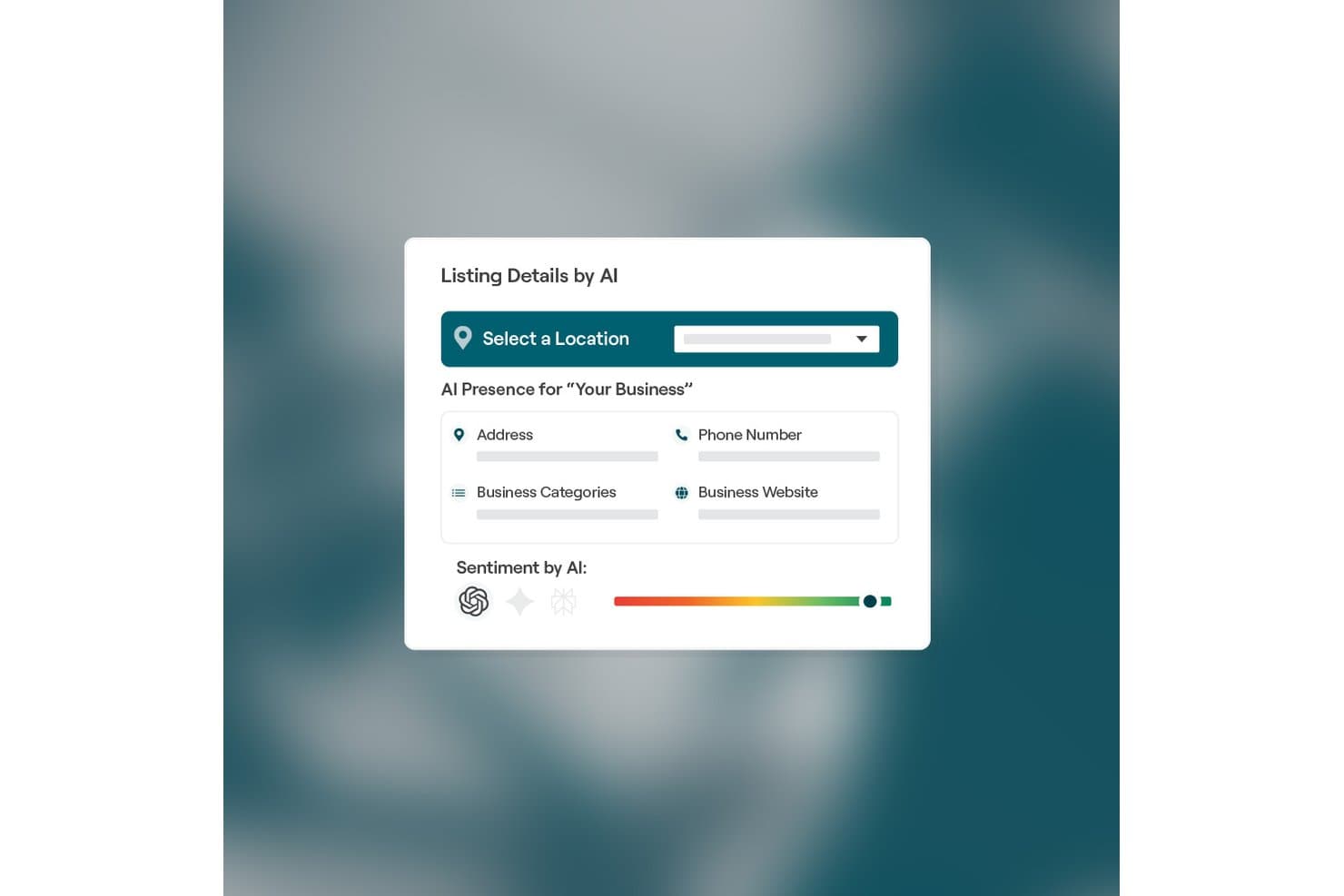
Reputation.com surfaces AI-powered listing details and sentiment scoring. Reputation.com is a local marketing and reputation management platform that combines business listings management, review monitoring and response, local SEO, and AI-powered search visibility tools across multiple locations.
Who Is Reputation.com Best For?
Reputation.com is built for multi-location brands—franchise networks, healthcare systems, automotive groups, and property management portfolios—that need to manage reviews, listings, and AI search visibility at scale.
Why I Picked Reputation.com
I picked Reputation.com as one of the best because its GEO Readiness tool directly measures how your locations surface in AI-generated search results, including Google AI Overviews and ChatGPT-style engines, which most competing platforms simply don't address. The AI Reputation Manager pairs with this by showing you exactly what AI engines "see" when they surface your brand, so you can act on gaps rather than guess. For multi-location brands watching traditional search give way to AI answers, that visibility is genuinely hard to replicate elsewhere.
Reputation.com Key Features
- Review Booster: Automates review generation via Google's private API and streams verified reviews to your website with Google Seller Ratings support for ads.
- RepScore: A composite KPI that ties together nine dimensions of customer experience and local visibility into a single metric for comparing performance across locations.
- Reputation®IQ: An AI-powered interface that lets you query all your reputation data in plain language, surfacing decision-ready answers without building custom reports.
- Multi-channel survey delivery: Sends branded, personalized surveys via web, email, SMS, conversational SMS, and kiosks, with conditional logic and NPS support built in.
Reputation.com Integrations
Reputation.com supports integrations via RepConnect with HubSpot, Salesforce, CDK, Epic, Yardi, Entrata, RealPage, and UKG. It also supports Google Analytics, Adobe Analytics, REST API, and API, CSV, or SFTP data transfers for custom connectivity.
Pros and Cons
Pros:
- Single KPI for all reputation signals
- Bulk review management across 130+ sites
- Tracks AI and LLM search visibility
Cons:
- Social publishing suite requires paid upgrade
- Lacks geo-targeted paid ad campaigns
Learn more about Reputation.com: Best for agency-scale franchise marketing
- Free plan + 14-day trial + demo available
- Pricing upon request
Visit WebsiteCustomer Rating:4.5/5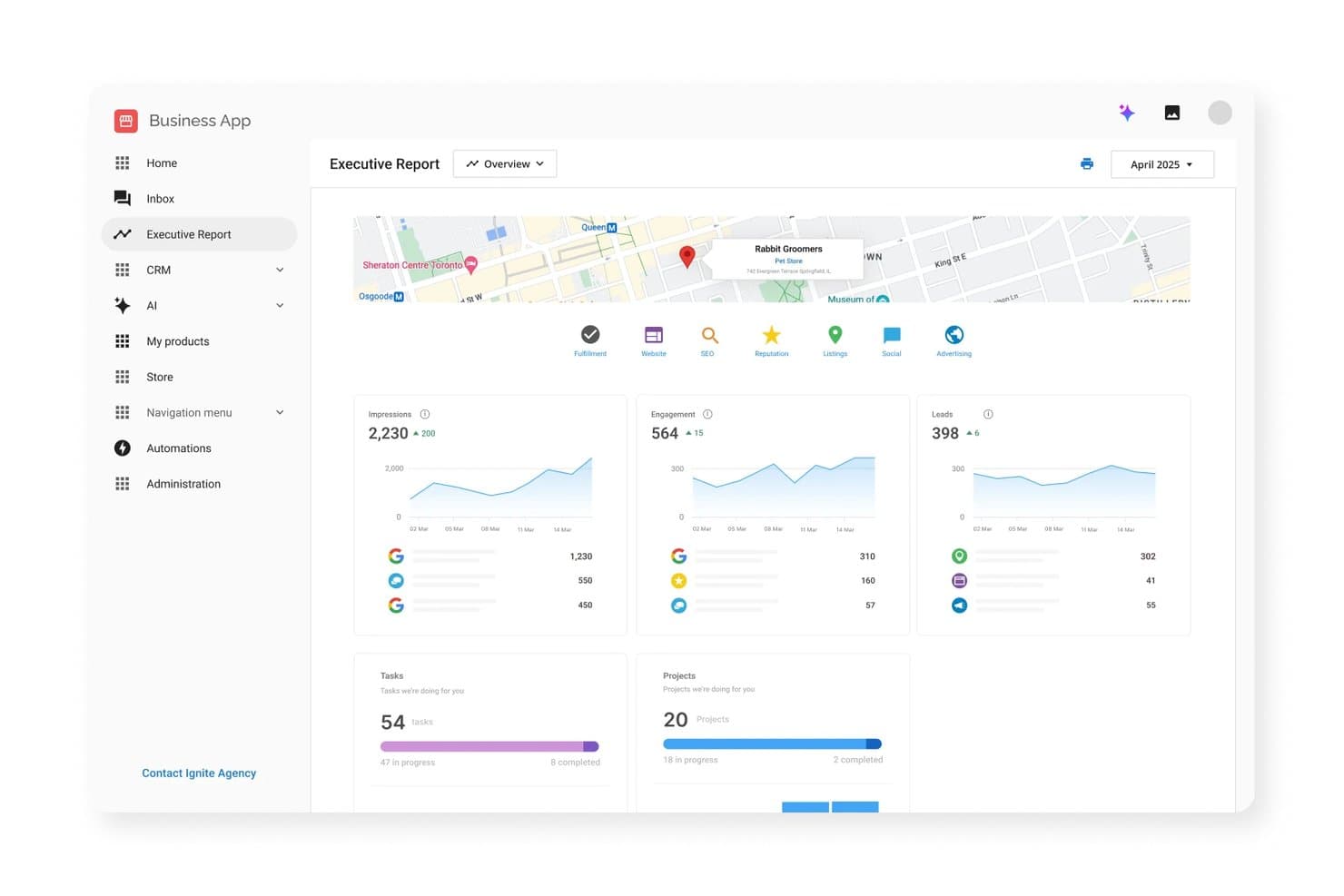
Vendasta's Business App centralizes local marketing performance in one dashboard. Vendasta is an agency-focused local marketing platform that combines listings management, reputation and review monitoring, local SEO, social media publishing, and digital advertising into a single white-label suite built for managing multiple business locations at scale.
Who Is Vendasta Best For?
Vendasta is built for marketing agencies and franchise networks that need to manage local visibility, reputation, and advertising across dozens or hundreds of locations from one platform.
Why I Picked Vendasta
Vendasta earns its spot on my shortlist because of how well it handles franchise and agency-scale marketing across dozens or hundreds of locations from one platform. I'm particularly impressed by its AI Workforce, which lets franchisors set brand standards once and enforce them automatically at every location, and its multi-location dashboard, which aggregates reputation, listings, and GBP data across thousands of locations simultaneously. Its Reputation AI monitors 100-plus review sites and auto-generates tone-matched responses per location, which is the kind of coverage that's otherwise impossible to manage manually at scale.
Vendasta Key Features
- Local SEO Grid: Tracks local search rankings by geolocation, so you can see how each location performs for specific keywords across different areas.
- Citation Builder: Submits NAP data to major aggregators like Neustar Localeze and Foursquare, distributing accurate business information to 300+ downstream directories.
- Vendasta Ads: Manages search, social, display, and video ad campaigns across Google, Bing, Meta, and TikTok with AI-assisted keyword and ad copy recommendations.
- Snapshot Report: Scans the web to generate a per-business audit covering SEO, reviews, social media, and website performance, usable for prospecting or client reporting.
Vendasta Integrations
Vendasta has documented integrations with Google Business Profile, Apple Business Connect, HubSpot, WordPress, QuickBooks Online, Jobber, PetExec, Zoom, Google Meet, and Stripe. It also connects with Google Ads, Bing Ads, Facebook, Instagram, and TikTok through Vendasta Ads.
Pros and Cons
Pros:
- AI-powered review monitoring and response automation
- White-label client portal for agency branding
- Multi-location dashboard for franchise brand governance
Cons:
- No dedicated store locator or AI visibility tool
- Multi-location features only on premium tiers
Learn more about Vendasta: Best for AI-powered multi-location reputation
- Free demo available
- Pricing upon request

Chatmeter has joined Alchemer, merging reputation management into one platform. Chatmeter is a multi-location local marketing platform that combines listings management across 140+ directories, AI-powered reputation and review monitoring, localized social media publishing, and location-level SEO tools.
Who Is Chatmeter Best For?
Chatmeter is built for multi-location brands and franchise marketers managing reputation, listings, and local SEO across dozens to thousands of locations.
Why I Picked Chatmeter
Chatmeter earns its spot on my shortlist because its AI reputation stack goes well beyond basic review aggregation. I'm particularly impressed by Pulse AI Signals, which lets you ask plain-language questions across thousands of reviews and get synthesized answers instantly, and by Risk Monitoring, which flags mentions of discrimination or safety issues before they escalate. Both features are purpose-built for brands running dozens or hundreds of locations where manual review is simply not an option.
Chatmeter Key Features
- Local listings management: Syncs accurate business data across 140+ directories through direct API partnerships with Google, Apple Maps, Bing, Yelp, and Facebook.
- AI Response Generator: Produces AI-generated, human-centered replies to customer reviews directly within the platform.
- Social Suite: Lets you create, schedule, and publish localized content across Facebook, Instagram, Google Posts, X, and LinkedIn from one dashboard.
- BI tool integrations: Connects reporting data to Tableau, Power BI, Domo, and Qlik for deeper cross-location analysis.
Chatmeter Integrations
Chatmeter integrates with Google Business Profile, Apple Maps, Bing Places, Yelp, Facebook, Tableau, Power BI, Domo, and Qlik. It also supports an open API for custom integrations and connects with Uber Eats, DoorDash, and Grubhub.
Pros and Cons
Pros:
- Specialized Apple Maps listing management
- Social Suite included in every plan
- AI-powered review and risk monitoring
Cons:
- Cannot reply in-platform to Yelp reviews
- No native geo-targeted ad features
Learn more about Chatmeter:
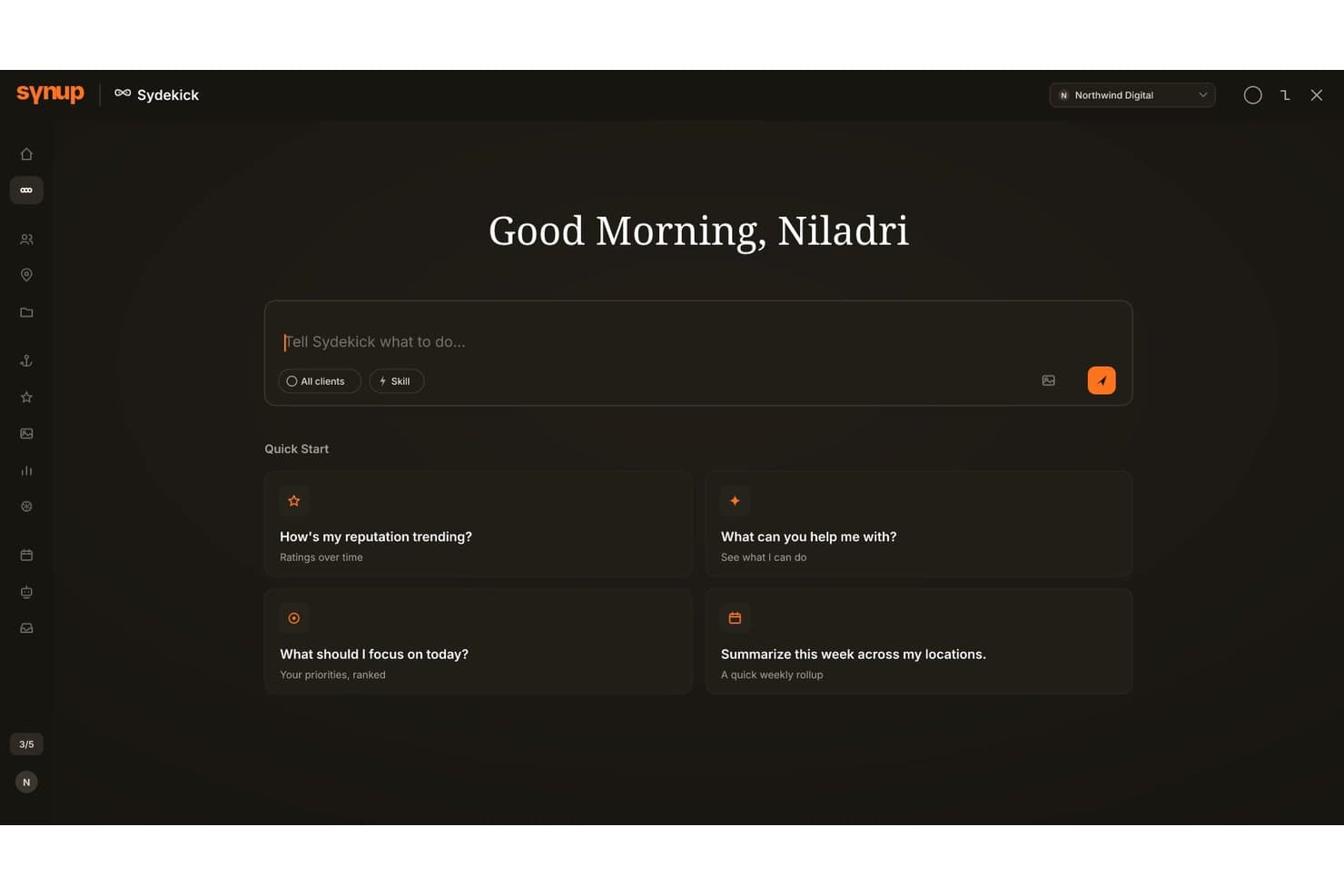
Synup's AI assistant helps users manage reputation and priorities. Synup is a local marketing platform that combines listings management, reputation monitoring, local SEO, social publishing, and AI-driven search visibility tracking across 100+ directories and AI engines like ChatGPT, Gemini, and Perplexity.
Who Is Synup Best For?
Synup is a strong fit for franchise marketing directors and multi-location marketing managers who need centralized control over local search visibility without sacrificing location-level flexibility.
Why I Picked Synup
Synup earns its spot as one of the best on my shortlist because it's the only local marketing platform I've seen with a dedicated AEO product that tracks your business's visibility inside ChatGPT, Gemini, Perplexity, and Microsoft Copilot. I love the AI Keyword Visibility Map, which color-codes your presence across AI engines per keyword so you can see exactly where you're missing ground. The 7×7 geo-grid rank tracker adds another layer I find genuinely useful, plotting 49 data points across your service area rather than delivering a single averaged rank.
Synup Key Features
- Reputation monitoring: Tracks reviews across 30+ sources with AI-assisted response drafting for Google Maps and Facebook directly from the platform.
- Review generation campaigns: Sends branded email and SMS outreach to customer lists to solicit new reviews across key platforms.
- Local landing pages: Builds schema-optimized, individually indexable pages per location using a drag-and-drop no-code builder populated with live business data.
- Role-based permissions: Assigns scoped access levels to team members or franchisees, controlling what each user can view or edit across locations.
Synup Integrations
Synup connects with 100+ publisher directories, including Google Business Profile, Apple Business Connect, Bing Places, Facebook, and Waze, plus 30+ review sources such as Yelp, TripAdvisor, and Trustpilot. Its REST API provides 140+ endpoints for custom integrations.
Pros and Cons
Pros:
- AI-driven listing monitoring and corrections
- Powerful geo-grid rank tracking per location
- Tracks AI engine visibility for local search
Cons:
- No built-in geo-targeted ad campaign tools
- Direct review replies limited to two platforms
Learn more about Synup: Best for hyperlocal lead generation
- Not available
- From ₹800/month/outlet
Visit WebsiteCustomer Rating:4.5/5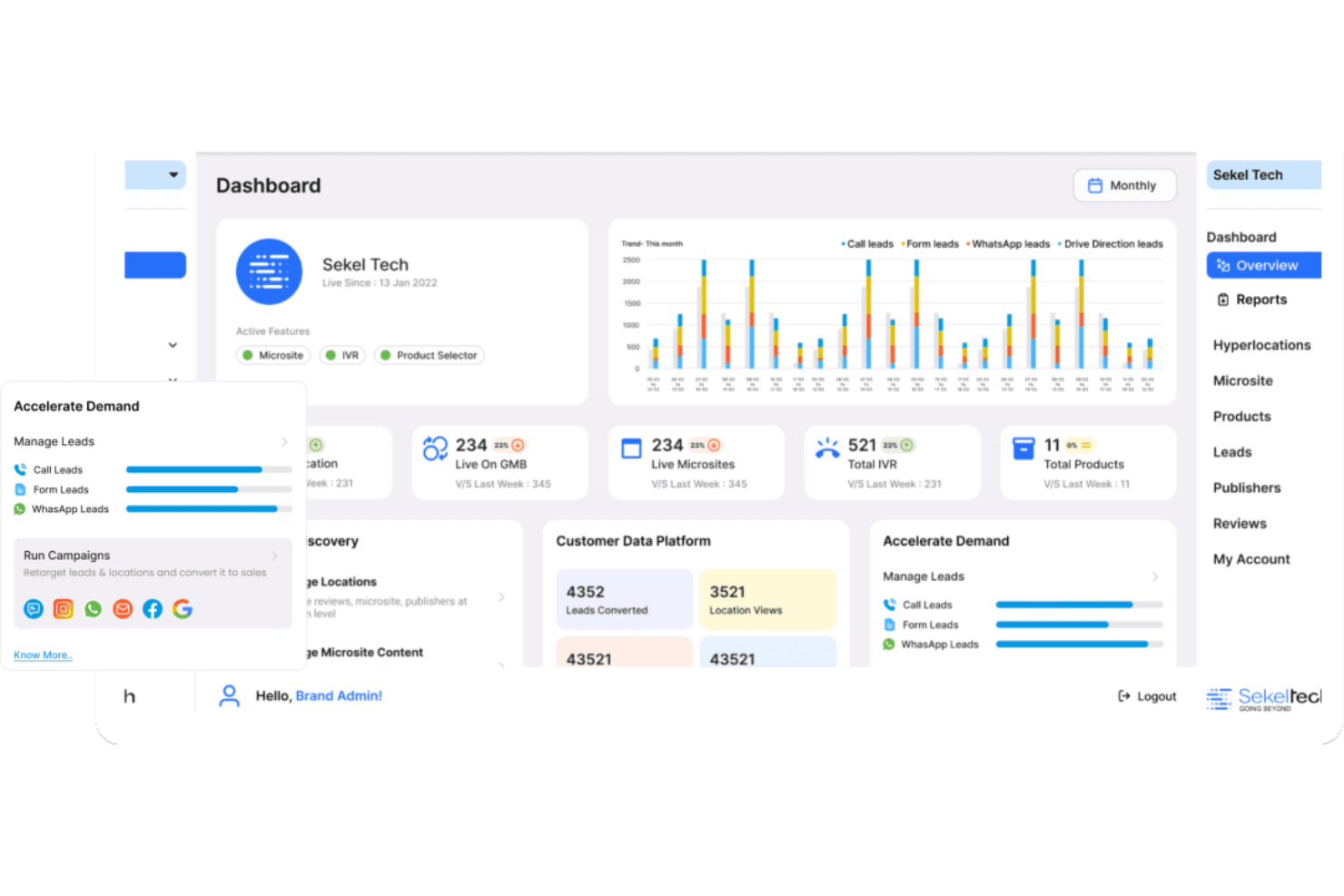
Sekel Tech generates leads and targets hyperlocal select audiences. Sekel Tech is a hyperlocal marketing platform that combines dynamic listing management, local SEO, reputation management, localized content, and dealer-level paid advertising into a single multi-location system.
Who Is Sekel Tech Best For?
Sekel Tech is a strong fit for multi-location brands and dealer networks—particularly in retail, automotive, and franchise sectors—that need to convert local search visibility into in-store sales at scale.
Why I Picked Sekel Tech
I picked Sekel Tech as one of the best because it's built specifically around converting local search into in-store sales, not just visibility. Its Dynamic Listing Management syncs across Google Business Profile, Apple Maps, and 50+ publishers in real time, while dealer-level Google and Meta Ads campaigns run at 0% media commission. I also love that it tracks the full lead-to-sale journey, so you can see which location pages and campaigns are actually driving foot traffic.
Sekel Tech Key Features
- Sekel Agentic AI: An AI co-pilot that monitors 150+ platforms for competitor intelligence, automates customer engagement via WhatsApp and voice, and converts interactions into CRM tasks.
- Hierarchical admin roles: A Brand → Zone → State → City → Store permission model lets corporate teams set guardrails while local operators customize content and campaigns.
- Customer data platform (CDP): A built-in CDP unifies first-party data with CRM, lead management, and product information management in a single system.
- SellrApp: A cloud-based retail management app that handles product catalogs, lead tracking, order management, warranty service, and smart EPOS across mobile and web.
Sekel Tech Integrations
Sekel Tech supports 20+ integrations, including Google Ads, Meta Ads, Google Maps, Salesforce, HubSpot, Zoho, Shopify, WooCommerce, Magento, and Adobe Commerce. It also supports Open API integrations for custom connectivity.
Pros and Cons
Pros:
- Hierarchical admin roles for multi-location control
- No media commission on ad campaigns
- Tracks conversions from online to in-store sales
Cons:
- Limited independent reviews outside India
- Primarily focused on Indian brands and markets
Learn more about Sekel Tech: Best for customer feedback management
- Free demo available
- Pricing upon request
Visit WebsiteCustomer Rating:4.8/5
Birdeye automates email and SMS campaigns across locations. Birdeye is a local marketing platform built for multi-location brands that combines reputation management, local listings, social publishing, SEO-optimized location pages, and AI-driven review generation and response across 200+ review sites.
Who Is Birdeye Best For?
Birdeye is a strong fit for multi-location brands and franchise networks that need centralized control over customer reviews, local listings, and location-level marketing at scale.
Why I Picked Birdeye
Birdeye earns its spot on my shortlist because no other platform I've evaluated comes close to its depth of customer feedback management at scale. The Review Response Agent can autonomously handle tens of thousands of reviews, as H&R Block proved during tax season with 49,000+ reviews managed without manual input. I also love that the platform pulls from 200+ review sites into a single dashboard, with sentiment analytics and competitor benchmarking built in at the location level.
Birdeye Key Features
- Local Pages Builder: Deploys AI-generated, SEO-optimized landing pages for each location without requiring developer resources.
- Search AI: Tracks brand and location visibility across AI-generated results from ChatGPT, Gemini, Perplexity, and Google AI Overviews.
- Marketing automation: Runs personalized, location-specific email and SMS campaigns that dynamically adapt by location using plain-English audience segmentation.
- Multi-location reporting: Delivers real-time, location-level dashboards with side-by-side comparisons, anomaly detection, and natural-language querying.
Birdeye Integrations
Birdeye connects with 3,000+ software systems, including Salesforce, HubSpot, Google Business Profile, Apple Business Connect, Bing Places, Yelp, Facebook, Shopify, Square, and QuickBooks. It also offers open APIs, webhooks, and a developer portal for custom integrations.
Pros and Cons
Pros:
- Multi-location reporting with anomaly detection
- AI tracks AI/LLM search result visibility
- Review automation across 200+ sites and locations
Cons:
- No live video or Reels social support
- No native geo-targeted paid ad console
Learn more about Birdeye: 7Best for location listings accuracy
Yext
- Free demo available
- Pricing upon request
Visit WebsiteCustomer Rating:4.4/5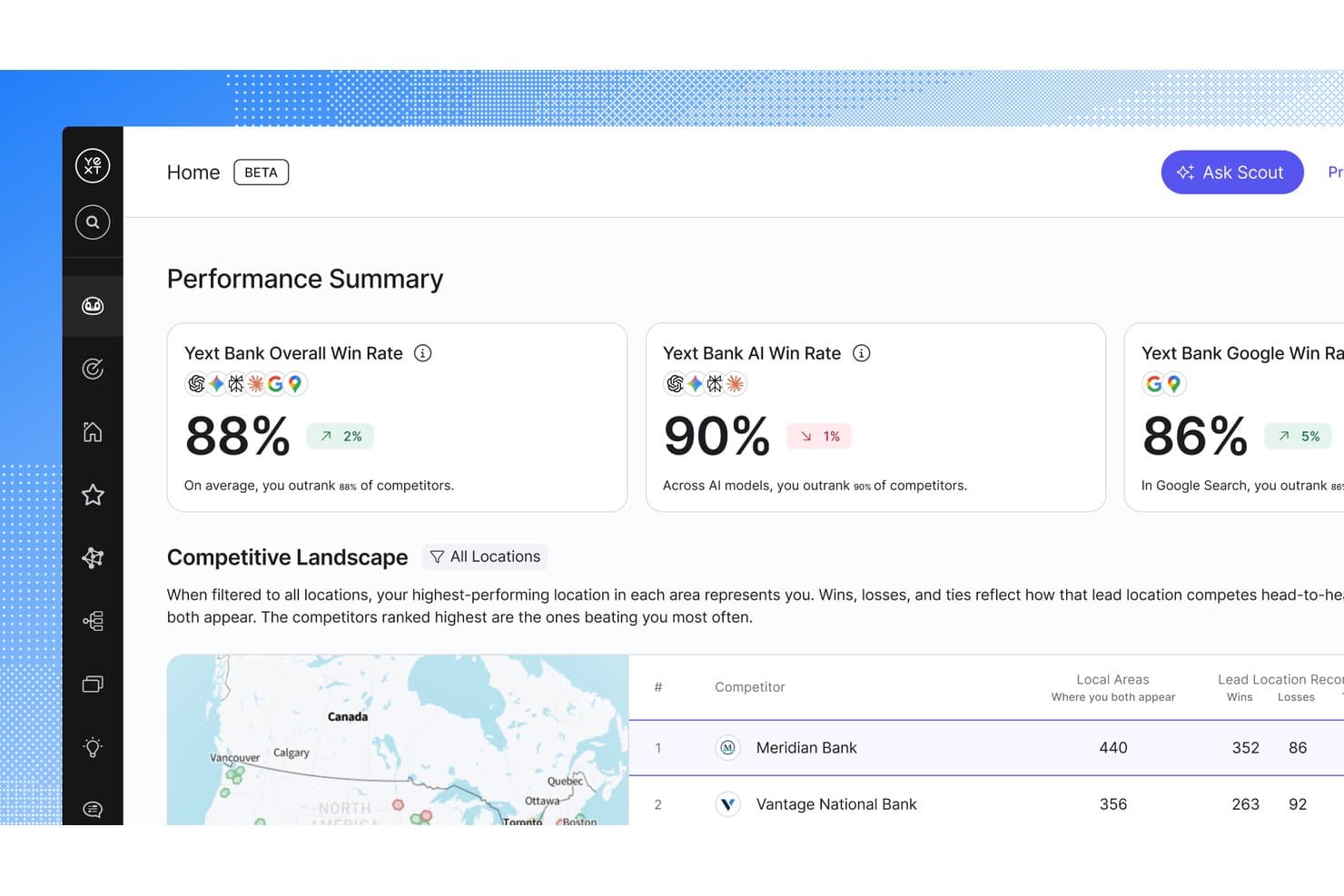
Yext tracks win rates and competitor rankings across search platforms. Yext is a local marketing platform that manages business listings, reputation, local landing pages, social publishing, and AI search visibility across hundreds of publishers and directories.
Who Is Yext Best For?
Yext is built for enterprise brands and franchise organizations managing listings, reviews, and local visibility across hundreds or thousands of locations.
Why I Picked Yext
Yext earns its spot on my shortlist because no other platform comes close to its listing accuracy across 200+ publishers via direct API connections, with zero aggregator intermediaries. I love that the Listings Verifier automatically detects and corrects third-party overwrites before they cause visibility damage. On top of that, Yext Scout now tracks how your brand appears inside ChatGPT, Gemini, and Google AI Overviews, which is territory most local marketing tools haven't touched yet.
Yext Key Features
- AI Reputation Agent: Monitors, aggregates, and drafts responses to reviews across 80+ platforms, with sentiment analysis and configurable auto-reply rules.
- Knowledge Graph: A central data repository that syncs one update across listings, pages, social, and reviews simultaneously across all locations.
- Yext Pages: A no-code builder that generates thousands of schema-rich, individually indexable local landing pages powered by live Knowledge Graph data.
- Franchise governance tools: Role-based permissions, brand-critical field locking, and franchisee-to-corporate approval workflows for managing large multi-location organizations.
Yext Integrations
Yext connects with 200+ publishers, including Google Business Profile, Apple Business Connect, Bing Places, Yelp, Facebook, UberEats, and Amazon Alexa. It also integrates with Salesforce, Google Looker Studio, Drupal, and Freshdesk, with APIs and webhooks for custom connections.
Pros and Cons
Pros:
- Automates review responses with AI drafting
- Tracks brand mentions in AI search results
- Updates listings across 200+ publishers instantly
Cons:
- Not designed for small businesses or SMBs
- Data reverts if subscription is cancelled
Learn more about Yext:
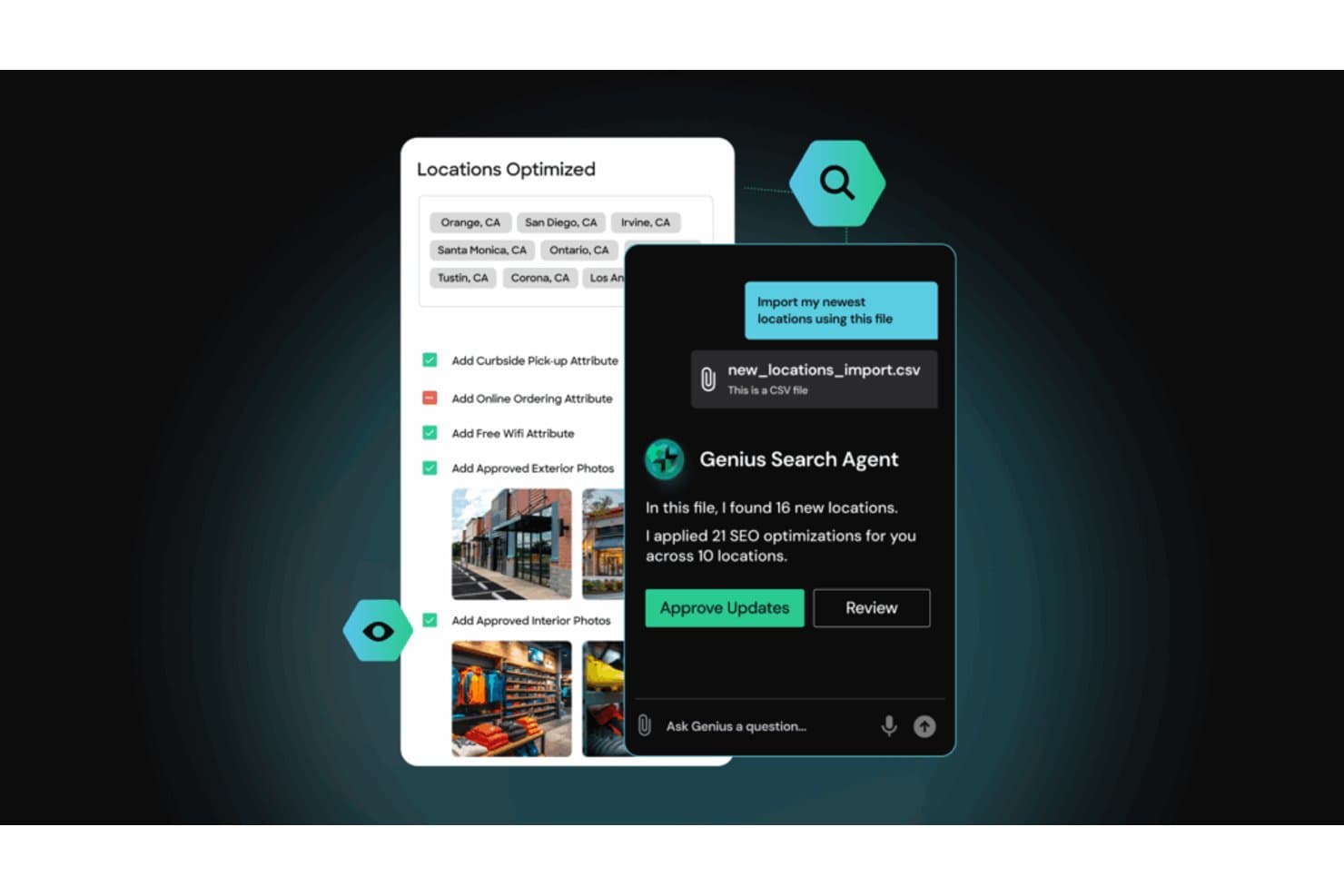
SOCi's Genius Search Agent automates SEO optimizations across multiple locations. SOCi is an AI-driven local marketing platform that manages listings, reputation, social content, local SEO, and paid ads across hundreds or thousands of business locations from a single dashboard.
Who Is SOCi Best For?
SOCi is built for franchise networks and multi-location enterprise brands that need to manage local marketing across hundreds or thousands of locations from a single platform.
Why I Picked SOCi
SOCi earns its spot on my shortlist because no other platform I've seen handles franchise-scale local marketing with this level of autonomy. Its Genius Agents don't just flag issues—they actively respond to reviews, update listings across 140+ directories, and publish localized social content without someone manually triggering each action. I'm particularly impressed by the AI/LLM Visibility feature, which optimizes location discoverability inside Google AI Overviews, ChatGPT, and Perplexity, a capability most platforms haven't touched yet.
SOCi Key Features
- Genius Reputation Agent: Automatically generates on-brand review responses across Google, Yelp, Facebook, and TripAdvisor, with sentiment analysis and escalation workflows for sensitive reviews.
- SOCi Shield: A built-in compliance layer that scans and blocks non-compliant content before it's published across listings, social posts, and review responses.
- SOCi Surveys: Collects first-party customer feedback via email, SMS, QR codes, and web embeds, with NPS and CSAT reporting and integrations with Salesforce and Olo Engage.
- Hierarchical org structure: Organizes locations across brand, region, market, and store levels with role-based permissions and approval workflows for each tier.
SOCi Integrations
SOCi integrates with 140+ platforms, including Google Business Profile, Apple Maps, Bing Places, Yelp, Facebook, Instagram, TikTok, Salesforce, Olo, and TripAdvisor. Custom integrations are available through its API.
Pros and Cons
Pros:
- Scales compliance and brand governance controls
- Optimizes AI-driven search and visibility
- Automates review responses across all locations
Cons:
- Social post publishing can require manual steps
- Only available to enterprise-scale businesses
Learn more about SOCi: Best for AI-driven online presence control
- Free demo available
- Pricing upon request
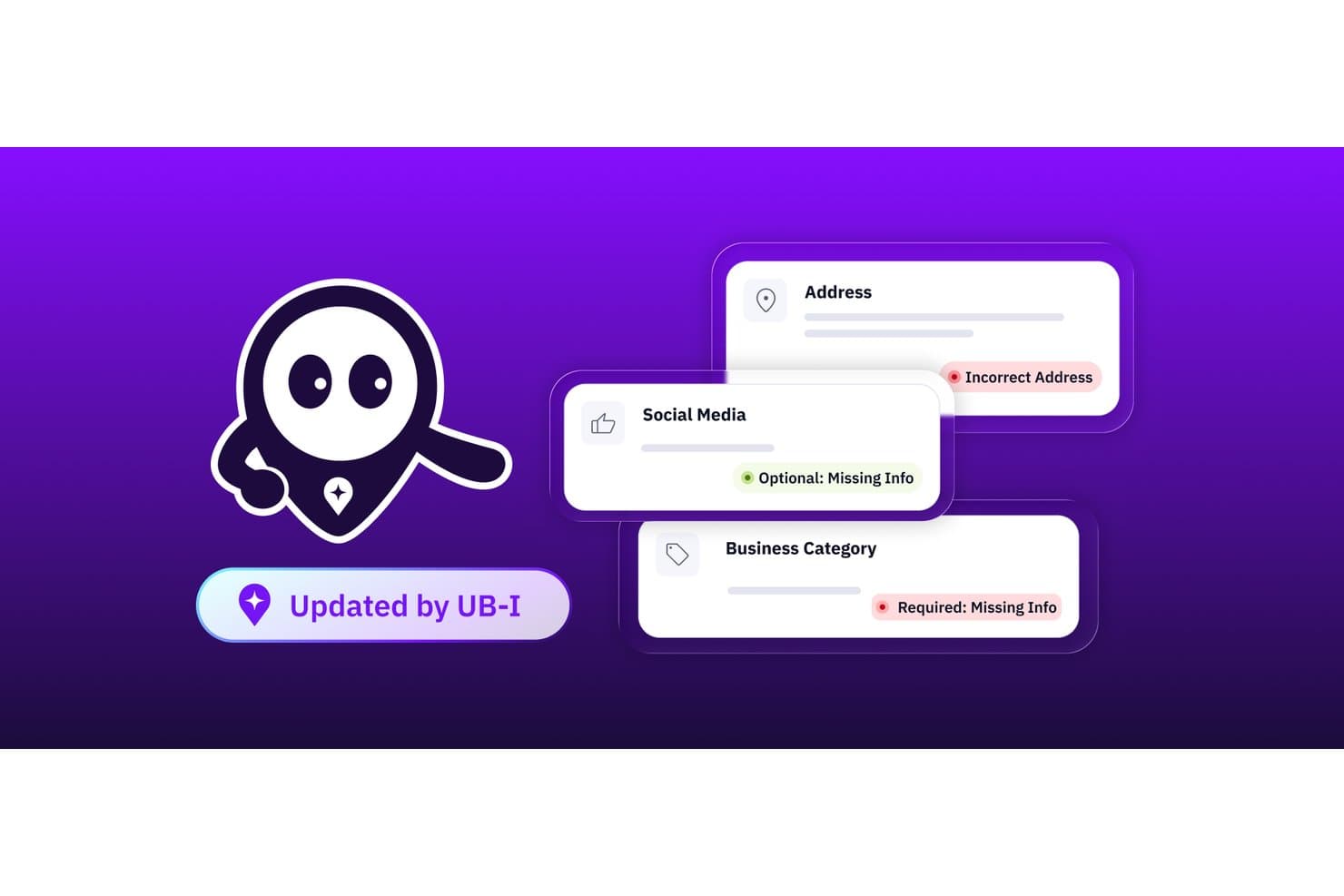
Uberall flags incorrect, missing, or required business listing data automatically. Uberall is a multi-location marketing platform that centralizes listings management, local SEO, review management, localized social publishing, and AI-driven search visibility across 150+ directories and platforms.
Who Is Uberall Best For?
Uberall is a strong fit for franchise marketing directors and multi-location brand teams that need centralized control over listings, reviews, and local content across dozens—or thousands—of locations.
Why I Picked Uberall
I picked Uberall as one of the best because its AI-driven approach to online presence control goes further than any other tool I've seen in this category. UB-I, its agentic AI, monitors listings across 150+ directories in real time and autonomously fixes broken profiles or outdated data without waiting for manual input. I'm also a fan of GEO Studio, which tracks how your locations appear inside ChatGPT, Perplexity, and Google AI Overviews, a capability most competing platforms haven't touched yet.
Uberall Key Features
- Distributed marketing portal: A role-based permission system that lets corporate teams lock brand-critical fields while giving local operators controlled flexibility to customize content within approved guardrails.
- AI Bulk Replies: Generates and sends AI-written responses to multiple reviews at once, scaling reputation management across large location networks without manual effort.
- Local Pages builder: A no-code tool for creating individually indexable, schema-marked location landing pages with embedded CTAs for directions, click-to-call, and appointment booking.
- Sentiment analysis report: Tracks customer sentiment across all locations on a scored scale, surfacing theme-based trends and insights from review data in a unified dashboard.
Uberall Integrations
Uberall offers 1,000+ plug-and-play integrations, including Google Business Profile, Apple Business Connect, Bing Places, Yelp, TripAdvisor, Facebook, Instagram, LinkedIn, and TikTok. It also connects with Salesforce, Zendesk, Canva, Power BI, Tableau, Google Analytics 4, Google Search Console, and supports custom integrations through an Open REST API.
Pros and Cons
Pros:
- Distributed marketing governance for franchises
- GEO Studio tracks AI search visibility
- AI-driven multi-location listing corrections
Cons:
- Review response AI lacks deep personalization
- Custom-quote pricing creates friction for buyers
Learn more about Uberall:
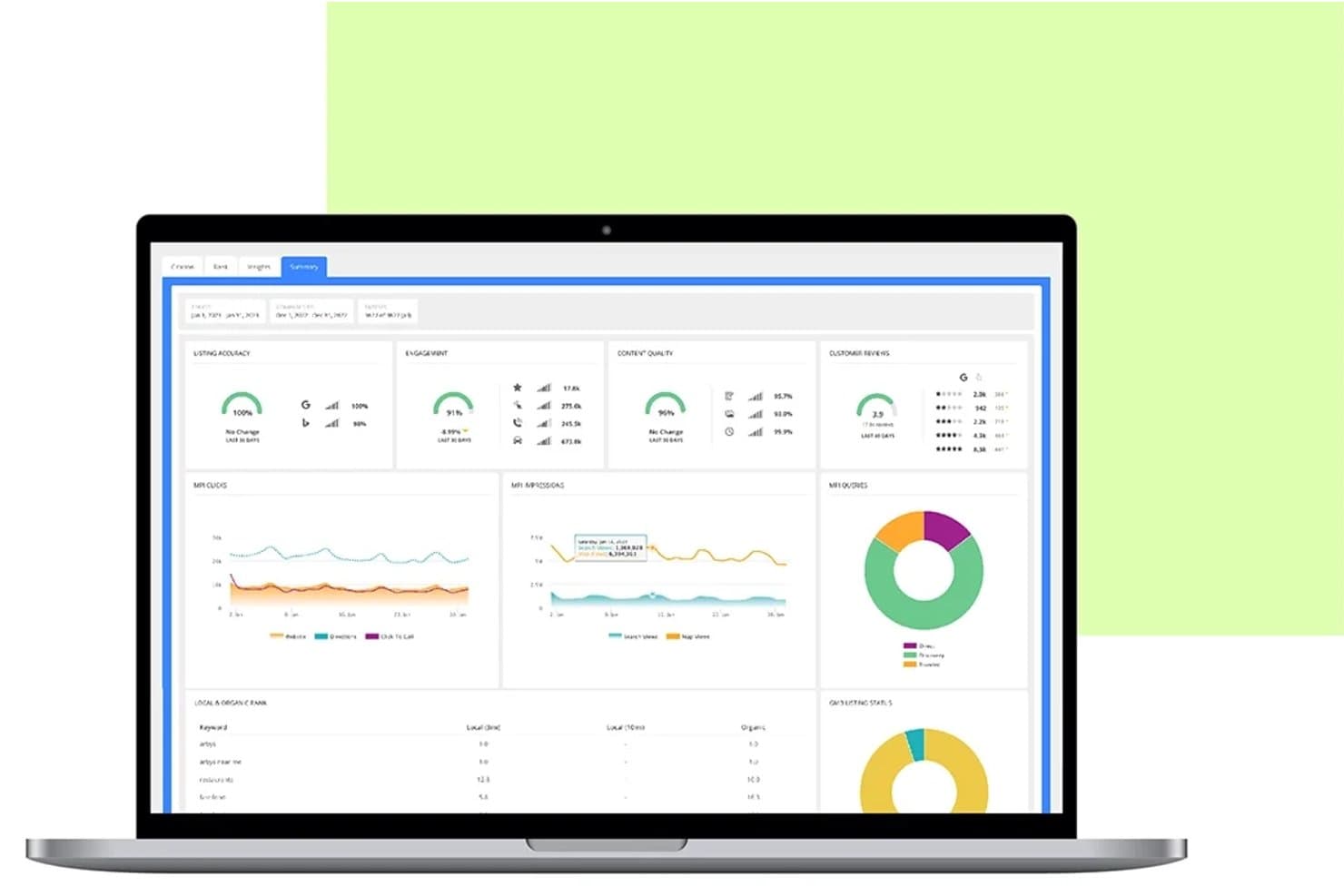
Rio SEO centralizes local listing and review performance in one dashboard. Rio SEO is an enterprise local marketing platform that combines listings management, local SEO, reputation and review management, localized content publishing, and multi-location reporting into a single suite built for large multi-location brands and franchises.
Who Is Rio SEO Best For?
Rio SEO is built for enterprise marketing teams managing hundreds or thousands of locations who need organic search visibility, review management, and listings accuracy all in one platform.
Why I Picked Rio SEO
Rio SEO earns its spot on my shortlist because no other platform matches its depth for multi-location organic search at scale. I'm particularly impressed by its Google Business Profile Featured Partner status, which gives enterprise brands API-level access to push bulk updates across thousands of locations instantly. Pair that with schema-optimized Local Pages built per location and real-time rank tracking across every locale, and you have a genuinely hard-working organic visibility engine.
Rio SEO Key Features
- Duplicate listing suppression: Automatically identifies and removes rogue or duplicate listings across directories, resolving ownership conflicts before they hurt your search visibility.
- AI-drafted review responses: Generates context-aware response suggestions for reviews across 100+ platforms, with bulk reply capability for up to 50 reviews at once.
- Genius Text Analytics: ML-powered sentiment analysis applied to review content, surfacing topic trends and patterns at both the location and enterprise level.
- Voice of Customer survey integration: Connects local marketing performance data with Forsta's survey and digital feedback tools for a unified view of customer experience across locations.
Rio SEO Integrations
Rio SEO integrates with Google Business Profile, Apple Business Connect, Bing Places, Yelp, Facebook, Nextdoor, TripAdvisor, 100+ review platforms, and hundreds of directories. Google Business Profile and Apple Business Connect APIs support bulk listing updates.
Pros and Cons
Pros:
- Managed services included for local SEO tasks
- AI-powered review response and sentiment tools
- Excels at bulk updates for business listings
Cons:
- Interface complexity noted by enterprise users
- No native geo-targeted paid ad module
Learn more about Rio SEO:
Outro software de marketing local
Eis algumas opções adicionais de software de marketing local que não foram incluídas na minha seleção, mas que ainda vale a pena conhecer.
- 11SingleInterfaceBest for call-to-audience remarketing insights
- 12LocaliQ.comBest for cross-channel AI lead conversion
- 13BrightLocalBest for local SEO and citation ownership
- 14AnsiraBest for co-op fund management at scale
- 15ThryvBest for small business local visibility
- 16MomentFeedBest for multi-location proximity search wins
- 17Surefire LocalBest for local business insights
How I Evaluate Local Marketing Software
I evaluate local marketing tools in two layers: the core capabilities that determine whether a tool belongs on this list, and the differentiators that matter depending on whether you're marketing one local business, managing a regional brand, or coordinating hundreds of franchise locations.
Core Functionality (Table Stakes For This List)
When I'm selecting tools for my list, I rank each one on a scale from 0 (does not offer the functionality) to 5 (excels in this area) for each core functionality listed below. Then, I calculate the tool's total score into a percentage. Each tool needs to achieve a minimum total score of 65% to be considered for inclusion.
- Local Listings Management: I look at how each tool helps businesses manage local information, such as names, addresses, hours, and categories. Stronger platforms can sync updates across directories, maps, and search engines, which is especially useful when you're managing information for multiple locations.
- Local SEO & Visibility: I evaluate how each tool helps improve or measure visibility in local search. This can include Google Business Profile management, local rank tracking, citation management, NAP audits, and location-level search insights.
- Reputation & Review Management: I look for tools that help monitor, aggregate, request, or respond to customer reviews. For multi-location businesses, I also consider whether reviews can be managed and analyzed separately for each location.
- Localized Content & Campaigns: I check whether teams can create and deploy marketing content for specific locations or markets. This might include local landing pages, social posts, promotions, or brand-approved templates that individual locations can customize.
- Hyper-Local Advertising & Social: I evaluate whether a platform can reach audiences based on location through local social publishing, geo-targeted advertising, store-level promotions, or similar geographic targeting capabilities.
- Local Analytics & Reporting: I look for reporting that breaks performance down by location, market, or campaign. This can include local search visibility, reviews, campaign engagement, and other location-level metrics that help you see what's working in different markets.
Once I have a list of tools that meet the criteria, I consider what sets each platform apart.
Differentiating Factors (What Sets Vendors Apart)
Here's how I compare and contrast different vendors:
Standout Features
Local landing page builders stand out when they can create individually optimized pages for each location without requiring teams to build every page manually. I also look for store locators that connect local discovery with actions like getting directions, calling a location, or booking an appointment.
For larger networks, distributed marketing portals are another useful differentiator because they give local operators access to approved assets and campaigns while helping corporate teams maintain brand standards. I also consider AI-assisted review responses, social listening, competitive local insights, and newer AI search visibility tools when they add meaningful capabilities beyond the platform's core local marketing functions.
Beyond Features
Pricing structure matters a lot here. I check whether a vendor charges per location, by feature bundle, or through a custom contract because the economics can change considerably between a small business and a large franchise network.
I also consider how well a platform handles location data and connects with the wider local marketing ecosystem. Direct integrations with services like Google Business Profile, Apple Business Connect, and major review platforms can affect how efficiently teams manage their local presence. CRM, POS, marketing automation, and analytics integrations also matter when local marketing data needs to connect with the rest of the marketing stack.
For multi-location and franchise teams, I look at scalability and governance as well. Role-based permissions, location hierarchies, approval workflows, and bulk operations can determine whether corporate and local teams can work independently without losing control over brand standards.
Como escolher software de marketing local
É fácil ficar atolado em listas extensas de funcionalidades e estruturas de preços complexas. Eis uma lista de verificação dos fatores a ter em conta para o ajudar a manter o foco enquanto percorre o seu processo único de seleção de software.
| Fator | O que considerar |
| Escalabilidade | Certifique-se de que o software acompanha o crescimento da sua empresa. Procure soluções que acomodem um número crescente de locais ou de clientes. |
| Integrações | Para simplificar os fluxos de trabalho, verifique se o software se liga às ferramentas que já utiliza, como sistemas de CRM ou plataformas de redes sociais. |
| Personalização | Pode adaptar o software às suas estratégias de marketing e à sua identidade de marca? Painéis de controlo e relatórios personalizáveis são um bom sinal. |
| Facilidade de utilização | A sua equipa não deve ter dificuldades com interfaces complexas. Opte por designs intuitivos que minimizem o tempo de formação |
| Orçamento | Alinhe o custo com o seu plano financeiro. Considere se o modelo de preços se adequa à dimensão e às necessidades da sua empresa, quer se trate de uma subscrição ou de uma taxa única. |
| Medidas de segurança | Certifique-se de que os dados dos clientes estão protegidos. Procure funcionalidades como a encriptação e a conformidade com os regulamentos de proteção de dados. |
| Suporte | Um suporte ao cliente fiável pode poupar-lhe tempo e preocupações. Verifique se é disponibilizado suporte 24 horas por dia, 7 dias por semana, bem como várias opções de contacto. |
| Análise de dados | Um software eficaz deve oferecer informações sobre o desempenho das campanhas e o comportamento dos clientes, ajudando-o a tomar decisões fundamentadas. |
Tendências no software de marketing local
Durante a minha investigação, recolhi inúmeras atualizações de produtos, comunicados de imprensa e registos de fornecedores de software de marketing local. Eis algumas das tendências emergentes que tenho acompanhado.
- Personalizações baseadas em IA: Mais ferramentas utilizam IA para adaptar as mensagens de marketing a cada cliente. Esta tendência ajuda as empresas a estabelecer uma ligação pessoal com o seu público, melhorando o envolvimento. Alguns fornecedores introduziram funcionalidades de IA que recomendam conteúdos com base no comportamento dos clientes.
- Otimização para pesquisa por voz: Com o aumento dos assistentes de voz, a otimização para a pesquisa por voz está a tornar-se essencial. O software de marketing local está a adaptar-se, disponibilizando ferramentas que ajudam as empresas a garantir que as suas informações são adequadas para a pesquisa por voz. Os fornecedores estão a incorporar funcionalidades para analisar e otimizar consultas de pesquisa por voz.
- Capacidades de pesquisa visual: A pesquisa visual está a ganhar força, permitindo aos utilizadores pesquisar através de imagens em vez de palavras-chave. Esta tendência é significativa para empresas locais que dependem do apelo visual, como restaurantes e lojas. Algumas plataformas disponibilizam agora formas de otimizar conteúdos para motores de pesquisa visual.
- Funcionalidades focadas na sustentabilidade: À medida que os consumidores se tornam mais conscientes das questões ambientais, as empresas procuram formas de destacar as suas práticas sustentáveis. O software de marketing local começa a disponibilizar funcionalidades que permitem às empresas apresentar iniciativas ecológicas, ajudando-as a atrair este grupo demográfico em crescimento.
- Marketing nas redes sociais hiperlocal: A segmentação de bairros ou comunidades específicos através das redes sociais está a tornar-se mais popular. As soluções de software disponibilizam ferramentas para criar e gerir campanhas hiperlocais, permitindo às empresas interagir com os clientes de determinadas áreas de forma mais eficaz. Esta tendência está a ajudar as empresas a adaptar as suas mensagens aos públicos locais.
O que é o software de marketing local?
O software de marketing local ajuda as empresas a gerir o seu marketing a nível local. É utilizado por profissionais de marketing, proprietários de pequenas empresas e agências para reforçar a sua presença em comunidades ou regiões específicas.
Estas ferramentas permitem gerir listagens locais, monitorizar avaliações de clientes e interagir com públicos locais. Foram concebidas para aumentar a visibilidade e melhorar o envolvimento dos clientes em mercados regionais.
Funcionalidades do software de marketing local
Ao selecionar um software de marketing local, procure as seguintes funcionalidades essenciais.
- Gestão de listagens locais: Ajuda a garantir que as informações da sua empresa são exatas e consistentes em várias plataformas.
- Monitorização de avaliações: Permite acompanhar e responder de forma eficiente ao feedback dos clientes, melhorando a sua reputação.
- Publicidade segmentada geograficamente: Permite alcançar públicos locais específicos, maximizando a relevância dos seus esforços de marketing.
- Gestão das redes sociais: Permite agendar e publicar publicações para interagir com a sua comunidade local em várias plataformas.
- Painel de análise: Fornece informações sobre o desempenho nas pesquisas locais e o comportamento dos clientes, contribuindo para as suas estratégias de marketing.
- Ferramentas para campanhas hiperlocais: Permite criar e gerir campanhas de marketing adaptadas a bairros ou comunidades específicos.
- Ferramentas de consistência da marca: Garantem que todos os seus materiais de marketing estão alinhados com as normas da marca, mantendo uma imagem uniforme.
- Otimização para pesquisa por voz: Ajuda a sua empresa a adaptar-se à tendência crescente das pesquisas ativadas por voz, melhorando a acessibilidade.
- Comunicação automatizada: Facilita o envio de mensagens personalizadas e acompanhamentos aos clientes sem esforço manual.
- Capacidades de pesquisa visual: Permite otimizar os seus conteúdos para motores de pesquisa visual, melhorando a capacidade de descoberta das empresas orientadas para o aspeto visual.
Vantagens do software de marketing local
A implementação de um software de marketing local proporciona várias vantagens para a sua equipa e para a sua empresa. Eis algumas que pode esperar.
- Maior visibilidade local: Garante que as informações da sua empresa são exatas e fáceis de encontrar, reforçando a sua presença nas pesquisas locais.
- Maior envolvimento dos clientes: Permite estabelecer uma ligação com o seu público através de mensagens personalizadas e interações nas redes sociais.
- Gestão eficiente da reputação: Permite monitorizar e responder rapidamente às avaliações, mantendo uma imagem positiva.
- Esforços de marketing segmentados: Permite utilizar publicidade segmentada geograficamente e campanhas hiperlocais, alcançando o público certo com conteúdos relevantes.
- Decisões baseadas em dados: Fornece informações através de painéis de análise, ajudando a aperfeiçoar as suas estratégias com base no comportamento dos clientes.
- Identidade de marca consistente: Garante que todos os materiais de marketing estão alinhados com as normas da marca, apresentando uma imagem unificada em todas as plataformas.
Custos e preços do software de marketing local
Selecionar software de marketing local requer compreender os vários modelos de preços e planos disponíveis. Os custos variam consoante as funcionalidades, o tamanho da equipa, os complementos e muito mais. A tabela abaixo resume os planos padrão, os preços médios e as funcionalidades típicas das soluções de software de marketing local.
Tabela de comparação de planos para software de marketing local
| Tipo de plano | Preço médio | Funcionalidades comuns |
| Plano gratuito | $0 | Gestão básica de listagens, análises limitadas e ferramentas de interação com a comunidade |
| Plano pessoal | $5-$25/ utilizador/mês | Monitorização melhorada das avaliações, agendamento de publicações nas redes sociais e apoio básico ao cliente |
| Plano empresarial | $30-$75/ utilizador/mês | Análises avançadas, publicidade direcionada geograficamente e automatização do marketing por e-mail |
| Plano empresarial de grande escala | $100-$250/utilizador/mês | Ferramentas de personalização da marca, gestor de conta dedicado e relatórios abrangentes |
Perguntas frequentes sobre software de marketing local
Aqui estão algumas respostas a perguntas comuns sobre software de marketing local.
Como pode o software de marketing local melhorar a classificação da minha empresa nas pesquisas locais?
O software de marketing local ajuda a otimizar as informações da sua empresa em várias plataformas, garantindo consistência e precisão. Isto melhora a sua visibilidade nos resultados de pesquisa locais. As ferramentas também ajudam a gerir as avaliações dos clientes e a interagir com os públicos locais, o que pode melhorar ainda mais a sua classificação.
O software de marketing local é adequado para pequenas empresas?
Sim, o software de marketing local é frequentemente concebido a pensar nas pequenas empresas. Disponibiliza funcionalidades como a gestão de listagens locais e a monitorização das avaliações dos clientes, essenciais para que as pequenas empresas possam competir nos seus mercados locais. Estas ferramentas podem ajudá-lo a interagir de forma mais eficaz com os clientes locais e a construir uma presença forte na comunidade.
O que devo considerar ao escolher um software de marketing local?
Analise a capacidade do software para gerir listagens locais, as suas funcionalidades de análise e a forma como ajuda na interação com os clientes. Considere se disponibiliza funcionalidades como publicidade direcionada geograficamente e gestão das redes sociais. Avalie a interface do utilizador para garantir que é intuitiva e fácil de utilizar pela sua equipa.
Como ajuda o software de marketing local na interação com os clientes?
O software de marketing local disponibiliza ferramentas para automatizar a comunicação com os clientes, como o envio de mensagens personalizadas e de mensagens de acompanhamento. Ajuda a gerir e responder às avaliações dos clientes, criando oportunidades de interação. Pode estabelecer relações mais fortes e reforçar a fidelização dos clientes ao interagir com eles através de vários canais.
O software de marketing local pode ser integrado com outras ferramentas que utilizo?
A maioria das soluções de software de marketing local disponibiliza integrações com ferramentas populares, como o Google My Business, plataformas de redes sociais e serviços de marketing por e-mail. Estas integrações permitem simplificar os seus esforços de marketing e garantir que todos os seus sistemas funcionam em conjunto de forma eficiente.
Como meço o sucesso dos meus esforços utilizando ferramentas de software de marketing local?
Pode medir o sucesso acompanhando as classificações nas pesquisas locais, as avaliações dos clientes e as taxas de interação. Utilize os painéis de análise disponibilizados pelo software para obter informações sobre o desempenho do seu marketing. Analise regularmente estas métricas para ajustar as suas estratégias e melhorar os resultados.