

As plataformas de marketing conversacional são ferramentas essenciais para as equipas de marketing que pretendem melhorar o envolvimento dos clientes. Estas plataformas permitem interações em tempo real, ajudando as equipas a aumentar a satisfação dos clientes e a criar relações sólidas. No entanto, escolher a plataforma certa pode ser um desafio devido à grande variedade de opções.
Com base na minha experiência em software de marketing, testei e analisei várias das principais plataformas de marketing conversacional. Com base nas minhas conclusões, criei análises detalhadas para ajudar a descobrir a melhor plataforma para responder às necessidades da sua equipa.
Why Trust Our Software Recommendations
6,700+
Reviews
20
Industry experts
16+
Evaluation factors
14
Years
Our team has been testing and reviewing software since 2012. As marketing leaders ourselves, we know how difficult—and important—it is to choose the right software.
For this guide, we evaluated tools using hands-on testing and independent research, scoring tools using our selection criteria.
Our reviews reflect our human editorial judgment, not a sales pitch.
Expert reviewers:
 Gui DrusinaCreative Director
- Shriya GhateSenior Marketing Lead
 Amanda JacquesMarketing Ops Leader

Tabela comparativa de plataformas de marketing conversacional
Esta tabela comparativa resume os detalhes dos preços das minhas principais escolhas de plataformas de marketing conversacional.
| Tool | Best For | Trial Info | Price | ||
|---|---|---|---|---|---|
| 1 | Best for omnichannel AI chat in regulated industries | Free trial available | From $15/user/month (billed annually) | Website | |
| 2 | Best for CRM-native chat and lead routing | Free plan available | From $45/user/month (billed annually) | Website | |
| 3 | Best for customer analytics | Free demo available | Pricing upon request | Website | |
| 4 | Best for AI-driven sales assistants | Not available | Pricing upon request | Website | |
| 5 | Best for reputation management | Free demo available | Pricing upon request | Website | |
| 6 | Best for AI-driven chatbots | Free trial + Free demo available | From $19/user/month (billed annually) | Website | |
| 7 | Best for customer messaging | 14-day free trial | From $29/user/month (billed annually) | Website | |
| 8 | Best for no-code AI chat with flat-rate pricing | 14-day free trial | From $29/user/month | Website | |
| 9 | Best for a personalized digital experience | Free demo available | Pricing upon request | Website | |
| 10 | Best for Salesforce-native pipeline chat | Free demo available | Pricing upon request | Website |





Análises das melhores plataformas de marketing conversacional
Eis os meus resumos detalhados das principais plataformas de marketing conversacional que selecionei. As minhas análises abrangem funcionalidades essenciais, vantagens e desvantagens, integrações e casos de utilização para ajudar a escolher a melhor ferramenta.
 Best for omnichannel AI chat in regulated industries
- Free trial available
- From $15/user/month (billed annually)
Visit WebsiteCustomer Rating:4.5/5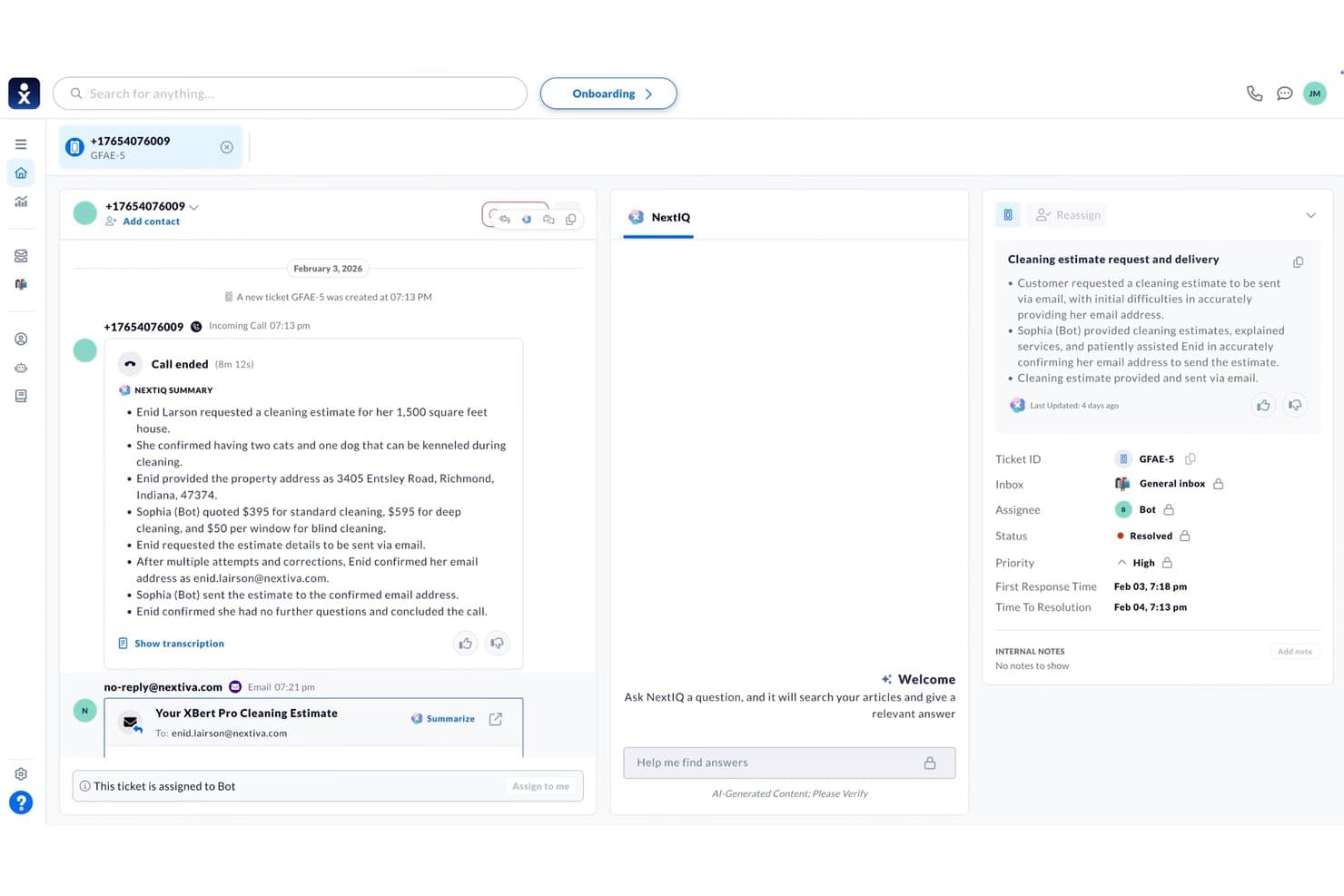
Nextiva displays AI-generated call summaries and ticket details in one view. Nextiva XBert is an AI-powered conversational platform that handles real-time web chat, voice, and SMS engagement, with automated bot building, lead qualification, omnichannel routing, and compliance-ready infrastructure for regulated industries.
Who Is Nextiva Best For?
Nextiva XBert is a strong fit for teams in regulated industries—healthcare, financial services, and similar sectors—that need compliant, 24/7 omnichannel customer engagement across voice, chat, and SMS.
Why I Picked Nextiva
I picked Nextiva XBert as one of the best because it's purpose-built for regulated industries that can't afford compliance gaps in their customer conversations. HIPAA eligibility, SOC 2 Type II, and PCI DSS certification mean a healthcare or financial services team can run 24/7 AI chat without legal exposure. I also like how XBert's "James AI" routes incoming conversations by detected intent in under a second, and how "Dana AI" handles live lead qualification across voice, SMS, and web chat from a single platform.
Nextiva Key Features
- Drag-and-drop bot builder: Build AI chat bots by connecting a knowledge base rather than writing scripts, with reusable functions for tasks like lookups and confirmations.
- Multi-channel inbox: Manage voice, SMS, web chat, email, WhatsApp, Facebook Messenger, Instagram DMs, and more from a single unified inbox.
- CSAT and NPS surveys: Collect post-conversation satisfaction scores automatically after each chat session to track customer experience over time.
- Conversation dashboard: Monitor real-time and historical metrics including chat volume, escalation rates, agent performance, and lead-generation data across channels.
Nextiva Integrations
Nextiva integrates with HubSpot, Salesforce, Zoho, Pipedrive, Microsoft Dynamics, Calendly, and more. XBert-specific connections include Google Calendar, Salesforce, HubSpot, Pipedrive, and Zoho.
Pros and Cons
Pros:
- Intent-based routing speeds qualified handoffs
- 24/7 voice, chat, and SMS coverage
- Compliance-ready omnichannel customer engagement
Cons:
- Built for service, not demand generation
- No lead scoring or revenue attribution
Learn more about Nextiva: Best for CRM-native chat and lead routing
- Free plan available
- From $45/user/month (billed annually)
Visit WebsiteCustomer Rating:4.4/5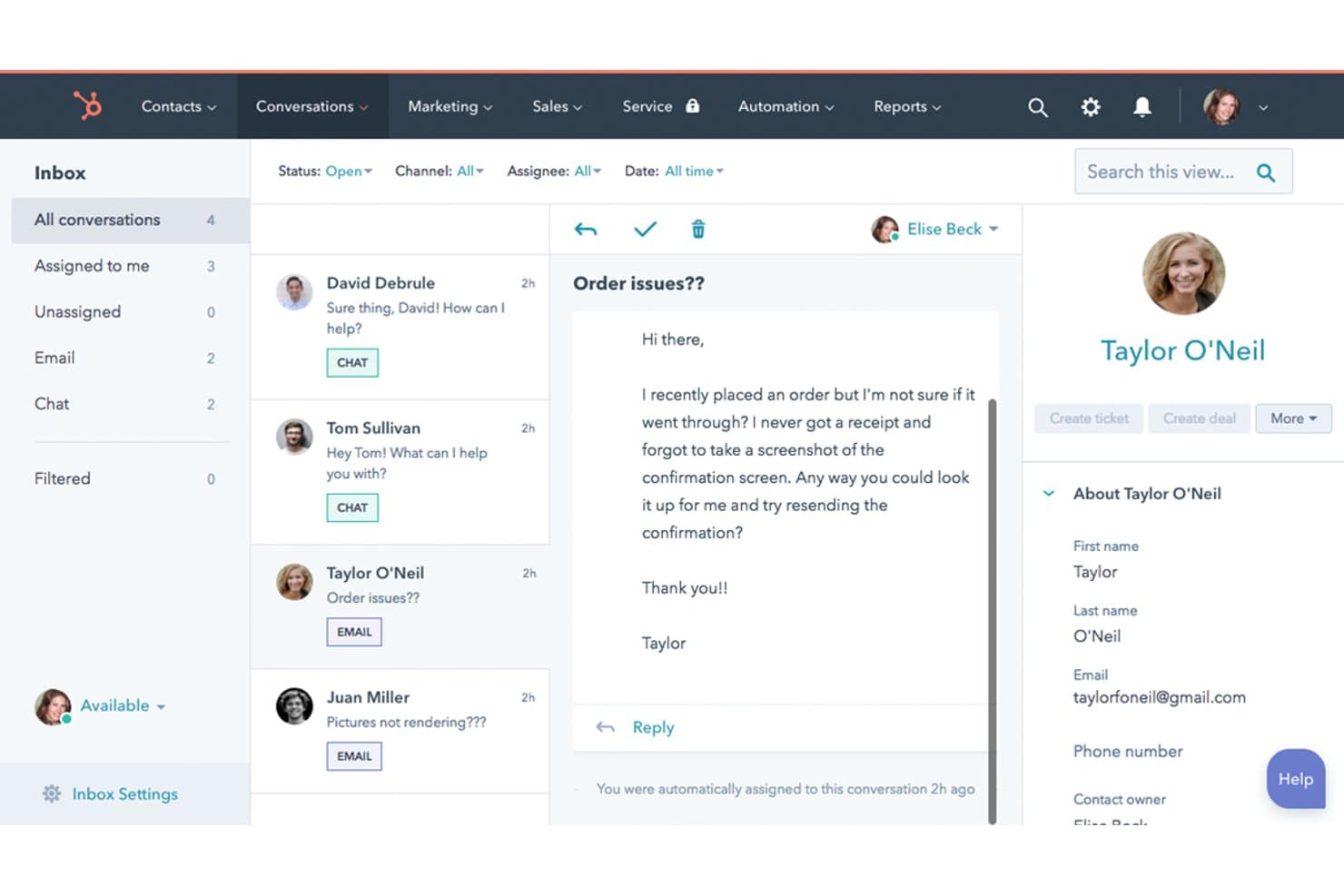
HubSpot centralizes email and chat conversations in a unified inbox. HubSpot is a CRM-native conversational marketing platform that combines live chat, no-code chatbot builder, AI-powered agents, and multi-channel inbox into a single suite alongside its broader marketing, sales, and service tools.
Who Is HubSpot Best For?
HubSpot is a natural fit for marketing and sales teams that already live in a CRM and want chat, bots, and lead routing without stitching together separate tools.
Why I Picked HubSpot
HubSpot earns its spot on my shortlist because chat, bots, and CRM all live in the same system, so there's no syncing data between tools. I particularly like how chatflows can qualify leads and route them to the right rep automatically, with full CRM context already attached to the conversation. The no-code bot builder lets you book meetings directly from a chat, which means a cold website visitor can land on your calendar without a rep ever typing a word.
HubSpot Key Features
- AI-powered prospecting agent: Monitors buying signals and automatically reaches out to accounts when they show purchase intent.
- Multi-channel shared inbox: Consolidates live chat, email, Facebook Messenger, and ticketing into one workspace with full CRM contact history.
- No-code chatflow templates: Pre-built bot templates let you launch lead qualification or support flows without writing any code.
- Meeting booking via chat: Bots connect directly to HubSpot's meeting scheduler so visitors can book time with a rep mid-conversation.
HubSpot Integrations
HubSpot has native integrations across its CRM, Marketing, Sales, Service, and Content Hubs, plus Facebook Messenger and Slack. Its Marketplace provides third-party integrations, while chatflows can connect to external APIs.
Pros and Cons
Pros:
- Routing sends conversations directly to sales representatives
- No-code bots qualify leads and book meetings
- CRM context follows every conversation
Cons:
- Complex support automation trails dedicated platforms
- Chat-specific reporting remains limited
 Best for customer analytics
- Free demo available
- Pricing upon request
Visit WebsiteCustomer Rating:4.5/5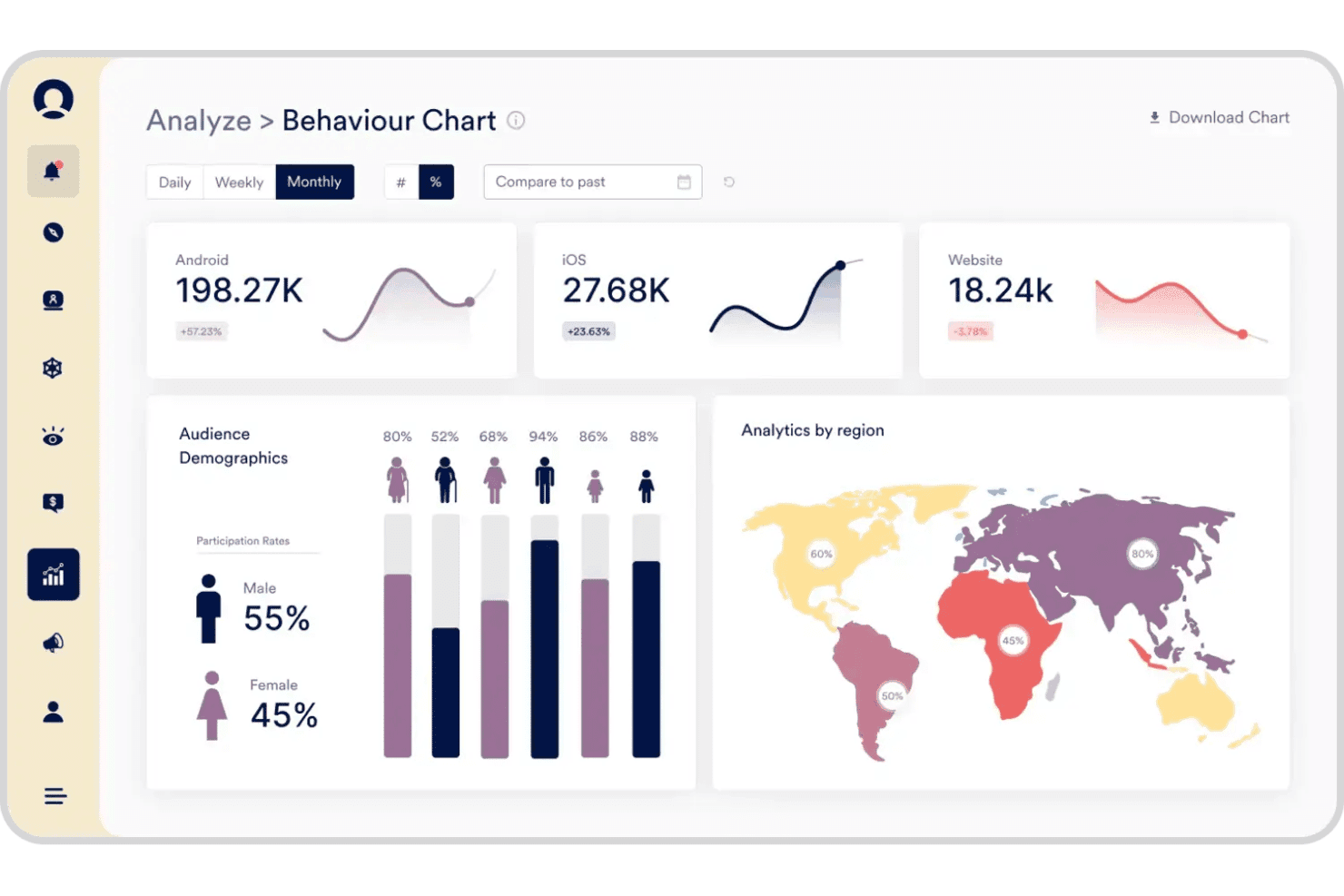
MoEngage provides tools to analyze data, personalize interactions, and boost retention. MoEngage is a customer engagement platform that helps you and your team understand customer behavior and personalize interactions. It provides tools for analyzing data and creating strategies to improve engagement and retention.
Why I picked MoEngage: MoEngage lets you understand your users with detailed analytics so you can shape your marketing strategies. Its segmentation tools allow you to target specific audiences effectively. You can connect with users at the right time with push notifications and in-app messaging. The journey builder enables you to automate customer interactions using real-time data.
Standout features & integrations:
Features include a journey builder that automates interactions based on customer actions. Advanced segmentation tools help you target specific groups with precision. Push notifications and in-app messaging keep your users engaged and informed.
Integrations include Salesforce, Shopify, HubSpot, Segment, Mixpanel, Google Analytics, Slack, Zendesk, Mailchimp, and Marketo.
Pros and Cons
Pros:
- Powerful journey builder
- Effective segmentation capabilities
- Strong customer analytics focus
Cons:
- May face occasional analytics delays
- Requires constant data updates
Learn more about MoEngage:
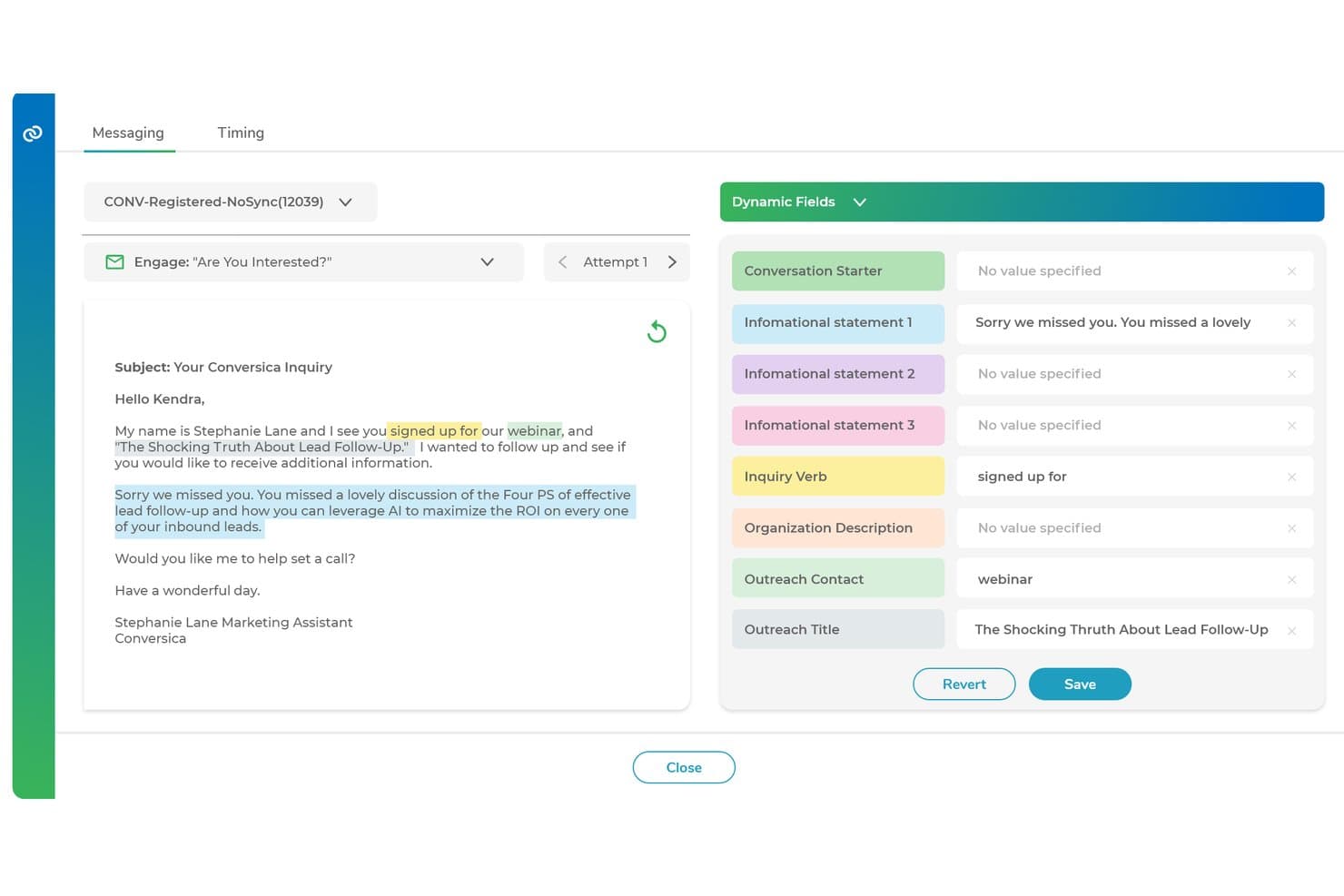
Conversica lets users customize dynamic fields in AI email messaging. Conversica is an AI-driven conversational marketing platform that automates multi-channel lead engagement through email, SMS, chat, and messaging apps, with built-in lead qualification, routing, and ABM outreach capabilities.
Who Is Conversica Best For?
Conversica fits enterprise marketing and demand generation teams that need automated, multi-channel lead follow-up without relying on sales reps to manage every touchpoint.
Why I Picked Conversica
I picked Conversica as one of the best because its AI sales assistant concept goes well beyond a basic chatbot. Its "smart persistence" model runs multi-day, multi-channel follow-up sequences across email, SMS, and messaging apps without a rep ever touching the conversation. I love that it handles account-based outreach by matching enterprise versus SMB inquiries to separate sales motions automatically, routing each lead with full context already captured.
Conversica Key Features
- Multi-channel follow-up sequences: AI agents run persistent outreach across email, SMS, chat, and messaging apps over multiple days without rep involvement.
- ABM account-specific routing: You can define handoff criteria by account, such as budget range or project timeline, so leads go to the right owner with full conversation context.
- Multilingual, 24/7 agent availability: Conversica's AI agents operate around the clock in multiple languages, supporting globally distributed audiences without manual scheduling.
- Customer service conversation handling: Agents manage FAQs, billing inquiries, and subscription changes inside the conversation and can escalate to a human without dropping the thread.
Conversica Integrations
Conversica offers documented native integrations with HubSpot, Marketo, and Eloqua. It supports lead intake through forms, chat, and webhooks, while its API Terms point to API-based custom integrations.
Pros and Cons
Pros:
- Supports account-specific outreach criteria
- Qualifies leads before sales handoff
- Persistent follow-up across multiple channels
Cons:
- AI can misinterpret nuanced replies
- Website chat lacks live collaboration
Learn more about Conversica: Best for reputation management
- Free demo available
- Pricing upon request
Visit WebsiteCustomer Rating:4.8/5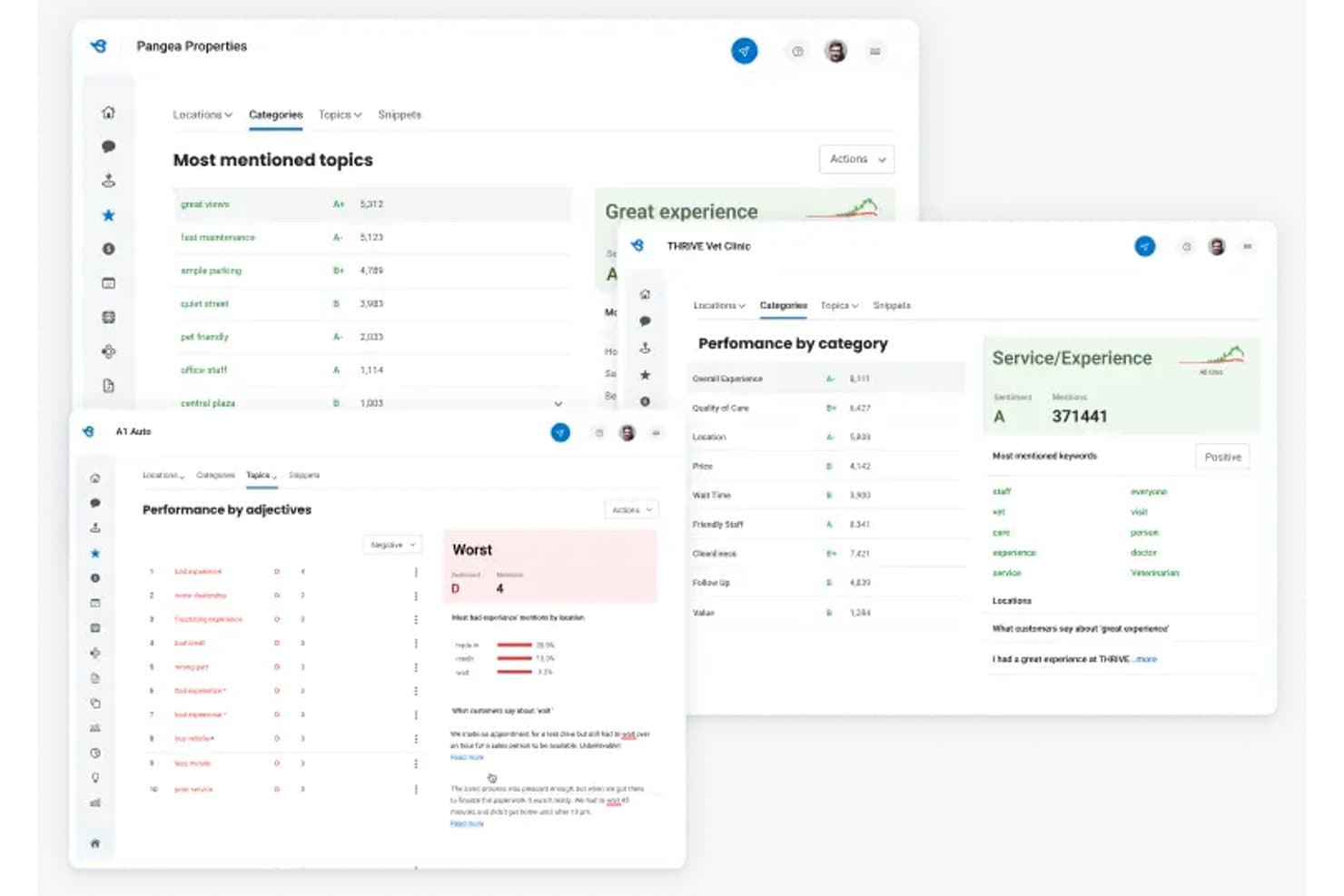
Birdeye offers tools to manage reviews, enhance interactions, and build an online reputation. Birdeye is a reputation management platform that helps businesses improve their online presence and customer interactions. It’s designed for businesses looking to manage customer reviews and strengthen their online reputation.
Why I picked Birdeye: Birdeye allows you to manage your reputation by providing tools to collect and handle customer reviews. It includes automated review requests, making gathering feedback easy for your team. With sentiment analysis, you can understand customer opinions and adjust your strategies. The platform also lets you monitor and respond to reviews, keeping you connected with your customers.
Standout features & integrations:
Features include automated review requests, which simplify gathering customer feedback. Sentiment analysis helps you understand customer opinions and refine your approach. Tools for monitoring and responding to reviews assist your team in maintaining a positive online presence.
Integrations include Salesforce, Google My Business, Facebook, Yelp, QuickBooks, Slack, HubSpot, Mailchimp, Zendesk, and Shopify.
Pros and Cons
Pros:
- Insightful sentiment analysis
- Automated review requests
- Effective reputation management tools
Cons:
- Some learning curve for users
- Requires initial setup effort
Learn more about Birdeye: Best for AI-driven chatbots
- Free trial + Free demo available
- From $19/user/month (billed annually)
Visit WebsiteCustomer Rating:4.6/5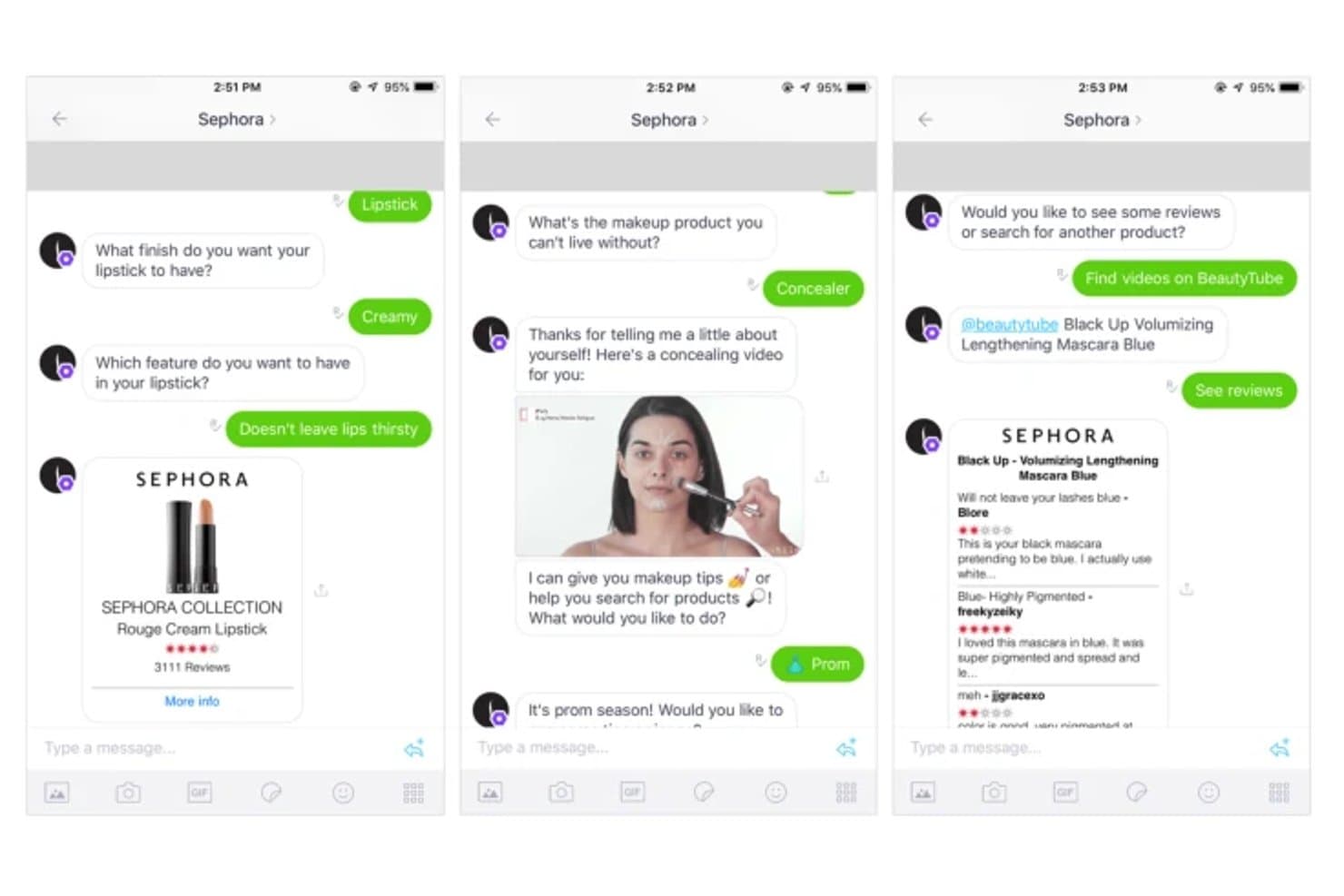
ChatBot offers AI tools to automate interactions, handle inquiries, and provide 24/7 support. ChatBot is an AI-powered platform that helps businesses automate customer interactions. It lets your team handle inquiries efficiently and provides 24/7 support without human involvement.
Why I picked ChatBot: ChatBot focuses on AI-driven chatbots to help you automate customer service. Its drag-and-drop interface makes it easy to create bots without coding so that you can design conversation flows quickly. You can use the platform’s analytics to track your bots' performance and make improvements. Pre-built templates let you launch bots fast, helping your team handle routine questions more efficiently.
Standout features & integrations:
Features include a drag-and-drop interface, making bot creation simple for non-coders. Analytics provide insights into bot performance, helping you optimize interactions. Pre-built templates can get you started quickly, saving your team time and effort.
Integrations include Slack, LiveChat, Facebook Messenger, WordPress, Shopify, Zapier, Mailchimp, HubSpot, Google Calendar, and WooCommerce.
Pros and Cons
Pros:
- Comprehensive analytics available
- Easy drag-and-drop interface
- AI-driven automation for customer service
Cons:
- Occasional AI response inaccuracies
- Limited customization for advanced users
Learn more about ChatBot: Best for customer messaging
- 14-day free trial
- From $29/user/month (billed annually)
Visit WebsiteCustomer Rating:4.4/5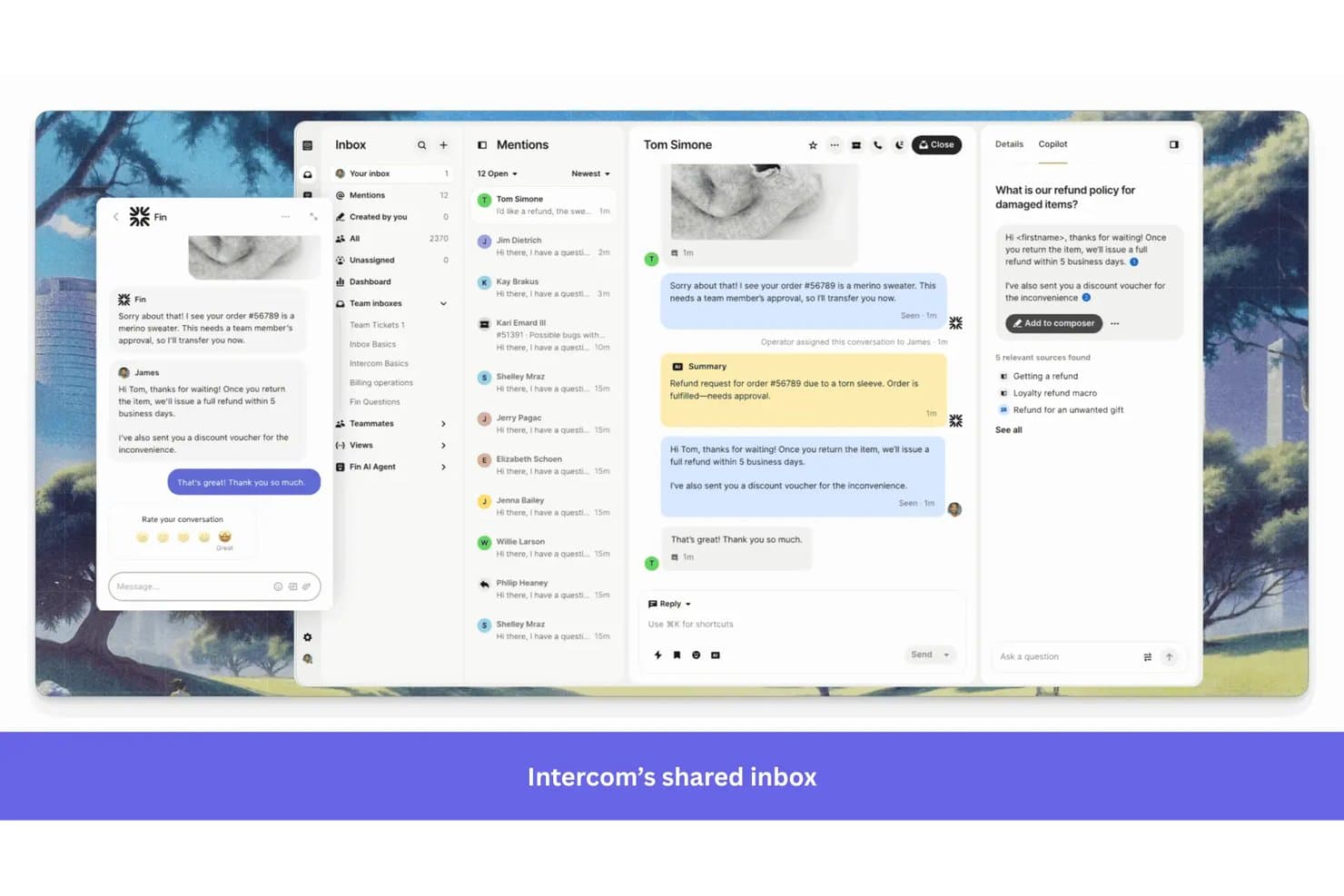
Intercom centralizes customer conversations with AI-assisted responses in a shared inbox. Intercom is a customer messaging platform that combines live chat, AI-powered automation via its Fin AI agent, multi-channel engagement, and support workflows across chat, email, WhatsApp, SMS, and phone.
Who Is Intercom Best For?
Intercom works best for customer experience and support teams that want a mature AI-powered chat layer across multiple channels.
Why I Picked Intercom
I picked Intercom as one of the best because its Fin AI agent sets a genuinely high bar for automated customer messaging. Fin lets you configure tone, brand voice, competitor handling, and escalation rules separately for different user segments, so a free-trial visitor gets a different conversation than an existing paying customer. I also like that this works across chat, email, WhatsApp, SMS, and phone from a single setup.
Intercom Key Features
- Fin Guidance controls: Set specific tone, brand voice, competitor handling, and escalation rules for different user segments directly within Fin's configuration.
- Multi-inbox routing: Advanced and Expert plans support multiple team inboxes with round-robin assignment to distribute conversations across reps.
- Proactive Support Plus add-on: Enables outbound engagement through Posts, Checklists, Product Tours, Surveys, and the Series campaign builder.
- HubSpot lead sync: The native HubSpot app pushes new leads and qualification data collected by Intercom directly into HubSpot.
Intercom Integrations
Intercom offers a native HubSpot integration for syncing leads, conversations, and qualification data, plus marketplace integrations through the Intercom App Store.
Pros and Cons
Pros:
- Multi-channel messaging extends conversational reach
- Unlimited live chat supports visitor engagement
- Fin guidance supports tailored audience conversations
Cons:
- Multi-step guidance struggles with qualification flows
- No native revenue attribution
Learn more about Intercom: Best for no-code AI chat with flat-rate pricing
- 14-day free trial
- From $29/user/month
Visit WebsiteCustomer Rating:4.4/5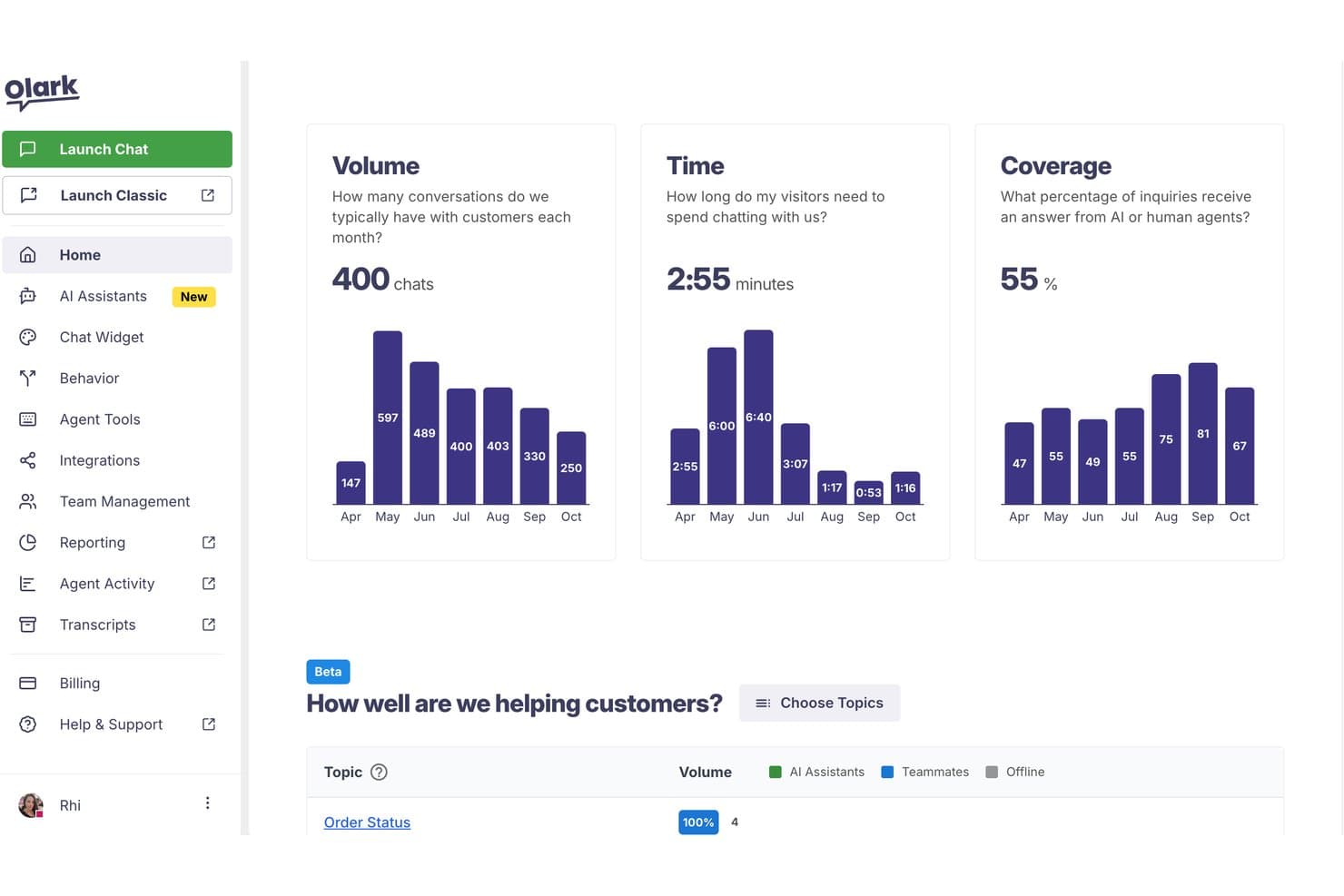
Olark tracks chat volume, response time, and coverage in one dashboard. Olark is a conversational marketing platform that combines AI-powered chat automation, real-time live chat, lead qualification and routing, and proactive visitor engagement triggers.
Who Is Olark Best For?
Olark is a strong fit for small to mid-sized marketing and sales teams that want to launch AI-powered chat quickly, without technical overhead or unpredictable usage costs.
Why I Picked Olark
Olark earns its spot on my shortlist because its AI Website Agent trains on your live site content in about a minute, with zero code required, and charges a flat monthly rate with no token fees or usage limits. I love that qualification criteria are written in plain English, so the agent weighs signals like budget and company size across the full conversation rather than at a single gate. When a lead is ready, it routes directly to a live rep, a calendar booking, or your CRM, with the full transcript attached.
Olark Key Features
- Proactive engagement triggers: Automatically start chats based on page viewed, time on site, scroll depth, return visits, or UTM parameters.
- Draft-test-publish workflow: Build, test, and version AI agent changes before publishing, with A/B testing across different agent configurations.
- Live qualification trace: Replay each visitor's full conversation journey to see exactly how qualification criteria were evaluated.
- Zapier and API access: Connect Olark to 2,000+ apps via Zapier, or build custom workflows using webhooks and a native API.
Olark Integrations
Olark offers native integrations with Salesforce, HubSpot, Zendesk, Calendly, Shopify, WordPress, and Webflow. It also supports webhooks, an API, an MCP server, and Zapier.
Pros and Cons
Pros:
- Human handoff preserves full chat context
- Plain-English qualification weighs entire conversations
- No-code AI trains on site content
Cons:
- No predictive scoring or ABM intelligence
- Multi-channel orchestration remains limited
Learn more about Olark: Best for a personalized digital experience
- Free demo available
- Pricing upon request
Visit WebsiteCustomer Rating:3.9/5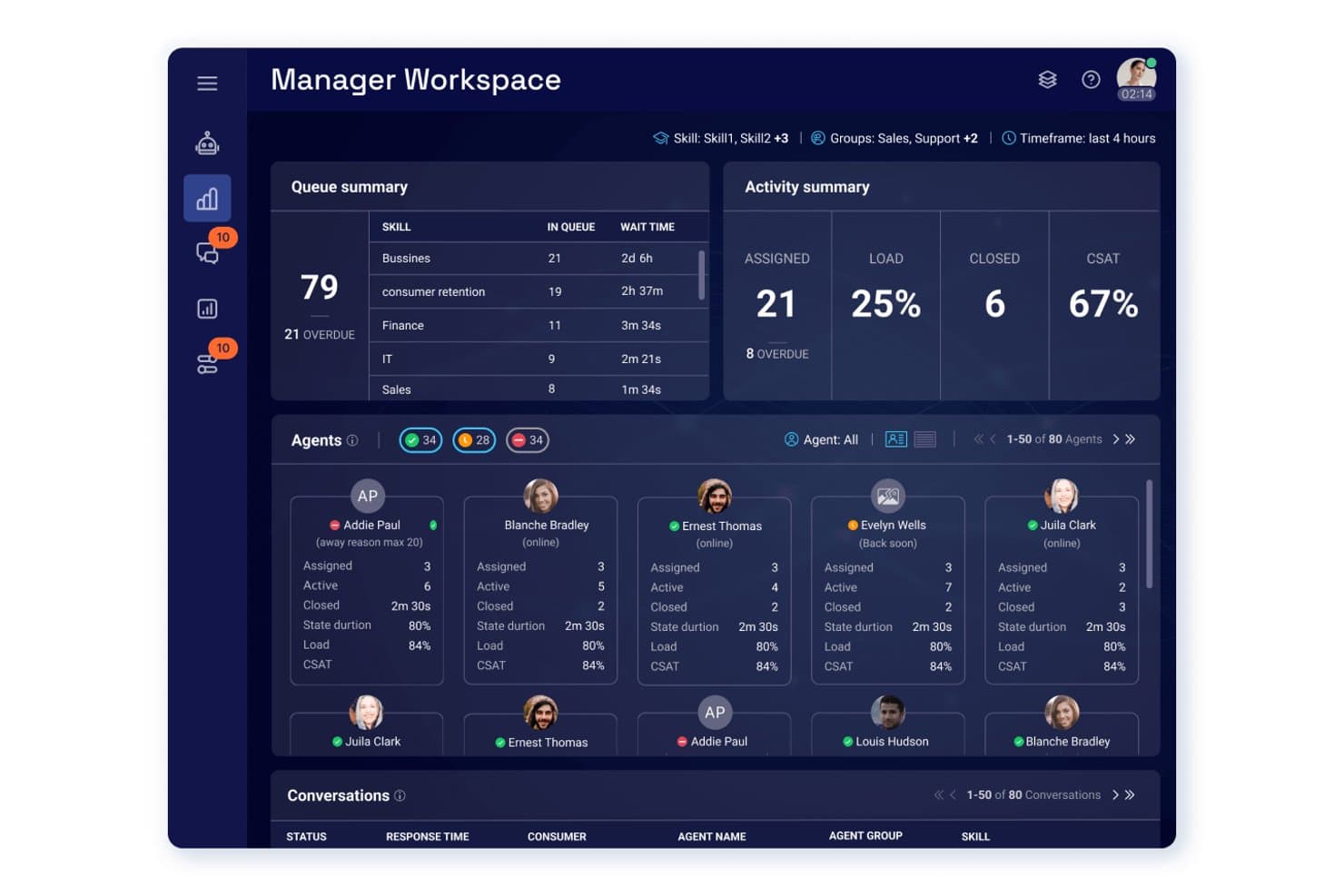
LivePerson lets managers monitor agent activity and queue metrics in real time. LivePerson is a conversational AI platform that combines real-time web and in-app messaging, no-code bot building, intent detection, and 14+ channel support—including WhatsApp, SMS, and Apple Messages for Business—into a single agent workspace.
Who Is LivePerson Best For?
LivePerson is a strong fit for enterprise customer experience teams that need AI-driven, omnichannel messaging at scale across 14+ channels.
Why I Picked LivePerson
LivePerson earns its spot as one of the best on my shortlist because its Conversation Builder lets you create sophisticated, no-code bot flows across 14+ channels, from WhatsApp to Apple Messages for Business, without writing a single line of code. I love that its Syntrix simulation tool stress-tests AI agents against thousands of real conversation scenarios before going live, which cuts launch risk significantly. Its Hallucination Detection then keeps generative AI responses grounded in your actual knowledge base during live interactions.
LivePerson Key Features
- Conversation Builder: A no-code bot builder that lets you create and deploy automated conversation flows across all 14+ supported messaging channels.
- KnowledgeAI: A centralized knowledge source that bots and human agents both draw from, with the option to connect an external CMS.
- Campaign Builder: A targeting tool that lets you configure proactive web and in-app engagement triggers based on visitor behavior and context.
- Connect to Messaging: A deflection feature that moves inbound phone callers from your IVR system into a messaging conversation with an agent or bot.
LivePerson Integrations
LivePerson offers a Salesforce connector, Medallia connectivity, and an Integration Hub powered by Workato. It also supports IBM Watson, Google Dialogflow, Amazon Lex, Microsoft bots, and custom integrations through 50+ APIs.
Pros and Cons
Pros:
- Personalizes proactive visitor conversations
- Tests AI agents before launch
- Supports 14+ engagement channels
Cons:
- No native lead scoring or pipeline attribution
- Built more for service than demand generation
Learn more about LivePerson: Best for Salesforce-native pipeline chat
- Free demo available
- Pricing upon request
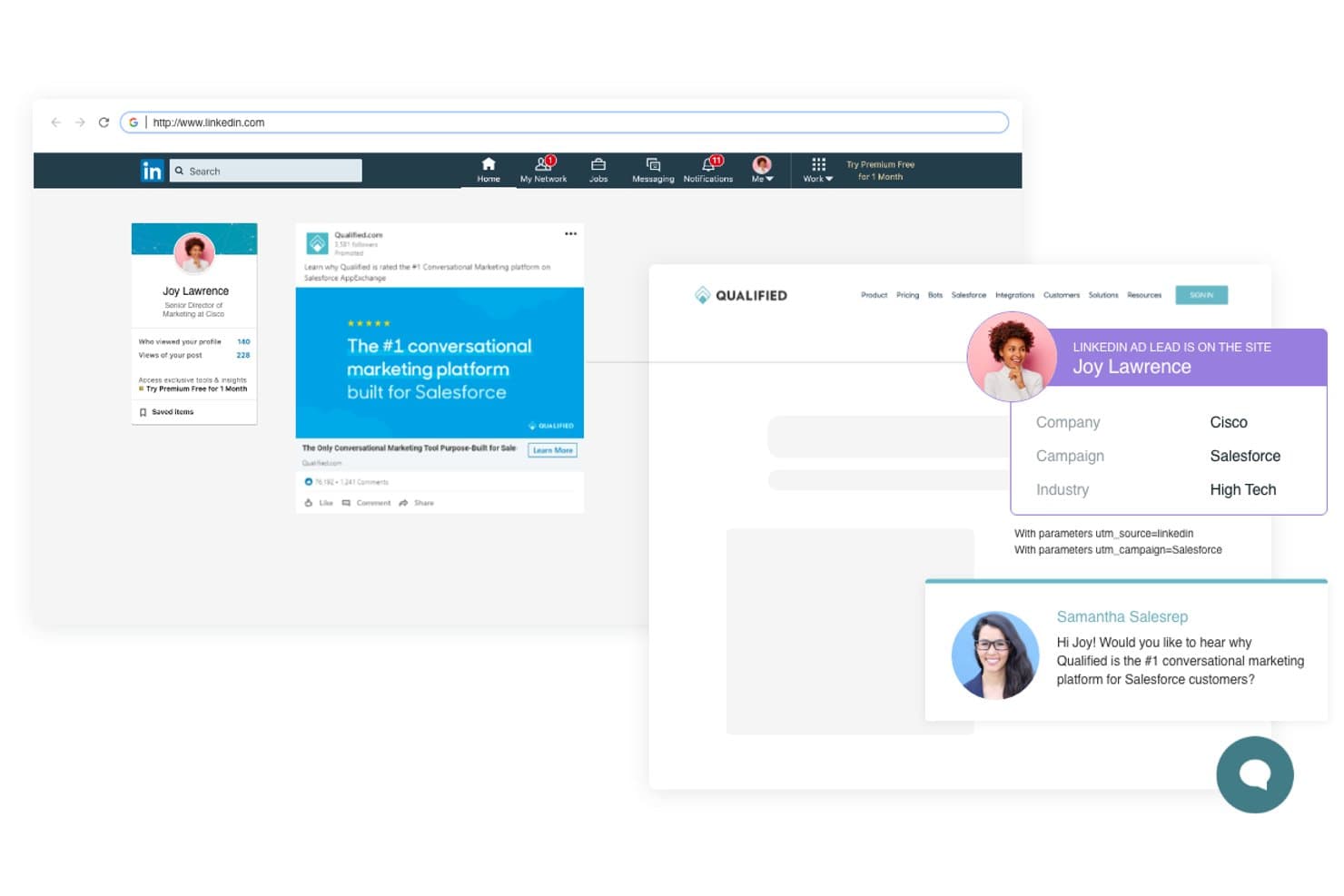
Qualified identifies LinkedIn ad leads and engages them instantly on-site. Qualified is an agentic marketing platform built around an AI SDR agent that handles real-time website chat, email engagement, lead qualification, meeting booking, and routing—all natively on the Salesforce platform.
Who Is Qualified Best For?
Qualified is a strong fit for demand generation and sales teams at mid-market to enterprise companies already running on Salesforce.
Why I Picked Qualified
Qualified earns its spot on my shortlist because it's the only conversational marketing platform I've seen that runs natively on the Salesforce platform, meaning your chat, qualification, and routing logic all pull directly from your existing Salesforce data. I love how Piper, the AI SDR agent, uses Visitor 360 to surface real-time account context mid-conversation, so it's not guessing who a visitor is. Agent Spotlight shows exactly how Piper reasons through each interaction, which gives me confidence in how it's qualifying and routing leads.
Qualified Key Features
- Piper Offers: Surfaces personalized marketing content to each website visitor based on their account data and behavior.
- Agentic Nurture: Automatically engages top-of-funnel leads over time to move them closer to a sales conversation.
- Multi-modal conversations: Lets Piper engage website visitors via text, voice, or video within the same conversation.
- Waterfall enrichment: Pulls contact and account data from multiple sources in sequence to fill gaps in your Salesforce records.
Qualified Integrations
Qualified runs natively on Salesforce and connects with Slack, Gong, and Salesforce Marketing Cloud Account Engagement (MCAE), among 20+ GTM systems. Enterprise and above plans include MCP and API access for custom integrations.
Pros and Cons
Pros:
- Multi-modal conversations support text, voice, video
- Agent Spotlight exposes decision reasoning
- AI SDR handles qualification and meetings
Cons:
- Reporting sometimes requires external exports
- Limited coverage beyond web and email
Learn more about Qualified:
Outras plataformas de marketing conversacional
Eis algumas opções adicionais de plataformas de marketing conversacional que não entraram na minha seleção, mas que vale a pena conhecer.
- 11TidioBest for small businesses
- 12LiveChatBest for multi-channel live chat and visitor tracking
- 13Zoho SalesIQBest for Zoho ecosystem chat and lead scoring
- 14FreshchatBest for team collaboration
- 15PodiumBest for local business SMS-driven chat
- 16ActiveCampaignBest for marketing automation
- 17Zoho Marketing PlusBest for integrated marketing tools
- 18LandBotBest for no-code WhatsApp and web chat automation
- 19AdaBest for AI-driven enterprise support at scale
How I Evaluate Conversational Marketing Platforms
I evaluate these platforms across two layers: the baseline capabilities a tool must offer—real-time chat, bot-driven lead qualification, and meeting booking—and the differentiators that separate strong contenders.
Core Functionality (Table Stakes For This List)
When I'm selecting tools for my list, I rank each one on a scale from 0 (does not offer the functionality) to 5 (excels in this area) for each core functionality listed below. Then, I calculate the tool's total score into a percentage. Each tool needs to achieve a minimum total score of 65% to be considered for inclusion.
- Live Chat & Chatbots: I evaluate whether the platform supports both automated bot flows and live human handoff, such as a bot greeting a returning visitor and escalating to a rep mid-conversation.
- Lead Qualification Logic: Each tool should let you build branching conversation flows that qualify visitors using criteria like company size, role, or budget before passing them to sales.
- Meeting Scheduling: I check for native calendar booking within the chat experience, including round-robin assignment across reps so qualified buyers can book time without leaving the page.
- Visitor Identification & Targeting: The platform should recognize who's on your site and serve targeted playbooks, like triggering an ABM-specific greeting when a contact from a target account lands on pricing.
- CRM & MarTech Integrations: I look at how deeply the tool syncs with platforms like Salesforce, HubSpot, and Marketo, especially bidirectional data flow that keeps conversation context attached to contact records.
- Conversation Analytics & Routing: Reporting should tie conversations to pipeline outcomes, and routing logic should assign chats based on territory, deal stage, or rep availability rather than simple round-robin alone.
Once I have a list of tools that meet this criteria, I consider what sets each platform apart.
Differentiating Factors (What Sets Vendors Apart)
Here's how I compare and contrast different vendors:
Standout Features
Generative AI agents are a big differentiator. I look for bots that pull from a knowledge base to answer nuanced product questions rather than just following scripted paths. Multi-channel reach matters too, especially when buyers start conversations on your site but continue over WhatsApp or SMS. I also evaluate whether a platform offers A/B testing on playbooks and bot copy, since small changes to a greeting or qualification question can shift conversion rates significantly.
Beyond Features
Revenue attribution is where I spend real evaluation time. If a platform can't show you which conversations sourced or influenced pipeline, it's hard to justify the investment to leadership. Integration depth with your revenue stack also weighs heavily—I check whether conversation data flows into CRM opportunity records and attribution tools so marketing gets credit for influenced deals. Finally, I consider compliance posture, especially cookie consent controls and data residency options, since chat widgets collect visitor data the moment they load.
Como escolher uma plataforma de marketing conversacional
É fácil perder-se em listas extensas de funcionalidades e estruturas de preços complexas. Eis uma lista de verificação dos fatores a ter em conta para se manter focado enquanto percorre o seu processo específico de seleção de software.
| Fator | O que considerar |
| Escalabilidade | Certifique-se de que a plataforma acompanha o crescimento da sua empresa. Verifique os limites de utilizadores e o tratamento de dados. |
| Integrações | Procure compatibilidade com as ferramentas que já utiliza, como CRM ou software de marketing por email. |
| Personalização | Determine se pode adaptar a plataforma à voz da sua marca e às necessidades do seu fluxo de trabalho. |
| Facilidade de utilização | Escolha uma interface intuitiva para que a sua equipa possa começar a trabalhar rapidamente. |
| Orçamento | Avalie o custo em função do seu orçamento e considere o valor a longo prazo e o potencial retorno do investimento. |
| Medidas de segurança | Verifique a encriptação dos dados e a conformidade com os regulamentos para proteger as informações dos clientes. |
| Opções de suporte | Considere o apoio ao cliente disponível, como chat em direto ou gestores de conta dedicados. |
| Análise de dados | Procure funcionalidades de relatórios sólidas para acompanhar o envolvimento e as métricas de desempenho. |
Tendências nas plataformas de marketing conversacional
Durante a minha pesquisa, consultei inúmeras atualizações de produtos, comunicados de imprensa e registos de lançamentos de diferentes fornecedores de plataformas de marketing conversacional. Eis algumas das tendências emergentes que estou a acompanhar.
- Capacidades de interação por voz: Mais plataformas estão a integrar o reconhecimento de voz para permitir que os utilizadores interajam através de comandos de voz. Esta tendência está a crescer à medida que as empresas procuram oferecer experiências de apoio ao cliente sem utilização das mãos. Alguns fornecedores estão a explorar a integração com colunas inteligentes e assistentes de voz.
- Deteção de emoções: As plataformas analisam o sentimento dos clientes durante as interações para fornecer respostas mais empáticas. Esta funcionalidade ajuda as empresas a adaptar as suas estratégias de comunicação às emoções dos clientes, melhorando o envolvimento.
- Hiperpersonalização: Os fornecedores concentram-se em proporcionar experiências personalizadas através da utilização de análise de dados para compreender as preferências dos utilizadores. Esta tendência permite às empresas apresentar conteúdos e recomendações de produtos adaptados a cada cliente, aumentando a satisfação e a fidelização.
- Comércio conversacional: Existe um foco crescente em facilitar as compras diretamente através de plataformas de conversação. Esta tendência permite aos clientes concluir transações na interface de conversação, proporcionando uma experiência de compra fluida e reduzindo a necessidade de vários pontos de contacto.
- Reforço da privacidade dos dados: Com o aumento das preocupações relacionadas com a segurança dos dados, as plataformas estão a reforçar as funcionalidades de privacidade para cumprir os regulamentos. As empresas dão prioridade a ferramentas de tratamento seguro dos dados e a políticas de privacidade transparentes para criar confiança nos clientes.
O que é uma plataforma de marketing conversacional?
Uma plataforma de marketing conversacional é uma ferramenta de software que permite a comunicação em tempo real entre empresas e clientes, normalmente através de robôs de conversação ou interfaces de conversação em direto. Estas ferramentas ajudam as equipas de marketing e de apoio ao cliente a interagir com os clientes e a melhorar a sua experiência.
Funcionalidades como o envio automatizado de mensagens, a personalização e a análise de sentimentos facilitam a ligação às necessidades dos clientes e a sua compreensão. Em última análise, estas plataformas ajudam as empresas a comunicar de forma mais eficiente e a criar relações sólidas com o seu público.
Funcionalidades das plataformas de marketing conversacional
Ao selecionar uma plataforma de marketing conversacional, procure as seguintes funcionalidades principais.
- Chat em direto: Permite a comunicação em tempo real com os clientes, melhorando o envolvimento e o suporte.
- Automatização por chatbot: Automatiza as respostas a perguntas frequentes, poupando tempo e melhorando a eficiência.
- Suporte multicanal: Permite a interação através de várias plataformas, como a Web, as redes sociais e as aplicações de mensagens.
- Personalização: Oferece uma comunicação adaptada com base nas preferências dos utilizadores, aumentando a relevância e a ligação.
- Análise de sentimentos: Deteta as emoções dos clientes durante as interações, permitindo respostas mais empáticas.
- Análises e relatórios: Fornece informações sobre o comportamento dos utilizadores e o desempenho das conversas para otimizar as estratégias.
- Interação por voz: Permite que os utilizadores utilizem comandos de voz, dando resposta às necessidades de suporte ao cliente sem utilizar as mãos.
- Funcionalidades de privacidade dos dados: Garante um tratamento seguro dos dados e a conformidade com os regulamentos, criando confiança nos clientes.
- Integração das capacidades: Liga-se às ferramentas e aos sistemas existentes para criar um fluxo de trabalho unificado.
- Comércio conversacional: Facilita as transações na interface de conversação, simplificando o processo de compra.
- IA conversacional: Utiliza a compreensão da linguagem natural e chatbots com tecnologia de IA para permitir interações semelhantes às humanas e promover o envolvimento dos clientes.
- Integração com o Drift: Oferece compatibilidade com o Drift, uma ferramenta líder de marketing conversacional, para melhorar as interações com os clientes e promover conversões.
- Acompanhamento automatizado: Garante acompanhamentos atempados e personalizados, ajudando a desenvolver potenciais clientes e a aumentar a conversão de potenciais clientes.
- Identificação de potenciais clientes qualificados: Identifica e dá prioridade a potenciais clientes de elevada qualidade, simplificando os esforços de marketing e otimizando o funil de vendas.
- Suporte da equipa de vendas: Melhora a colaboração entre os representantes de vendas e as equipas de marketing para melhorar as interações com os clientes e apoiar o processo de vendas.
- Acompanhamento da jornada do cliente: Mapeia e acompanha as jornadas dos clientes para proporcionar uma melhor compreensão do comportamento dos clientes e dos pontos de contacto do envolvimento.
- Integração com páginas de destino: Liga as ferramentas conversacionais às páginas de destino, melhorando as taxas de conversão e captando potenciais clientes.
- Otimização dos esforços de marketing: Utiliza informações das conversas para aperfeiçoar as campanhas de marketing e promover um contacto mais direcionado.
- Envolvimento dos potenciais clientes: Aumenta o envolvimento com potenciais clientes, ajudando a convertê-los em potenciais clientes qualificados.
- Conversas em tempo real: Facilita a comunicação instantânea com os clientes, oferecendo suporte imediato e experiências personalizadas.
- Alinhamento do processo de vendas: Garante uma transição simples do marketing para as vendas, apoiando os representantes de vendas e promovendo conversões mais rápidas.
- Chatbots com tecnologia de IA: Os chatbots baseados em IA automatizam as respostas, reduzindo a necessidade de intervenção humana e apoiando simultaneamente os potenciais clientes.
Vantagens de uma plataforma de marketing conversacional
A implementação de uma plataforma de marketing conversacional proporciona várias vantagens para a sua equipa e para a sua empresa. Eis algumas das vantagens que pode esperar.
- Maior envolvimento dos clientes: O chat em tempo real e as interações personalizadas ajudam a manter o interesse e a ligação dos clientes.
- Maior eficiência: A automatização dos chatbots trata das perguntas de rotina, permitindo que a sua equipa se concentre em tarefas mais complexas.
- Mais oportunidades de vendas: As funcionalidades de comércio conversacional permitem que os clientes concluam compras diretamente no chat, aumentando as vendas.
- Informações valiosas: As análises e os relatórios proporcionam uma melhor compreensão do comportamento dos clientes, orientando as suas estratégias de marketing.
- Maior satisfação dos clientes: A análise de sentimentos garante que a sua equipa pode responder com empatia, resultando em clientes mais satisfeitos.
- Maior alcance: O suporte multicanal permite-lhe interagir com os clientes nas plataformas que preferem, aumentando o seu público.
- Maior confiança dos clientes: As funcionalidades de privacidade dos dados garantem interações seguras, criando confiança na sua marca.
Custos e preços das plataformas de marketing conversacional
A seleção de uma plataforma de marketing conversacional exige a compreensão dos vários modelos e planos de preços. Os custos variam consoante as funcionalidades, o tamanho da equipa, os complementos, entre outros fatores. A tabela abaixo resume os planos padrão, os respetivos preços médios e as funcionalidades normalmente incluídas nas soluções de plataformas de marketing conversacional:
Tabela de comparação de planos para plataformas de marketing conversacional
| Tipo de plano | Preço médio | Funcionalidades comuns |
| Plano gratuito | $0 | Funcionalidades básicas de chat, suporte limitado aos utilizadores e análises básicas |
| Plano pessoal | $10-$30/utilizador/mês | Funcionalidades de chat avançadas, opções de personalização e integrações básicas |
| Plano profissional | $50-$100/utilizador/mês | Automatização avançada, suporte multicanal e análises detalhadas |
| Plano empresarial | $150-$300/utilizador/mês | Soluções personalizadas, suporte dedicado, funcionalidades de segurança avançadas e acesso total à API |
Uma análise dos tipos de planos, custos e funcionalidades das plataformas de marketing conversacional.
Perguntas frequentes sobre plataformas de marketing conversacional
Aqui encontrará algumas respostas a perguntas comuns sobre plataformas de marketing conversacional.
Que ferramenta permite interagir com clientes através de plataformas de marketing conversacional?
Ferramentas como os chatbots são essenciais para interagir no marketing conversacional. Fornecem respostas e atualizações instantâneas, melhorando a interação com os clientes. Estas ferramentas ajudam as marcas a oferecer conteúdos personalizados e informações sobre eventos, tornando a experiência mais envolvente para os utilizadores. A implementação de chatbots pode melhorar a satisfação dos clientes e simplificar a comunicação.
Porque utilizaria uma empresa plataformas de marketing conversacional?
As empresas utilizam o marketing conversacional para aumentar o envolvimento dos clientes e melhorar os esforços de atração. Ao oferecer interações individuais, as empresas podem recolher dados atempados sobre as preferências dos clientes. Esta abordagem melhora a experiência do utilizador ao responder às necessidades dos clientes de forma mais eficaz, aumentando a satisfação e a fidelidade.
As plataformas de marketing conversacional representam a próxima grande oportunidade no marketing digital?
Sim, as plataformas conversacionais são consideradas uma oportunidade significativa no marketing digital. Nos próximos anos, é provável que estas plataformas se expandam para além do serviço de apoio ao cliente. Facilitarão a tomada de decisões informadas e criarão experiências imersivas de marca, proporcionando às empresas novas formas de interagir com os clientes.
Qual é o principal objetivo das plataformas de marketing conversacional?
O principal objetivo do marketing conversacional é criar ligações mais profundas com os clientes. Procura criar oportunidades de interação e conversão através da disponibilização de respostas úteis e instantâneas. Quer seja para ajudar com dúvidas sobre produtos ou para concluir uma compra, esta abordagem aumenta a satisfação e a fidelidade dos clientes.
Como melhoram as plataformas de marketing conversacional a tomada de decisões dos clientes?
As plataformas de marketing conversacional oferecem acesso instantâneo a informações, ajudando os clientes a tomar decisões informadas. Fornecem recomendações e apoio personalizados, orientando os utilizadores ao longo do processo de compra. Ao melhorar o processo de tomada de decisões, estas plataformas podem melhorar a experiência geral do cliente e aumentar as vendas.
Como medem as empresas o sucesso das estratégias de plataformas de marketing conversacional?
As empresas medem o sucesso através de métricas como as taxas de interação dos clientes e as taxas de conversão. A análise do feedback dos clientes e dos índices de satisfação também ajuda a avaliar a eficácia das estratégias de marketing conversacional. Estas informações permitem às empresas aperfeiçoar as suas abordagens e responder melhor às necessidades dos clientes.