

Acompanhar a presença online da sua marca pode ser um desafio quando as menções estão dispersas pelas redes sociais, sites de notícias, avaliações, fóruns e outros canais digitais. As ferramentas de monitorização de marcas ajudam a acompanhar estas conversas, analisar o sentimento, identificar problemas emergentes e compreender a perceção que as pessoas têm da sua marca.
Analisei as principais ferramentas de monitorização de marcas para comparar a cobertura de monitorização, as análises, os alertas e outras capacidades. Este guia vai ajudá-lo a encontrar a opção certa para as necessidades de monitorização da sua marca.
Why Trust Our Software Recommendations
6,700+
Reviews
20
Industry experts
16+
Evaluation factors
14
Years
Our team has been testing and reviewing software since 2012. As marketing leaders ourselves, we know how difficult—and important—it is to choose the right software.
For this guide, we evaluated tools using hands-on testing and independent research, scoring tools using our selection criteria.
Our reviews reflect our human editorial judgment, not a sales pitch.
Expert reviewers:
 Gui DrusinaCreative Director
- Shriya GhateSenior Marketing Lead
 Amanda JacquesMarketing Ops Leader

Tabela comparativa das ferramentas de monitorização de marcas
Esta tabela comparativa resume os detalhes de preços das minhas principais escolhas de ferramentas de monitorização de marcas:
| Tool | Best For | Trial Info | Price | ||
|---|---|---|---|---|---|
| 1 | Best for multilingual sentiment analysis | Free trial available | From $199/month (billed annually) | Website | |
| 2 | Best for counterfeit removal | Not available | Pricing upon request | Website | |
| 3 | Best for pay-only-on-results reputation repair | Not available | From $2,500/month | Website | |
| 4 | Best for AI-driven emotion and anomaly detection | Free demo + 14-day free trial available | From $49/month (billed annually) | Website | |
| 5 | Best for AI-driven spike alerts and PR crisis response | 5-day free trial | From €99/month | Website | |
| 6 | Best for web-wide mention coverage at scale | 7-day free trial available | From $99/month | Website | |
| 7 | Best for enterprise-scale social listening | Not available | Pricing upon request | Website | |
| 8 | Best for all-in-one social listening and scheduling | 14-day free trial + free demo available | From $99/user/month | Website | |
| 9 | Best for AI-driven media and brand intelligence | Free demo available | From $10,000/year (billed annually) | Website | |
| 10 | Best for social listening at enterprise scale | 30-day free trial | From $249/month | Website |


Análises das melhores ferramentas de monitorização de marcas
Apresentamos abaixo as minhas análises detalhadas das melhores ferramentas de monitorização de marcas que entraram na minha lista restrita. Avaliei as suas capacidades de monitorização, principais funcionalidades, casos de utilização, vantagens e desvantagens para o ajudar a encontrar a opção certa para as suas necessidades.
 Best for multilingual sentiment analysis
- Free trial available
- From $199/month (billed annually)
Visit WebsiteCustomer Rating:4.7/5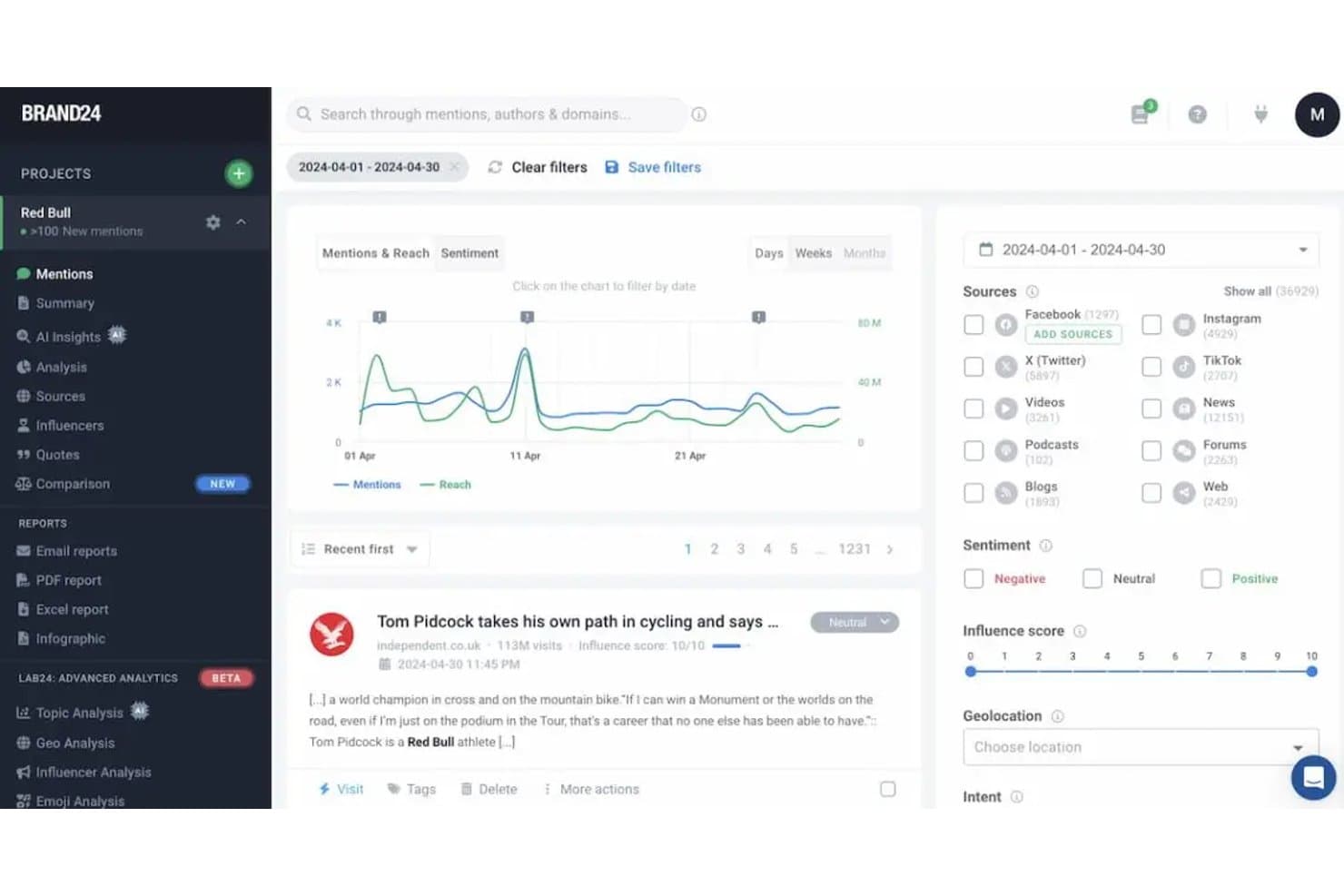
Brand24 offers a brand monitoring dashboard displaying mentions, reach trends, sentiment analysis, and source filtering across platforms like Facebook, Instagram, and TikTok. Brand24 is an AI-powered brand monitoring platform that tracks mentions across social media, news, blogs, forums, podcasts, and review sites, with built-in sentiment analysis, influencer identification, and real-time alerting.
Who Is Brand24 Best For?
Brand24 is a strong fit for marketing teams and agencies managing brand presence across multiple regions or languages.
Why I Picked Brand24
Brand24 earns its spot as one of the best on my shortlist because of how it handles multilingual sentiment at scale. It analyzes sentiment across 108 languages, and I like that you can filter results by country, region, or language to isolate exactly where sentiment is shifting. The AI Brand Assistant layers on top of that data, so I can ask direct questions about sentiment trends in specific markets without digging through raw mention feeds.
Brand24 Key Features
- Real-time mention tracking: Get instant updates from social media, news, blogs, podcasts, and forums.
- Influencer analysis: Identify top profiles and domains mentioning your brand to spot potential partners.
- Storm alerts: Receive notifications when your brand gets unusually high attention for rapid response.
- Custom shareable reports: Export project data into white-labeled PDFs or PowerPoint files for easy sharing.
Brand24 Integrations
Brand24 offers native integrations with Slack and Microsoft Teams, and provides an API for custom integrations.
Pros and Cons
Pros:
- Monitors brand mentions in ChatGPT, Gemini, and Perplexity
- Sentiment analysis spans 108 languages natively
- Tracks mentions across 25 million online sources
Cons:
- Sentiment detection can misread sarcastic mentions
- Keyword limits feel restrictive on lower-tier plans
Learn more about Brand24:

The platform regularly works towards identifying new listings and confirming whether there are any counterfeit infringements. Red Points is an AI-powered brand protection platform that scans marketplaces, social media, domains, and ad networks to detect and remove counterfeit listings, impersonation accounts, and unauthorized use of your brand's IP.
Who Is Red Points Best For?
Red Points is a strong fit for brand protection and legal teams at mid-to-large consumer brands that deal with counterfeit products, fake seller listings, or impersonation accounts at scale.
Why I Picked Red Points
I picked Red Points as one of the best because no other tool on this list matches its ability to find and remove counterfeit listings at scale. I love how its AI clusters repeat infringers into fraud networks, enabling bulk takedowns across 5,000+ platforms rather than one-off removals. Its image recognition catches violations even when your brand name isn't in the listing text, which is where most manual enforcement falls short.
Red Points Key Features
- Domain discovery tool: Monitors 1.4 billion domains and tracks 250,000 new domains daily to detect typosquatting and fake websites impersonating your brand.
- Actor network clustering: AI groups repeat infringers into connected fraud networks, enabling bulk takedown submissions across linked seller accounts and profiles.
- Image recognition scanning: Computer vision identifies unauthorized use of your brand's logos and product images even when your brand name doesn't appear in listing text.
- Deepfake detection: Scans social platforms for AI-generated deepfakes that use your brand or executives in fraudulent or misleading content.
Red Points Integrations
Red Points has documented direct integrations with Meta, Google Search, Google Shopping, Bing, and Amazon Brand Registry. It also works with 70+ platform contacts for enforcement, while native integrations with marketing tools aren’t clearly documented.
Pros and Cons
Pros:
- Detects image-only IP infringements
- Finds fake websites impersonating your brand
- Removes counterfeit listings at large scale
Cons:
- No sentiment analysis or competitor monitoring
- Doesn’t track news or blog mentions
Learn more about Red Points: Best for pay-only-on-results reputation repair
- Not available
- From $2,500/month
Visit WebsiteCustomer Rating:5/5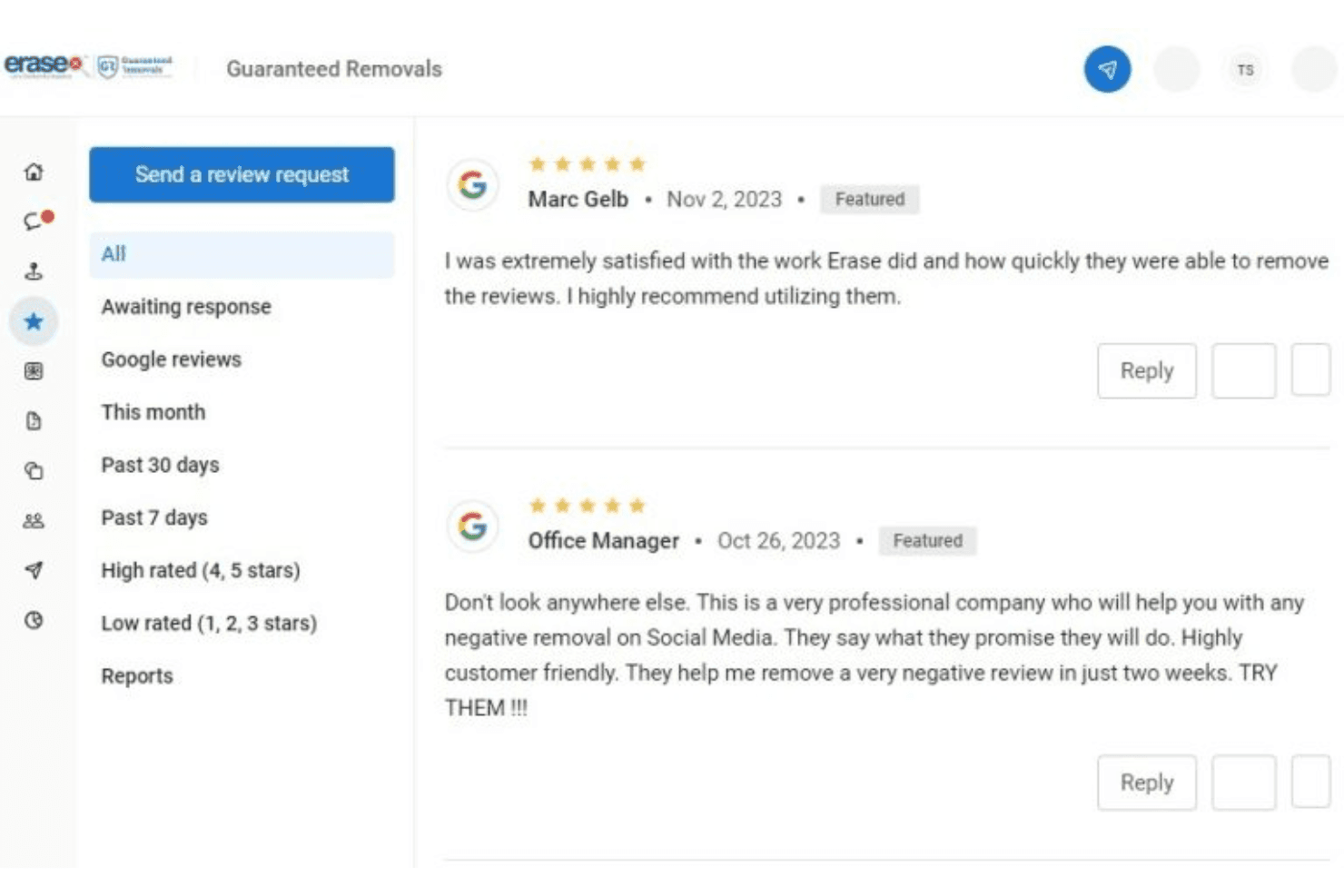
Erase.com displays a review management dashboard featuring featured 5-star Google reviews from satisfied customers. Erase.com is a managed reputation repair service that handles the removal and suppression of harmful content across search engines, AI answer platforms, and major review sites.
Who Is Erase.com Best For?
Erase.com suits brands, executives, and professionals who've identified damaging online content and need a specialist to manage removal and suppression across search and review platforms.
Why I Picked Erase.com
I picked Erase.com because its pay-for-results model is genuinely rare in the reputation repair space: you only pay after harmful content is confirmed removed. I also like its lifetime removal guarantee, which means if a de-indexed piece resurfaces, the team removes it again at no extra cost. Coverage across Google AI Overviews, ChatGPT, and Perplexity sets it apart from services that still focus exclusively on traditional search results.
Erase.com Key Services
- Four-phase reputation process: Covers audit, removal, suppression, and ongoing monitoring for comprehensive management.
- Multi-platform review removal: Handles content removal requests across more than a dozen top review and business listing sites.
- AI-driven reputation monitoring: Scans Google, ChatGPT, Gemini, and Perplexity for reputation risks beyond traditional search.
- Legal takedown coordination: Connects clients with partner attorneys for DMCA and defamation actions when needed.
Erase.com Target Industries
Healthcare, financial services, legal, technology, and personal branding.
Erase.com Specialties
Content removal, search result suppression, review management, media monitoring, and privacy protection.
Pros and Cons
Pros:
- Lifetime removal guarantee for deleted items
- Coverage includes AI-generated search results
- Pay only if content is removed
Cons:
- Does not offer real-time brand alerts
- No transparent pricing published online
Learn more about Erase.com: Best for AI-driven emotion and anomaly detection
- Free demo + 14-day free trial available
- From $49/month (billed annually)
Visit WebsiteCustomer Rating:4.8/5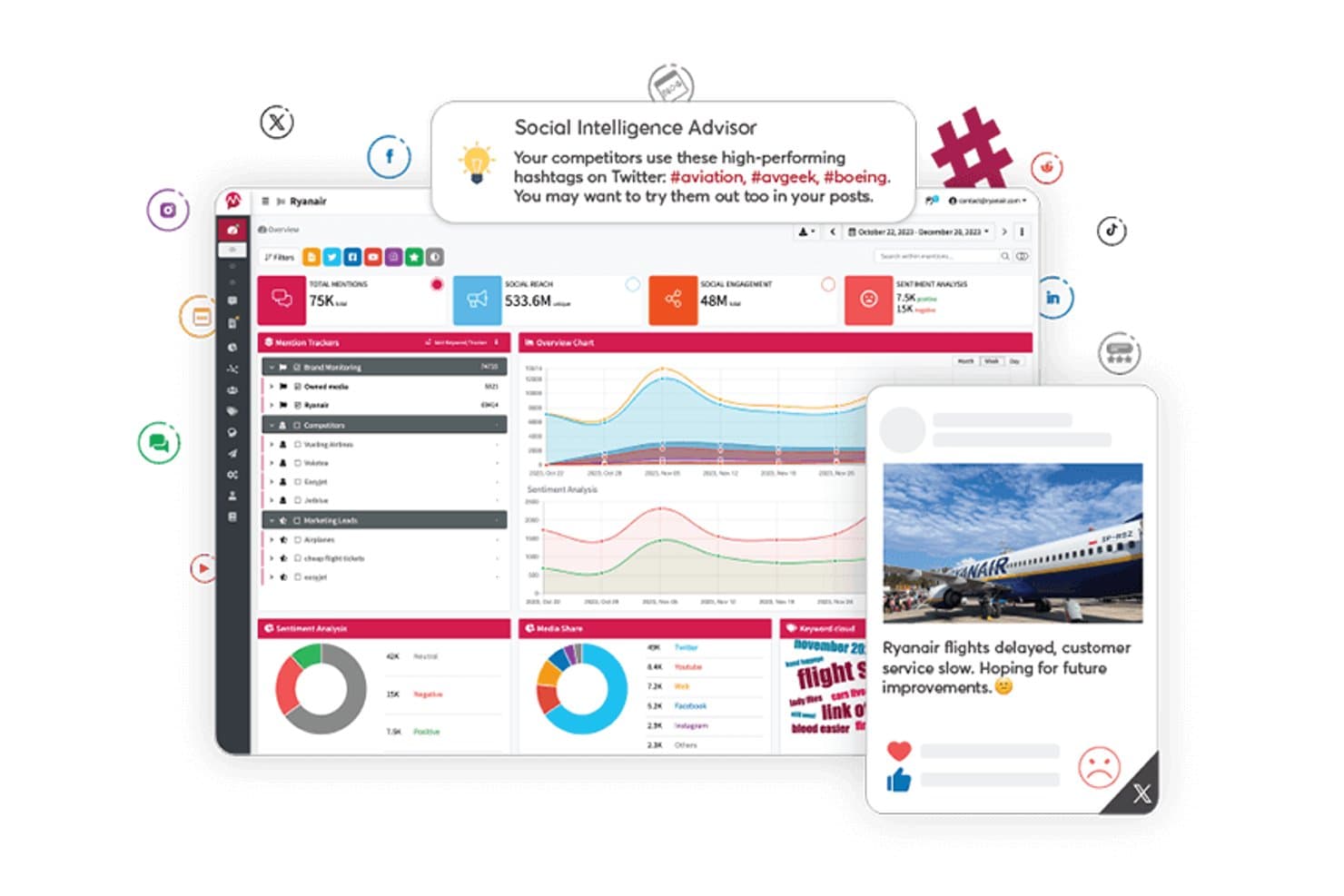
Mentionlytics tracks brand mentions, sentiment, and competitor hashtags across social platforms. Mentionlytics is a brand monitoring platform that tracks mentions across social media, news, blogs, podcasts, review sites, and AI-generated search results, with built-in sentiment analysis, emotion detection, and anomaly alerting.
Who Is Mentionlytics Best For?
Mentionlytics is a strong fit for marketing teams and agencies that need emotion-level sentiment analysis and AI-driven anomaly alerts to manage brand reputation across a wide range of channels.
Why I Picked Mentionlytics
I picked Mentionlytics as one of the best because its AI goes beyond basic sentiment tracking to detect specific emotions like Joy, Anger, Fear, and Sarcasm within mentions. What I find especially useful is SIA (Social Intelligence Advisor), which flags unusual spikes in mention volume or sentiment before they escalate into a full crisis. I also like that it tracks brand mentions inside AI-generated answers from ChatGPT, Gemini, and Perplexity, which most monitoring tools still don't do.
Mentionlytics Key Features
- Multi-source coverage: Tracks mentions across 11 social networks, news, blogs, podcasts, forums, and 100+ review sites from a single dashboard.
- Influencer identification: Surfaces the authors, accounts, and domains generating the most reach for your tracked keywords.
- White-label reporting: Lets you export and share fully branded reports in PDF, CSV, XLS, and PPTX formats for client or stakeholder presentations.
- AI Brand Visibility monitoring: Tracks how your brand is cited inside AI-generated answers from ChatGPT, Gemini, Perplexity, and Copilot via an add-on.
Mentionlytics Integrations
Mentionlytics integrates with Hootsuite, Slack, and Looker Studio, supports Power BI reporting and MCP-compatible LLMs, and provides a Social Media Monitoring API for custom connections. Zapier is also supported.
Pros and Cons
Pros:
- Tracks brand mentions in AI-generated results
- Real-time anomaly alerts for crisis detection
- Detects emotions like joy, anger, sarcasm
Cons:
- Full Instagram and LinkedIn tracking requires authorization
- No free-forever monitoring plan offered
Learn more about Mentionlytics: Best for AI-driven spike alerts and PR crisis response
- 5-day free trial
- From €99/month
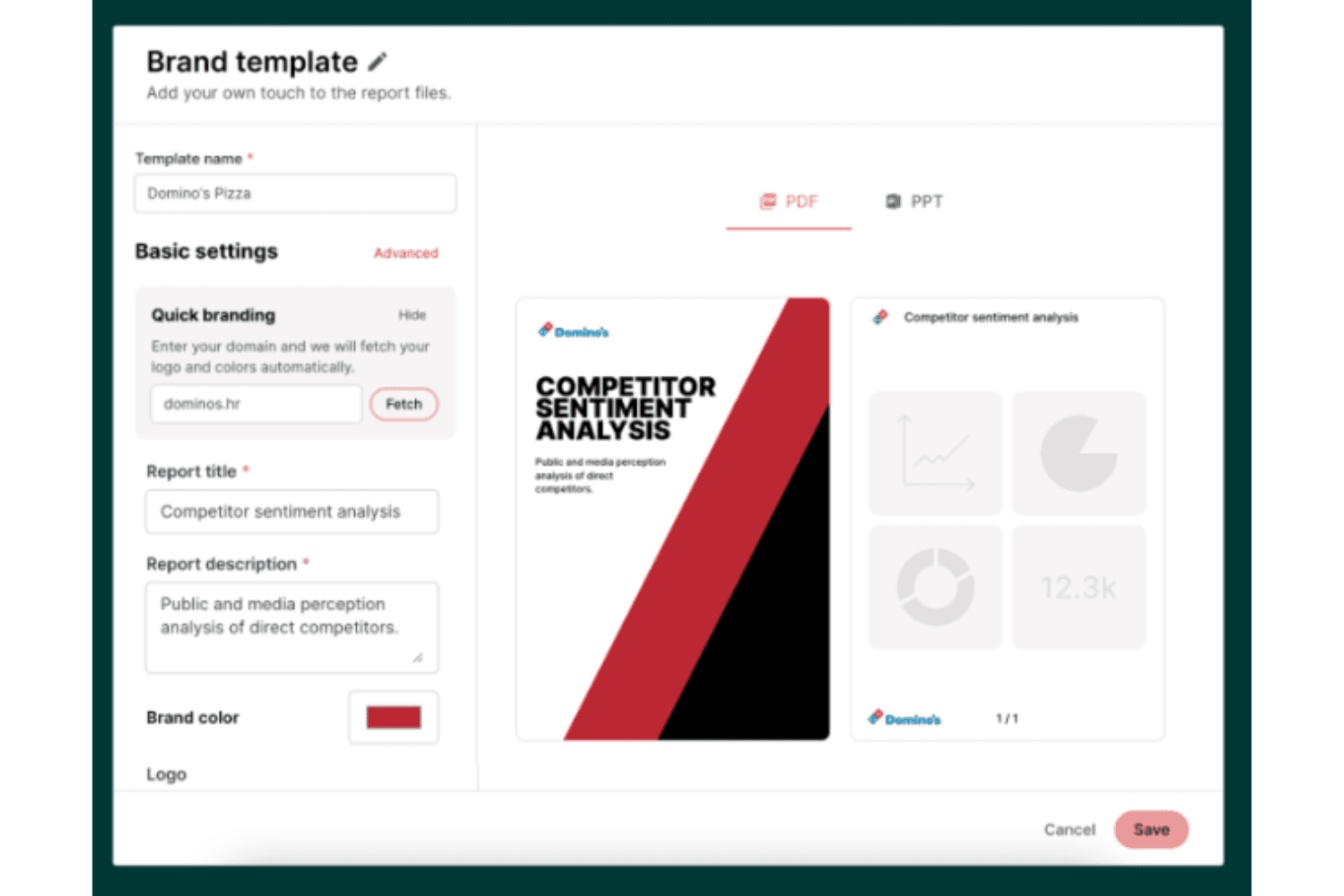
Determ lets users create branded report templates for PDF and PPT exports. Determ is a brand monitoring platform that tracks mentions across 100M+ websites, social networks, traditional media, and forums, with AI-driven sentiment analysis, spike alerts, competitive benchmarking, and automated reporting built in.
Who Is Determ Best For?
Determ is a strong fit for PR and communications teams that need to catch brand crises early and respond before they escalate.
Why I Picked Determ
I picked Determ as one of the best because its Synthia AI doesn't just flag a spike in mentions—it tells you why it's happening, generating a plain-language summary of the escalation so your PR team can respond in minutes, not hours. I love how volume and sentiment anomalies trigger simultaneously, meaning you catch both a surge in negative coverage and a shift in public opinion before either spirals. Determ's claim of 84× faster crisis reaction time reflects what that combination actually delivers in practice.
Determ Key Features
- Synthia AI summaries: Automatically distills monitored coverage into key takeaways, sentiment insights, and strategic recommendations in a plain-language format.
- Multilingual sentiment analysis: Classifies mention sentiment across 107 languages with entity-level breakdowns and manual override options.
- Opinion Leaders dashboard: Ranks authors, accounts, and domains by impressions, mentions, and sentiment to support influencer identification and earned media analysis.
- Competitive benchmarking dashboards: Displays side-by-side share of voice, share of impressions, and sentiment comparisons across tracked competitors.
Determ Integrations
Determ offers documented integrations with Slack, X/Twitter, Instagram, Facebook, Threads, RSS, Microsoft Teams, BigQuery, Power BI, and MCP-connected assistants such as ChatGPT and Claude. Higher-tier plans include an API for custom integrations, and Determ is also available on Zapier.
Pros and Cons
Pros:
- Multilingual sentiment across 107 languages
- Unlimited users and keywords on all plans
- AI summarizes PR crises in real time
Cons:
- No TikTok or comprehensive Instagram stories coverage
- No free-forever plan available
Learn more about Determ: Best for web-wide mention coverage at scale
- 7-day free trial available
- From $99/month
Visit WebsiteCustomer Rating:5/5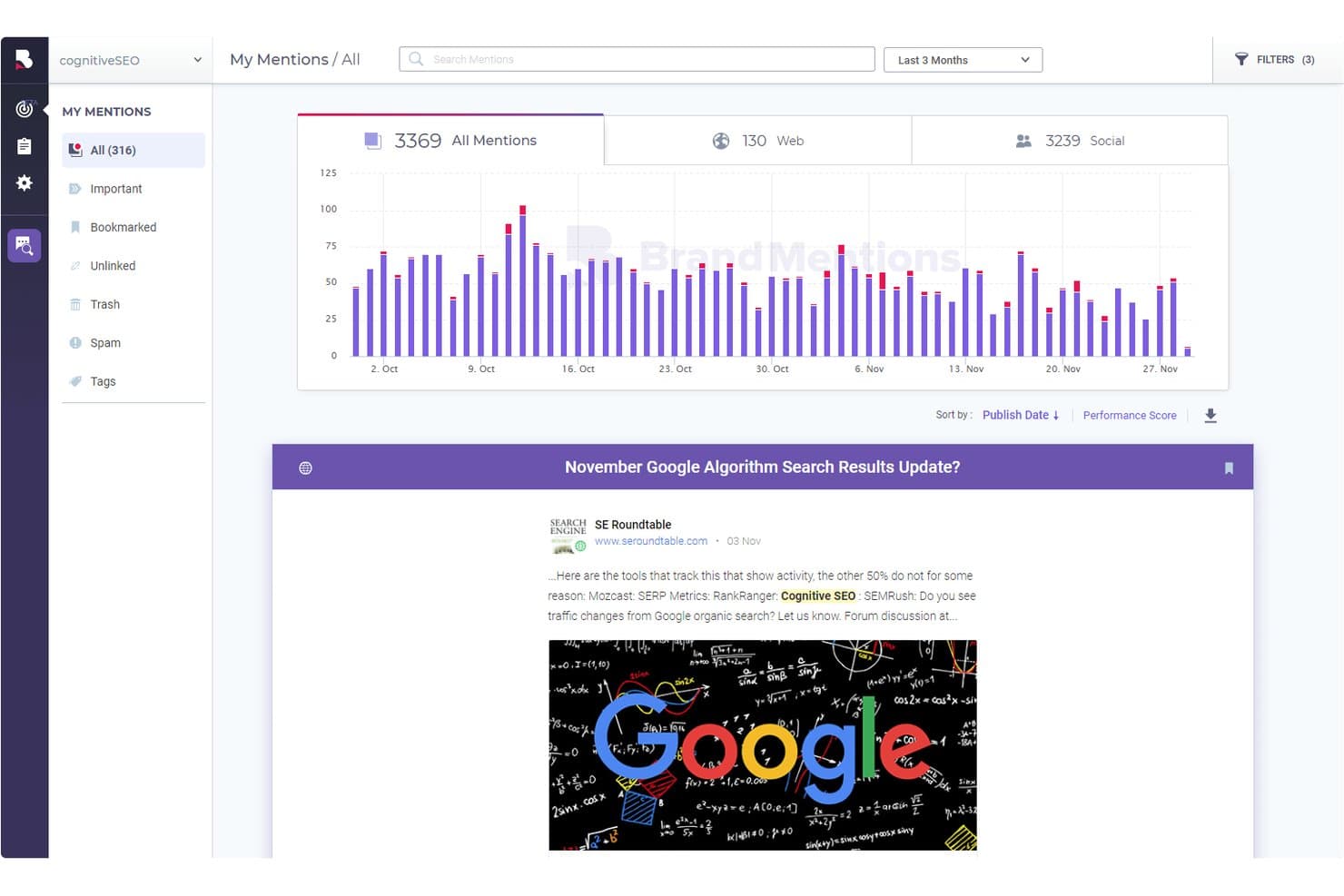
BrandMentions tracks brand mentions across web and social channels. BrandMentions is a brand monitoring platform that tracks mentions across social networks, news, blogs, forums, and the broader web, combining AI sentiment analysis, competitor benchmarking, and real-time alerting in one tool.
Who Is BrandMentions Best For?
BrandMentions is a strong fit for PR teams and brand managers who need to track mentions across social media, news, blogs, and forums at scale.
Why I Picked BrandMentions
BrandMentions earns its spot on my list because it covers more of the web than almost any other tool I've tested, pulling mentions from social networks, news, blogs, forums, review sites, and video in a single feed. I love that competitor tracking is built directly into the core workflow: I can add a rival brand as its own Project and benchmark share of voice side by side with my own brand, no workarounds needed. The multilingual AI sentiment analysis is another standout, flagging negative mentions in real time and routing them straight to Slack.
BrandMentions Key Features
- Real-time Slack alerts: Sends mention notifications directly to a Slack channel, filterable by negative sentiment for faster crisis response.
- Historical data access: Retrieves up to 12 months of past mentions on Expert plans, or full historical data on Enterprise, for long-term trend analysis.
- White-label reporting: Generates fully customizable, client-ready reports on Expert and Enterprise plans, including application white-labeling for agencies.
- Influencer identification: Surfaces high-reach authors and accounts using Domain Influence and Reach metrics pulled directly from your monitoring data.
BrandMentions Integrations
BrandMentions offers a native Slack integration for filtered mention alerts. It also supports webhooks, an API for Enterprise customers, and Zapier.
Pros and Cons
Pros:
- Built-in competitor benchmarking exceeds category norms
- Multilingual AI sentiment with negative alerts
- Tracks mentions across all major web channels
Cons:
- Custom reporting locked to higher plans
- No always-on free monitoring available
Learn more about BrandMentions: Best for enterprise-scale social listening
- Not available
- Pricing upon request
Visit WebsiteCustomer Rating:4.3/5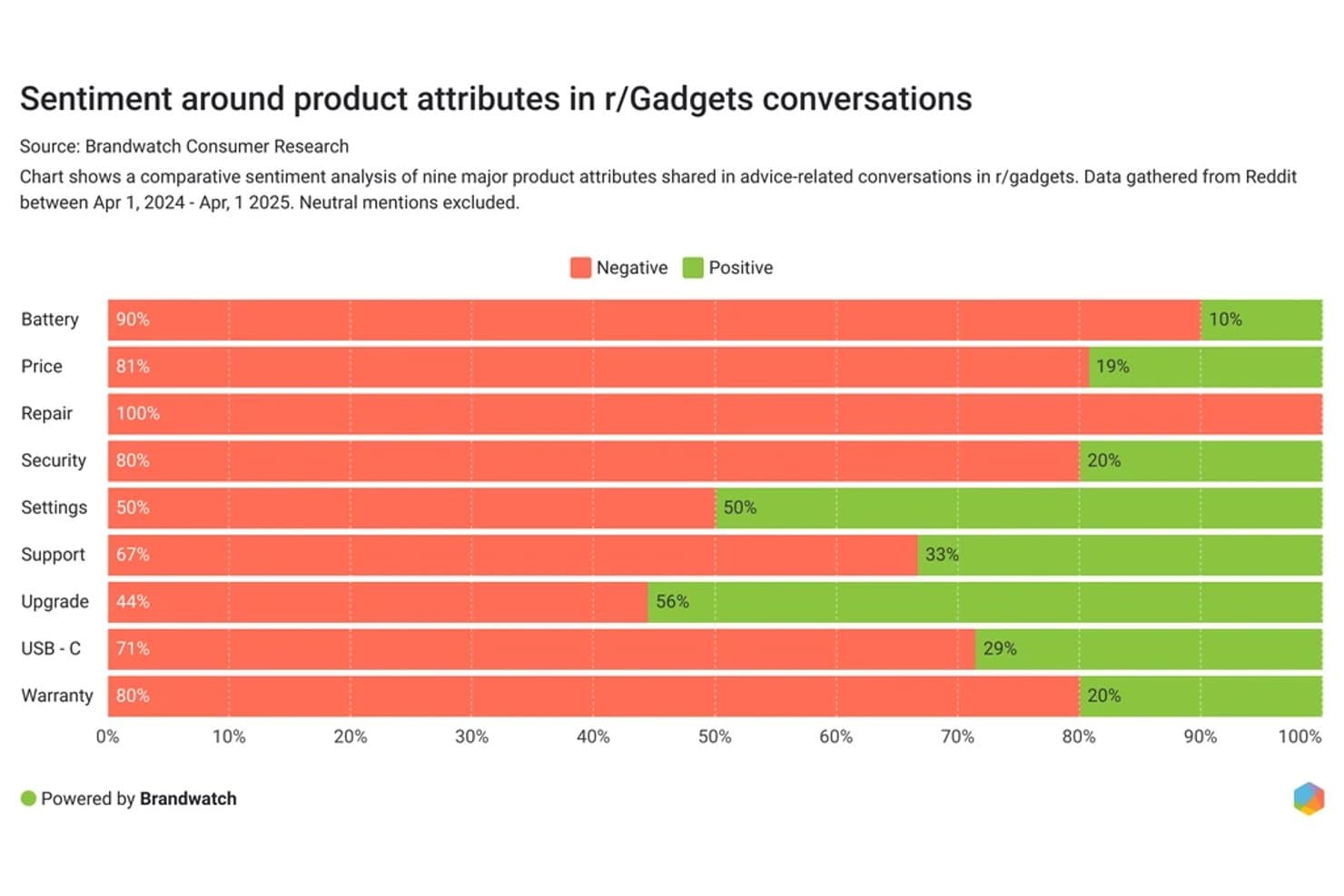
Brandwatch tracks sentiment polarity across product attributes in Reddit. Brandwatch is an enterprise social listening and consumer intelligence platform that tracks brand mentions, sentiment, competitor activity, and audience conversations across 100M+ sources, including social media, news, forums, review sites, and broadcast media.
Who Is Brandwatch Best For?
Brandwatch is a strong fit for enterprise marketing and PR teams that need deep social listening, competitor benchmarking, and AI-driven consumer intelligence at scale.
Why I Picked Brandwatch
Brandwatch earns its spot on my list because no other platform comes close to its scale of social listening. It pulls from 100M+ sources, including the full X/Twitter firehose and Bluesky firehose, meaning my team catches mentions that narrower tools simply miss. I'm particularly impressed by React Score AI, which flags brand threats before they escalate into real crises, and the historical archive dating back to 2010, which lets me run genuine longitudinal analysis rather than just a snapshot.
Brandwatch Key Features
- Iris AI query assistant: Helps you build precise Boolean keyword queries with smart suggestions for keywords, hashtags, and related entities.
- Emotion detection: Classifies mentions beyond positive/negative/neutral, identifying specific emotional signals across tracked conversations.
- Influence module: Provides access to a database of 30M+ creators for influencer discovery, relationship management, and campaign reporting.
- Benchmark module: Enables side-by-side competitive comparisons across reach, engagement, sentiment, and share of voice.
Brandwatch Integrations
Brandwatch lists 17 documented partner integrations, including Salesforce, HubSpot, Zendesk, ServiceNow, Shopify, Bitly, Bynder, Dropbox, Box, and Google Drive. It also provides API access for custom integrations.
Pros and Cons
Pros:
- Benchmarks against unlimited competitors in dashboard
- Offers emotion detection beyond basic sentiment
- Tracks mentions across 100M+ online sources
Cons:
- Requires annual enterprise contract for access
- No free plan or self-serve trial
Learn more about Brandwatch: Best for all-in-one social listening and scheduling
- 14-day free trial + free demo available
- From $99/user/month
Visit WebsiteCustomer Rating:4.3/5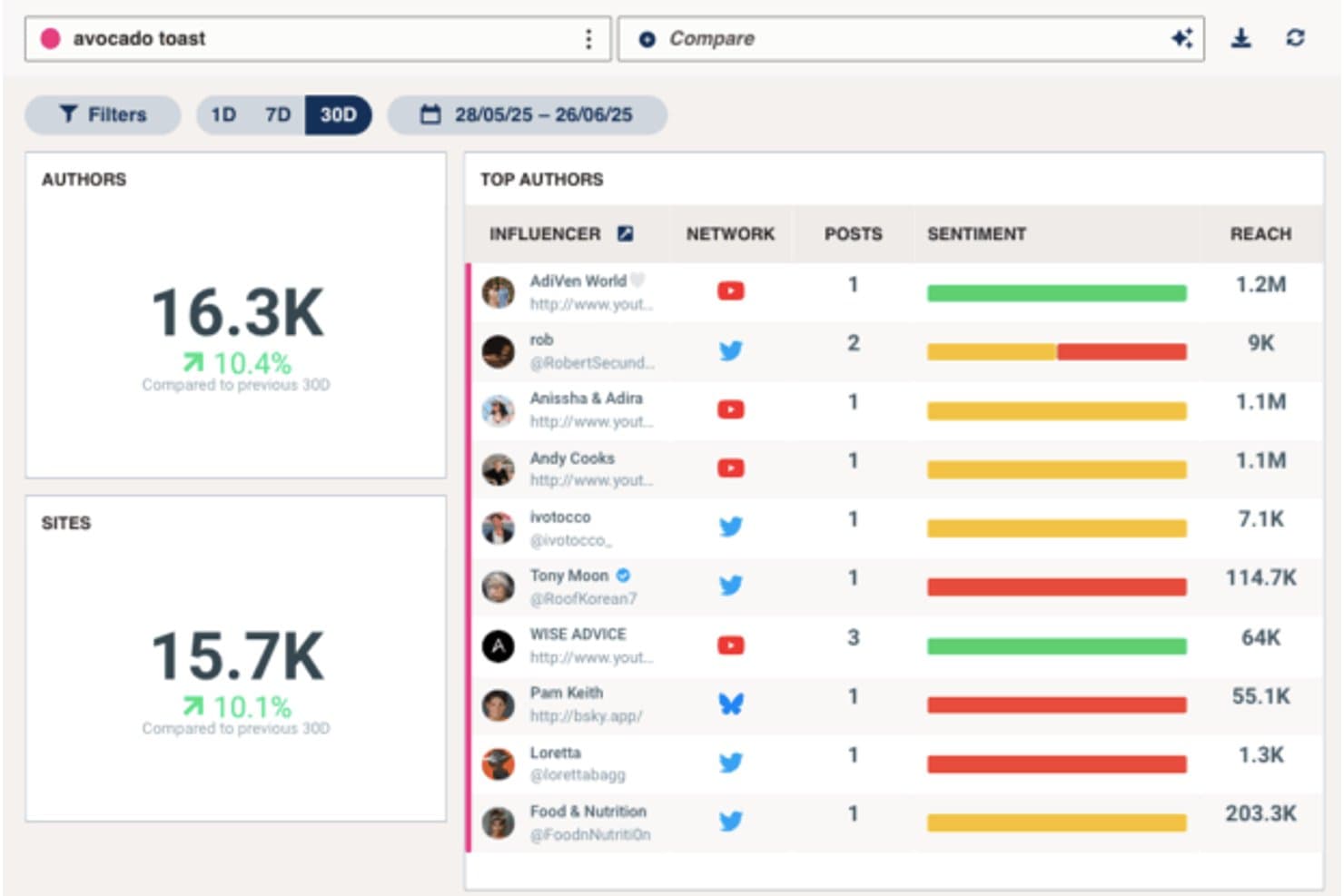
Hootsuite ranks top authors by reach, posts, and sentiment. Hootsuite is a social media management and brand monitoring platform that combines mention tracking, sentiment analysis, competitor benchmarking, multi-source coverage, and content scheduling in a single dashboard.
Who Is Hootsuite Best For?
Hootsuite is a strong fit for marketing and social media teams that want brand monitoring and content scheduling in one place, without juggling multiple tools.
Why I Picked Hootsuite
I've included Hootsuite in my top picks because it's the only tool on this list that genuinely combines brand monitoring and content scheduling in one place. I love that Lumen, its Talkwalker-powered listening engine, flags sentiment shifts and mention spikes in real time, so my team can draft and publish a response without ever leaving the dashboard. The built-in crisis management workflow is what sets it apart: it's structured, fast, and keeps everyone coordinated when things move quickly.
Hootsuite Key Features
- Blue Silk™ AI sentiment analysis: Detects contextual sentiment, emotions, and multilingual signals across brand mentions at the Enterprise tier.
- Boolean keyword search: Lets you build precise, noise-filtered queries to track exactly the mentions that matter to your brand.
- ReviewTrackers integration: Pulls in brand reviews from 85+ platforms—including Google, Yelp, and TripAdvisor—directly into your dashboard.
- Influencer identification: Surfaces the authors and accounts driving the highest reach and engagement around your tracked keywords.
Hootsuite Integrations
Hootsuite offers 100+ integrations, including ReviewTrackers, Slack, Zendesk, Salesforce, Canva, Upfluence, Google Analytics, Reddit, and Bitly. Enterprise plans also provide API access for custom integrations.
Pros and Cons
Pros:
- Multi-source listening with influencer identification
- AI-powered sentiment and competitor benchmarking
- Real-time alerting for crises and spikes
Cons:
- Advanced monitoring locked to Enterprise tier
- No free-forever plan available
Learn more about Hootsuite: Best for AI-driven media and brand intelligence
- Free demo available
- From $10,000/year (billed annually)
Visit WebsiteCustomer Rating:4.1/5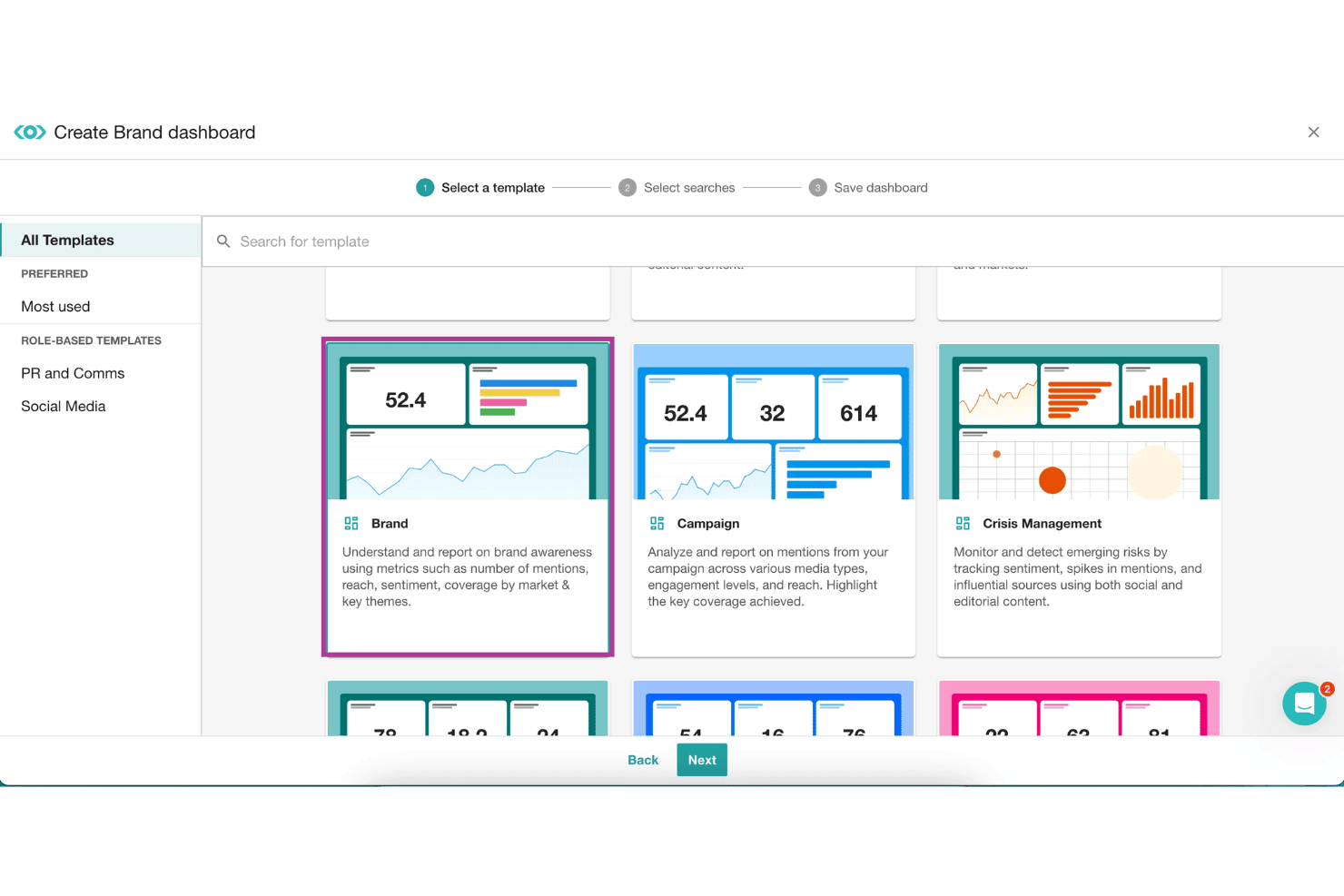
Meltwater offers dashboards for brand, campaign, and crisis analytics. Meltwater is a media intelligence and brand monitoring platform that tracks mentions across news, social media, podcasts, broadcast, forums, and AI platforms, with built-in sentiment analysis, competitor benchmarking, and influencer identification.
Who Is Meltwater Best For?
Meltwater is a strong fit for enterprise PR and communications teams that need deep media intelligence across global markets and multiple source types.
Why I Picked Meltwater
Meltwater earns its spot on my list because no other platform matches its breadth of AI-driven media intelligence. I'm particularly impressed by Mira, its AI assistant, which detects sentiment anomalies and auto-generates narrative summaries the moment a story shifts. I also love its AI Visibility Tracking, which monitors how brands appear across ChatGPT, Perplexity, and Gemini—something I haven't seen any other monitoring tool offer.
Meltwater Key Features
- Boolean query builder: Build precise keyword and topic searches using Boolean logic to filter out irrelevant mentions and reduce monitoring noise.
- Influencer and journalist database: Access a built-in database of media contacts and influencer profiles to support outreach directly within the platform.
- Multi-channel alert routing: Configure alerts to reach your team via email, Slack, or Microsoft Teams, with spike detection and crisis escalation signals included.
- Customizable reporting dashboards: Build and schedule reports tracking mention volume, reach, share of voice, and sentiment, with export options for PDF, CSV, and BI tools.
Meltwater Integrations
Meltwater integrates with Slack, Microsoft Teams, Salesforce, Power BI, Domo, and Looker. It also supports webhooks, data warehouse exports, the Meltwater API, and Zapier for custom connectivity.
Pros and Cons
Pros:
- Powerful Boolean search for targeted monitoring
- Unique AI visibility tracking for generative AI
- Tracks brand mentions across 240+ languages
Cons:
- Aggressive sales outreach and opaque pricing
- No free plan or self-serve trial
 Best for social listening at enterprise scale
- 30-day free trial
- From $249/month
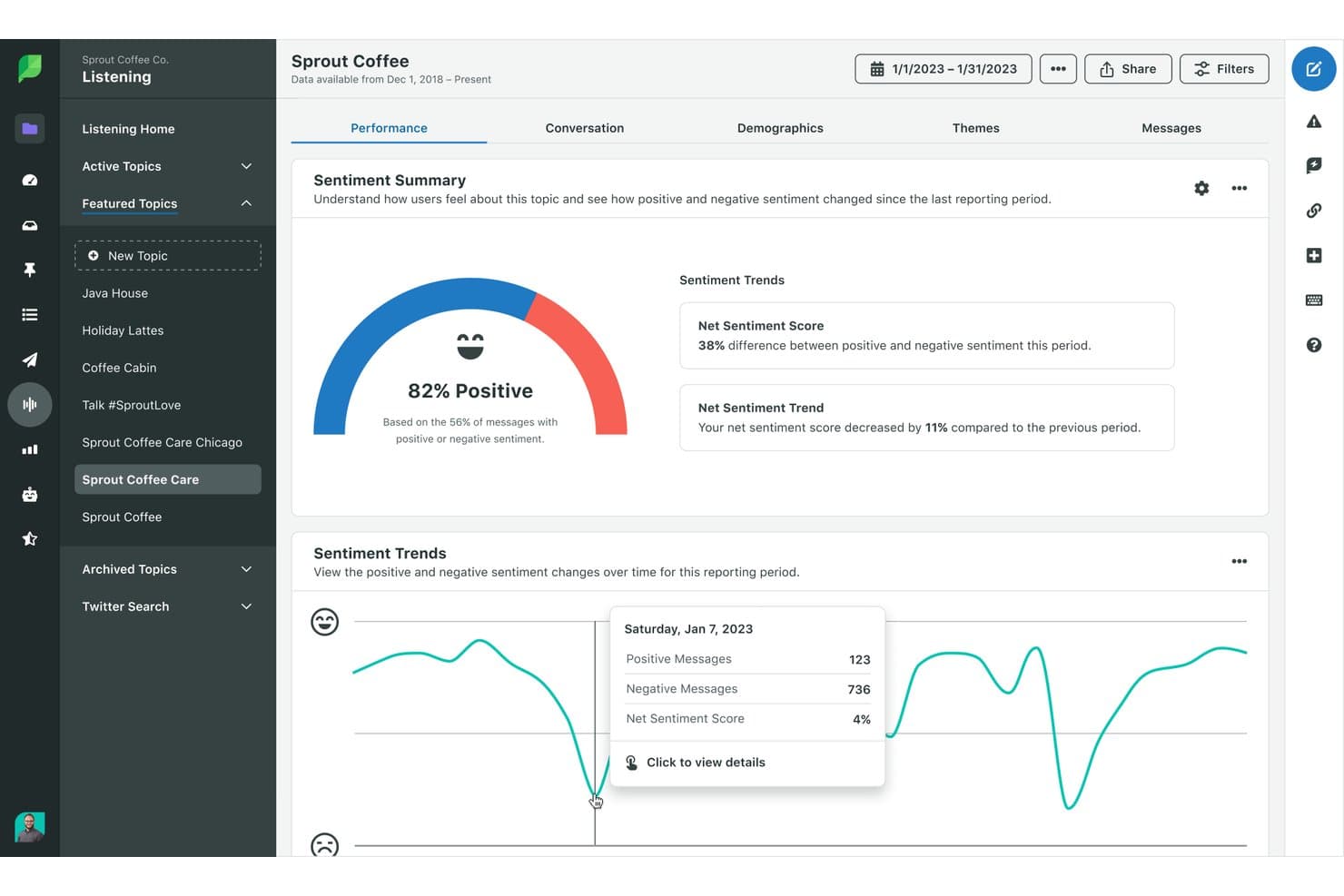
Sprout Social tracks brand sentiment trends and scores over time. Sprout Social is a social media management and brand monitoring platform that combines a unified Smart Inbox, social listening, sentiment analysis, competitor tracking, and multi-source mention monitoring across social networks, review sites, and the web.
Who Is Sprout Social Best For?
Sprout Social is built for enterprise marketing and social media teams that need to monitor brand conversations at high volume across multiple channels and regions simultaneously.
Why I Picked Sprout Social
Sprout Social earns its spot on my shortlist because its listening engine operates at a scale most tools simply can't match, processing up to 50,000 posts per second across social networks, news, blogs, review sites, and the web simultaneously. I particularly like the Listening add-on's Spike Alerts, which flag sudden surges in mention volume or sentiment shifts before a situation escalates. Trellis AI layers on top of that by letting you query brand data in plain language instead of building Boolean searches.
Sprout Social Key Features
- Smart Inbox: Consolidates DMs, comments, and tagged posts from all connected social profiles into a single unified feed.
- Review management: Aggregates customer reviews from up to eight platforms, including Google My Business, Yelp, TripAdvisor, and Glassdoor, alongside social mentions.
- Query Builder: Lets you build keyword listening queries using AI Assist and keyword suggestions without needing Boolean search knowledge.
- Influencer identification: Surfaces key authors and accounts driving the most reach around tracked keywords directly within the Listening add-on.
Sprout Social Integrations
Sprout Social offers integrations with Salesforce, Zendesk, HubSpot, Slack, Google Analytics, Tableau, and Salesforce Marketing Intelligence Cloud, plus review platforms including Yelp and Trustpilot. Advanced plans include API access for custom integrations.
Pros and Cons
Pros:
- Identifies top influencers driving brand conversations
- AI-powered sentiment and crisis alerts
- Tracks mentions across social, web, and reviews
Cons:
- Full monitoring features require paid add-on
- No free-forever plan available
Learn more about Sprout Social:
Outras ferramentas de monitorização de marcas
Eis algumas ferramentas adicionais de monitorização de marcas que não entraram na minha lista restrita, mas que vale a pena conhecer:
- 11QuestelBest for global trademark protection
- 12TramaTMBest for trademark watch alerts
- 13SprinklrBest for AI-powered crisis detection at scale
- 14BuzzSumoBest for PR-driven content and mention reach
- 15YouScanBest for image and logo mention detection
- 16Lumen by TalkwalkerBest for visual brand monitoring
- 17AwarioBest for Boolean brand mention tracking
O que são as ferramentas de monitorização de marcas?
As ferramentas de monitorização de marcas são plataformas de software que acompanham as menções à sua marca, aos seus produtos, aos concorrentes e a palavras-chave relevantes nos canais online. Podem monitorizar fontes como redes sociais, sites de notícias, blogues, fóruns, sites de avaliações e outras plataformas digitais.
As equipas de marketing e relações públicas utilizam ferramentas de monitorização de marcas para acompanhar a perceção pública, analisar o sentimento, identificar problemas emergentes de reputação, medir a visibilidade da marca e compreender como as conversas sobre a sua marca mudam ao longo do tempo.
How I Evaluate Brand Monitoring Tools
I split my evaluation into two layers: baseline requirements a tool must meet to make the list, and the differentiators that separate genuinely useful brand monitoring platforms from ones that just check boxes.
Core Functionality (Table Stakes For This List)
When I'm selecting tools for my list, I rank each one on a scale from 0 (does not offer the functionality) to 5 (excels in this area) for each core functionality listed below. I then calculate the tool's total score into a percentage, using 75% as a benchmark to help assess its overall fit for the list.
- Brand mention tracking: I check whether a tool can track brand names, products, keywords, and relevant conversations across multiple online sources rather than limiting monitoring to a single channel.
- Social media monitoring: I evaluate how well each platform tracks mentions and conversations across major social networks, including direct mentions as well as relevant keyword-based discussions.
- Sentiment analysis: I look for tools that can classify and analyze sentiment around brand mentions, helping teams identify changes in public perception and prioritize negative or high-impact conversations.
- Real-time monitoring and alerts: I check whether teams can receive timely alerts for new mentions, sudden increases in conversation volume, sentiment shifts, or other activity that may require attention.
- Competitor monitoring: I evaluate whether the platform can track competing brands and compare metrics such as mention volume, sentiment, reach, and share of voice.
- Reporting and analytics: I look for dashboards and reports that turn monitoring data into usable insights, including mention trends, sentiment, reach, share of voice, and historical performance.
Once I have a list of tools that meet the criteria, I consider what sets each platform apart.
Differentiating Factors (What Sets Vendors Apart)
Here's how I compare and contrast different vendors:
Standout Features
I look for capabilities that extend monitoring beyond basic mention tracking. These can include AI-powered analysis, crisis and spike detection, multilingual monitoring, visual and logo recognition, influencer identification, historical data, and advanced Boolean search. I also consider how broadly each platform monitors sources such as news, blogs, forums, podcasts, review sites, and emerging channels like generative AI platforms.
Beyond Features
I evaluate how well each platform fits different team sizes and monitoring requirements. This includes pricing and monitoring limits, the number of users or projects supported, available integrations, onboarding resources, and customer support. I also consider scalability, particularly whether the tool can accommodate growing mention volumes, additional brands or competitors, multiple markets, and expanded reporting needs.
Como escolher uma ferramenta de monitorização de marcas
Ao escolher uma ferramenta de monitorização de marcas, comece por identificar onde é mais provável que ocorram conversas sobre a sua marca e o que precisa de aprender com elas. Considere se precisa sobretudo de escuta social, de uma monitorização mais abrangente dos meios de comunicação, de acompanhamento da reputação, de informações sobre os concorrentes ou de proteção da marca.
| Se a sua prioridade for… | Procure… |
|---|---|
| Se a sua prioridade for…Acompanhar menções em toda a Internet | Procure…Cobertura de redes sociais, notícias, blogues, fóruns e sites de avaliações |
| Se a sua prioridade for…Detetar rapidamente problemas de reputação | Procure…Alertas em tempo real, deteção de picos e monitorização do sentimento |
| Se a sua prioridade for…Compreender a perceção da marca | Procure…Análise do sentimento, acompanhamento de tendências e dados históricos |
| Se a sua prioridade for…Monitorizar concorrentes | Procure…Acompanhamento de concorrentes, avaliação comparativa e análise da quota de voz |
| Se a sua prioridade for…Gerir vários mercados | Procure…Monitorização multilingue e filtragem geográfica |
| Se a sua prioridade for…Medir o desempenho da marca | Procure…Painéis personalizados, relatórios e exportação de dados |
| Se a sua prioridade for…Ligar fluxos de trabalho de monitorização | Procure…Integrações com o Slack, o Teams, sistemas CRM e ferramentas de análise |
Principais funcionalidades de monitorização de marcas online
Ao selecionar uma ferramenta de monitorização de marcas, procure funcionalidades que o ajudem a acompanhar conversas, analisar a perceção da marca e identificar alterações que possam exigir a sua atenção.
- Monitorização das redes sociais: Acompanha as menções à marca e as interações nas plataformas sociais para gerir a reputação e interagir eficazmente com os clientes.
- Análise da concorrência: Fornece informações sobre as estratégias e o posicionamento no mercado dos concorrentes, ajudando a sua equipa a manter-se competitiva.
- Acompanhamento das menções à marca: Monitoriza as menções online à sua marca para avaliar a perceção pública e responder prontamente ao feedback.
- Monitorização da reputação: Acompanha as conversas e o sentimento que podem afetar a reputação da sua marca, ajudando a sua equipa a identificar problemas que requerem atenção.
- Monitorização de domínios: Protege a sua marca através do acompanhamento dos registos de domínios e da prevenção da utilização não autorizada.
- Acompanhamento de influenciadores: Identifica e monitoriza influenciadores relevantes para a sua marca, de modo a tirar partido do seu alcance e impacto.
- Deteção de crises: Identifica aumentos súbitos nas menções, sentimentos negativos ou atividades invulgares que possam indicar um problema emergente relacionado com a marca.
- Informações baseadas em IA: Utiliza inteligência artificial para fornecer informações práticas e tendências a partir de grandes conjuntos de dados, permitindo tomar melhores decisões.
- Relatórios personalizáveis: Permite adaptar os relatórios para se centrarem nas métricas e informações mais importantes para a sua empresa.
- Deteção de ameaças: Assinala potenciais riscos para a marca, como usurpação de identidade, atividade de contrafação ou utilização não autorizada de ativos da marca.
Benefícios das ferramentas online de monitorização da marca
A utilização de uma ferramenta online de monitorização da marca pode ajudar a sua equipa a compreender a perceção da sua marca, a identificar problemas emergentes e a tomar decisões mais informadas.
Eis alguns dos benefícios que pode esperar:
- Melhoria da monitorização da reputação: Ajuda a identificar menções negativas e alterações no sentimento, para que a sua equipa possa responder a potenciais problemas de reputação.
- Maior vantagem competitiva: Fornece informações sobre as estratégias e o posicionamento no mercado dos concorrentes através da análise da concorrência, mantendo a sua equipa à frente no mercado.
- Deteção atempada de ameaças: Identifica potenciais riscos, atividades invulgares e ameaças à marca, para que a sua equipa possa responder antes de os problemas se agravarem.
- Gestão proativa de crises: Disponibiliza ferramentas e estratégias para lidar eficazmente com crises de relações públicas, minimizando os danos para a sua marca.
- Tomada de decisões informada: Fornece informações baseadas em IA a partir de grandes conjuntos de dados, permitindo tomar melhores decisões estratégicas com base em dados práticos.
- Interação eficaz com influenciadores: Monitoriza e identifica influenciadores relevantes, ajudando a tirar partido do seu alcance para aumentar a visibilidade da marca.
- Informações personalizáveis: Fornece relatórios personalizáveis centrados nas métricas e informações mais importantes para a sua empresa, garantindo que os dados relevantes estão sempre ao seu alcance.
Custos e modelos de preços das ferramentas online de monitorização da marca
O preço das ferramentas online de monitorização da marca varia em função de fatores como o número de palavras-chave monitorizadas, menções, utilizadores, projetos, fontes de dados e acesso a funcionalidades avançadas. Alguns fornecedores publicam planos de subscrição fixos, enquanto as plataformas empresariais podem disponibilizar preços personalizados com base no volume e nos requisitos de monitorização.
Os modelos de preços mais comuns incluem:
- Baseado em subscrição: Uma taxa mensal ou anual recorrente pelo acesso à plataforma e a um conjunto definido de funcionalidades.
- Preços por escalão: O preço dos planos aumenta à medida que adiciona volume de monitorização, utilizadores, projetos, fontes de dados ou funcionalidades avançadas.
- Baseado na utilização: O preço baseia-se em fatores como o número de menções, pesquisas, consultas ou tópicos monitorizados.
- Preço por utilizador: Os custos aumentam em função do número de membros da equipa que necessitam de acesso à plataforma.
- Preços empresariais personalizados: As organizações de maior dimensão recebem propostas personalizadas com base no volume de monitorização, nos requisitos de funcionalidades, nos utilizadores e nas necessidades de suporte.
Principais fatores que influenciam o preço das ferramentas online de monitorização da marca
Para além do modelo de preços específico, eis alguns fatores adicionais que podem influenciar o custo das ferramentas online de monitorização da marca:
- Requisitos das funcionalidades: As análises avançadas, as capacidades de IA, as fontes de dados adicionais e os relatórios personalizados podem aumentar o custo.
- Volume de dados: Volumes maiores de menções e uma monitorização mais frequente podem exigir planos de nível superior ou capacidade de utilização adicional.
- Requisitos do setor: Requisitos especializados de conformidade, segurança ou dados podem influenciar os planos ou as capacidades da plataforma de que necessita.
- Número de utilizadores: Algumas plataformas cobram com base no número de utilizadores ou exigem licenças adicionais à medida que a sua equipa cresce.
- Âmbito geográfico: A monitorização em várias regiões e idiomas pode exigir uma cobertura de dados mais abrangente ou planos de nível superior.
Ter estes fatores em consideração pode ajudá-lo a comparar planos e propostas personalizadas de forma mais eficaz e a determinar qual a opção que melhor se adequa aos seus requisitos de monitorização.
Ferramentas de monitorização de marcas online: perguntas frequentes
Eis algumas respostas a perguntas frequentes sobre ferramentas de monitorização de marcas online:
Como é que as ferramentas de monitorização de marcas online ajudam a proteger a minha marca?
As ferramentas de monitorização de marcas acompanham as menções, o sentimento e as conversas sobre a sua marca nos canais online. Isto pode ajudá-lo a identificar cobertura negativa, problemas de reputação, falsificação de identidade ou outras potenciais ameaças que possam exigir atenção.
Com que frequência é que as ferramentas de monitorização de marcas fornecem atualizações?
A frequência das atualizações varia consoante a plataforma. Muitas ferramentas de monitorização de marcas disponibilizam monitorização e alertas em tempo real ou quase em tempo real, enquanto outras também oferecem relatórios e resumos programados.
As ferramentas de monitorização de marcas podem ajudar na gestão de crises?
Sim. As ferramentas de monitorização de marcas podem ajudar a detetar aumentos repentinos nas menções, sentimento negativo ou atividade invulgar, proporcionando à sua equipa uma visibilidade mais precoce sobre potenciais problemas de reputação.
As ferramentas de monitorização de marcas são adequadas para pequenas empresas?
Sim. Algumas ferramentas de monitorização de marcas oferecem planos concebidos para equipas mais pequenas, embora os limites de monitorização, as fontes de dados, os dados históricos e as funcionalidades avançadas variem consoante o plano.
Como posso medir o ROI de uma ferramenta de monitorização de marcas?
Pode avaliar o ROI utilizando métricas como o volume de menções à marca, as tendências de sentimento, a quota de voz, o tempo de resposta e o número de problemas de reputação identificados através da monitorização.
Porque é que a inteligência da marca é importante para a monitorização de marcas online?
A inteligência da marca desempenha um papel crucial na monitorização de marcas online, pois ajuda as empresas a medir a saúde da marca, acompanhar a análise de sentimento e desenvolver uma estratégia eficaz de monitorização da marca. Ao utilizarem software de inteligência da marca, como o Brandwatch, as empresas podem recolher inteligência sobre os consumidores a partir de várias fontes e transformá-la em informações baseadas em dados. Isto permite uma gestão proativa da reputação e um melhor alinhamento dos esforços de marketing com a perceção do público.
Como é que a monitorização de marcas online apoia os esforços de marketing e de notoriedade da marca?
A monitorização de marcas online reforça a notoriedade da marca ao permitir que os profissionais de marketing avaliem campanhas de marketing, comparem o desempenho através de referências e avaliem o impacto das parcerias em tempo real. Com informações contínuas, as marcas podem aperfeiçoar as suas mensagens, garantir uma presença consistente nas plataformas e identificar áreas de melhoria — tudo isto contribui para estratégias de marketing mais inteligentes e direcionadas.
Que canais digitais devem as marcas monitorizar online?
Para obter uma visão completa da sua reputação online, as marcas precisam de monitorizar todos os canais digitais relevantes — isto inclui canais de comunicação social, plataformas de redes sociais, sites de avaliações e fóruns. Cada um oferece uma perspetiva única sobre as opiniões e os comportamentos dos clientes. A monitorização nestas plataformas ajuda as marcas a detetar precocemente tanto os elogios como os problemas, permitindo-lhes manter uma imagem positiva.
Como é que as marcas acompanham as conversas e as ameaças online?
As marcas acompanham as conversas online e potenciais ameaças, como o abuso da marca, utilizando os Alertas do Google e ferramentas de menções nas redes sociais. Estas ferramentas ajudam a identificar onde e como uma marca está a ser discutida, permitindo às empresas agir rapidamente para proteger a sua reputação. A monitorização em tempo real garante que as marcas podem responder aos problemas antes de estes se agravarem.