

Gerir a reputação online da sua empresa pode parecer uma tarefa avassaladora. Enquanto responsável de marketing, sabe como as avaliações dos clientes são cruciais para a imagem da sua marca. As avaliações negativas podem prejudicá-la, enquanto as positivas podem reforçar a sua credibilidade e criar confiança.
O software de gestão de avaliações do Google pode ajudá-lo a acompanhar, responder e analisar eficazmente o feedback dos clientes. Pela minha experiência, ter as ferramentas certas pode tornar esta tarefa menos complexa e mais eficaz.
Testei e analisei de forma independente várias opções para lhe apresentar uma visão imparcial das melhores soluções de software disponíveis. Pode esperar um guia cuidadosamente pesquisado para ajudar a sua equipa a escolher a ferramenta certa para as suas necessidades.
Why Trust Our Software Recommendations
6,700+
Reviews
20
Industry experts
16+
Evaluation factors
14
Years
Our team has been testing and reviewing software since 2012. As marketing leaders ourselves, we know how difficult—and important—it is to choose the right software.
For this guide, we evaluated tools using hands-on testing and independent research, scoring tools using our selection criteria.
Our reviews reflect our human editorial judgment, not a sales pitch.
Expert reviewers:
 Gui DrusinaCreative Director
- Shriya GhateSenior Marketing Lead
 Amanda JacquesMarketing Ops Leader

Tabela comparativa de software de gestão de avaliações do Google
Esta tabela comparativa resume os detalhes de preços das minhas principais escolhas de software de gestão de avaliações do Google:
| Tool | Best For | Trial Info | Price | ||
|---|---|---|---|---|---|
| 1 | Best for multi-location Google review management | Free trial + free demo available | From $63/location/month (billed monthly) | Website | |
| 2 | Best for analyzing Google review sentiment | Free trial + free demo available | From $10/location/month | Website | |
| 3 | Best for AI-powered review replies | Free demo available | Pricing upon request | Website | |
| 4 | Best for review management automation | 14-day free trial + free demo available | From $35/month (billed annually) | Website | |
| 5 | Best for Google-only multi-location monitoring | 24-hour free trial + free plan + free demo available | From $6.99/month | Website | |
| 6 | Best for social media teams | 14-day free trial available | From $64/month (billed annually) | Website | |
| 7 | Best for multi-channel support | Free demo available | Pricing upon request | Website | |
| 8 | Best for easy widget integration | 7-day free trial | From $29/month | Website | |
| 9 | Best for small businesses | 14-day free trial | From $25/month (billed annually) | Website | |
| 10 | Best for Zoho users | Free plan available | From $8.33/month (billed annually) | Website |


Análise do melhor software de gestão de avaliações do Google
Apresento abaixo os meus resumos detalhados do melhor software de gestão de avaliações do Google incluído na minha seleção. As minhas análises abrangem as principais funcionalidades, vantagens e desvantagens, integrações e casos de utilização ideais de cada ferramenta, para o ajudar a encontrar a melhor opção.
 Best for multi-location Google review management
- Free trial + free demo available
- From $63/location/month (billed monthly)
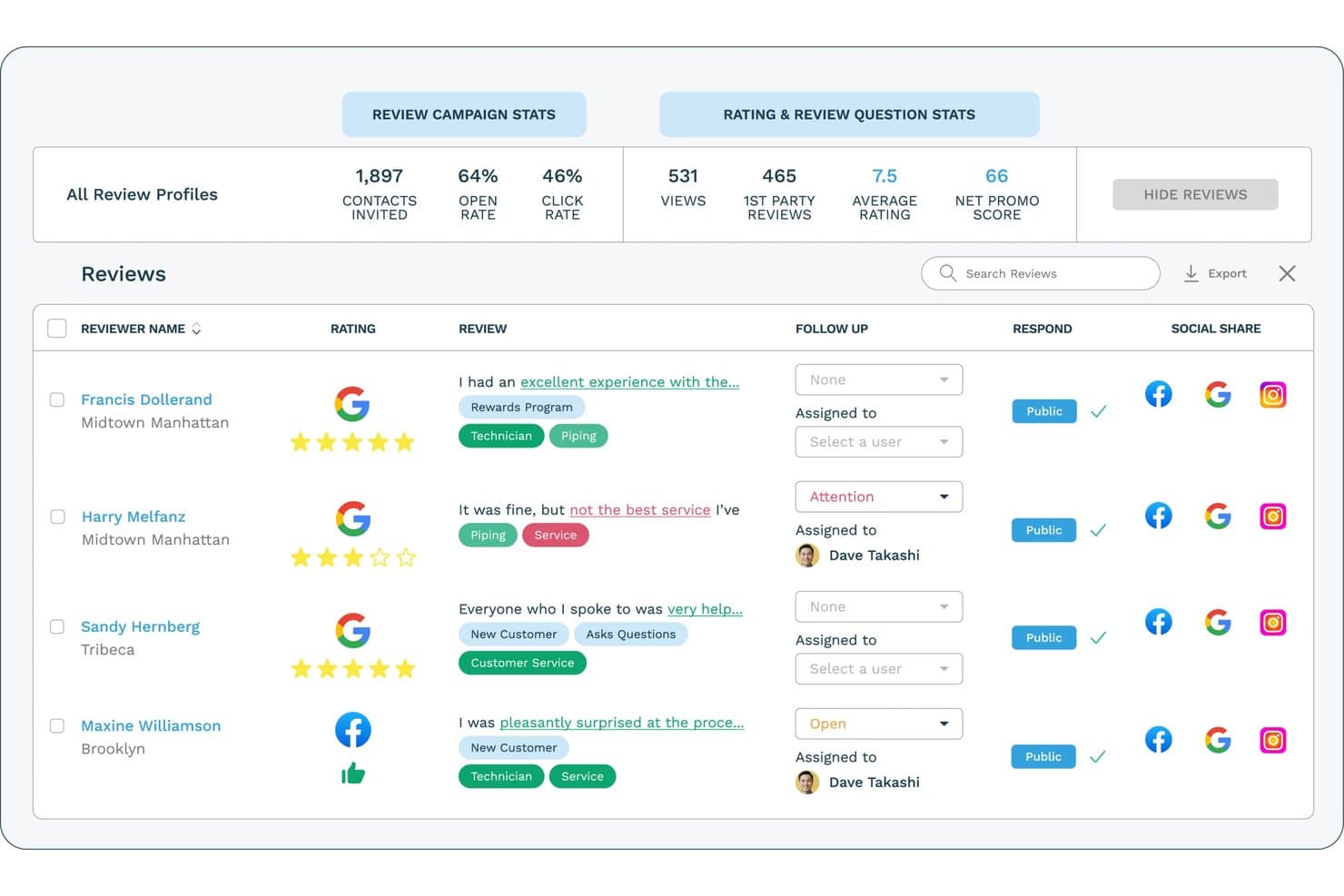
ReputationStacker lets users monitor and respond to Google reviews in one dashboard. ReputationStacker is a review management platform that automates review request campaigns via email and SMS, monitors reviews across 100+ platforms, and provides multi-location analytics, AI-powered sentiment analysis, and response management from a single dashboard.
Who Is ReputationStacker Best For?
ReputationStacker is a strong fit for multi-location businesses and the marketing teams managing them, especially when review volume and cross-location performance are the metrics that matter most.
Why I Picked ReputationStacker
I picked ReputationStacker as one of the best because it's purpose-built for managing Google reviews across multiple locations from a single dashboard, with location analytics that let you compare review volume, ratings trends, and customer feedback by individual site or location group. I also like its AI-powered sentiment analysis, which uses NLP to surface recurring themes across locations so you can spot patterns like wait time complaints or staff feedback without reading every review manually.
ReputationStacker Key Features
- Automated review requests: Sends personalized review requests via email or text, with controls for timing, frequency, message content, and spacing between messages.
- NPS surveys: Collects quantitative customer feedback scores and open-ended comments through automated, branded surveys tied directly to your review workflow.
- Review widgets: Embeds customizable review displays—carousels, lists, cards, badges, and corner displays—on your website, refreshing automatically as new reviews come in.
- AI review replies: Generates on-brand response drafts that can be posted automatically or reviewed and edited before going live, and learns from your past replies over time.
ReputationStacker Integrations
ReputationStacker offers native integrations with Google Business Profile, Facebook, and Instagram. It also supports custom integrations through its API and connects with thousands of apps through Zapier.
Pros and Cons
Pros:
- Sentiment analysis reveals cross-location feedback themes
- Location comparisons surface recurring customer issues
- Automated requests help raise review volume
Cons:
- Alerts lack negative-rating thresholds and escalation
- Google review syncing isn’t real time
Learn more about ReputationStacker: Best for analyzing Google review sentiment
- Free trial + free demo available
- From $10/location/month

RightResponse AI offers a comprehensive dashboard for managing customer reviews. RightResponse AI helps you break down Google reviews into the topics and phrases that actually matter to your business, not just keywords or star ratings. You get a clearer read on what customers are saying, how sentiment shifts across locations, and where competitors may be gaining ground — all while using AI-generated replies that reflect your own business facts and voice.
Why I Picked RightResponse AI: I picked RightResponse AI because of how it analyzes customer sentiment on Google reviews at a business-specific level. Instead of only tagging reviews as “positive” or “negative,” it maps phrases into categories that you care about, giving you a clearer sense of why customers are leaving certain ratings. This makes it easier to identify service gaps, coaching opportunities, and recurring issues across multiple locations.
Standout Features & Integrations:
Features include competitor tracking that compares your average ratings and review volume trends against others, Google Map rank tracking with insights into category-level competition, AI-generated replies that factor in reviewer details, and configurable filters that exclude certain reviews from reply automation. You also get phrase-level sentiment drilldowns that allow you to compare feedback across locations or time periods. An AI-powered review requester (in rollout) is also available for personalized outreach.
Integrations include WhatsApp, Gmail, Outlook, Google Maps, and additional apps via Zapier.
Pros and Cons
Pros:
- Personalized, fact-based AI responses
- Location-based sentiment breakdown
- Competitor benchmarking tools
Cons:
- No public integrations listed
- Some learning curve for setup
Learn more about RightResponse AI: Best for AI-powered review replies
- Free demo available
- Pricing upon request
Visit WebsiteCustomer Rating:4.8/5
Birdeye offers a range of alerts, including for reviews that were left with no response, for better reputation monitoring and management. Birdeye is an AI-powered reputation and customer experience platform built for multi-location and enterprise businesses, helping them manage reviews, listings, social media, surveys, and customer interactions from one centralized system. It serves 200,000+ customers globally across industries such as dental, healthcare, automotive, retail, legal, and home services, where local visibility and online reputation directly influence growth.
Why I Picked Birdeye
I picked Birdeye for its BirdAI agents, which automate review generation, monitoring, and responses across 200+ platforms while staying aligned with your brand voice and industry context. These always-on AI agents reduce manual work and help enterprises manage reputation consistently at scale. Birdeye also stands out for its Search AI and Listings AI, which actively optimize local visibility and improve rankings on Google and AI-driven search results. Combined with Insights AI, the platform makes it easy to track customer sentiment across locations, identify trends, and address issues before they impact brand perception.
Birdeye Key Features
In addition to Birdeye’s core AI-driven review and search capabilities, the platform offers:
- Social AI: Manage and schedule social media content across multiple locations from a single dashboard, with AI-assisted posting to maintain brand consistency.
- Surveys AI: Collect customer and patient feedback, measure satisfaction, and identify churn risks through automated, customizable surveys.
- Messaging AI & Unified Inbox" Centralizes SMS, website chat, and social messages into one inbox, helping teams respond efficiently across channels.
- Reports AI & Location-Level Analytics: Provides enterprise-grade reporting to track performance by location, region, or brand.
Birdeye Integrations
Birdeye supports 3,000+ integrations, including Salesforce, HubSpot, QuickBooks, Facebook, Google My Business, Slack, Microsoft Teams, Zendesk, Shopify, and Mailchimp.
Pros and Cons
Pros:
- BirdAI agents automate reputation management across 200+ review platforms.
- Robust analytics and location-level reporting for tracking performance at scale.
- Unified dashboard simplifies multi-client monitoring.
Cons:
- Enterprise-focused feature set may feel excessive for single-location or very small businesses.
- Onboarding can take time for organizations managing many locations.
Learn more about Birdeye: Best for review management automation
- 14-day free trial + free demo available
- From $35/month (billed annually)
Visit WebsiteCustomer Rating:4.9/5
Reviewflowz alerts teams instantly to reviews for quick, smart replies. Reviewflowz sends real time review alerts to tools like Slack, Teams, and email, helping teams respond quickly to customer feedback. This automation keeps businesses aware of new reviews, supports fast replies, and can improve customer satisfaction.
Why I picked Reviewflowz: I picked Reviewflowz because its AI powered reply system helps you stay on top of reviews without adding extra manual work. You can tune AI Reply Agents to match your brand voice, include a signature, and add contact details. These agents can automatically respond to reviews based on rules you set, such as star rating, keywords, platform, or timing. It also sends customizable alerts so you are notified immediately and can reply right away.
Standout features & integrations:
Features include a centralized dashboard that gathers reviews from multiple platforms, customizable notifications to alert your team to new activity, and sentiment analysis that helps you gauge the tone of customer feedback.
Integrations include Google My Business, Yelp, TripAdvisor, Trustpilot, Zendesk, Intercom, Slack, Google Sheets, ChatGPT, Claude, and Microsoft Teams.
Pros and Cons
Pros:
- Magic link review requests
- Dynamic review widgets
- Competitor review tracking
Cons:
- AI Chat Assistant (Lenny) is limited to higher plans
- Doesn't support listing management
Learn more about ReviewFlowz: Best for Google-only multi-location monitoring
- 24-hour free trial + free plan + free demo available
- From $6.99/month
Visit WebsiteCustomer Rating:4.5/5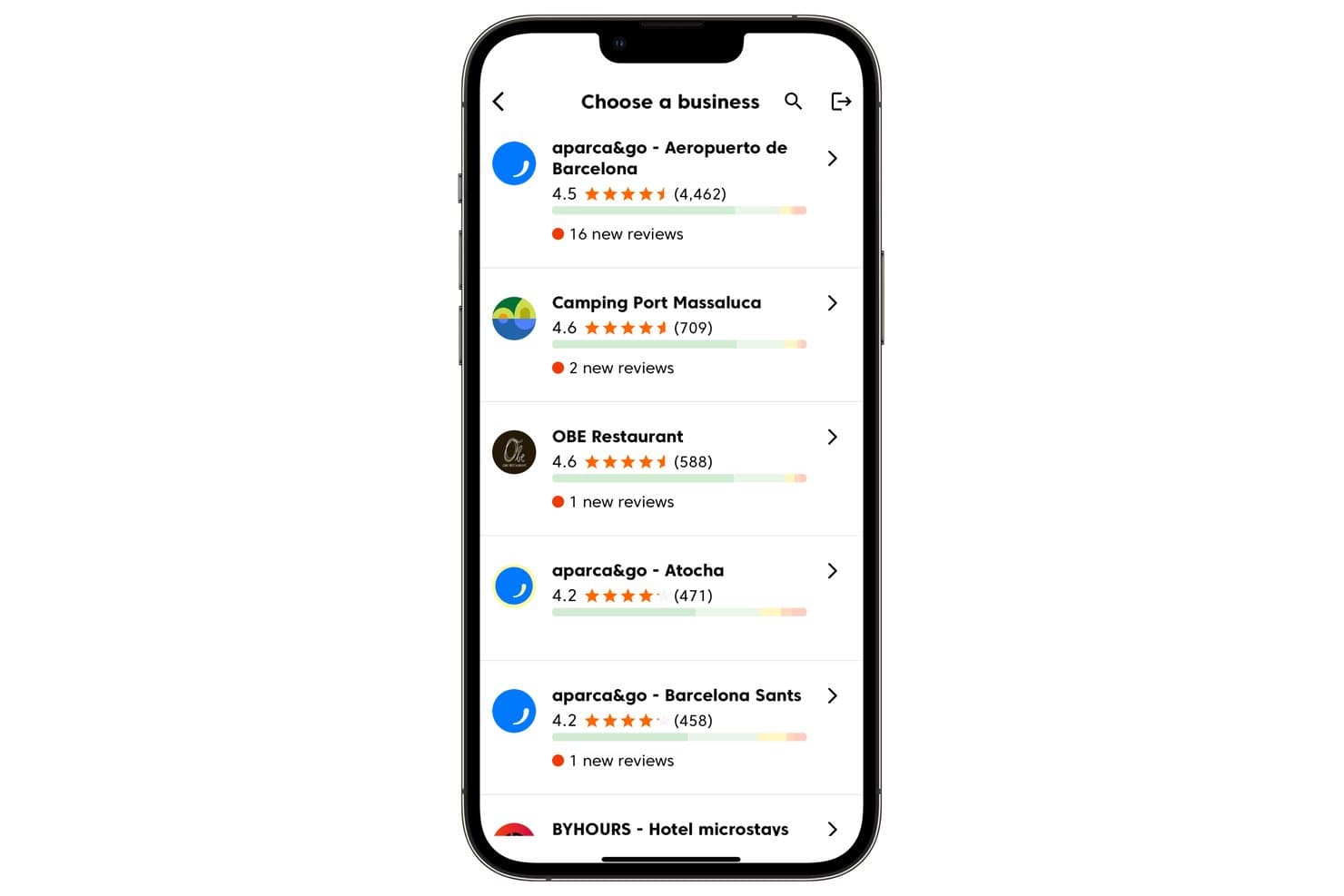
Cinquo lets users manage multiple business locations and track new reviews. Cinquo is a Google-only review management tool that centralizes multi-location monitoring, AI-powered reply automation via its CINTIA agent, trackable QR code–based review requests, and operational rating analytics across a unified mobile and desktop dashboard.
Who Is Cinquo Best For?
Cinquo is a strong fit for multi-location businesses and local SEO specialists who want deep Google-specific review insights without paying per-location fees.
Why I Picked Cinquo
Cinquo earns its spot on my shortlist because it goes deeper on Google-specific data than any multi-platform tool I've seen. I love that it calculates your true, unrounded star rating (think 4.41 vs. 4.49) and tells you exactly how many 5-star reviews you need to hit the next milestone. Add in CINTIA's per-location AI reply automation and real-time push alerts, and you've got a purpose-built monitoring setup that multi-location teams will find hard to replicate elsewhere at this price.
Cinquo Key Features
- Delegated Gmail-based user access: Team members log in with their own Gmail accounts to access Cinquo without being added as Google Business Profile managers.
- Removable review detector: Flags reviews that may violate Google's policies and surfaces them for potential removal request submission.
- Per-star-rating reply automation controls: CINTIA can be configured to auto-publish replies for specific star ratings while holding others for manual review.
- Employee-attributed QR codes: Each staff member gets a unique, trackable QR code that attributes resulting reviews to that individual in the dashboard.
Cinquo Integrations
Cinquo has a native Google Business Profile integration for real-time review, rating, and location syncing.
Pros and Cons
Pros:
- Trackable employee and location QR codes
- Delegated Gmail access keeps GBP roles secure
- Calculates unrounded Google star ratings
Cons:
- No multi-platform review monitoring
- No sentiment analysis or competitor metrics
Learn more about Cinquo: Best for social media teams
- 14-day free trial available
- From $64/month (billed annually)
Visit WebsiteCustomer Rating:4.9/5
Vista Social unifies reviews & social media to streamline team workflows. Vista Social centralizes review management and monitoring from major platforms, including Google My Business, Facebook, and TrustPilot. Its integration with various social media channels streamlines workflows to maintain positive customer relationships. You can easily follow-up on any bad reviews, helping to convert naysayers to happy customers.
Why I picked Vista Social: Vista Social brings reviews from platforms like Google, Yelp, and Facebook into one place, making it easy for businesses to track and respond quickly. Along with review management, it includes tools for publishing, analytics, engagement, and social listening, giving you a full suite for managing their online presence. Its user-friendly interface lets users sort, filter, and customize how they view reviews, helping them build more targeted and effective strategies.
Standout features & integrations:
Features include sentiment analysis that helps identify the tone of reviews, a review history tracker for past interactions, and a competitor monitoring tool to see how your brand compares. You can also set up alerts for new reviews to stay updated.
Integrations include Facebook, Twitter, Instagram, LinkedIn, Google My Business, YouTube, Pinterest, TikTok, Reddit, and Slack.
Pros and Cons
Pros:
- Competitor review benchmarking
- Cross-platform review monitoring
- AI-generated review responses
Cons:
- Delayed review notifications
- Limited non-Google integrations
Learn more about Vista Social: Best for multi-channel support
- Free demo available
- Pricing upon request
Visit WebsiteCustomer Rating:4.3/5
Simplify360 unifies customer chats across social, messaging, and reviews. Simplify360 has multi-channel support, allowing businesses to connect with customers on social media, messaging apps, and review sites in one place. It consolidates interactions, streamlines workflows, improves response times, and ensures consistent communication.
Why I picked Simplify360: Simplify360 integrates with over 20 communication channels, allowing you to streamline customer engagement and support processes in one platform. Its AI-driven tools automate up to 90% of review responses, and it offers autoresponders and email escalations for high-priority reviews to help maintain a positive brand reputation. Its in-depth analytics and reporting features provide insights into customer sentiment and support performance.
Standout features & integrations:
Features include a customizable dashboard that allows you to prioritize important reviews. The platform also offers automated alerts for new reviews, ensuring timely responses. Detailed reporting tools help track performance and identify trends in customer feedback.
Integrations include Facebook, Twitter, Instagram, LinkedIn, YouTube, Google My Business, WhatsApp, Pinterest, TripAdvisor, and Trustpilot.
Pros and Cons
Pros:
- Real-time review notifications
- Automated review categorization
- AI-powered review responses
Cons:
- No auto-flagging negatives
- Basic sentiment analysis tools
Learn more about Simplify360:

EmbedSocial offers 80+ customizable widgets that are easy to embed on any site. EmbedSocial offers over 80 pre-built, customizable, and mobile-responsive review widgets that can be embedded into any website with simple JavaScript code. It is compatible with various web builders and CMS platforms, allowing businesses to showcase customer feedback and enhance credibility using real social proof.
Why I picked EmbedSocial: EmbedSocial’s AI tools, like the review summarizer and AI Reply Assistant, help businesses quickly understand feedback and respond with personalized messages. Its widgets are fully responsive, support custom CSS, and work on any platform that supports JavaScript. This makes it easy to match the look and feel of any website. Plus, its combo widgets can pull reviews from multiple sources, giving a well-rounded view of customer sentiment.
Standout features & integrations:
Features include AI review summaries that help potential customers quickly grasp feedback, a Google Posts scheduler to automate updates, and the ability to generate review reports across multiple profiles. Your team will also appreciate the wide compatibility with most web builders and eCommerce platforms.
Integrations include Google, Facebook, Instagram, Twitter, LinkedIn, Shopify, WooCommerce, Wix, Squarespace, and WordPress.
Pros and Cons
Pros:
- Customizable review widgets
- Automated response templates
- AI-powered review summaries
Cons:
- Limited review sentiment analysis
- Customization requires CSS knowledge
Learn more about EmbedSocial: Best for small businesses
- 14-day free trial
- From $25/month (billed annually)
Visit WebsiteCustomer Rating:4.9/5
Freshreview helps small businesses collect and showcase reviews easily. Freshreview is an online reputation management system that streamlines the collection, monitoring, and showcasing of customer feedback across 16 review sites. With minimal setup and no complex learning curve, it empowers small businesses to build credibility and grow their reputation.
Why I picked Freshreview: Freshreview’s user-friendly interface and cost-effective pricing plans allow you to automate multi-channel review requests via WhatsApp, SMS, and email for a steady flow of customer reviews. The platform also provides customizable QR codes so in-store customers can leave immediate feedback. Its AI-driven sentiment analysis offers businesses actionable insights by monitoring and responding to reviews from a centralized dashboard.
Standout features & integrations:
Features include the ability to monitor reviews across multiple platforms, automated review requests to engage customers, and analytics to track performance over time. Your team can also customize review displays to match your branding.
Integrations include Google, Facebook, Yelp, HubSpot, Salesforce, Mailchimp, Shopify, WooCommerce, Squarespace, and WordPress.
Pros and Cons
Pros:
- SEO-friendly response templates
- Multi-channel review campaigns
- AI-optimized review responses
Cons:
- No sentiment analysis tools
- No video testimonial support
Learn more about Freshreview:

Zoho Publish boosts workflows with seamless Zoho app integration. Zoho Publish integrates natively with other Zoho applications, creating a solid data flow that enhances customer engagement, lead tracking, and support workflows. This reduces platform switching and boosts team productivity.
Why I picked Zoho Publish: Zoho Publish syncs business listings across directories like Google Maps, ensuring that accurate information is available for customers, as well as monitoring and responding to customer reviews in real time. This closed-loop feedback system allows you to react to customer experiences and proactively optimize your presence across directories. Its integration with other Zoho tools enables you to link reviews to leads or tickets in Zoho CRM or review ratings and sentiments in Zoho Analytics.
Standout features & integrations:
Features include review monitoring to track customer feedback across platforms, automated response capabilities to save time, and sentiment analysis to prioritize reviews. The platform also provides detailed analytics to help improve your business strategies.
Integrations include Zoho CRM, Zoho Desk, Google My Business, Facebook, Yelp, TripAdvisor, Twitter, LinkedIn, Instagram, and Slack.
Pros and Cons
Pros:
- Automated response workflows
- Real-time review notifications
- Multi-platform review integration
Cons:
- No competitor review tracking
- No keyword-based filtering
Learn more about Zoho Publish:
Outro software de gestão de avaliações do Google
Eis algumas opções adicionais de software de gestão de avaliações do Google que não entraram na minha seleção, mas que ainda vale a pena conhecer:
- 11Social PilotBest for social media scheduling
- 12SynupBest for local SEO management
- 13LocaloBest for local SEO boost
- 14Local VikingBest for geo-grid tracking
- 15MerchyntBest for local review growth
- 16GomingaBest for large enterprises
- 17SprinklrBest for enterprise-level insights
- 18PodiumBest for text-based interactions
- 19Local RankingBest for small business SEO
- 20RevyooBest for review generation campaigns
How I Evaluate Google Review Management Software
I look at two things: does a tool handle the basics—live GBP syncing, centralized response management, and automated review requests—and does it offer what separates good picks from great ones.
Core Functionality (Table Stakes For This List)
When I'm selecting tools for my list, I rank each one on a scale from 0 (does not offer the functionality) to 5 (excels in this area) for each core functionality listed below. Then, I calculate the tool's total score into a percentage. Each tool needs to achieve a minimum total score of 65% to be considered for inclusion.
- Google Business Profile Connection: I check whether each tool syncs with GBP via API for real-time review and rating updates, or relies on slower scraping and manual imports.
- Review Monitoring & Alerts: Real-time notifications matter when a one-star review hits your busiest location on a Friday night, so I evaluate alert speed, channel options, and filtering.
- Review Response Tools: I look for the ability to reply directly from the dashboard using templates, AI-suggested drafts, or bulk actions—especially for teams managing dozens of locations.
- Review Request Automation: Whether it's a post-purchase SMS drip or a QR code on a receipt, the platform should automate outreach across email and SMS to drive review volume.
- Multi-Location Support: Franchise groups and agencies need location hierarchies, role-based permissions, and grouped dashboards—I evaluate how cleanly a tool handles scaling past a handful of sites.
- Review Analytics & Reporting: I look at whether the platform offers sentiment breakdowns, rating trend tracking, and keyword surfacing that help you tie review data back to campaign or operational decisions.
Once I have a list of tools that meet the criteria, I consider what sets each platform apart.
Differentiating Factors (What Sets Vendors Apart)
Here's how I compare and contrast different vendors:
Standout Features
Competitor benchmarking is a big differentiator—I want to see how a client's ratings and review velocity stack up against nearby rivals. Review widgets that embed Google reviews with schema markup on landing pages can boost both conversions and local SEO. I also evaluate whether a platform bundles local rank tracking and GBP post scheduling, since those features save teams from juggling separate tools. AI-powered review summarization is worth noting too, especially for brands with hundreds of locations where reading every review isn't realistic.
Beyond Features
Pricing structure matters a lot here. Per-location pricing can balloon fast for franchise groups, so I evaluate whether the model scales reasonably as you add sites. Compliance is another area I look at closely—tools that send SMS review requests need to respect opt-in regulations, and platforms should follow Google's own policies against review gating. I also consider how well each tool connects to CRMs and POS systems, since triggering a review request right after a transaction is one of the highest-converting workflows you can set up.
Como escolher software de gestão de avaliações do Google
É fácil ficar perdido entre listas extensas de funcionalidades e estruturas de preços complexas. Para o ajudar a manter o foco enquanto percorre o seu processo específico de seleção de software, apresentamos uma lista de verificação com os fatores a ter em conta:
| Fator | O que considerar |
| Escalabilidade | Certifique-se de que o software consegue acompanhar o crescimento da sua empresa. Procure ferramentas capazes de gerir um número crescente de avaliações e de expandir as suas funcionalidades conforme necessário. |
| Integrações | Verifique se se integra com as plataformas que utiliza, como sistemas de CRM ou canais de redes sociais, para simplificar o seu fluxo de trabalho. |
| Personalização | Escolha uma ferramenta que lhe permita adaptar os painéis e relatórios às suas necessidades, dando-lhe controlo sobre a forma como consulta e gere as avaliações. |
| Facilidade de utilização | Opte por software com uma interface intuitiva para minimizar o tempo de formação da sua equipa e evitar frustrações. |
| Orçamento | Tenha em conta o seu orçamento e procure uma solução que ofereça uma boa relação qualidade-preço, equilibrando as funcionalidades com a rentabilidade. |
| Medidas de segurança | Verifique se a ferramenta cumpre os regulamentos de proteção de dados e oferece medidas de segurança robustas para proteger os dados dos clientes. |
| Suporte | Procure fornecedores que ofereçam um suporte ao cliente sólido através de vários canais, garantindo que obtém ajuda quando necessário. |
| Análise de dados | Certifique-se de que o software fornece análises úteis para o ajudar a tomar decisões baseadas em dados e a melhorar as suas estratégias de gestão de avaliações. |
Tendências no software de gestão de avaliações do Google
Na minha pesquisa, recolhi inúmeras atualizações de produtos, comunicados de imprensa e registos de lançamentos de diferentes fornecedores de software de gestão de avaliações do Google. Eis algumas das tendências emergentes que estou a acompanhar:
- Informações baseadas em IA: A IA está a ser utilizada para analisar o sentimento dos clientes e prever tendências. Isto ajuda as empresas a compreender o feedback a um nível mais aprofundado. Alguns fornecedores disponibilizam painéis de controlo baseados em IA que destacam informações importantes e sugerem ações.
- Avaliações em vídeo: O conteúdo em vídeo está a tornar-se mais popular e algumas plataformas permitem agora que os clientes carreguem avaliações em vídeo. Isto acrescenta um toque pessoal e pode reforçar a confiança. As empresas podem tirar partido destas avaliações para criar conteúdos de marketing mais apelativos.
- Feedback em tempo real: A recolha instantânea de feedback está a ganhar força, permitindo que as empresas resolvam os problemas à medida que surgem. Esta funcionalidade ajuda a melhorar a satisfação e a retenção dos clientes. Os fornecedores estão a desenvolver ferramentas que notificam imediatamente as empresas quando é publicada uma avaliação.
- Widgets de avaliações personalizados: Um maior número de ferramentas disponibiliza widgets de avaliações personalizáveis que correspondem à estética de uma marca. Isto facilita a apresentação de avaliações nos sites das empresas de uma forma alinhada com a respetiva imagem de marca.
- Acompanhamento do sentimento ao longo do tempo: Os fornecedores estão a concentrar-se em ferramentas que acompanham as alterações do sentimento ao longo do tempo, ajudando as empresas a perceber como evolui a sua reputação. Esta tendência permite um planeamento estratégico a longo prazo com base nos padrões do feedback dos clientes.
O que é o software de gestão de avaliações do Google?
O software de gestão de avaliações do Google ajuda as empresas a monitorizar, responder e analisar as avaliações dos clientes no Google. É utilizado por profissionais de marketing, equipas de atendimento ao cliente e proprietários de empresas para melhorar a reputação online e a satisfação dos clientes.
As suas funcionalidades incluem a análise de sentimentos, a recolha de feedback em tempo real e widgets de avaliações personalizáveis, que ajudam a compreender o sentimento dos clientes, a resolver problemas rapidamente e a manter a consistência da marca. De um modo geral, estas ferramentas fornecem às empresas informações valiosas para melhorar o serviço e criar confiança junto dos clientes.
Funcionalidades do software de gestão de avaliações do Google
Ao selecionar um software de gestão de avaliações do Google, esteja atento às seguintes funcionalidades essenciais:
- Análise de sentimentos: Esta funcionalidade ajuda-o a compreender o tom do feedback dos clientes para tomar decisões informadas com base no sentimento dos clientes.
- Recolha de feedback em tempo real: Permite-lhe receber e responder às avaliações à medida que são publicadas, melhorando a satisfação e o envolvimento dos clientes.
- Widgets de avaliações personalizáveis: Permite-lhe apresentar avaliações no seu site de uma forma alinhada com o aspeto da sua marca, reforçando a confiança e a credibilidade.
- Alertas automáticos de avaliações: Notifica imediatamente a sua equipa quando são publicadas novas avaliações, garantindo respostas atempadas e uma gestão proativa da reputação.
- Painel de controlo centralizado: Disponibiliza uma visão abrangente de todas as avaliações das plataformas para gerir e acompanhar o feedback dos clientes.
- Acompanhamento das classificações locais: Monitoriza a posição da sua empresa nos resultados de pesquisa locais para o ajudar a otimizar a sua estratégia de SEO local.
- Informações baseadas em IA: Utiliza inteligência artificial para destacar tendências e informações importantes das avaliações dos clientes, orientando as decisões estratégicas.
- Suporte para avaliações em vídeo: Permite que os clientes enviem avaliações em vídeo, acrescentando um toque pessoal ao feedback e reforçando os esforços de marketing.
- Definições de notificações personalizadas: Permite-lhe adaptar os alertas e as notificações ao seu fluxo de trabalho, para que a sua equipa se mantenha informada sem ficar sobrecarregada.
Benefícios do software de gestão de avaliações do Google
A implementação de um software de gestão de avaliações do Google proporciona vários benefícios à sua equipa e à sua empresa. Eis alguns dos que pode esperar:
- Maior satisfação dos clientes: A recolha de feedback em tempo real e os alertas automáticos ajudam-no a resolver rapidamente os problemas e a aumentar a satisfação dos clientes.
- Reputação da marca reforçada: A análise de sentimentos e os painéis de controlo centralizados permitem-lhe monitorizar e melhorar eficazmente a sua reputação online.
- Maior visibilidade local: O acompanhamento das classificações locais ajuda a otimizar os seus esforços de SEO local e aumenta a visibilidade da sua empresa nas pesquisas locais.
- Gestão eficiente das avaliações: Os widgets personalizáveis e os painéis de controlo centralizados tornam a gestão e a apresentação de avaliações mais eficientes.
- Decisões baseadas em dados: As informações baseadas em IA fornecem tendências e análises valiosas, orientando as suas decisões estratégicas empresariais.
- Conteúdo de marketing apelativo: O suporte para avaliações em vídeo permite que os clientes partilhem experiências pessoais, enriquece o seu conteúdo de marketing e cria confiança.
- Experiência do utilizador personalizada: As definições de notificações personalizadas garantem que a sua equipa recebe alertas relevantes, mantendo-a informada e concentrada no que é importante.
Custos e preços do software de gestão de avaliações do Google
A seleção de um software de gestão de avaliações do Google exige compreender os vários modelos de preços e planos disponíveis. Os custos variam consoante as funcionalidades, o tamanho da equipa, os complementos e outros fatores. A tabela abaixo resume os planos comuns, os respetivos preços médios e as funcionalidades normalmente incluídas nas soluções de software de gestão de avaliações do Google:
Tabela de comparação de planos para software de gestão de avaliações do Google
| Tipo de plano | Preço médio | Funcionalidades comuns |
| Plano gratuito | $0/utilizador/ mês | Monitorização básica de avaliações, resposta limitada a comentários e relatórios essenciais. |
| Plano pessoal | $5-$25/ utilizador/mês | Monitorização de avaliações, alertas automáticos, análise de sentimentos e relatórios e análises básicos. |
| Plano empresarial | $30-$75/ utilizador/mês | Suporte para várias localizações, painéis personalizáveis, análises avançadas e pedidos automáticos de avaliações. |
| Plano empresarial de grande dimensão | $100-$200/utilizador/mês | Relatórios abrangentes, informações baseadas em IA, suporte dedicado e capacidades completas de integração. |
Perguntas frequentes sobre software de gestão de avaliações do Google
Eis algumas respostas a perguntas comuns sobre software de gestão de avaliações do Google:
Como funciona o sistema de avaliações do Google?
As avaliações do Google permitem que os clientes atribuam uma classificação por estrelas às empresas e forneçam comentários escritos sobre a sua experiência. Estas avaliações aparecem na Pesquisa Google e no Google Maps, sendo visíveis para qualquer pessoa que procure a empresa. Ajudam a informar potenciais clientes e influenciam a reputação da empresa.
O que viola a política de avaliações do Google?
O Google não permite avaliações enganosas ou imprecisas. Os utilizadores não podem induzir outras pessoas em erro nem atribuir falsamente avaliações a indivíduos ou organizações não autorizados. A violação destas diretrizes pode resultar na remoção de avaliações, afetando a credibilidade e a presença online da sua empresa.
Como posso responder eficazmente a avaliações negativas?
Responda rápida e profissionalmente às avaliações negativas. Reconheça a experiência do cliente e proponha resolver o problema em privado. Isto demonstra aos potenciais clientes que valoriza os comentários e está empenhado em melhorar a experiência, o que pode reforçar a sua reputação.
Posso automatizar as respostas às avaliações?
Sim, muitas ferramentas de gestão de avaliações disponibilizam funcionalidades de resposta automática. Estas ferramentas permitem configurar modelos para situações comuns de comentários, poupando tempo e garantindo uma comunicação consistente. No entanto, podem continuar a ser necessárias respostas personalizadas para questões mais complexas.
Como integro o software de gestão de avaliações nos sistemas existentes?
A maioria das soluções de software de gestão de avaliações disponibiliza integrações com plataformas de CRM e canais de redes sociais. Isto permite simplificar os fluxos de trabalho, manter os dados dos clientes organizados e gerir as avaliações a partir de uma única interface, melhorando a eficiência e a colaboração.
Posso automatizar as respostas às avaliações do Google?
Sim, muitas ferramentas de gestão de avaliações do Google disponibilizam funcionalidades de automatização para responder às avaliações. Pode configurar modelos para respostas comuns, poupando tempo e mantendo um toque pessoal. No entanto, é importante personalizar as respostas ao abordar preocupações específicas, de modo a demonstrar um envolvimento genuíno com os clientes.