
Raven Tools-beoordeling: voordelen, nadelen, functies en prijzen
Raven Tools blinkt uit met een uitgebreide reeks SEO-tools en is daarmee een voor de hand liggende keuze voor teams die op zoek zijn naar gedetailleerde rapportage en analyse.

We review tools independently, and commissions help fund our testing. See our transparency policy, our methodology, or suggest a tool.
Raven Tools is an SEO reporting tool built for agencies and marketing teams that need to pull data from multiple sources into a single, client-ready report. If your team is spending hours stitching together data from Google Analytics, Search Console, and social platforms, Raven Tools is worth a close look. I'd choose it over SEMrush when reporting is the priority—SEMrush is a fuller SEO suite, but Raven Tools is designed around reporting workflows, with white-label options and automated report delivery that SEMrush doesn't match.
Raven Tools Evaluation Summary
4.4/5
- From $39/month (billed annually)
- 7-day free trial
Waarom u onze softwareaanbevelingen kunt vertrouwen
6,700+
Reviews
20
Industry experts
16+
Evaluation factors
14
Years
Ons team test en beoordeelt software sinds 2012. Als marketingleiders weten we zelf hoe moeilijk — en belangrijk — het is om de juiste software te kiezen.
Voor deze gids hebben we tools geëvalueerd met behulp van praktijktests en onafhankelijk onderzoek, waarbij we tools beoordeelden aan de hand van onze selectiecriteria.
Onze reviews weerspiegelen ons menselijke redactionele oordeel, geen verkooppraatje.
Deskundige beoordelaars:
 Gui DrusinaCreatief directeur
- Shriya GhateSenior Marketing Lead
 Amanda JacquesMarketing Ops Leader

Raven Tools Overview
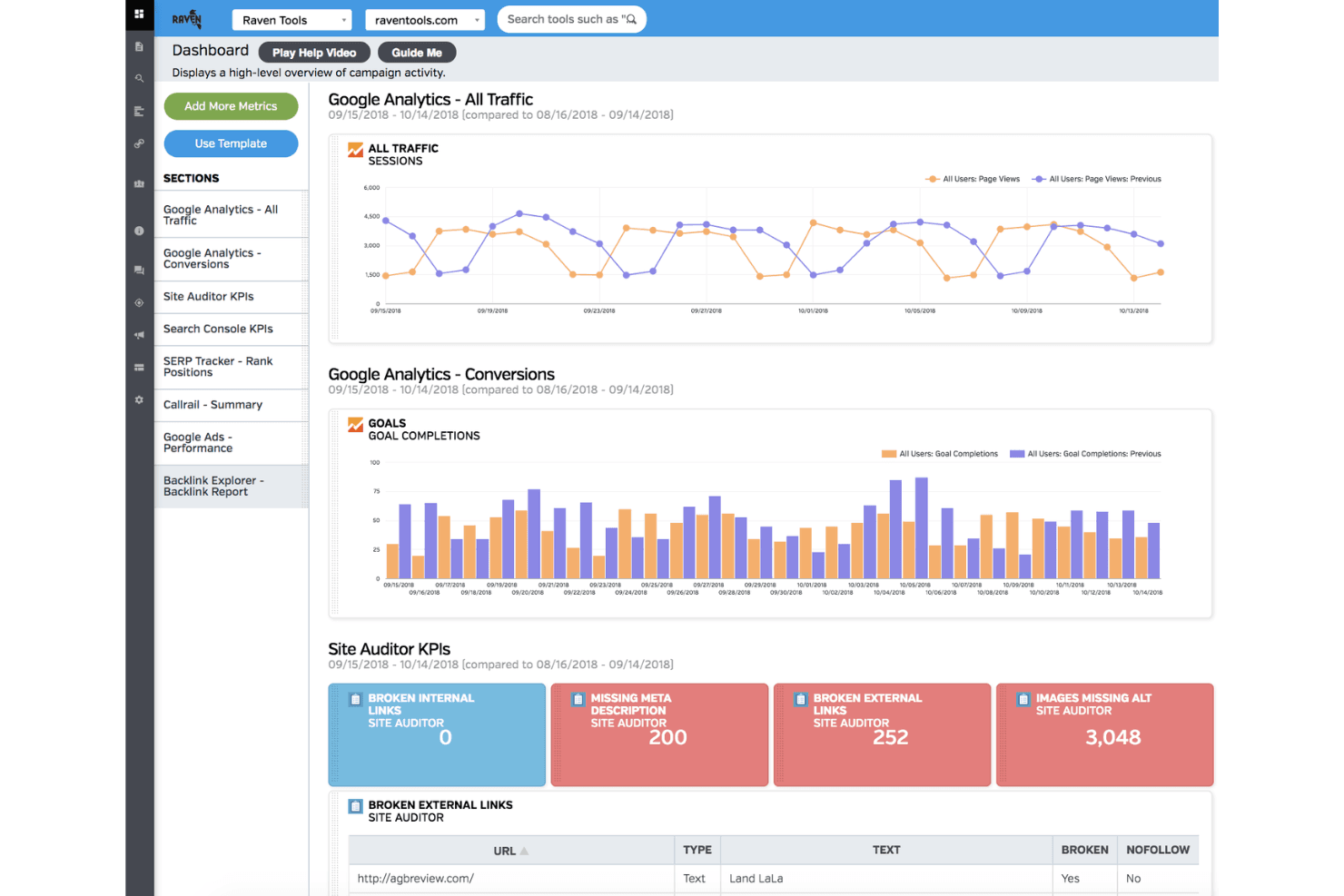
In my opinion, Raven Tools is a reliable choice for digital marketing teams looking for a solid SEO reporting solution. Its intuitive interface makes it accessible, while the comprehensive onboarding ensures a smooth start. Compared to other tools, Raven Tools excels in ease of use and provides valuable insights, though it may not be the best for those needing extensive integrations. It's particularly beneficial for agencies and teams focusing on SEO analysis without needing to juggle multiple platforms. If you're seeking a straightforward tool with effective reporting, Raven Tools should be on your list.
Pros
- Raven Tools offers an intuitive interface that makes navigation easy for your team.
- The onboarding process is straightforward, helping your team get started quickly.
- It provides detailed reporting, which enhances your team's SEO analysis capabilities.
Cons
- Raven Tools may lack some advanced features that your team might find in other tools.
- Some users report that data updates can be slow, impacting their work efficiency.
- The customization options for reports might not meet all of your team's needs.
Is Raven Tools Right For Your Needs?
Who Would be a Good Fit for Raven Tools?
Raven Tools is ideal for digital marketing agencies and small to medium-sized businesses that need effective SEO reporting. If your team values intuitive navigation and detailed reporting, it’s a solid choice. Teams focused on SEO analysis will appreciate its easy onboarding, straightforward interface, and built-in research tools. For example, e-commerce businesses and content publishers can benefit from its capabilities to track search visibility and analyze data efficiently.
- Digital Marketing AgenciesRaven Tools simplifies client reporting, making it a valuable tool for agencies managing multiple clients.
- E-commerce BusinessesIts detailed reporting helps track search visibility, crucial for online retail success.
- Content PublishersRaven Tools offers insights into SEO performance, aiding in content optimization.
- Small BusinessesThe intuitive interface makes it accessible for teams with limited resources.
- SEO SpecialistsRaven Tools provides the data needed for in-depth SEO analysis.
- Marketing DepartmentsIt enhances your team's ability to generate reports and track SEO progress efficiently.
Who Would be a Bad Fit for Raven Tools?
Raven Tools might not be suitable for large enterprises or teams needing extensive integrations and advanced features. If your team relies heavily on custom reporting or advanced data manipulation, you might find its capabilities limiting. Businesses in tech industries with complex SEO needs could struggle with the lack of advanced features compared to competitors. Its slower data updates might hinder teams that require real-time insights.
- Large EnterprisesRaven Tools doesn't offer the advanced features and integrations needed for complex corporate SEO tasks.
- Tech IndustriesThe tool might not meet the high demands for customization and real-time data analysis in tech sectors.
- Advanced SEO TeamsIf your team needs extensive custom reporting, Raven Tools might not provide the flexibility required.
- Data-Driven DepartmentsSlower data updates can be a drawback for departments needing quick, real-time insights.
- Custom Reporting NeedsRaven Tools's limited customization options might not suit teams needing highly tailored reports.
- Complex SEO ProjectsThe tool's basic features may not support the intricate SEO requirements of large-scale projects.
How We Test & Score Tools
We’ve spent years building, refining, and improving our software testing and scoring system. The rubric is designed to capture the nuances of software selection and what makes a tool effective, focusing on critical aspects of the decision-making process.
Below, you can see exactly how our testing and scoring works across seven criteria. It allows us to provide an unbiased evaluation of the software based on core functionality, standout features, ease of use, onboarding, customer support, integrations, customer reviews, and value for money.
Core Functionality (25% of final scoring)
The starting point of our evaluation is always the core functionality of the tool. Does it have the basic features and functions that a user would expect to see? Are any of those core features locked to higher-tiered pricing plans? At its core, we expect a tool to stand up against the baseline capabilities of its competitors.
Standout Features (25% of final scoring)
Next, we evaluate uncommon standout features that go above and beyond the core functionality typically found in tools of its kind. A high score reflects specialized or unique features that make the product faster, more efficient, or offer additional value to the user.
We also evaluate how easy it is to integrate with other tools typically found in the tech stack to expand the functionality and utility of the software. Tools offering plentiful native integrations, 3rd party connections, and API access to build custom integrations score best.
Ease of Use (10% of final scoring)
We consider how quick and easy it is to execute the tasks defined in the core functionality using the tool. High scoring software is well designed, intuitive to use, offers mobile apps, provides templates, and makes relatively complex tasks seem simple.
Onboarding (10% of final scoring)
We know how important rapid team adoption is for a new platform, so we evaluate how easy it is to learn and use a tool with minimal training. We evaluate how quickly a team member can get set up and start using the tool with no experience. High scoring solutions indicate little or no support is required.
Customer Support (10% of final scoring)
We review how quick and easy it is to get unstuck and find help by phone, live chat, or knowledge base. Tools and companies that provide real-time support score best, while chatbots score worst.
Customer Reviews (10% of final scoring)
Beyond our own testing and evaluation, we consider the net promoter score from current and past customers. We review their likelihood, given the option, to choose the tool again for the core functionality. A high scoring software reflects a high net promoter score from current or past customers.
Value for Money (10% of final scoring)
Lastly, in consideration of all the other criteria, we review the average price of entry level plans against the core features and consider the value of the other evaluation criteria. Software that delivers more, for less, will score higher.
Core Features
Keyword Research: Raven Tools helps you discover and analyze high-value keywords across major search engine results with detailed metrics.
Competitor Analysis: Compare your site’s performance against competitors to uncover strengths and opportunities.
Site Audits: Scan your website for SEO issues such as broken links, missing tags, and technical errors.
Backlink Monitoring: Track backlinks to your site and support effective link management by analyzing link quality and anchor-text distribution to improve your link-building strategy.
Rank Tracking: Monitor how your targeted keywords rank over time to assess SEO progress.
Custom Reporting: Build tailored reports with insights on performance, trends, and key SEO metrics.
Ease of Use
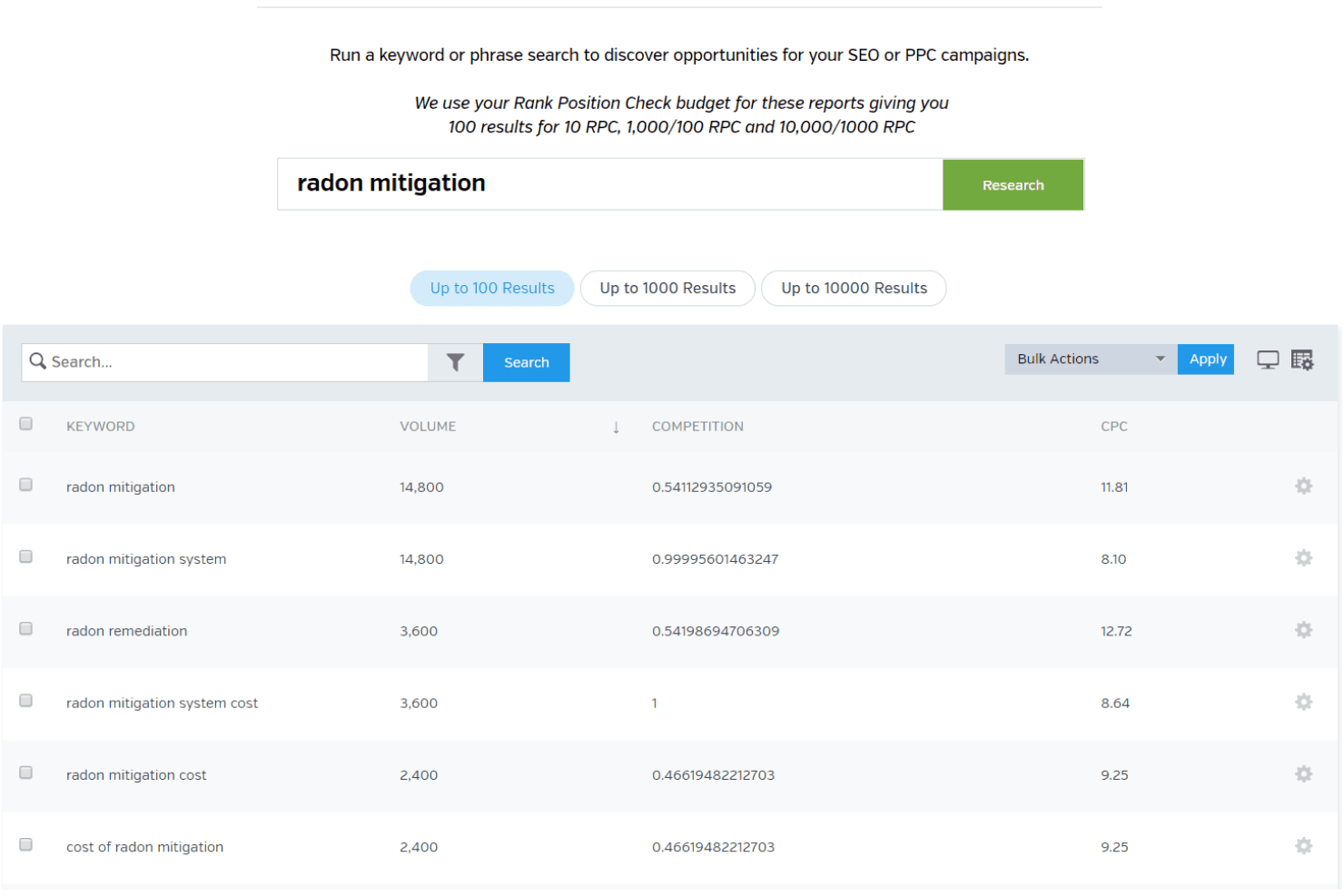
Raven Tools is known for its user-friendly interface that makes navigation a breeze for your team. The intuitive design ensures that even new users can quickly find their way around. Its straightforward onboarding process helps your team get up and running without a hitch. Compared to other SEO tools, Raven Tools stands out with its simplicity, allowing you to focus on your SEO strategy rather than getting bogged down by complex features.
Integrations
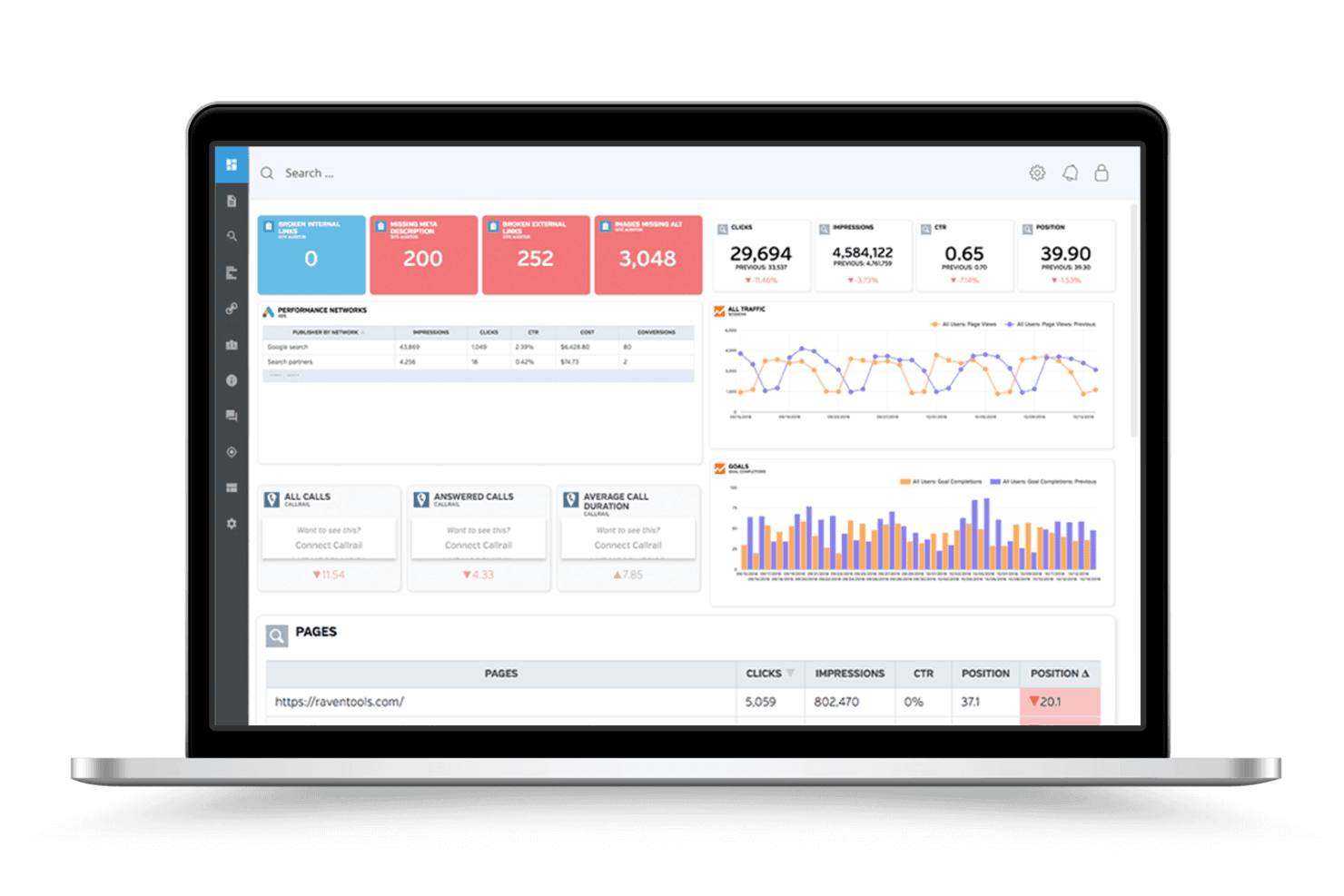
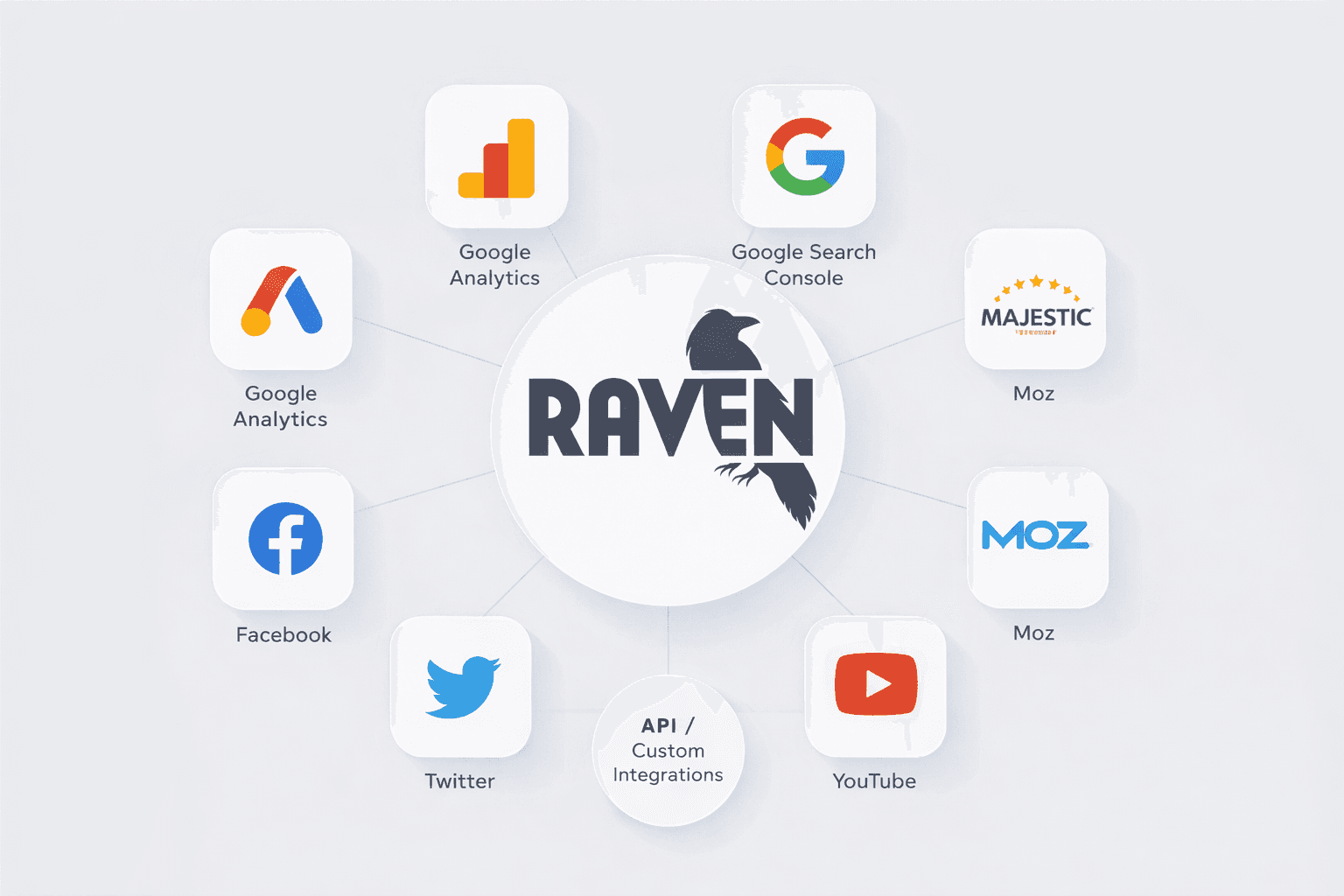
Raven Tools integrates with Google Analytics, Google Search Console, Majestic, and Moz for SEO data, and connects with Google Ads, Bing Ads, and Facebook Ads for paid campaign reporting. It also pulls social metrics from platforms like Facebook, Twitter, LinkedIn, and YouTube, and offers an API for custom integrations.
Raven Tools Specs
- API: No
- Audience Targeting: No
- Brand Management: No
- Conversion Tracking: No
- Dashboard: No
- Data Export: No
- Data Import: No
- Data Visualization: No
- External Integrations: No
- Keyword Tracking: No
- Link Tracking: No
- Marketing Automation: No
- Multi-Account: No
- Multi-User: No
- Notifications: No
- Social-Media Integration: No


