

Recensione di SharpSpring 2026: pro, contro, funzionalità & prezzi
I put SharpSpring’s automation, CRM, and agency-friendly pricing under the microscope to see whether its flexibility outweighs the learning curve—and who should actually choose it.

Recensiamo gli strumenti in modo indipendente, e le commissioni aiutano a finanziare i nostri test. Consulta la nostra politica sulla trasparenza, la nostra metodologia o suggerisci uno strumento.
SharpSpring is marketing automation software with CRM, email campaigns, lead scoring, workflow automation, and reporting for teams managing complex lead journeys. I’d consider it for agencies and growing businesses that need flexible automation across multiple clients or campaigns, especially when compared with HubSpot, because SharpSpring offers agency-focused tools and pricing that can better suit multi-client marketing programs.
SharpSpring Evaluation Summary
4.5/5
- Pricing upon request
- Free demo available
Perché fidarsi dei nostri consigli sui software
6,700+
Reviews
20
Industry experts
16+
Evaluation factors
14
Years
Il nostro team testa e recensisce software dal 2012. In quanto leader del marketing noi stessi, sappiamo quanto sia difficile — e importante — scegliere il software giusto.
Per questa guida, abbiamo valutato gli strumenti attraverso test pratici e ricerche indipendenti, assegnando un punteggio agli strumenti in base ai nostri criteri di selezione.
Le nostre recensioni riflettono il nostro giudizio editoriale umano, non un discorso di vendita.
Revisori esperti:
 Gui DrusinaDirettore creativo
- Shriya GhateSenior Marketing Lead
 Amanda JacquesResponsabile Marketing Ops

SharpSpring Overview
I’d choose SharpSpring for agencies and growing teams that need CRM, email campaigns, lead scoring, workflow automation, landing pages, and reporting in one platform. Its flexible automation and multi-client account structure outperform many tools built for a single brand, while agency-focused pricing can make larger contact volumes easier to judge. The trade-off is a busier interface, quote-based pricing, and onboarding that requires planning. Integrations cover common CRM, advertising, webinar, and analytics needs, while support and onboarding help teams configure campaigns. I think it suits marketers who value flexibility over simplicity.
Pros
- Visual workflows connect behavioral triggers with email and sales actions.
- Built-in CRM tracks activity across each lead’s timeline.
- Agency accounts support white-labeling, client consoles, and unlimited users.
Cons
- Quote-based pricing and onboarding fees complicate direct budget comparisons.
- Landing-page and email editors feel dated beside newer builders.
- Reporting offers less depth than dedicated analytics platforms.
Is SharpSpring Right For Your Needs?
Who Would be a Good Fit for SharpSpring?
SharpSpring fits agencies and larger marketing teams that need contact-based pricing, flexible automation, and shared access for multiple users. It also suits sales and marketing departments that need CRM timelines, lead scoring, forms, reporting, and notifications connected to campaign workflows.
- Marketing AgenciesAgency pricing includes unlimited users, client management tools, month-to-month billing, and a rebrandable interface.
- Larger TeamsPlans with 10,000 or more contacts include unlimited users, allowing larger teams to work within the same marketing platform.
- Sales Marketing TeamsCRM timelines, lead scoring, sales notifications, and workflow automation support coordination between marketing and sales departments.
- Lead Generation TeamsDynamic forms, landing pages, chatbots, email marketing, and analytics support teams managing lead capture and follow-up campaigns.
- Salesforce UsersSharpSpring connects with Salesforce, giving teams a documented integration for linking marketing activity with their CRM processes.
- Complex WorkflowsThe visual workflow builder supports branching triggers and persona-based messaging for teams managing detailed automation paths.
Who Would be a Bad Fit for SharpSpring?
SharpSpring is a poor match for small databases, beginner users, and teams that need quick campaign launches without configuration work. Its contact-based pricing, dated editors, learning curve, and narrower named integration set can create unnecessary cost or setup effort for simpler marketing programs.
- Small DatabasesThe $449 monthly starting price for 1,000 contacts can be expensive for small businesses with limited marketing budgets.
- Beginner MarketersThe workflow builder supports many automation options, but its breadth creates a learning curve for users without onboarding time.
- Quick CampaignsTeams seeking fast, self-serve launches may struggle with configuration across personas, scoring, forms, and integrations.
- Modern EditorsSharpSpring’s dated email and landing page editors make it a weaker choice for teams prioritizing a newer content creation experience.
- Broad IntegrationsTeams needing many native integrations should review SharpSpring’s available connections because the documented options include Salesforce, GoToWebinar, and Facebook Lead Ads.
- Limited Support HoursTeams needing phone assistance outside Monday through Friday, 8 a.m. to 6 p.m. Eastern Time, may find the support schedule restrictive.
Come Testiamo e Valutiamo gli Strumenti
Abbiamo passato anni a costruire, perfezionare e migliorare il nostro sistema di test e valutazione del software. Il nostro metodo è progettato per cogliere le sfumature nella selezione del software e ciò che rende uno strumento efficace, concentrandoci sugli aspetti critici del processo decisionale. Qui sotto puoi vedere esattamente come funziona il nostro sistema di test e valutazione su sette criteri. Questo ci permette di offrire una valutazione imparziale del software basata su funzionalità principali, funzioni distintive, facilità d’uso, onboarding, supporto clienti, integrazioni, recensioni dei clienti e rapporto qualità-prezzo.
Funzionalità principali (25% del punteggio finale)
Il punto di partenza della nostra valutazione è sempre la funzionalità principale dello strumento. Include le caratteristiche e le funzioni basilari che un utente si aspetterebbe di trovare? Alcune di queste funzionalità sono bloccate nei piani premium? Ci aspettiamo che ogni strumento soddisfi almeno le capacità di base dei suoi concorrenti.
Funzionalità distintive (25% del punteggio finale)
Successivamente, valutiamo le funzionalità uniche che vanno oltre la normale funzionalità principale, quelle poco comuni negli strumenti simili. Un punteggio alto riflette caratteristiche specializzate o uniche che rendono il prodotto più veloce, efficiente o offrono un valore aggiunto all’utente. Valutiamo anche quanto sia semplice integrare il software con altri strumenti abitualmente usati in una tech stack, per espandere le funzionalità e l’utilità del prodotto. Sono valutate positivamente soluzioni con molte integrazioni native, connessioni di terze parti e API per creare integrazioni personalizzate.
Facilità d’uso (10% del punteggio finale)
Consideriamo la rapidità e semplicità con cui si possono eseguire le attività principali tramite lo strumento. I software con punteggio più alto sono ben progettati, intuitivi, dispongono di app mobili, offrono template e semplificano compiti complessi.
Onboarding (10% del punteggio finale)
Sappiamo quanto sia importante l’adozione rapida in azienda, quindi valutiamo la facilità di apprendimento e utilizzo di uno strumento con formazione minima. Analizziamo quanto velocemente un utente senza esperienza può iniziare a usare il software. Le soluzioni migliori richiedono poco o nessun supporto.
Supporto clienti (10% del punteggio finale)
Analizziamo la rapidità e facilità nel trovare aiuto tramite telefono, chat dal vivo o knowledge base. Gli strumenti che offrono supporto in tempo reale ottengono il punteggio migliore: i chatbot invece i peggiori.
Recensioni dei clienti (10% del punteggio finale)
Oltre ai nostri test, consideriamo il net promoter score di attuali ed ex clienti. Valutiamo la probabilità che, potendo scegliere, l’utente decida di utilizzare ancora quello strumento per le funzionalità principali. Un software con un punteggio alto corrisponde ad un alto net promoter score tra clienti attuali o passati.
Rapporto qualità-prezzo (10% del punteggio finale)
Infine, tenendo conto di tutti gli altri criteri, confrontiamo il prezzo medio dei piani base rispetto alle funzionalità principali e agli altri fattori di valutazione. I software che offrono di più, a meno, ottengono i punteggi più alti.
Core Features
Workflow Automation
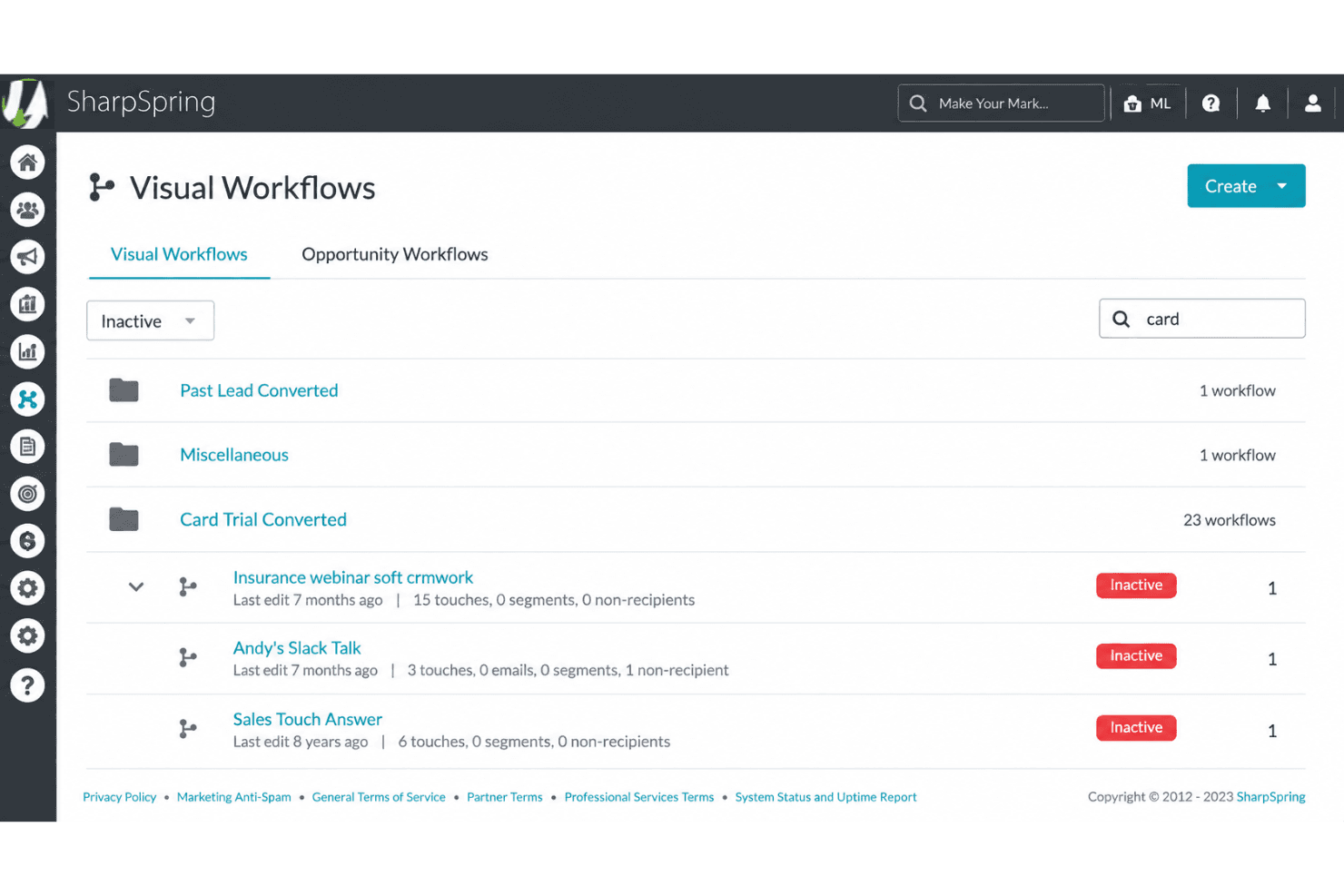
SharpSpring’s visual workflow builder uses branching logic, buyer personas, and behavioral triggers to move leads through personalized campaigns. You can route a form submission into an email sequence, notify sales after a page visit, or change messaging by persona.
Email Marketing
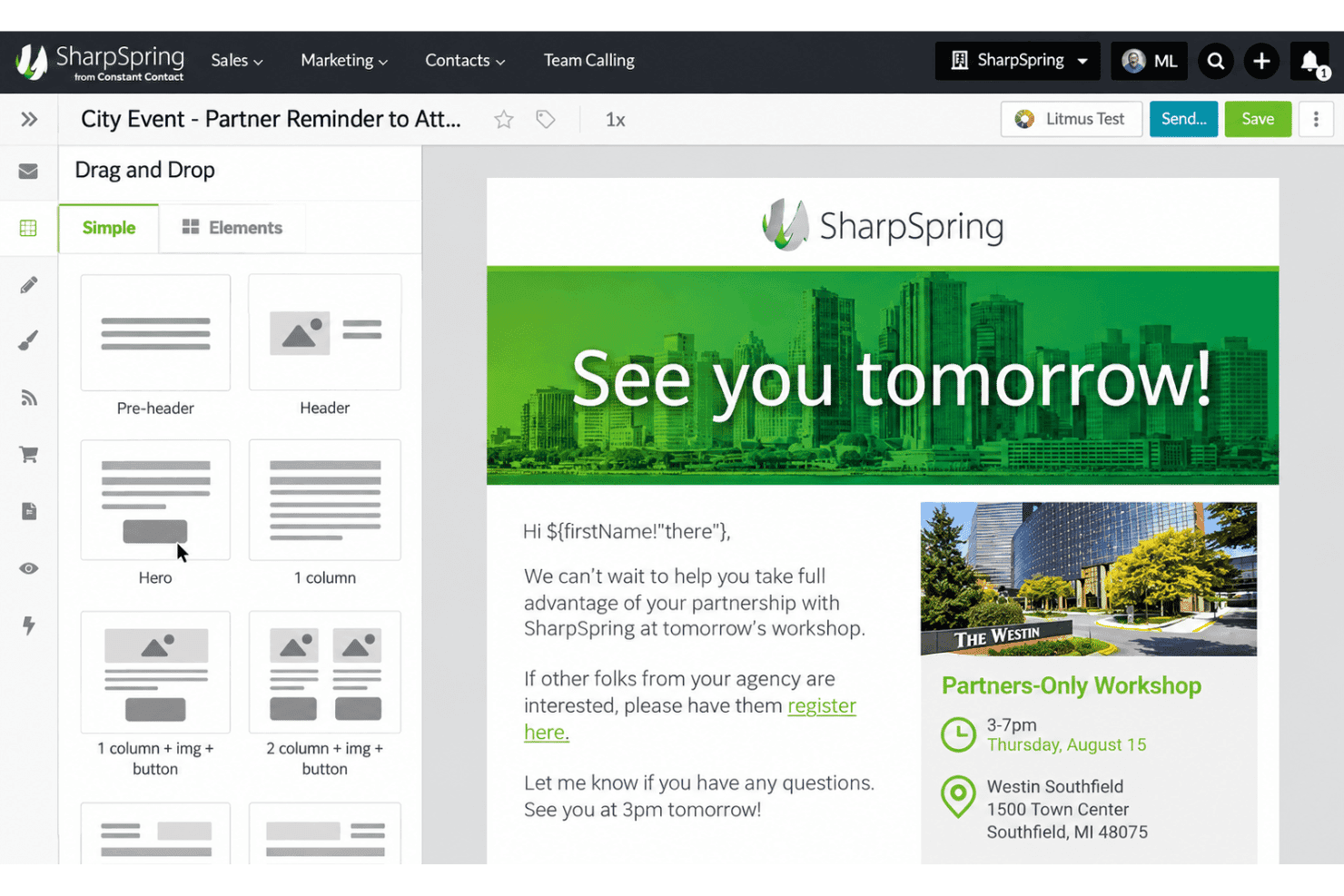
SharpSpring sends targeted email messages and tracks post-click activity within each lead’s CRM record. You can use engagement data to time follow-up emails and continue lead nurturing from one campaign.
Lead Scoring
SharpSpring scores leads using engagement, page visits, fit, and natural lead decay over time. This helps sales focus on contacts showing meaningful intent, such as repeated visits to a pricing page.
Dynamic Forms
The drag-and-drop form builder creates forms with autocomplete fields, custom CSS, and field mapping. Known visitors can complete forms with less typing, while marketers capture submissions in consistent CRM fields.
Landing Pages
SharpSpring provides a point-and-click landing-page editor, templates, funnel support, and dynamic content based on visitor attributes. You can create campaign-specific pages and show different content to visitors based on their profiles.
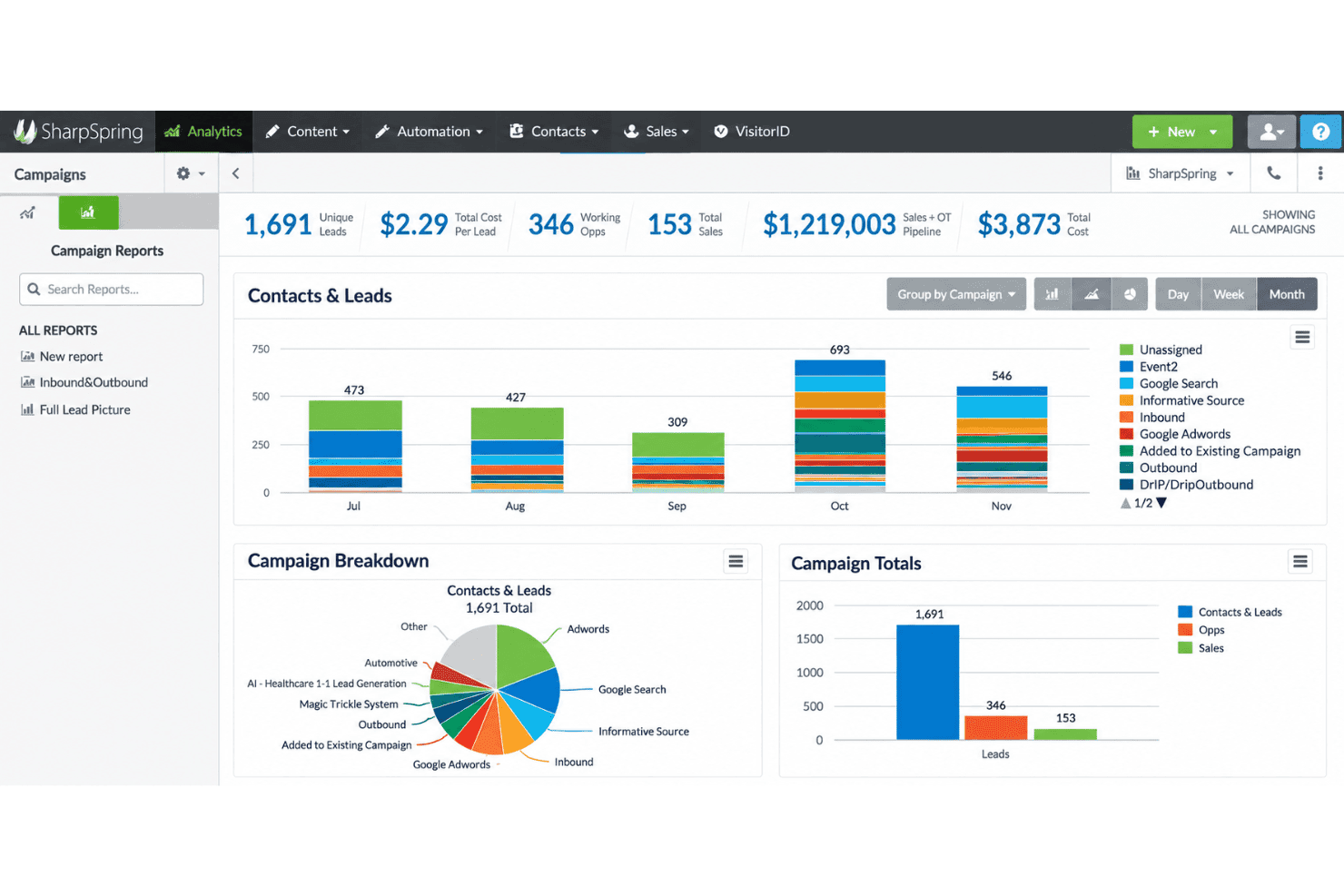
Analytics And Reporting
SharpSpring creates custom reports using behavior, engagement, campaign ROI, and online or offline lead-source data. Shareable reports help marketing teams connect campaign activity with lead sources and client performance.
Ease of Use
SharpSpring is usable once configured, but I wouldn’t call it beginner-friendly. User reviews often praise its flexible automation and CRM timeline while criticizing the dated editors and learning curve. The visual workflow builder handles branching triggers, persona-based messaging, and sales notifications, but its breadth creates setup work. I’d recommend it to teams willing to invest in onboarding; smaller teams wanting quick campaign creation may find the interface busier than expected.
Integrations
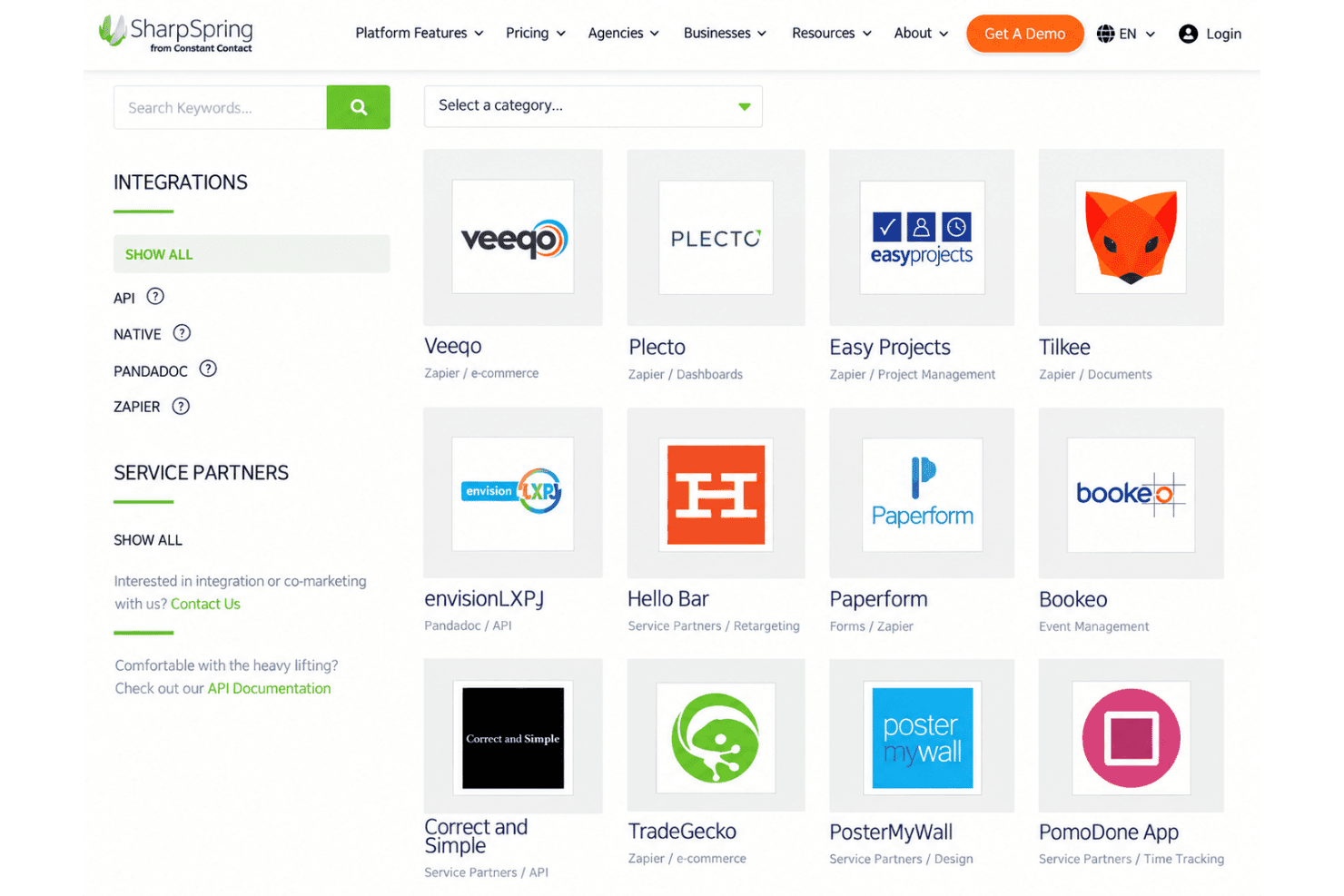
SharpSpring integrates with Salesforce and Facebook Lead Ads and connects with GoToWebinar through Zapier.
SharpSpring also provides an open API and supports third-party integrations through tools such as Zapier.
SharpSpring Specs
- A/B Testing: Yes
- Analytics: Yes
- API: Yes
- Audience Targeting: Yes
- Automated Conversion: No
- Batch Permissions & Access: No
- Behavioral Tracking: Yes
- Brand Management: No
- Campaign Management: Yes
- Contact Management: Yes
- Contact Sharing: No
- Conversion Tracking: Yes
- CRM Integration: Yes
- Customer Management: Yes
- Dashboards: Yes
- Data Export: Yes
- Data Import: Yes
- Email Integration: Yes
- External Integrations: Yes
- Keyword Tracking: No
- Landing Pages: Yes
- Lead Management: Yes
- Lead Scoring: Yes
- Link Tracking: Yes
- Marketing Automation: Yes
- Multi-User: Yes
- Notifications: Yes
- Password & Access Management: Yes
- Social-Media Integration: Yes


