

Recensione Looker Studio: Pro, Contro, Caratteristiche e Prezzi Spiegati
Looker Studio si distingue per la perfetta integrazione con Google e la flessibilità nella visualizzazione dei dati, ma può risultare limitato per analisi avanzate rispetto a piattaforme di intelligenza di marketing specializzate.

Recensiamo gli strumenti in modo indipendente, e le commissioni aiutano a finanziare i nostri test. Consulta la nostra politica sulla trasparenza, la nostra metodologia o suggerisci uno strumento.
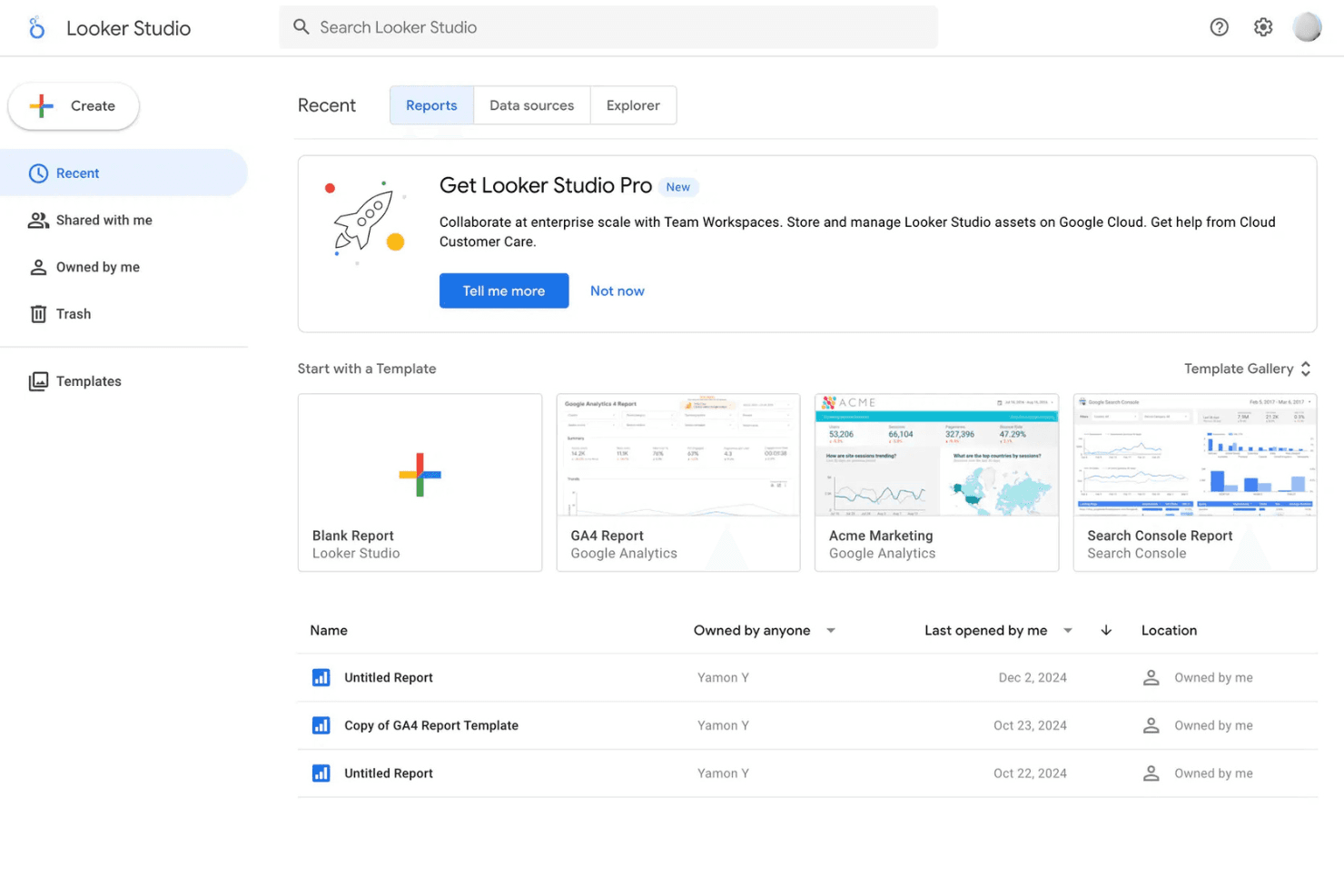
Looker Studio is a marketing intelligence software built around data visualization and dashboard reporting, designed for teams that need to pull marketing data into a single, shareable view. I'd consider it most seriously if your stack is Google-heavy—it connects natively with GA4, Google Ads, and Search Console out of the box. It's also free, which puts it in a different category than Tableau for teams that need flexible, custom reporting without a licensing cost attached to every seat.
Looker Studio Evaluation Summary
4.4/5
- From $9/user/project/month
- Free plan available
Perché fidarsi dei nostri consigli sui software
6,700+
Reviews
20
Industry experts
16+
Evaluation factors
14
Years
Il nostro team testa e recensisce software dal 2012. In quanto leader del marketing noi stessi, sappiamo quanto sia difficile — e importante — scegliere il software giusto.
Per questa guida, abbiamo valutato gli strumenti attraverso test pratici e ricerche indipendenti, assegnando un punteggio agli strumenti in base ai nostri criteri di selezione.
Le nostre recensioni riflettono il nostro giudizio editoriale umano, non un discorso di vendita.
Revisori esperti:
 Gui DrusinaDirettore creativo
- Shriya GhateSenior Marketing Lead
 Amanda JacquesResponsabile Marketing Ops

Looker Studio Overview
If you’re judging Looker Studio against other marketing intelligence software, I think its Google ecosystem integration, free pricing tier, and easy onboarding make it a top pick for teams already using Google Workspace. The drag-and-drop interface and wide range of connectors help you quickly build dashboards, but advanced users may find its analytics depth limited compared to more specialized tools.
In my experience, it’s best for marketing teams that need fast, collaborative reporting and don’t require heavy-duty data modeling or complex automation. For example, campaign performance dashboards and cross-channel reporting are where Looker Studio shines.
Pros
- Looker Studio offers intuitive data visualization tools that are easy for your team to use.
- It provides real-time data updates, keeping your work current and accurate.
- The platform supports collaboration, making it simple for your team to work together on data projects.
Cons
- Some users find the learning curve a bit steep, which might slow your team's initial adoption.
- The customization options for visualizations are limited, which might not meet all your needs.
- Advanced users may find the depth of features lacking for highly specialized tasks.
Is Looker Studio Right For Your Needs?
Who Would be a Good Fit for Looker Studio?
Looker Studio is ideal for marketing teams, finance departments, and tech startups that need to turn data into actionable insights quickly. Its real-time data updates and collaborative features help your team stay informed and aligned. If you’re in an industry where data-driven decisions are key, like e-commerce or SaaS, Looker Studio’s intuitive visualizations and straightforward interface make it a solid choice for your team.
- Marketing TeamsLooker Studio helps your team visualize campaign performance data, making it easier to track KPIs and adjust strategies in real-time.
- Finance DepartmentsIts real-time data updates let your team monitor financial trends and make informed budgeting decisions.
- Tech StartupsThe platform supports rapid iteration and data-driven decision-making crucial for your fast-paced environment.
- E-commerce BusinessesLooker Studio’s visualizations help you track sales trends and customer behavior, enhancing your strategic planning.
- Product ManagersYou can leverage data insights to guide product development and align with user needs.
- Business AnalystsThe intuitive interface and visualization tools make it easier for you to analyze data and convey insights to stakeholders.
Who Would be a Bad Fit for Looker Studio?
Looker Studio might not suit large corporations with highly specialized data needs or industries requiring deep customization, like aerospace or pharmaceuticals. If your team needs complex, tailored visualizations or advanced analytics beyond the standard offerings, you might find Looker Studio’s customization options too limited. Additionally, if your organization lacks the resources for initial training, the learning curve could be a barrier.
- Aerospace CompaniesThe need for highly specialized and custom data visualizations might not be met by Looker Studio’s standard features.
- Pharmaceutical ResearchAdvanced analytics and customization required for clinical data might be beyond Looker Studio’s capabilities.
- Large EnterprisesComplex data environments and specific needs for customization might not be fully supported.
- Data ScientistsThe platform’s visualizations may not meet the depth of analysis and customization you require.
- Custom Analytics TeamsIf your work requires building highly tailored analytics solutions, Looker Studio’s limitations could be a hindrance.
- Government AgenciesThe need for highly secure, customized, and complex data handling might not align with Looker Studio’s offerings.
Come Testiamo e Valutiamo gli Strumenti
Abbiamo passato anni a costruire, perfezionare e migliorare il nostro sistema di test e valutazione del software. Il nostro metodo è progettato per cogliere le sfumature nella selezione del software e ciò che rende uno strumento efficace, concentrandoci sugli aspetti critici del processo decisionale. Qui sotto puoi vedere esattamente come funziona il nostro sistema di test e valutazione su sette criteri. Questo ci permette di offrire una valutazione imparziale del software basata su funzionalità principali, funzioni distintive, facilità d’uso, onboarding, supporto clienti, integrazioni, recensioni dei clienti e rapporto qualità-prezzo.
Funzionalità principali (25% del punteggio finale)
Il punto di partenza della nostra valutazione è sempre la funzionalità principale dello strumento. Include le caratteristiche e le funzioni basilari che un utente si aspetterebbe di trovare? Alcune di queste funzionalità sono bloccate nei piani premium? Ci aspettiamo che ogni strumento soddisfi almeno le capacità di base dei suoi concorrenti.
Funzionalità distintive (25% del punteggio finale)
Successivamente, valutiamo le funzionalità uniche che vanno oltre la normale funzionalità principale, quelle poco comuni negli strumenti simili. Un punteggio alto riflette caratteristiche specializzate o uniche che rendono il prodotto più veloce, efficiente o offrono un valore aggiunto all’utente. Valutiamo anche quanto sia semplice integrare il software con altri strumenti abitualmente usati in una tech stack, per espandere le funzionalità e l’utilità del prodotto. Sono valutate positivamente soluzioni con molte integrazioni native, connessioni di terze parti e API per creare integrazioni personalizzate.
Facilità d’uso (10% del punteggio finale)
Consideriamo la rapidità e semplicità con cui si possono eseguire le attività principali tramite lo strumento. I software con punteggio più alto sono ben progettati, intuitivi, dispongono di app mobili, offrono template e semplificano compiti complessi.
Onboarding (10% del punteggio finale)
Sappiamo quanto sia importante l’adozione rapida in azienda, quindi valutiamo la facilità di apprendimento e utilizzo di uno strumento con formazione minima. Analizziamo quanto velocemente un utente senza esperienza può iniziare a usare il software. Le soluzioni migliori richiedono poco o nessun supporto.
Supporto clienti (10% del punteggio finale)
Analizziamo la rapidità e facilità nel trovare aiuto tramite telefono, chat dal vivo o knowledge base. Gli strumenti che offrono supporto in tempo reale ottengono il punteggio migliore: i chatbot invece i peggiori.
Recensioni dei clienti (10% del punteggio finale)
Oltre ai nostri test, consideriamo il net promoter score di attuali ed ex clienti. Valutiamo la probabilità che, potendo scegliere, l’utente decida di utilizzare ancora quello strumento per le funzionalità principali. Un software con un punteggio alto corrisponde ad un alto net promoter score tra clienti attuali o passati.
Rapporto qualità-prezzo (10% del punteggio finale)
Infine, tenendo conto di tutti gli altri criteri, confrontiamo il prezzo medio dei piani base rispetto alle funzionalità principali e agli altri fattori di valutazione. I software che offrono di più, a meno, ottengono i punteggi più alti.
Core Features
Customizable Dashboards
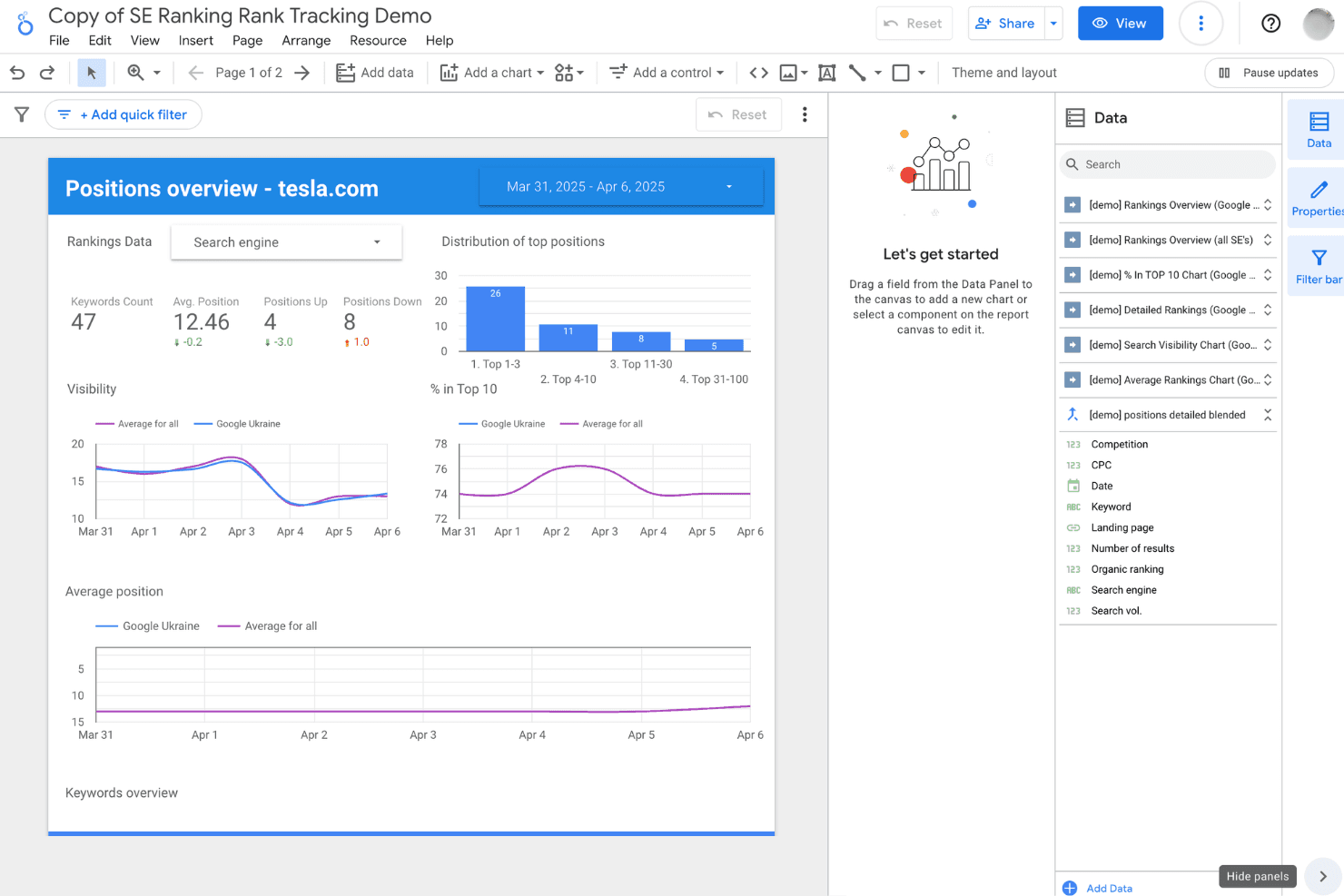
Build interactive dashboards with drag-and-drop widgets and charts. Users can tailor layouts to highlight KPIs and campaign metrics.
Data Blending
Combine data from multiple sources into a single report. This helps you compare performance across channels in one view.
Real-Time Collaboration
Share reports and dashboards with teammates for live editing. Multiple users can comment and update insights simultaneously.
Scheduled Report Delivery
Automate report distribution to stakeholders via email on a set schedule. This keeps teams and clients updated without manual effort.
Calculated Fields
Create custom metrics and formulas directly within reports. This lets you track unique business goals without exporting data.
Visualization Library
Access a wide range of charts, tables, and graphs for data storytelling. Choose from bar charts, geo maps, scorecards, and more to fit your reporting needs.
Ease of Use
Looker Studio is one of the most approachable marketing intelligence tools for non-technical users, thanks to its drag-and-drop dashboard builder and familiar Google interface. Most users can create and share reports quickly without coding or IT help. The onboarding process is straightforward, and the platform’s real-time collaboration feels intuitive. However, some users mention that managing very large datasets or highly customized reports can get clunky, especially as dashboards grow in complexity.
Integrations
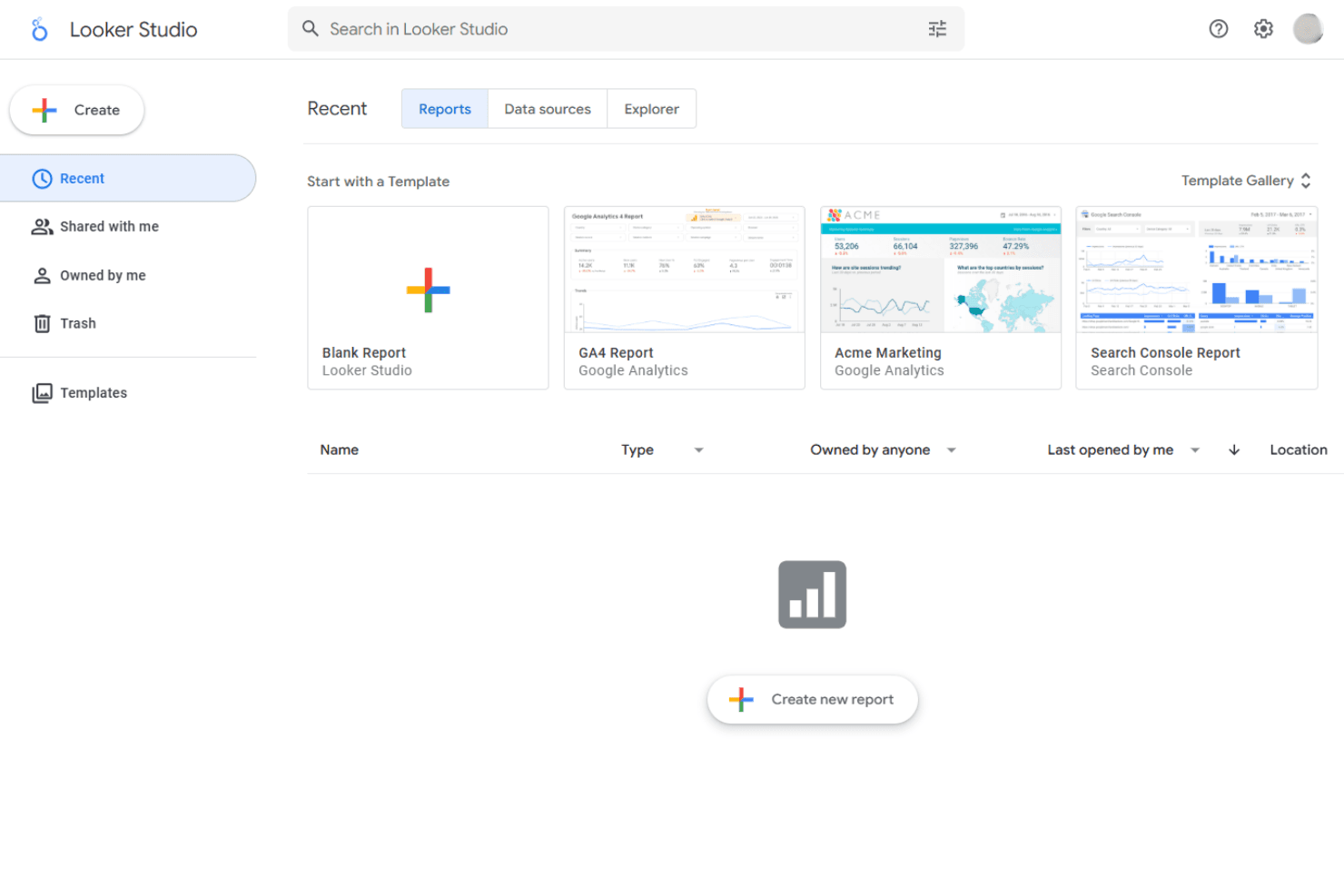
Looker Studio integrates with Google Analytics, Google Ads, Google Sheets, BigQuery, YouTube Analytics, Google Search Console, Campaign Manager, Display & Video 360, Google Ad Manager, and Cloud SQL, among others.
Looker Studio also supports community connectors, offers an API, and can connect with third-party integration tools for even broader data access.
Looker Studio Specs
- A/B Testing: No
- Analytics: Yes
- API: Yes
- Audience Targeting: No
- Automated Conversion: No
- Batch Permissions & Access: No
- Behavioral Tracking: No
- Brand Management: No
- Campaign Management: No
- Contact Management: No
- Contact Sharing: No
- Conversion Tracking: No
- CRM Integration: Yes
- Customer Management: No
- Dashboards: Yes
- Data Export: Yes
- Data Import: Yes
- Email Integration: Yes
- External Integrations: Yes
- Keyword Tracking: No
- Landing Pages: No
- Lead Management: No
- Lead Scoring: No
- Link Tracking: No
- Marketing Automation: No
- Multi-User: Yes
- Notifications: Yes
- Password & Access Management: Yes
- Social-Media Integration: No


