

Recensione di Bloomreach 2026: vantaggi, svantaggi, funzionalità e prezzi
I judge Bloomreach email marketing by more than its campaign tools: this review weighs the features, trade-offs, and pricing to see whether it fits your broader marketing needs.

Recensiamo gli strumenti in modo indipendente, e le commissioni aiutano a finanziare i nostri test. Consulta la nostra politica sulla trasparenza, la nostra metodologia o suggerisci uno strumento.
Bloomreach is email marketing software that uses real-time customer data to personalize campaigns across email, SMS, and web. It’s a better fit than Klaviyo for ecommerce teams that want to coordinate on-site personalization and customer journeys across multiple channels, not just email and SMS.
Bloomreach Evaluation Summary
4.7/5
- From $60,000/year
- Free demo available
Perché fidarsi dei nostri consigli sui software
6,700+
Reviews
20
Industry experts
16+
Evaluation factors
14
Years
Il nostro team testa e recensisce software dal 2012. In quanto leader del marketing noi stessi, sappiamo quanto sia difficile — e importante — scegliere il software giusto.
Per questa guida, abbiamo valutato gli strumenti attraverso test pratici e ricerche indipendenti, assegnando un punteggio agli strumenti in base ai nostri criteri di selezione.
Le nostre recensioni riflettono il nostro giudizio editoriale umano, non un discorso di vendita.
Revisori esperti:
 Gui DrusinaDirettore creativo
- Shriya GhateSenior Marketing Lead
 Amanda JacquesResponsabile Marketing Ops

Bloomreach Overview
I’d judge Bloomreach as an enterprise marketing platform with email at its core, not a basic newsletter tool. Real-time profiles, segmentation, a drag-and-drop editor, testing, and journey automation can trigger cart recovery from browsing data and extend campaigns to SMS and web. Compared with email-only tools, it offers broader orchestration and revenue reporting, though data setup and platform complexity call for technical planning. Included onboarding, 175+ integrations, training, and 24/7 in-app chat support adoption. I’d choose it for larger ecommerce teams coordinating personalized journeys across channels.
Pros
- Real-time behavioral profiles support precise, frequently refreshed email segments.
- Journey automation triggers emails from browsing, cart, and purchase signals.
- AI send-time optimization and multivariate testing refine campaign delivery.
Cons
- Custom annual contracts start around $60,000, pricing out smaller teams.
- Implementation can take 8–12 weeks and demands advance data planning.
- Reviewers report limited dashboard flexibility and vague error logs.
Is Bloomreach Right For Your Needs?
Who Would be a Good Fit for Bloomreach?
I’d recommend Bloomreach for established businesses with customer data, technical support, and a need for tailored email journeys. Its real-time segments, triggered and batch email, personalization, and visual journey builder support programs that go beyond basic newsletters.
- Large RetailersRetailers with sizable customer lists can use real-time segments and personalized email to tailor campaigns to customer behavior.
- Ecommerce BrandsEcommerce teams can connect platforms such as Shopify, Adobe Commerce, or BigCommerce and coordinate email with product recommendations.
- Omnichannel TeamsMarketing teams coordinating email with other channels can use Bloomreach’s journey orchestration and all-channel plans.
- Lifecycle MarketersLifecycle teams can build visual journeys and send triggered messages alongside batch campaigns.
- Data-Rich BusinessesTeams with customer data in platforms such as Snowflake, Databricks, or Twilio Segment can connect those sources to support segmentation and personalization.
- Enterprise Marketing TeamsLarger teams with technical resources can plan the 8–12-week implementation and use Bloomreach’s API or custom integrations to connect their stack.
Who Would be a Bad Fit for Bloomreach?
Bloomreach is a poor fit when you need inexpensive, self-serve email or lack the time and technical resources for implementation. Custom pricing, data planning, and a learning curve can be difficult to justify for simple campaigns or small programs.
- Small BusinessesSmall businesses with limited budgets may find Bloomreach’s custom pricing hard to justify, as most brands pay $60K or more annually.
- Early-Stage StartupsStartups that need to launch email quickly may struggle with the 8–12-week implementation and advance data planning.
- Newsletter TeamsTeams sending occasional newsletters may not need real-time segments, journey orchestration, and advanced personalization.
- Solo MarketersA marketer without technical support may find implementation and self-teaching difficult, despite the drag-and-drop editor and Academy resources.
- Basic Email ProgramsBusinesses that need only simple batch email may pay for capabilities such as triggered messaging, personalization, and journey building they don’t plan to use.
- Tight-Deadline ProjectsTeams with an immediate launch deadline may not have time to prepare data and complete Bloomreach’s multiweek setup.
Come Testiamo e Valutiamo gli Strumenti
Abbiamo passato anni a costruire, perfezionare e migliorare il nostro sistema di test e valutazione del software. Il nostro metodo è progettato per cogliere le sfumature nella selezione del software e ciò che rende uno strumento efficace, concentrandoci sugli aspetti critici del processo decisionale. Qui sotto puoi vedere esattamente come funziona il nostro sistema di test e valutazione su sette criteri. Questo ci permette di offrire una valutazione imparziale del software basata su funzionalità principali, funzioni distintive, facilità d’uso, onboarding, supporto clienti, integrazioni, recensioni dei clienti e rapporto qualità-prezzo.
Funzionalità principali (25% del punteggio finale)
Il punto di partenza della nostra valutazione è sempre la funzionalità principale dello strumento. Include le caratteristiche e le funzioni basilari che un utente si aspetterebbe di trovare? Alcune di queste funzionalità sono bloccate nei piani premium? Ci aspettiamo che ogni strumento soddisfi almeno le capacità di base dei suoi concorrenti.
Funzionalità distintive (25% del punteggio finale)
Successivamente, valutiamo le funzionalità uniche che vanno oltre la normale funzionalità principale, quelle poco comuni negli strumenti simili. Un punteggio alto riflette caratteristiche specializzate o uniche che rendono il prodotto più veloce, efficiente o offrono un valore aggiunto all’utente. Valutiamo anche quanto sia semplice integrare il software con altri strumenti abitualmente usati in una tech stack, per espandere le funzionalità e l’utilità del prodotto. Sono valutate positivamente soluzioni con molte integrazioni native, connessioni di terze parti e API per creare integrazioni personalizzate.
Facilità d’uso (10% del punteggio finale)
Consideriamo la rapidità e semplicità con cui si possono eseguire le attività principali tramite lo strumento. I software con punteggio più alto sono ben progettati, intuitivi, dispongono di app mobili, offrono template e semplificano compiti complessi.
Onboarding (10% del punteggio finale)
Sappiamo quanto sia importante l’adozione rapida in azienda, quindi valutiamo la facilità di apprendimento e utilizzo di uno strumento con formazione minima. Analizziamo quanto velocemente un utente senza esperienza può iniziare a usare il software. Le soluzioni migliori richiedono poco o nessun supporto.
Supporto clienti (10% del punteggio finale)
Analizziamo la rapidità e facilità nel trovare aiuto tramite telefono, chat dal vivo o knowledge base. Gli strumenti che offrono supporto in tempo reale ottengono il punteggio migliore: i chatbot invece i peggiori.
Recensioni dei clienti (10% del punteggio finale)
Oltre ai nostri test, consideriamo il net promoter score di attuali ed ex clienti. Valutiamo la probabilità che, potendo scegliere, l’utente decida di utilizzare ancora quello strumento per le funzionalità principali. Un software con un punteggio alto corrisponde ad un alto net promoter score tra clienti attuali o passati.
Rapporto qualità-prezzo (10% del punteggio finale)
Infine, tenendo conto di tutti gli altri criteri, confrontiamo il prezzo medio dei piani base rispetto alle funzionalità principali e agli altri fattori di valutazione. I software che offrono di più, a meno, ottengono i punteggi più alti.
Core Features
Drag-And-Drop Email Builder
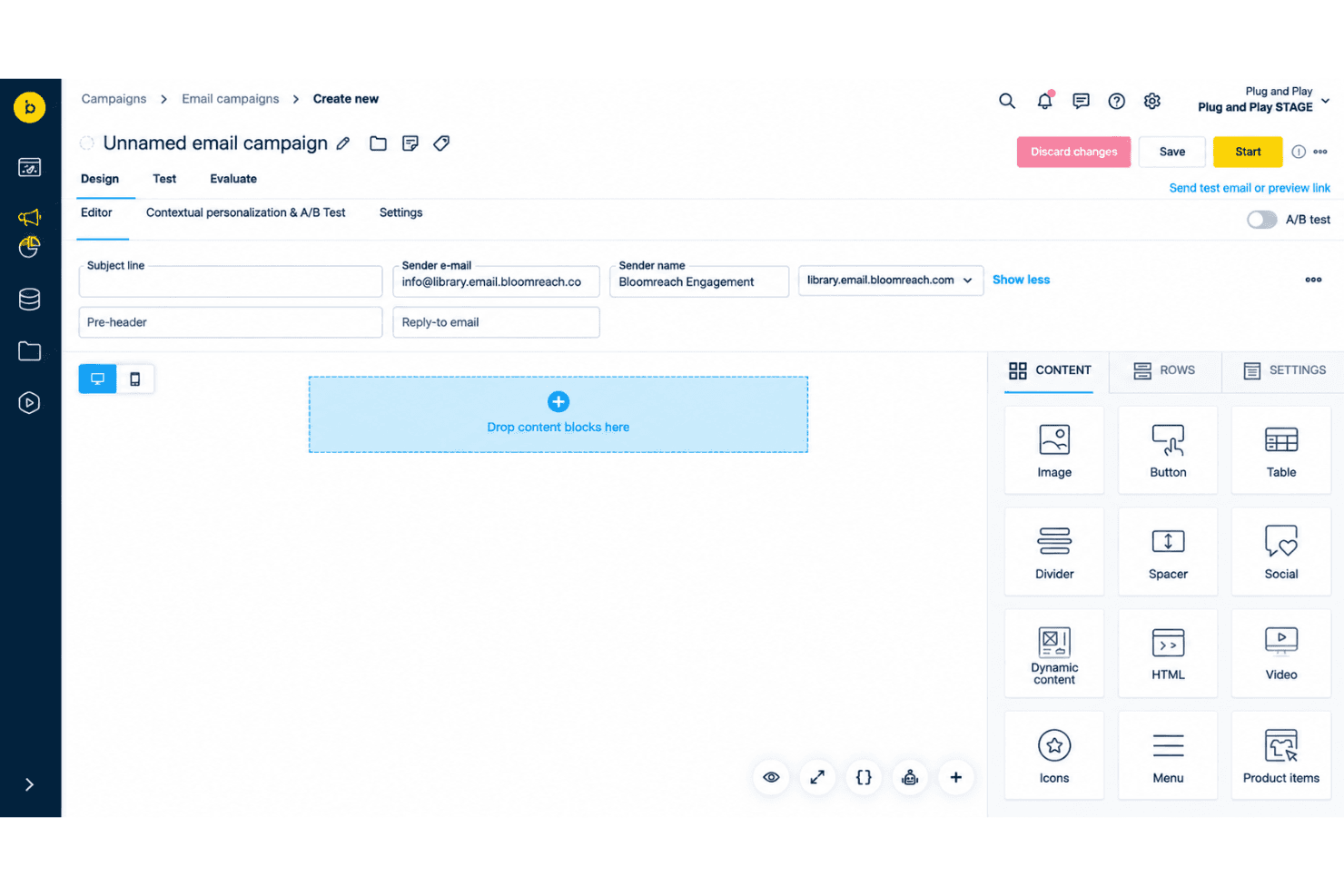
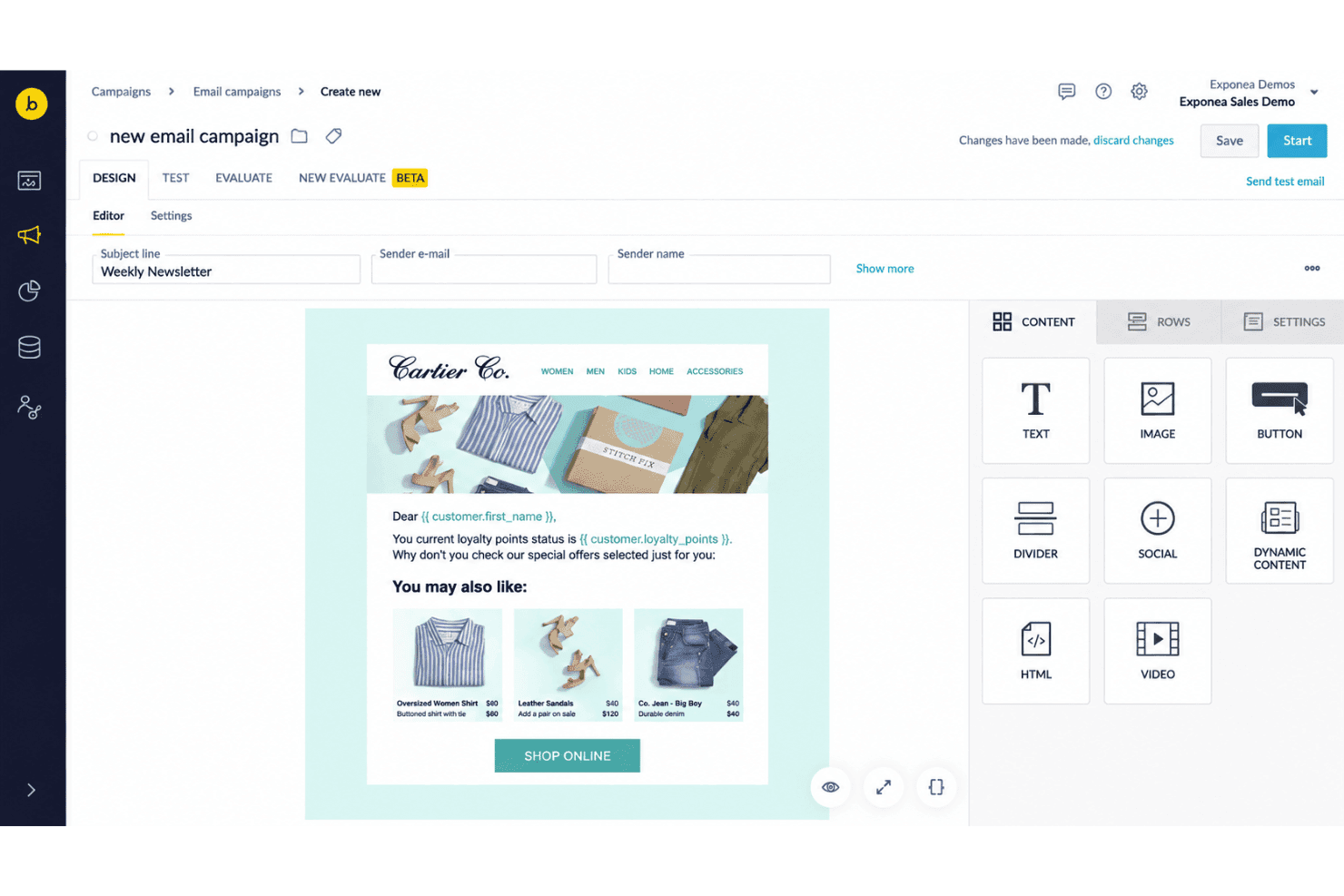
Bloomreach’s visual builder lets you create emails with text, images, product blocks, and conditional content, while an HTML editor gives developers more control. Dynamic recommendation blocks can show items such as abandoned-cart products, so each email can feature relevant products without building separate versions.
Audience Segmentation
Build audiences with customer attributes and behavioral events, then apply those filters to email campaigns. For example, you can target repeat buyers or customers who browsed a product category, with segment sizes calculated in real time.
Automated Email Journeys
Use the journey builder to send emails when customers browse, abandon a cart, make a purchase, or meet other tracked conditions. You can also add recurring sends, such as a replenishment message after a purchase.
A/B Testing
Compare email variations using A/B tests in the campaign workflow. Testing different subject lines or content helps you identify which version earns more clicks from your audience.
Personalized Send-Time Optimization
Bloomreach predicts when each customer is most likely to engage and schedules email delivery for that hour, optimizing for clicks by default. You can set a maximum wait window, so a scheduled newsletter reaches customers at a better time without waiting indefinitely.
Email Performance Reporting
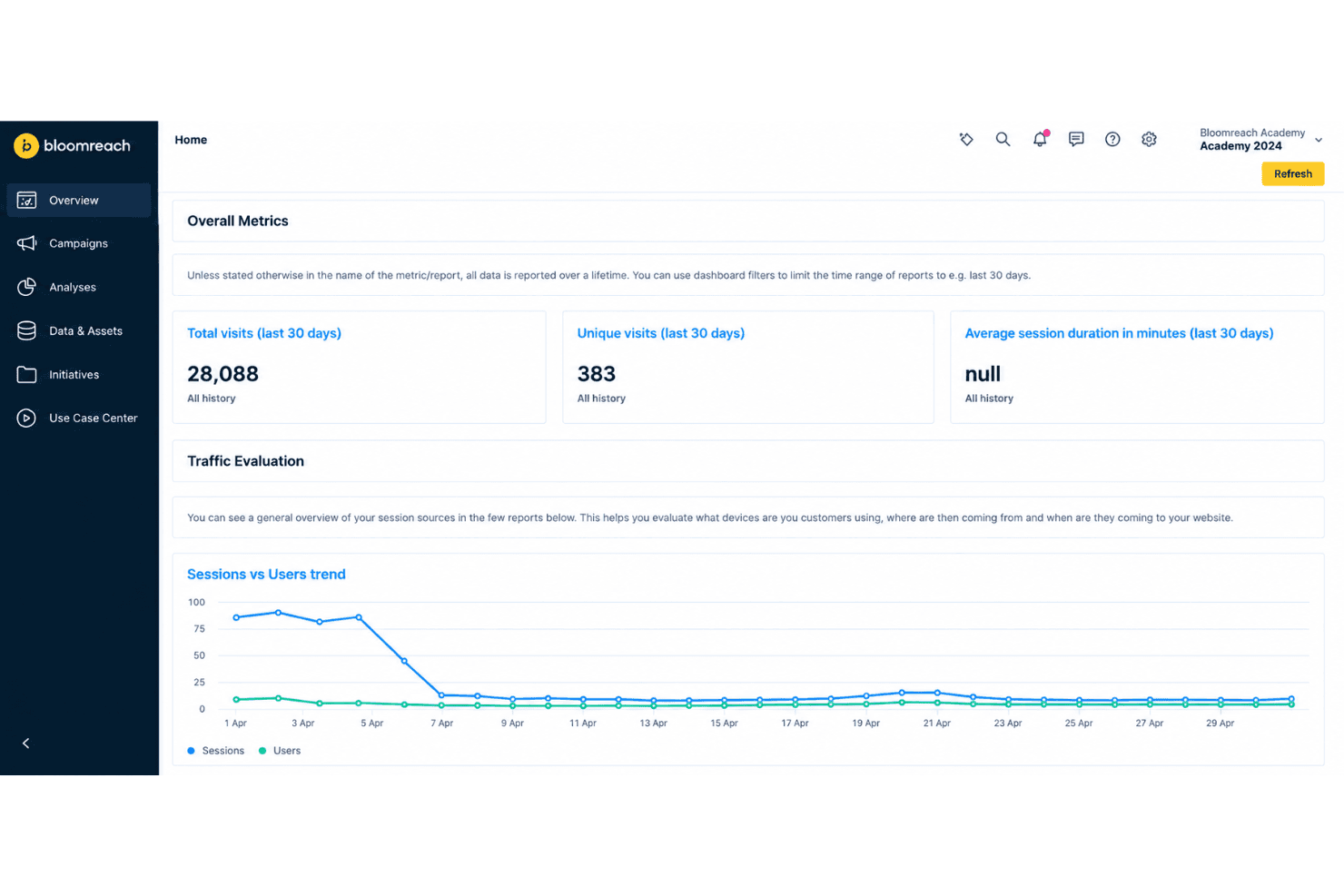
Bloomreach’s email dashboard brings deliverability, revenue, and unsubscribe reports together and supports campaign comparisons. Your team can review delivery rates and attributed purchases to assess results; the dashboard’s default revenue attribution window is 48 hours after an email open or click.
Ease of Use
Bloomreach is capable but less approachable than simpler email tools. Its drag-and-drop editor, real-time segments, and visual journey builder make campaign work clear once your data is in place. The harder part is implementation: setup can take 8–12 weeks and requires advance data planning. User reviews also flag limited dashboard flexibility and vague error logs, so expect a learning curve and technical support needs rather than a plug-and-play experience.
Integrations
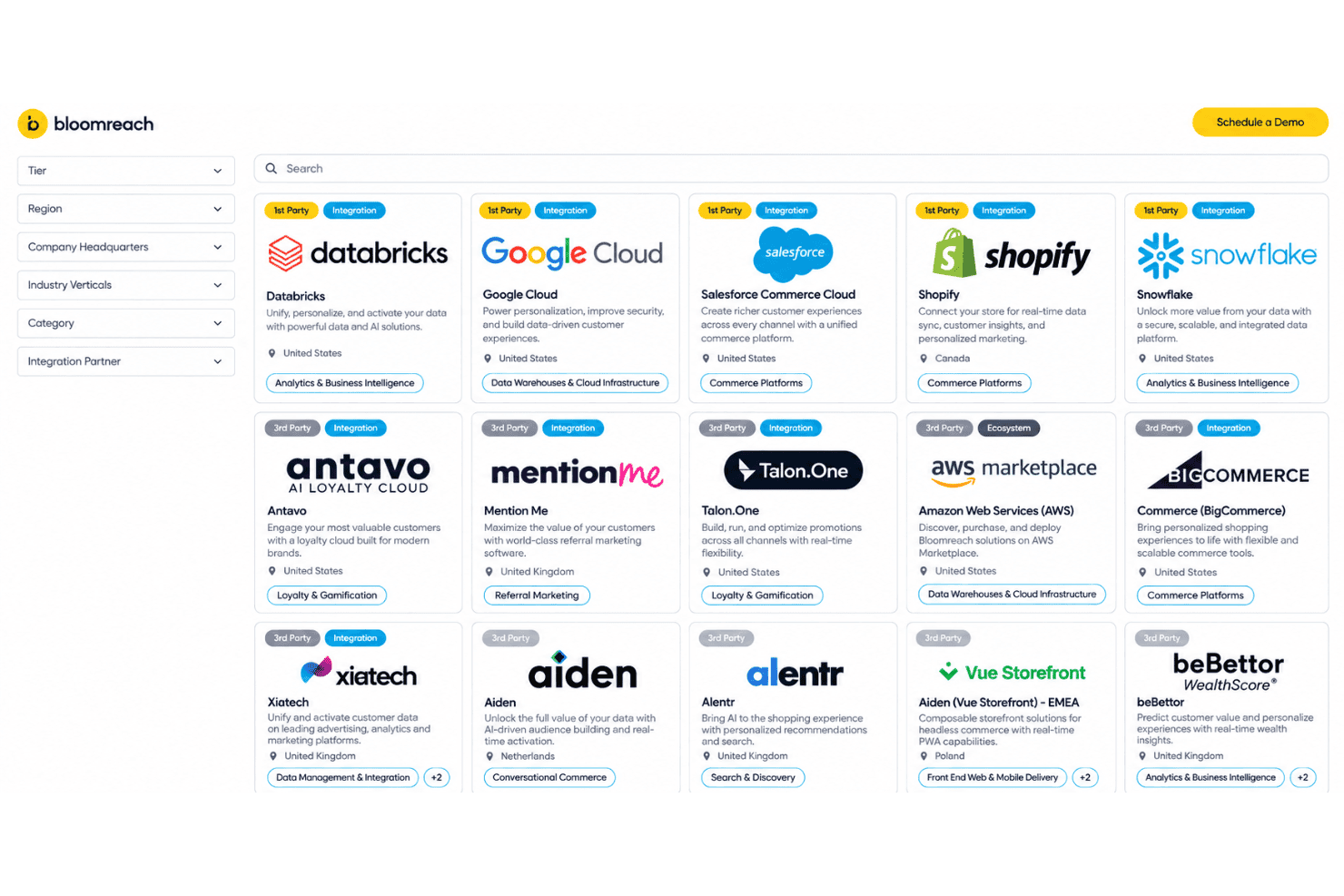
Bloomreach integrates with Shopify, Snowflake, Databricks, Twilio Segment, Google Ads, Facebook and Instagram Ads, and TikTok Ads, among others. It also supports Adobe Commerce (Magento) and BigCommerce through legacy connectors for existing implementations.
Bloomreach offers a REST API for custom integrations and connects with third-party integration tools such as Zapier.
New Product Updates from Bloomreach
Bloomreach Adds Smart Triggers for Weblayers
Bloomreach adds smart triggering for weblayers, allowing the Web SDK to check real-time visitor conditions before display. This helps teams deliver weblayers based on current user behavior instead of relying only on preset conditions. Highlights include:
- Smart Weblayer Triggers: Evaluates real-time visitor conditions before deciding whether to display a weblayer.
- Behavior-Based Display: Helps teams control when weblayers appear based on current visitor activity.
Visit Bloomreach’s official site for more details.
Bloomreach Adds Security Checks for the Experiments Editor
Bloomreach adds a security validation step before loading the Experiments editor. The update restricts editor access to authorized users, helping protect experiment configurations from unauthorized changes. Highlights include:
- Authorization Check: Verifies user access before the Experiments editor loads.
- Restricted Editor Access: Prevents unauthorized users from opening or interacting with experiments.
- Improved Security: Adds tighter control over who can make changes within the Experiments editor.
Visit Bloomreach’s official site for more details.
 Opens new window
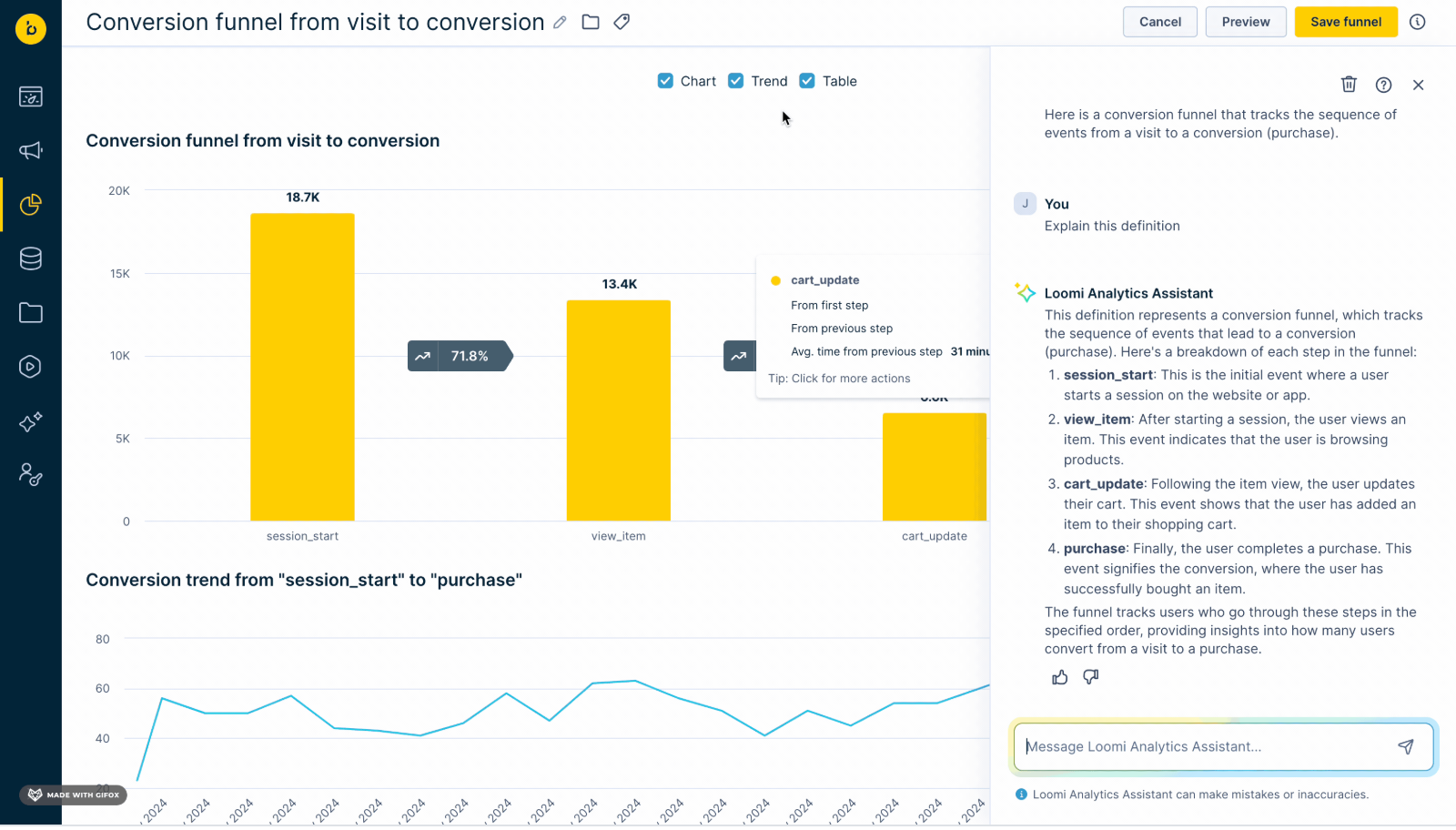
Bloomreach Improves Loomi Analytics Accuracy and Editing
Bloomreach has improved Loomi Analytics with enhanced analysis workflows, metric accuracy, and data handling. This update helps users update existing reports, generate accurate insights, and improve analytics reliability. Highlights include:
- Analysis Editing: Update existing reports, segmentations, running aggregates, and funnels without recreating them.
- Event-Based Metrics: Count events accurately to reflect actions taken instead of customer totals.
- Running Aggregate Updates: Apply rolling window settings correctly for more reliable calculations.
Visit Bloomreach’s official site for more details.
Bloomreach Specs
- A/B Testing: Yes
- Analytics: Yes
- API: Yes
- Audience Targeting: Yes
- Automated Conversion: No
- Batch Permissions & Access: Yes
- Behavioral Tracking: Yes
- Brand Management: No
- Campaign Management: Yes
- Contact Management: Yes
- Contact Sharing: No
- Conversion Tracking: Yes
- CRM Integration: Yes
- Customer Management: Yes
- Dashboards: Yes
- Data Export: Yes
- Data Import: Yes
- Email Integration: Yes
- External Integrations: Yes
- Keyword Tracking: No
- Landing Pages: No
- Lead Management: No
- Lead Scoring: No
- Link Tracking: Yes
- Marketing Automation: Yes
- Multi-User: Yes
- Notifications: Yes
- Password & Access Management: Yes
- Social-Media Integration: Yes


