

Recensione Brandfolder: Pro, Contro, Caratteristiche e Prezzi Spiegati
Brandfolder si distingue per la sua interfaccia intuitiva e l'organizzazione robusta delle risorse, rendendolo ideale per i team che cercano una gestione degli asset di marketing semplificata, anche se potrebbe non essere adatto a flussi di lavoro altamente complessi.

Recensiamo gli strumenti in modo indipendente, e le commissioni aiutano a finanziare i nostri test. Consulta la nostra politica sulla trasparenza, la nostra metodologia o suggerisci uno strumento.
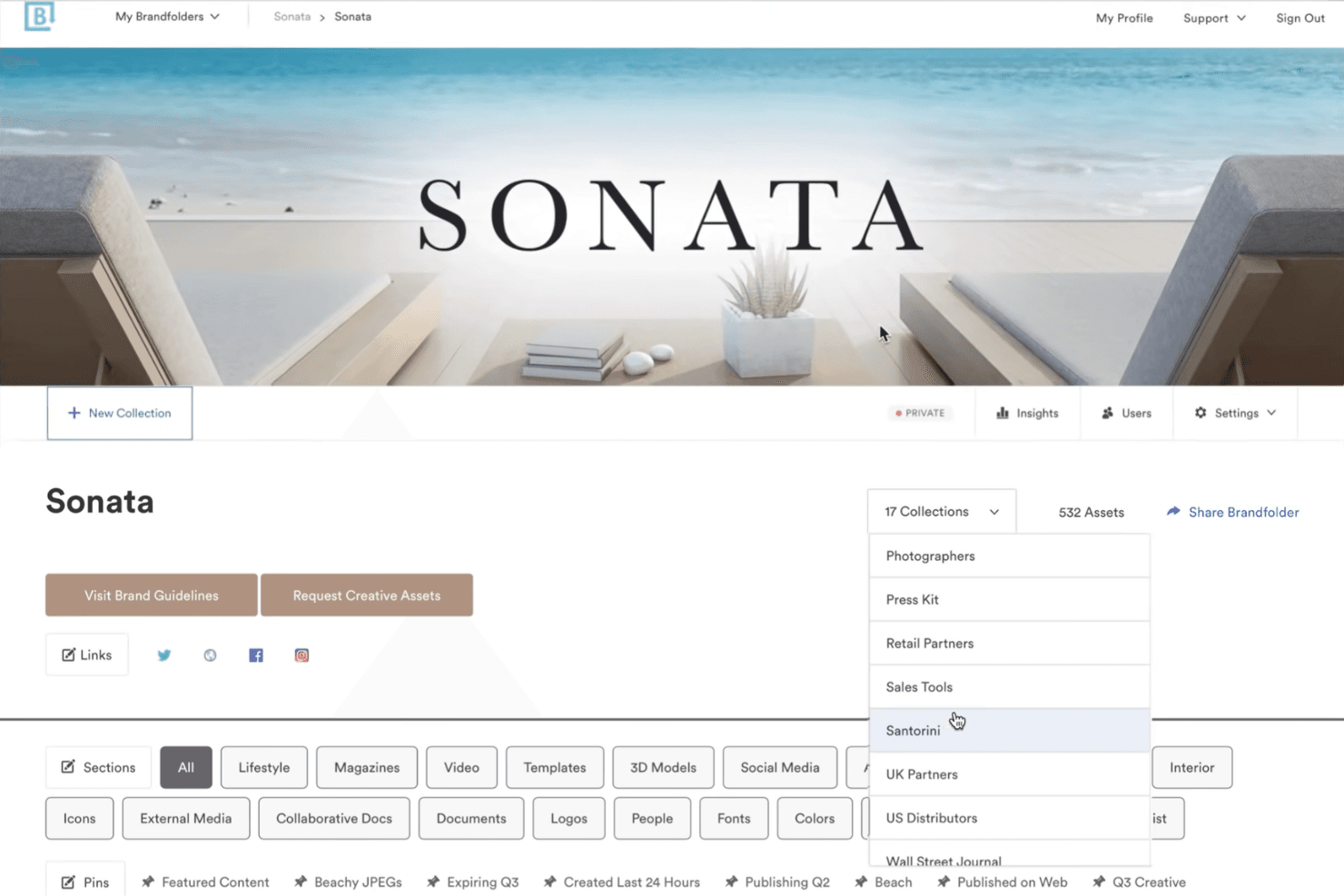
Brandfolder is a marketing asset management software built for marketing teams that need one place to store, organize, and share brand assets—think logos, images, videos, and templated collateral. It's a good fit if your team is constantly fielding "can you send me the logo?" requests or losing control of which asset versions are actually in use. I'd pick it over Bynder if you want something your whole organization can navigate without a formal training session.
Brandfolder Evaluation Summary
4.6/5
- Pricing upon request
- Free demo available
Perché fidarsi dei nostri consigli sui software
6,700+
Reviews
20
Industry experts
16+
Evaluation factors
14
Years
Il nostro team testa e recensisce software dal 2012. In quanto leader del marketing noi stessi, sappiamo quanto sia difficile — e importante — scegliere il software giusto.
Per questa guida, abbiamo valutato gli strumenti attraverso test pratici e ricerche indipendenti, assegnando un punteggio agli strumenti in base ai nostri criteri di selezione.
Le nostre recensioni riflettono il nostro giudizio editoriale umano, non un discorso di vendita.
Revisori esperti:
 Gui DrusinaDirettore creativo
- Shriya GhateSenior Marketing Lead
 Amanda JacquesResponsabile Marketing Ops

Brandfolder Overview
If you’re judging marketing asset management software on interface and ease of onboarding, Brandfolder is a top pick—its clean design and guided setup make adoption quick for most teams. I think its asset organization and sharing features outperform many competitors, especially for marketing teams managing large libraries. Pricing is mid-range, and support is responsive, but advanced workflow automation and niche integrations can lag behind.
If you’re selecting a solution for a fast-moving marketing team that values usability and brand consistency, Brandfolder is a strong contender. For highly specialized workflows, you might find some limitations.
Pros
- Brandfolder simplifies digital asset organization for your team, making content management a breeze.
- Its intuitive interface helps you quickly locate and share assets, boosting your team's productivity.
- You can easily collaborate with your team, ensuring everyone stays aligned and informed.
Cons
- Some users find the initial learning curve challenging when getting started with Brandfolder.
- Customization options may feel limited for teams with specific needs or workflows.
- Users sometimes experience slower customer support response times compared to competitors.
Is Brandfolder Right For Your Needs?
Who Would be a Good Fit for Brandfolder?
Brandfolder is ideal for creative teams in advertising agencies and marketing departments in large corporations that need quick access to digital assets. Its intuitive interface and easy asset sharing enable your team to streamline workflows and enhance collaboration. Retail businesses can also benefit from Brandfolder’s ability to maintain consistent brand assets across multiple channels, ensuring your brand’s message remains uniform. If your team values time-saving tools and efficient content management, Brandfolder’s features align well with your goals.
- Advertising AgenciesBrandfolder’s organization features help your team manage and access creative assets quickly, improving project turnaround times.
- Retail BusinessesYou can maintain consistent brand messaging across various platforms, thanks to Brandfolder’s centralized asset management.
- Marketing DepartmentsBrandfolder’s collaborative tools ensure your team stays aligned, making it easier to execute campaigns efficiently.
- Large CorporationsYou benefit from Brandfolder’s robust asset storage and sharing capabilities, which support complex marketing operations.
- Creative TeamsIts user-friendly interface helps your team focus on creativity rather than navigating cumbersome software.
- Brand ManagersBrandfolder’s version control and asset tracking ensure your brand assets remain up-to-date and on-point.
Who Would be a Bad Fit for Brandfolder?
Brandfolder may not suit small businesses or startups with limited budgets that require extensive customization options. Its initial learning curve and limited customization can be challenging for teams that need highly tailored solutions. If your team relies heavily on quick customer support for troubleshooting, Brandfolder’s response times might not meet your needs. Additionally, if your organization needs advanced analytics or reporting features, Brandfolder may not offer the depth you require.
- Small StartupsYour budget constraints might not align with Brandfolder’s offerings, especially if you need extensive customization.
- Highly Regulated IndustriesYou might find Brandfolder’s compliance features lacking for industries with strict data regulations.
- FreelancersThe robust features of Brandfolder may be excessive for your individual needs and simpler asset management tools could suffice.
- Non-Technical TeamsThe initial learning curve may be too steep if your team lacks technical expertise.
- Data-Driven OrganizationsIf you require in-depth analytics, Brandfolder’s reporting capabilities might fall short of your expectations.
- Niche IndustriesYou may find Brandfolder’s features too generalized if your industry requires specialized asset management functions.
Come Testiamo e Valutiamo gli Strumenti
Abbiamo passato anni a costruire, perfezionare e migliorare il nostro sistema di test e valutazione del software. Il nostro metodo è progettato per cogliere le sfumature nella selezione del software e ciò che rende uno strumento efficace, concentrandoci sugli aspetti critici del processo decisionale. Qui sotto puoi vedere esattamente come funziona il nostro sistema di test e valutazione su sette criteri. Questo ci permette di offrire una valutazione imparziale del software basata su funzionalità principali, funzioni distintive, facilità d’uso, onboarding, supporto clienti, integrazioni, recensioni dei clienti e rapporto qualità-prezzo.
Funzionalità principali (25% del punteggio finale)
Il punto di partenza della nostra valutazione è sempre la funzionalità principale dello strumento. Include le caratteristiche e le funzioni basilari che un utente si aspetterebbe di trovare? Alcune di queste funzionalità sono bloccate nei piani premium? Ci aspettiamo che ogni strumento soddisfi almeno le capacità di base dei suoi concorrenti.
Funzionalità distintive (25% del punteggio finale)
Successivamente, valutiamo le funzionalità uniche che vanno oltre la normale funzionalità principale, quelle poco comuni negli strumenti simili. Un punteggio alto riflette caratteristiche specializzate o uniche che rendono il prodotto più veloce, efficiente o offrono un valore aggiunto all’utente. Valutiamo anche quanto sia semplice integrare il software con altri strumenti abitualmente usati in una tech stack, per espandere le funzionalità e l’utilità del prodotto. Sono valutate positivamente soluzioni con molte integrazioni native, connessioni di terze parti e API per creare integrazioni personalizzate.
Facilità d’uso (10% del punteggio finale)
Consideriamo la rapidità e semplicità con cui si possono eseguire le attività principali tramite lo strumento. I software con punteggio più alto sono ben progettati, intuitivi, dispongono di app mobili, offrono template e semplificano compiti complessi.
Onboarding (10% del punteggio finale)
Sappiamo quanto sia importante l’adozione rapida in azienda, quindi valutiamo la facilità di apprendimento e utilizzo di uno strumento con formazione minima. Analizziamo quanto velocemente un utente senza esperienza può iniziare a usare il software. Le soluzioni migliori richiedono poco o nessun supporto.
Supporto clienti (10% del punteggio finale)
Analizziamo la rapidità e facilità nel trovare aiuto tramite telefono, chat dal vivo o knowledge base. Gli strumenti che offrono supporto in tempo reale ottengono il punteggio migliore: i chatbot invece i peggiori.
Recensioni dei clienti (10% del punteggio finale)
Oltre ai nostri test, consideriamo il net promoter score di attuali ed ex clienti. Valutiamo la probabilità che, potendo scegliere, l’utente decida di utilizzare ancora quello strumento per le funzionalità principali. Un software con un punteggio alto corrisponde ad un alto net promoter score tra clienti attuali o passati.
Rapporto qualità-prezzo (10% del punteggio finale)
Infine, tenendo conto di tutti gli altri criteri, confrontiamo il prezzo medio dei piani base rispetto alle funzionalità principali e agli altri fattori di valutazione. I software che offrono di più, a meno, ottengono i punteggi più alti.
Core Features
AI-Powered Tagging and Search
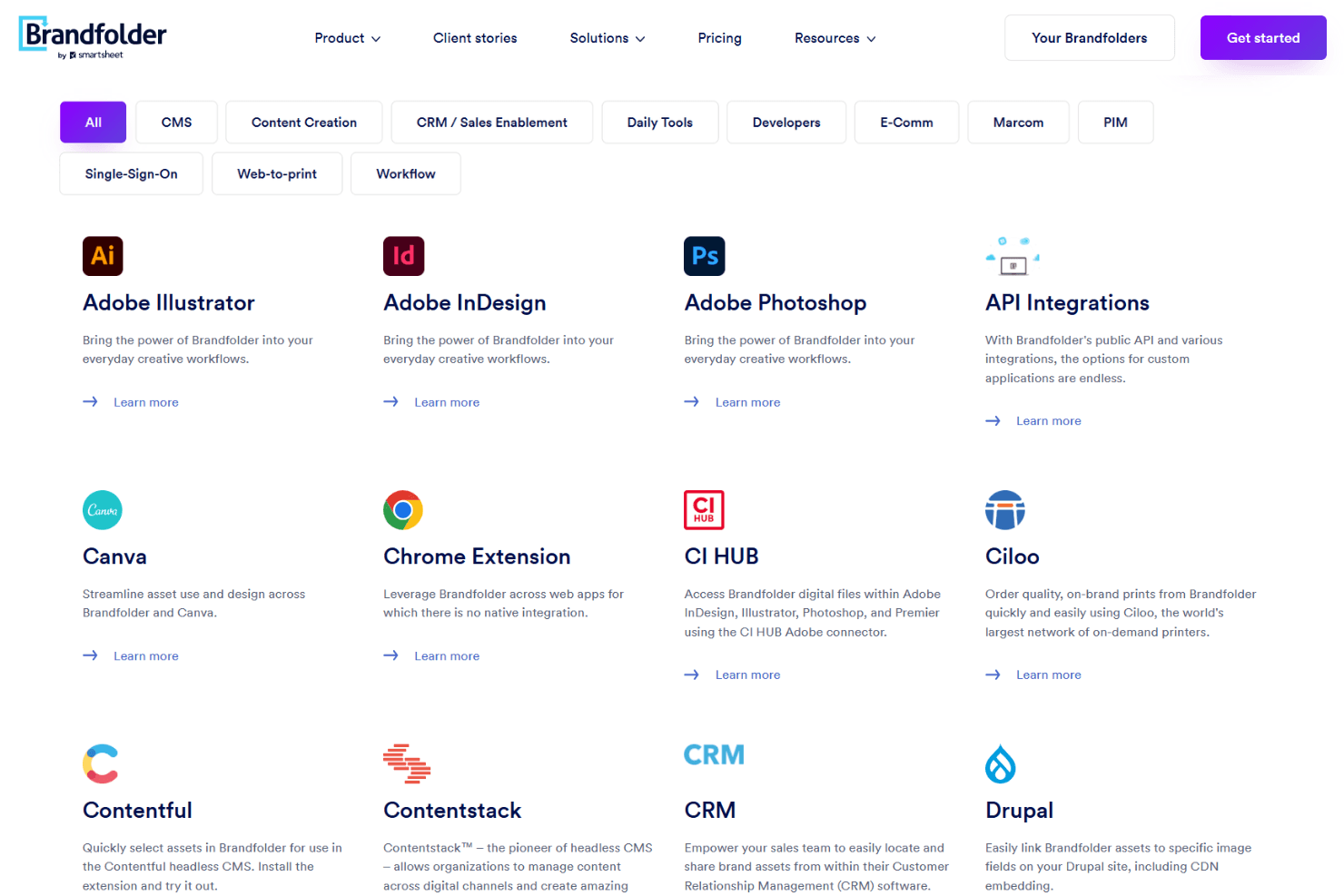
Brand Intelligence uses AI to automatically tag assets and recommend keywords, making it easy to find files by campaign, color, or product.
Smart CDN Links
Update assets across dozens of channels instantly with a single link, ensuring everyone always accesses the latest approved version.
Collaborative Workspaces
Manage in-progress assets, creative briefs, and approvals in dedicated spaces, streamlining feedback and review cycles.
Content Automation
Create and customize on-brand content at scale using templates and self-service tools, so marketers can update assets without design help.
Brandguide
Keep brand guidelines up to date and accessible anywhere, so teams and partners always have the latest standards at hand.
Portals
Curate and share collections of assets with specific audiences, making it simple to deliver the right content to the right stakeholders.
Ease of Use
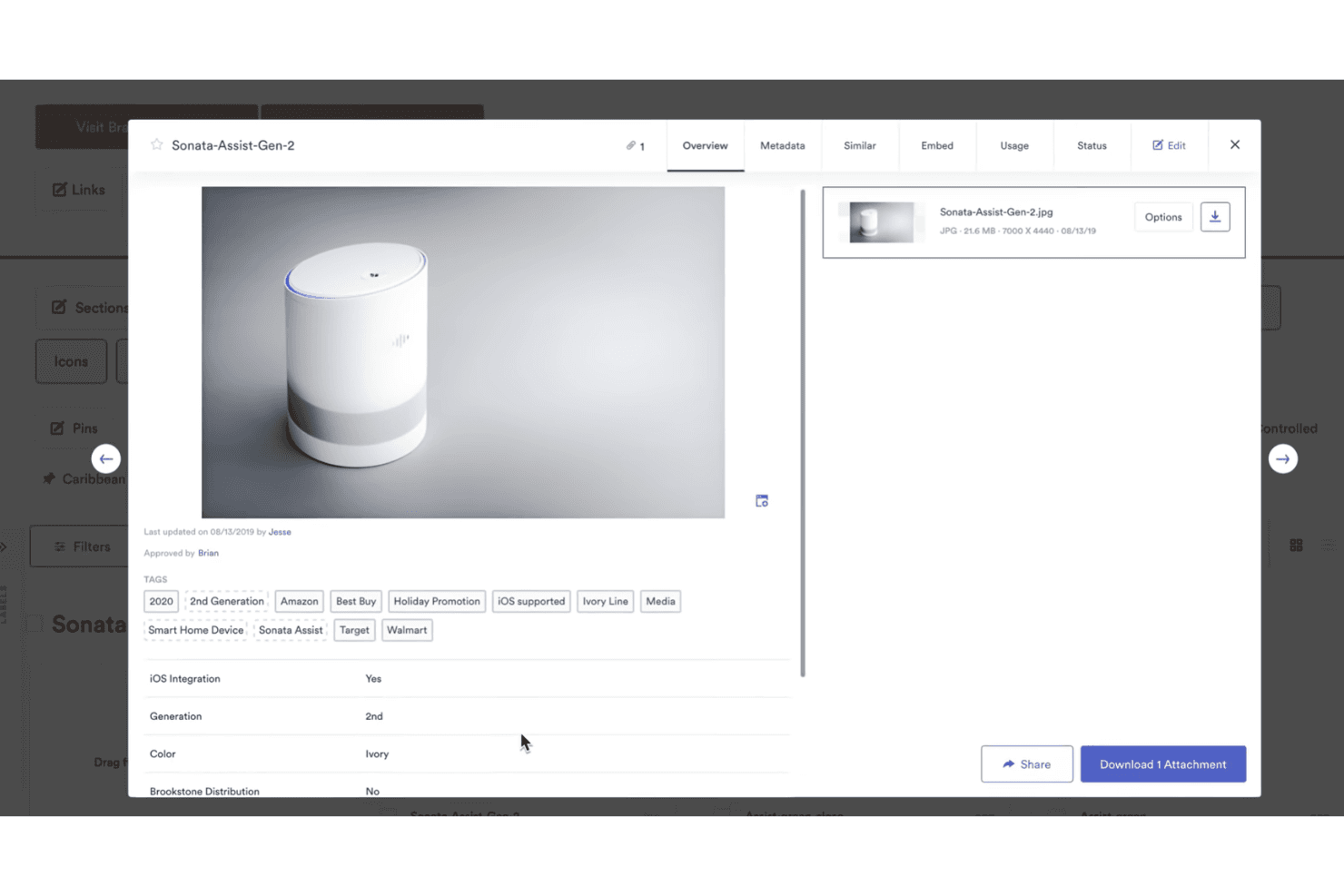
Brandfolder is one of the most user-friendly marketing asset management platforms I’ve used. The interface is clean, navigation is intuitive, and onboarding is quick—even for non-technical users. Features like AI-powered search, drag-and-drop uploads, and guided asset organization make daily tasks simple. User reviews consistently mention how easy it is for teams to find, share, and update assets without extra training or IT support.
Integrations
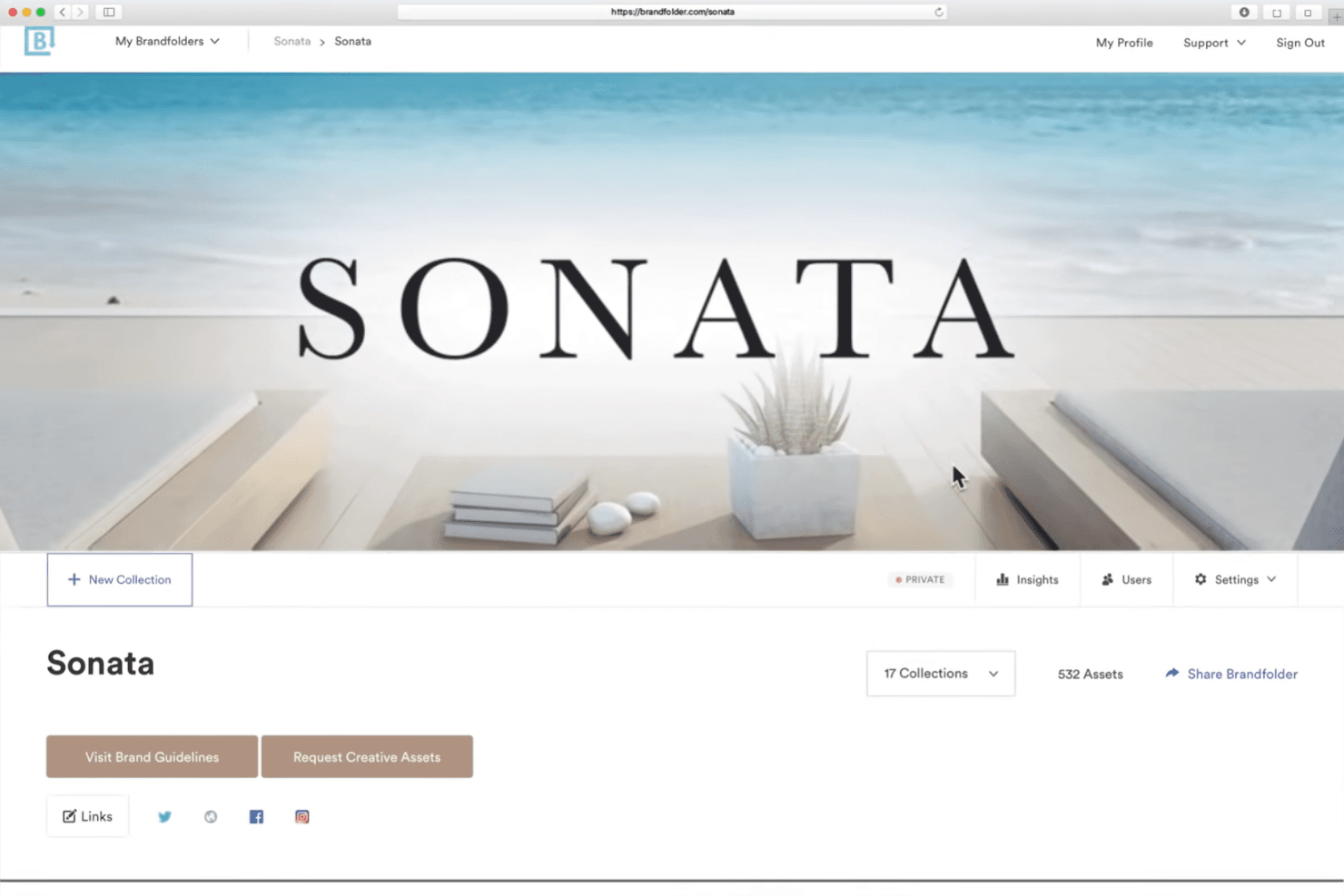
Brandfolder integrates with Adobe Creative Cloud (Illustrator, InDesign, Photoshop), Canva, Figma, Salesforce, HubSpot, Hootsuite, Slack, WordPress, Smartsheet, and Shopify, among others.
Brandfolder also offers a public API and connects with third-party integration tools like Zapier and Tray.io.
Brandfolder Specs
- Analytics: Yes
- Brand Asset Creation: Yes
- Brand Management: Yes
- Campaign Management: Yes
- Data Export: Yes
- Data Import: Yes
- Database: Yes
- Document Comparison: No
- External Integrations: Yes
- Feedback Management: Yes
- File Format Conversion: Yes
- File Sharing: Yes
- File Transfer: Yes
- Knowledge Base: Yes
- Marketing Automation: No
- Multi-App: Yes
- Multi-Site: Yes
- Multi-User: Yes
- Net Promoter Score: No
- Notifications: Yes
- Optimized Search Processing: Yes
- Review Monitoring: No
- Scheduling: No
- Sentiment Analysis: No
- Social Media Monitoring: No
- Social-Media Integration: No
- Template Designer: Yes
- Third-Party Plugins/Add-Ons: Yes
- White-label: Yes
- Workflow Management: Yes


