

Perché fidarsi dei nostri consigli sui software
6,700+
Reviews
20
Industry experts
16+
Evaluation factors
14
Years
Il nostro team testa e recensisce software dal 2012. In quanto leader del marketing noi stessi, sappiamo quanto sia difficile — e importante — scegliere il software giusto.
Per questa guida, abbiamo valutato gli strumenti attraverso test pratici e ricerche indipendenti, assegnando un punteggio agli strumenti in base ai nostri criteri di selezione.
Le nostre recensioni riflettono il nostro giudizio editoriale umano, non un discorso di vendita.
Revisori esperti:
 Gui DrusinaDirettore creativo
- Shriya GhateSenior Marketing Lead
 Amanda JacquesResponsabile Marketing Ops

| Tool | Best For | Trial Info | Price | ||
|---|---|---|---|---|---|
| 1 | Best integrations for workflow automation | 14-day free trial + free demo available | From $103.20/month (billed annually) | Website | |
| 2 | Best support for managing local SEO at scale | 14-day free trial + free demo | From $31/month (billed annually) | Website | |
| 3 | Best SEO and AI visibility data coverage | Free plan available | From $29/month | Website | |
| 4 | Best all-in-one competitor and keyword analysis | 7-day free trial + free demo | From $50/month (billed annually) | Website | |
| 5 | Best actionable insights with AI-powered tools | 7-day free trial + free demo available | From $79/month (billed annually) | Website | |
| 6 | Best white-label widgets to capture new leads | 14-day free trial | From $99/month (billed annually) | Website | |
| 7 | Best automated client reporting for large teams | 14-day free trial | From $20/month (billed annually) | Website | |
| 8 | Best competitive digital visibility data | 14-day free trial | From $139/month | Website | |
| 9 | Best customizable SEO marketing reports | 7-day free trial | From $39/month (billed annually) | Website | |
| 10 | Best unified search and AI platform tracking | 14-day free trial | From $96/month (billed annually) | Website |



Recensioni dei Migliori Strumenti SEO per Agenzie
Qui sotto sono le mie dettagliate riflessioni dei migliori strumenti SEO per agenzie che hanno raggiunto l’ultima nella mia shortlist. Le mie recensioni forniscono un aspetto dettagliato delle funzioni, integrazioni e prezzi di ciascun piattaforma per aiutarti a trovare la migliore soluzione per te.
 Le migliori integrazioni per l'automazione dei flussi di lavoro
- Prova gratuita di 14 giorni + demo gratuita
- Da $103,2/mese (fatturato annualmente)
Visit WebsiteCustomer Rating:4.8/5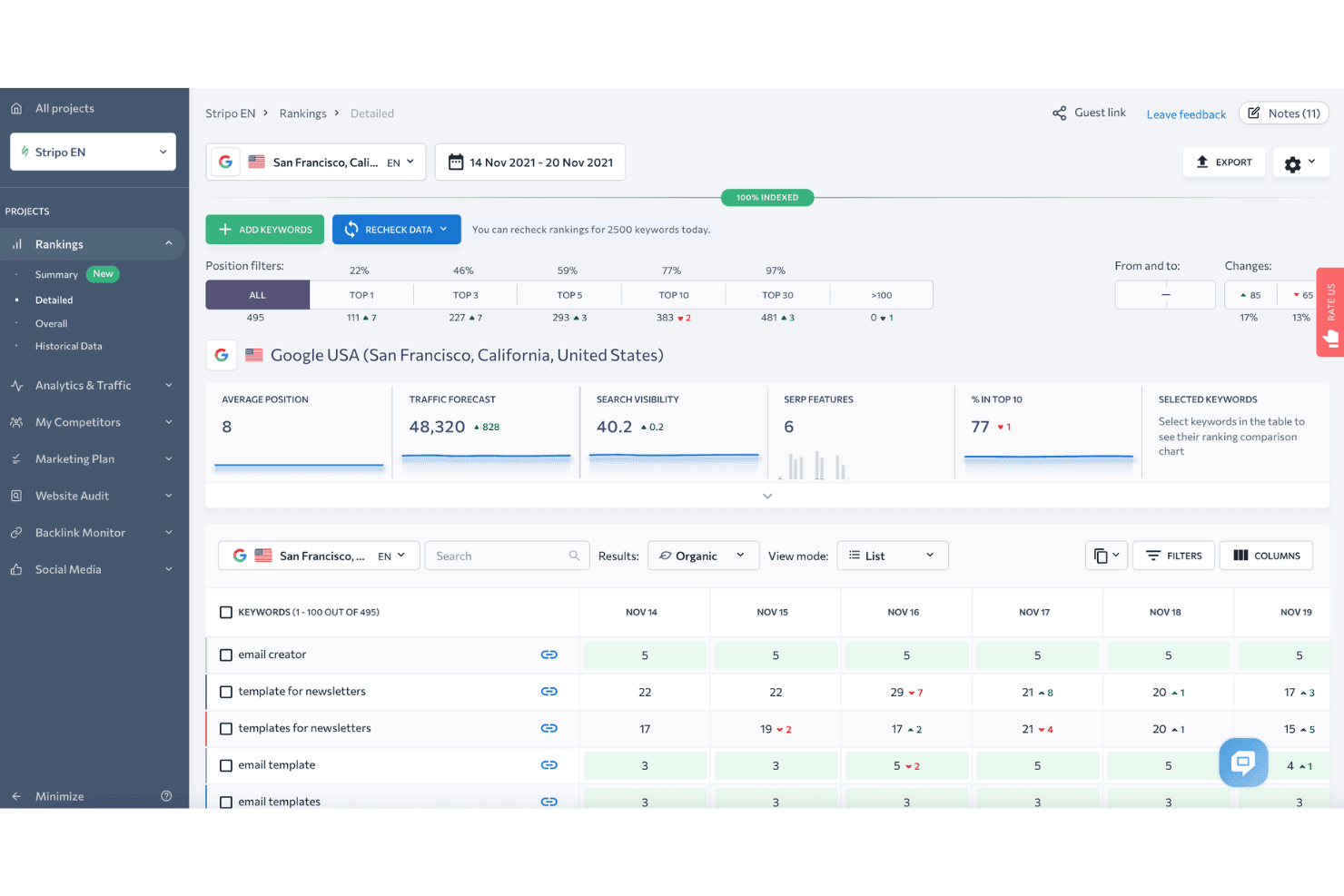
SE Ranking mostra una dashboard dettagliata delle posizioni delle keyword con filtri per posizione, previsione del traffico e variazioni giornaliere delle classifiche per le parole chiave monitorate. SE Ranking è una piattaforma SEO basata su cloud che copre monitoraggio delle posizioni, audit del sito, ricerca di keyword, analisi dei backlink, ricerca dei concorrenti, report white-label e monitoraggio della visibilità tramite IA su più progetti clienti.
Per chi è ideale SE Ranking?
SE Ranking è particolarmente adatto ad agenzie di piccole e medie dimensioni che hanno bisogno di una suite SEO completa per gestire più account clienti senza dover pagare prezzi da livello enterprise.
Perché ho scelto SE Ranking
SE Ranking merita un posto nella mia shortlist per quanto bene il suo ecosistema di automazione si collega ai flussi di lavoro reali delle agenzie. Uso il suo nodo n8n verificato e il connettore Make.com per attivare avvisi sul monitoraggio delle posizioni e inviare i dati direttamente nei dashboard dei clienti senza esportazioni manuali. Il server MCP fa ancora di più, alimentando dati SE Ranking in tempo reale su Claude o ChatGPT così posso generare analisi senza cambiare strumento.
Funzionalità principali di SE Ranking
- Report white-label: Crea report personalizzabili con branding che i clienti possono consultare tramite un portale dedicato.
- Raggruppamento keyword: Raggruppa automaticamente grandi liste di parole chiave per argomento e intento per ricerche scalabili.
- Monitoraggio locale delle posizioni: Monitora i posizionamenti in città o regioni specifiche e gestisci i dati del profilo Google Business.
- Monitoraggio dei backlink: Tieni traccia dei backlink acquisiti e persi su vari domini, con dati storici e metriche di autorevolezza.
Integrazioni SE Ranking
SE Ranking offre integrazioni native con Google Analytics 4, Google Search Console, Google Ads, Matomo Analytics, Looker Studio, Whatagraph, AgencyAnalytics e Reportz. Si connette con Zapier, Make.com, n8n e offre una API per integrazioni personalizzate.
Pros and Cons
Pros:
- Monitoraggio affidabile delle posizioni su base giornaliera in varie regioni
- Portali clienti white-label e accesso ospite
- Agency Pack con posti per manager e clienti
Cons:
- Database di backlink più piccolo rispetto ai concorrenti
- Audit dei siti con JavaScript limitato
Learn more about SE Ranking: Il migliore supporto per gestire la SEO locale su larga scala
- Prova gratuita di 14 giorni + demo gratuita
- A partire da $31/mese (fatturato annualmente)
Visit WebsiteCustomer Rating:4.7/5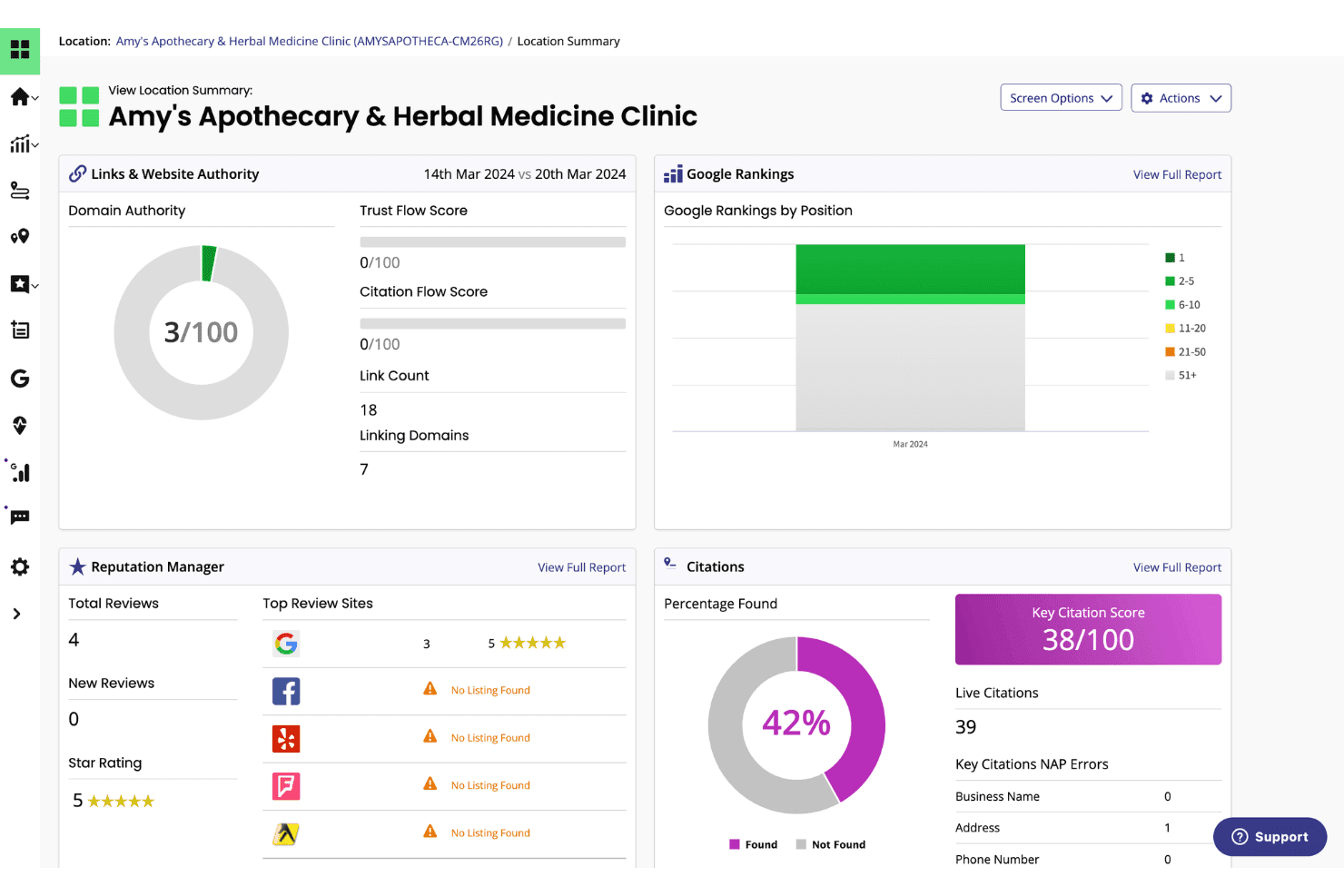
BrightLocal visualizza una dashboard riepilogativa della località con posizionamenti su Google, punteggi delle citazioni, autorità di dominio e metriche di reputazione di un’attività locale. BrightLocal è una piattaforma di SEO locale progettata per agenzie e aziende con più sedi, che combina tracciamento delle posizioni locali, gestione delle citazioni, audit del profilo Google Business e monitoraggio delle recensioni in un'unica dashboard.
Per chi è ideale BrightLocal?
Agenzie e fornitori SEO in white-label che gestiscono campagne di ricerca locale per clienti con attività fisiche o che operano su area di servizio trarranno il massimo vantaggio da BrightLocal.
Perché ho scelto BrightLocal
BrightLocal merita il suo posto nella mia shortlist per l'efficacia con cui gestisce il tracciamento delle posizioni locali su tutto il portfolio clienti. Adoro la Local Search Grid, che mappa le posizioni Google su un'area geografica tramite una geo-griglia visiva, così posso vedere immediatamente dove un cliente è dominante e dove la copertura diminuisce. Ogni cliente ha inoltre un accesso esterno alla dashboard brandizzata, il che significa che posso impostare report automatizzati una sola volta e lasciare che i clienti controllino autonomamente le loro performance.
Caratteristiche principali di BrightLocal
- Citation Tracker: Analizza e monitora le schede aziendali per verificarne l’accuratezza e identifica nuove opportunità di citazione nei principali elenchi.
- Audit GBP: Confronta il profilo Google Business di un cliente con quello dei concorrenti locali, fornendo indicazioni pratiche per l’ottimizzazione.
- Active Sync: Mantiene automaticamente le informazioni aziendali coerenti su tutte le principali fonti di dati locali e directory.
- Widget di recensioni in vetrina: Consente di pubblicare direttamente le recensioni dei clienti sul proprio sito web per rafforzare la prova sociale e la fiducia.
Integrazioni di BrightLocal
BrightLocal offre integrazioni native con Google Business Profile, Google Analytics 4, Facebook e Zapier. È disponibile un'API per integrazioni personalizzate.
Pros and Cons
Pros:
- Tracciamento delle posizioni locali con visualizzazione su geo-griglia
- Dashboard brandizzate per clienti illimitati
- Gestione e monitoraggio automatico delle citazioni
Cons:
- Nessuna analisi dei backlink o audit dei link tossici
- Funzionalità limitate di audit tecnico del sito
Learn more about BrightLocal: Migliore copertura di dati SEO e di visibilità AI
- Piano gratuito + demo gratuita
- Da $29/mese
Visit WebsiteCustomer Rating:4.6/5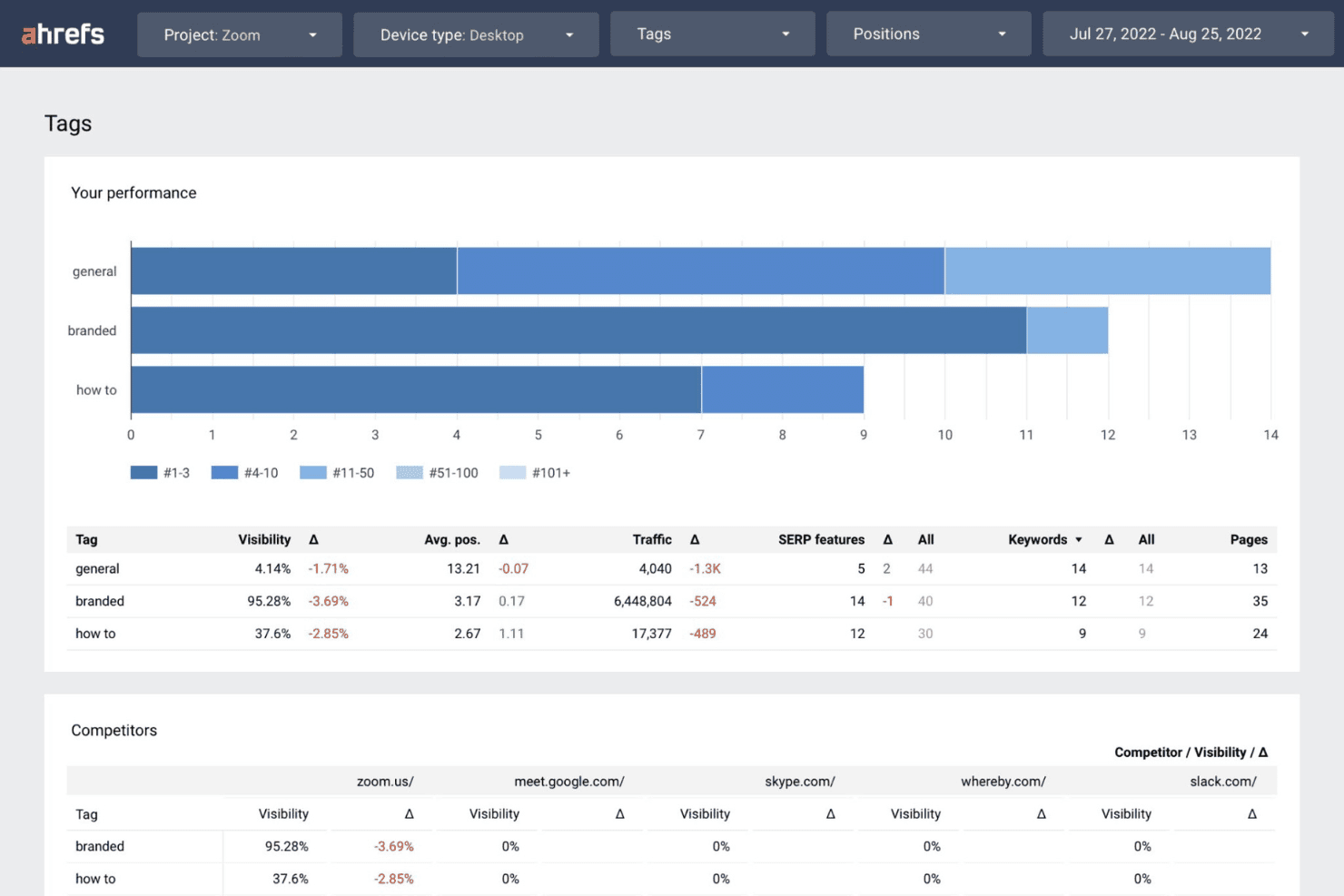
Ahrefs mostra una dashboard delle prestazioni dei Tag con dati su visibilità, traffico e parole chiave, suddivisi per categorie branded, generali e how-to insieme al confronto con i concorrenti. Ahrefs è una piattaforma SEO completa basata su uno dei più grandi indici di backlink del settore, che offre ricerca di parole chiave, monitoraggio del posizionamento, audit dei siti e analisi della concorrenza su più account clienti.
Per chi è più indicato Ahrefs?
Ahrefs è particolarmente adatto a direttori SEO di agenzia e account manager che danno priorità alla profondità dei dati per analisi competitive, link building e monitoraggio di parole chiave su più clienti.
Perché ho scelto Ahrefs
Ho scelto Ahrefs come uno dei migliori perché la sua copertura abbraccia sia la visibilità SEO tradizionale che quella tramite IA, in un modo che nessun concorrente attualmente eguaglia. Brand Radar traccia le menzioni e citazioni dei brand dei clienti tra i LLM come ChatGPT, Claude e Gemini, mentre i Prompt Personalizzati mi permettono di monitorare esattamente in quali risposte AI compare un cliente. Inoltre, uso spesso i dati sui click di Keywords Explorer per filtrare le parole chiave ad alto volume che però non generano traffico reale, mantenendo così le strategie di contenuto orientate su comportamenti di ricerca autentici.
Caratteristiche principali di Ahrefs
- Site Explorer: Analizza in dettaglio i profili di backlink dei concorrenti, il traffico organico e le parole chiave a pagamento.
- Site Audit: Esegui audit tecnici SEO scalabili per individuare errori on-page e problemi di salute del sito.
- Rank Tracker: Monitora il posizionamento delle parole chiave su dispositivi, località e diversi motori di ricerca.
- Report Builder: Crea dashboard personalizzate e report SEO automatizzati già pronti per i clienti.
Integrazioni di Ahrefs
Ahrefs offre integrazioni native con Google Search Console e Looker Studio, supporta MCP Server per assistenti IA come ChatGPT e Claude, e mette a disposizione un’API per integrazioni personalizzate.
Pros and Cons
Pros:
- Il più grande e recente indice di backlink disponibile
- Tracciamento della visibilità AI per i motori di ricerca
- Strumenti avanzati per analisi di concorrenti e SERP
Cons:
- Nessun accesso nativo o portale per i clienti
- Opzioni di white-label reporting limitate
 Il migliore per analisi completa di concorrenti e keyword
- Prova gratuita di 7 giorni + demo gratuita
- Da $50/mese (fatturato annualmente)
Visit WebsiteCustomer Rating:4.6/5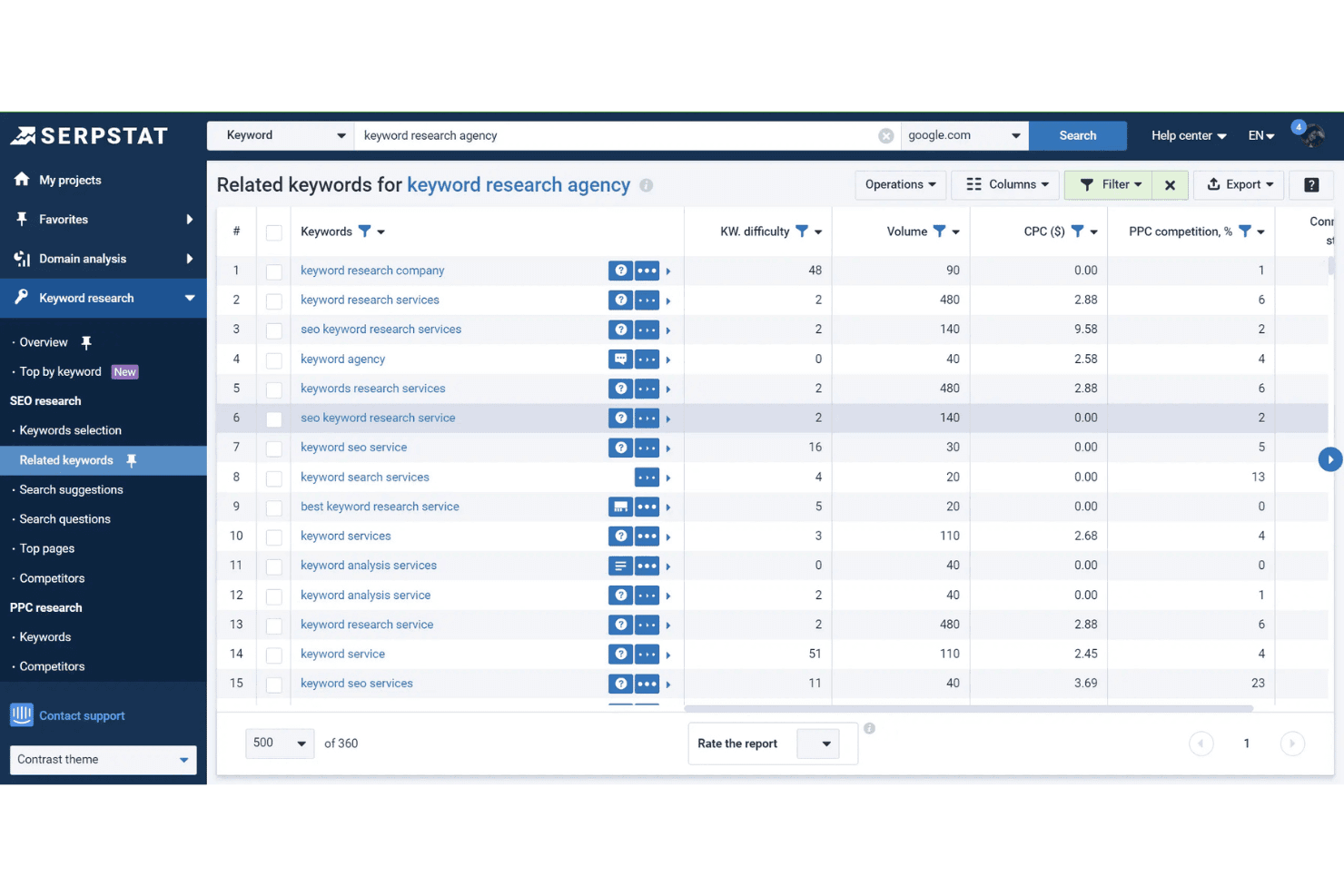
Lo strumento Parole Chiave Correlate di Serpstat mostra difficoltà della keyword, volume di ricerca, CPC e dati sulla concorrenza PPC per 'agenzia di ricerca parole chiave'. Serpstat è una piattaforma di search marketing che riunisce ricerca di parole chiave, analisi dei concorrenti, monitoraggio delle posizioni, audit del sito e analisi dei backlink in 230 paesi e su molteplici progetti dei clienti.
Per chi è più adatto Serpstat?
Serpstat è particolarmente indicato per le agenzie di marketing digitale di piccole e medie dimensioni che necessitano di una piattaforma SEO completa e accessibile per gestire più account clienti.
Perché ho scelto Serpstat
Serpstat si guadagna un posto nella mia lista grazie all’approfondimento con cui il suo modulo di analisi dei concorrenti si adatta ai casi d’uso delle agenzie. Posso ottenere le pagine a maggior rendimento di un concorrente, il loro intero set di parole chiave e la quota di traffico, tutto da una sola schermata, il che velocizza molto l’analisi delle opportunità prima di una chiamata strategica. Anche lo strumento di clustering delle parole chiave è veramente utile: posso raggruppare automaticamente migliaia di keyword grezze, accelerando la pianificazione dei contenuti per clienti con strutture di sito complesse o su larga scala.
Caratteristiche principali di Serpstat
- Rank tracker: Monitora le posizioni delle parole chiave in 230 paesi sia su desktop che su mobile.
- Audit del sito: Analizza i siti per problemi di SEO tecnico, con pianificazione degli audit personalizzabile.
- Accesso API: Importa dati di analisi della ricerca e degli audit direttamente nei flussi di lavoro personalizzati.
- Analisi in batch: Analizza fino a 100.000 domini o parole chiave contemporaneamente per revisioni in massa.
Integrazioni di Serpstat
Serpstat offre integrazioni native con Google Sheets, Google Search Console, Reportz, Stackby, Oviond, Datorama, SEOtools for Excel e Looker Studio. Sono inoltre disponibili estensioni browser per Chrome, Firefox, Edge e Opera, con accesso API per integrazioni personalizzate.
Pros and Cons
Pros:
- Analisi dei concorrenti su mercati globali e locali
- Raggruppa ampie liste di keyword
- Clusterizzazione automatica delle parole chiave per grandi dataset
Cons:
- I dati sui backlink sono meno approfonditi rispetto a Ahrefs
- Report in white-label disponibili solo con il piano superiore
 Le migliori informazioni attuabili grazie a strumenti potenziati dall'IA
- Prova gratuita di 7 giorni
- Da $49/mese
Visit WebsiteCustomer Rating:4.5/5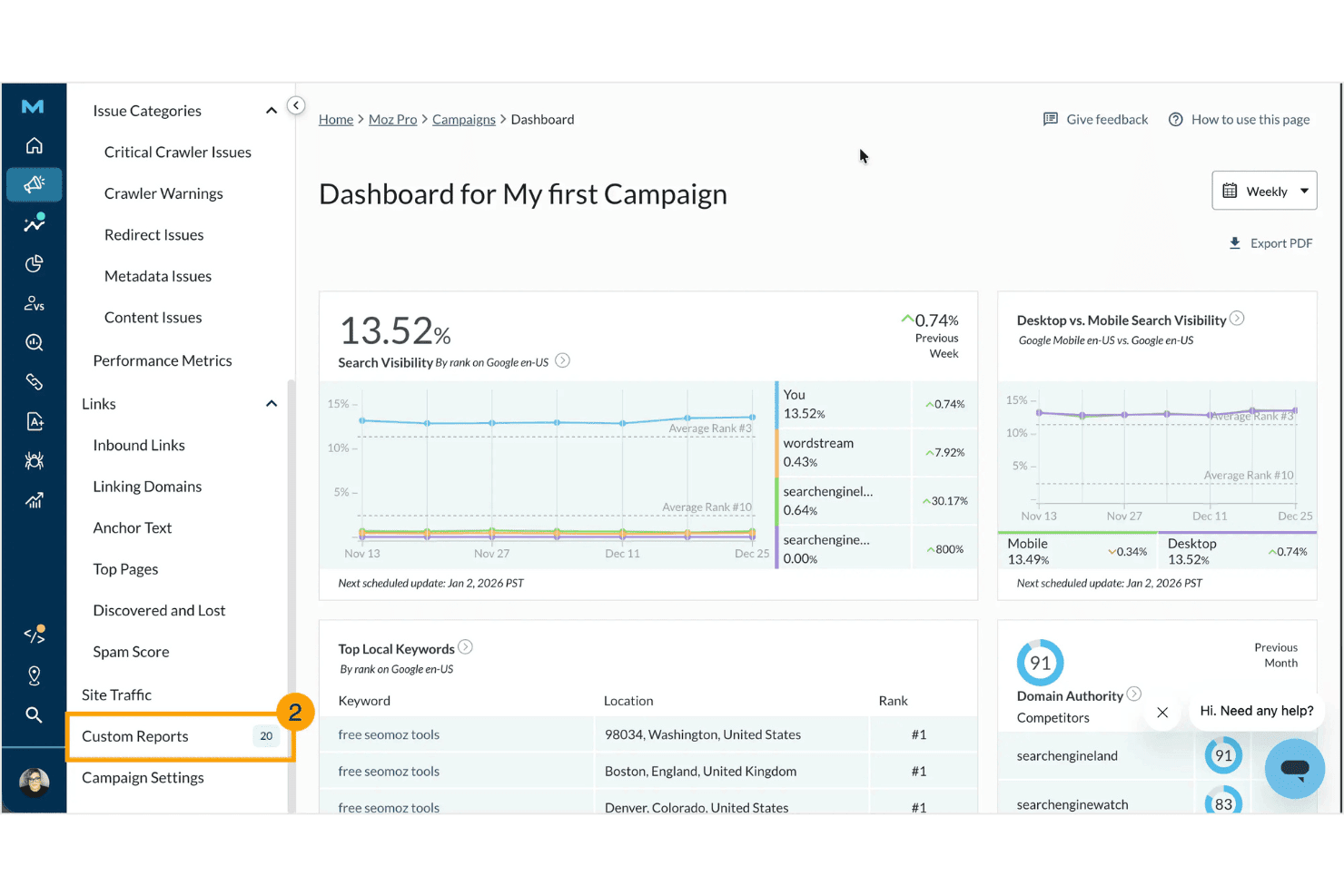
Moz Pro mostra una dashboard di campagna con metriche di visibilità nella ricerca, principali parole chiave locali, punteggi di autorità di dominio e confronti con i concorrenti. Moz Pro è una piattaforma SEO incentrata su ricerca di parole chiave, monitoraggio delle posizioni, audit del sito, analisi dei backlink e reportistica con marchio personalizzato, con strumenti potenziati dall’IA per monitorare la visibilità del brand sui motori di ricerca generativi.
Per chi è Moz Pro?
Moz Pro si adatta perfettamente ad agenzie di marketing digitale di piccole e medie dimensioni che necessitano di report affidabili per i clienti, metriche autorevoli affidabili e un’interfaccia accessibile per i loro team SEO.
Perché ho scelto Moz Pro
Moz Pro guadagna un posto nella mia shortlist grazie alla combinazione tra le sue metriche di autorità consolidate e strumenti IA realmente utili. Mi piace particolarmente la funzionalità di AI Prompt Tracking, che mostra con quale frequenza il brand del cliente appare nelle risposte di ChatGPT, Gemini e Google AI Mode. Gli AI Content Brief aggiungono un ulteriore livello trasformando i dati delle parole chiave in indicazioni strutturate immediatamente utilizzabili da chi scrive i contenuti.
Funzionalità principali di Moz Pro
- Report con marchio personalizzato: Genera report SEO con white label pronti per le agenzie, con personalizzazione drag-and-drop.
- Gestione clienti basata su campagne: Organizza più siti e progetti dei clienti in campagne separate in un’unica dashboard.
- Analisi completa del sito: Effettua l’audit dell’intero sito per individuare problemi tecnici SEO e opportunità di ottimizzazione.
- Analisi del profilo backlink: Accedi a dati dettagliati sui link per clienti e concorrenti, inclusi nuovi e persi backlink.
Integrazioni Moz Pro
Moz Pro offre integrazioni native con Google Analytics, Google Search Console, HubSpot e Looker Studio. È disponibile un’API per integrazioni personalizzate.
Pros and Cons
Pros:
- Tracciamento dei prompt IA per la ricerca generativa
- Metriche affidabili di Domain Authority e punteggio spam
- Report SEO e di audit per clienti con marchio personalizzato
Cons:
- I dati sui backlink sono meno aggiornati rispetto ai principali concorrenti
- Nessun accesso diretto al portale clienti
Learn more about Moz Pro: I migliori widget white-label per acquisire nuovi lead
- Prova gratuita di 14 giorni
- Da $99/mese (fatturazione annuale)
Visit WebsiteCustomer Rating:4.8/5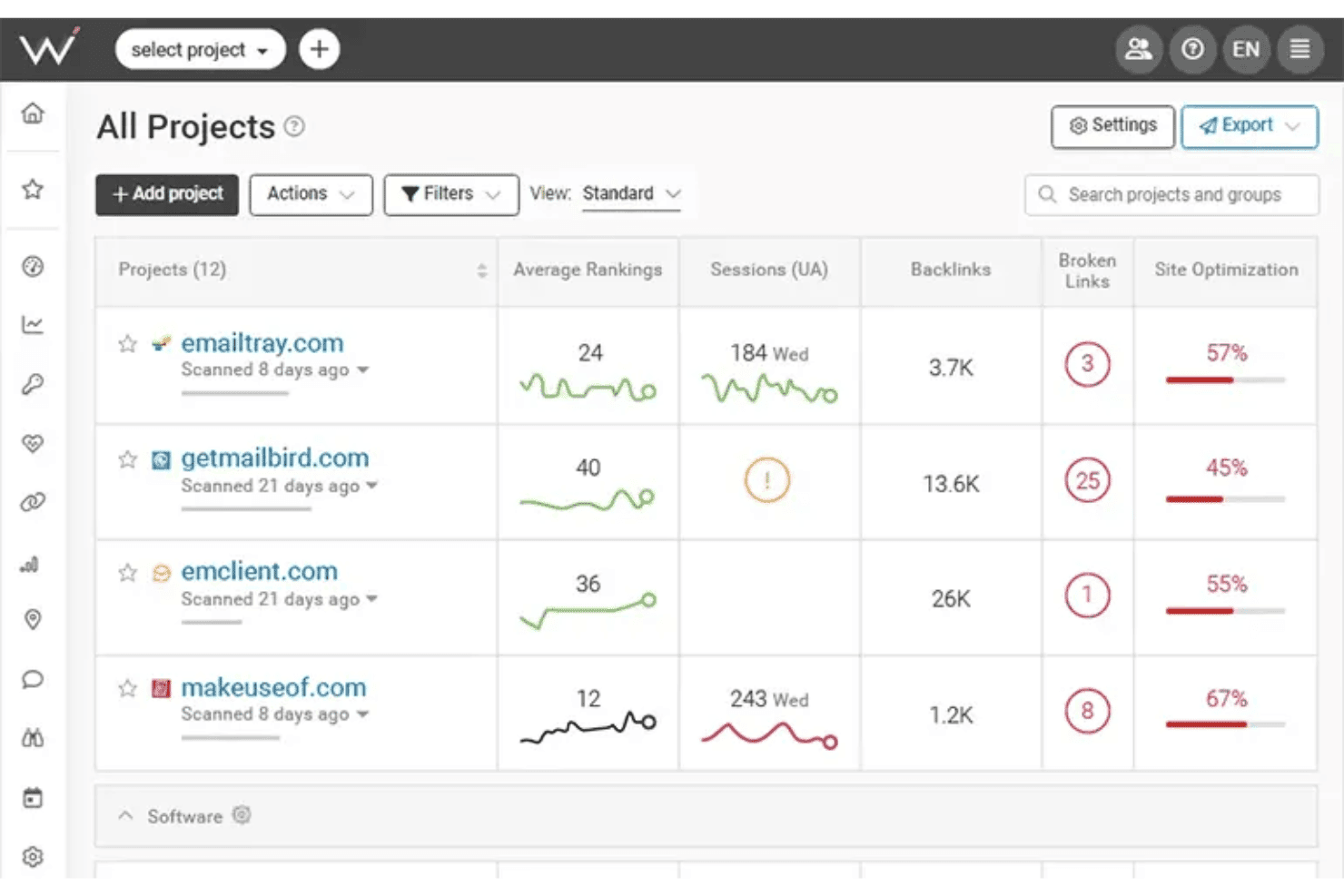
WebCEO mostra una dashboard Tutti i Progetti in cui gli utenti possono monitorare la posizione media, le sessioni, i backlink, i link interrotti e i punteggi di ottimizzazione dei siti su più siti web. WebCEO è una piattaforma SEO basata su cloud pensata per le agenzie, che include monitoraggio delle posizioni, audit del sito, analisi dei backlink, ricerca di parole chiave, analisi della concorrenza e report white-label su progetti illimitati, tutto da un'unica dashboard.
Per chi è più indicato WebCEO?
WebCEO è ideale per le agenzie di marketing digitale che gestiscono più account clienti e desiderano offrire servizi SEO brandizzati sotto il proprio dominio.
Perché ho scelto WebCEO
WebCEO si guadagna un posto nella mia shortlist perché il widget white-label per la generazione di lead è davvero raro nel mercato degli strumenti SEO. Posso integrare un pulsante di audit personalizzabile su una pagina rivolta ai clienti e, quando un potenziale cliente effettua una scansione, ricevo un report SEO brandizzato consegnato sotto il dominio della mia agenzia. Inoltre, l'hub white-label completo mi permette di utilizzare gli strumenti WebCEO sul mio dominio personalizzato, con accessi clienti basati su ruolo e invio automatico e programmato dei report.
Funzionalità principali di WebCEO
- Monitoraggio completo delle posizioni: Segui le classifiche delle parole chiave ogni giorno su diversi motori di ricerca, località e dispositivi.
- Strumenti di collaborazione per il team: Assegna compiti, gestisci i ruoli degli utenti e monitora i progressi del team da una dashboard unica.
- Analisi SEO dei concorrenti: Analizza i backlink, le strategie di contenuto e le parole chiave della concorrenza per ottenere informazioni utili.
- Audit tecnico automatico del sito: Analizza interi siti web per individuare errori on-page, problemi di visualizzazione mobile e dati dei Core Web Vitals.
Integrazioni WebCEO
WebCEO offre integrazioni native con Google Analytics, Google Ads, Google Search Console, Facebook e LinkedIn. È disponibile un'API per integrazioni personalizzate.
Pros and Cons
Pros:
- Widget white-label per acquisizione lead SEO disponibile
- Identifica problemi di prestazioni su dispositivi mobili
- Invio programmato e automatico dei report SEO brandizzati
Cons:
- Prevede costi aggiuntivi per ogni scansione nei piani agency
- Non è disponibile una versione software desktop
Learn more about WebCEO: Miglior reporting automatizzato per clienti per grandi team
- Prova gratuita di 14 giorni + demo gratuita
- A partire da $20/cliente/mese (fatturato annualmente)
Visit WebsiteCustomer Rating:4.7/5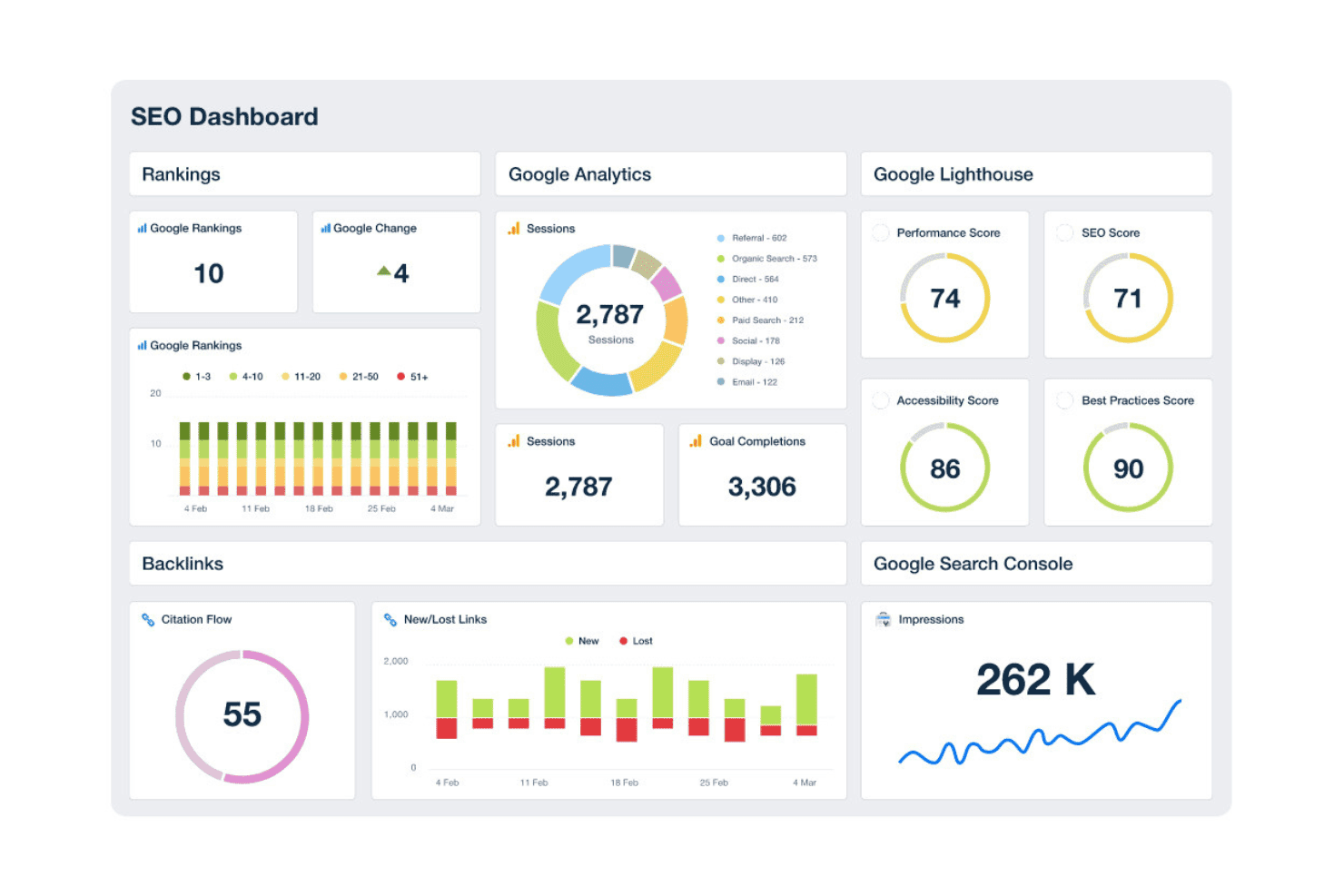
AgencyAnalytics offre una dashboard SEO completa che mostra posizionamenti, sessioni Google Analytics, punteggi Lighthouse, backlink e impressioni search console in un'unica vista unificata. AgencyAnalytics è una piattaforma di reportistica con etichetta bianca e monitoraggio SEO pensata per agenzie di marketing digitale, che combina dashboard automatizzate per i clienti, monitoraggio del posizionamento, audit dei siti e controllo dei backlink su più account clienti.
Per chi è ideale AgencyAnalytics?
AgencyAnalytics è la soluzione ideale per piccole e medie agenzie di marketing digitale che gestiscono più account clienti e hanno bisogno di report con etichetta bianca senza dover costruire dashboard personalizzate.
Perché ho scelto AgencyAnalytics
Ho incluso AgencyAnalytics tra le mie migliori scelte perché nessun altro strumento in questo settore offre la stessa pianificazione scalabile dei report automatizzati. Posso creare un modello di report brandizzato una sola volta, applicarlo a più di 20 account clienti e programmare la consegna mensile senza doverci più intervenire. Il portale cliente white-label, la configurazione del dominio personalizzato e il generatore di report drag-and-drop assicurano ai clienti dashboard curate e in linea con l'immagine dell'agenzia su un URL che controllo direttamente, e non su un sottodominio generico di terzi.
Caratteristiche principali di AgencyAnalytics
- Approfondimenti AI e rilevamento anomalie: Utilizza il machine learning per evidenziare tendenze, anomalie e nuove opportunità nei dati delle prestazioni.
- Monitoraggio dei backlink: Tieni traccia di nuovi e persi backlink da fonti integrate per ogni account cliente.
- Libreria di integrazioni: Si collega a oltre 80 piattaforme di marketing, SEO e paid media per una reportistica centralizzata.
- Strumento di audit del sito: Esegue automaticamente la scansione dei siti dei clienti per identificare problemi SEO tecnici e suggerimenti on-page.
Integrazioni di AgencyAnalytics
AgencyAnalytics offre oltre 85 integrazioni native, tra cui Google Analytics, Google Search Console, Ahrefs, Semrush, Moz, Facebook Ads, Google Ads, Shopify, HubSpot, Mailchimp e CallRail. È disponibile anche un'API per integrazioni personalizzate.
Pros and Cons
Pros:
- Reportistica automatizzata white-label su tutti i clienti
- Offre layout dashboard personalizzati
- Permessi per l'accesso al portale cliente individuale
Cons:
- Le funzionalità di ricerca keyword richiedono strumenti di terze parti
- Gli audit dei siti hanno una profondità tecnica limitata
Learn more about AgencyAnalytics: I migliori dati competitivi sulla visibilità digitale
- Piano gratuito + prova gratuita di 7 giorni + demo gratuita
- Da $117,33/mese (fatturazione annuale)
Visit WebsiteCustomer Rating:4.5/5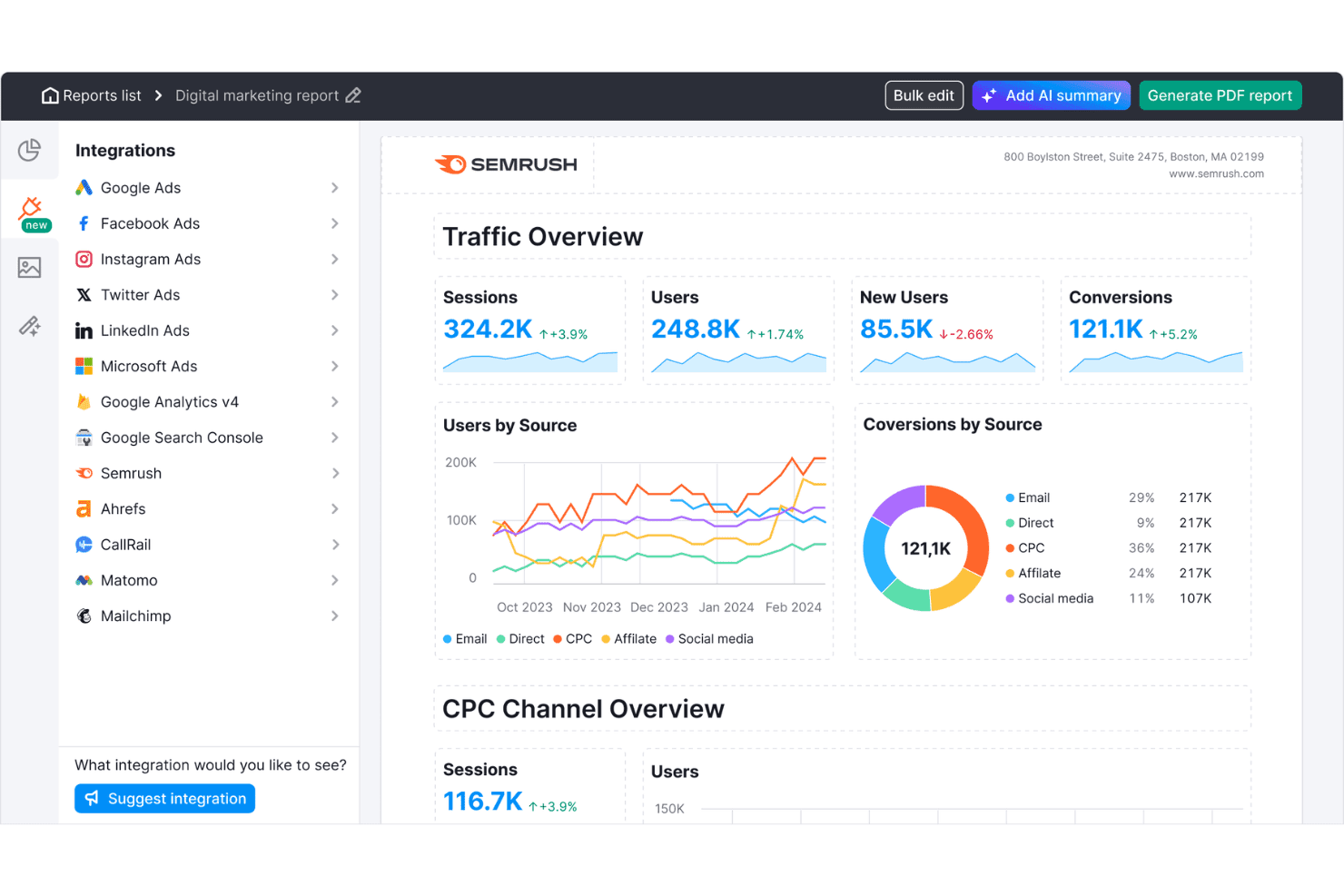
Semrush offre una dashboard di report di marketing digitale con panoramica del traffico, utenti per fonte, conversioni per fonte e metriche dei canali CPC. Semrush è una piattaforma di visibilità online che offre alle agenzie ricerca di parole chiave, monitoraggio delle posizioni, audit dei siti, analisi dei backlink, intelligence sui concorrenti e reportistica white-label su dozzine di account clienti da un'unica dashboard.
Per chi è ideale Semrush?
Semrush è particolarmente indicato per agenzie digitali di medie e grandi dimensioni che gestiscono campagne SEO su un elevato numero di account clienti contemporaneamente.
Perché ho scelto Semrush
Ho scelto Semrush tra i migliori perché i suoi dati di intelligence competitiva non hanno eguali in ambito agenziale. Lo strumento Keyword Gap consente di confrontare fino a cinque domini concorrenti fianco a fianco, per individuare le parole chiave su cui loro sono posizionati e i miei clienti no, mentre lo strumento Backlink Gap fa lo stesso per le opportunità di link building. Grazie a un database di 28 miliardi di parole chiave che copre 142 database geografici, posso eseguire questa analisi in qualsiasi settore dei clienti senza incorrere in limiti di copertura.
Funzionalità principali di Semrush
- Strumento Site Audit: Analizza i siti web dei clienti individuando problemi tecnici SEO, contenuti duplicati, link interrotti e criticità di scansione.
- Monitoraggio delle posizioni: Controlla quotidianamente il posizionamento delle parole chiave su diversi motori di ricerca, località e dispositivi per ciascun progetto cliente.
- Dashboard Client Manager: Organizza tutti gli account, progetti e deliverable dei clienti in un unico spazio di lavoro con permessi basati sui ruoli.
- Reportistica white-label: Genera report SEO e marketing personalizzati con il brand, programmati per una consegna e presentazione facile al cliente.
Integrazioni di Semrush
Semrush offre integrazioni native con Google Analytics, Google Search Console, Google Sheets, Looker Studio, Facebook, Pinterest, LinkedIn, Instagram, YouTube, All in One SEO, monday.com e Zoho Analytics. È disponibile un'API per integrazioni personalizzate.
Pros and Cons
Pros:
- Analisi competitiva delle lacune di parole chiave e backlink
- Ampio database di parole chiave e link geospecifici
- Audit del sito con controllo dei core web vitals
Cons:
- La reportistica white-label richiede un componente aggiuntivo a pagamento
- Limiti sulle parole chiave e domini monitorati
 Migliori report SEO di marketing personalizzabili
- Prova gratuita di 7 giorni
- A partire da $39/mese (fatturazione annuale)
Visit WebsiteCustomer Rating:4.4/5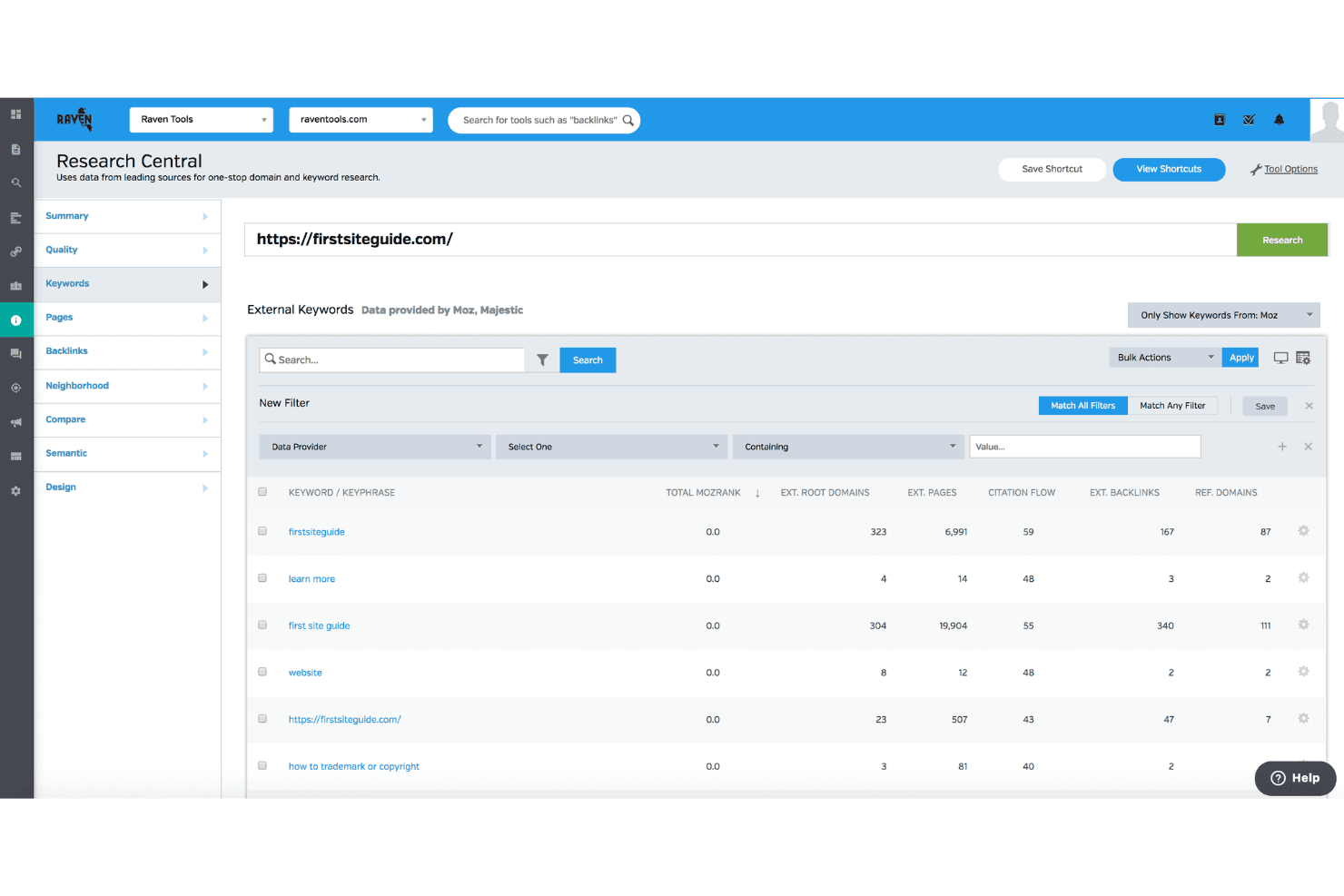
Raven Tools offre una funzione Research Central che visualizza dati esterni sulle parole chiave tra cui MozRank, citation flow e metriche dei backlink per qualsiasi dominio. Raven Tools è una piattaforma SEO pensata per le agenzie, incentrata sulla reportistica ai clienti con white-label, tracking delle posizioni su più motori di ricerca, audit dei siti, analisi dei backlink supportata da Majestic e Moz, e ricerca di parole chiave.
Per chi è ideale Raven Tools?
Raven Tools si adatta perfettamente ad agenzie di marketing digitale di piccole e medie dimensioni che gestiscono più account clienti e danno priorità a report automatizzati e personalizzati con il proprio brand.
Perché ho scelto Raven Tools
Raven Tools si guadagna un posto nella mia shortlist per la profondità del suo generatore di report. Posso estrarre dati da oltre 20 fonti e più di 30 moduli preimpostati per costruire un unico deliverable brandizzato che include tracking delle posizioni, crescita dei backlink e dati di Google Analytics fianco a fianco. L’hosting su dominio personalizzato e la pianificazione delle email con mittente personalizzato fanno sì che i clienti ricevano i report dall’indirizzo della mia agenzia, non da quello di Raven, un dettaglio importante quando si gestiscono molteplici relazioni clienti.
Funzionalità principali di Raven Tools
- Site Auditor: Analizza i siti per problemi SEO tecnici e genera un punteggio di salute del sito con soluzioni prioritarie.
- Monitoraggio posizionamenti su più motori: Tiene traccia delle posizioni delle parole chiave su Google, Bing, Yahoo, Yandex e Baidu, con supporto al targeting per località.
- Backlink Explorer: Fornisce accesso ai dati sui backlink grazie alle integrazioni con Majestic e Moz, senza necessità di abbonamenti separati.
- Task Manager: Permette al tuo team di assegnare, gestire e monitorare i compiti SEO direttamente all’interno di ogni campagna cliente.
Integrazioni di Raven Tools
Raven Tools offre integrazioni native con Google Analytics, Google Search Console, Google Ads, Bing Webmaster Tools, Facebook Ads, Majestic, Moz, YouTube, LinkedIn, Twitter, MailChimp, Constant Contact e CallRail. È disponibile una API per integrazioni personalizzate.
Pros and Cons
Pros:
- Report personalizzati white-label con pianificazione delle email
- Report automatizzati illimitati per più clienti
- Dati sui backlink integrati da Majestic e Moz
Cons:
- Manca il tracciamento storico della difficoltà delle parole chiave
- Assenza di punteggio della difficoltà delle parole chiave negli strumenti di ricerca
Learn more about Raven Tools: Miglior piattaforma unificata per il monitoraggio di ricerche tradizionali e AI
- Prova gratuita di 14 giorni
- A partire da $96/mese (fatturazione annuale)
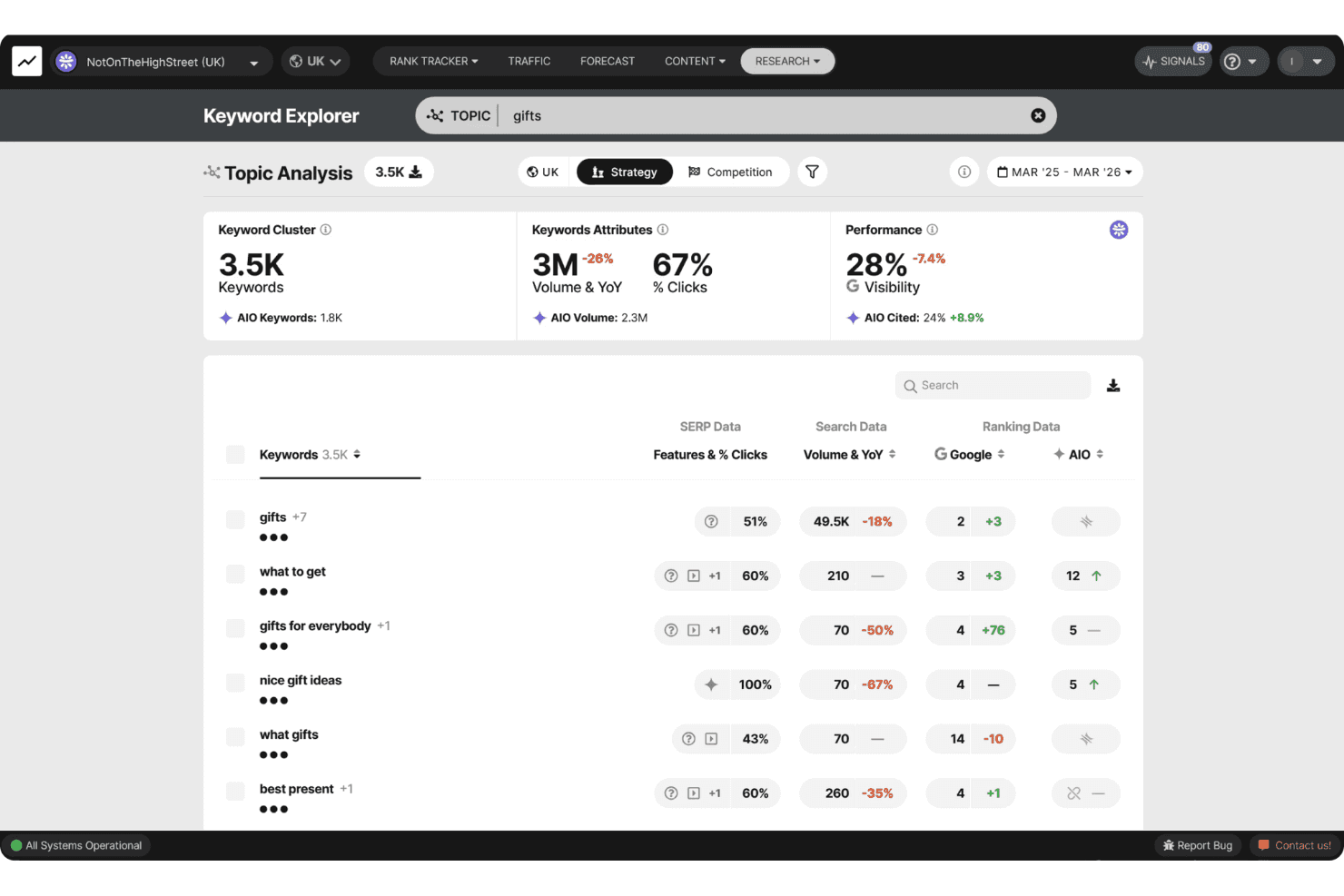
SEOmonitor offre un Esploratore di Parole Chiave con Analisi degli Argomenti, mostrando gruppi di parole chiave, volume di ricerca, metriche di visibilità e dati AIO per il tema 'regali'. SEOmonitor è una piattaforma SEO pensata per le agenzie che combina il monitoraggio del posizionamento delle parole chiave su Google e sui motori di ricerca AI (ChatGPT, Gemini, Perplexity), ricerca delle parole chiave, previsioni SEO e scrittura di contenuti AI in un unico workspace.
Per chi è ideale SEOmonitor?
SEOmonitor è particolarmente indicato per le agenzie SEO che gestiscono più campagne clienti e che necessitano di una visione unificata sia dei posizionamenti tradizionali su Google, sia sulle piattaforme di ricerca AI.
Perché ho scelto SEOmonitor
Ho selezionato SEOmonitor perché è l'unica piattaforma che ho utilizzato capace di monitorare sia le posizioni su Google sia la visibilità nelle ricerche AI (ChatGPT, Gemini, Perplexity) all'interno della stessa strategia di parole chiave. Mi affido alla funzione Bozze di Campagna per creare previsioni SEO pronte da presentare ai potenziali clienti, senza pagare in anticipo per nessuna parola chiave monitorata. Il modello blended Google e AI Overviews CTR mostra inoltre come la ricerca AI stia modificando i tassi di clic sulle parole chiave più importanti per i miei clienti.
Funzionalità principali di SEOmonitor
- Dashboard per agenzie: Monitora le prestazioni del portafoglio e la situazione dei clienti da un'unica vista centralizzata.
- Scrittore di contenuti AI: Automatizza la ricerca di contenuti, la pianificazione, i brief e la creazione di articoli per le campagne dei clienti.
- Keyword vault: Archivia parole chiave illimitate con aggiornamenti mensili continui del volume di ricerca per nuove opportunità.
- Connettore nativo Looker Studio: Crea report SEO visivi, pronti per i clienti, con dati in tempo reale.
Integrazioni di SEOmonitor
SEOmonitor offre integrazioni native con Google Analytics, Google Search Console, Google Sheets e Looker Studio. È disponibile un'API per integrazioni personalizzate.
Pros and Cons
Pros:
- Monitora ranking sia su Google che su motori di ricerca AI
- Aggiornamenti giornalieri del ranking per tutte le parole chiave monitorate
- Previsioni dettagliate per campagne multi-cliente
Cons:
- Si concentra principalmente sull'analisi del traffico organico
- Richiede strumenti esterni per il monitoraggio dei link
Learn more about SEOmonitor :
Altri Strumenti SEO per Agenzie
Qui di seguito altri strumenti SEO per agenzie che non hanno raggiunto la mia shortlist, ma sono comunque da dare un’Occhiata che meritano la pena di considerazione.
- 11Screaming FrogMigliore scansione approfondita dei siti per audit tecnici
- 12SitebulbI migliori layout di dati visivi per audit tecnici
- 13AccuRankerIl miglior monitoraggio delle prestazioni LLM in tempo reale
- 14WhatagraphLa migliore base dati scalabile e multicanale
- 15DashThisI migliori dashboard per la reportistica multicanale
- 16SeobilityIdeale per una guida intuitiva all'ottimizzazione
- 17MorningscoreLe migliori checklist di attività gamificate per il monitoraggio della crescita
- 18NightwatchI migliori report di attribuzione per l'IA e la ricerca
- 19SEOptimerIl miglior audit di siti web integrabile per la generazione di contatti
- 20SEO PowerSuiteIl miglior monitoraggio illimitato di parole chiave e backlink
Come Valuto gli Strumenti SEO per le Agenzie
Divido la mia valutazione tra funzionalità di base che ogni piattaforma per agenzie deve offrire—come reportistica white-label e spazi di lavoro multi-cliente—e le caratteristiche distintive che separano i buoni dai migliori.
Funzionalità di Base (Requisiti Fondamentali per Questa Lista)
Quando seleziono gli strumenti per la mia lista, valuto ognuno su una scala da 0 (non offre la funzionalità) a 5 (eccelle in questo ambito) per ogni funzionalità di base elencata di seguito. Poi, calcolo il punteggio totale dello strumento come una percentuale. Ogni strumento deve ottenere un punteggio totale minimo del 65% per essere preso in considerazione.
- Gestione Multi-Cliente: Verifico se la piattaforma consente di gestire spazi di lavoro separati per ciascun cliente con permessi basati sui ruoli, così i responsabili degli account possono vedere solo ciò che serve.
- Monitoraggio delle Posizioni: Il monitoraggio quotidiano su motori di ricerca, località e dispositivi è fondamentale—specialmente per le agenzie che gestiscono campagne locali in decine di mercati contemporaneamente.
- Audit del Sito: Valuto la profondità della scansione e il rilevamento dei problemi, cercando riesecuzioni programmate che segnalano nuovi problemi tecnici prima del prossimo incontro con il cliente.
- Analisi dei Backlink: L’indice dei backlink deve mostrare nuovi link acquisiti e persi, domini di riferimento e metriche di autorità sia per i siti dei clienti che per quelli dei concorrenti.
- Ricerca delle Parole Chiave: Cerco volumi di ricerca, punteggi di difficoltà e dati SERP sufficientemente ampi per consentire la scoperta di parole chiave in diversi settori dei clienti.
- Reportistica White-Label: Le agenzie necessitano di report automatici e con marchio personalizzato, che includano il proprio logo, colori e idealmente un portale con dominio personalizzato a cui i clienti possono accedere direttamente.
Una volta individuati gli strumenti che soddisfano i criteri, considero ciò che rende ciascuna piattaforma unica.
Fattori Differenzianti (Cosa Distingue i Fornitori)
Ecco come confronto e metto a confronto i diversi fornitori:
Funzionalità Distintive
Il monitoraggio SEO locale è un punto di forza per le agenzie con clienti multi-sede—cerco un monitoraggio delle posizioni geo-specifico insieme alla gestione del profilo Google Business. L’ottimizzazione dei contenuti tramite IA è rilevante quando si producono contenuti per molteplici settori di clienti. I brief di contenuto integrati e gli analizzatori SERP fanno risparmiare tempo al team evitando di passare da uno strumento all’altro. L’analisi in blocco completa il quadro, permettendo analisi massive di parole chiave o scansioni di siti in batch per l’intero portafoglio clienti.
Oltre le Funzionalità
Il modello di prezzo è il primo aspetto che valuto—una tariffazione per progetto che cresce in modo prevedibile al crescere dei clienti è migliore rispetto al pagamento di più licenze singole. Anche la copertura delle integrazioni è fondamentale. Collegamenti nativi a Google Search Console, GA4 e Looker Studio sono imprescindibili, ma verifico anche i collegamenti CRM a strumenti come HubSpot o Asana. L’accuratezza dei dati completa il quadro; un ampio indice di backlink e aggiornamenti affidabili delle posizioni giornaliere distinguono gli strumenti affidabili per la consegna al cliente da quelli che non lo sono.
Come Scegliere gli Strumenti SEO per Agenzie
È facile sentirsi sommersi da lunghe liste di caratteristiche e da strutture di prezzi complesse. Per aiutarti a restare concentrato durante il processo di selezione software, ecco una checklist di fattori da tenere a mente:
| Fattore | Cosa Considerare |
|---|---|
| FattoreScalabilità | Cosa ConsiderareLo strumento supporta la crescita dei clienti o cambiamenti nella struttura della tua agenzia senza dover aggiungere sforzi manuali o sorprese nel fatturato? |
| FattoreIntegrazioni | Cosa ConsiderareSi collega con le piattaforme di analisi, reportistica e workflow che il tuo team e i clienti già utilizzano? |
| FattorePersonalizzazione | Cosa ConsiderareI dashboard, i report e i ruoli utente possono essere completamente adattati alle esigenze di ciascun cliente, oppure devi attenerti a template imposti dal fornitore? |
| FattoreFacilità d'uso | Cosa ConsiderareSia il tuo team che i clienti riescono a imparare velocemente ad usarlo, o la curva di apprendimento ripida rischia di creare attriti e lavoro extra di onboarding? |
| FattoreImplementazione e onboarding | Cosa ConsiderareQuanto durerà l’installazione? Il fornitore offre documentazione, supporto live o aiuto per la migrazione dei dati per aiutarti a partire senza intoppi? |
| FattoreCosto | Cosa ConsiderareOltre al prezzo principale, ci sono costi extra per utenti clienti, esportazione dati, reportistica brandizzata o limiti di dati più elevati? |
| FattoreGaranzie di sicurezza | Cosa ConsiderarePuoi affidare alla piattaforma i dati prestazionali dei clienti e le risorse sensibili? Sono previsti controlli di accesso, backup dei dati e standard chiari di sicurezza? |
| FattoreDisponibilità del supporto | Cosa ConsiderareIl supporto live o prioritario è disponibile mentre lavori a progetti urgenti dei clienti, oppure rischi di restare da solo se emerge un problema? |
Cosa Sono gli Strumenti SEO per Agenzie?
Gli strumenti SEO per agenzie sono piattaforme specializzate che ti permettono di gestire più campagne clienti, automatizzare il monitoraggio delle posizioni e generare report white-label su larga scala. Questi strumenti sono pensati per il flusso di lavoro delle agenzie, offrendo dashboard multi-cliente, controlli sui permessi utente e funzionalità avanzate di auditing per aiutarti a rispondere alle sfide di gestione di programmi SEO complessi su settori e portafogli clienti diversificati.
Funzionalità
Quando selezioni strumenti SEO per agenzie, fai attenzione alle seguenti funzionalità chiave:
- Gestione multi-cliente: Gestisci progetti separati per i clienti, controlla i permessi utente e previeni la commistione di dati tra account per un’operatività efficiente dell’agenzia.
- Reportistica white-label: Genera report e dashboard personalizzabili e con il tuo branding per rafforzare l’identità dell’agenzia quando presenti i risultati ai clienti.
- Audit completo del sito: Scansiona automaticamente i siti web dei clienti alla ricerca di errori tecnici SEO, problemi on-page e opportunità di ottimizzazione con raccomandazioni dettagliate e azionabili.
- Ricerca e monitoraggio delle parole chiave: Scopri opportunità di parole chiave di alto valore, monitora il posizionamento su più motori di ricerca, località e dispositivi, e analizza le variazioni nella SERP.
- Analisi dei backlink: Monitora i profili dei backlink, identifica link nuovi e persi, valuta i domini di riferimento e analizza le strategie di linking dei concorrenti per una visione completa dell’SEO off-page.
- Strumenti per la SEO locale: Monitora il posizionamento geo-specifico, controlla le schede locali e gestisci Google Business Profiles su più sedi clienti per aziende focalizzate sulla visibilità nella ricerca locale.
- Strumenti di analisi di massa: Esegui controlli di parole chiave, audit di backlink e crawl dei siti in batch per gestire grandi volumi di dati di più clienti in un unico flusso di lavoro.
- Controlli di accesso basati sui ruoli: Definisci ruoli e permessi per i membri del team e i clienti, garantendo che ciascuno visualizzi solo i dati e gli strumenti pertinenti alle proprie responsabilità.
- Pianificazione e automazione dei report: Imposta la consegna automatica e ricorrente di report sulle performance e dashboard ai clienti, risparmiando tempo e riducendo le attività di reporting manuale.
- Integrazioni con piattaforme di marketing: Connettiti con strumenti di analytics, pubblicità e CRM per unificare la reportistica SEO all’interno di operazioni di marketing più ampie dell’agenzia.
Vantaggi
L’implementazione di strumenti SEO per agenzie offre numerosi vantaggi per il tuo team e la tua azienda. Eccone alcuni a cui puoi guardare con fiducia:
- Gestione dei clienti semplificata: Spazi di lavoro dedicati e permessi utente ti permettono di organizzare, monitorare e servire facilmente più clienti senza sovrapposizioni o confusione di dati.
- Maggiore fidelizzazione del cliente: La reportistica automatizzata white-label e i dashboard con il tuo brand ti aiutano a dimostrare valore continuo e rafforzare l’immagine professionale della tua agenzia.
- Operatività SEO su larga scala: Analisi di massa e automazione dei flussi di lavoro consentono al tuo team di gestire grandi volumi di audit, monitoraggio posizionamenti e ricerche su portafogli clienti diversificati.
- Migliori performance delle campagne: Audit completi del sito, monitoraggio delle parole chiave e analisi backlink forniscono insight pratici per ottimizzare le strategie di ogni cliente e ottenere risultati concreti.
- Cicli di reportistica più rapidi: La pianificazione automatica dei report elimina estrazioni manuali di dati e garantisce aggiornamenti frequenti e accurati ai clienti con il minimo sforzo.
- Maggiore collaborazione e trasparenza: I controlli di accesso basati sui ruoli e dashboard condivisibili promuovono la fiducia, permettono una comunicazione chiara e tengono tutti allineati sui progressi delle campagne.
- Migliore allineamento della tech stack: Le integrazioni con analytics, CRM e piattaforme di marketing unificano il lavoro SEO dell’agenzia nei più ampi processi di reporting e flussi di lavoro del cliente.
Costi & Prezzi
La scelta degli strumenti SEO per agenzie richiede la comprensione dei diversi modelli e piani di prezzo disponibili. I costi variano in base alle funzionalità, alla dimensione del team, ai componenti aggiuntivi e altro ancora. La tabella sottostante riassume i piani più comuni, i loro prezzi medi e le funzionalità tipiche incluse nelle soluzioni di strumenti SEO per agenzie:
Tabella di Confronto dei Piani per Strumenti SEO per Agenzie
| Tipo di piano | Prezzo medio | Funzionalità comuni |
|---|---|---|
| Tipo di pianoPiano gratuito | Prezzo medio$0 | Funzionalità comuniMonitoraggio delle parole chiave limitato, audit di base, reportistica minima e accesso per un solo utente. |
| Tipo di pianoPiano personale | Prezzo medio$25-$75/utente/mese | Funzionalità comuniMonitoraggio del posizionamento ampliato, ricerca di parole chiave, audit standard del sito, esportazione dei report e supporto via email. |
| Tipo di pianoPiano business | Prezzo medio$100-$300/mese | Funzionalità comuniWorkspace multi-cliente, report con etichette bianche, analisi in blocco, accesso API, integrazioni e controlli di team. |
| Tipo di pianoPiano enterprise | Prezzo medio$500+/mese | Funzionalità comuniGestione clienti illimitata, automazione avanzata, SLA personalizzati, onboarding dedicato e supporto premium. |