

Il miglior software per la gestione della reputazione ti aiuta a controllare la narrativa online del tuo brand monitorando le recensioni, segnalando i feedback urgenti, automatizzando le richieste di recensione e mantenendo coerenti le schede della tua attività su oltre 50 siti.
Ma molte piattaforme non sono all'altezza. Monitorano le recensioni, lasciandoti però rispondere manualmente, oppure gestiscono le schede saltando le directory che generano effettivamente conversioni. In qualità di responsabile del marketing SaaS che nell'ultimo decennio ha gestito oltre 5.000 recensioni dei clienti e diversi Profili dell'attività su Google, so in prima persona quanto il processo possa diventare difficile senza gli strumenti giusti.
Per questo ho dedicato oltre 100 ore a testare i principali strumenti, confrontando l'accuratezza dell'analisi del sentiment, l'automazione dei flussi di lavoro e la profondità dei report, così puoi trovare la soluzione più adatta.
Questa guida fa chiarezza per aiutarti a scegliere un software in linea con la fase di crescita e la strategia di reputazione della tua azienda.
Perché fidarsi dei nostri consigli sui software
6,700+
Reviews
20
Industry experts
16+
Evaluation factors
14
Years
Il nostro team testa e recensisce software dal 2012. In quanto leader del marketing noi stessi, sappiamo quanto sia difficile — e importante — scegliere il software giusto.
Per questa guida, abbiamo valutato gli strumenti attraverso test pratici e ricerche indipendenti, assegnando un punteggio agli strumenti in base ai nostri criteri di selezione.
Le nostre recensioni riflettono il nostro giudizio editoriale umano, non un discorso di vendita.
Revisori esperti:
 Gui DrusinaDirettore creativo
- Shriya GhateSenior Marketing Lead
 Amanda JacquesResponsabile Marketing Ops

Riepilogo dei migliori software per la gestione della reputazione
Questa tabella comparativa riassume i dettagli dei prezzi delle mie migliori selezioni di software per la gestione della reputazione, per aiutarti a trovare il software più adatto al tuo budget e alle esigenze della tua azienda.
| Tool | Best For | Trial Info | Price | ||
|---|---|---|---|---|---|
| 1 | Ideale per la rimozione dei contenuti basata sulla SEO | Consulenza gratuita disponibile | Prezzi su richiesta | Website | |
| 2 | Il migliore per il monitoraggio multilingue delle menzioni sui social | Prova gratuita di 14 giorni | Da $199/mese (fatturazione annuale) | Website | |
| 3 | Ideale per automatizzare le risposte alle recensioni | Demo gratuita disponibile | Prezzi su richiesta | Website | |
| 4 | Ideale per risposte alle recensioni con IA | Prova gratuita disponibile | Da $10/località/mese | Website | |
| 5 | Ideale per la soppressione di contenuti negativi | Nessuna prova gratuita disponibile | Da $3,000/mese | Website | |
| 6 | Ideale per la gestione delle recensioni tra vari elenchi digitali | Demo gratuita disponibile | A partire da $79/mese (fatturazione annuale) | Website | |
| 7 | Ideale per servizi specifici di settore | Prezzo su richiesta | Website | ||
| 8 | Ideale per analisi delle recensioni avanzate tramite IA | Prova gratuita di 14 giorni disponibile | Da $45/località/mese | Website | |
| 9 | Il migliore per il monitoraggio delle recensioni dei clienti | Prova gratuita di 14 giorni + demo gratuita | Da $31/mese (fatturazione annuale) | Website | |
| 10 | Ideale per grandi imprese | Demo gratuita disponibile | Prezzi su richiesta | Website |


Recensioni dei migliori software per la gestione della reputazione
Di seguito trovi i miei riepiloghi dettagliati dei migliori software per la gestione della reputazione inclusi nel mio elenco. Le mie recensioni offrono uno sguardo approfondito sulle funzionalità principali, sui pro e contro, sulle integrazioni e sui casi d’uso ideali di ogni strumento, per aiutarti a trovare quello più adatto a te.
 Ideale per la rimozione dei contenuti basata sulla SEO
- Consulenza gratuita disponibile
- Prezzi su richiesta

Pagina iniziale di TheBestReputation che presenta servizi personalizzati di gestione della reputazione online con un invito all’azione e un video introduttivo. TheBestReputation è un servizio di gestione della reputazione gestito che combina soppressione SEO, rimozione dei contenuti e PR per plasmare il modo in cui il tuo marchio appare sui motori di ricerca, sulle piattaforme di recensioni e sugli strumenti di ricerca basati sull’intelligenza artificiale.
Per chi è più indicato TheBestReputation?
TheBestReputation è particolarmente adatto a dirigenti, personaggi pubblici e aziende che devono affrontare risultati di ricerca dannosi e necessitano di una strategia gestita e operativa di rimozione e soppressione.
Perché ho scelto TheBestReputation
Ho scelto TheBestReputation come uno dei migliori perché il suo approccio alla rimozione dei contenuti basato sulla SEO va oltre quello della maggior parte degli strumenti che ho visto. Quando compare un articolo dannoso o una recensione diffamatoria, il suo team persegue la rimozione completa e successivamente deindicizza il contenuto rimosso, così che non rimanga nelle cache dei motori di ricerca. Inoltre, crea e posiziona contenuti positivi utilizzando domini a corrispondenza esatta e pubblicazioni ad alta autorevolezza per spingere completamente i contenuti negativi fuori dalla prima pagina.
Caratteristiche principali di TheBestReputation
- Portale clienti: Uno spazio di lavoro condiviso in cui puoi esaminare i contenuti, approvare le attività e monitorare i rapporti delle campagne in un unico luogo.
- Monitoraggio delle panoramiche basate sull’intelligenza artificiale: Uno strumento diagnostico che monitora il modo in cui i motori di ricerca basati sull’intelligenza artificiale, come ChatGPT e Google Gemini, descrivono il tuo marchio.
- Aggiornamenti quindicinali e rapporti mensili sui progressi: Rapporti programmati forniti da strateghi senior, che analizzano l’andamento nei risultati di ricerca, le tendenze delle recensioni e la visibilità sui media.
- Servizi ORM a marchio bianco: Un’offerta di gestione della reputazione chiavi in mano che agenzie e studi legali possono rivendere con il proprio marchio.
Integrazioni di TheBestReputation
Le integrazioni native non sono documentate chiaramente, poiché TheBestReputation opera come servizio gestito anziché come piattaforma autogestita. Lo strumento non pubblicizza il supporto a Zapier né un’API pubblica per le integrazioni personalizzate.
Pros and Cons
Pros:
- Offre supporto nella pianificazione della risposta alle crisi
- Integrazioni approfondite con gli strumenti ORM
- Combina i punti di forza delle PR e della SEO
Cons:
- I tempi delle campagne possono variare
- Nessuna struttura di prezzi fissa
Learn more about TheBestReputation: Il migliore per il monitoraggio multilingue delle menzioni sui social
- Prova gratuita di 14 giorni
- Da $199/mese (fatturazione annuale)
Visit WebsiteCustomer Rating:4.7/5This rating combines scores from multiple user review sites to reflect overall customer sentiment about the product.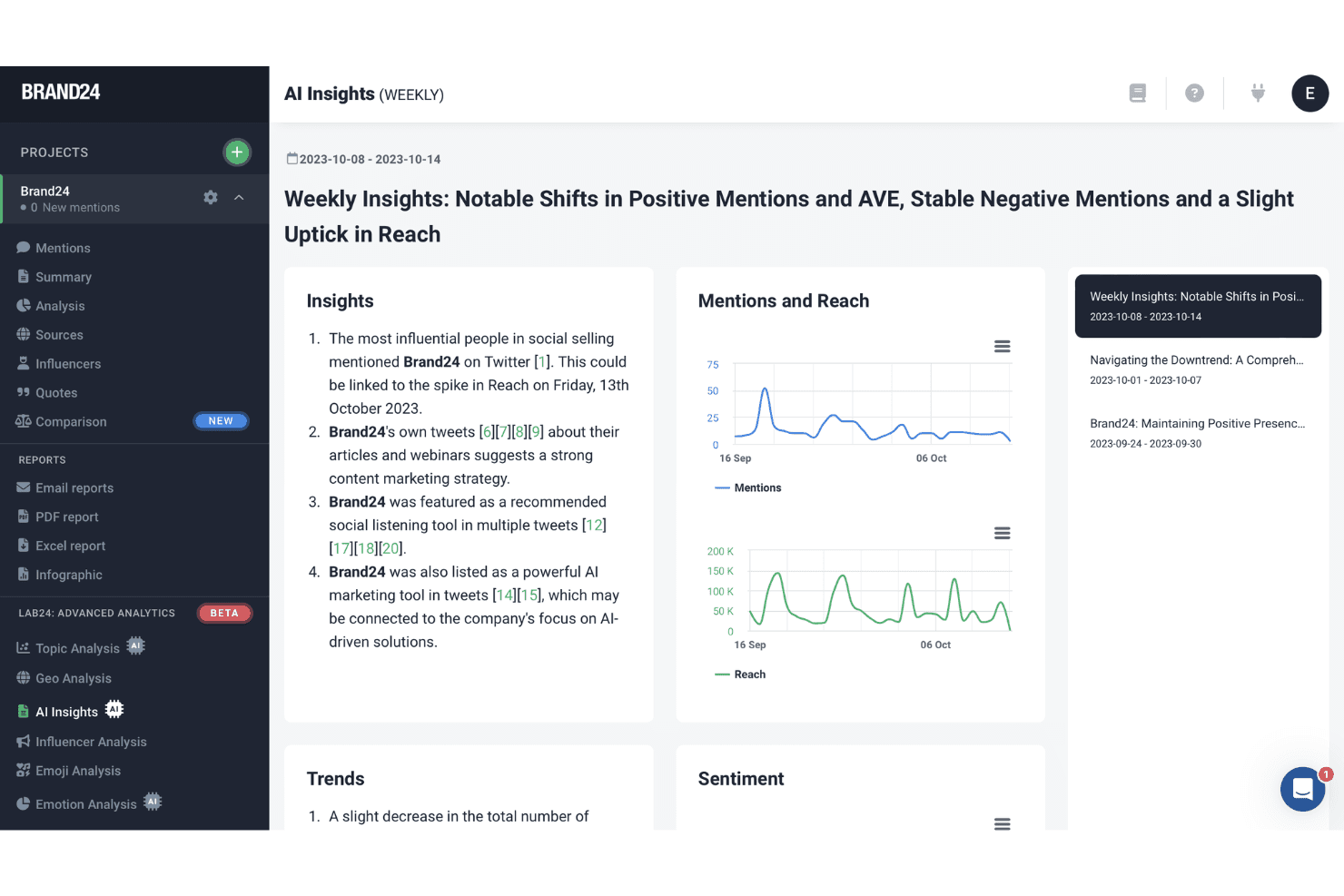
Brand24 offre una dashboard AI Insights che mostra riepiloghi settimanali delle menzioni del marchio, le tendenze della portata e l'analisi del sentiment con le fonti citate. Brand24 è una piattaforma di ascolto sociale e monitoraggio del marchio che traccia in tempo reale le menzioni su social media, notizie, blog, forum, podcast e siti di recensioni, con un'analisi del sentiment basata su IA in 108 lingue.
Per chi è Brand24?
Brand24 è particolarmente adatto a team di marketing e agenzie che gestiscono la reputazione del marchio su mercati globali o in più lingue.
Perché ho scelto Brand24
Brand24 si è guadagnato il suo posto nella mia shortlist perché il suo rilevamento linguistico basato su IA copre 108 lingue su oltre 25 milioni di fonti in tempo reale. Quando monitoro un marchio tra mercati europei e latinoamericani contemporaneamente, quel livello di copertura multilingue è qualcosa che la maggior parte degli strumenti di monitoraggio non può offrire. Faccio inoltre affidamento sul suo sistema di Rilevamento Eventi IA, che segnala picchi anomali nel volume delle menzioni prima che una conversazione si trasformi in una vera e propria crisi reputazionale.
Caratteristiche principali di Brand24
- Monitoraggio su più canali: Traccia le menzioni da siti di notizie, blog, forum, podcast, YouTube e fonti di recensione di nicchia.
- Analisi del sentiment con IA: Classifica automaticamente le menzioni come positive, negative o neutre utilizzando l'elaborazione del linguaggio naturale.
- Identificazione degli influencer: Evidenzia i profili influenti che parlano del tuo marchio e li classifica in base a portata e autorevolezza.
- Avvisi e report personalizzabili: Permette agli utenti di impostare notifiche giornaliere, settimanali o di emergenza e di esportare report in formato PDF, Excel o PowerPoint.
Integrazioni Brand24
Le integrazioni native non sono chiaramente documentate. È disponibile un'API per integrazioni personalizzate.
Pros and Cons
Pros:
- Traccia menzioni in 108 lingue contemporaneamente
- Il Rilevamento Eventi IA segnala precocemente crisi reputazionali
- Monitora podcast, notizie e forum di nicchia
Cons:
- I limiti di menzioni possono ostacolare grandi agenzie
- Nessuno strumento nativo per generazione o risposta a recensioni
Learn more about Brand24: Ideale per automatizzare le risposte alle recensioni
- Demo gratuita disponibile
- Prezzi su richiesta
Visit WebsiteCustomer Rating:4.8/5This rating combines scores from multiple user review sites to reflect overall customer sentiment about the product.
Birdeye offre una gamma di avvisi, compresi quelli per le recensioni rimaste senza risposta, per un monitoraggio e una gestione della reputazione più efficaci. Birdeye è una piattaforma di gestione della reputazione e dell'esperienza del cliente basata sull'intelligenza artificiale, progettata per aziende multi-sede ed enterprise, che aiuta a gestire recensioni, liste, social media, sondaggi e interazioni con i clienti da un unico sistema centralizzato. Serve oltre 200.000 clienti a livello globale in settori come odontoiatria, sanità, automotive, retail, legale e servizi per la casa, dove la reputazione e la visibilità locale sono fattori chiave per la crescita.
Perché ho scelto Birdeye
Ho scelto Birdeye per le sue risposte automatizzate alle recensioni tramite gli agenti BirdAI. Questi agenti AI vanno oltre l'automazione tradizionale: sono sempre attivi, progettati per ottenere risultati concreti e formati sia sulla voce del tuo marchio che sul contesto del settore. Gli agenti BirdAI monitorano, analizzano e rispondono alle recensioni dei clienti su oltre 200 piattaforme, scrivono risposte coerenti con il marchio, segnalano feedback sensibili e ottimizzano continuamente la visibilità locale. Mi è anche piaciuto che Listings AI e Search AI di Birdeye ottimizzano attivamente la presenza nella ricerca locale per aiutare i brand a posizionarsi più in alto su Google e nei risultati di ricerca basati su AI, aumentando il traffico in negozio e i lead in entrata. Per l'ascolto proattivo dei clienti, Surveys AI e Insights AI facilitano la raccolta di feedback, l'analisi del sentiment e l'intervento prima che i problemi impattino la reputazione.
Funzionalità principali di Birdeye
Oltre alle funzionalità core basate su AI, la piattaforma offre:
- Messaging AI & Posta in arrivo unificata: Birdeye centralizza SMS, web chat, messaggi social e comunicazioni in posta in arrivo in un’unica dashboard. L’AI aiuta con l’instradamento, le risposte suggerite e i follow-up rapidi, aiutando i team a rispondere a lead e clienti senza cambiare strumento.
- Raccomandazioni & Google Seller Ratings: Gli strumenti di referral integrati permettono di trasformare facilmente i clienti soddisfatti in promotori, mentre i Google Seller Ratings aiutano le aziende idonee a mostrare badge di fiducia nei risultati a pagamento per migliorare la percentuale di clic.
- Pagamenti & Text-to-Pay: Birdeye consente alle aziende di inviare richieste di pagamento tramite testo o canali di messaggistica, riducendo gli ostacoli per i clienti e aiutando le attività basate sui servizi a concludere più velocemente dopo l’interazione.
- Reports AI & Analisi a livello di sede: Report preimpostati e personalizzabili permettono alle aziende di monitorare le performance per sede, regione o brand. I responsabili possono identificare rapidamente le sedi più performanti e individuare criticità operative prima che impattino l’esperienza clienti.
Integrazioni Birdeye
Birdeye supporta oltre 3.000 integrazioni, facilitando la connessione con sistemi CRM, marketing, finanziari e sanitari esistenti. Queste includono QuickBooks, Salesforce, HubSpot, Mailchimp, Shopify, Xero, AppFolio, AthenaHealth, Cerner, MINDBODY, Clio Manage e Timely.
Pros and Cons
Pros:
- Avvisi di errore che migliorano la gestione proattiva dei clienti
- Funzionalità di pubblicazione social in blocco
- Dashboard unificata che semplifica il monitoraggio multi-cliente
Cons:
- Personalizzazione limitata in alcune funzionalità
- La profondità enterprise può risultare complessa per team con una sola sede
Learn more about Birdeye: Ideale per risposte alle recensioni con IA
- Prova gratuita disponibile
- Da $10/località/mese

RightResponse AI offre una dashboard completa per la gestione delle recensioni dei clienti. RightResponse AI è progettato per elevare la reputazione del tuo marchio attraverso una gestione delle recensioni personalizzata e guidata dall’IA. Per le aziende che desiderano migliorare il coinvolgimento dei clienti, questa piattaforma offre una soluzione unica trasformando le recensioni in interazioni significative che risuonano con il tuo pubblico. Sia che tu sia un piccolo imprenditore o un manager aziendale, RightResponse AI ti aiuta a creare comunicazioni autentiche che aumentano le conversioni dei clienti e migliorano la tua presenza online.
Perché ho scelto RightResponse AI
Ho scelto RightResponse AI per la sua funzione distintiva nelle risposte alle recensioni potenziate dall’IA, fondamentale per le aziende che vogliono gestire efficacemente la propria reputazione. Il software eccelle nel fornire risposte personalizzate e basate sui fatti, che aumentano l’autenticità e la connessione con i clienti. Inoltre, la funzione di analisi del sentiment ti aiuta a comprendere meglio il feedback dei clienti, consentendo miglioramenti mirati. Queste capacità sono essenziali per le aziende che vogliono trasformare le recensioni dei clienti da un semplice compito a un’opportunità strategica di crescita.
Funzionalità principali di RightResponse AI
Oltre alle risposte alle recensioni alimentate dall’IA, ho trovato anche diverse altre funzionalità che potenziano le sue capacità di gestione della reputazione:
- Richiesta di Recensioni: Questa funzione utilizza IA avanzata per creare richieste di recensioni iper-personalizzate, aumentando la probabilità di coinvolgimento del cliente.
- Tracker di Posizionamento su Maps: Fornisce informazioni sulle prestazioni della tua azienda su Google Maps, aiutandoti a monitorare e migliorare la tua visibilità nelle ricerche locali.
- Strumenti di Analisi della Concorrenza: Questi strumenti offrono preziose informazioni sulle strategie dei tuoi concorrenti, permettendoti di adattare il tuo approccio e restare competitivo.
- Analisi del Sentiment: Questa funzione analizza il feedback dei clienti per identificare tendenze e aree di miglioramento, assicurando che la tua attività soddisfi le aspettative dei clienti.
Integrazioni di RightResponse AI
RightResponse AI non elenca attualmente integrazioni native.
Pros and Cons
Pros:
- Strumenti di benchmarking della concorrenza
- Suddivisione del sentiment per località
- Risposte IA personalizzate e basate sui fatti
Cons:
- Piccola curva di apprendimento per la configurazione
- Nessuna integrazione pubblica elencata
Learn more about RightResponse AI: Ideale per la soppressione di contenuti negativi
- Nessuna prova gratuita disponibile
- Da $3,000/mese
Visit WebsiteCustomer Rating:5/5This rating combines scores from multiple user review sites to reflect overall customer sentiment about the product.
Reputation Pros mostra il suo processo in più fasi per migliorare e proteggere la reputazione online di aziende e privati. Reputation Pros è specializzata nell’aiutare aziende e privati a mantenere una presenza online impeccabile sopprimendo i contenuti negativi e aumentando la visibilità. Questo strumento è particolarmente interessante per aziende e professionisti che desiderano controllare la propria narrazione digitale, assicurandosi che i risultati di ricerca rispecchino l’immagine desiderata. Affrontando questioni come risultati indesiderati e notizie negative, Reputation Pros ti aiuta a tutelare l’integrità e la fiducia del tuo marchio nel panorama digitale.
Perché ho scelto Reputation Pros
Ho scelto Reputation Pros perché eccelle nella soppressione dei contenuti negativi, una caratteristica critica per chiunque voglia gestire la propria reputazione online. La loro tecnologia proprietaria spinge efficacemente verso il basso i risultati dannosi sostituendoli con contenuti autorevoli che puoi controllare. Inoltre, il monitoraggio proattivo 24/7 assicura che ogni menzione negativa venga affrontata rapidamente prima che possa peggiorare. Questa combinazione di soppressione dei contenuti e monitoraggio attivo rende Reputation Pros una delle migliori scelte per la gestione della reputazione.
Funzionalità principali di Reputation Pros
Oltre alla soppressione dei contenuti negativi, Reputation Pros offre diverse altre funzionalità che potenziano le sue capacità di gestione della reputazione.
- Gestione delle crisi: Fornisce strategie di risposta immediata per emergenze reputazionali e esposizione mediatica negativa.
- Ottimizzazione SEO: Si concentra sull’ottimizzazione dei contenuti positivi per superare quelli negativi, garantendo una prima pagina pulita su Google.
- Gestione personale e aziendale: Offre soluzioni su misura per il branding personale e la reputazione aziendale, incrementando fiducia e credibilità.
- Servizi White-Label: Permette alle agenzie di offrire servizi ORM sotto il proprio marchio, espandendo la loro gamma senza costi aggiuntivi.
Integrazioni Reputation Pros
Al momento Reputation Pros non indica integrazioni native disponibili.
Pros and Cons
Pros:
- Strumenti completi per la soppressione di contenuti negativi
- Sistema di monitoraggio reputazionale continuo 24/7
- Gestione integrata SEO e PR
Cons:
- Prezzi disponibili solo su richiesta
- Trasparenza limitata sulle funzionalità di integrazione
Learn more about Reputation Pros: Ideale per la gestione delle recensioni tra vari elenchi digitali
- Demo gratuita disponibile
- A partire da $79/mese (fatturazione annuale)
Visit WebsiteCustomer Rating:4.4/5This rating combines scores from multiple user review sites to reflect overall customer sentiment about the product.
La dashboard delle recensioni di Synup mostra valutazioni, sentiment e trend delle recensioni. Synup aiuta agenzie e aziende con più sedi a gestire recensioni, schede e feedback dei clienti da un'unica piattaforma white-label. Riduce il lavoro manuale di monitoraggio delle recensioni sulle directory combinando monitoraggio delle recensioni, risposte generate da AI, richieste di recensioni automatizzate, analisi del sentimento e gestione delle schede locali.
Per chi è più adatto Synup?
Synup è particolarmente indicato per agenzie di marketing e marchi con più sedi che devono gestire recensioni e schede di più clienti o sedi da un'unica dashboard.
Perché ho scelto Synup
Ho scelto Synup perché consente al tuo team di gestire le recensioni su elenchi digitali senza dover passare da un sito di recensioni all'altro. Raccoglie le recensioni da fonti come Google Business Profile, Facebook, TripAdvisor, Trustpilot e directory di settore specifiche in un'unica dashboard, rendendo più semplice tracciare i feedback su varie sedi. Mi piace anche la possibilità di filtrare le recensioni per valutazione a stelle, sentimento, parola chiave e sede, cosicché il tuo team possa dare priorità ai feedback negativi prima che incidano sulla reputazione. Per agenzie e aziende multi-sede, la configurazione white-label di Synup e il supporto per scraper personalizzati sono utili quando i clienti richiedono una copertura oltre le normali reti di recensioni.
Funzionalità principali di Synup
Altre funzionalità di Synup supportano la risposta alle recensioni, la crescita della reputazione e la reportistica cliente:
- Generatore di risposte alle recensioni tramite AI: Crea risposte alle recensioni basate su contesto, sentimento e tono del brand, con opzioni di personalizzazione prima della pubblicazione.
- Campagne automatizzate di richiesta recensioni: Invia richieste di recensione personalizzate via email o SMS dopo le interazioni con i clienti per aumentare il volume delle recensioni.
- Dashboard di analisi del sentimento: Mette in evidenza i temi ricorrenti nei feedback dei clienti così il tuo team può identificare elogi, reclami e carenze di servizio comuni.
- Widget recensioni incorporabili: Mostra recensioni dei clienti in tempo reale sul tuo sito web per aumentare la fiducia dei visitatori.
Integrazioni di Synup
Le integrazioni includono Google Business Profile, Google Maps, Facebook, Instagram, LinkedIn, X, Salesforce CRM, HubSpot’s Sales Hub, Zoho e Square.
Pros and Cons
Pros:
- Sincronizza automaticamente le schede su oltre 150 directory
- Aggrega recensioni da Google, Yelp, Facebook e TripAdvisor
- Progettato principalmente per agenzie con possibilità di white-label
Cons:
- Meno directory rispetto ad alcuni concorrenti
- Risposta lenta dell'assistenza tecnica per richieste complesse
Learn more about Synup: Ideale per servizi specifici di settore
- Prezzo su richiesta
Visit WebsiteCustomer Rating:5/5This rating combines scores from multiple user review sites to reflect overall customer sentiment about the product.
La dashboard di Erase.com che mostra la gestione delle recensioni Google e il feedback dei clienti sulla rimozione riuscita delle recensioni. Erase.com è un servizio di gestione della reputazione focalizzato sulla rimozione di contenuti online negativi, sulla gestione di risultati di ricerca dannosi e sulla riparazione delle reputazioni in diversi settori. A differenza di molti strumenti che si limitano a monitorare e rispondere alle recensioni, Erase.com interviene attivamente nella rimozione dei contenuti da piattaforme come Google, Facebook, Reddit e articoli di notizie per proteggere la tua presenza online.
Perché ho scelto Erase.com:
Ho scelto Erase.com perché è specializzato nella rimozione definitiva dei contenuti, fondamentale quando un contenuto dannoso non può essere semplicemente nascosto, ma deve essere eliminato. Questo lo differenzia dalla maggior parte degli strumenti di gestione delle recensioni che si concentrano solo sulle strategie di risposta. Erase.com offre inoltre soluzioni personalizzate per la gestione delle crisi e servizi specifici per settore, aiutando aziende come studi legali, operatori sanitari e agenzie immobiliari a riprendersi da danni reputazionali. Il loro modello pay-for-success e le solide recensioni dei clienti sottolineano affidabilità e responsabilità, aumentando la fiducia nell’offerta.
Caratteristiche e integrazioni principali:
Caratteristiche comprendono la rimozione permanente di risultati di ricerca negativi, dati personali da siti di brokeraggio dati e articoli di notizie dannosi. Erase.com offre anche strategie di gestione della reputazione online (ORM) su misura e supporta la gestione delle crisi per le aziende colpite da episodi negativi virali.
Integrazioni includono Glassdoor, Google, Yelp e altri motori di ricerca.
Pros and Cons
Pros:
- Specializzato nella rimozione permanente di recensioni e contenuti
- Fornisce supporto clienti continuativo e gestione account
- Offre strategie ORM personalizzate
Cons:
- Nessun prezzo fisso o trasparente; tutti i preventivi sono personalizzati
- Mancanza di trasparenza sulle aspettative
Learn more about Erase.com: Ideale per analisi delle recensioni avanzate tramite IA
- Prova gratuita di 14 giorni disponibile
- Da $45/località/mese
Visit WebsiteCustomer Rating:4.9/5This rating combines scores from multiple user review sites to reflect overall customer sentiment about the product.
Dashboard di ReviewFlowz che mostra velocità delle recensioni, valutazione media e nuove tendenze delle recensioni Reviewflowz è una soluzione software per la gestione delle recensioni progettata per aiutare le aziende ad automatizzare la raccolta, le risposte e l'analisi delle recensioni. Combina monitoraggio, risposte assistite dall'IA, campagne di feedback e widget recensioni personalizzabili per mostrare la prova sociale dove conta di più.
Perché ho scelto ReviewFlowz:
Ho scelto ReviewFlowz perché integra la gestione delle recensioni direttamente negli strumenti già utilizzati dai team. Puoi rispondere alle recensioni, impostare avvisi e analizzare le tendenze direttamente da Slack. Mi piacciono anche le sue analisi avanzate basate sull'IA che offrono una comprensione approfondita di ciò che i clienti stanno effettivamente dicendo su tutte le tue fonti di recensioni. Invece di lasciarti scorrere infinite recensioni, la sua IA categoriza i temi, mette in evidenza i pattern di sentiment e segnala cambiamenti nel feedback dei clienti, così il tuo team può agire tempestivamente sulle tendenze.
Funzionalità e integrazioni principali:
Funzionalità includono risposte alle recensioni potenziate dall'IA, widget di prova sociale multilingue, analisi di sentiment e della concorrenza.
Integrazioni includono Slack, Zendesk, Chat GPT & Claude AI.
Pros and Cons
Pros:
- Permette alle aziende di mostrare le testimonianze sui propri siti web
- Aiuta le aziende a rispondere prontamente ai feedback, migliorando la fiducia dei clienti
- Aggrega recensioni da più piattaforme in un unico posto
Cons:
- L'assistente AI Chat (Lenny) è limitato ai piani superiori
- Alcuni utenti desiderano maggiore flessibilità nella progettazione dei widget
Learn more about ReviewFlowz: Il migliore per il monitoraggio delle recensioni dei clienti
- Prova gratuita di 14 giorni + demo gratuita
- Da $31/mese (fatturazione annuale)
Visit WebsiteCustomer Rating:4.7/5This rating combines scores from multiple user review sites to reflect overall customer sentiment about the product.
BrightLocal è un software di local SEO che offre funzionalità di gestione della reputazione per aiutare le aziende a mantenere una forte presenza online. Con strumenti per la creazione di citazioni, ottimizzazione della ricerca locale e monitoraggio delle recensioni dei clienti, facilita alle aziende la gestione e il miglioramento della loro reputazione online.
Perché ho scelto BrightLocal
Uno dei motivi per cui ho scelto BrightLocal è la funzione di monitoraggio delle recensioni dei clienti, che ti consente di tenere traccia delle recensioni su più piattaforme. Questo è fondamentale per mantenere una reputazione online positiva, poiché permette di rispondere tempestivamente ai feedback dei clienti. Un altro strumento utile è la funzione di creazione delle citazioni, che garantisce la coerenza delle informazioni aziendali nei vari elenchi. Questa coerenza aiuta a migliorare la visibilità nelle ricerche locali, facilitando ai potenziali clienti il compito di trovarti.
BrightLocal offre inoltre ottimizzazione della ricerca locale, aumentando la visibilità della tua attività nei risultati locali. Questa funzione è utile per raggiungere clienti nelle vicinanze, più propensi a visitare la tua sede fisica. Inoltre, la piattaforma offre un audit della posizione, che analizza numerosi dati per individuare aree di miglioramento. Ciò ti aiuta a ottimizzare la ricerca locale e le citazioni, offrendoti un vantaggio competitivo nel tuo mercato locale.
Funzionalità principali
Le funzionalità comprendono il monitoraggio del posizionamento, che osserva specifiche parole chiave in aree mirate per offrirti informazioni sulla tua posizione competitiva. Lo strumento di generazione dei report crea report white-label semplici da comprendere, che illustrano l'impatto delle tue attività SEO, facilitando la comunicazione dei risultati al tuo team o ai clienti. Infine, la gestione delle inserzioni semplifica il processo di gestione delle citazioni e delle inserzioni su più sedi, risparmiando tempo e fatica.
Integrazioni
Le integrazioni includono Cloudflare, Google, HubSpot, LinkedIn, Twitter, Vimeo, YouTube, TikTok, Zendesk e Streamyard.
Learn more about BrightLocal: 10Ideale per grandi imprese
InMoment
- Demo gratuita disponibile
- Prezzi su richiesta
Visit WebsiteCustomer Rating:4.7/5This rating combines scores from multiple user review sites to reflect overall customer sentiment about the product.
InMoment monitora il sentiment dei clienti con strumenti avanzati di feedback e reportistica. InMoment è una piattaforma che aiuta le aziende a gestire e migliorare le esperienze dei clienti tramite la raccolta, l’analisi e l’azione sui feedback. È pensata per grandi organizzazioni che devono monitorare il sentiment dei clienti su diversi touchpoint, fornendo insight utili per sostenere le prestazioni aziendali.
Perché ho scelto InMoment:
InMoment offre strumenti avanzati per raccogliere feedback dai clienti su larga scala, rendendolo ideale per le grandi imprese. Con funzionalità come l’analisi del sentiment e reportistica, il tuo team può tracciare e analizzare facilmente le interazioni con i clienti su diversi canali. La capacità della piattaforma di gestire grandi volumi di feedback assicura che anche le organizzazioni più complesse possano mantenere il controllo sulla loro reputazione. Inoltre, l’attenzione di InMoment sugli insight azionabili aiuta a trasformare i feedback in miglioramenti strategici.
Caratteristiche principali & Integrazioni:
Caratteristiche come strumenti per raccogliere feedback in tempo reale su più canali, analisi avanzata del sentiment per aiutare il team a comprendere le emozioni dei clienti e report approfonditi che offrono insight operativi. La piattaforma consente di raccogliere feedback da sondaggi, social media e siti di recensioni, offrendo una visione completa del sentiment dei clienti. Puoi anche impostare avvisi per rispondere prontamente ai feedback negativi.
Integrazioni includono Google, Facebook, TripAdvisor, Yelp, Salesforce, Zendesk, Twitter, Instagram, Apple e Microsoft.
Pros and Cons
Pros:
- Supporta molteplici canali di feedback
- Fornisce analisi del sentiment in tempo reale
- Insight attuabili per migliorare la strategia
Cons:
- Richiede gestione costante per essere efficace
- Personalizzazione limitata nei flussi di lavoro del feedback
Learn more about InMoment:
Quando utilizzare un software per la gestione della reputazione
Il software per la gestione della reputazione monitora ciò che viene detto sul tuo brand online, dai siti di recensioni e dai social media alle testate giornalistiche e ai forum, e ti offre gli strumenti per rispondere, creare report e proteggere il tuo brand su larga scala. Ecco quando ha senso utilizzarlo:
- I problemi di PR emergono troppo tardi: Immagina che una notizia negativa o un post social diventato virale sul tuo brand circolino da 48 ore prima che qualcuno del tuo team li segnali. Gli strumenti per la gestione della reputazione come Brandwatch o Mention inviano avvisi in tempo reale, così puoi anticipare una storia prima che diventi una crisi.
- Sei un brand con più sedi e senza una presenza coerente: Se hai oltre 50 sedi e ognuna ha il proprio profilo Google, la propria pagina Yelp e la propria cronologia di recensioni, senza che nessuno le gestisca attivamente, il tuo brand appare incoerente e trascurato ai clienti che effettuano ricerche locali. Il software centralizzato per la gestione della reputazione ti consente di gestire la presenza di ogni sede da un unico luogo, con modelli di risposta e supervisione coerenti.
- Ti stai preparando a un importante momento per il brand: Stai lanciando un prodotto, facendo un rebranding o entrando in un nuovo mercato? Gli strumenti per la gestione della reputazione forniscono una panoramica del sentiment, così puoi pianificare i lanci e modificare i messaggi prima di renderli pubblici.
- Contenuti obsoleti o negativi danneggiano la tua pipeline: Se i potenziali clienti cercano su Google la tua azienda e trovano articoli negativi e obsoleti o un profilo di recensioni scarno e poco convincente prima ancora di parlare con il team commerciale, hai un problema nella pipeline. Il software per la gestione della reputazione ti aiuta a costruire una presenza digitale più solida e accurata, che rifletta chi sei realmente oggi.
- Non hai idea di come si posiziona il tuo brand rispetto ai concorrenti: Se il tuo CMO ti chiede come si confronta il sentiment del tuo brand con quello di un concorrente importante e non sai rispondere con dati alla mano, hai una lacuna che finirà per presentarti il conto. Le piattaforme per la gestione della reputazione monitorano le menzioni e il sentiment dei concorrenti insieme ai tuoi, offrendoti il contesto necessario per prendere decisioni di posizionamento più efficaci.
Altri software per la gestione della reputazione
Ecco alcune opzioni aggiuntive di software per la gestione della reputazione che non sono entrate nella mia selezione, ma che vale comunque la pena prendere in considerazione:
- 11ReviewTrackersIdeale per il monitoraggio dei feedback dei clienti
- 12Text RequestIdeale per la raccolta di recensioni tramite messaggi di testo
- 13Reputation.comIdeale per aziende con più sedi
- 14ReviewIncIdeale per la gestione di recensioni multilingue
- 15PodiumIdeale per le aziende locali
- 16YextIdeale per ottimizzare la visibilità sui motori di ricerca
- 17YotpoIdeale per raccogliere le recensioni dei clienti
- 18WeaveIdeale per la gestione della reputazione basata sulla comunicazione
- 19BrandwatchIdeale per l’analisi del sentiment dei consumatori
- 20NetReputationIdeale per la gestione della reputazione scalabile
- 21BroadlyIdeale per la crescita della reputazione delle piccole imprese
- 22GatherUpIdeale per la gestione delle testimonianze dei clienti
- 23SwellIdeale per i professionisti sanitari
- 24Reputation X Ideale per la rimozione di risultati di ricerca negativi
- 25Doctor ConnectIdeale per il feedback automatico dei pazienti
- 26AicarmaIdeale per il monitoraggio della visibilità nell’IA
- 27JobberIdeale per la gestione della reputazione nei servizi domestici
- 28SurveySparrowIdeale per l'analisi delle recensioni guidata dall'IA
- 29ReputationStackerIdeale per la gestione di canalizzazioni di recensioni basate sull'NPS
Come valuto i software di gestione della reputazione
Suddivido la mia valutazione in criteri di base—come l'aggregazione delle recensioni su più piattaforme e i flussi di lavoro per la risposta—e fattori differenzianti che separano gli strumenti veramente utili da tutti gli altri.
Funzionalità di base (requisiti fondamentali per questo elenco)
Quando seleziono gli strumenti per il mio elenco, valuto ciascuno su una scala da 0 (non offre la funzionalità) a 5 (eccelle in quest'area) per ogni funzionalità di base elencata di seguito. Poi, calcolo il punteggio totale dello strumento in percentuale. Ogni strumento deve raggiungere un punteggio totale minimo del 75% per essere preso in considerazione.
- Monitoraggio e aggregazione delle recensioni: Verifico da quante fonti di recensione uno strumento raccoglie dati e se la sincronizzazione è in tempo reale—coprire Google, Yelp, Facebook e siti specifici di settore è fondamentale per una visibilità completa.
- Gestione delle risposte alle recensioni: La possibilità di rispondere direttamente da un'unica dashboard è cruciale, quindi valuto se lo strumento offre modelli di risposta, flussi di lavoro per l'assegnazione ai team e bozze assistite dall'intelligenza artificiale.
- Campagne per la generazione di recensioni: Cerco opzioni di contatto multi-canale come email, SMS e richieste tramite codice QR che permettano di inviare richieste di recensione dopo un'interazione con il cliente.
- Monitoraggio del brand e delle menzioni social: Oltre ai siti di recensione, valuto se la piattaforma traccia le menzioni del brand su canali social, testate giornalistiche, blog e forum, per intercettare le conversazioni in anticipo.
- Analisi del sentimento e reportistica: Una buona reportistica va oltre le valutazioni a stelle, quindi cerco funzioni di analisi del sentimento con intelligenza artificiale, analisi delle tendenze e dashboard che aiutino a individuare schemi nel tempo.
- Gestione multi-sede e delle schede: Per i team che gestiscono più sedi, considero se lo strumento supporta aggiornamenti massivi delle schede, sincronizzazione con directory e accesso basato su ruoli ai vari profili.
Una volta individuati gli strumenti che soddisfano questi criteri, considero cosa differenzia ogni piattaforma.
Fattori differenzianti (cosa distingue i fornitori)
Ecco come confronto e metto a confronto i diversi fornitori:
Caratteristiche distintive
Presto particolare attenzione al benchmarking dei concorrenti—sapere come valutazioni a stelle e volume di recensioni si confrontano con i rivali offre un reale valore strategico nella reportistica per la dirigenza. Valuto anche strumenti per la SEO locale come l'ottimizzazione di Google Business Profile e il monitoraggio della posizione a livello locale, poiché reputazione e visibilità sui motori di ricerca sono strettamente collegate. I sondaggi di feedback dei clienti sono un altro elemento distintivo; strumenti con sondaggi NPS o CSAT integrati permettono di individuare clienti insoddisfatti prima che lascino una recensione pubblica.
Oltre le caratteristiche
Le integrazioni sono fondamentali—controllo se una piattaforma si collega con strumenti CRM e helpdesk come Salesforce o Zendesk, dato che i trigger per le richieste di recensione spesso dipendono dai dati post-transazione che fluiscono tra i sistemi. La specializzazione settoriale è un altro fattore che considero, in particolare se il fornitore copre siti di recensioni di nicchia rilevanti per verticali come healthcare o hospitality. Per i team che gestiscono decine o centinaia di sedi, valuto anche la scalabilità, incluse le opzioni white-label per agenzie e la reportistica gerarchica per le strutture in franchising.
Come scegliere un software per la gestione della reputazione
È facile perdersi in lunghi elenchi di funzionalità e strutture tariffarie complesse. Per aiutarti a rimanere concentrato mentre affronti il tuo processo di selezione del software, unico per le tue esigenze, ecco una lista di fattori da tenere a mente:
| Fattore | Cosa considerare |
| Scalabilità | Questo strumento crescerà insieme alla tua azienda? |
| Integrazioni | Si collega agli strumenti utilizzati dal tuo team? |
| Personalizzazione | Puoi adattarlo alle tue esigenze specifiche? |
| Facilità d'uso | Quanto velocemente il tuo team può iniziare a utilizzare il software? |
| Budget | Rientra nei tuoi vincoli finanziari? |
| Misure di sicurezza | Protegge adeguatamente i dati dei tuoi clienti? |
| Assistenza clienti | Quanto è reattivo il team di assistenza del fornitore? |
| Analisi | Offre gli approfondimenti necessari per migliorare? |
Utilizza questa lista di controllo per mantenere organizzato e mirato il processo di selezione del software.
Tendenze nei software per la gestione della reputazione
Durante la mia ricerca, ho raccolto innumerevoli aggiornamenti dei prodotti, comunicati stampa e registri delle versioni di diversi fornitori di software per la gestione della reputazione. Ecco alcune delle tendenze emergenti che sto tenendo d'occhio:
- Analisi del sentiment basata sull'IA: Gli strumenti di IA stanno diventando sempre più efficaci nel comprendere il sentiment dei clienti nelle recensioni, aiutando le aziende a stabilire quali feedback affrontare prioritariamente. Fornitori come Reputation utilizzano l'IA per offrire approfondimenti più dettagliati su ciò che pensano i clienti.
- Raccolta di recensioni video: Alcuni software per la gestione della reputazione delle piccole imprese stanno aggiungendo la possibilità di raccogliere e gestire recensioni video, offrendo ai clienti un modo più coinvolgente per condividere le proprie esperienze. Questa tendenza è in crescita poiché gli utenti cercano feedback più personali e autentici.
- Automazione delle risposte alle recensioni con personalizzazione: Sebbene le risposte automatizzate esistano già da tempo, sempre più strumenti consentono alle aziende di personalizzare questi messaggi automatici, rendendo le interazioni meno impersonali. Ciò aiuta a mantenere la coerenza aggiungendo al contempo un tocco umano.
- Gestione multilingue delle recensioni: Man mano che le aziende si espandono a livello globale, la possibilità di monitorare e gestire le recensioni in più lingue sta diventando fondamentale. Strumenti come ReviewInc sono all'avanguardia in questo ambito, supportando recensioni in diverse lingue e consentendo alle aziende di gestire meglio i feedback internazionali.
- Avvisi sui rischi per la reputazione: Vengono introdotti strumenti avanzati di monitoraggio dei social media e di monitoraggio dei media che avvisano le aziende dei potenziali rischi per la reputazione in tempo reale. Questa tendenza aiuta le aziende ad affrontare i problemi prima che si aggravino, fornendo un controllo proattivo dei danni.
Che cos'è un software per la gestione della reputazione?
Il software per la gestione della reputazione è uno strumento che aiuta le aziende a monitorare, gestire e migliorare la propria presenza online tenendo traccia delle recensioni e dei feedback dei clienti. Questi strumenti vengono generalmente utilizzati dai team di marketing, dai reparti del servizio clienti e dai titolari di piccole imprese che desiderano proteggere l'immagine del proprio marchio e rispondere in modo efficiente ai feedback dei clienti. Le funzionalità di monitoraggio delle recensioni, analisi del sentiment e risposta automatizzata aiutano le aziende a mantenere una reputazione positiva e ad affrontare rapidamente le criticità. Nel complesso, questi strumenti offrono agli utenti la possibilità di gestire efficacemente l'immagine online del proprio marchio.
Funzionalità dei software per la gestione della reputazione
Quando scegli un software per la gestione della reputazione, presta attenzione a queste funzionalità chiave:
- Monitoraggio delle recensioni: Tieni traccia di ciò che le persone dicono della tua attività sui principali siti di recensioni. Questa funzionalità ti aiuta a individuare le tendenze, rispondere rapidamente e comprendere come cambia la tua reputazione in tempo reale.
- Avvisi automatici: Ricevi notifiche istantanee quando compaiono nuove recensioni, valutazioni o menzioni. Sarai sempre aggiornato e potrai agire rapidamente prima che un reclamo di lieve entità si trasformi in un problema più grande.
- Gestione delle risposte: Gestisci e rispondi alle recensioni da un'unica bacheca, invece di passare da una piattaforma all'altra. In questo modo è molto più semplice mantenere un tono coerente e ponderato in ogni risposta.
- Analisi del sentiment: Analizza il tono e le emozioni alla base delle recensioni e delle menzioni sui social. Puoi iniziare a capire l'andamento della tua attività, positivo o negativo, senza dover esaminare tutto manualmente.
- Generazione di recensioni: Invia richieste di recensione ai clienti tramite email o SMS, rendendo semplice per i clienti soddisfatti lasciare un feedback. Le recensioni recenti possono aiutarti a mostrare nel tempo una reputazione affidabile e degna di fiducia.
- Monitoraggio dei social media: Tieni sotto controllo menzioni, commenti e tag sulle piattaforme social. Potrai intercettare conversazioni che non sono “recensioni” tradizionali, ma che influiscono comunque sul tuo marchio.
- Report e analisi: Trasforma i dati sulla tua reputazione in report, grafici e tendenze. Usa questi dati per individuare cosa funziona, cosa deve essere migliorato e dove concentrare i tuoi sforzi.
- Gestione delle schede: Aggiorna le informazioni sulla tua attività su diversi siti e directory da un unico punto. In questo modo i clienti ricevono sempre dati accurati, ovunque ti trovino.
- Confronto con i concorrenti: Confronta i dati della tua reputazione online con quelli dei concorrenti, utilizzando dati reali per capire qual è la tua posizione e quali sono i tuoi punti di forza.
- Flussi di lavoro e collaborazione tra team: Assegna le risposte alle recensioni o le attività ai membri del team, monitora i progressi e assicurati che nulla venga trascurato.
Funzionalità comuni basate sull'AI nei software di gestione della reputazione
Oltre alle funzionalità standard dei software di gestione della reputazione elencate sopra, molte di queste soluzioni integrano l'AI con funzionalità come:
- Comprensione del linguaggio naturale: L'AI analizza le sfumature del feedback dei clienti, estraendo argomenti e temi chiave per aiutarti a capire esattamente cosa pensano i tuoi clienti.
- Analisi del sentiment basata sull'AI: Rileva automaticamente il sentiment alla base di recensioni e menzioni con maggiore precisione, fornendoti informazioni utili in tempo reale.
- Generazione automatica delle risposte: Usa l'AI per suggerire risposte alle recensioni personalizzate e appropriate, risparmiando tempo e contribuendo a mantenere un rapporto positivo con i clienti.
- Rilevamento dello spam nelle recensioni: Individua e segnala le recensioni sospette o false utilizzando algoritmi di AI che analizzano schemi e formulazioni, preservando l'integrità della tua reputazione.
- Analisi predittiva: Sfrutta l'AI per prevedere possibili cali o miglioramenti della reputazione sulla base delle conversazioni emergenti, così da poter affrontare i problemi in modo proattivo.
Vantaggi dei software di gestione della reputazione
L'implementazione di un software di gestione della reputazione offre diversi vantaggi al tuo team e alla tua attività. Ecco alcuni dei benefici che puoi aspettarti:
- Maggiore fiducia dei clienti: Rispondere regolarmente alle recensioni dimostra ai clienti che dai valore al loro feedback e tieni alla loro esperienza.
- Maggiore visibilità: Gestire le recensioni e migliorare le valutazioni può aumentare la tua presenza sui motori di ricerca, rendendo più facile trovare la tua attività.
- Risoluzione più rapida dei problemi: Gli avvisi in tempo reale ti aiutano ad affrontare rapidamente le recensioni negative, evitando che piccoli problemi si trasformino in difficoltà più grandi.
- Informazioni basate sui dati: Gli strumenti di analisi ti consentono di monitorare le tendenze e modificare le tue strategie sulla base del sentiment dei clienti e dei dati sulle prestazioni.
- Migliore gestione delle recensioni: Riunire le recensioni in un unico luogo fa risparmiare tempo e fatica, permettendo al tuo team di concentrarsi sulle risposte e sul miglioramento dell'esperienza dei clienti.
- Reputazione del marchio più solida: Gestendo e migliorando costantemente la tua immagine online, costruisci una reputazione positiva che attira nuovi clienti.
- Maggiore coinvolgimento dei clienti: Le richieste e le risposte automatiche alle recensioni mantengono viva la conversazione, favorendo un'interazione continua con i tuoi clienti.
Costi e prezzi dei software di gestione della reputazione
La scelta di un software di gestione della reputazione richiede la conoscenza dei vari modelli e piani tariffari disponibili. I costi variano in base alle funzionalità, alle dimensioni del team, agli extra e ad altri fattori. La tabella seguente riassume i piani più comuni, i relativi prezzi medi e le funzionalità tipicamente incluse nelle soluzioni software di gestione della reputazione:
Tabella comparativa dei piani per il software di gestione della reputazione
| Tipo di piano | Prezzo medio | Funzionalità comuni |
| Piano gratuito | $0/user/ month | Monitoraggio di base delle recensioni, richieste di recensione limitate e reportistica di base. |
| Piano personale | $5-$25/ user/month | Monitoraggio delle recensioni, richieste di recensione automatizzate, gestione delle risposte e analisi di base. |
| Piano aziendale | $30-$100/ user/month | Monitoraggio avanzato delle recensioni, analisi del sentiment, modelli personalizzabili e analisi dettagliate. |
| Piano per grandi aziende | $150+/user/month | Supporto multilingue, confronto con i concorrenti, approfondimenti basati sull'IA e reportistica completa. |
Una panoramica dei tipi di piano del software di gestione della reputazione, con relativi costi e funzionalità.
Domande frequenti sul software di gestione della reputazione
Ecco alcune risposte alle domande comuni sul software di gestione della reputazione:
Come posso misurare il ROI del software di gestione della reputazione?
Misura il ROI monitorando i cambiamenti nei punteggi e nel volume delle recensioni e nel sentiment dei clienti, oltre ai tassi di generazione e fidelizzazione dei lead. Le piattaforme di qualità mostrano come le tendenze della reputazione influenzano le visite al sito web o le conversioni. Confronta le analisi dello strumento con i tuoi obiettivi di marketing per ottenere informazioni chiare sul valore generato.
Gli strumenti di gestione della reputazione supportano le aziende con più sedi o in franchising?
Sì, la maggior parte degli strumenti di gestione della reputazione offre funzionalità specifiche per le aziende con più sedi e per i franchising. Puoi supervisionare tutte le sedi da una dashboard unificata, confrontare le prestazioni, automatizzare le risposte e delegare le attività ai responsabili locali. Questo ti aiuta a mantenere la coerenza e a rispondere rapidamente nei team distribuiti.
Il software di gestione della reputazione è scalabile per le aziende in crescita?
Sì, la maggior parte dei software di gestione della reputazione è progettata per crescere insieme alla tua azienda. Puoi aggiungere nuovi utenti, integrare un numero maggiore di sedi e gestire volumi più elevati di recensioni man mano che l’azienda cresce. Se prevedi un’espansione, cerca soluzioni con autorizzazioni utente flessibili e supporto per più sedi.
Gli strumenti di gestione della reputazione si integrano con altri software aziendali?
Sì, le piattaforme leader si integrano comunemente con i CRM, gli strumenti di automazione del marketing e i software di assistenza clienti. Questo ti consente di sincronizzare i dati dei clienti, ottimizzare i flussi di lavoro e ottenere informazioni più approfondite. Controlla sempre l’elenco delle integrazioni di ogni strumento per verificare che sia compatibile con il tuo stack di marketing.
Quanto tempo occorre per vedere i risultati del software di gestione della reputazione?
Puoi aspettarti di vedere risultati in un periodo che va da alcune settimane ad alcuni mesi, a seconda di quanto attivamente il tuo team utilizza il software. Rispondere tempestivamente alle recensioni e incoraggiare i clienti a lasciare un feedback sono elementi fondamentali per migliorare la tua reputazione online. La costanza è essenziale, quindi assicurati di interagire regolarmente con le recensioni.
Che tipo di analisi offrono gli strumenti di gestione della reputazione?
La maggior parte delle piattaforme fornisce analisi sul volume delle recensioni, sulle tendenze del sentiment, sui tassi di risposta e sulle valutazioni in stelle nel tempo. Alcuni strumenti collegano inoltre queste metriche ai risultati aziendali, come l’aumento delle visite al sito web o delle richieste di contatto. I report personalizzati possono aiutarti a concentrarti sugli indicatori chiave di prestazione più importanti per il tuo team.
Qual è la differenza tra gestione della reputazione e monitoraggio del marchio?
La gestione della reputazione si concentra sulla raccolta, sulla risposta e sul miglioramento delle recensioni dei clienti sulle diverse piattaforme. Il monitoraggio del marchio tiene traccia delle menzioni della tua azienda, dei tuoi prodotti o dei concorrenti sui canali digitali. Mentre il monitoraggio del marchio offre una visibilità ampia, la gestione della reputazione riguarda maggiormente il coinvolgimento diretto dei clienti e la costruzione proattiva della reputazione.
Cosa succede dopo?
Pronto a crescere? Iscriviti alla newsletter di The CMO per rimanere aggiornato sulle tendenze e ricevere direttamente nella tua casella di posta gli ultimi consigli, le risorse e le guide della nostra community di esperti leader del marketing.