

Orientarsi nel panorama del marketing può essere difficile. Servono strumenti che aiutino il team a generare lead, coinvolgere i clienti e analizzare i dati. È qui che entrano in gioco le piattaforme di marketing B2B.
Ho testato e recensito questi strumenti, concentrandomi su ciò che funziona davvero per responsabili marketing come te. Il mio obiettivo è offrirti un elenco imparziale e accuratamente documentato delle migliori opzioni disponibili.
In questo articolo troverai informazioni sulle principali piattaforme che possono semplificare il tuo lavoro. Scoprirai quali funzionalità rispondono alle tue esigenze e in che modo possono affrontare le sfide del tuo team.
Perché fidarsi dei nostri consigli sui software
6,700+
Reviews
20
Industry experts
16+
Evaluation factors
14
Years
Il nostro team testa e recensisce software dal 2012. In quanto leader del marketing noi stessi, sappiamo quanto sia difficile — e importante — scegliere il software giusto.
Per questa guida, abbiamo valutato gli strumenti attraverso test pratici e ricerche indipendenti, assegnando un punteggio agli strumenti in base ai nostri criteri di selezione.
Le nostre recensioni riflettono il nostro giudizio editoriale umano, non un discorso di vendita.
Revisori esperti:
 Gui DrusinaDirettore creativo
- Shriya GhateSenior Marketing Lead
 Amanda JacquesResponsabile Marketing Ops

Tabella comparativa delle piattaforme di marketing B2B
| Tool | Best For | Trial Info | Price | ||
|---|---|---|---|---|---|
| 1 | Ideale per webinar personalizzabili e con branding aziendale | Prova gratuita di 14 giorni + demo gratuita disponibile | Da $85/presentatore/mese (fatturazione annuale) | Website | |
| 2 | Ideale con dati di contatto B2B verificati e in tempo reale | Piano gratuito + prova gratuita di 14 giorni + dimostrazione gratuita disponibile | Da $49/utente/mese (con fatturazione annuale) | Website | |
| 3 | Ideale per la pianificazione del marketing delle piccole imprese | Prova gratuita di 14 giorni | A partire da $29/mese | Website | |
| 4 | Ideale per il targeting comportamentale del pubblico | Prova gratuita di 14 giorni + demo gratuita disponibile | Da $100/mese | Website | |
| 5 | Ideale per il SEO B2B | Piano gratuito disponibile | A partire da $29/mese | Website | |
| 6 | Ideale per i messaggi push | Prova gratuita di 14 giorni + demo gratuita disponibile | A partire da $29/utente/mese (fatturazione annuale) | Website | |
| 7 | Ideale per il tracciamento delle conversioni | Demo gratuita disponibile | Prezzi su richiesta | Website | |
| 8 | Ideale per la personalizzazione | Demo gratuita disponibile | Da $800/mese | Website | |
| 9 | Ideale per l'automazione del marketing | Demo gratuita disponibile | Prezzi su richiesta | Website | |
| 10 | Ideale per strumenti integrati multipli | Demo gratuita disponibile | Prezzo su richiesta | Website |


Recensioni delle migliori piattaforme di marketing B2B
Di seguito trovi le mie recensioni complete delle 12 migliori piattaforme di marketing B2B, utili per gestire le campagne di marketing e misurarne i risultati.
 Ideale per webinar personalizzabili e con branding aziendale
- Prova gratuita di 14 giorni + demo gratuita disponibile
- Da $85/presentatore/mese (fatturazione annuale)
Visit WebsiteCustomer Rating:4.5/5This rating combines scores from multiple user review sites to reflect overall customer sentiment about the product.
L’interfaccia live di WebinarGeek mostra presentatori, contenuti, comandi e chat. WebinarGeek aiuta i team di marketing B2B a organizzare webinar dal vivo e automatizzati, con branding personalizzato, che coinvolgono i potenziali clienti e raccolgono dati sui lead. Risolve la sfida di creare webinar pienamente in linea con l'identità del marchio, supportando allo stesso tempo la generazione di lead, il coinvolgimento del pubblico e il marketing di follow-up su un'unica piattaforma.
Per chi è ideale WebinarGeek?
WebinarGeek è una scelta valida per i team di marketing di aziende B2B che hanno la necessità di realizzare webinar personalizzati e interattivi per coinvolgere potenziali clienti e raccogliere lead.
Perché ho scelto WebinarGeek
Ho scelto WebinarGeek perché offre ai marketer B2B un ampio controllo sull'aspetto grafico dei webinar, aiutandoli a mantenere la coerenza del marchio su pagine di registrazione, email e nella stessa sala webinar. La piattaforma permette di personalizzare questi punti di contatto con i colori, i loghi e l'identità visiva della propria azienda, e persino di rimuovere completamente il branding WebinarGeek per un'esperienza white-label. Mi piace il fatto che renda più semplice offrire un evento professionale totalmente in linea con il proprio brand.
Funzionalità principali di WebinarGeek
Altre funzionalità che rendono WebinarGeek utile includono:
- Webinar automatizzati: Pianifica ed esegui webinar preregistrati che simulano eventi dal vivo per generare lead e formare il personale.
- Strumenti di interazione con il pubblico: Utilizza sondaggi, sessioni di domande e risposte, e chat per coinvolgere i partecipanti e raccogliere feedback durante le sessioni.
- Dashboard di analisi dettagliata: Monitora il comportamento dei partecipanti, le metriche di coinvolgimento e i dati di conversione per ogni webinar.
- Hosting di webinar on-demand: Consenti ai potenziali clienti di accedere ai webinar registrati quando preferiscono, ampliando la portata oltre gli eventi live.
- Sottotitoli in tempo reale: Aggiungi sottotitoli in diretta per favorire l’accessibilità e aiutare il pubblico globale a seguire meglio la presentazione.
Integrazioni WebinarGeek
Le integrazioni includono HubSpot, Salesforce, Pipedrive, Mailchimp, ActiveCampaign, ConvertKit, MailBlue, Enormail, Google Tag Manager e Stripe. WebinarGeek offre anche una REST API per integrazioni personalizzate.
Pros and Cons
Pros:
- Completamente basato su browser per host e partecipanti, senza necessità di scaricare app
- Supporta webinar automatizzati, live e on-demand per campagne flessibili
- Brand personalizzato su pagine di registrazione, email e sale webinar
Cons:
- Nessuna stanza per sottogruppi integrata per discussioni in piccoli gruppi
- Le analisi avanzate sono meno approfondite rispetto ad alcuni concorrenti maggiori
Learn more about WebinarGeek: Ideale con dati di contatto B2B verificati e in tempo reale
- Piano gratuito + prova gratuita di 14 giorni + dimostrazione gratuita disponibile
- Da $49/utente/mese (con fatturazione annuale)
Visit WebsiteCustomer Rating:4.5/5This rating combines scores from multiple user review sites to reflect overall customer sentiment about the product.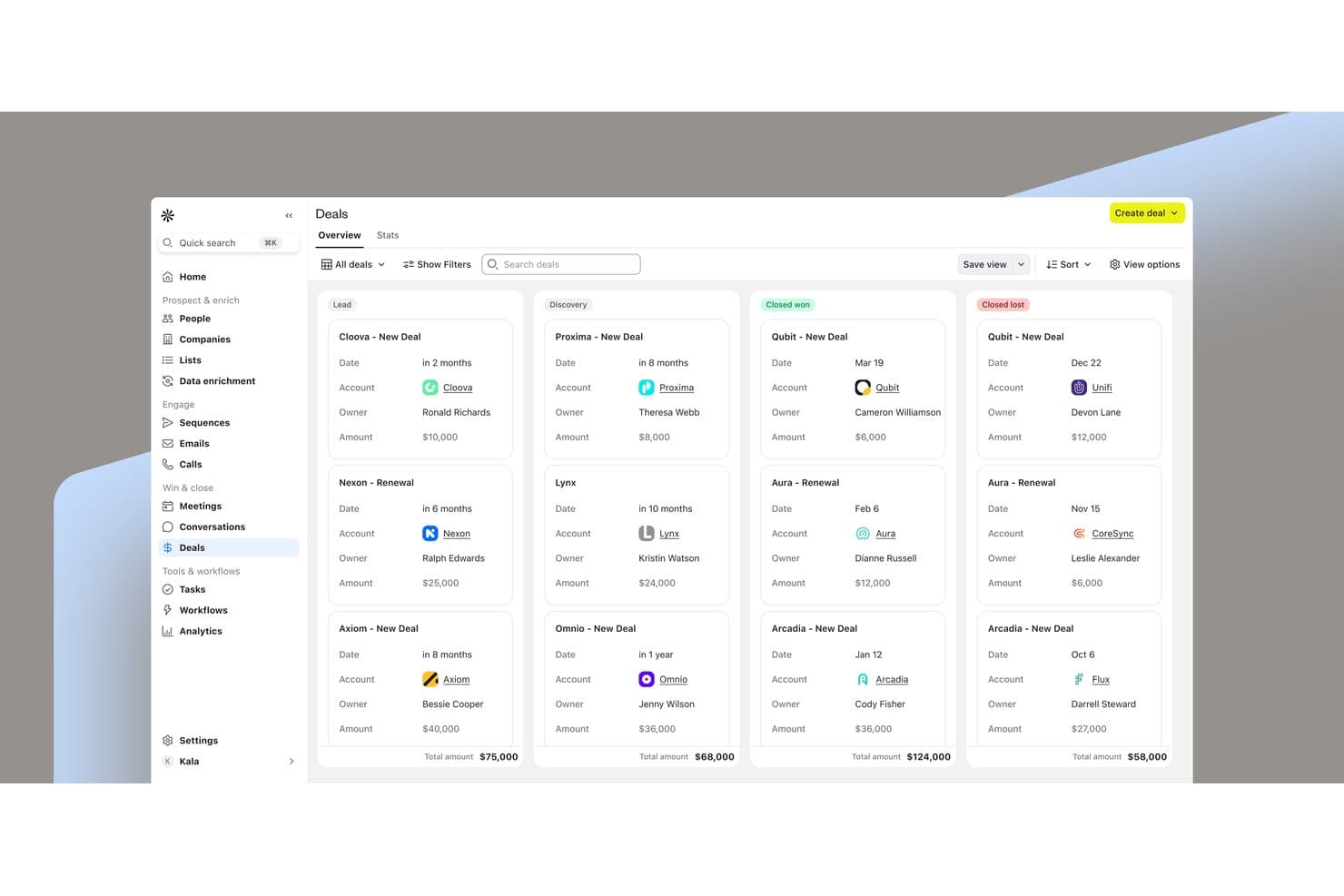
Apollo.io organizza le trattative di vendita B2B tra le fasi della pipeline in un'unica visualizzazione. Apollo.io è una piattaforma GTM basata sull'IA che combina un database di oltre 240 milioni di contatti con il punteggio dei lead, sequenze di contatto multicanale, strumenti ABM e integrazioni CRM per collegare i flussi di lavoro di vendite e marketing.
Per chi è più indicato Apollo.io?
Apollo.io è adatto ai team di vendita e marketing B2B che necessitano di dati di contatto verificati e sequenze di contatto outbound in un unico luogo, soprattutto quelli che coordinano strettamente gli SDR e la generazione della domanda.
Perché ho scelto Apollo.io
Apollo.io è entrato nella mia rosa dei preferiti perché il suo database di contatti supporta ogni decisione di contatto con dati verificati e in tempo reale, a una scala che poche piattaforme riescono a eguagliare. Sono particolarmente colpito dall'arricchimento a cascata, che sovrappone più fonti di dati per colmare automaticamente le lacune nei record dei contatti, e dai modelli di punteggio automatico basati sull'IA, che utilizzano la cronologia del tuo CRM per individuare i potenziali clienti con il più alto tasso di conversione. Quando il mio team si rivolge a un comitato d'acquisto, gli oltre 65 filtri di Apollo, inclusi i segnali di finanziamento e i cambi di ruolo, rendono facile individuare i contatti giusti prima di inviare anche una sola email.
Funzionalità principali di Apollo.io
- Sincronizzazione CRM bidirezionale: Collega Salesforce, HubSpot e Pipedrive con aggiornamenti programmati dei dati.
- Sequenze multicanale: Automatizza attività coordinate di contatto tramite email, chiamate e social network.
- Moduli intelligenti: Acquisisce e arricchisce i lead prima di assegnarli ai rappresentanti di vendita.
- Analisi personalizzate: Fornisce report su attività, prestazioni del team, messaggi e ROI.
Integrazioni di Apollo.io
Apollo.io supporta oltre 200 integrazioni, incluse quelle native con Salesforce, HubSpot, Pipedrive, Outreach, Salesloft, SendGrid, LinkedIn e Gmail. Offre inoltre un'API REST e MCP per integrazioni personalizzate con strumenti di IA.
Pros and Cons
Pros:
- L'arricchimento a cascata colma automaticamente le lacune nei record dei contatti
- Il punteggio basato sull'IA individua i potenziali clienti con il più alto tasso di conversione dalla cronologia del CRM
- Oltre 65 filtri individuano con precisione i comitati d'acquisto
Cons:
- Le campagne di fidelizzazione sempre attive non sono ancora disponibili
- I dati sui contatti internazionali sono meno completi rispetto alla copertura degli Stati Uniti
Learn more about Apollo.io: 3Ideale per la pianificazione del marketing delle piccole imprese
Enji
- Prova gratuita di 14 giorni
- A partire da $29/mese
Visit WebsiteCustomer Rating:4.9/5This rating combines scores from multiple user review sites to reflect overall customer sentiment about the product.
Calendario di marketing Enji è progettato per aiutare le aziende a organizzare e gestire le proprie attività di marketing da un'unica piattaforma. È particolarmente utile per le piccolissime imprese che cercano un modo strutturato per pianificare campagne, gestire attività di marketing, creare contenuti e monitorare le prestazioni in un unico spazio di lavoro. Combinando la gestione dei progetti di marketing con strumenti operativi come la creazione di contenuti assistita dall'intelligenza artificiale, la pianificazione dei contenuti e la programmazione dei social media, Enji aiuta gli utenti a mantenere il proprio marketing organizzato e coerente.
Perché ho scelto Enji
Ho scelto Enji per la sua attenzione alla pianificazione e alla gestione dei progetti di marketing per le piccole imprese, aiutando gli utenti a organizzare campagne, attività e strategie di marketing in un unico luogo. La piattaforma include un generatore di strategie di marketing che aiuta a creare piani strutturati su misura per le esigenze della propria azienda, insieme a strumenti per i contenuti assistiti dall'intelligenza artificiale che generano contenuti in linea con il tono di voce del brand. In combinazione con il suo strumento per la programmazione dei social media e il calendario di marketing, Enji supporta sia la pianificazione sia l'esecuzione quotidiana delle attività di marketing da un unico sistema.
Funzionalità principali di Enji
Oltre alla pianificazione del marketing per le piccole imprese, Enji offre:
- Calendario di marketing: Aiuta a pianificare e organizzare le attività di marketing, mantenendo campagne e programmi dei contenuti in un unico luogo.
- Campagne pronte all'uso: Le campagne pronte all'uso semplificano le attività di marketing e fanno risparmiare tempo.
- Copywriter basato sull'intelligenza artificiale: Aiuta a creare contenuti adattati al tono di voce del brand, riducendo il carico della creazione dei contenuti.
- Monitoraggio delle prestazioni: Consente agli utenti di monitorare le prestazioni del marketing con strumenti centralizzati di analisi e reportistica, per supportare decisioni consapevoli.
Integrazioni di Enji
Le integrazioni includono Facebook, Instagram, LinkedIn, Pinterest, TikTok, YouTube, Google Analytics 4, Google Calendar, iCal e Canva.
Pros and Cons
Pros:
- Il calendario di marketing organizza campagne, attività e programmazione dei contenuti in un unico luogo
- Progettato per chi non è un professionista del marketing, con strumenti semplici e flussi di lavoro guidati
- Dashboard centralizzata per organizzare attività di marketing, calendario e pianificazione dei contenuti
Cons:
- Pensato principalmente per le piccole imprese anziché per team di marketing più grandi
- L'insieme di funzionalità potrebbe risultare basilare per i professionisti del marketing più esperti
Learn more about Enji: Ideale per il targeting comportamentale del pubblico
- Prova gratuita di 14 giorni + demo gratuita disponibile
- Da $100/mese
Visit WebsiteCustomer Rating:4.2/5This rating combines scores from multiple user review sites to reflect overall customer sentiment about the product.
Customer.io offre una dashboard delle campagne dove gli utenti possono monitorare le campagne email personalizzate con metriche come messaggi consegnati, aperti, cliccati e tassi di conversione. Customer.io è una piattaforma di automazione della messaggistica che combina segmentazione comportamentale in tempo reale, creazione visiva di workflow per campagne e invio di messaggi cross-canale tramite email, SMS, notifiche push, messaggi in-app e webhook.
Per chi è pensato Customer.io?
Customer.io è particolarmente adatto ai team di marketing per la crescita e la gestione del ciclo di vita nelle aziende SaaS di fascia media che gestiscono campagne di messaggistica multi-canale, basate sui dati.
Perché ho scelto Customer.io
Customer.io si guadagna il suo posto nella mia lista ristretta per la profondità della sua segmentazione comportamentale rispetto alla maggior parte delle piattaforme di marketing B2B. Posso creare segmenti utilizzando condizioni comportamentali illimitate—azioni sul prodotto, visualizzazioni di pagina, cronologia degli eventi, attributi personalizzati—e tali segmenti si aggiornano in tempo reale. Utilizzo anche la funzione di sincronizzazione del pubblico pubblicitario per trasmettere questi segmenti direttamente a Google e Meta, così i miei canali a pagamento e di proprietà restano coordinati senza esportazione manuale di file CSV.
Funzionalità principali di Customer.io
- Costruttore visivo di workflow per campagne: Progetta percorsi di campagne automatizzate multistep utilizzando un'interfaccia drag-and-drop con logica ramificata e trigger condizionali.
- Invio messaggi cross-canale: Invia messaggi tramite email, SMS, notifiche push, in-app e webhook da un unico workflow di campagna.
- Test A/B e multivariati: Testa varianti di messaggi, tempistiche e percorsi ramificati direttamente nei workflow per identificare la logica di campagna più efficace.
- Oggetti personalizzati: Modella dati a livello di account o azienda per supportare i casi d'uso B2B in cui la messaggistica deve riflettere relazioni organizzative.
Integrazioni di Customer.io
Customer.io offre una vasta directory di integrazioni sia in ingresso che in uscita, tra cui Salesforce, HubSpot, Segment, Snowflake, Google BigQuery, Amplitude, Mixpanel, Slack, Twilio e Google Ads. Si connette anche con Zapier e fornisce molteplici API per integrazioni personalizzate, incluse la Pipelines API, la Track API e la App API.
Pros and Cons
Pros:
- Trigger di segmentazione basati su eventi dai dati di prodotto
- Sincronizzazione del pubblico pubblicitario con Google e Facebook
- Ancora nessun blocco di contenuto riutilizzabile a livello globale
- Segmentazione basata su eventi da dati reali di prodotto
- Sincronizzazione del pubblico pubblicitario con Google e Facebook
- Orchestrazione multi-canale su cinque canali
Cons:
- Nessun builder nativo per landing page o form
- Per analisi più approfondite è necessario esportare i report
- Nessun builder nativo per landing page o form
- Per analisi più approfondite è necessario esportare i report
Learn more about Customer.io: Ideale per il SEO B2B
- Piano gratuito disponibile
- A partire da $29/mese
Visit WebsiteCustomer Rating:4.7/5This rating combines scores from multiple user review sites to reflect overall customer sentiment about the product.
Trova le parole chiave per cui i concorrenti sono posizionati e analizza i dati per scoprire le loro strategie SEO. Marketing Miner è uno strumento di marketing SEO B2B approfondito pensato per i team di marketing che desiderano migliorare il posizionamento sui motori di ricerca e aumentare il traffico.
Perché ho scelto Marketing Miner: La piattaforma è uno strumento di marketing SEO B2B che consente alle aziende di raccogliere dati di marketing utili per posizionare i siti web sui motori di ricerca. Marketing Miner permette di ottenere preziose informazioni SEO, panoramiche su parole chiave e siti web, analizzare questi dati e integrarli in report dettagliati. Puoi inoltre utilizzare Marketing Miner per monitorare e gestire tutti gli aspetti della visibilità online, compresi il monitoraggio del posizionamento e le menzioni del brand.
Caratteristiche distintive e integrazioni di Marketing Miner
Le caratteristiche distintive includono audit SEO che ti aiutano a scoprire problematiche tecniche che incidono sul posizionamento del tuo sito sui motori di ricerca. Marketing Miner offre anche opportunità di link building per rafforzare il profilo backlink del tuo sito web.
Le integrazioni comprendono connessioni con varie applicazioni di terze parti, come Ahrefs, Google Analytics, Google Data Studio, Google Search Console, Google Sheets e Majestic. Puoi inoltre creare integrazioni personalizzate tramite l’API della piattaforma.
Pros and Cons
Pros:
- Ampia gamma di funzionalità SEO
- Prezzi convenienti
- Aiuta a posizionare i siti web sui motori di ricerca
Cons:
- L'interfaccia utente necessita di miglioramenti
- Non dispone di una funzione per controllare i backlink
Learn more about Marketing Miner: Ideale per i messaggi push
- Prova gratuita di 14 giorni + demo gratuita disponibile
- A partire da $29/utente/mese (fatturazione annuale)
Visit WebsiteCustomer Rating:4.4/5This rating combines scores from multiple user review sites to reflect overall customer sentiment about the product.
Gestisci conversazioni su larga scala con potenziali lead tramite una casella messaggi di nuova generazione. Intercom è uno strumento di marketing conversazionale che utilizza messaggi push per connettersi con potenziali clienti nei momenti migliori.
Perché ho scelto Intercom: La piattaforma è uno dei principali strumenti di marketing B2B che aiuta la tua azienda a catturare lead e convertirli tramite le funzionalità di messaggistica push. Le capacità di Intercom ti permettono di coinvolgere i lead attraverso messaggi in-app e fornire supporto tramite chat dal vivo e bot IA. Quando i clienti contattano il tuo team marketing, puoi indirizzarli direttamente alla persona giusta in tempo reale, insieme ai loro account.
Funzionalità principali e integrazioni di Intercom
Le funzionalità principali includono strumenti per aiutarti nell'onboarding, coinvolgere e attivare nuovi clienti e convertire più visitatori del sito in clienti paganti. Intercom offre inoltre una posizione centralizzata che ti permette di avere tutti i dati e i report integrati tra loro.
Le integrazioni includono collegamenti con oltre 300 applicazioni di terze parti per aumentare l'efficienza e la produttività del team, come CloudTalk, Freshdesk, Google Analytics, Hevo, Hubspot, Outreach, Pipedrive, Salesforce, Trello, Zoho Desk e altre soluzioni software. Puoi inoltre utilizzare un account Zapier a pagamento e l'API della piattaforma per creare integrazioni personalizzate tra Intercom e i tuoi strumenti attuali.
Pros and Cons
Pros:
- Piattaforma facile da usare
- Fornisce informazioni accurate
- Organizza i dettagli dei clienti
Cons:
- Non adatto alle piccole imprese
- Presenta alcuni problemi di latenza
Learn more about Intercom: Ideale per il tracciamento delle conversioni
- Demo gratuita disponibile
- Prezzi su richiesta
Visit WebsiteCustomer Rating:4.4/5This rating combines scores from multiple user review sites to reflect overall customer sentiment about the product.
Ottieni una panoramica di costi, ricavi e ROAS in base ai canali di marketing. LeadsRX offre una soluzione completa per il tracciamento delle conversioni, fornendo le informazioni, la tecnologia e la sicurezza necessarie per migliorare le prestazioni di marketing.
Perché ho scelto LeadsRX: La piattaforma aiuta i team di marketing B2B a raccogliere strumenti essenziali, imparziali e cross-canale per il tracciamento delle conversioni. LeadsRX aiuterà i tuoi team a comprendere perché le conversioni sono ai livelli attuali. Puoi utilizzare la soluzione per vedere quali punti di contatto con i lead, o una combinazione di essi, portano ai costi di acquisizione più efficienti e a un ritorno sull'investimento pubblicitario più elevato.
Funzionalità e integrazioni principali di LeadsRX
Le funzionalità principali includono strumenti per aiutarti a costruire customer journey attraverso più canali e programmi di marketing, permettendoti di identificare come i clienti sviluppano una relazione con il tuo brand. LeadsRX offre anche una funzionalità privacy studio che aiuta il tuo brand a proteggere i dati e controllare come vengono archiviati nella tua azienda.
Le integrazioni includono collegamenti con popolari strumenti di marketing come Act-On, AdRoll, CallRail, Google Analytics, Hubspot Marketing Hub, Mailchimp, Marketo, Optimizely, Salesforce, WordPress e altre opzioni software.
Pros and Cons
Pros:
- Consente la creazione di piani di marketing completi
- Fornisce dati dettagliati sulle conversioni
- Facile da usare per i team
Cons:
- Le visualizzazioni dei dati possono risultare confuse
- Richiede tempo per sincronizzare i report
Learn more about LeadsRx: Ideale per la personalizzazione
- Demo gratuita disponibile
- Da $800/mese
Visit WebsiteCustomer Rating:4.2/5This rating combines scores from multiple user review sites to reflect overall customer sentiment about the product.
Crea email visivamente sorprendenti con vari blocchi di contenuto, tutto senza bisogno di esperienza di codifica. emfluence Marketing Platform offre una soluzione di marketing B2B altamente personalizzabile che consente agli utenti di ottenere esattamente lo strumento di cui hanno bisogno per la propria azienda.
Perché ho scelto emfluence Marketing Platform: ho deciso di includere emfluence Marketing Platform in questo articolo perché il fornitore può aiutarti a personalizzare la soluzione in base alle tue esigenze. Il team di sviluppo del fornitore può realizzare nuove funzionalità e caratteristiche nello strumento secondo i tuoi requisiti e il tuo budget. Il team di emfluence Marketing Platform è sempre disponibile per aiutarti a ottenere il massimo dalle tue campagne di marketing B2B, sia che tu abbia bisogno di assistenza durante una campagna sia che ti serva una guida per i prossimi passi.
Funzionalità eccezionali e integrazioni di emfluence Marketing Platform
Funzionalità eccezionali includono strumenti di marketing automation che ti permettono di creare campagne automatizzate tramite funzionalità visive in una dashboard drag-and-drop. La piattaforma offre anche funzionalità di web tracking che raccolgono dati utili su come i visitatori interagiscono con il tuo sito web.
Integrazioni comprendono connessioni flessibili con altre tecnologie leader del settore, come Email on Acid, Microsoft Dynamics 365, Nifty Images, ReturnPath, Salesforce, TapClicks, WordPress e Yext. Puoi inoltre creare integrazioni personalizzate tramite un account Zapier a pagamento o l'API della piattaforma.
Pros and Cons
Pros:
- Ritorno sull'investimento rapido
- Team di supporto disponibile
- Offre servizi di agenzia di marketing
Cons:
- Alcune funzionalità non vengono aggiornate
- Il prezzo non è adatto alle piccole imprese
Learn more about emfluence Marketing Platform: Ideale per l'automazione del marketing
- Demo gratuita disponibile
- Prezzi su richiesta
Visit WebsiteCustomer Rating:4.1/5This rating combines scores from multiple user review sites to reflect overall customer sentiment about the product.
Accedi a tutte le aree della piattaforma da un'unica posizione comoda. Adobe Marketo Engage è una piattaforma di marketing B2B completa che offre ampie funzionalità di automazione per aiutare le aziende B2B a coinvolgere i giusti segmenti di pubblico.
Perché ho scelto Adobe Marketo Engage: La piattaforma offre potenti capacità di automazione che aiutano la tua azienda a identificare, coinvolgere e convertire i segmenti di pubblico più adatti. Con Adobe Marketo Engage puoi automatizzare tutto, dalla gestione dei lead e l'email marketing fino alle campagne ABM e all'attribuzione. Adobe Marketo Engage include tutto ciò di cui hai bisogno per aumentare le entrate della tua organizzazione B2B.
Caratteristiche distintive e integrazioni di Adobe Marketo Engage
Caratteristiche distintive includono le funzionalità di lead nurturing che ti consentono di coltivare i lead in tutte le fasi del percorso cliente e offrire esperienze rilevanti ai clienti. La piattaforma comprende anche strumenti di reportistica e analisi che coprono informazioni dettagliate sui percorsi degli acquirenti B2B.
Integrazioni includono collegamenti con utili strumenti aziendali come Crossbeam, Oktopost, ON24, Outgrow, PathFactory, RainFocus, Skilljar, streamGo, Survicate, ZoomInfo e altre soluzioni software. È possibile utilizzare anche l'API della piattaforma o un account Zapier a pagamento per integrazioni personalizzate.
Pros and Cons
Pros:
- Funzionalità complete di automazione del marketing
- Eccellente gestione dei flussi di lavoro
- Personalizzazione in tempo reale
Cons:
- Interfaccia obsoleta
- Curva di apprendimento ripida
Learn more about Adobe Marketo Engage: Ideale per strumenti integrati multipli
- Demo gratuita disponibile
- Prezzo su richiesta

Utilizza lo strumento Google Analytics per identificare dove gli utenti abbandonano e migliorare i risultati. Google Marketing Platform offre molteplici strumenti Google integrati per proporre una soluzione unificata di pubblicità e analisi per un marketing B2B più innovativo.
Perché ho scelto Google Marketing Platform: Attraverso Google Marketing Platform, il tuo team di marketing B2B avrà accesso a diversi strumenti integrati, aiutandoti a raggiungere i tuoi obiettivi di marketing. Con questi strumenti puoi raccogliere informazioni preziose, ottenere nuove intuizioni su quali campagne funzionano e sviluppare relazioni più solide con i clienti. Google Marketing Platform offre anche strumenti che ti aiutano a ottimizzare i contenuti, capire come il tuo sito si posiziona sui motori di ricerca e monitorare i social network.
Caratteristiche e integrazioni principali di Google Marketing Platform
Caratteristiche principali includono Google Data Studio, che raccoglie, organizza e converte i dati in report personalizzabili. Puoi anche utilizzare lo strumento Campaign Manager 360 della piattaforma per ottenere panoramiche complete di tutte le campagne digitali.
Le integrazioni comprendono collegamenti con strumenti esterni alla linea di prodotti Google, come Business Warrior, BySide, Calltracks, Commission Factory, Fone Dynamics, Ketch, MSIGHTS, Sightly, Signal AI, Telaria e altre soluzioni software.
Pros and Cons
Pros:
- Soluzione unica per strumenti di marketing
- Integrazione perfetta con prodotti Google
- Comprende molteplici strumenti Google
Cons:
- Non adatto alle piccole imprese
- Poche integrazioni con sistemi non Google
Learn more about Google Marketing Platform :
Altri software di marketing B2B
In aggiunta, ti propongo un altro breve elenco di piattaforme di marketing B2B che ogni professionista del marketing B2B dovrebbe prendere in considerazione per sfruttare al meglio le proprie campagne.
- 11Salesforce Marketing Cloud IntelligenceIdeale per grandi aziende
- 12LeadfeederIdeale per l'identificazione dei lead
- 13Marketing OptimizerIdeale per generare lead pronti per la vendita
- 14TofuIdeale per il marketing generativo
- 15Mailchimp Ideale per l’email marketing
- 16Zoho CRMIdeale per la gestione delle relazioni
Come valuto le piattaforme di marketing B2B
La mia valutazione si articola su due livelli: i requisiti di base che qualsiasi piattaforma B2B deve soddisfare—valutazione dei lead, sincronizzazione con il CRM, individuazione degli account per il marketing basato sugli account (ABM)—e gli elementi distintivi che separano le opzioni più solide da quelle mediocri.
Funzionalità principali (requisiti fondamentali per questo elenco)
Quando seleziono gli strumenti per il mio elenco, assegno a ciascuno un punteggio su una scala da 0 (non offre la funzionalità) a 5 (eccelle in quest'area) per ogni funzionalità principale indicata di seguito. Poi converto il punteggio totale dello strumento in una percentuale. Ogni strumento deve raggiungere un punteggio totale minimo del 65% per essere preso in considerazione.
- Gestione e valutazione dei lead: valuto il modo in cui ogni piattaforma acquisisce, valuta e indirizza i lead, verificando se i modelli di valutazione possono combinare segnali comportamentali come i download di contenuti con i dati firmografici.
- Automazione delle campagne multicanale: ogni strumento dovrebbe orchestrare campagne via e-mail, social, pubblicità a pagamento e web tramite flussi di lavoro ramificati, non limitarsi all'invio di e-mail in batch.
- Marketing basato sugli account (ABM): verifico se la piattaforma supporta l'individuazione a livello di account e il coinvolgimento del comitato d'acquisto, ad esempio fornendo contenuti personalizzati a più interlocutori della stessa azienda.
- Integrazione con CRM e vendite: in questo caso è importante la sincronizzazione bidirezionale con i principali CRM, come Salesforce, HubSpot CRM o Microsoft Dynamics, inclusa la mappatura degli oggetti personalizzati e gli aggiornamenti dei dati in tempo reale.
- Analisi e attribuzione B2B: cerco funzionalità di attribuzione multi-touch e report sulla pipeline che colleghino l'attività di marketing ai ricavi, non solo metriche di vanità come tassi di apertura o impression.
- Segmentazione e personalizzazione: la piattaforma dovrebbe combinare dati firmografici, comportamentali e tecnografici per creare segmenti dinamici, come l'individuazione di aziende SaaS con oltre 500 dipendenti che hanno visitato la pagina dei prezzi.
Una volta ottenuto un elenco di strumenti che soddisfano questi criteri, considero ciò che distingue ciascuna piattaforma.
Fattori distintivi (ciò che differenzia i fornitori)
Ecco come confronto i diversi fornitori:
Funzionalità distintive
L'integrazione dei dati sull'intento d'acquisto è un importante elemento distintivo. Le piattaforme che acquisiscono segnali da fornitori come Bombora o G2 aiutano il tuo team a dare priorità agli account che stanno già effettuando ricerche sulla tua categoria. Valuto anche se una piattaforma attiva avvisi di vendita in tempo reale quando gli account target superano determinate soglie di coinvolgimento, poiché la velocità di questo passaggio influisce direttamente sulla conversione. Anche le pagine di destinazione dinamiche sono importanti, soprattutto per le iniziative ABM in cui vuoi fornire contenuti personalizzati in base al settore o alle dimensioni dell'azienda senza dover coinvolgere uno sviluppatore.
Oltre le funzionalità
La struttura dei prezzi è molto importante in questa categoria. Alcune piattaforme applicano costi in base al volume dei contatti, mentre altre stabiliscono i prezzi in base alle funzionalità o agli account attivi, e questa differenza può modificare notevolmente il costo totale con la crescita del database. Valuto anche il supporto all'implementazione, poiché la configurazione dei modelli di valutazione dei lead e della mappatura dei campi CRM su una piattaforma come Marketo o HubSpot può richiedere settimane senza risorse adeguate per l'avvio. Vale la pena verificare anche i controlli sulla privacy dei dati, in particolare la gestione del consenso e la registrazione delle verifiche per i team che gestiscono campagne in regioni soggette a normative diverse.
Come scegliere una piattaforma di marketing B2B
È facile perdersi in lunghi elenchi di funzionalità e strutture tariffarie complesse. Per aiutarti a rimanere concentrato mentre affronti il tuo specifico processo di selezione del software, ecco un elenco di fattori da tenere a mente:
| Fattore | Cosa considerare |
|---|---|
| FattoreScalabilità | Cosa considerareLa piattaforma può crescere insieme alla tua azienda? Considera la crescita futura e verifica se lo strumento può gestire una quantità maggiore di dati e utenti senza problemi di prestazioni. |
| FattoreIntegrazioni | Cosa considerareSi collega agli strumenti che già utilizzi? Verifica la compatibilità con il CRM, gli strumenti di analisi e le altre soluzioni di marketing che usi. Cerca un flusso di dati continuo tra le piattaforme. |
| FattorePersonalizzazione | Cosa considerarePuoi adattarla ai tuoi flussi di lavoro? Cerca opzioni per personalizzare dashboard, report e autorizzazioni degli utenti in base alle esigenze del tuo team. |
| FattoreFacilità d'uso | Cosa considerareL'interfaccia è intuitiva? Assicurati che il tuo team possa utilizzarla senza una formazione approfondita. Cerca design semplici e intuitivi che non richiedano una lunga curva di apprendimento. |
| FattoreImplementazione e avviamento | Cosa considerareQuanto tempo occorre per renderla operativa? Considera il tempo e le risorse necessari per la configurazione. Verifica la disponibilità di guide, tutorial o supporto per aiutare il team a iniziare rapidamente. |
| FattoreCosto | Cosa considerareRientra nel tuo budget? Analizza le strutture tariffarie, i costi nascosti e gli sconti disponibili. Valuta se il valore offerto giustifica il costo nel tempo. |
| FattoreMisure di sicurezza | Cosa considerareQuanto sono sicuri i tuoi dati? Assicurati che la piattaforma offra la crittografia, aggiornamenti di sicurezza regolari e la conformità alle normative sulla protezione dei dati come il GDPR. |
| FattoreDisponibilità dell'assistenza | Cosa considerareL'aiuto è disponibile quando serve? Verifica la presenza di un'assistenza 24 ore su 24, 7 giorni su 7, i tempi di risposta e l'accesso a risorse come FAQ o forum della community. Assicurati che il tuo team disponga di un supporto adeguato. |
Che cos'è una piattaforma di marketing B2B?
Una piattaforma di marketing B2B è un software che aiuta le aziende a gestire e realizzare campagne di marketing rivolte ad altre aziende. I responsabili del marketing e i team di vendita utilizzano generalmente questi strumenti per migliorare la generazione di lead, il coinvolgimento dei clienti e l'analisi dei dati. Funzionalità come la gestione dei lead, l'automazione delle campagne e l'analisi supportano operazioni di marketing e processi decisionali efficienti. Nel complesso, questi strumenti forniscono informazioni preziose e semplificano le attività di marketing per ottenere risultati aziendali migliori.
Funzionalità
Quando scegli una piattaforma di marketing B2B, presta attenzione alle seguenti funzionalità chiave:
- Gestione dei lead: Aiuta a monitorare e coltivare i lead lungo il funnel di vendita, assicurando che nessun potenziale cliente venga trascurato.
- Automazione delle campagne: Automatizza le attività ripetitive, consentendo ai team di concentrarsi sulla strategia e sulla creatività.
- Analisi e reportistica: Fornisce informazioni sulle prestazioni delle campagne, consentendo di prendere decisioni e apportare modifiche basate sui dati.
- Segmentazione dei clienti: Consente di realizzare attività di marketing mirate dividendo il pubblico in gruppi specifici in base a caratteristiche o comportamenti.
- Marketing via e-mail: Facilita campagne e-mail personalizzate per coinvolgere e convertire efficacemente i lead.
- Funzionalità di integrazione: Garantisce un flusso di dati e una collaborazione fluidi collegandosi agli altri strumenti del tuo ecosistema tecnologico.
- Pannelli di controllo personalizzabili: Offre visualizzazioni personalizzate di dati e metriche, aiutando i team a concentrarsi sugli aspetti più importanti.
- Informazioni basate sull'intelligenza artificiale: Utilizza l'intelligenza artificiale per prevedere le tendenze e ottimizzare le strategie di marketing.
- Misure di sicurezza: Protegge i dati sensibili mediante la crittografia e la conformità a normative come il GDPR.
- Risorse per la formazione: Fornisce accesso a tutorial, webinar e assistenza per aiutare gli utenti a sfruttare al massimo il potenziale dello strumento.
Vantaggi
L'implementazione di una piattaforma di marketing B2B offre diversi vantaggi al tuo team e alla tua azienda. Ecco alcuni dei vantaggi che puoi aspettarti:
- Migliore generazione di lead: Grazie alle funzionalità di gestione dei lead, puoi acquisire e coltivare più lead in modo efficiente.
- Risparmio di tempo: L'automazione delle campagne riduce le attività manuali, lasciando più tempo per la pianificazione strategica.
- Decisioni basate sui dati: L'analisi e la reportistica offrono informazioni utili per prendere decisioni di marketing consapevoli.
- Marketing mirato: La segmentazione dei clienti consente di adattare le campagne a gruppi di pubblico specifici, aumentando la rilevanza e il coinvolgimento.
- Collaborazione migliorata: Le funzionalità di integrazione assicurano che tutti i tuoi strumenti lavorino insieme, promuovendo il lavoro di squadra e la coerenza dei dati.
- Comunicazione personalizzata: Il marketing via e-mail ti consente di inviare messaggi mirati che risuonano con il tuo pubblico.
- Garanzia di sicurezza: Le misure di sicurezza proteggono i tuoi dati, assicurando la conformità alle normative e la tranquillità.
Costi e prezzi
La scelta di una piattaforma di marketing B2B richiede la comprensione dei vari modelli e piani tariffari disponibili. I costi variano in base alle funzionalità, alle dimensioni del team, agli elementi aggiuntivi e ad altro ancora. La tabella seguente riassume i piani più comuni, i relativi prezzi medi e le funzionalità tipicamente incluse nelle soluzioni di piattaforma di marketing B2B:
Tabella comparativa dei piani per una piattaforma di marketing B2B
| Tipo di piano | Prezzo medio | Funzionalità comuni |
|---|---|---|
| Tipo di pianoPiano gratuito | Prezzo medio$0 | Funzionalità comuniGestione di base dei lead, marketing via e-mail limitato e segmentazione dei clienti. |
| Tipo di pianoPiano personale | Prezzo medio$10-$30/utente/mese | Funzionalità comuniAnalisi avanzate, automazione delle campagne e integrazioni di base. |
| Tipo di pianoPiano aziendale | Prezzo medio$50-$150/utente/mese | Funzionalità comuniPersonalizzazione avanzata, integrazione multicanale e pannelli di controllo personalizzabili. |
| Tipo di pianoPiano aziendale avanzato | Prezzo medio$200+/utente/mese | Funzionalità comuniInformazioni basate sull'intelligenza artificiale, assistenza prioritaria e misure di sicurezza complete. |
Domande frequenti
Per aiutarti, ho risposto ad alcune delle domande più frequenti per assisterti nella ricerca di nuovi strumenti di marketing B2B.
Una piattaforma di marketing B2B può integrarsi con il mio CRM esistente?
Sì, la maggior parte delle piattaforme di marketing B2B offre integrazioni con i CRM più diffusi. Verifica le funzionalità di integrazione della piattaforma per assicurarti che possa connettersi ai tuoi sistemi attuali. Questa integrazione consente un flusso di dati continuo tra marketing e vendite, migliorando la collaborazione e l’efficienza.
È difficile passare da una piattaforma di marketing B2B a un'altra?
Cambiare piattaforma può essere impegnativo, ma la pianificazione è utile. Considera la migrazione dei dati, la formazione e il modo in cui la nuova piattaforma si allinea ai tuoi obiettivi. Cerca piattaforme che offrano supporto durante l’attivazione per agevolare la transizione e ridurre al minimo le interruzioni durante il passaggio.
Come posso valutare la sicurezza di una piattaforma di marketing B2B?
Verifica la crittografia, la conformità alle normative sulla protezione dei dati come il GDPR e la presenza di aggiornamenti di sicurezza regolari. Chiedi ai fornitori informazioni sulle loro misure di sicurezza e su eventuali violazioni avvenute in passato. Garantire la protezione dei tuoi dati è fondamentale, soprattutto se gestisci informazioni sensibili sui clienti.