

Un agente di marketing basato sull'intelligenza artificiale utilizza l'intelligenza artificiale per pianificare, eseguire e ottimizzare le attività di marketing con un intervento manuale limitato. Questi strumenti possono supportare la gestione delle campagne, la creazione di contenuti, il targeting del pubblico e l'analisi delle prestazioni.
Tuttavia, le loro funzionalità variano considerevolmente. Alcuni si concentrano sulla produzione di contenuti, mentre altri possono modificare i budget, creare segmenti di pubblico o lanciare campagne su più canali. Ho valutato le principali opzioni per aiutarti a trovare il miglior agente di marketing basato sull'intelligenza artificiale per i tuoi obiettivi, il tuo stack tecnologico e il tuo budget.
Perché fidarsi dei nostri consigli sui software
6,700+
Reviews
20
Industry experts
16+
Evaluation factors
14
Years
Il nostro team testa e recensisce software dal 2012. In quanto leader del marketing noi stessi, sappiamo quanto sia difficile — e importante — scegliere il software giusto.
Per questa guida, abbiamo valutato gli strumenti attraverso test pratici e ricerche indipendenti, assegnando un punteggio agli strumenti in base ai nostri criteri di selezione.
Le nostre recensioni riflettono il nostro giudizio editoriale umano, non un discorso di vendita.
Revisori esperti:
 Gui DrusinaDirettore creativo
- Shriya GhateSenior Marketing Lead
 Amanda JacquesResponsabile Marketing Ops

Tabella comparativa degli agenti di marketing basati sull'intelligenza artificiale
Questa tabella comparativa riepiloga i dettagli sui prezzi delle mie migliori selezioni di agenti di marketing basati sull’intelligenza artificiale:
| Tool | Best For | Trial Info | Price | ||
|---|---|---|---|---|---|
| 1 | Ideale per codificare processi GTM riutilizzabili | Demo gratuita disponibile | Da $29/mese | Website | |
| 2 | Ideale per team di marketing multi-agente no-code | Piano gratuito disponibile | Prezzo su richiesta | Website | |
| 3 | Ideale per l’ottimizzazione autonoma dei media a pagamento | Non disponibile | Prezzo su richiesta | Website | |
| 4 | Ideale per l'attivazione di campagne account-based | Demo gratuita disponibile | Prezzo su richiesta | Website | |
| 5 | Ideale per la scoperta predittiva dell'audience | Dimostrazione gratuita disponibile | Da $1.250/mese (fatturato annualmente) | Website | |
| 6 | Ideale per la produzione di contenuti governata dal brand | Prova gratuita di 7 giorni disponibile | Da $59/mese (fatturazione annuale) | Website | |
| 7 | Ideale per messaggistica adattiva cross-canale | Demo gratuita disponibile | Prezzo su richiesta | Website | |
| 8 | Ideale per l'intelligenza di campagna basata sul CRM | Demo gratuita disponibile | A partire da $1.500/mese (fatturazione annuale) | Website | |
| 9 | Ideale per eseguire campagne nativamente su HubSpot | Piano gratuito disponibile | Prezzo su richiesta | Website | |
| 10 | Ideale per la personalizzazione delle campagne e-commerce | Piano gratuito disponibile | A partire da $14/mese | Website |


Recensioni dei migliori agenti di marketing basati sull'intelligenza artificiale
\u003cspan data-slate-fragment=\u0022JTVCJTdCJTIyY2hpbGRyZW4lMjIlM0ElNUIlN0IlMjJ0ZXh0JTIyJTNBJTIyQmVsb3clMjBhcmUlMjBteSUyMGRldGFpbGVkJTIwc3VtbWFyaWVzJTIwb2YlMjB0aGUlMjBiZXN0JTIwQUklMjBtYXJrZXRpbmclMjBhZ2VudHMlMjB0aGF0JTIwbWFkZSUyMGl0JTIwb250byUyMG15JTIwc2hvcnRsaXN0LiUyME15JTIwcmV2aWV3cyUyMG9mZmVyJTIwYSUyMGRldGFpbGVkJTIwbG9vayUyMGF0JTIwdGhlJTIwZmVhdHVyZXMlMkMlMjBiZXN0JTIwdXNlJTIwY2FzZXMlMkMlMjBhbmQlMjBpbnRlZ3JhdGlvbnMlMjBvZiUyMGVhY2glMjBwbGF0Zm9ybSUyMHRvJTIwaGVscCUyMHlvdSUyMGZpbmQlMjB0aGUlMjBiZXN0JTIwb25lJTIwZm9yJTIweW91LiUyMiU3RCU1RCUyQyUyMnR5cGUlMjIlM0ElMjJwJTIyJTJDJTIyaWQlMjIlM0ElMjJQSnhRaDFhUWNFJTIyJTdEJTVE\u0022\u003eDi seguito trovi i miei riepiloghi dettagliati dei migliori agenti di marketing basati sull’intelligenza artificiale che sono entrati nella mia selezione. Le mie recensioni offrono una panoramica dettagliata delle funzionalità, dei casi d’uso migliori e delle integrazioni di ogni piattaforma, per aiutarti a trovare quella più adatta a te.\u003c/span\u003e
 Ideale per codificare processi GTM riutilizzabili
- Demo gratuita disponibile
- Da $29/mese
Visit WebsiteCustomer Rating:4.4/5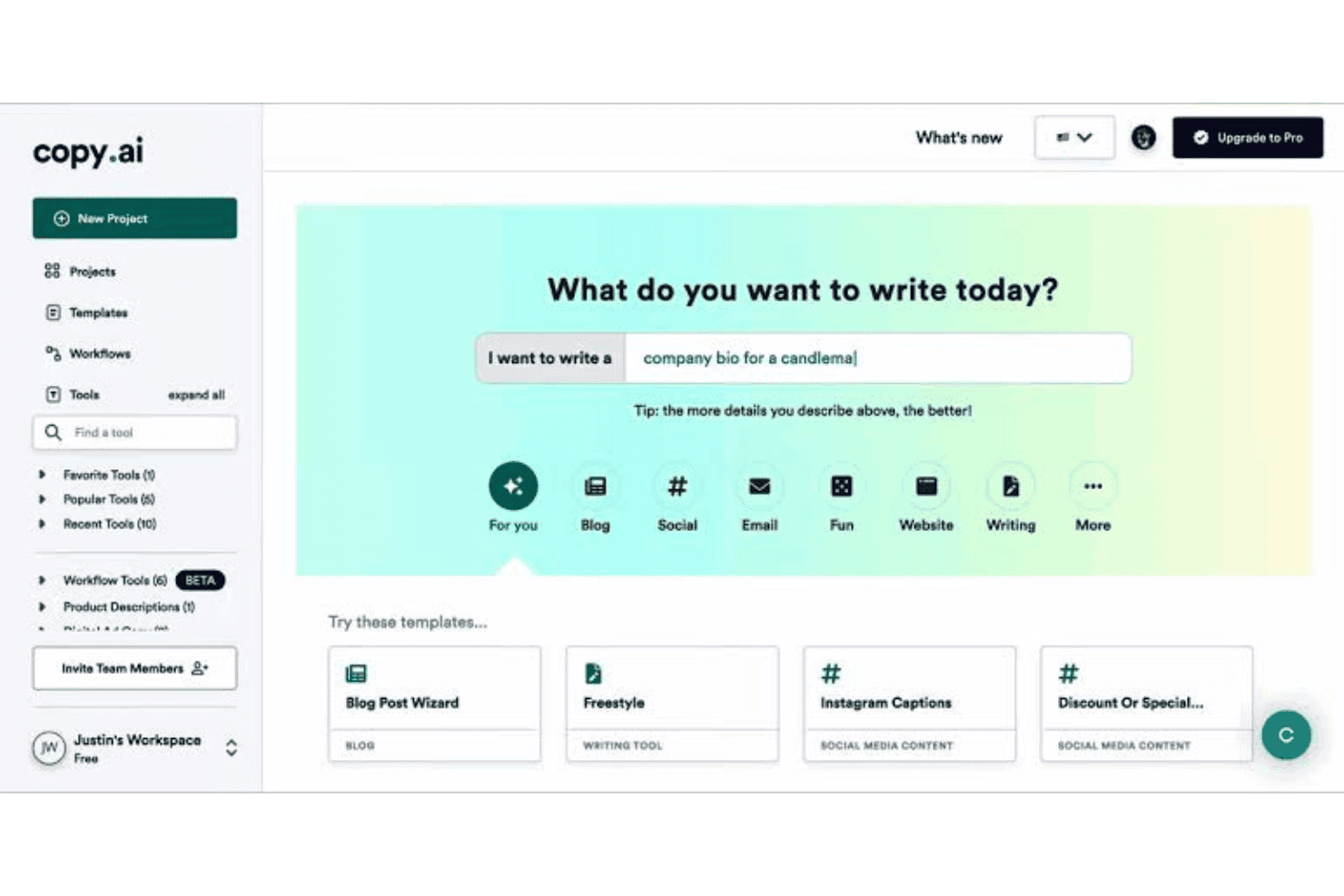
Copy.ai offre un'interfaccia di scrittura basata su prompt con strumenti categorizzati come Blog, Social, Email e Sito web per aiutare gli utenti a generare contenuti rapidamente. Copy.ai è una piattaforma GTM nativa per l'IA che combina l'automazione dei flussi di lavoro, agenti AI, generazione di contenuti e integrazioni CRM per eseguire processi go-to-market attraverso le funzioni di vendita e marketing.
Per chi è Copy.ai?
Copy.ai è particolarmente indicato per team B2B di livello medio e enterprise in cui le operazioni di marketing e le vendite sono strettamente allineate attorno a un'esecuzione GTM condivisa.
Perché ho scelto Copy.ai
Ho incluso Copy.ai fra le mie migliori scelte perché nessun'altra piattaforma che abbia utilizzato rende così semplice trasformare i processi GTM ripetibili in Workflow strutturati e riutilizzabili. Posso codificare un'intera sequenza ABM, una strategia di prospecting o un processo di localizzazione una sola volta e distribuirlo al team senza doverlo ricostruire da zero. Le funzionalità Infobase e Brand Voice assicurano che ogni output dei flussi di lavoro attinga dalla stessa fonte di verità, così la coerenza non è più qualcosa che devo controllare manualmente.
Funzionalità chiave di Copy.ai
- Content Agent Studio: Genera agenti AI personalizzati per produrre asset di marketing in linea con il brand utilizzando input di esempio.
- Tabelle come base dati: Struttura e interroga dati di marketing provenienti da più fonti per flussi di lavoro e automazioni.
- Controlli Brand Voice: Garantisce che i messaggi generati siano coerenti con lo stile e la terminologia approvata del tuo brand.
- Interfaccia di prompt chat: Interagisci con la piattaforma tramite una chat AI per attività ad hoc e richieste di contenuti rapide.
Integrazioni di Copy.ai
Copy.ai offre integrazioni native con HubSpot, Salesforce, Gong, Outreach e Salesloft, e si collega con Zapier. È disponibile un API per integrazioni personalizzate.
Pros and Cons
Pros:
- I workflow GTM riutilizzabili si distribuiscono senza dover ricostruire ogni volta
- Il Prospecting Cockpit ricerca gli account prima di iniziare l'outreach
- Certificazione SOC 2 per team che gestiscono dati sensibili dei clienti
Cons:
- I livelli di automazione dei flussi di lavoro aumentano rapidamente di prezzo
- La profondità della piattaforma richiede un notevole setup prima di apportare valore
 Ideale per team di marketing multi-agente no-code
- Piano gratuito disponibile
- Prezzo su richiesta
Visit WebsiteCustomer Rating:4.3/5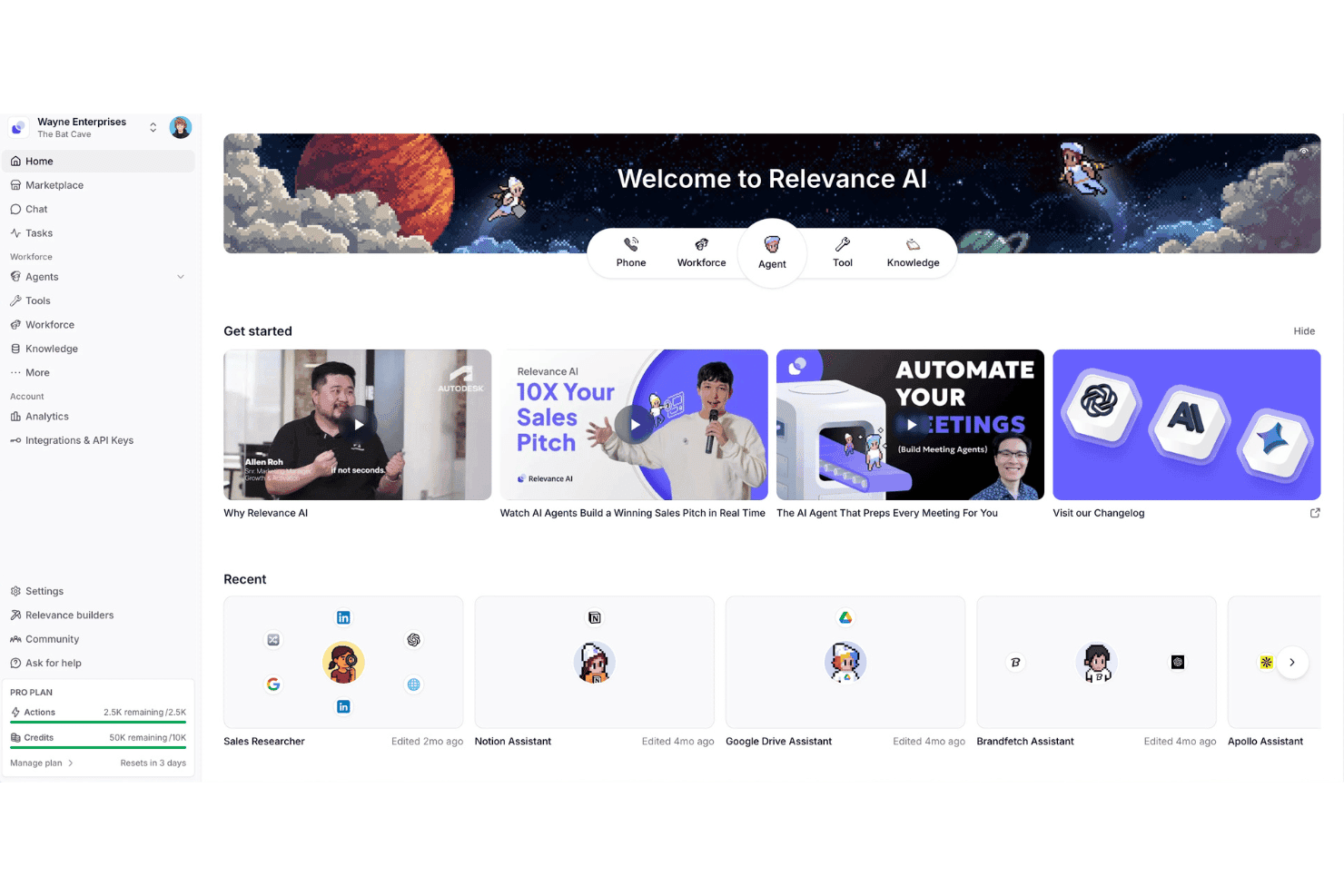
Relevance AI offre una dashboard principale con agenti AI, strumenti e funzioni di workforce per automatizzare compiti di vendita e gestione riunioni. Relevance AI è una piattaforma di agenti AI no-code che consente ai team di marketing di costruire, distribuire ed eseguire workforce multi-agente per la qualificazione dei lead, il nurturing del ciclo di vita, il riposizionamento dei contenuti e la reportistica delle campagne.
Per chi è più adatto Relevance AI?
È particolarmente indicato per team di marketing e go-to-market di livello medio-grande azienda che desiderano creare workflow personalizzati di agenti senza dipendere dalle risorse di ingegneria.
Perché ho scelto Relevance AI
Relevance AI si guadagna un posto nella mia shortlist per il modo in cui gestisce l'orchestrazione di agenti multipli per i team di marketing. Adoro il modello 'Workforce', che permette di costruire agenti specializzati (come un Qualificatore MQL e un Marketer per il ciclo di vita) che lavorano in tandem piuttosto che in isolamento. La funzione 'Invent' è particolarmente impressionante: descrivi semplicemente l'agente di cui hai bisogno in linguaggio naturale, e genera per te prompt, strumenti e logica di valutazione, rendendo tutto davvero accessibile anche senza supporto tecnico.
Funzionalità chiave di Relevance AI
- Agenti di marketing preconfigurati: Accesso a modelli per la qualificazione MQL, nurturing del ciclo di vita, riposizionamento dei contenuti e analisi delle campagne.
- Integrazioni native multicanale: Collegamento diretto con strumenti come email, CRM, social, e fogli di calcolo per un'esecuzione end-to-end.
- Valutazione delle prestazioni degli agenti: Usa valutazioni integrate, A/B testing e analytics per rivedere i risultati degli agenti e ottimizzare i workflow.
- Governance di livello enterprise: Ottieni conformità SOC 2 Type II, log di audit, mascheramento PII, approvazioni human-in-the-loop e monitoraggio dettagliato.
Integrazioni di Relevance AI
Relevance AI offre integrazioni native con HubSpot, Salesforce, Google Sheets, Slack, LinkedIn, ZoomInfo e Gmail. Si collega anche con Zapier e offre una API per integrazioni personalizzate.
Pros and Cons
Pros:
- Costruzione di agenti no-code per marketer non tecnici
- Workforce multi-agente che esegue i compiti in parallelo
- Controlli di approvazione human-in-the-loop integrati
Cons:
- La logica degli agenti può avere problemi con workflow complessi
- Tempo di configurazione più lungo rispetto alle piattaforme mono-agente
Learn more about Relevance AI: Ideale per l’ottimizzazione autonoma dei media a pagamento
- Non disponibile
- Prezzo su richiesta
Visit WebsiteCustomer Rating:4/5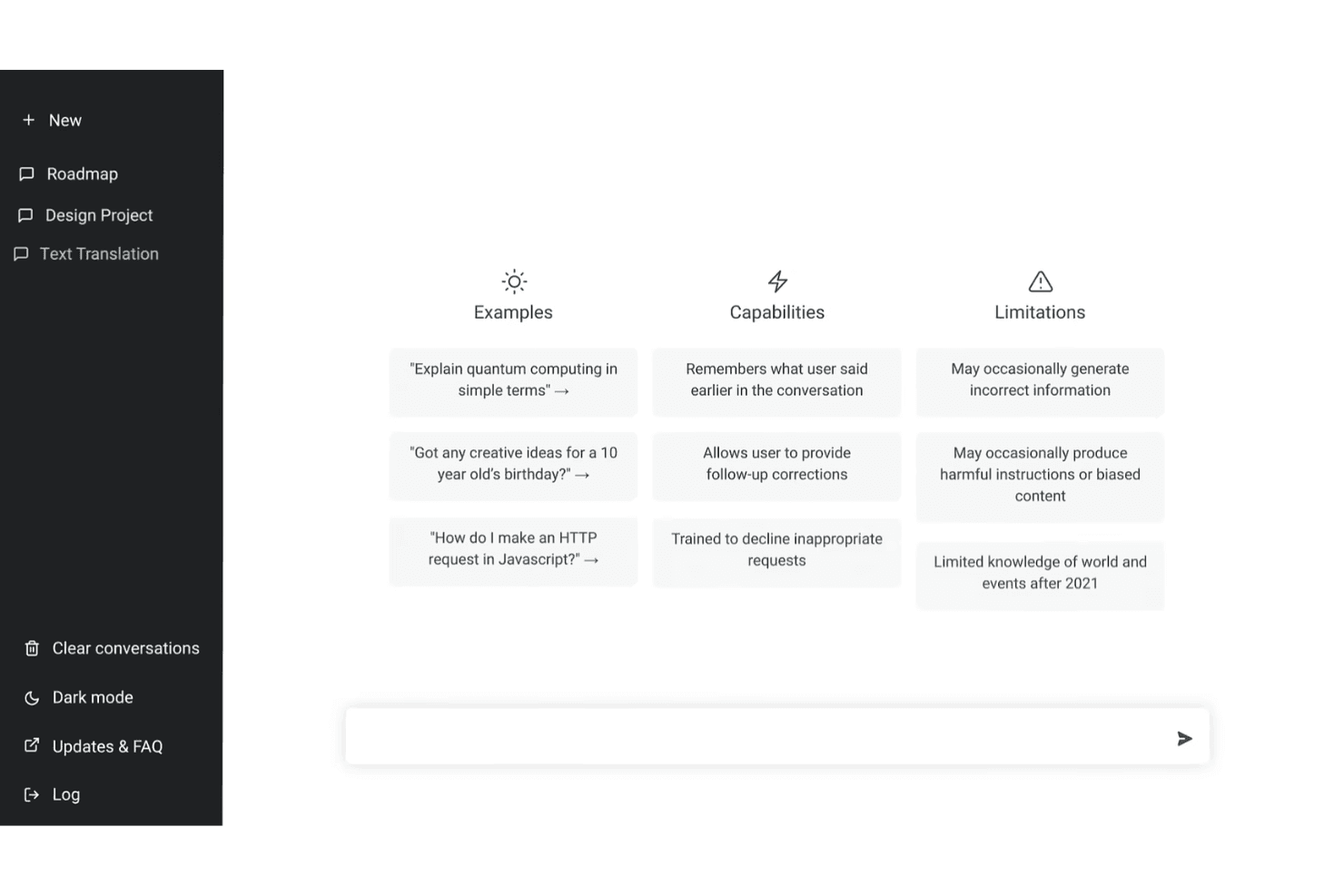
Albert.ai mostra un’interfaccia in stile ChatGPT con sezioni Esempi, Funzionalità e Limitazioni accanto a una barra laterale della conversazione. Albert.ai è un agente di marketing autonomo basato su intelligenza artificiale che gestisce e ottimizza in modo indipendente le campagne di media a pagamento su canali search, social e programmatici, occupandosi in tempo reale di offerte, allocazione del budget, targeting del pubblico e test creativi.
Per chi è ideale Albert.ai?
Albert.ai è adatto a grandi marchi B2C aziendali e agenzie che gestiscono ampi budget di media a pagamento e desiderano affidare l'esecuzione tattica delle campagne a un'IA.
Perché ho scelto Albert.ai
Albert.ai si guadagna un posto tra i migliori della mia lista perché è una delle poche piattaforme che realmente prende decisioni in modo autonomo sulle campagne, e non si limita a segnalare opportunità su cui l’umano deve agire. Apprezzo molto il modo in cui esegue regolazioni delle offerte in tempo reale su Google Ads, Meta e network programmatici simultaneamente, riallocando il budget verso i pubblici più performanti senza attendere un ciclo di revisione settimanale. Il suo motore di test creativo multivariato ruota le risorse pubblicitarie esistenti e identifica le combinazioni vincenti a una velocità irraggiungibile da un team umano.
Caratteristiche principali di Albert.ai
- Scoperta di pubblico cross-channel: individua e raggiunge pubblici di alto valore su diversi network di media a pagamento utilizzando segnali in tempo reale.
- Gestione delle campagne guidata dagli obiettivi: consente di inserire specifici KPI affinché la piattaforma possa adattare automaticamente strategie e spesa in base agli obiettivi.
- Reportistica continua delle prestazioni: fornisce dashboard dei dati con metriche di campagna e pubblico in tempo reale su ogni canale collegato.
- Modellazione lookalike potenziata dall’IA: crea e adatta pubblici simili sulla base di dati di engagement e conversione in tempo reale per espandere la portata.
Integrazioni Albert.ai
Albert.ai offre integrazioni native con Google Ads, Bing, Facebook, Instagram, YouTube e Google Marketing Platform. È disponibile un’API per integrazioni personalizzate.
Pros and Cons
Pros:
- Applica modifiche a offerte e budget completamente senza input umano
- Esegue test creativi multivariati su diversi canali contemporaneamente
- Gestisce un elevato volume di campagne senza incremento di personale
Cons:
- Richiede una grande libreria di asset creativi esistenti per funzionare al meglio
- Non è compatibile con i canali LinkedIn e Amazon Ads
Learn more about Albert.ai:
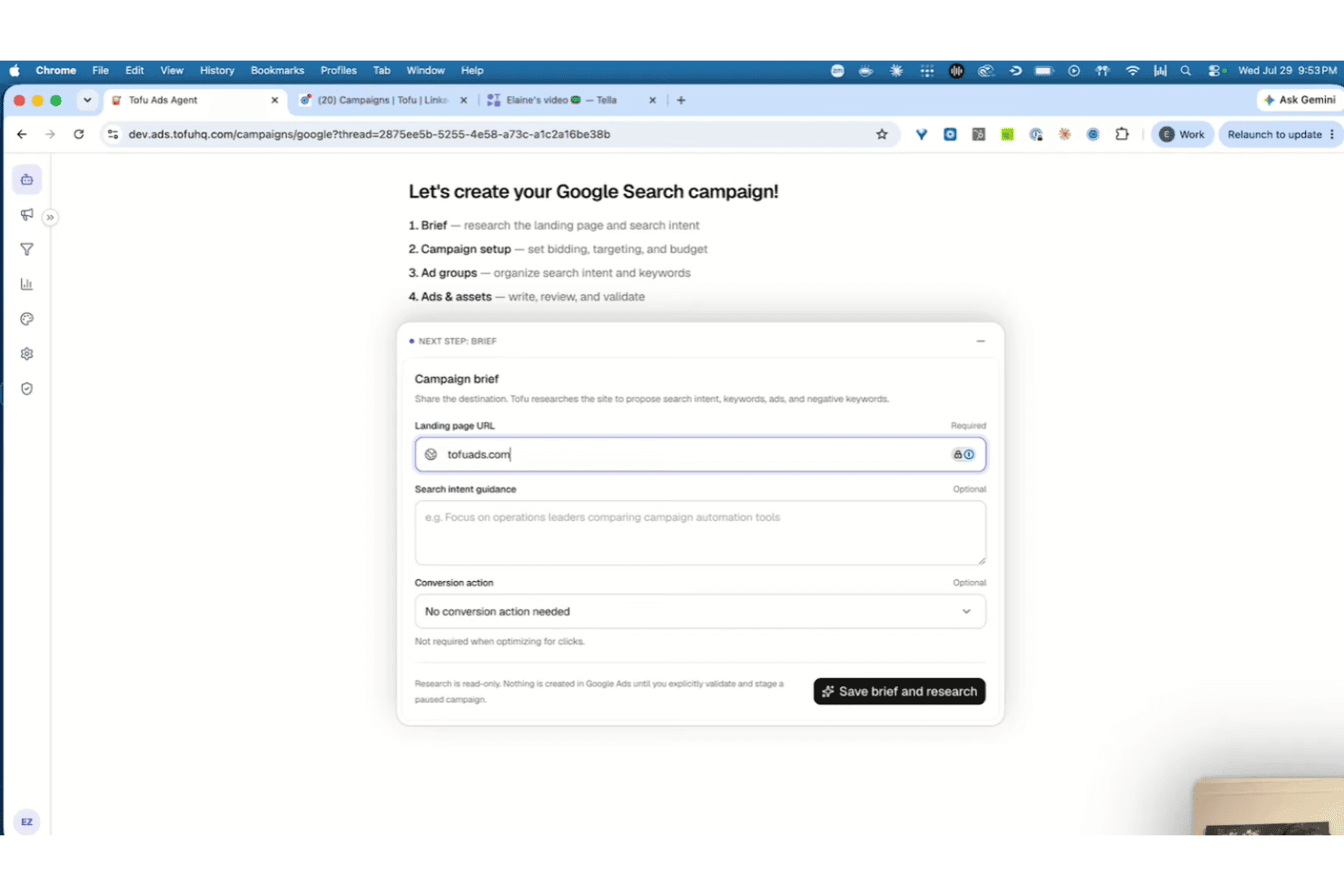
L'Ads Agent di Tofu guida l'utente nella creazione di una campagna Google Search inserendo l'URL della landing page e l'intento di ricerca. Tofu è una piattaforma di demand generation B2B nativa IA che utilizza tre agenti AI connessi per ricercare account, generare contenuti di campagna personalizzati e attivarli su email, landing page e annunci all'interno dei tuoi strumenti CRM e di marketing esistenti.
Per Chi È Più Adatto Tofu?
Tofu è particolarmente adatto a team di marketing B2B di medie e grandi aziende che gestiscono programmi ABM strutturati su più settori verticali o segmenti target.
Perché Ho Scelto Tofu
Ho scelto Tofu tra i migliori perché il suo Agente di Ricerca attinge da oltre 75 fonti di dati, incluse note sulle fasi delle trattative, motivi di chiusura negativa e tecnografie, per costruire il contesto dell'account prima ancora che venga creato un singolo asset. Questa intelligenza sull'account alimenta direttamente l'Agente di Creazione, che genera landing page e sequenze email personalizzate in base alla specifica fase di acquisto di ciascun account. In pratica, questo significa che posso attivare una campagna ABM completa, dalla ricerca al lancio, senza dover fare briefing manuali su ogni asset.
Funzionalità Principali di Tofu
- Ingestione automatica degli asset di brand: Tofu importa e aggiorna automaticamente le linee guida del tuo brand, il messaging e i dati sulle personas per assicurare la coerenza dei contenuti di campagna.
- Distribuzione multicanale delle campagne: Invia campagne tramite email, landing page, annunci e LinkedIn da un'unica piattaforma centralizzata.
- Workflow di approvazione e collaborazione: Strumenti integrati permettono ai membri del team di revisionare, modificare e approvare i materiali di campagna prima del lancio.
- Integrazione personalizzata Salesforce e HubSpot: Sincronizza direttamente con il tuo CRM per mostrare note sulle opportunità in tempo reale e collegare le azioni di campagna ai dati dell'account.
Integrazioni di Tofu
Tofu offre integrazioni native con Salesforce, HubSpot, Marketo e Outreach. È disponibile un'API per integrazioni personalizzate.
Pros and Cons
Pros:
- Personalizzazione avanzata a livello di account su tutti gli asset di campagna
- L'Agente di Ricerca attinge da oltre 75 fonti di dati
- Attivazione completa di campagne ABM da un'unica piattaforma
Cons:
- Limitato esclusivamente a casi d'uso B2B
- La configurazione richiede dati CRM di alta qualità
Learn more about Tofu: Ideale per la scoperta predittiva dell'audience
- Dimostrazione gratuita disponibile
- Da $1.250/mese (fatturato annualmente)
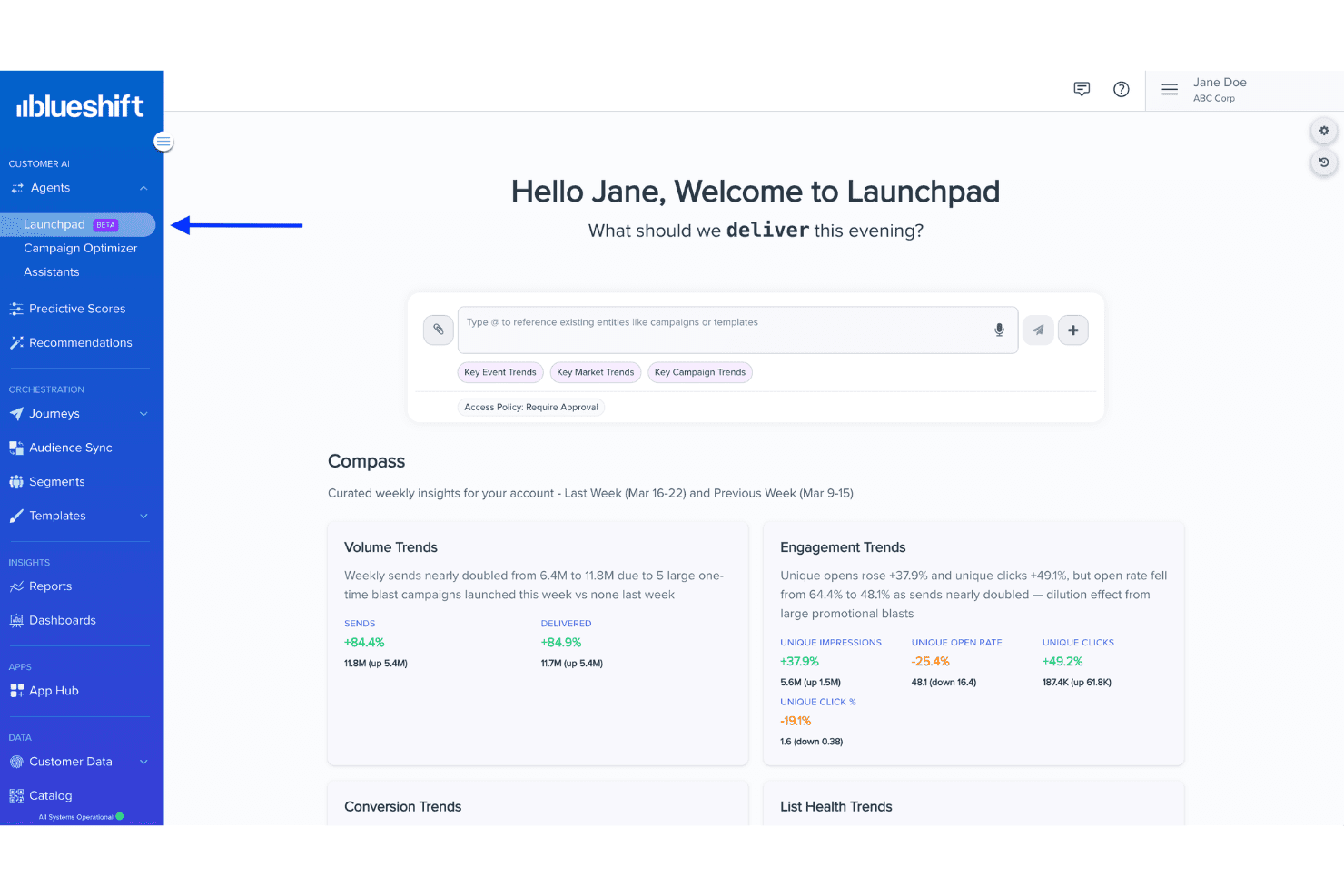
Blueshift offre una dashboard Launchpad potenziata dall'IA con insight settimanali di Compass su volumi, coinvolgimento e tendenze delle campagne. Blueshift è una piattaforma di coinvolgimento dei clienti alimentata dall'IA che combina un CDP nativo con IA agentica per eseguire segmentazioni predittive, orchestrazione di campagne cross-canale e personalizzazione 1:1 su email, SMS, push, in-app e web.
Per chi è ideale Blueshift?
Blueshift è particolarmente indicato per marchi B2C di medie e grandi dimensioni con esigenze complesse di gestione dei dati dei clienti e team di marketing dedicati.
Perché ho scelto Blueshift
Ho incluso Blueshift tra le mie scelte principali perché il suo super agente Compass analizza costantemente i profili unificati dei clienti per individuare nuove opportunità di audience prima ancora che tu possa cercarle. Associa a ogni idea individuata previsioni di risultato, così non devi affidarti a supposizioni sull'impatto. Abbinata alla modellazione proprietaria dell'intento, che prevede il canale e il momento più adatto per ciascun individuo, la scoperta del pubblico diventa davvero predittiva e non semplicemente retrospettiva.
Funzionalità principali di Blueshift
- Costruttore di campagne omnicanale: Avvia e automatizza flussi di lavoro su email, SMS, push, in-app e web da un'unica interfaccia.
- Designer di percorsi drag-and-drop: Mappa visivamente e modifica sequenze di coinvolgimento multi-step senza bisogno di codice.
- Integrazioni native con Shopify ed e-commerce: Collega direttamente i dati dello store per trigger in tempo reale e messaggi personalizzati.
- Motore avanzato di segmentazione: Crea segmenti di pubblico dinamici basati sul comportamento usando profili cliente unificati ed eventi in tempo reale.
Integrazioni di Blueshift
Blueshift offre oltre 100 integrazioni native, tra cui Salesforce, HubSpot, Shopify, Magento, BigCommerce, Marketo, Braze, Segment, Snowflake e S3. È disponibile un'API per integrazioni personalizzate.
Pros and Cons
Pros:
- IA brevettata prevede il momento migliore per l'engagement individuale
- CDP integrato elimina la necessità di una piattaforma separata
- Il super agente Compass individua autonomamente nuovi segmenti
Cons:
- La configurazione iniziale richiede molte risorse di data engineering
- Le dashboard di reportistica hanno opzioni di personalizzazione limitate
Learn more about Blueshift: Ideale per la produzione di contenuti governata dal brand
- Prova gratuita di 7 giorni disponibile
- Da $59/mese (fatturazione annuale)
Visit WebsiteCustomer Rating:4.7/5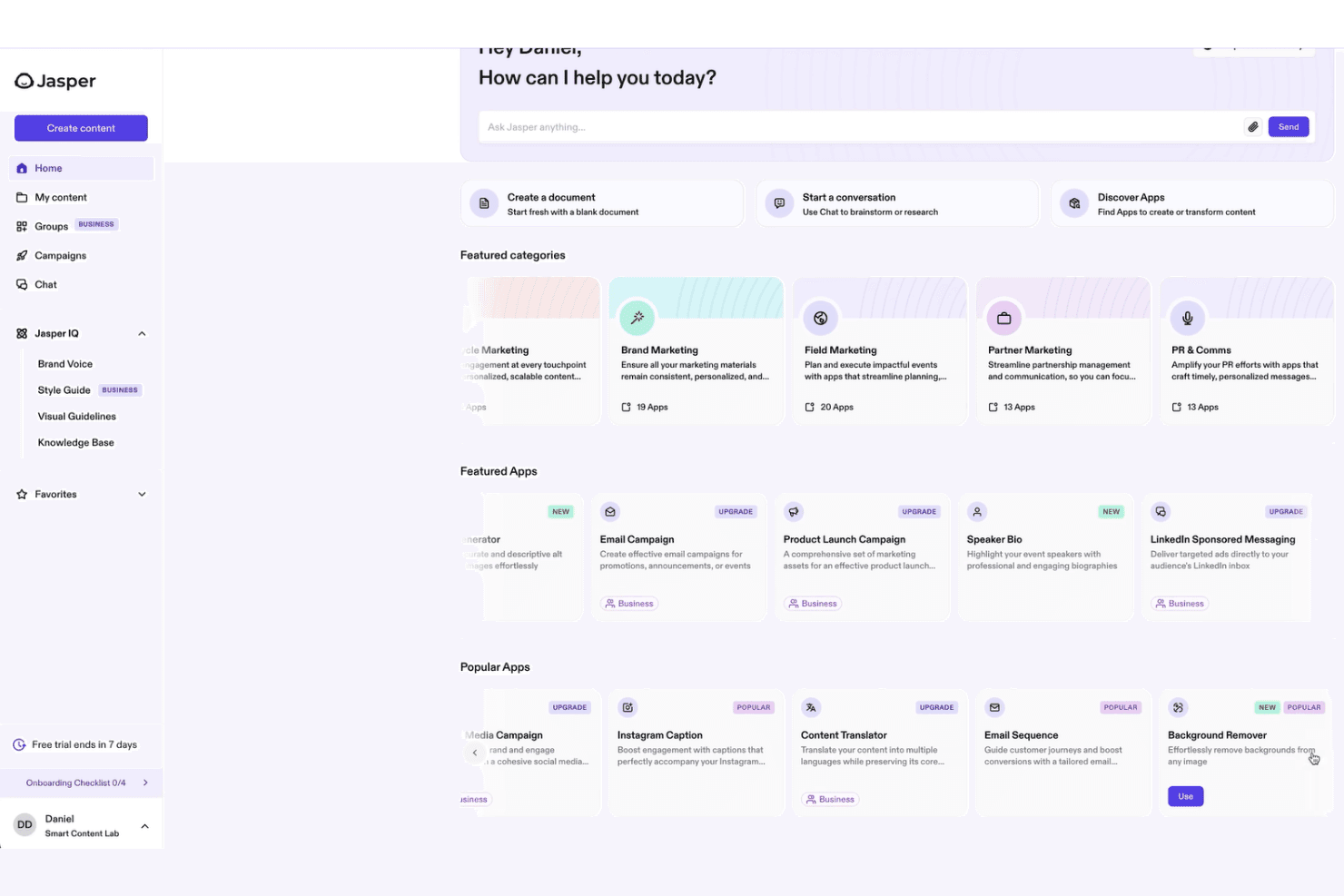
Jasper offre una dashboard principale con categorie di app in primo piano, strumenti di content AI e un’interfaccia conversazionale per i team marketing. Jasper è una piattaforma di marketing AI costruita attorno ad agenti autonomi, pipeline di contenuti e strumenti di governance del brand che eseguono flussi di lavoro multi-step per i contenuti su più canali—dalla creazione di campagne e ottimizzazione SEO fino alla personalizzazione per il pubblico e la traduzione.
Per chi è ideale Jasper?
Jasper è adatto a team marketing di medie e grandi dimensioni che producono volumi elevati di contenuti per più brand o campagne e che necessitano di controlli di governance per mantenere una coerenza costante con l’identità del brand.
Perché ho scelto Jasper
Jasper guadagna un posto nella mia shortlist grazie all’attenzione con cui gestisce la governance del brand su larga scala. Il layer Jasper IQ, che include Brand Voice, Style Guide e Visual Guidelines, funge da sistema di intelligenza condiviso per garantire che ogni contenuto rimanga fedele al marchio indipendentemente da chi lo produce nel team. Mi affido anche alle Content Pipelines per gestire le campagne dalla creazione, all’adattamento, fino all’attivazione, come un flusso di lavoro ripetibile e strutturato invece di un processo singolo ogni volta.
Caratteristiche principali di Jasper
- Editor collaborativo Canvas: Crea, modifica e ottimizza contenuti multiformato con il tuo team in tempo reale su uno spazio di lavoro condiviso.
- Generazione di contenuti in bulk tramite Grid: Produci grandi volumi di asset di marketing, come descrizioni di prodotto o testi per landing page, tramite un’interfaccia simile a un foglio di calcolo.
- Ottimizzazione tramite agenti AI: Utilizza agenti AI per migliorare automaticamente SEO, traduzione e personalizzazione dei contenuti all’interno di flussi di lavoro definiti.
- Supporto per API ed estensione browser: Accedi alle funzionalità di Jasper tramite programmazione o all’interno di app di terze parti usando un’estensione browser per una maggiore flessibilità nel flusso di lavoro.
Integrazioni Jasper
Jasper offre integrazioni native con Salesforce, HubSpot, Google Workspace, Microsoft Teams, WordPress, Sitecore, Slack, Webflow, Salesforce Marketing Cloud e SEMrush. Un’API è disponibile per integrazioni personalizzate.
Pros and Cons
Pros:
- Brand Voice garantisce coerenza all’output conforme al brand
- Le Content Pipelines automatizzano i flussi di lavoro multistep delle campagne
- Jasper IQ mantiene il contesto del brand su tutti gli asset
Cons:
- Esecuzione autonoma limitata oltre la creazione di contenuti
- Gestione debole dei canali pubblicitari nativi
Learn more about Jasper: Ideale per messaggistica adattiva cross-canale
- Demo gratuita disponibile
- Prezzo su richiesta
Visit WebsiteCustomer Rating:4.4/5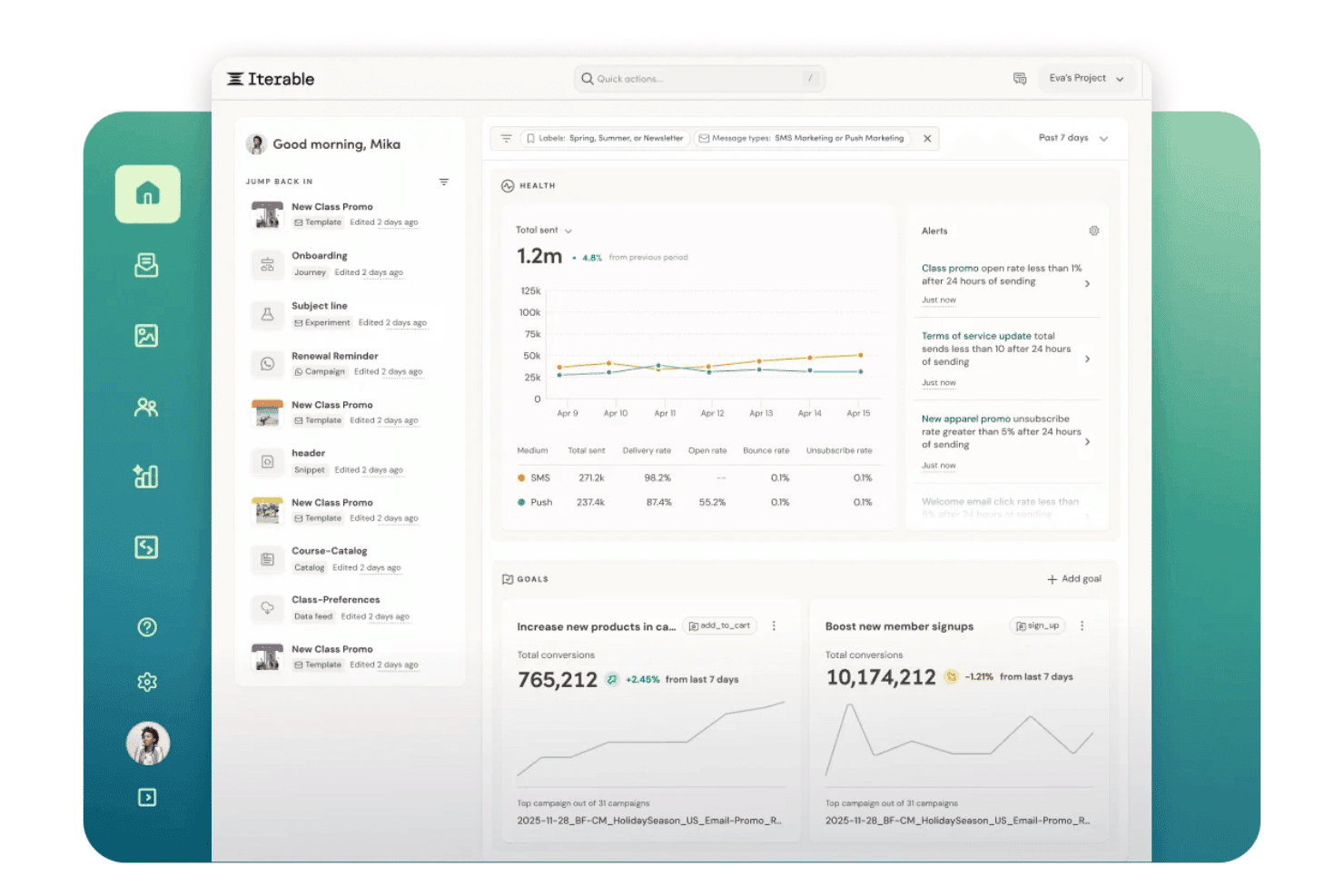
Iterable Nova Agent mostra una dashboard di marketing con metriche di salute, avvisi e obiettivi di conversione per campagne SMS e push. Iterable Nova Agent è un agente di marketing AI integrato nella piattaforma di coinvolgimento cross-canale di Iterable che costruisce autonomamente percorsi, genera testi per le campagne, esegue esperimenti e personalizza i messaggi su email, SMS, push, in-app e altro ancora.
Per chi è ideale Iterable Nova Agent?
Iterable Nova Agent è particolarmente indicato per i team di marketing B2C di livello medio-grande o enterprise che gestiscono programmi lifecycle ad alto volume su più canali di proprietà.
Perché ho scelto Iterable Nova Agent
Ho scelto Iterable Nova Agent tra i migliori perché la sua funzione di Canal Decisioning seleziona automaticamente il canale giusto e la frequenza di invio per ogni singolo utente in tempo reale. Questo lo rende davvero adattivo su email, SMS, push, in-app e WhatsApp. Apprezzo anche Decision Memory, che trasforma l'intento di marketing dichiarato in un sistema di apprendimento ripetibile che migliora a ogni ciclo di campagna.
Funzionalità chiave di Iterable Nova Agent
- Pubblici predittivi: Identifica i rischi di abbandono e le opportunità ad alto valore utilizzando modelli di machine learning basati sui dati comportamentali degli utenti.
- Spiegabilità Glassbox: Rende ogni risultato guidato dall'AI trasparente e tracciabile per il controllo marketing e compliance.
- Attivazione utenti sconosciuti: Rileva e coinvolge i visitatori anonimi del sito prima della conversione, ampliando la crescita del pubblico di prima parte.
- Assistente segmentazione: Usa l'AI per trasformare richieste in linguaggio naturale in segmenti di pubblico mirati per le campagne.
Integrazioni di Iterable Nova Agent
Iterable Nova Agent offre integrazioni native con Salesforce, HubSpot, Microsoft Dynamics 365, Segment, Snowflake, Google Ads, Facebook Ads, Braze, Amplitude e Power BI. È disponibile un'API per integrazioni personalizzate.
Pros and Cons
Pros:
- Il decisioning dei canali adatta i messaggi per ogni singolo utente
- Decision Memory migliora le campagne nel tempo
- La spiegabilità Glassbox rende chiaro il ragionamento dell'AI
Cons:
- Complessità di configurazione per i team marketing non tecnici
- Autonomia agentica limitata al di fuori dell'ecosistema Iterable
Learn more about Iterable Nova Agent: Ideale per l'intelligenza di campagna basata sul CRM
- Demo gratuita disponibile
- A partire da $1.500/mese (fatturazione annuale)
Visit WebsiteCustomer Rating:4/5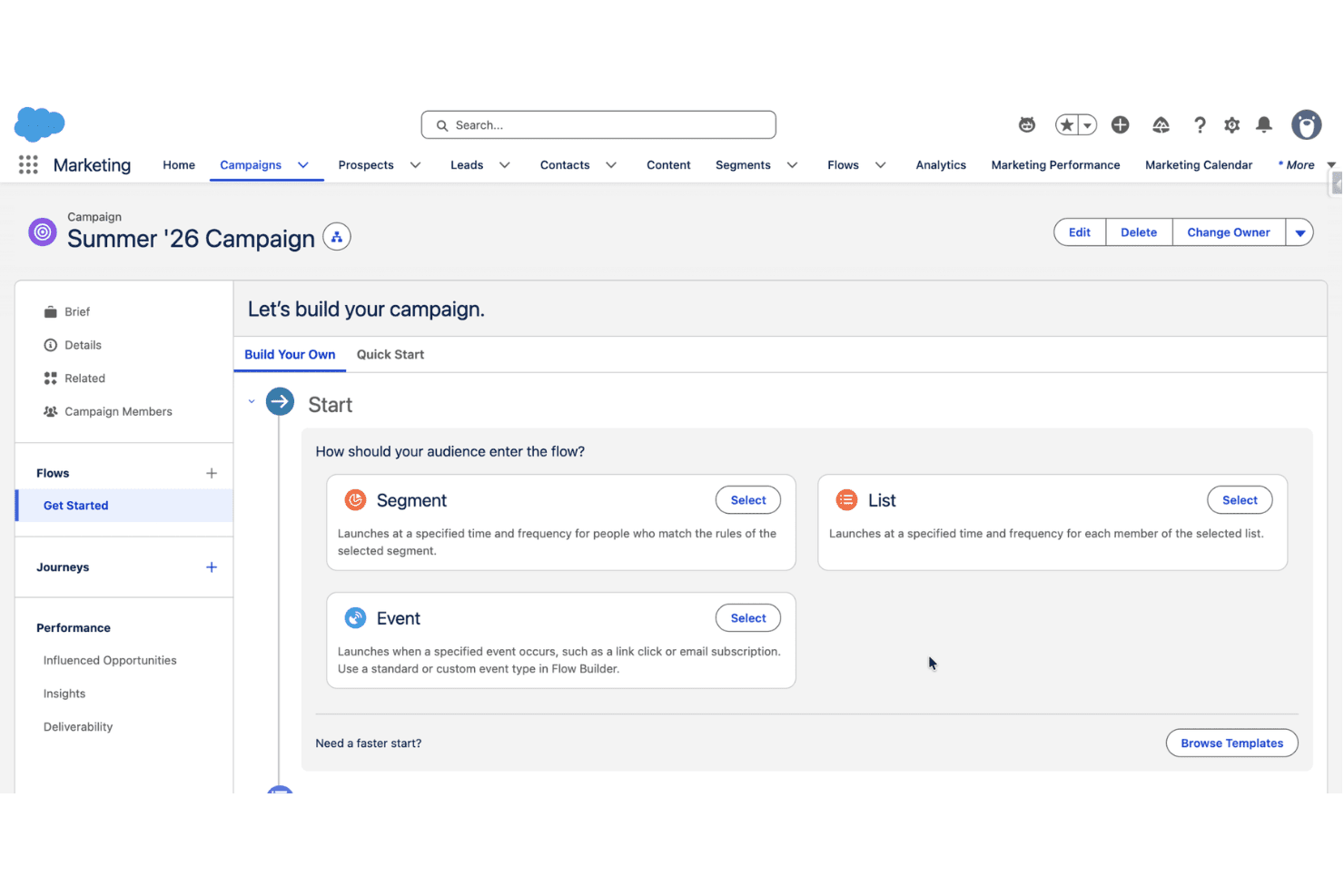
Agentforce Marketing consente agli utenti di costruire campagne scegliendo come il proprio pubblico entra in un flusso tramite trigger Segmento, Lista o Evento. Agentforce Marketing è la piattaforma di marketing agentico di Salesforce che utilizza agenti AI autonomi per pianificare, costruire, lanciare e ottimizzare campagne su email, SMS, media a pagamento e web—il tutto basato su dati CRM e dati cliente unificati.
Per chi è ideale Agentforce Marketing?
È particolarmente adatta a team di marketing di medie e grandi aziende che già utilizzano Salesforce e desiderano estendere i dati CRM all'esecuzione autonoma delle campagne.
Perché ho scelto Agentforce Marketing
Agentforce Marketing si guadagna un posto nella mia selezione perché nessun altro agente AI per il marketing si basa su una tale profondità di dati CRM e cliente. Quando inserisco un obiettivo di campagna, gli agenti attingono ai dati di Data 360 (CDP di Salesforce) per segmentare il pubblico, generare contenuti e lanciare la campagna su più canali senza che io debba definire ogni singolo passaggio. Il livello di Marketing Intelligence chiude il cerchio, riportando l'attribuzione dei media a pagamento e i riepiloghi AI delle campagne all'interno dello stesso ambiente in cui opera già l'agente.
Caratteristiche principali di Agentforce Marketing
- Dashboard Command Center: consente di monitorare la salute degli agenti, lo stato dei workflow e i KPI di marketing di tutte le campagne in tempo reale.
- Marketplace AgentExchange: collega i tuoi agenti di marketing a un ecosistema di workflow predefiniti, estensioni di partner e plugin specializzati per agenti.
- Automazione Journey Builder: orchestra customer journey multicanale e multi-step attivati da dati in tempo reale e segnali comportamentali.
- Messaggistica conversazionale bidirezionale: consente agli agenti AI di rispondere a clienti e prospect via SMS, WhatsApp ed email direttamente nelle tue campagne.
Integrazioni di Agentforce Marketing
Agentforce Marketing offre integrazioni nativamente con Salesforce Sales Cloud, Service Cloud, Slack, MuleSoft, Google Ads, Meta (Facebook), WhatsApp e Data Cloud, e dispone di un'API per integrazioni personalizzate.
Pros and Cons
Pros:
- Dati CRM approfonditi consentono campagne altamente personalizzate
- Gli agenti eseguono autonomamente flussi di lavoro di campagne multicanale
- L'attribuzione a ciclo chiuso collega le entrate alle campagne
Cons:
- Richiede un'infrastruttura Salesforce esistente per funzionare
- Il costo iniziale elevato limita l'accesso ai team più piccoli
Learn more about Agentforce Marketing: Ideale per eseguire campagne nativamente su HubSpot
- Piano gratuito disponibile
- Prezzo su richiesta
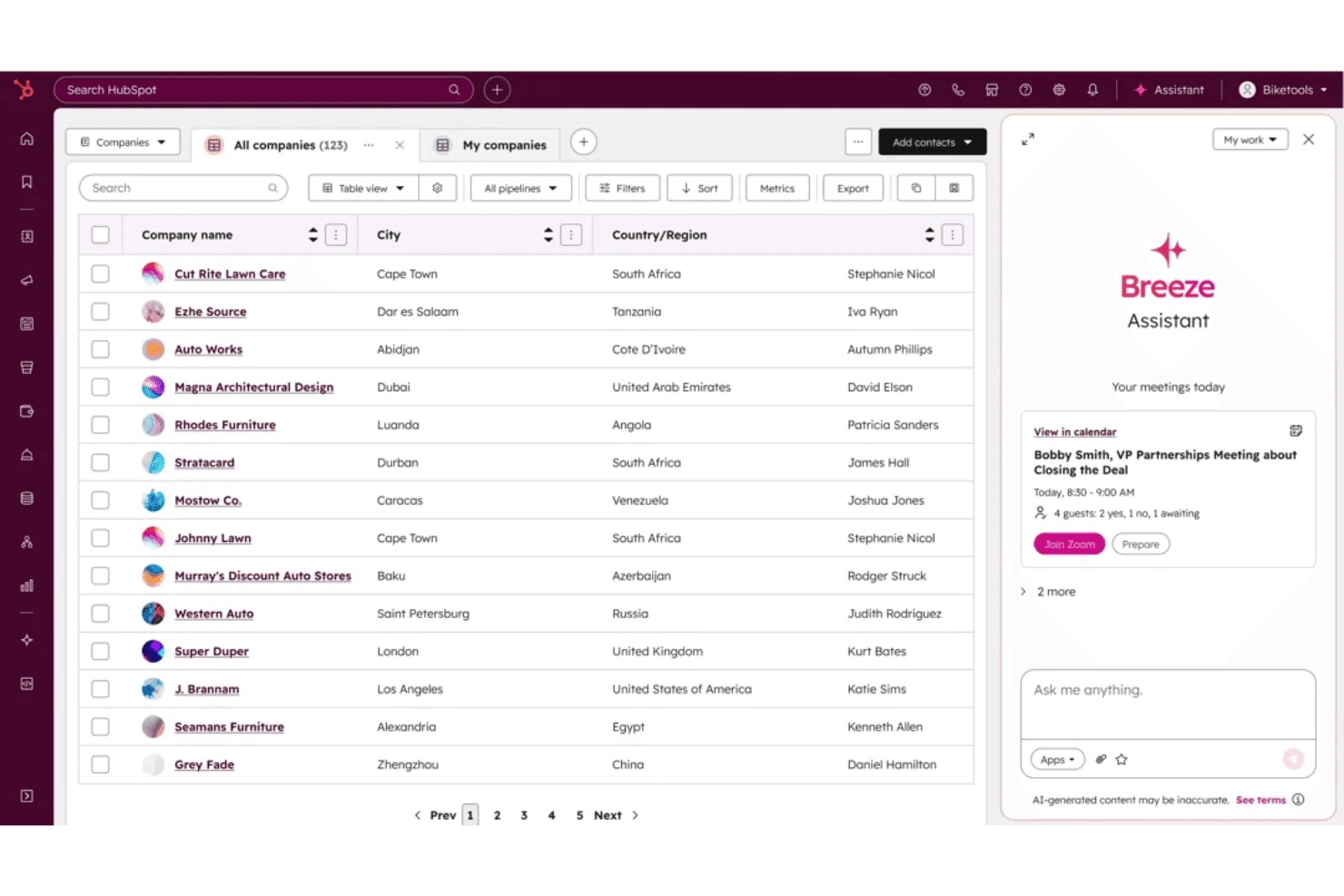
HubSpot Breeze offre un pannello di assistente AI che mostra le riunioni di oggi e consente agli utenti di porre domande direttamente nella vista Companies del CRM. HubSpot Breeze è uno strato di intelligenza artificiale integrato nella HubSpot Customer Platform che combina un assistente conversazionale, agenti specializzati per marketing e vendite, e arricchimento dati nativo al CRM per automatizzare la creazione di contenuti, attività di outreach e i flussi di lavoro delle campagne.
Per chi è ideale HubSpot Breeze?
Si adatta perfettamente a team di marketing di medie e grandi aziende che già gestiscono le proprie operazioni GTM sulla piattaforma CRM di HubSpot.
Perché ho scelto HubSpot Breeze
HubSpot Breeze merita un posto nella mia shortlist perché il Content Agent e il Social Media Agent generano blog, landing page e post social direttamente all’interno di Marketing Hub, utilizzando i dati in tempo reale del CRM per affinare il tono di voce del brand e il targeting. Con Content Remix posso trasformare una singola risorsa in email, annunci e testi social in un solo passaggio. Breeze Intelligence poi arricchisce automaticamente i contatti con oltre 200 milioni di profili aziendali, integrando la personalizzazione direttamente nello stesso flusso di lavoro delle campagne.
Funzionalità principali di HubSpot Breeze
- Barra laterale chat Breeze Assistant: Assistente AI basato sulla chat, incorporato in tutto HubSpot per rapidi quesiti sulle campagne, generazione di idee e sintesi dei record CRM.
- Agent Hub con builder di agenti personalizzati: Ti permette di creare e configurare agenti per marketing, vendite e customer service per flussi di lavoro personalizzati.
- Breeze Intelligence per arricchimento dati: Arricchisce automaticamente i contatti con dati aziendali e dei buyer in tempo reale, prelevati da oltre 200 milioni di profili.
- Segmentazione e personalizzazione alimentate dall’AI: Costruisce segmenti di pubblico dinamici e fornisce contenuti personalizzati usando attributi CRM e trigger comportamentali.
Integrazioni di HubSpot Breeze
HubSpot Breeze offre integrazioni native su tutto l’ecosistema HubSpot, inclusi Marketing Hub, CRM, CMS Hub, Sales Hub e Service Hub. Sono disponibili oltre 1.700 integrazioni aggiuntive tramite marketplace ed è fornita un’API per flussi di lavoro personalizzati.
Pros and Cons
Pros:
- AI nativa nel CRM elimina il passaggio di dati tra strumenti
- Content Agent genera risorse multi-formato rapidamente
- Breeze Intelligence arricchisce automaticamente i contatti
Cons:
- Gli agenti funzionano solo all’interno della piattaforma HubSpot
- La qualità della generazione dei contenuti varia a seconda del tipo di risorsa
Learn more about HubSpot Breeze: Ideale per la personalizzazione delle campagne e-commerce
- Piano gratuito disponibile
- A partire da $14/mese
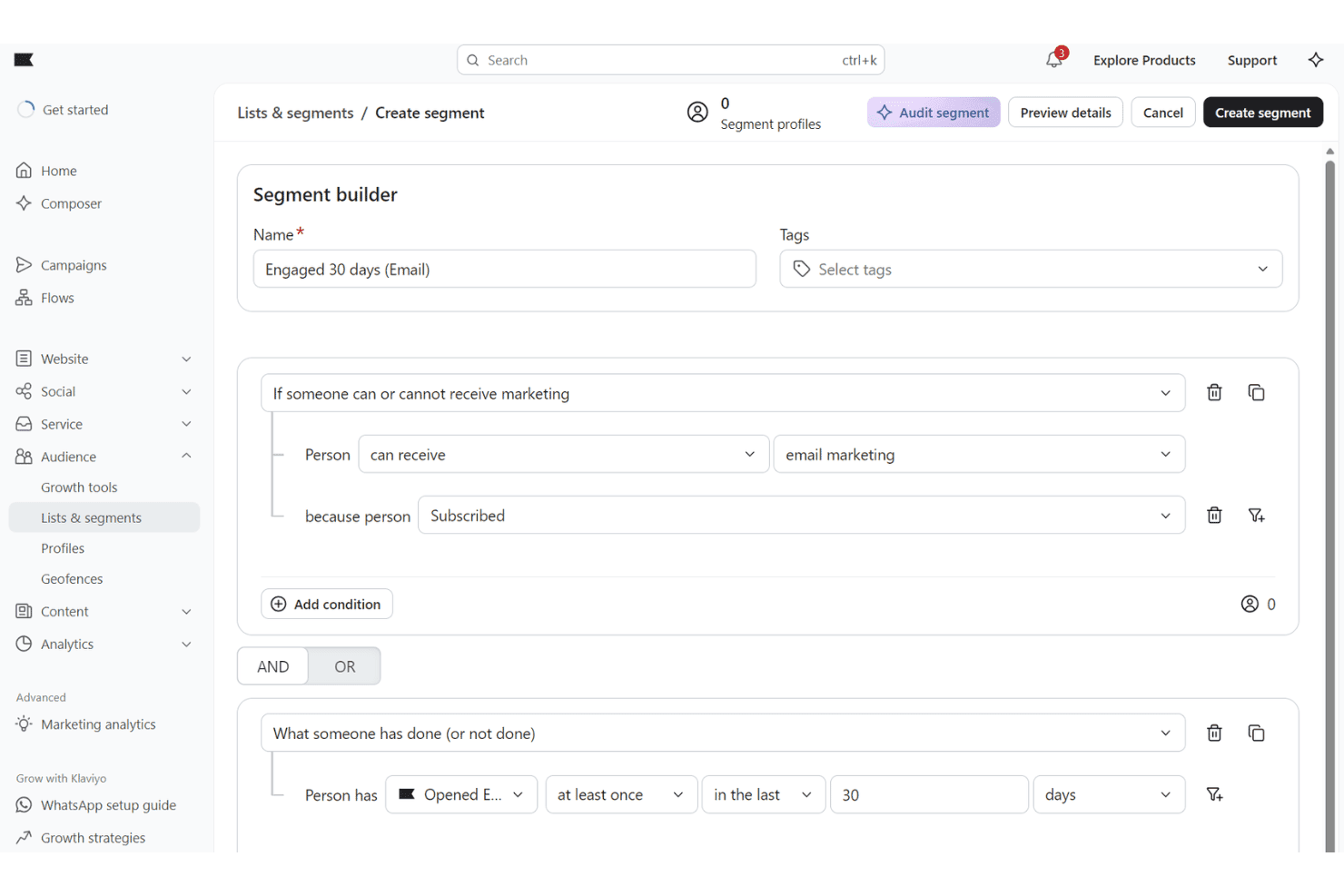
Il generatore di segmenti di Klaviyo consente agli utenti di creare segmenti email mirati in base allo stato dell'abbonamento e all'attività di coinvolgimento. Composer di Klaviyo è un agente di marketing basato sull'intelligenza artificiale che analizza i dati dei tuoi clienti, individua opportunità per le campagne, crea segmenti di pubblico e genera contenuti per campagne email e SMS multicanale direttamente nel tuo account Klaviyo.
Per chi è più adatto Composer di Klaviyo?
Composer è una scelta naturale per i team di marketing e-commerce e DTC che utilizzano già Klaviyo e vogliono passare più velocemente dall'idea della campagna alla sua esecuzione.
Perché ho scelto Composer di Klaviyo
Composer di Klaviyo si è guadagnato un posto nella mia selezione perché nessun altro agente di marketing basato sull'intelligenza artificiale personalizza le campagne a partire da una base di dati e-commerce altrettanto ricca. Inserisco un brief della campagna in linguaggio naturale, ad esempio per riattivare gli acquirenti inattivi da 90 giorni, e Composer crea il pubblico a partire dai profili cliente aggiornati, prepara il testo per email e SMS nello stile del mio marchio e lo predispone per la revisione. Mi piace anche il fatto che i segnali provenienti dalle conversazioni con Customer Agent confluiscano direttamente nel modo in cui Composer segmenta la campagna successiva.
Funzionalità principali di Composer di Klaviyo
- Creazione di campagne multicanale: Crea contemporaneamente campagne per email e SMS a partire da un'unica richiesta.
- Approvazione con supervisione umana: Tutte le campagne vengono predisposte per la revisione prima di essere inviate al tuo pubblico.
- Creazione dinamica del pubblico: Genera automaticamente segmenti di pubblico mirati utilizzando i profili dei tuoi clienti e i dati sugli acquisti.
- Avvisi sulle prestazioni comportamentali: Ricevi notifiche quando ti avvicini ai limiti di utilizzo dei crediti di Composer, per evitare interruzioni impreviste.
Integrazioni di Composer di Klaviyo
Composer di Klaviyo si integra nativamente con Shopify, BigCommerce, WooCommerce e Magento e si connette ad altri strumenti tramite il più ampio ecosistema Klaviyo. È disponibile un'API per le integrazioni personalizzate.
Pros and Cons
Pros:
- Personalizzazione avanzata basata sui dati e-commerce proprietari
- Crea pubblico e testi a partire da un'unica richiesta
- I segnali di Customer Agent confluiscono nel targeting delle campagne
Cons:
- Utilizzabile solo all'interno della piattaforma Klaviyo
- I crediti di Composer limitano il volume mensile delle campagne
Learn more about Composer by Klaviyo:
Altri agenti di marketing basati sull'intelligenza artificiale
\u003cspan data-slate-fragment=\u0022JTVCJTdCJTIyY2hpbGRyZW4lMjIlM0ElNUIlN0IlMjJ0ZXh0JTIyJTNBJTIySGVyZSUyMGFyZSUyMHNvbWUlMjBhZGRpdGlvbmFsJTIwQUklMjBtYXJrZXRpbmclMjBhZ2VudCUyMG9wdGlvbnMlMjB0aGF0JTIwZGlkbiVFMiU4MCU5OXQlMjBtYWtlJTIwaXQlMjBvbnRvJTIwbXklMjBzaG9ydGxpc3QlMkMlMjBidXQlMjBhcmUlMjBzdGlsbCUyMHdvcnRoJTIwY2hlY2tpbmclMjBvdXQlM0ElMjIlN0QlNUQlMkMlMjJ0eXBlJTIyJTNBJTIycCUyMiUyQyUyMmlkJTIyJTNBJTIyb2ItbWVwMDhzSyUyMiU3RCU1RA==\u0022\u003eEcco alcune opzioni aggiuntive di agenti di marketing basati sull’intelligenza artificiale che non sono entrate nella mia selezione, ma che vale comunque la pena esaminare:\u003c/span\u003e
- 11Adobe Experience Platform Agent OrchestratorIdeale per l'orchestrazione aziendale cross-platform
- 12Optimizely Agent PlatformIdeale per l'ottimizzazione autonoma degli esperimenti
- 13OptimoveIdeale per la decisione del cliente guidata dall'IA
- 14GumloopIdeale per l'automazione dei flussi di lavoro di marketing visivo
- 15CrewAIIdeale per lo sviluppo multi-agente basato su codice
- 16LyzrIdeale per il deployment privato e controllato degli agenti
Come Valuto gli Agenti di Marketing AI
Gli strumenti che si limitano a inserire un chatbot intorno a un brief di campagna non sono stati inclusi nella mia lista. Ho invece considerato le piattaforme che possono gestire in modo autonomo i flussi di lavoro, come il lancio di test A/B e la ricostruzione dei segmenti di pubblico durante le campagne. Divido la mia valutazione in due aree. Prima valuto le funzionalità di base necessarie per qualificarsi. Poi considero i fattori che distinguono ciascuna piattaforma.
Funzionalità di Base (Requisiti Minimi per Questa Lista)
Quando seleziono gli strumenti per la mia lista, assegno a ciascuno un punteggio da 0 (non offre la funzionalità) a 5 (eccelle in questa area) per ogni funzionalità di base elencata sotto. Poi, calcolo il punteggio totale dello strumento in percentuale. Ogni strumento deve raggiungere un punteggio totale minimo del 65% per essere preso in considerazione per l'inclusione.
- Esecuzione Autonoma dei Task: Valuto se l'agente è in grado di concatenare autonomamente flussi di lavoro a più fasi, come creare una sequenza di email, programmare gli invii e mettere in pausa quelle meno performanti senza intervento manuale a ogni passaggio.
- Integrazione con i Canali di Marketing: Lo strumento dovrebbe connettersi nativamente ai canali principali come email, annunci, social, CRM e CMS, così che l'agente possa agire direttamente invece di esportare dati da utilizzare altrove.
- Generazione di Contenuti: Cerco la capacità di produrre testi pronti per il marketing su diversi tipi di risorse—titoli di annunci, oggetti email, blocchi di landing page—e non solo compilazione di testo generico.
- Ragionamento Basato sugli Obiettivi: Quando imposti un KPI come aumentare le richieste di demo del 20%, l'agente dovrebbe collegare tale obiettivo ad azioni specifiche e iniziare a eseguirle, anziché suggerire solo una checklist.
- Analisi delle Prestazioni e Ottimizzazione: Verifico se la piattaforma ingerisce dati delle campagne in tempo reale e adegua iterativamente variabili come importi delle offerte, orari di invio o varianti creative in base a ciò che funziona realmente.
- Targeting dell'Audience e Personalizzazione: Gli strumenti migliori vanno oltre segmenti statici basati su regole—cerco una segmentazione guidata dall'intelligenza artificiale che ricostruisca i gruppi dinamicamente man mano che cambiano i comportamenti e i segnali di intenzione degli utenti durante la campagna.
Una volta che ho una lista di strumenti che soddisfano i criteri, considero cosa rende ciascuna piattaforma unica.
Fattori Distintivi (Cosa Distingue i Fornitori)
Ecco come confronto i diversi fornitori:
Funzionalità Esclusive
L'apprendimento della voce del brand è un elemento che fa la differenza—cerco agenti che assimilano le linee guida stilistiche e i materiali passati, affinando così i risultati nel tempo anziché ripartire da zero con ogni nuovo brief. Sono importanti anche le analisi chiuse, perché le piattaforme più avanzate attribuiscono i ricavi alle singole campagne e spostano il budget verso ciò che converte di più. Valuto inoltre i controlli umani nel processo, come i gate di approvazione e i log di audit che consentono al tuo team di revisionare le decisioni dell'agente prima che nulla venga pubblicato.
Oltre le Funzionalità
La compatibilità con gli altri strumenti martech è uno dei primi aspetti che verifico. Le connessioni native con il tuo CRM, le piattaforme pubblicitarie e gli strumenti di analisi incidono sulla rapidità con cui l'agente genera valore. Valuto anche la privacy dei dati e i controlli di governance, poiché un agente autonomo che gestisce dati dei clienti deve avere paletti chiari su come tali dati addestrano i suoi modelli. Infine, esamino la struttura dei prezzi. Confronto modelli a postazione e a consumo per vedere come variano i costi al crescere del volume delle campagne.
Come scegliere il miglior agente di marketing basato sull'intelligenza artificiale
È facile perdersi in lunghi elenchi di funzionalità e strutture tariffarie complesse. Per aiutarti a rimanere concentrato mentre affronti il tuo processo unico di selezione del software, ecco una lista di fattori da tenere a mente:
| Fattore | Cosa considerare |
|---|---|
| FattoreScalabilità | Cosa considerareLo strumento sarà ancora adatto se aumentano il volume delle campagne, i canali o le dimensioni del team? Verifica se i prezzi o i flussi di lavoro diventano limitanti con un utilizzo più intenso. |
| FattoreIntegrazioni | Cosa considerareSi connette nativamente al tuo CRM principale, agli strumenti pubblicitari, di analisi e al CMS? Valuta la profondità delle API e se sarebbero necessarie procedure manuali o connettori aggiuntivi. |
| FattorePersonalizzazione | Cosa considerarePuoi adattare i flussi di lavoro, le linee guida del brand o i processi di approvazione alla tua attività? Evita le piattaforme che impongono un'automazione rigida e uguale per tutti. |
| FattoreFacilità d'uso | Cosa considerareIl tuo team avrà bisogno di una formazione approfondita o i professionisti del marketing potranno iniziare a usarlo fin dal primo giorno? Cerca interfacce chiare e controlli con supervisione umana per ridurre i tempi di avviamento. |
| FattoreImplementazione e avviamento | Cosa considerareCosa comporta la configurazione: sono disponibili opzioni autonome o hai bisogno di un partner del fornitore che configuri i flussi di dati, i canali o le autorizzazioni per tuo conto? |
| FattoreCosto | Cosa considerareIl prezzo è in linea con i tuoi modelli di campagna: per utente, per utilizzo o per output? Tieni conto dei costi nascosti per integrazioni, componenti aggiuntivi e necessità di scalabilità. |
| FattoreMisure di sicurezza | Cosa considerareOffre controlli chiari per l'accesso ai dati, i registri di audit e la revisione dei contenuti, così da soddisfare le esigenze di privacy e governance del tuo team? |
| FattoreRisorse interne necessarie | Cosa considerareChi si occuperà della progettazione dei flussi di lavoro, della supervisione degli agenti e della messa a punto delle campagne in corso? Verifica se sarà necessario dedicare una persona del team per ottenere valore dalla piattaforma. |
Che cos'è un agente di marketing basato sull'AI?
Gli agenti di marketing basati sull'AI sono strumenti autonomi che utilizzano l'intelligenza artificiale per pianificare, eseguire e ottimizzare le campagne di marketing su più canali con un intervento umano minimo. Questi agenti gestiscono attività come la creazione di contenuti, il targeting, l'orchestrazione delle campagne e l'analisi delle prestazioni. Sono progettati per aiutare i team di marketing ad automatizzare le attività ripetitive, personalizzare le comunicazioni su larga scala e adattare le strategie in tempo reale in base ai dati e agli obiettivi.
Caratteristiche principali degli agenti di marketing basati sull'AI
Quando selezioni un agente di marketing basato sull'AI, presta attenzione alle seguenti caratteristiche principali:
- Esecuzione autonoma dei flussi di lavoro: consente all'agente di pianificare, organizzare ed eseguire autonomamente attività di marketing complesse, come il lancio di campagne, senza istruzioni dettagliate passo dopo passo.
- Integrazione multicanale: si connette nativamente a strumenti per email, social media, piattaforme pubblicitarie, CRM e CMS, in modo che azioni e dati fluiscano direttamente tra i tuoi sistemi.
- Creazione di contenuti basata sull'AI: utilizza l'AI generativa per produrre testi di marketing, email, post sui social e annunci personalizzati, in linea con la voce del tuo brand e con gli obiettivi della campagna.
- Ottimizzazione delle campagne basata sugli obiettivi: accetta obiettivi o KPI definiti, quindi adatta automaticamente le attività di marketing per raggiungere i risultati desiderati, riallocando il budget o perfezionando i messaggi.
- Analisi delle prestazioni in tempo reale: monitora istantaneamente i risultati delle campagne, mettendo in evidenza gli insight e apportando modifiche basate sui dati durante lo svolgimento della campagna.
- Targeting predittivo del pubblico: segmenta il pubblico utilizzando dati comportamentali e relativi all'intento, quindi personalizza le comunicazioni in base ai cambiamenti in tempo reale nell'attività degli utenti.
- Flussi di approvazione e protezioni: consente ai team di configurare controlli con supervisione umana, in modo che le azioni principali richiedano una revisione e un'approvazione prima di essere attivate.
- Controlli per la privacy dei dati e la conformità: offre opzioni solide per controllare l'utilizzo dei dati, il consenso e la reportistica, aiutandoti a rispettare gli standard globali in materia di privacy.
- Libreria di modelli e procedure operative: fornisce strutture di campagna e prompt pronti all'uso che aiutano i team ad avviare rapidamente flussi di lavoro collaudati.
- Registri di audit e trasparenza: tiene traccia di ogni decisione o azione importante intrapresa dall'agente, consentendoti di esaminare, documentare e rispettare gli standard di responsabilità.
Vantaggi dell'utilizzo di un agente di marketing basato sull'AI
L'implementazione di un agente di marketing basato sull'AI offre numerosi vantaggi al tuo team e alla tua attività. Eccone alcuni:
- Esecuzione automatizzata delle campagne: libera il tuo team dalle attività ripetitive, consentendo all'agente di pianificare, lanciare e gestire le campagne con una supervisione minima.
- Decisioni basate sui dati: l'analisi in tempo reale e le ottimizzazioni adattive assicurano che le campagne migliorino continuamente sulla base delle prestazioni effettive, non di supposizioni.
- Personalizzazione scalabile: distribuisci facilmente messaggi personalizzati 1:1 su larga scala, poiché la segmentazione intelligente e la generazione di contenuti adattano le comunicazioni a ogni cliente.
- Voce del brand coerente: i modelli di IA apprendono le linee guida del tuo stile e i contenuti utilizzati in precedenza, creando contenuti coerenti con il brand su ogni canale e per ogni tipo di risorsa.
- Ingresso sul mercato più rapido: flussi di lavoro, modelli e manuali operativi predefiniti ti consentono di lanciare più rapidamente nuove campagne senza dover attendere lunghe configurazioni manuali.
- Maggiore conformità e controllo: i passaggi di approvazione con supervisione umana e i registri di controllo mantengono la governance, consentendoti di esaminare, approvare e creare report sulle azioni automatizzate.
- Integrazione perfetta con gli strumenti esistenti: le connessioni native alle piattaforme principali mantengono unificato il tuo ecosistema di marketing, consentendo a dati e azioni di fluire agevolmente tra i sistemi.
Costi e prezzi degli agenti di marketing basati sull'IA
La scelta di un agente di marketing basato sull'IA richiede la comprensione dei vari modelli di prezzo e dei piani disponibili. I costi variano in base alle funzionalità, alle dimensioni del team, ai componenti aggiuntivi e ad altri fattori. La tabella seguente riassume i piani più comuni, i relativi prezzi medi e le funzionalità tipicamente incluse nelle soluzioni con agenti di marketing basati sull'IA:
Tabella comparativa dei piani per gli agenti di marketing basati sull'IA
| Tipo di piano | Prezzo medio | Funzionalità comuni |
|---|---|---|
| Tipo di pianoPiano gratuito | Prezzo medio$0 | Funzionalità comuniAutomazione di base dei flussi di lavoro, integrazioni limitate, volume di campagne ridotto e analisi minime. |
| Tipo di pianoPiano personale | Prezzo medio$15-$40/utente/mese | Funzionalità comuniConnessioni multicanale, creazione di contenuti di base con l'IA, semplice definizione del pubblico target e assistenza standard. |
| Tipo di pianoPiano aziendale | Prezzo medio$50-$120/utente/mese | Funzionalità comuniAutomazione avanzata, segmentazione dinamica, apprendimento della voce del brand, dashboard analitiche e assistenza prioritaria. |
| Tipo di pianoPiano aziendale avanzato | Prezzo medio$120-$300+/utente/mese | Funzionalità comuniIntegrazioni personalizzate, onboarding dedicato, controlli completi di conformità, campagne illimitate e registrazione degli audit. |
Domande frequenti sull'agente di marketing basato sull'IA
Ecco alcune risposte alle domande più comuni sugli agenti di marketing basati sull’IA:
In che modo un agente di marketing basato sull'IA migliora le prestazioni delle campagne?
Un agente di marketing basato sull’IA analizza continuamente i dati e i risultati delle campagne, apportando modifiche in tempo reale, come lo spostamento del budget, il perfezionamento dei messaggi o il targeting di nuovi segmenti, per massimizzare i risultati e raggiungere i tuoi obiettivi.
Posso controllare o verificare ciò che fa l'agente di IA prima che le campagne vengano pubblicate?
Sì, la maggior parte degli agenti di marketing basati sull’IA offre controlli con supervisione umana, che consentono di impostare flussi di approvazione, esaminare i contenuti generati e richiedere un’approvazione finale prima del lancio delle campagne o dell’applicazione di modifiche.
Gli agenti di marketing basati sull'IA sono adatti a piccoli team o startup?
Sì, questi strumenti possono aiutare i team più piccoli ad automatizzare le attività e a far crescere le campagne senza aumentare il personale, rendendo il marketing di livello professionale accessibile anche con risorse o tempo limitati.
Quali tipi di integrazione dovrei cercare?
Dovresti cercare connessioni dirette al tuo CRM, alle piattaforme pubblicitarie, agli strumenti di analisi e al CMS. In questo modo l’automazione delle campagne funziona dall’inizio alla fine e i dati rimangono coerenti in tutto il tuo ecosistema tecnologico.
In che modo gli agenti di marketing basati sull'IA gestiscono la privacy e la sicurezza dei dati?
La maggior parte dei fornitori include controlli sulla privacy dei dati, registri di audit e politiche di consenso chiare, aiutandoti a rispettare standard come il GDPR o il CCPA e a mantenere il controllo sul modo in cui i dati dei clienti vengono utilizzati e archiviati.