

Avis sur Sanity.io : avantages, inconvénients, fonctionnalités et détails des tarifs
Sanity.io isn’t your average CMS—it’s a customizable toolkit that lets me shape digital experiences exactly how I imagine them. Ready to see if it’s the right fit for you?

Nous évaluons les outils de manière indépendante, et les commissions aident à financer nos tests. Consultez notre politique de transparence, notre méthodologie ou suggérez un outil.
Sanity.io is a headless content management software for teams that need to model, structure, and deliver content across websites, apps, and other digital channels from a single source. I'd reach for it when your team has outgrown page-based tools like WordPress and wants full control over content schemas, real-time collaboration in the Studio editor, and API-first delivery. Compared to Contentful, I think Sanity gives you more flexibility because the Studio is open-source and fully customizable in React, so you can shape the editing experience to match how your marketers and developers actually work. As a headless CMS, the Sanity CMS model puts the schema rather than the page at the centre.
Sanity.io Evaluation Summary
4.7/5
- From $15/seat/month
- Free forever plan available
Pourquoi faire confiance à nos recommandations de logiciels
6,700+
Reviews
20
Industry experts
16+
Evaluation factors
14
Years
Notre équipe teste et évalue des logiciels depuis 2012. En tant que leaders marketing nous-mêmes, nous savons à quel point il est difficile — et important — de choisir le bon logiciel.
Pour ce guide, nous avons évalué les outils grâce à des tests pratiques et une recherche indépendante, en notant les outils selon nos critères de sélection.
Nos avis reflètent notre jugement éditorial humain, et non un argumentaire de vente.
Réviseurs experts:
 Gui DrusinaDirecteur de la création
- Shriya GhateSenior Marketing Lead
 Amanda JacquesResponsable Marketing Ops

Sanity.io Overview
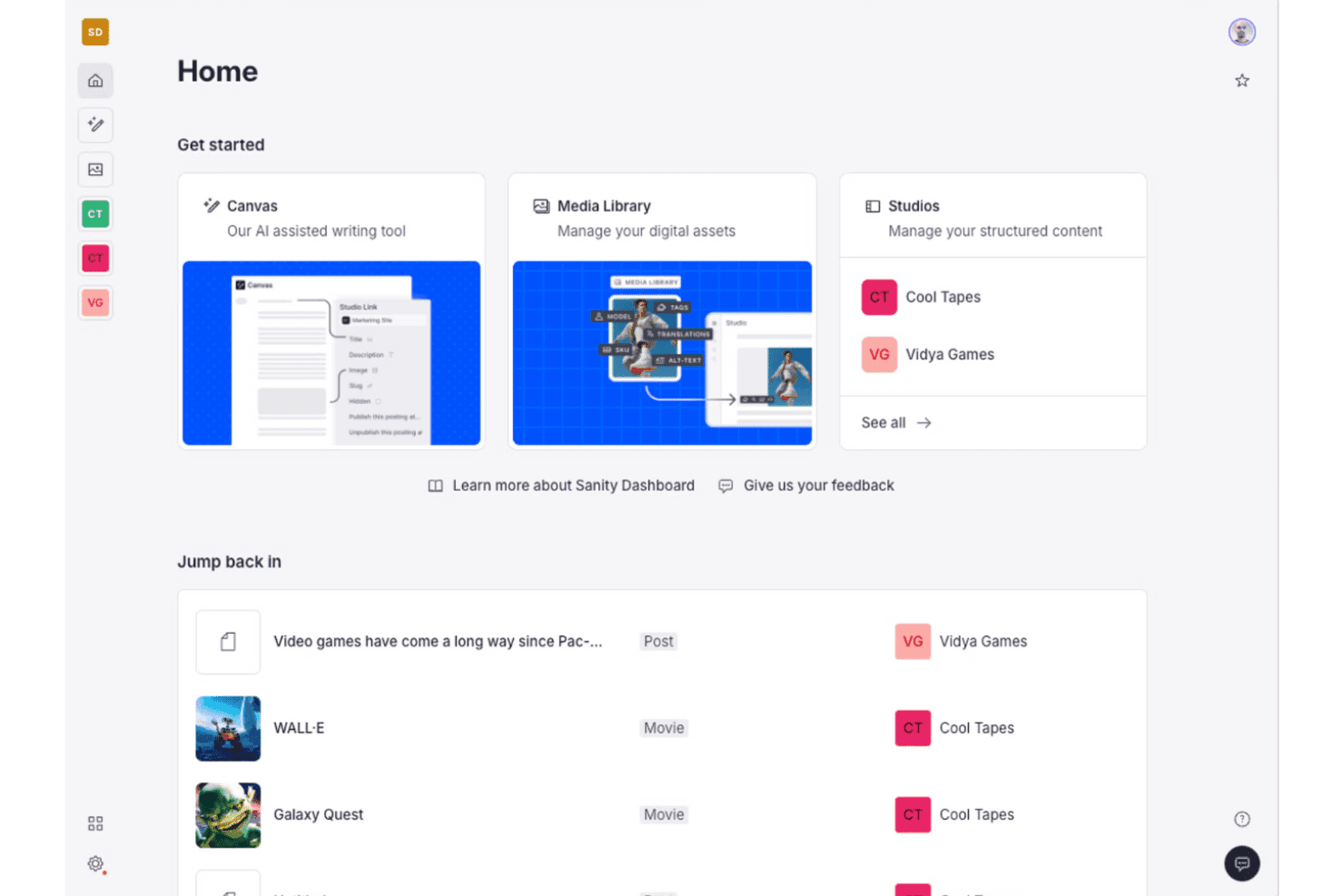
Sanity.io stands out for its customizable Studio editor, real-time collaboration, and API-first approach, which make it a top pick for teams who want complete control over content structure and delivery. The open-source Studio lets you shape the interface to fit your workflows, something I rarely see in other platforms. Sanity pitches itself as a content operating system rather than a CMS, and the developer experience genuinely backs that framing. Pricing is flexible, and the starter plan supports generous usage. Integrations are strong, particularly with modern web frameworks, but there’s a learning curve during onboarding. I’d recommend it for teams with developers on board who need a scalable, collaborative, and customizable content platform.
Pros
- Studio editor is fully customizable with React components.
- Real-time collaboration supports multiple editors working simultaneously.
- Flexible content modeling fits complex, multi-channel structures.
Cons
- Requires developer support for initial setup and configuration.
- Limited visual preview tools for non-technical content editors.
- Usage costs can rise quickly with high API and bandwidth demand.
Is Sanity.io Right For Your Needs?
Who Would be a Good Fit for Sanity.io?
Sanity.io is a strong fit for tech-forward teams and organizations that want to customize their content workflows and integrate modern frontend frameworks. You’re going to get the most value if your business has technical support and cares about structured, API-driven content. In my experience, it’s a good pick for companies with complex content needs, headless integrations, or multi-channel publishing, especially when developer resources are available to tailor schemas and workflows. Treat it as content infrastructure rather than a traditional content management system and the trade-offs make sense.
- Enterprise TechEngineering and product teams can define custom schemas and embrace API-first content operations for flexibility and maintainability.
- Ecommerce PlatformsCustom ecommerce setups get structured product data and integrations with storefront frameworks like Next.js.
- Digital AgenciesAgencies building custom sites for multiple clients will appreciate the ability to deliver unique, branded content models and editor experiences.
- NewsroomsEditorial teams that need real-time collaboration and structured workflows can manage content updates with full control and flexible previews.
- Marketing OpsMarketing teams working closely with developers can personalize content structure and leverage integrations with analytics and campaign tools.
- SaaS StartupsStartups focused on rapid product evolution get scalability, API-driven design, and the freedom to iterate on content models without vendor lock-in.
Who Would be a Bad Fit for Sanity.io?
Sanity.io is less suitable for businesses where technical resources are limited, or when teams need a ready-to-use CMS with minimal configuration. If you want easy setup, strong WYSIWYG editing, or lots of visual design options for non-technical editors, it’s going to feel overwhelming or restrictive. Small businesses or content teams who can’t dedicate developer time will likely be frustrated by the code-driven onboarding and custom schema requirements.
- Small RetailersOwner-operators or small shops lacking a developer will struggle with setup and ongoing schema management.
- Freelance WritersWriters or small teams wanting a plug-and-play blog platform will find the developer-first approach excessive and unnecessarily complex.
- Local NonprofitsOrganizations relying on volunteers or non-technical staff for web updates need a more guided, visually-driven CMS experience.
- Restaurant ChainsTeams focused on visual page building and frequent menu updates won’t benefit from the structured, code-dependent content modeling.
- Traditional PublishersMedia businesses with legacy editorial workflows often need instant previews and page-building tools not natively offered in Sanity.io.
- Event PlannersProject-driven teams looking for out-of-the-box event templates and calendar tools will not get the fast start they expect from other CMS platforms.
Comment nous testons et évaluons les outils
Nous avons passé des années à construire, affiner et améliorer notre système de test et de notation des logiciels. Notre grille d’évaluation est conçue pour prendre en compte toutes les nuances du choix logiciel et ce qui rend un outil efficace, en mettant l’accent sur les aspects critiques du processus de décision. Ci-dessous, vous pouvez découvrir précisément comment nos tests et notations fonctionnent selon sept critères. Cela nous permet d’offrir une évaluation impartiale des logiciels en fonction de la fonctionnalité principale, des fonctionnalités différenciantes, de la facilité d’utilisation, de l’onboarding, du support client, des intégrations, des avis clients et du rapport qualité-prix.
Fonctionnalité principale (25% de la note finale)
Le point de départ de notre évaluation est toujours la fonctionnalité principale de l’outil. Dispose-t-il des fonctions de base attendues ? Certaines de ces fonctionnalités sont-elles bloquées dans des offres tarifaires supérieures ? Nous attendons d’un outil qu’il soit à la hauteur des capacités fondamentales de ses concurrents.
Fonctionnalités différenciantes (25% de la note finale)
Ensuite, nous évaluons les fonctionnalités spéciales qui vont au-delà de ce que l’on trouve habituellement chez ce type d’outils. Un score élevé indique des fonctionnalités uniques ou spécialisées qui rendent le produit plus rapide, plus efficace, ou offrent une valeur ajoutée à l’utilisateur. Nous évaluons également la facilité d’intégration avec d’autres outils couramment utilisés pour élargir les possibilités et l’utilité du logiciel. Les outils offrant de nombreuses intégrations natives, des connexions tierces et un accès API pour bâtir des intégrations personnalisées obtiennent les meilleures notes.
Facilité d’utilisation (10% de la note finale)
Nous considérons la rapidité et la facilité d’exécution des tâches principales via l’outil. Les logiciels les mieux notés sont bien conçus, intuitifs à utiliser, proposent des applications mobiles, des modèles prêts à l’emploi, et simplifient des tâches parfois complexes.
Onboarding (10% de la note finale)
Nous savons combien l’adoption rapide par l’équipe est cruciale pour une nouvelle plateforme. Nous évaluons donc la facilité avec laquelle il est possible d’apprendre et d’utiliser un outil sans formation poussée. On mesure aussi la vitesse à laquelle un membre de l’équipe peut être opérationnel, sans expérience préalable. Les solutions bien notées requièrent peu ou pas d’assistance.
Support client (10% de la note finale)
Nous examinons la rapidité et la facilité avec lesquelles on peut obtenir de l’aide par téléphone, chat en direct ou base de connaissances. Les outils et sociétés offrant un support en temps réel sont favorisés ; les chatbots sont pénalisés.
Avis clients (10% de la note finale)
Au-delà de nos propres tests et évaluations, nous prenons en compte le score de recommandation nette des clients actuels et passés. Nous étudions leur propension, si l’occasion se présente, à réutiliser l’outil pour sa fonctionnalité principale. Un score élevé reflète donc un bon taux de recommandation.
Rapport qualité-prix (10% de la note finale)
Enfin, après avoir pris en compte tous les autres critères, nous confrontons le prix moyen des offres de base aux fonctionnalités principales et prenons en compte la valeur apportée par les autres éléments d’évaluation. Les logiciels qui offrent plus pour moins obtiennent une note supérieure.
Core Features
Customizable Studio Editor
Shape the editing experience in React and TypeScript—custom dashboards, workflows, fields. Add plugins, validation, and components right inside the Studio.
Real-Time Collaboration
Edit the same document simultaneously—changes appear instantly and conflicts resolve as they happen. Marketers and developers work side by side, nothing overwritten.
Flexible Content Modeling
Define granular schemas for content types, relationships, and validation in JavaScript. Structured data supports rich references, arrays, and deeply nested objects.
API-First Content Delivery
Push content to sites, apps, and third-party platforms over fast, scalable APIs. Fetch exactly what you need with GROQ queries or the GraphQL API.
Structured Content Versioning
Track every edit, roll back to earlier versions, and review full history per document. Content releases let you stage and ship a set of changes together.
Role-Based Access Control
Grant precise editing, publishing, or admin rights per user, team, or dataset. Sensitive projects stay limited to approved collaborators.
Ease of Use
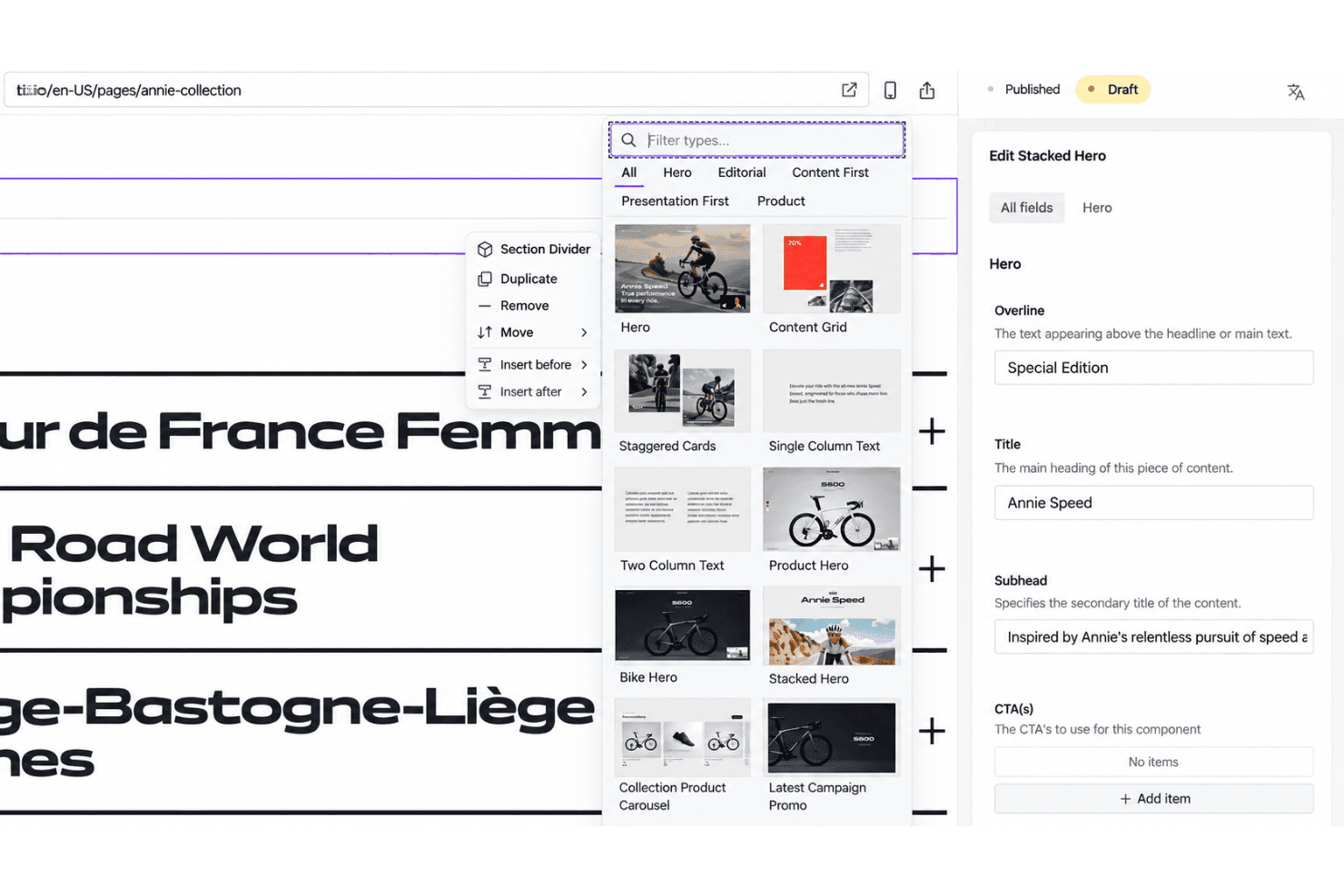
Sanity.io gives your team full flexibility, but it’s not out-of-the-box simple—you’ll need a developer to set up schemas and tailor the Studio. Once configured, editors love the clean interface, real-time collaboration, and custom fields. Some non-technical users want more visual preview options, but the workflow feels smooth and fast for structured content. The API-driven approach may bring a learning curve, yet usability shines for teams with technical support.
Integrations
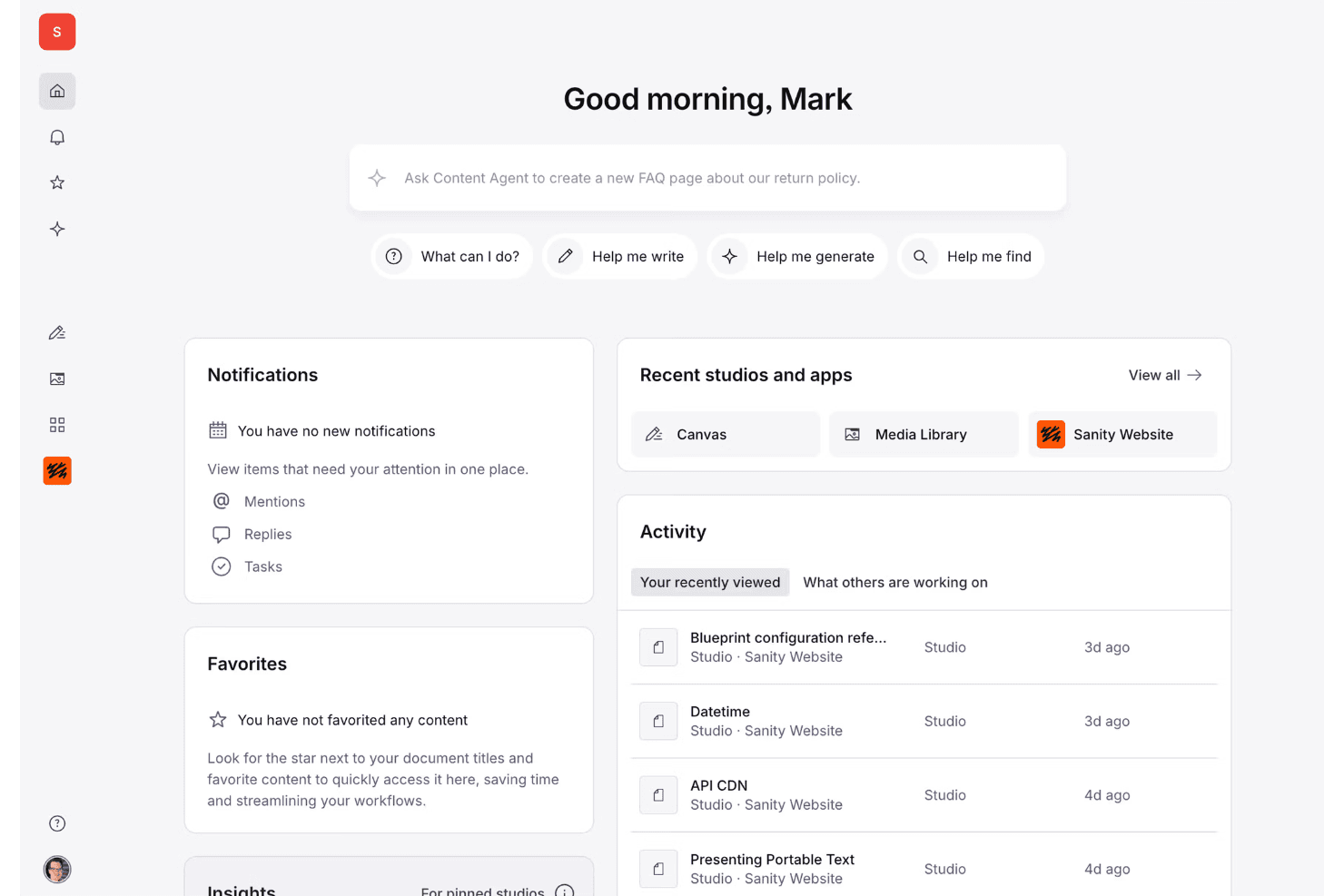
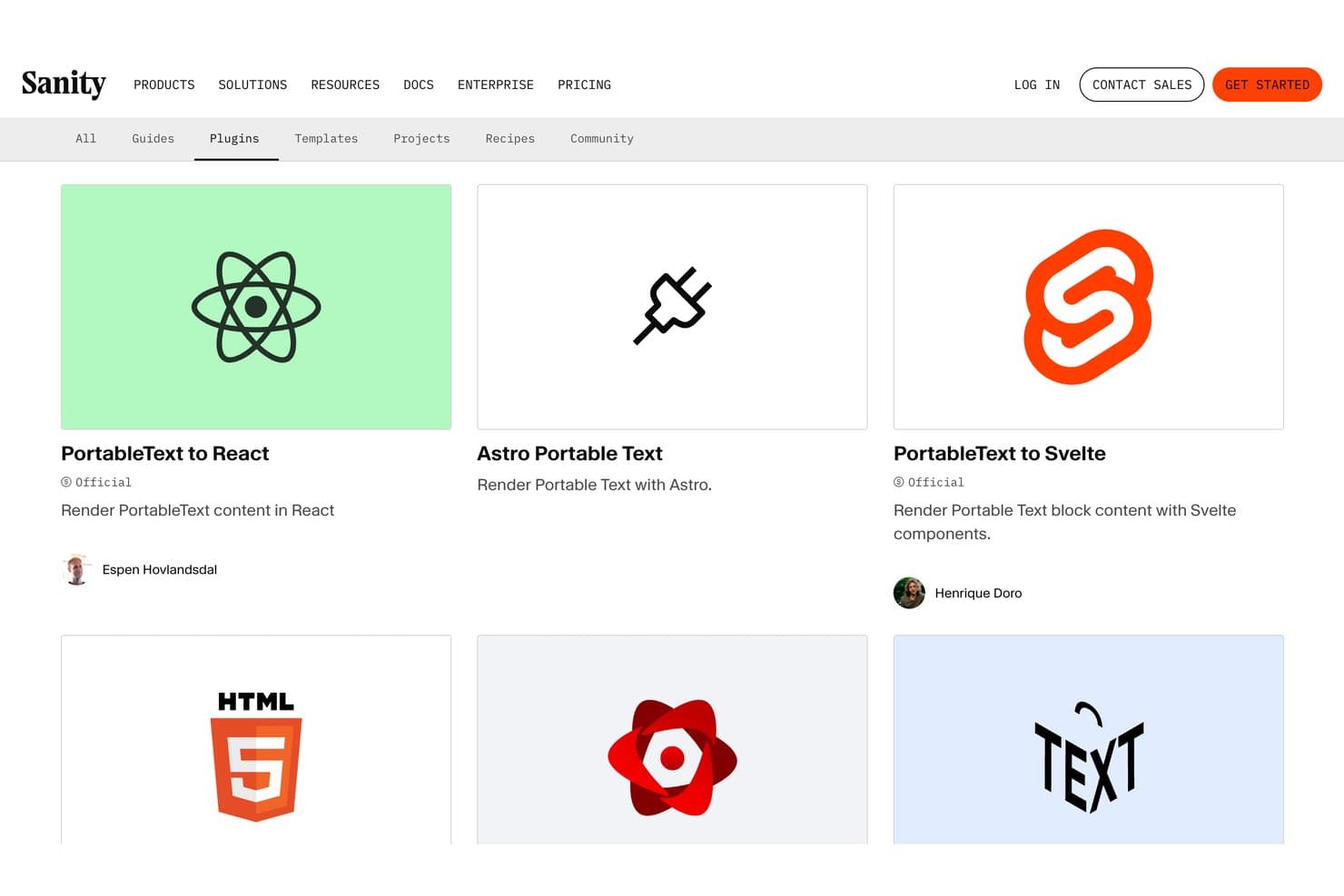
Sanity.io integrates with Next.js, Astro, Gatsby, Netlify, Vercel, Shopify, Slack, Algolia, AWS, Google Cloud, and Azure, among others.
Sanity.io also offers robust APIs, webhook support for build triggers, and connections with third-party integration tools.
Sanity.io Specs
- A/B Testing: Yes
- Energy Production Estimates: Yes
- Geo-filtering: Yes
- Inventory Tracking: Yes
- Materials Library: Yes
- Media Streaming: Yes
- SCORM: Yes
- SEO: Yes
- Shading Analysis: Yes


