

Avis sur Strapi 2026 : avantages, inconvénients, fonctionnalités et tarifs
I put Strapi’s API-first flexibility to the test, weighing its features, trade-offs, and pricing to see whether it’s the right CMS for your content stack.

Nous évaluons les outils de manière indépendante, et les commissions aident à financer nos tests. Consultez notre politique de transparence, notre méthodologie ou suggérez un outil.
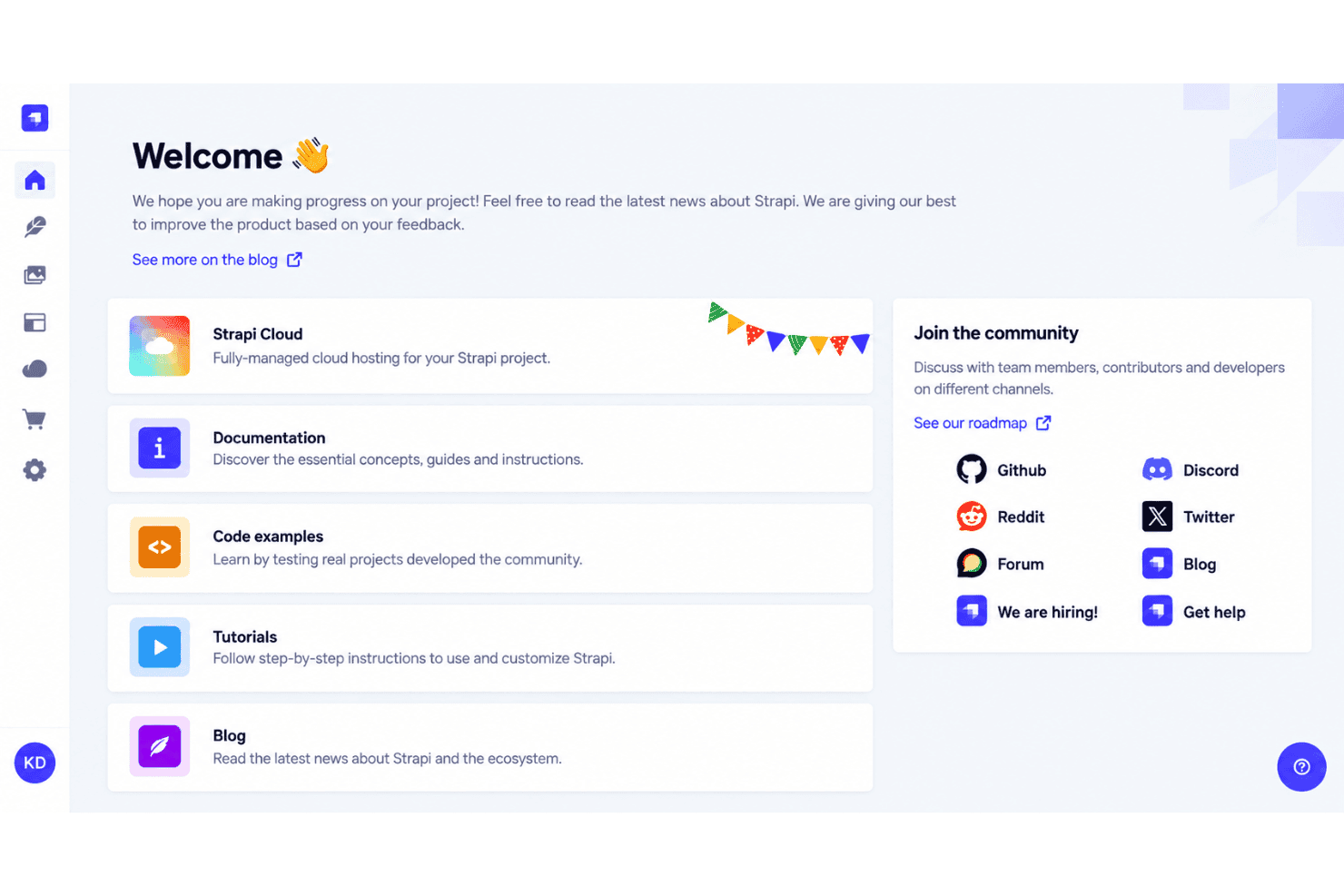
Strapi is an open-source, API-first content management software for teams that need to manage structured content across websites, mobile apps, and other digital channels. I’d choose Strapi over WordPress when developers need a customizable headless architecture, flexible content models, and API delivery without tying content to one presentation layer.
Strapi Evaluation Summary
4.5/5
- From $45/month
- Free plan available
Pourquoi faire confiance à nos recommandations de logiciels
6,700+
Reviews
20
Industry experts
16+
Evaluation factors
14
Years
Notre équipe teste et évalue des logiciels depuis 2012. En tant que leaders marketing nous-mêmes, nous savons à quel point il est difficile — et important — de choisir le bon logiciel.
Pour ce guide, nous avons évalué les outils grâce à des tests pratiques et une recherche indépendante, en notant les outils selon nos critères de sélection.
Nos avis reflètent notre jugement éditorial humain, et non un argumentaire de vente.
Réviseurs experts:
 Gui DrusinaDirecteur de la création
- Shriya GhateSenior Marketing Lead
 Amanda JacquesResponsable Marketing Ops

Strapi Overview
I’d choose Strapi when your team needs an open-source, API-first CMS with customizable content types, REST and GraphQL APIs, role-based access, webhooks, and plugin support. Its admin interface is clear, though onboarding still requires developer involvement for hosting, schemas, and deployments. Self-hosting keeps entry costs low, while cloud and enterprise plans add managed infrastructure and support. Compared with more packaged CMS platforms, Strapi offers greater control, flexible integrations, and cleaner multi-channel delivery, but less out-of-the-box functionality and a steeper technical setup. I think it fits product teams, content operations, and businesses supporting websites, apps, and other digital experiences.
Pros
- Flexible content types and reusable components support diverse content structures.
- REST and GraphQL APIs deliver content across websites and apps.
- Open-source self-hosting permits source-level customization without license fees.
Cons
- Self-hosting requires infrastructure, deployment, database, and maintenance ownership.
- Advanced plugins and admin customizations require substantial JavaScript development.
- Documentation can feel fragmented during complex configurations.
Is Strapi Right For Your Needs?
Who Would be a Good Fit for Strapi?
Strapi suits developer-led teams that need custom content models, REST or GraphQL APIs, and publishing across multiple channels. It works especially well for businesses with technical resources that can manage hosting, deployments, plugins, and integrations.
- Developer-Led StartupsStrapi lets developers create custom content types and automatically generated REST or GraphQL APIs without adopting a fixed frontend.
- Ecommerce BrandsEcommerce teams can connect Strapi with Shopify, BigCommerce, Cloudinary, webhooks, and custom integrations for product and campaign content.
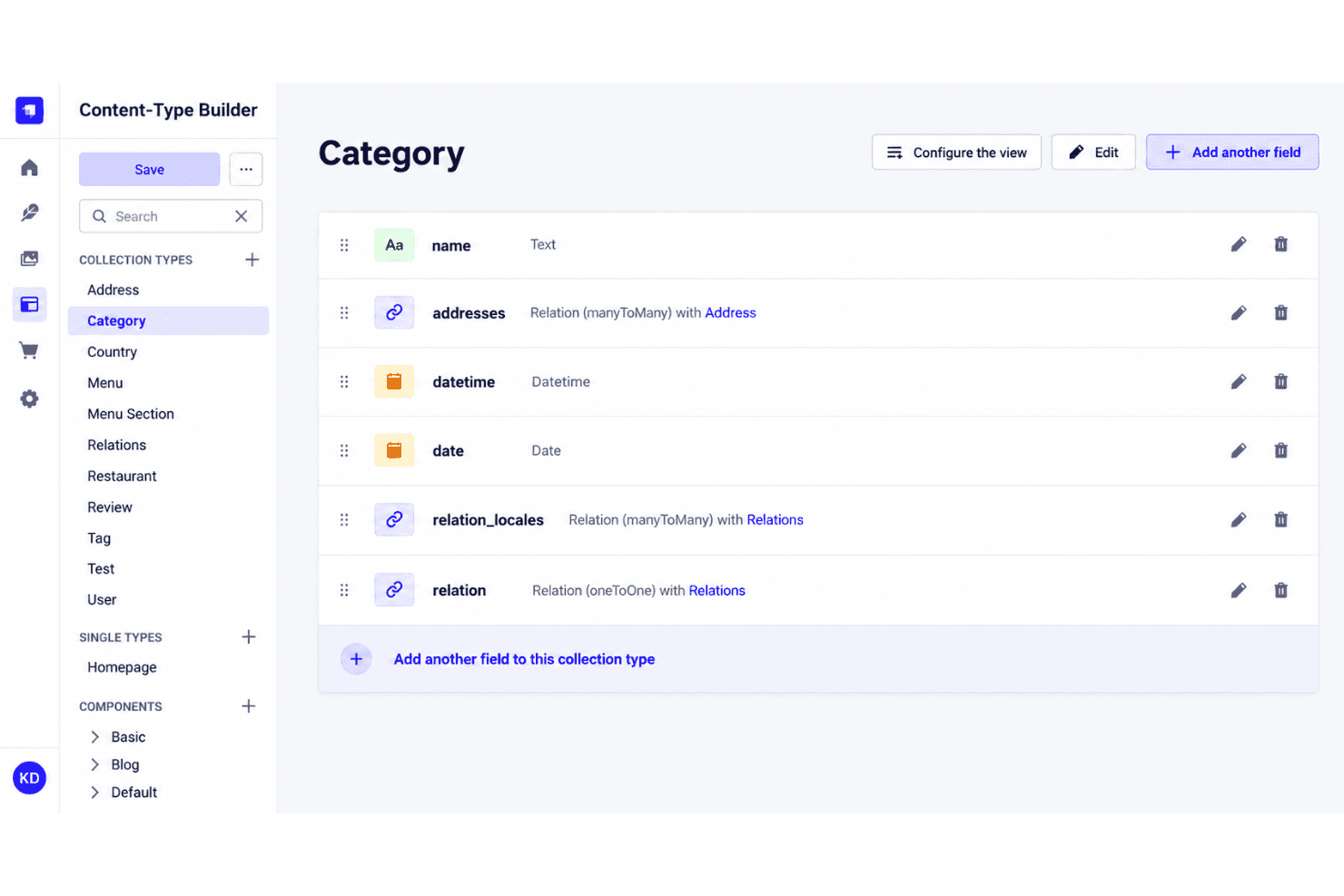
- Digital PublishersPublishers can model articles, authors, categories, and media assets in the Content-Type Builder, then deliver content to websites and applications.
- Marketing DepartmentsMarketing teams with developer support can manage entries in the admin interface while developers control schemas, deployments, plugins, and API connections.
- Content AgenciesAgencies can use Strapi’s open-source edition and custom integrations to build tailored CMS projects for clients with different content structures.
- Multichannel ProductsProduct teams can use Strapi’s REST and GraphQL APIs to distribute shared content across websites, mobile applications, ecommerce experiences, and other interfaces.
Who Would be a Bad Fit for Strapi?
Strapi is a poor match for teams that need a ready-to-use CMS with minimal technical administration. Self-hosting, database setup, schema design, deployment work, and advanced customization can create too much overhead for simple websites or teams without developer access.
- Solo EntrepreneursSolo business owners without technical support may struggle with hosting, deployments, database configuration, and custom plugin requirements.
- Simple Brochure SitesA small business needing only a few static pages may find Strapi’s content modeling and API setup unnecessary for its limited publishing needs.
- No-Code TeamsMarketing teams that need to create and change content without developer involvement may find Strapi less suitable because custom schemas and integrations require technical setup.
- Immediate LaunchesTeams with tight launch deadlines may lose time configuring infrastructure, designing content types, and deploying the CMS before publishing content.
- Guided SupportMarketers who expect hands-on troubleshooting may find the free edition restrictive because ticket-based support requires a Growth or Enterprise plan.
- Heavy GovernanceLarge organizations requiring review workflows, audit logs, and advanced support must choose Enterprise, which uses custom pricing rather than a standard low-cost plan.
Comment nous testons et évaluons les outils
Nous avons passé des années à construire, affiner et améliorer notre système de test et de notation des logiciels. Notre grille d’évaluation est conçue pour prendre en compte toutes les nuances du choix logiciel et ce qui rend un outil efficace, en mettant l’accent sur les aspects critiques du processus de décision. Ci-dessous, vous pouvez découvrir précisément comment nos tests et notations fonctionnent selon sept critères. Cela nous permet d’offrir une évaluation impartiale des logiciels en fonction de la fonctionnalité principale, des fonctionnalités différenciantes, de la facilité d’utilisation, de l’onboarding, du support client, des intégrations, des avis clients et du rapport qualité-prix.
Fonctionnalité principale (25% de la note finale)
Le point de départ de notre évaluation est toujours la fonctionnalité principale de l’outil. Dispose-t-il des fonctions de base attendues ? Certaines de ces fonctionnalités sont-elles bloquées dans des offres tarifaires supérieures ? Nous attendons d’un outil qu’il soit à la hauteur des capacités fondamentales de ses concurrents.
Fonctionnalités différenciantes (25% de la note finale)
Ensuite, nous évaluons les fonctionnalités spéciales qui vont au-delà de ce que l’on trouve habituellement chez ce type d’outils. Un score élevé indique des fonctionnalités uniques ou spécialisées qui rendent le produit plus rapide, plus efficace, ou offrent une valeur ajoutée à l’utilisateur. Nous évaluons également la facilité d’intégration avec d’autres outils couramment utilisés pour élargir les possibilités et l’utilité du logiciel. Les outils offrant de nombreuses intégrations natives, des connexions tierces et un accès API pour bâtir des intégrations personnalisées obtiennent les meilleures notes.
Facilité d’utilisation (10% de la note finale)
Nous considérons la rapidité et la facilité d’exécution des tâches principales via l’outil. Les logiciels les mieux notés sont bien conçus, intuitifs à utiliser, proposent des applications mobiles, des modèles prêts à l’emploi, et simplifient des tâches parfois complexes.
Onboarding (10% de la note finale)
Nous savons combien l’adoption rapide par l’équipe est cruciale pour une nouvelle plateforme. Nous évaluons donc la facilité avec laquelle il est possible d’apprendre et d’utiliser un outil sans formation poussée. On mesure aussi la vitesse à laquelle un membre de l’équipe peut être opérationnel, sans expérience préalable. Les solutions bien notées requièrent peu ou pas d’assistance.
Support client (10% de la note finale)
Nous examinons la rapidité et la facilité avec lesquelles on peut obtenir de l’aide par téléphone, chat en direct ou base de connaissances. Les outils et sociétés offrant un support en temps réel sont favorisés ; les chatbots sont pénalisés.
Avis clients (10% de la note finale)
Au-delà de nos propres tests et évaluations, nous prenons en compte le score de recommandation nette des clients actuels et passés. Nous étudions leur propension, si l’occasion se présente, à réutiliser l’outil pour sa fonctionnalité principale. Un score élevé reflète donc un bon taux de recommandation.
Rapport qualité-prix (10% de la note finale)
Enfin, après avoir pris en compte tous les autres critères, nous confrontons le prix moyen des offres de base aux fonctionnalités principales et prenons en compte la valeur apportée par les autres éléments d’évaluation. Les logiciels qui offrent plus pour moins obtiennent une note supérieure.
Core Features
Custom Content Types
Define structured content types with fields such as text, images, dates, and relationships. A marketing team could create separate models for blog posts, authors, campaigns, and landing pages without changing the front end.
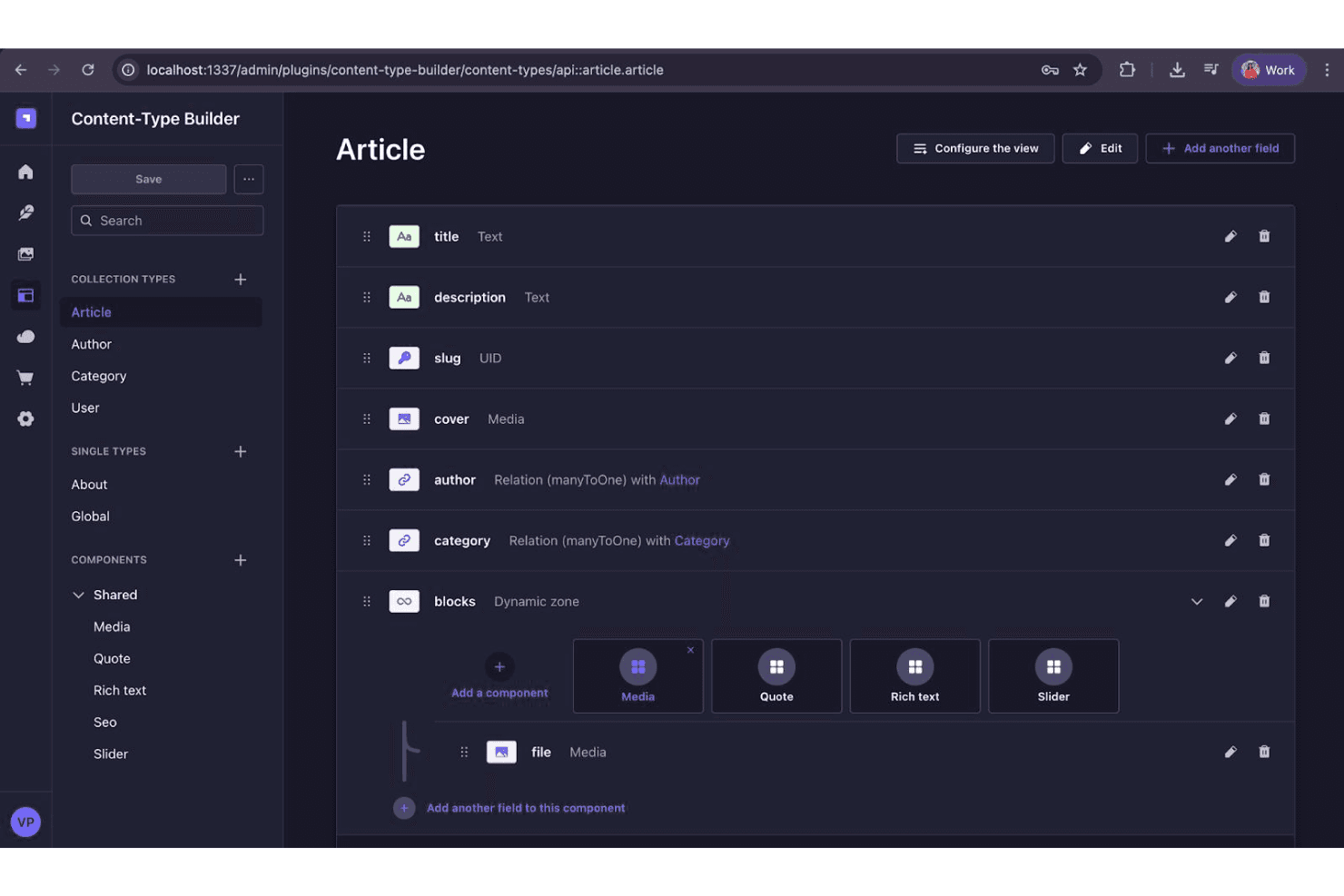
Reusable Components And Dynamic Zones
Build reusable field groups and flexible page sections, then arrange them across content entries. Editors can combine hero banners, testimonials, and calls to action while developers maintain consistent schemas.
Media Library
Upload, organize, and reuse images and other media from Strapi’s admin panel. A content team can manage campaign graphics in one place and attach them to multiple articles or landing pages.
REST And GraphQL APIs
Deliver structured content through REST or GraphQL APIs to websites, mobile apps, and other digital experiences. Developers can choose REST endpoints for straightforward requests or GraphQL queries when clients need specific fields.
Roles And Permissions
Set permissions for administrator, editor, author, and other roles across content types and actions. This lets an author draft articles while restricting publishing or settings changes to approved team members.
Draft And Publish
Create and edit unpublished entries before making them available through the API. Editors can review a campaign page, correct its copy, and publish it only when the content is ready.
Ease of Use
Strapi is user-friendly for developers and content teams once configured, but it isn’t a turnkey CMS. Its Content-Type Builder and automatically generated API endpoints make content modeling and entry management straightforward. However, self-hosting, deployments, and custom plugins require technical skills, which can make onboarding less approachable for nontechnical teams.
Integrations
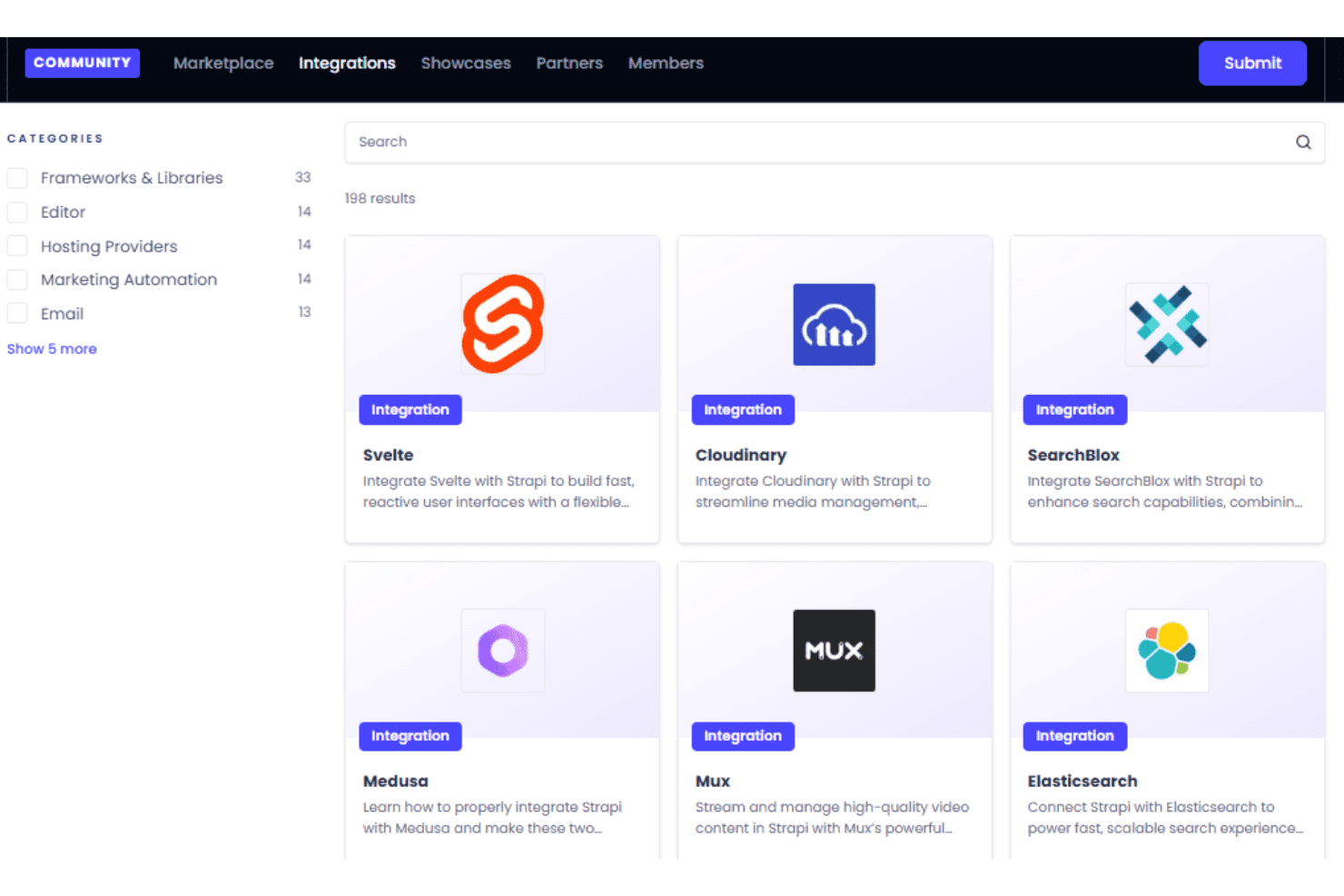
Strapi integrates with Shopify, BigCommerce, and Cloudinary. Strapi also provides REST and GraphQL APIs and connects with third-party tools through webhooks, custom integrations, and plugins.
Strapi Specs
- A/B Testing: No
- Analytics: No
- API: Yes
- Audience Targeting: No
- Automated Conversion: No
- Batch Permissions & Access: No
- Behavioral Tracking: No
- Brand Management: No
- Campaign Management: No
- Contact Management: No
- Contact Sharing: No
- Conversion Tracking: No
- CRM Integration: Yes
- Customer Management: No
- Dashboards: Yes
- Data Export: Yes
- Data Import: Yes
- Email Integration: Yes
- External Integrations: Yes
- Keyword Tracking: No
- Landing Pages: Yes
- Lead Management: No
- Lead Scoring: No
- Link Tracking: No
- Marketing Automation: No
- Multi-User: Yes
- Notifications: Yes
- Password & Access Management: Yes
- Social-Media Integration: Yes


