

Avis sur Contentstack 2026 : avantages, inconvénients, fonctionnalités et tarifs
I put Contentstack’s composable architecture to the test—here’s where its flexibility shines, where costs and complexity surface, and who will get the most from it.

Nous évaluons les outils de manière indépendante, et les commissions aident à financer nos tests. Consultez notre politique de transparence, notre méthodologie ou suggérez un outil.
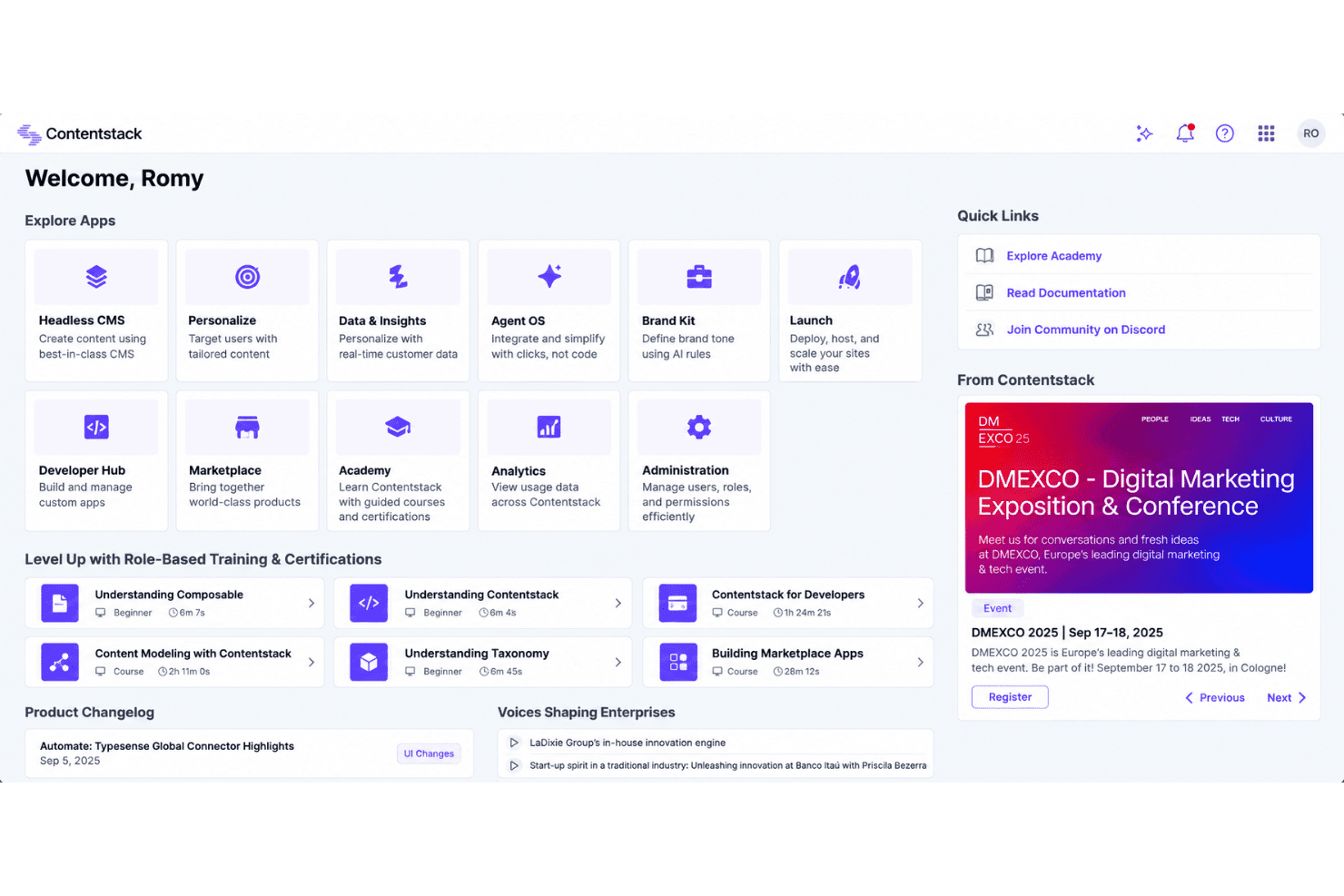
Contentstack is a composable content management software platform for marketing teams that need to manage structured content across websites, apps, and other digital channels. Choose it over WordPress when your team needs an API-first setup, reusable content models, and greater control over omnichannel publishing.
Contentstack Evaluation Summary
4.8/5
- From $29/month
- Free plan available
Pourquoi faire confiance à nos recommandations de logiciels
6,700+
Reviews
20
Industry experts
16+
Evaluation factors
14
Years
Notre équipe teste et évalue des logiciels depuis 2012. En tant que leaders marketing nous-mêmes, nous savons à quel point il est difficile — et important — de choisir le bon logiciel.
Pour ce guide, nous avons évalué les outils grâce à des tests pratiques et une recherche indépendante, en notant les outils selon nos critères de sélection.
Nos avis reflètent notre jugement éditorial humain, et non un argumentaire de vente.
Réviseurs experts:
 Gui DrusinaDirecteur de la création
- Shriya GhateSenior Marketing Lead
 Amanda JacquesResponsable Marketing Ops

Contentstack Overview
I’d choose Contentstack for teams that need API-first content modeling, reusable components, and publishing across websites, apps, and other channels. Its visual editing, workflows, localization, integrations, and developer tools support sophisticated content operations, while the interface remains approachable for marketers. However, custom pricing can exceed simpler platforms, and onboarding requires technical planning around schemas, APIs, and integrations. Support is strong for implementation-led projects, though smaller teams may prefer a lower-cost, faster setup. Compared with simpler options, Contentstack offers greater flexibility and governance but demands more investment, making it best for growing, multi-channel organizations.
Pros
- API-first modeling supports reusable content across omnichannel experiences.
- Visual Editor lets marketers update layouts without routine developer involvement.
- Workflows, releases, and branches support governed publishing across teams.
Cons
- Pricing is opaque and often expensive for smaller teams.
- Live preview setup can require substantial developer configuration.
- Localization and bulk publishing still involve manual work.
Is Contentstack Right For Your Needs?
Who Would be a Good Fit for Contentstack?
Contentstack fits organizations that need structured content across channels, sites, and teams. Its APIs, workflows, Releases, Visual Editor, integrations, and enterprise governance support complex publishing programs. Teams with developer support will get more from its headless architecture, Live Preview setup, and content modeling requirements.
- Enterprise BrandsContentstack supports multiple production sites, custom roles, workflows, personalization, and data residency through its Enterprise plan.
- Ecommerce TeamsEcommerce teams can connect Contentstack with commercetools, Algolia, Cloudinary, and other systems while managing structured product content through APIs.
- Global MarketingMarketing departments publishing across websites and channels can use structured content, Releases, workflows, and the Content Management API.
- Regulated OrganizationsOrganizations with strict publishing controls can use custom roles, approval workflows, Releases, audit-oriented governance, and enterprise support.
- Developer Led TeamsEngineering teams can build tailored digital experiences with Contentstack’s headless architecture, APIs, integrations, and developer-configured Live Preview.
- Content OperationsContent operations teams coordinating many contributors can use workflows, Visual Editor, Brand Kit, Agent OS, and centralized content modeling.
Who Would be a Bad Fit for Contentstack?
Contentstack is a poor match for teams seeking a simple, no-code website builder with minimal configuration. Its schemas, APIs, Live Preview setup, and technical documentation create more work than smaller teams may need. The pricing structure also becomes harder to justify when you need only one basic site, limited publishing controls, or a low-cost content platform.
- Solo CreatorsSolo creators may find Contentstack excessive because schemas, APIs, and Live Preview setup add technical work to a small publishing operation.
- Small BusinessesSmall businesses needing one basic website may not justify Growth pricing, workflows, enterprise features, and the configuration required by a headless CMS.
- No Code TeamsTeams without developer support may struggle with content modeling, API configuration, integrations, and the technical setup required for Live Preview.
- Basic Brochure SitesA simple brochure site rarely needs Releases, custom roles, multi-site delivery, or integrations with platforms such as commercetools and Algolia.
- Tight BudgetsBudget-conscious teams may outgrow the free and $29 Build plans quickly, while the $299 Growth plan adds a significant recurring cost.
- All In One CommerceBusinesses seeking built-in commerce may find Contentstack unsuitable because it connects with commercetools rather than providing a complete native commerce system.
Comment nous testons et évaluons les outils
Nous avons passé des années à construire, affiner et améliorer notre système de test et de notation des logiciels. Notre grille d’évaluation est conçue pour prendre en compte toutes les nuances du choix logiciel et ce qui rend un outil efficace, en mettant l’accent sur les aspects critiques du processus de décision. Ci-dessous, vous pouvez découvrir précisément comment nos tests et notations fonctionnent selon sept critères. Cela nous permet d’offrir une évaluation impartiale des logiciels en fonction de la fonctionnalité principale, des fonctionnalités différenciantes, de la facilité d’utilisation, de l’onboarding, du support client, des intégrations, des avis clients et du rapport qualité-prix.
Fonctionnalité principale (25% de la note finale)
Le point de départ de notre évaluation est toujours la fonctionnalité principale de l’outil. Dispose-t-il des fonctions de base attendues ? Certaines de ces fonctionnalités sont-elles bloquées dans des offres tarifaires supérieures ? Nous attendons d’un outil qu’il soit à la hauteur des capacités fondamentales de ses concurrents.
Fonctionnalités différenciantes (25% de la note finale)
Ensuite, nous évaluons les fonctionnalités spéciales qui vont au-delà de ce que l’on trouve habituellement chez ce type d’outils. Un score élevé indique des fonctionnalités uniques ou spécialisées qui rendent le produit plus rapide, plus efficace, ou offrent une valeur ajoutée à l’utilisateur. Nous évaluons également la facilité d’intégration avec d’autres outils couramment utilisés pour élargir les possibilités et l’utilité du logiciel. Les outils offrant de nombreuses intégrations natives, des connexions tierces et un accès API pour bâtir des intégrations personnalisées obtiennent les meilleures notes.
Facilité d’utilisation (10% de la note finale)
Nous considérons la rapidité et la facilité d’exécution des tâches principales via l’outil. Les logiciels les mieux notés sont bien conçus, intuitifs à utiliser, proposent des applications mobiles, des modèles prêts à l’emploi, et simplifient des tâches parfois complexes.
Onboarding (10% de la note finale)
Nous savons combien l’adoption rapide par l’équipe est cruciale pour une nouvelle plateforme. Nous évaluons donc la facilité avec laquelle il est possible d’apprendre et d’utiliser un outil sans formation poussée. On mesure aussi la vitesse à laquelle un membre de l’équipe peut être opérationnel, sans expérience préalable. Les solutions bien notées requièrent peu ou pas d’assistance.
Support client (10% de la note finale)
Nous examinons la rapidité et la facilité avec lesquelles on peut obtenir de l’aide par téléphone, chat en direct ou base de connaissances. Les outils et sociétés offrant un support en temps réel sont favorisés ; les chatbots sont pénalisés.
Avis clients (10% de la note finale)
Au-delà de nos propres tests et évaluations, nous prenons en compte le score de recommandation nette des clients actuels et passés. Nous étudions leur propension, si l’occasion se présente, à réutiliser l’outil pour sa fonctionnalité principale. Un score élevé reflète donc un bon taux de recommandation.
Rapport qualité-prix (10% de la note finale)
Enfin, après avoir pris en compte tous les autres critères, nous confrontons le prix moyen des offres de base aux fonctionnalités principales et prenons en compte la valeur apportée par les autres éléments d’évaluation. Les logiciels qui offrent plus pour moins obtiennent une note supérieure.
Core Features
Content Modeling
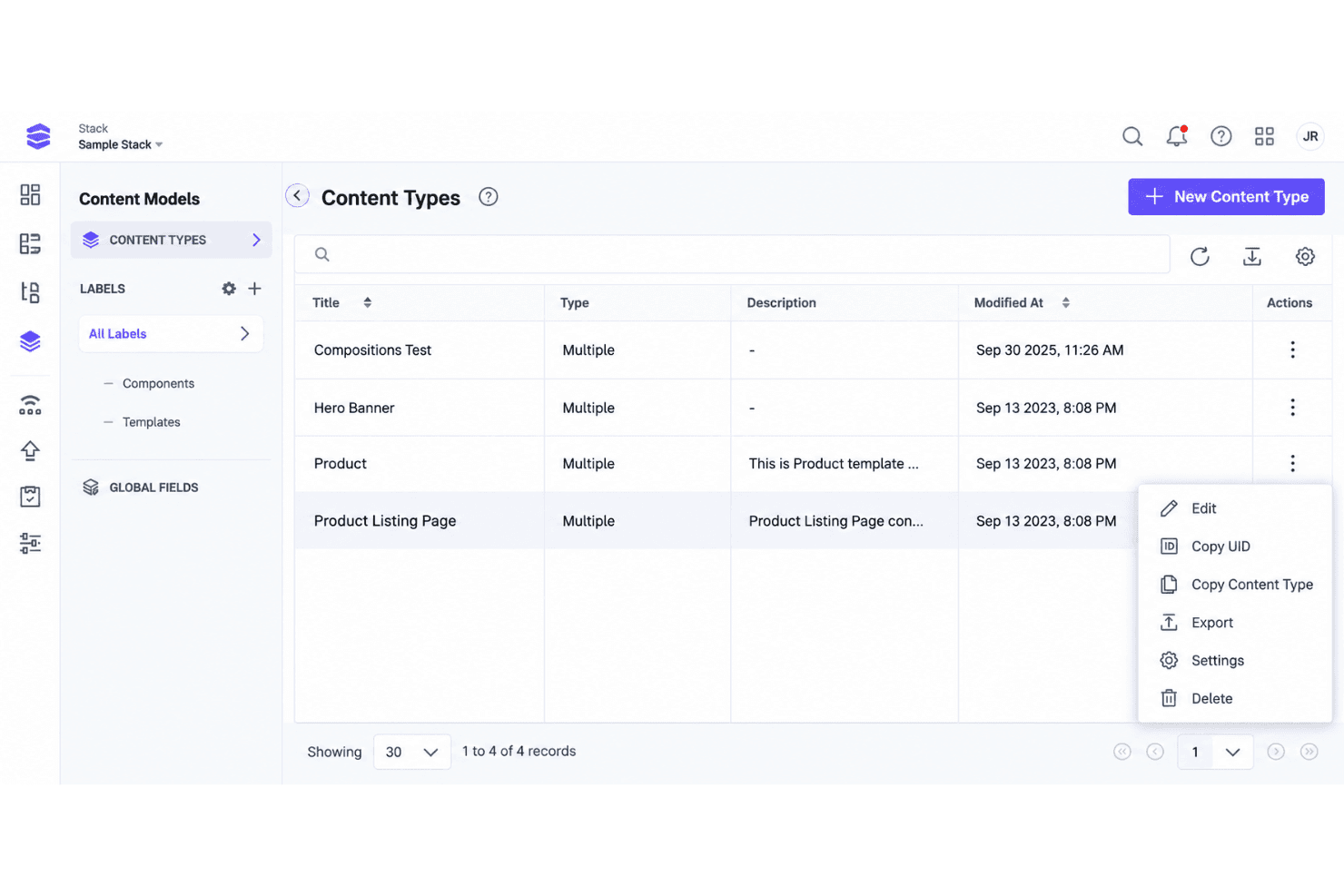
Contentstack lets you define structured content types, fields, and reusable components through an API-first model. This gives teams consistent content for websites, apps, and other channels, such as reusing one product description across multiple campaigns.
Visual Editor
The Visual Editor lets marketers edit content in a page context and preview changes before publishing. Teams can adjust page content without asking developers to handle every update.
Workflows
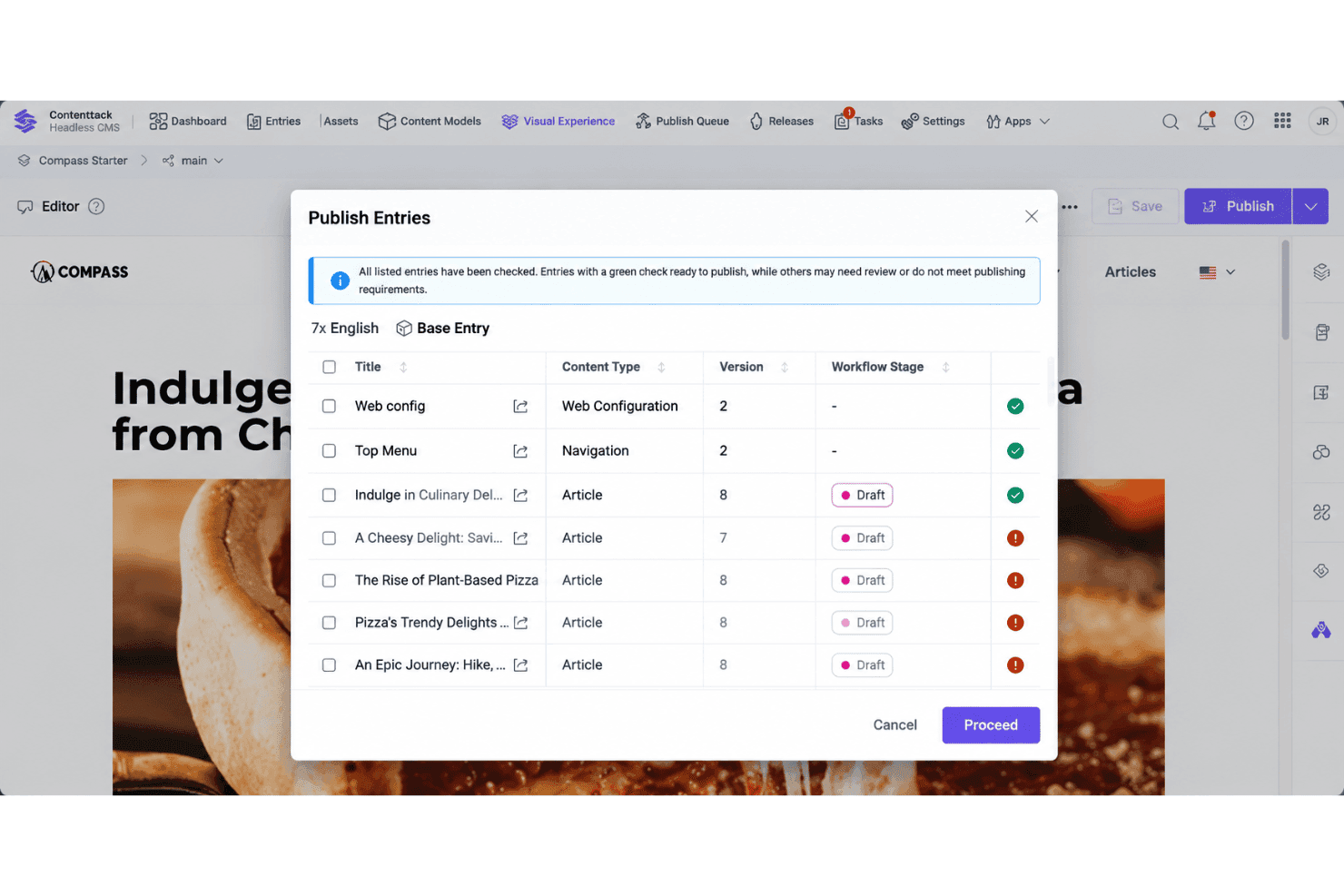
Workflows assign content stages, responsibilities, and approval steps to publishing processes. Marketing teams can route a campaign page from drafting to review and approval before it goes live.
Releases
Releases group related content changes for scheduled or coordinated publishing. A team can prepare landing pages, product updates, and campaign copy together, then publish them at a planned time.
Localization
Contentstack supports localized content for teams managing multiple languages and regional experiences. Editors can create language variants while keeping shared content structures consistent across markets.
Live Preview
Live Preview shows how content will appear on a connected website or application before publication. Developers configure the preview environment, giving marketers a practical way to check page context and presentation.
Ease of Use
Contentstack is approachable for content teams once the underlying content model is configured. Visual Editor provides no-code, in-context editing, while Workflows and Releases help teams manage approvals and coordinated publishing. However, initial setup can require developer involvement, particularly for schemas, APIs, integrations, and Live Preview configuration. It suits teams that need structured content and governance rather than a fully turnkey CMS.
Integrations
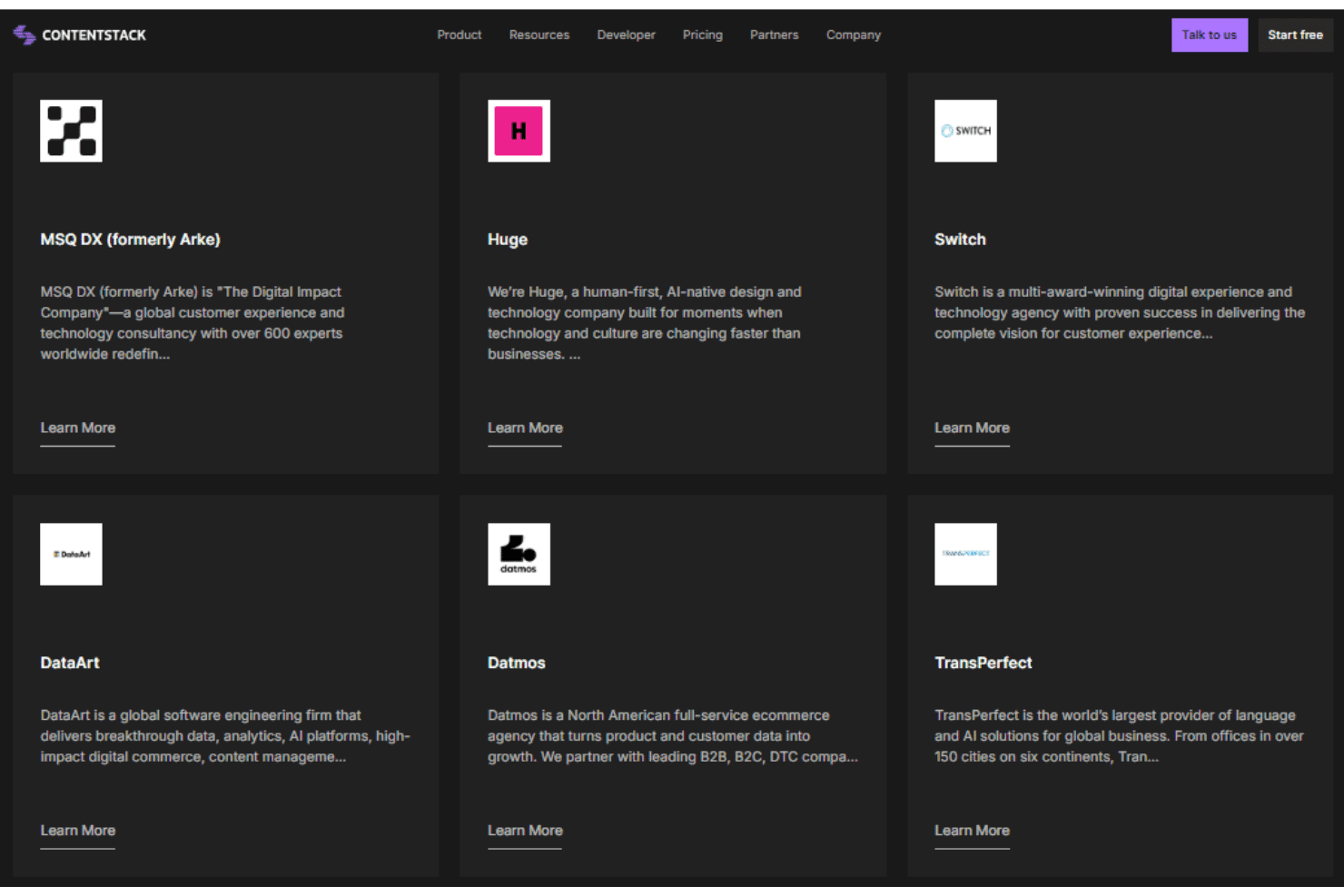
Contentstack integrates with Algolia, commercetools, Bynder, Cloudinary, Salesforce CRM data, and Salesforce Commerce, among other tools and services.
Contentstack also provides a Content Management API for custom integrations and connects with third-party automation tools such as Zapier.
Contentstack Specs
- A/B Testing: Yes
- API: Yes
- Batch Permissions & Access: Yes
- Dashboard: Yes
- Data Export: Yes
- Data Import: Yes
- Data Visualization: Yes
- External Integrations: Yes
- File Sharing: No
- File Transfer: No
- Multi-User: Yes
- Notifications: Yes
- Third-Party Plugins/Add-Ons: Yes


