
Avis sur AudioGO : avantages, inconvénients, fonctionnalités et tarifs expliqués
I’ve put AudioGO to the test—here’s what really works, what falls flat, and how it stacks up against other ad intelligence tools in 2026. Let’s cut through the noise.

Nous évaluons les outils de manière indépendante, et les commissions aident à financer nos tests. Consultez notre politique de transparence, notre méthodologie ou suggérez un outil.
AudioGO is an ad intelligence software built for marketers who need to plan, buy, and measure audio ad campaigns across streaming, podcasts, and broadcast radio from a single self-serve platform. I'd consider it if your team wants to launch targeted audio campaigns without the minimum spend commitments and account manager gatekeeping you get with SiriusXM Media, while still reaching premium publisher inventory that free tools like Spotify Ad Studio can't match on cross-channel scope.
AudioGO Evaluation Summary
0/5
- From $250/campaign
- Free account available
Pourquoi faire confiance à nos recommandations de logiciels
6,700+
Reviews
20
Industry experts
16+
Evaluation factors
14
Years
Notre équipe teste et évalue des logiciels depuis 2012. En tant que leaders marketing nous-mêmes, nous savons à quel point il est difficile — et important — de choisir le bon logiciel.
Pour ce guide, nous avons évalué les outils grâce à des tests pratiques et une recherche indépendante, en notant les outils selon nos critères de sélection.
Nos avis reflètent notre jugement éditorial humain, et non un argumentaire de vente.
Réviseurs experts:
 Gui DrusinaDirecteur de la création
- Shriya GhateSenior Marketing Lead
 Amanda JacquesResponsable Marketing Ops

AudioGO Overview
I think AudioGO stands out for teams who want to launch targeted audio campaigns without fighting minimum spend limits or waiting on an account rep. Its interface is clean, self-serve, and makes onboarding straightforward—even for first-time audio buyers. You get a broader mix of streaming, podcast, and broadcast radio placements than most, with easy audience targeting and clear reporting. Pricing is transparent, which I like, but integrations and deeper analytics aren't as advanced as top-tier platforms. I’d suggest it to marketers prioritizing fast setup and campaign control over ultra-granular measurement or ecosystem tie-ins.
Pros
- Runs campaigns across podcasts, streaming, and broadcast radio together
- Offers transparent pricing with no minimum spend requirements
- Provides quick self-serve access to premium audio inventory
Cons
- Lacks advanced analytics compared to top ad intelligence platforms
- Integrations with third-party tools are limited
- Reporting features do not support in-depth attribution analysis
Is AudioGO Right For Your Needs?
Who Would be a Good Fit for AudioGO?
AudioGO is a good fit for small businesses, agencies, and marketing teams that want an accessible way to launch targeted audio campaigns without a steep learning curve or high minimum spend. Teams new to audio advertising or operating with tight budgets will appreciate its pay-as-you-go rates, self-serve setup, and quick onboarding. AudioGO works best for those who value transparent pricing, direct access to major streaming platforms, and do not need technical customizations or third-party integrations.
- Local RetailersAudioGO makes it easy for local shops to launch audio ads across streaming and radio platforms with just a small upfront commitment.
- Independent AgenciesSmaller agencies can manage multiple client campaigns directly without needing to negotiate contracts or set up complex integrations.
- Nonprofit OrganizationsNonprofits with limited budgets can create targeted audio ads to reach specific audiences without dealing with traditional sales negotiations.
- Event Marketing TeamsAudioGO’s audience targeting and rapid setup help event marketers quickly promote time-sensitive events through audio channels.
- First-Time Ad BuyersThe self-serve dashboard and guided campaign flow make AudioGO especially accessible for marketers new to buying audio media.
- Franchise GroupsFranchises with many local branches can quickly deploy localized messaging across diverse geographies using simple audience selectors.
Who Would be a Bad Fit for AudioGO?
AudioGO is not well-suited to enterprise brands, technical teams, or advertisers needing sophisticated integrations or high-touch account management. If your business relies on custom analytics, API access, or deep cross-platform integrations, AudioGO’s feature set will likely fall short. Teams needing extensive automation, proprietary data integrations, or complex media planning tools should look elsewhere.
- Enterprise AdvertisersLarge brands needing advanced campaign management tools and custom integrations will find AudioGO’s self-serve platform limiting.
- Data Science TeamsData analysts who want granular access to campaign and audience data via APIs won’t find the export or integration capabilities they need.
- Multinational MarketersGlobal teams that need localization features and international streaming network access may find AudioGO’s publisher reach too limited.
- In-House Programmatic BuyersMarketing departments that use in-house DSPs and connect campaigns via APIs won’t benefit from AudioGO’s lack of technical integrations.
- Podcast Ad NetworksAudioGO doesn’t provide the network-level campaign controls or revenue management tools needed by podcast ad aggregators.
- Direct Sales DepartmentsBrands preferring personalized service with bespoke campaign planning will miss the high-touch account management and negotiation options.
Comment nous testons et évaluons les outils
Nous avons passé des années à construire, affiner et améliorer notre système de test et de notation des logiciels. Notre grille d’évaluation est conçue pour prendre en compte toutes les nuances du choix logiciel et ce qui rend un outil efficace, en mettant l’accent sur les aspects critiques du processus de décision. Ci-dessous, vous pouvez découvrir précisément comment nos tests et notations fonctionnent selon sept critères. Cela nous permet d’offrir une évaluation impartiale des logiciels en fonction de la fonctionnalité principale, des fonctionnalités différenciantes, de la facilité d’utilisation, de l’onboarding, du support client, des intégrations, des avis clients et du rapport qualité-prix.
Fonctionnalité principale (25% de la note finale)
Le point de départ de notre évaluation est toujours la fonctionnalité principale de l’outil. Dispose-t-il des fonctions de base attendues ? Certaines de ces fonctionnalités sont-elles bloquées dans des offres tarifaires supérieures ? Nous attendons d’un outil qu’il soit à la hauteur des capacités fondamentales de ses concurrents.
Fonctionnalités différenciantes (25% de la note finale)
Ensuite, nous évaluons les fonctionnalités spéciales qui vont au-delà de ce que l’on trouve habituellement chez ce type d’outils. Un score élevé indique des fonctionnalités uniques ou spécialisées qui rendent le produit plus rapide, plus efficace, ou offrent une valeur ajoutée à l’utilisateur. Nous évaluons également la facilité d’intégration avec d’autres outils couramment utilisés pour élargir les possibilités et l’utilité du logiciel. Les outils offrant de nombreuses intégrations natives, des connexions tierces et un accès API pour bâtir des intégrations personnalisées obtiennent les meilleures notes.
Facilité d’utilisation (10% de la note finale)
Nous considérons la rapidité et la facilité d’exécution des tâches principales via l’outil. Les logiciels les mieux notés sont bien conçus, intuitifs à utiliser, proposent des applications mobiles, des modèles prêts à l’emploi, et simplifient des tâches parfois complexes.
Onboarding (10% de la note finale)
Nous savons combien l’adoption rapide par l’équipe est cruciale pour une nouvelle plateforme. Nous évaluons donc la facilité avec laquelle il est possible d’apprendre et d’utiliser un outil sans formation poussée. On mesure aussi la vitesse à laquelle un membre de l’équipe peut être opérationnel, sans expérience préalable. Les solutions bien notées requièrent peu ou pas d’assistance.
Support client (10% de la note finale)
Nous examinons la rapidité et la facilité avec lesquelles on peut obtenir de l’aide par téléphone, chat en direct ou base de connaissances. Les outils et sociétés offrant un support en temps réel sont favorisés ; les chatbots sont pénalisés.
Avis clients (10% de la note finale)
Au-delà de nos propres tests et évaluations, nous prenons en compte le score de recommandation nette des clients actuels et passés. Nous étudions leur propension, si l’occasion se présente, à réutiliser l’outil pour sa fonctionnalité principale. Un score élevé reflète donc un bon taux de recommandation.
Rapport qualité-prix (10% de la note finale)
Enfin, après avoir pris en compte tous les autres critères, nous confrontons le prix moyen des offres de base aux fonctionnalités principales et prenons en compte la valeur apportée par les autres éléments d’évaluation. Les logiciels qui offrent plus pour moins obtiennent une note supérieure.
Core Features
Self-Serve Campaign Builder
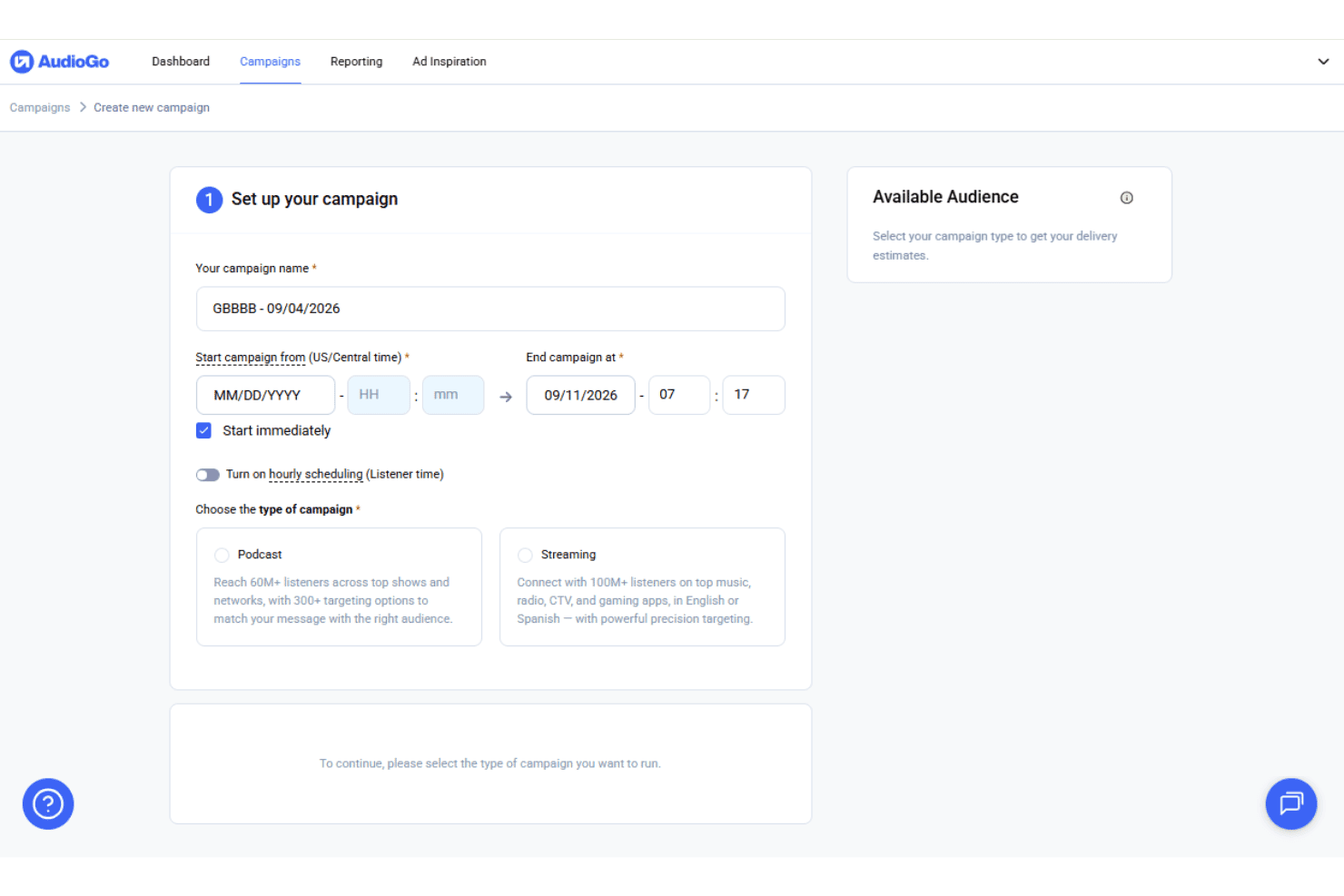
Set up, budget, and launch targeted audio ad campaigns in minutes from a web-based dashboard. You can select channels, define audiences, and set geo-targeting without contacting a sales rep.
Multi-Channel Audio Inventory
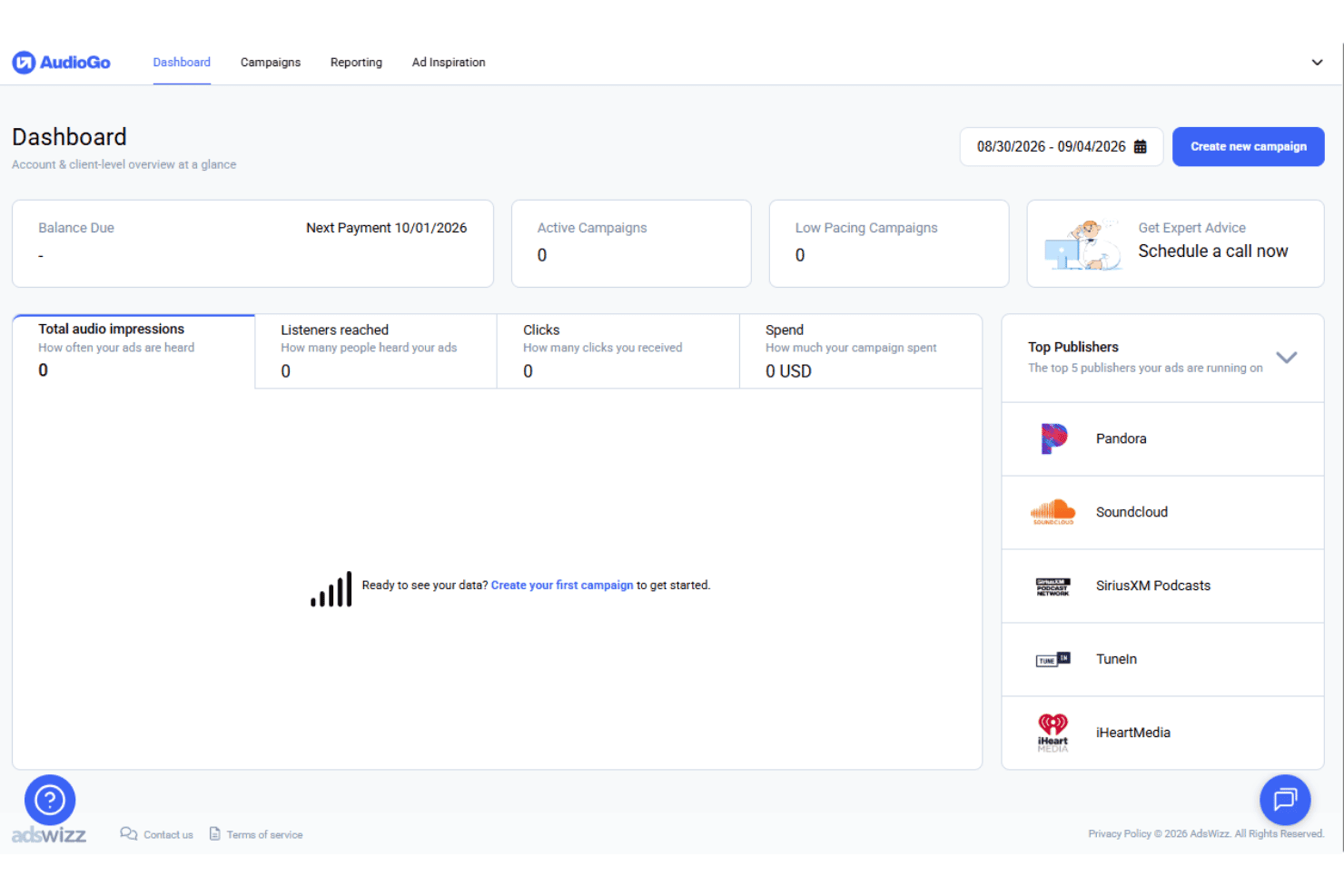
Access podcast, streaming, and broadcast radio placements from a single campaign workflow. Target your audience across iHeartRadio, TuneIn, podcasts, and AM/FM radio without splitting budgets or creative between platforms.
Audience Targeting and Segmentation
Choose audience parameters like age, gender, location, interests, device, and custom zip codes for precise reach. This makes your spend more efficient by only paying to reach the listeners you care about.
Real-Time Reporting Dashboard
Monitor impressions, reach, and basic campaign stats as soon as your ads go live. It’s easy to see where your ads are playing and how many people are hearing them.
Built-In Audio Ad Creative Tools
Script, voice, and produce audio ads using AudioGO’s integrated ad builder and voice talent features. If you don’t have a finished spot, you can generate one inside the platform before launching campaigns.
Transparent, Usage-Based Pricing
See clear CPM pricing and total campaign costs before you launch. There’s no minimum spend, so you can run small tests or scale up as needed.
Ease of Use
AudioGO is easy to use, even for first-time audio buyers, thanks to its clean, web-based dashboard and self-serve campaign setup. Users appreciate how quick it is to launch campaigns, select audience parameters, and monitor real-time reporting—all without needing to contact sales. I think its straightforward navigation and transparent pricing make it accessible for smaller teams or those new to audio ad buying.
Integrations
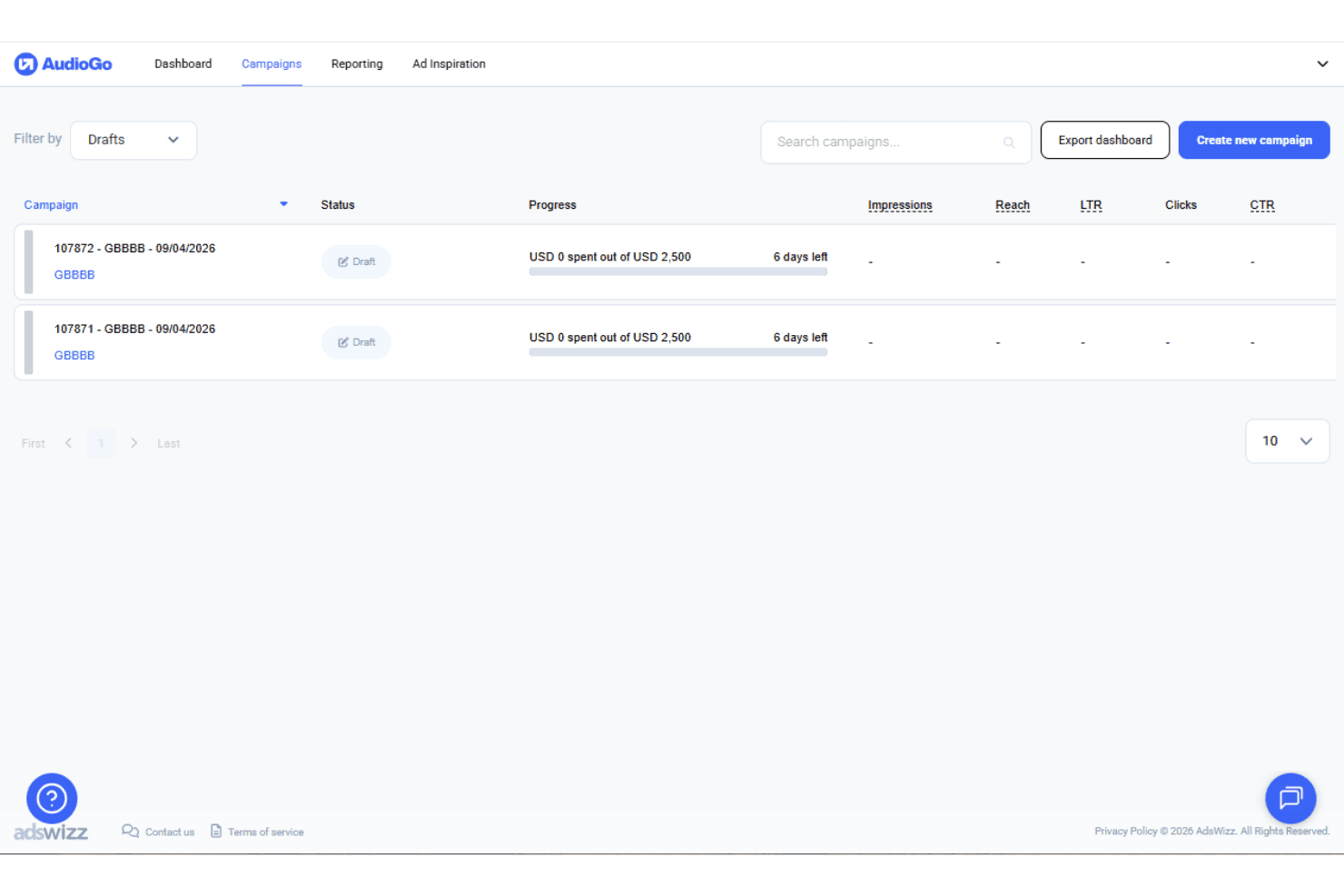
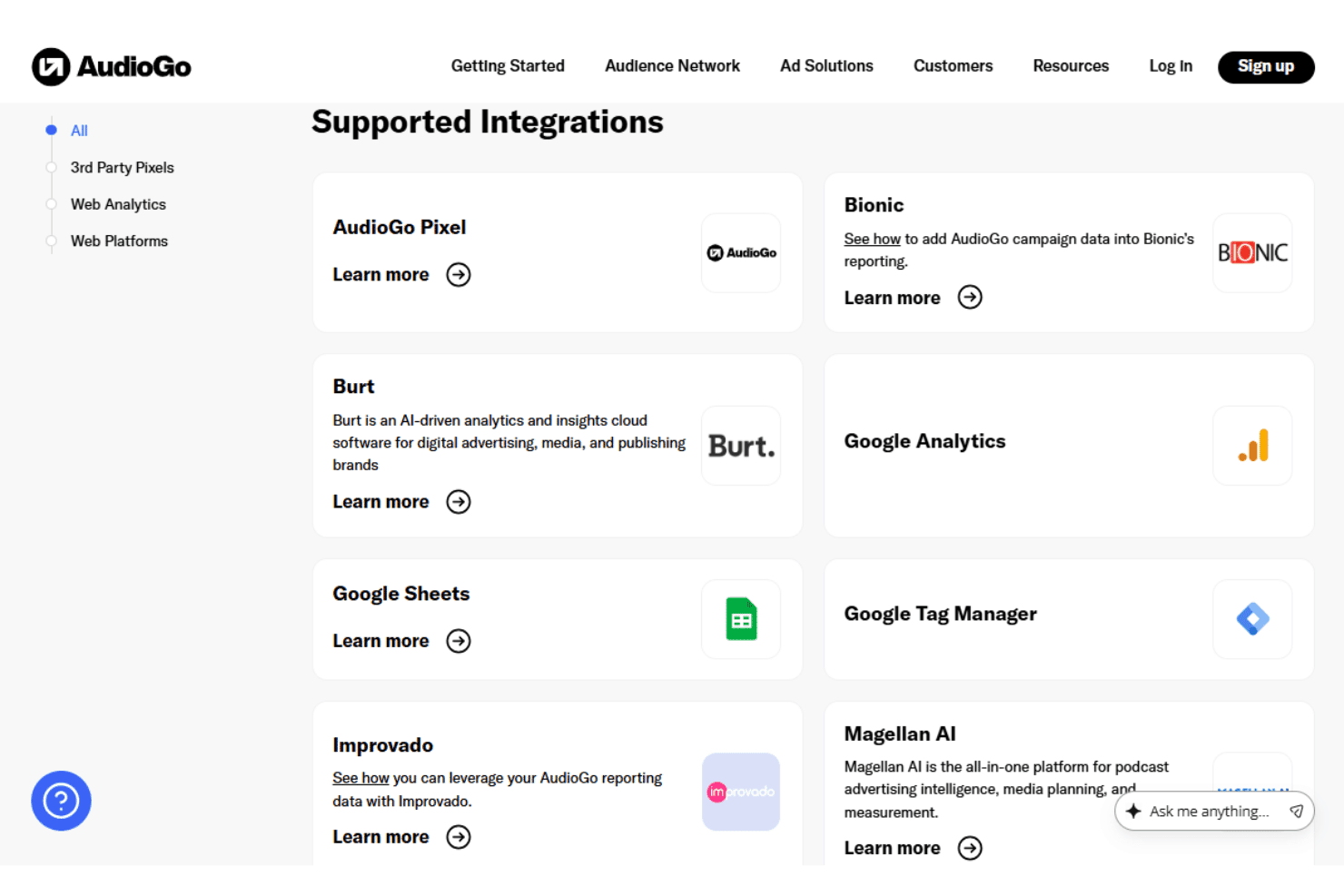
\AudioGO integrates with iHeartRadio, TuneIn, and podcasts, as well as AM/FM radio stations.
AudioGO does not advertise a public API or direct connections to third-party integration tools.
AudioGO Specs
- A/B Testing: Yes
- API: Yes
- Audience Targeting: Yes
- BitCoin: Yes
- Brand Management: Yes
- Budgeting: Yes
- Calendar Management: Yes
- Conversion Tracking: Yes
- Dashboard: Yes
- Data Export: Yes
- Data Import: Yes
- Data Visualization: Yes
- External Integrations: Yes
- Forecasting: Yes
- Marketing Automation: Yes
- Multi-User: Yes
- Notifications: Yes
- PayPal: Yes
- Scheduling: Yes
- Social-Media Integration: Yes
- Stripe: Yes
- Third-Party Plugins/Add-Ons: Yes


