


Avis ActiveCampaign 2026 : Avantages, Inconvénients, Fonctionnalités et Tarifs


Email campaigns start piling up, follow-ups slip through the cracks, and what used to be management in spreadsheets or basic email tools now feels scattered and hard to control. But the real bottleneck isn’t organization, it’s speed. Marketing teams spend weeks building campaigns manually, juggling disconnected tools, and reacting to problems after they’ve already hurt performance. This is where marketing automation software comes in.
This ActiveCampaign review walks through how the platform’s Active Intelligence transforms marketing from a manual, reactive process into an autonomous, predictive system. I’ll explore what the platform offers, how it performs in real team scenarios, and whether it delivers the speed, control, and business impact you need to move forward with confidence.
ActiveCampaign Evaluation Summary
- From $15/month (billed annually)
- 14-day free trial
Pourquoi faire confiance à nos recommandations de logiciels
Notre équipe teste et évalue des logiciels depuis 2012. En tant que leaders marketing nous-mêmes, nous savons à quel point il est difficile — et important — de choisir le bon logiciel.
Pour ce guide, nous avons évalué les outils grâce à des tests pratiques et une recherche indépendante, en notant les outils selon nos critères de sélection.
Nos avis reflètent notre jugement éditorial humain, et non un argumentaire de vente.
Réviseurs experts:
ActiveCampaign Overview
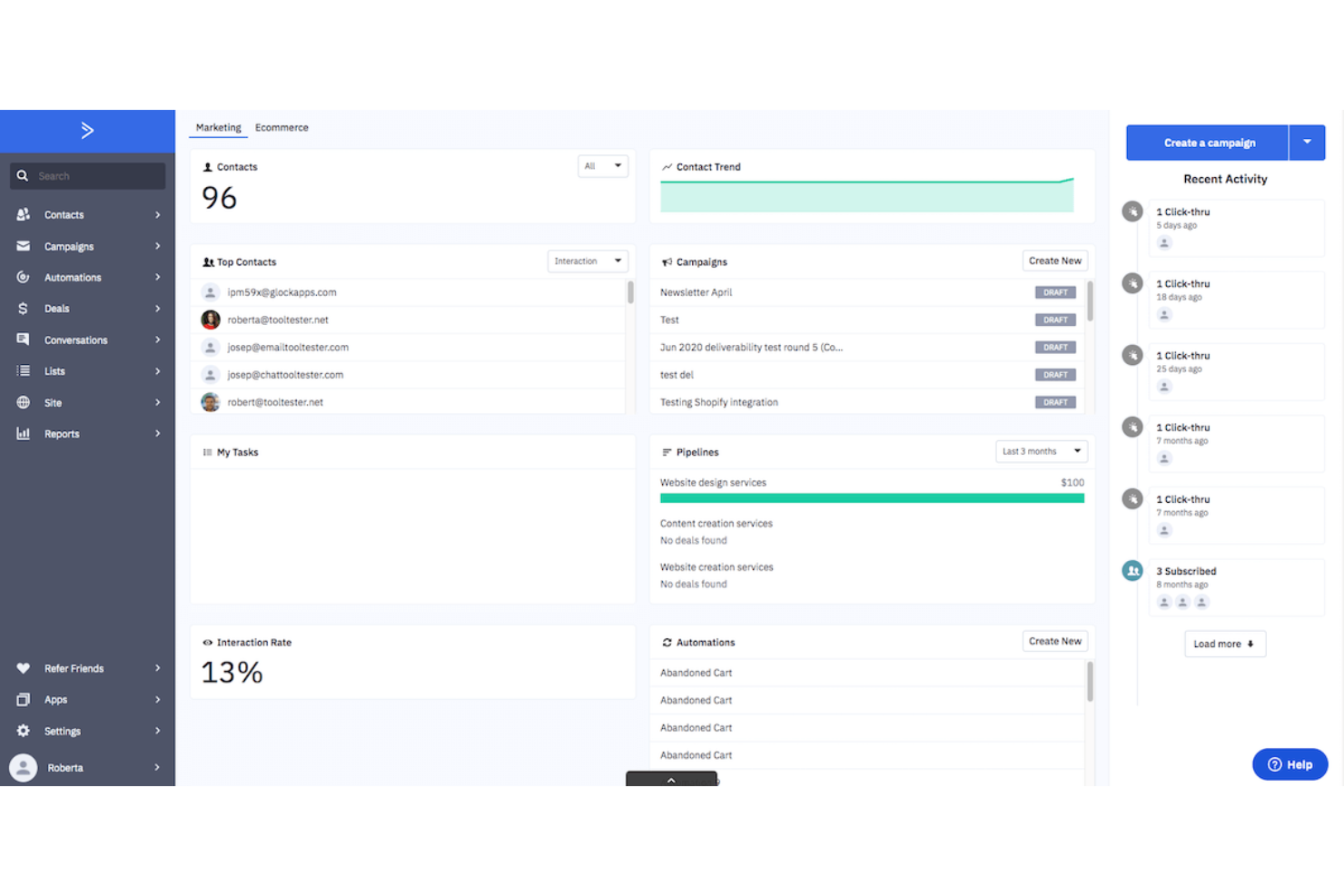
ActiveCampaign is an all-in-one platform that lets you build engaging marketing campaigns, including landing pages, email, SMS, WhatsApp, and automation to support personalized, behavior-driven customer journeys. It combines lead generation, personalization, tracking, and behavior automation in one tool so you can convert more, engage better, and act on insights faster.
Where other tools may make you build campaigns manually, ActiveCampaign builds them for you with Active Intelligence—AI agents that are trained on billions of data points to autonomously execute your goals. With leading deliverability, 1,000+ integrations, and the ability to build automated campaigns in just 5 clicks, ActiveCampaign delivers speed and sophistication without complexity.
pros
-
Offers market-leading email deliverability, free migration services, and 1:1 onboarding on all paid plans.
-
All-in-one platform combines email, SMS, WhatsApp, landing pages, CRM, and behavioral automation with over 1,000 integrations.
-
Active Intelligence builds campaigns for you from plain-language goals using AI trained on billions of data points, delivering campaigns in 5 clicks.
cons
-
The interface might feel a bit clunky compared to some competitors.
-
New users may find some of ActiveCampaign's more advanced features overwhelming, requiring time to learn.
-
Costs can rise as contact lists grow, especially for advanced features
Is ActiveCampaign Right For Your Needs?
Who Would be a Good Fit for ActiveCampaign?
ActiveCampaign is best for teams that need autonomous marketing execution, predictive intelligence, and multi-channel personalization without increasing their marketing ops team or budget. It fits businesses that want campaigns built in minutes instead of days, AI that flags problems before they impact revenue, and personalization across every platform that scales to thousands of contacts.”
-
Travel and Hospitality
Automate booking confirmations and post-stay engagement to improve guest retention and reviews.
-
Online Learning Creators
Deliver onboarding and lesson sequences automatically based on where learners are in your courses.
-
Healthcare Providers
Send appointment confirmations, reminders, and timely follow-ups with consistent communication.
-
Agencies
Manage segmented campaigns and automation workflows for clients without doing every step manually.
-
Ecommerce Stores
Trigger automated emails for abandoned carts and personalized product follow-ups tied to customer behavior.
-
SaaS Companies
Automate lead follow-ups and product onboarding sequences to nurture users through the trial and adoption cycle.
Who Would be a Bad Fit for ActiveCampaign?
ActiveCampaign is not built for every team. If your priorities lean toward extreme simplicity, heavy enterprise customization, or strict regulatory requirements, other tools may be a better match.
-
Large Enterprises
Teams that require deep system-wide customization and complex legacy integrations may outgrow ActiveCampaign’s flexibility.
-
Highly Regulated Organizations
Businesses that need strict compliance controls and industry-specific certifications may require more specialized platforms.
-
Teams Seeking Minimal Setup
If your team wants a plug-and-play email tool with little onboarding, ActiveCampaign’s learning curve may slow you down.
-
Organizations With Legacy Systems
Companies relying on outdated or proprietary systems may face integration limitations.
-
Budget-Constrained Teams at Scale
As contact lists grow, pricing can increase quickly, making it harder to justify long-term costs.
-
Users Needing Only Basic Email Sends
If your use case is limited to simple newsletters, ActiveCampaign’s automation depth may be unnecessary.
Comment nous testons et évaluons les outils
Nous avons passé des années à construire, affiner et améliorer notre système de test et de notation des logiciels. Notre grille d’évaluation est conçue pour prendre en compte toutes les nuances du choix logiciel et ce qui rend un outil efficace, en mettant l’accent sur les aspects critiques du processus de décision. Ci-dessous, vous pouvez découvrir précisément comment nos tests et notations fonctionnent selon sept critères. Cela nous permet d’offrir une évaluation impartiale des logiciels en fonction de la fonctionnalité principale, des fonctionnalités différenciantes, de la facilité d’utilisation, de l’onboarding, du support client, des intégrations, des avis clients et du rapport qualité-prix.
Fonctionnalité principale (25% de la note finale)
Le point de départ de notre évaluation est toujours la fonctionnalité principale de l’outil. Dispose-t-il des fonctions de base attendues ? Certaines de ces fonctionnalités sont-elles bloquées dans des offres tarifaires supérieures ? Nous attendons d’un outil qu’il soit à la hauteur des capacités fondamentales de ses concurrents.
Fonctionnalités différenciantes (25% de la note finale)
Ensuite, nous évaluons les fonctionnalités spéciales qui vont au-delà de ce que l’on trouve habituellement chez ce type d’outils. Un score élevé indique des fonctionnalités uniques ou spécialisées qui rendent le produit plus rapide, plus efficace, ou offrent une valeur ajoutée à l’utilisateur. Nous évaluons également la facilité d’intégration avec d’autres outils couramment utilisés pour élargir les possibilités et l’utilité du logiciel. Les outils offrant de nombreuses intégrations natives, des connexions tierces et un accès API pour bâtir des intégrations personnalisées obtiennent les meilleures notes.
Facilité d’utilisation (10% de la note finale)
Nous considérons la rapidité et la facilité d’exécution des tâches principales via l’outil. Les logiciels les mieux notés sont bien conçus, intuitifs à utiliser, proposent des applications mobiles, des modèles prêts à l’emploi, et simplifient des tâches parfois complexes.
Onboarding (10% de la note finale)
Nous savons combien l’adoption rapide par l’équipe est cruciale pour une nouvelle plateforme. Nous évaluons donc la facilité avec laquelle il est possible d’apprendre et d’utiliser un outil sans formation poussée. On mesure aussi la vitesse à laquelle un membre de l’équipe peut être opérationnel, sans expérience préalable. Les solutions bien notées requièrent peu ou pas d’assistance.
Support client (10% de la note finale)
Nous examinons la rapidité et la facilité avec lesquelles on peut obtenir de l’aide par téléphone, chat en direct ou base de connaissances. Les outils et sociétés offrant un support en temps réel sont favorisés ; les chatbots sont pénalisés.
Avis clients (10% de la note finale)
Au-delà de nos propres tests et évaluations, nous prenons en compte le score de recommandation nette des clients actuels et passés. Nous étudions leur propension, si l’occasion se présente, à réutiliser l’outil pour sa fonctionnalité principale. Un score élevé reflète donc un bon taux de recommandation.
Rapport qualité-prix (10% de la note finale)
Enfin, après avoir pris en compte tous les autres critères, nous confrontons le prix moyen des offres de base aux fonctionnalités principales et prenons en compte la valeur apportée par les autres éléments d’évaluation. Les logiciels qui offrent plus pour moins obtiennent une note supérieure.
Core Features
Email Marketing
Create and send targeted email campaigns using a drag-and-drop editor, templates, and personalization tools.
Marketing Automation
Build automated workflows that trigger emails and actions based on contact behavior, events, or lifecycle stages.
Sales CRM
Track contacts, deals, and interactions in a built-in CRM that connects marketing activity with sales follow-ups.
Audience Segmentation
Organize contacts using tags, custom fields, and behavior-based rules to deliver more relevant messaging.
Multi-Channel Messaging
Reach contacts beyond email using SMS, WhatsApp, and transactional messages from one platform.
Analytics and Reporting
Monitor campaign performance, automation outcomes, and engagement data to guide optimization decisions.
Standout Features
Active Intelligence (AI-Powered Automation)
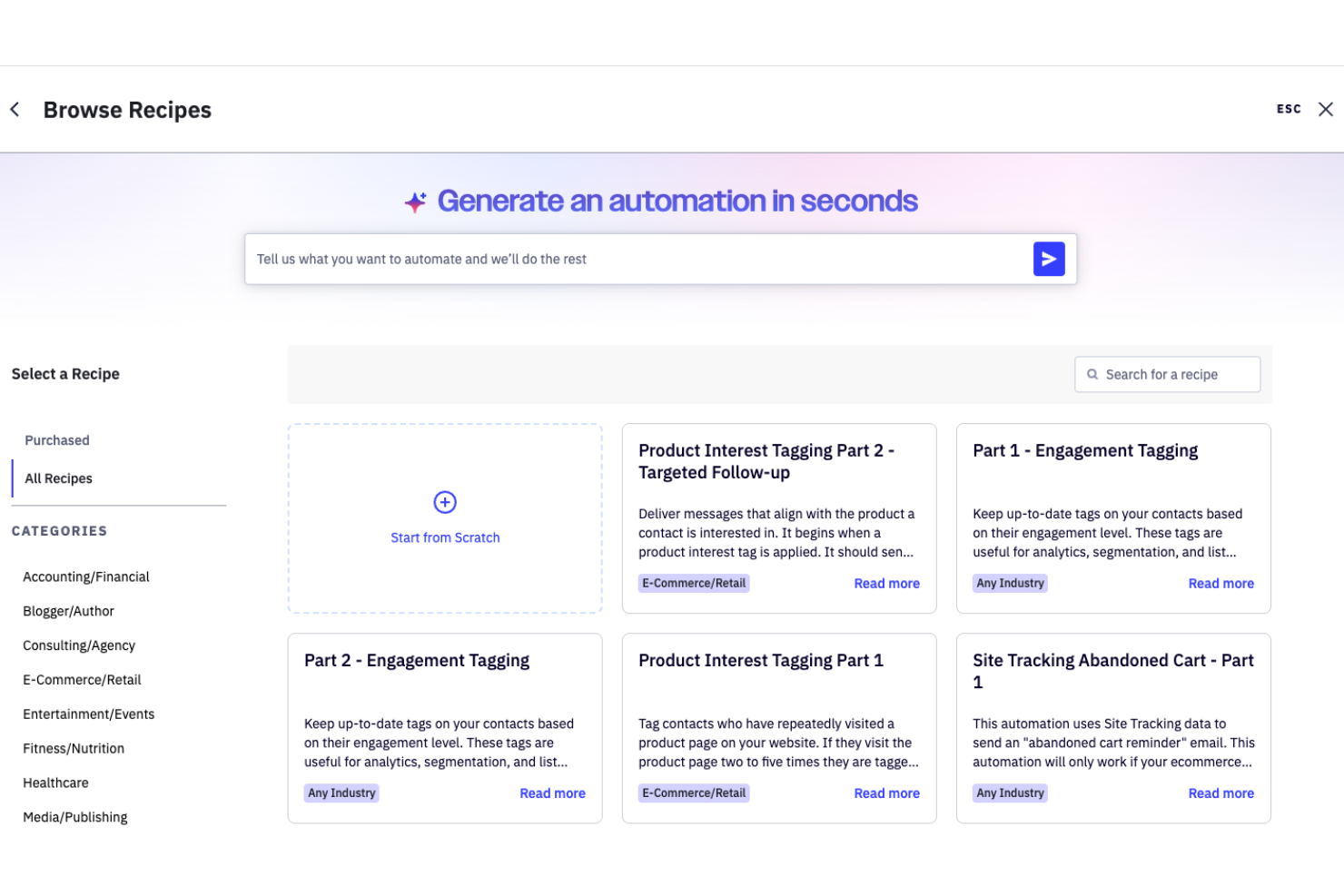
Go beyond AI assistance to fully autonomous execution. Describe goals in plain language, and AI agents trained on billions of customer interactions can build campaigns, optimize send times, create targeted segments, and proactively fix performance issues.
Site Tracking
Track website activity to trigger personalized follow-ups based on pages visited and actions taken.
Ease of Use
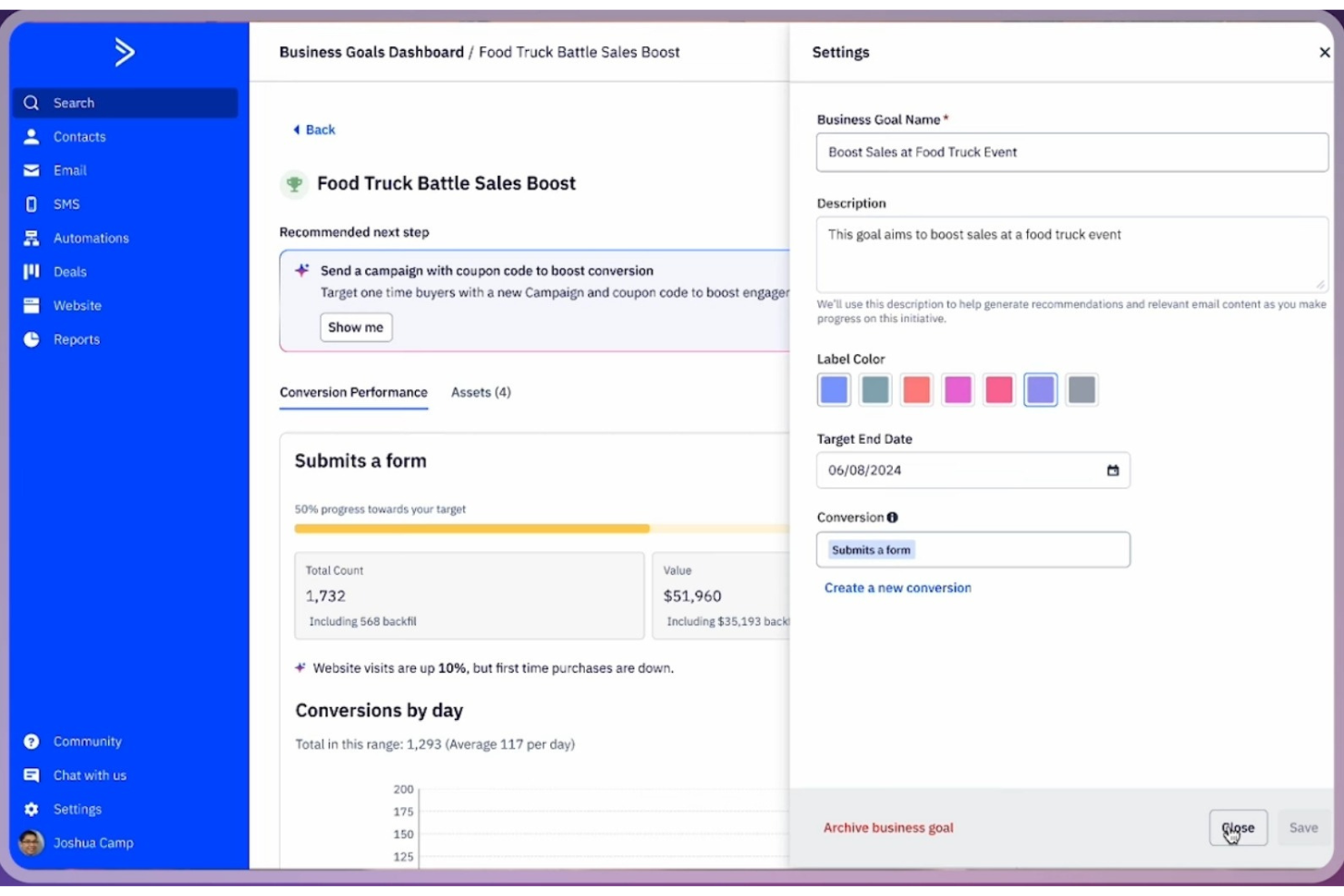
ActiveCampaign has a bit of a learning curve due to the depth of its automation and configuration options. While the interface can feel like a lot to absorb at first, it becomes more intuitive once workflows and features are set up. Then, you’ll be able to set up campaigns quickly. Teams that invest time in onboarding and setup typically find the platform flexible and efficient for managing complex marketing automations.
Onboarding
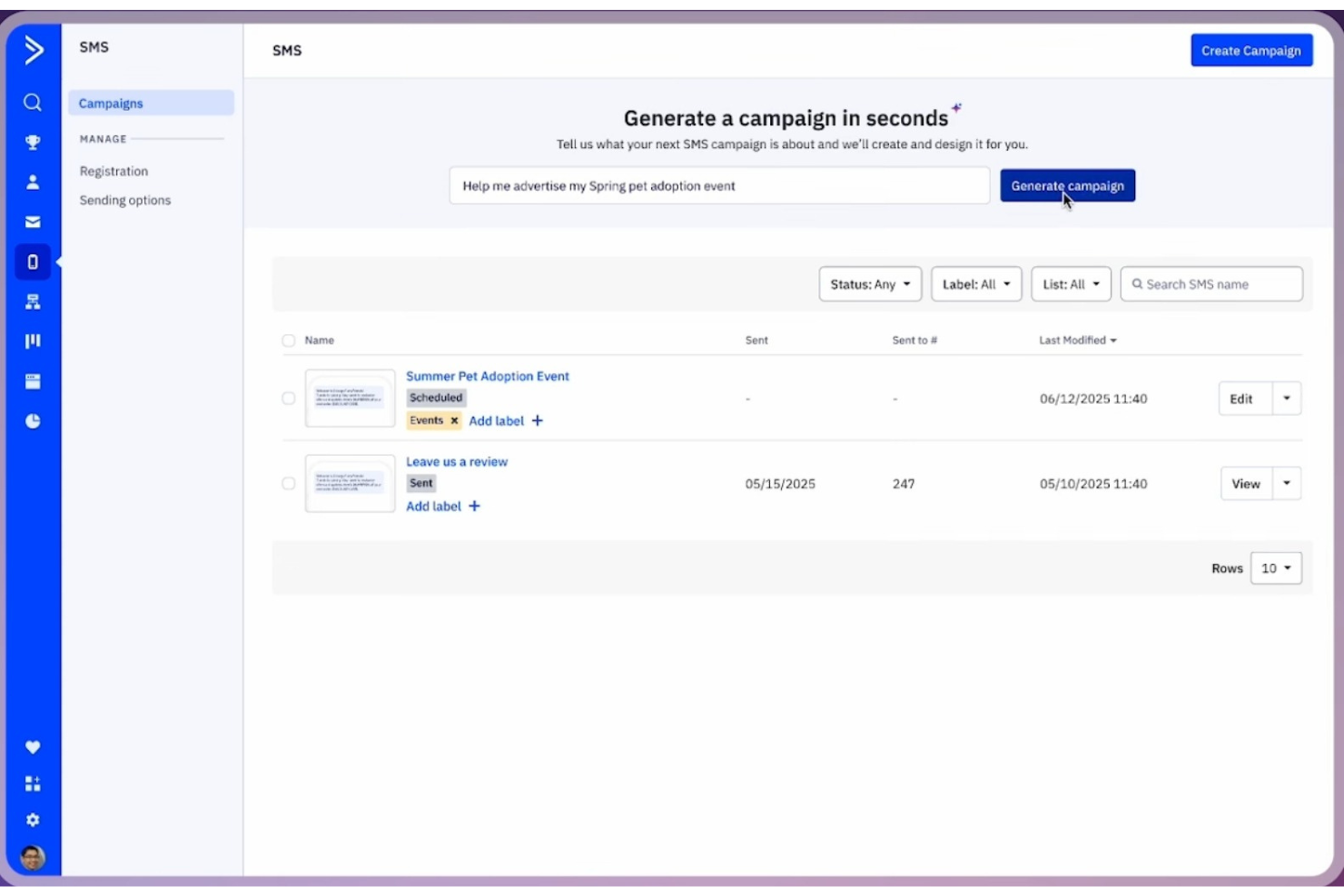
ActiveCampaign provides free one-on-one onboarding to help teams get started faster. New customers receive guided setup from an ActiveCampaign expert, including help with data migration, templates, and initial automations. This hands-on support reduces setup time and helps teams start running campaigns without unnecessary delays.
Customer Support
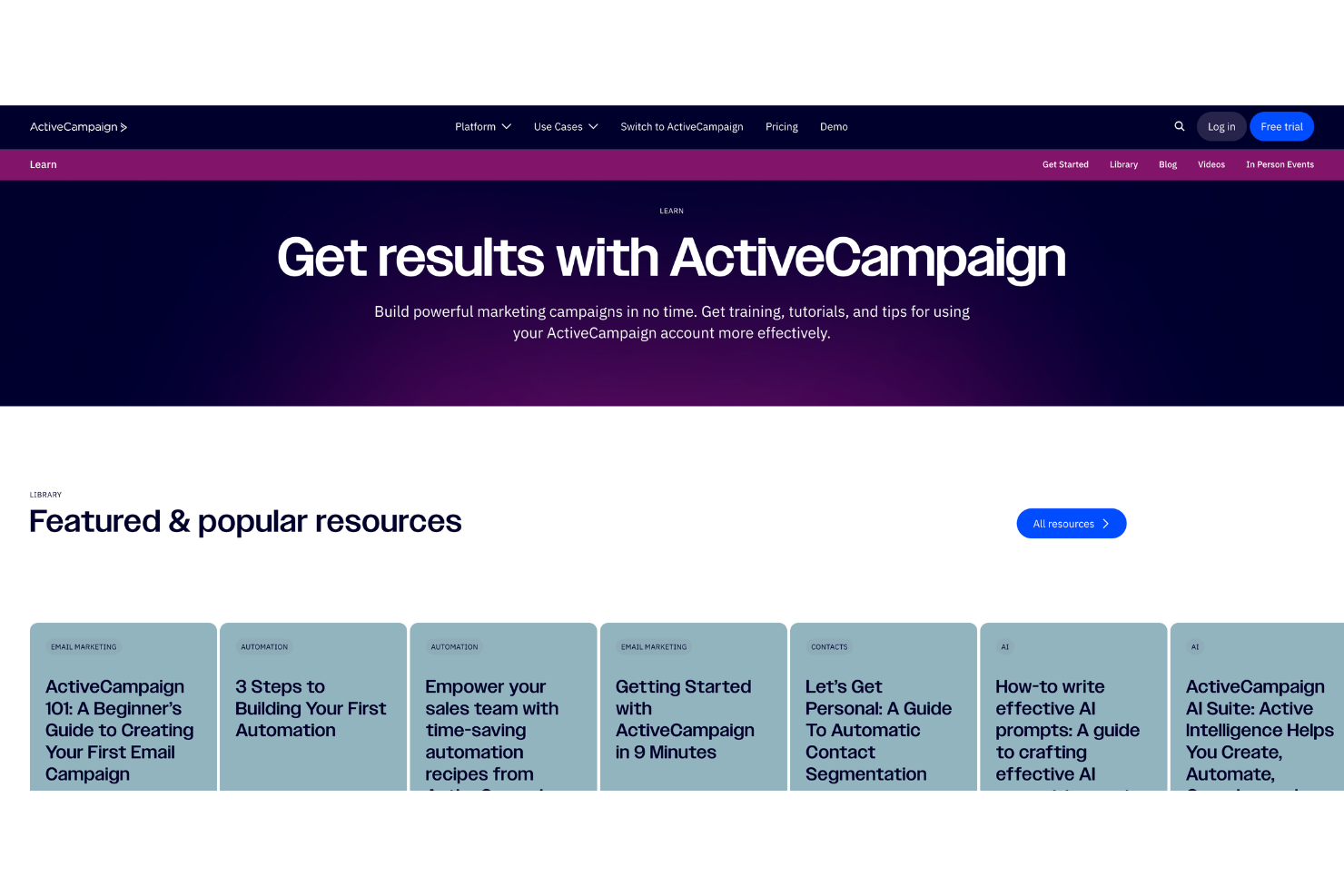
ActiveCampaign provides support through its help center, onboarding resources, and direct access to sales and specialists when needed. Customers can use documentation, training materials, and guided support to resolve issues or get set up faster.
Integrations
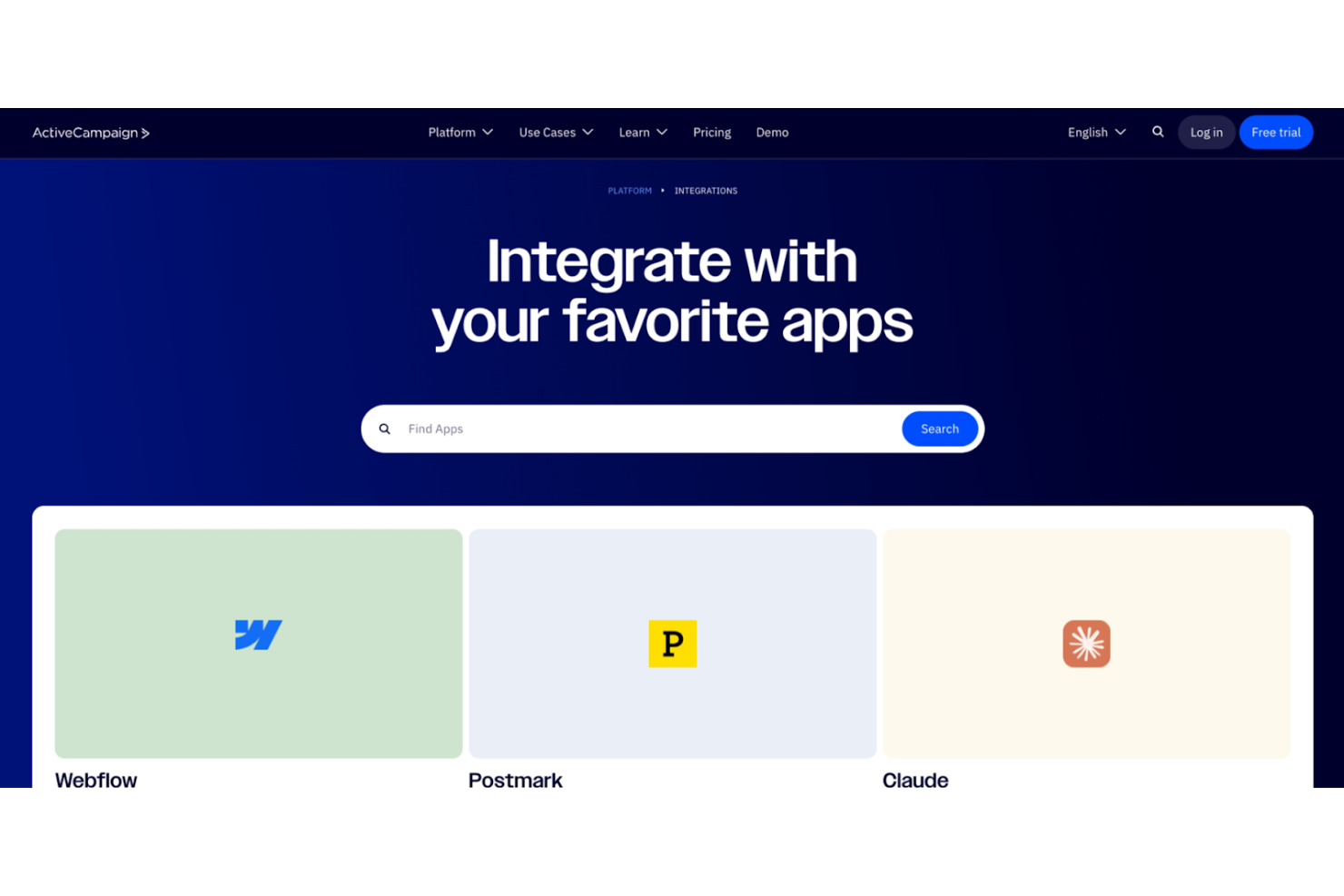
ActiveCampaign offers native integrations with widely used tools like Salesforce, Shopify, and WordPress, making it easier to connect marketing, sales, and customer data in one place.
For tools outside its native integrations, the platform does have API and Zapier support to help you extend workflows without added complexity.
Value for Money
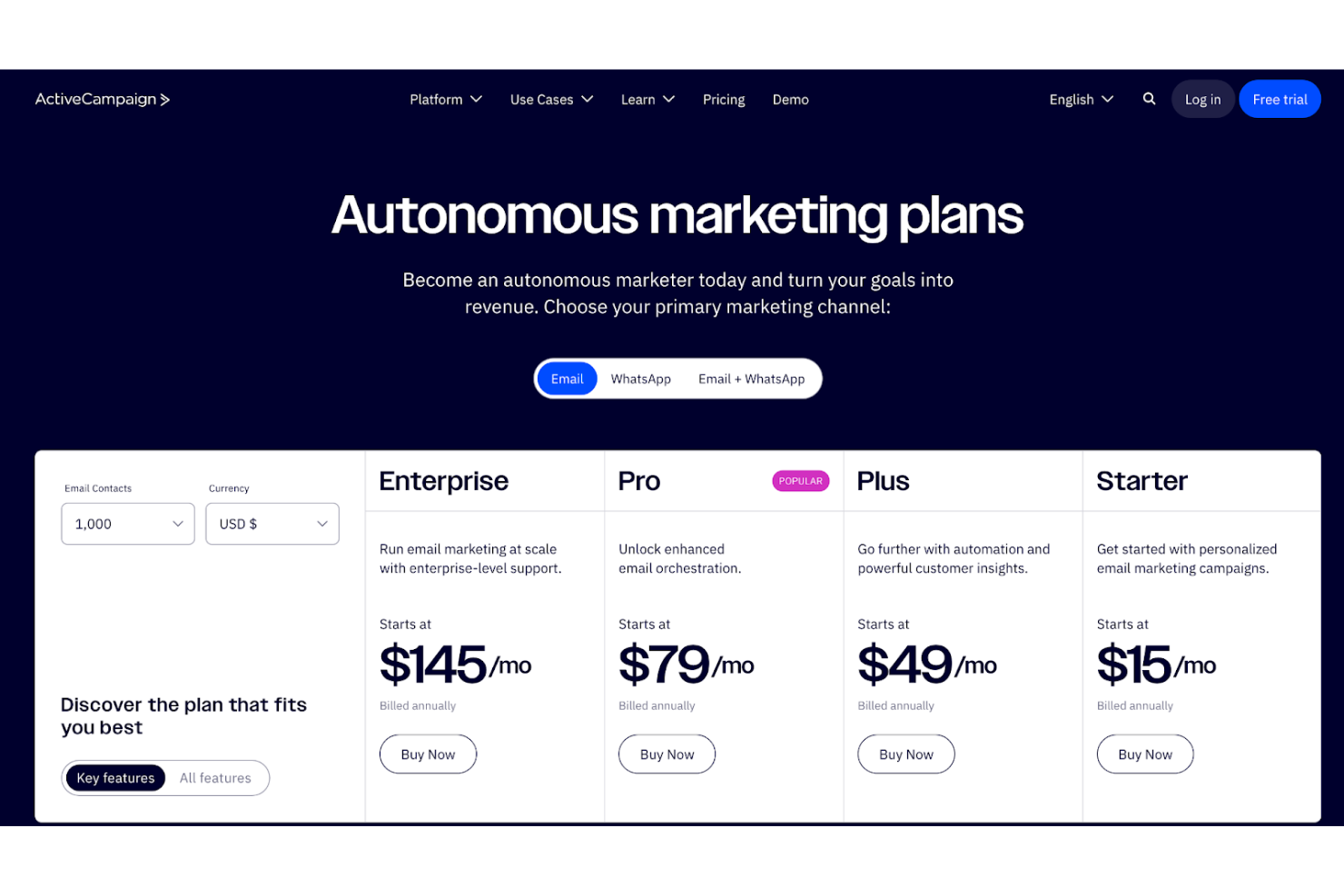
ActiveCampaign uses a tiered pricing model based on features and contact volume, allowing teams to scale as their needs grow. Plans are designed primarily for small to mid-sized businesses that want more advanced marketing automation over time.
- Starter: Includes core email marketing and basic automation tools for getting started.
- Plus: Adds advanced automation features, CRM functionality, and multi-channel messaging.
- Pro: Expands automation with predictive tools, deeper reporting, and optimization features.
- Enterprise: Offers custom solutions, advanced reporting, dedicated support, and higher limits for larger teams.
ActiveCampaign Specs
- A/B Testing
- Analytics
- API
- Audience Targeting
- Automated Conversion
- Batch Permissions & Access
- Behavioral Tracking
- Brand Management
- Campaign Management
- Contact Management
- Contact Sharing
- Conversion Tracking
- CRM Integration
- Customer Management
- Dashboards
- Data Export
- Data Import
- Email Integration
- External Integrations
- Keyword Tracking
- Landing Pages
- Lead Management
- Lead Scoring
- Link Tracking
- Marketing Automation
- Multi-User
- Notifications
- Password & Access Management
- Social-Media Integration
ActiveCampaign FAQs
What kind of customer support is available?
How customizable is ActiveCampaign?
How does ActiveCampaign handle data security and compliance?
Can ActiveCampaign support long-term business growth?
How easy is it to switch from another platform?
Does ActiveCampaign support team collaboration?
What is the learning curve like?
How does ActiveCampaign support email deliverability?
ActiveCampaign Company Overview & History
ActiveCampaign is a private marketing automation and CRM company founded in 2003 by Jason VandeBoom. Headquartered in Chicago, the company provides email marketing, automation, CRM, and customer experience tools to businesses worldwide.
ActiveCampaign serves 180,000+ customers across a wide range of industries and is known for its focus on automation, usability, and customer support.
ActiveCampaign Major Milestones
- 2003: Founded by Jason VandeBoom as a software company focused on helping small businesses grow.
- 2013–2014: Transitioned fully to a cloud-based SaaS model with a growing focus on marketing automation.
- 2021: Achieved unicorn status with a valuation exceeding $1 billion following major investment rounds.
- 2021: Expanded globally, growing its workforce to over 1,000 employees across multiple regions.
- 2022–2023: Continued scaling its automation platform and AI capabilities while remaining privately held.
- 2023–Present: Doubles down on AI-driven marketing solutions and platform integrations, positioning itself as a modern autonomous marketing platform for scaling businesses.