

Reseña de Ontraport 2026: ventajas, desventajas, funciones y precios
I put Ontraport’s automation, CRM, and pricing under the microscope to see whether its all-in-one approach truly simplifies marketing—or adds unnecessary complexity.

Revisamos herramientas de manera independiente, y las comisiones ayudan a financiar nuestras pruebas. Consulta nuestra política de transparencia, nuestra metodología o sugiere una herramienta.
Ontraport is a marketing automation software platform with CRM, email campaigns, sales automation, and ecommerce tools for businesses managing customer journeys across multiple channels. I’d consider it when you need one system for complex nurture sequences, sales follow-up, and online offers, especially if you want more built-in campaign and transaction controls than HubSpot provides.
Ontraport Evaluation Summary
4.3/5
- From $83/month (billed annually)
- 14-day free trial
Por qué confiar en nuestras recomendaciones de software
6,700+
Reviews
20
Industry experts
16+
Evaluation factors
14
Years
Nuestro equipo lleva probando y evaluando software desde 2012. Como líderes de marketing, sabemos lo difícil —y lo importante— que es elegir el software adecuado.
Para esta guía, evaluamos las herramientas mediante pruebas prácticas e investigación independiente, puntuando las herramientas según nuestros criterios de selección.
Nuestras reseñas reflejan nuestro criterio editorial humano, no un discurso de ventas.
Revisores expertos:
 Gui DrusinaDirector creativo
- Shriya GhateSenior Marketing Lead
 Amanda JacquesLíder de Marketing Ops

Ontraport Overview
I’d choose Ontraport when you need CRM, email and SMS automation, sales workflows, payments, ecommerce, and customer portals in one system. Its visual campaign builder, lead scoring, attribution, open API, and Zapier support cover more operational ground than simpler tools, while pricing remains reasonable for growing businesses. However, the customizable interface takes time to learn, and broad functionality can complicate onboarding. Support, migration assistance, setup services, and Ontraport University soften that learning curve. I think it best suits teams managing complex customer journeys, subscriptions, courses, or online offers that value control over simplicity.
Pros
- Visual campaign maps connect triggers, conditions, split tests, and goals.
- Built-in CRM, payments, SMS, and attribution cover full customer journeys.
- Contact-level funnel reporting supports lead scoring and ROI analysis.
Cons
- Complex automations require substantial training before teams can manage them.
- Subscription costs exceed lighter alternatives as contact volume grows.
- Some users report deliverability problems affecting open rates.
Is Ontraport Right For Your Needs?
Who Would be a Good Fit for Ontraport?
Ontraport fits businesses that need marketing automation alongside CRM, payments, websites, SMS, or membership features. Its visual campaign builder supports triggers, conditions, split tests, goals, tasks, and notifications. Teams with complex customer journeys can justify the learning curve, especially when they can use onboarding services, migration help, or Ontraport University.
- Membership BusinessesOntraport combines CRM, marketing automation, payments, websites, and membership features, giving membership businesses one system for managing customer journeys.
- Course CreatorsCourse creators can use automated campaigns, payments, websites, and membership features to manage enrollment-related communications and ongoing customer engagement.
- Ecommerce BrandsEcommerce brands that need marketing automation alongside payments and customer records can use Ontraport’s CRM, campaign builder, email, SMS, and payment features.
- Marketing TeamsMarketing teams managing complex campaigns can use triggers, conditions, split tests, goals, tasks, and notifications within Ontraport’s visual campaign builder.
- Automation SpecialistsAutomation specialists can build custom workflows through Ontraport’s campaign tools and connect external systems through its API, Zapier, Make, and other integration options.
- Growing BusinessesGrowing businesses that want CRM, automation, email, SMS, websites, and payments in one platform can choose plans starting at $83 monthly when billed annually for 500 contacts.
Who Would be a Bad Fit for Ontraport?
Ontraport is a poor match for teams that need a simple interface, quick setup, or a low monthly cost. Advanced campaigns require training and careful configuration, while added users, contacts, SMS, and CMS features can increase the total price. Smaller teams with limited automation needs may find its broader feature set difficult to justify.
- Small TeamsSmall teams with basic marketing needs may struggle with Ontraport’s learning curve and may not need its campaign, CRM, payment, and membership features.
- Newsletter TeamsTeams sending occasional newsletters may find Ontraport excessive because its visual campaigns support advanced triggers, conditions, tests, goals, tasks, and notifications.
- Lean StartupsLean startups with limited budgets may reject Ontraport because plans start at $83 monthly annually, with additional costs for users, contacts, SMS, and CMS features.
- Quick LaunchesTeams needing immediate setup may find Ontraport unsuitable because custom workflows often require training, careful configuration, and onboarding support.
- Low-Code UsersUsers who prefer a simple interface may find Ontraport difficult because its flexible campaign builder requires more setup than simpler marketing automation tools.
- Isolated ToolsTeams needing only a standalone email tool may not benefit from Ontraport’s broader CRM, payments, websites, membership, API, and automation capabilities.
Cómo Probamos y Puntuamos las Herramientas
Hemos dedicado años a construir, refinar y mejorar nuestro sistema de prueba y puntuación de software. El marco está diseñado para captar los matices de la selección de software y lo que hace a una herramienta eficaz, enfocándose en los aspectos críticos del proceso de decisión. A continuación, puedes ver exactamente cómo funcionan nuestras pruebas y puntuaciones en siete criterios. Esto nos permite brindar una evaluación imparcial de los programas basada en la funcionalidad principal, características destacadas, facilidad de uso, integración, soporte al cliente, reseñas de clientes y relación calidad-precio.
Funcionalidad Principal (25% de la puntuación final)
El punto de partida de nuestra evaluación siempre es la funcionalidad principal de la herramienta. ¿Cuenta con las funciones básicas que un usuario esperaría? ¿Alguna de esas funciones está reservada solo para planes de pago avanzados? Esperamos que, en esencia, una herramienta se mantenga al nivel de las capacidades mínimas de sus competidores.
Características Destacadas (25% de la puntuación final)
Después, evaluamos las características poco comunes y destacadas que van más allá de la funcionalidad típica de herramientas similares. Una puntuación alta refleja funciones especializadas o únicas que hacen el producto más rápido, eficiente o aportan un valor adicional al usuario. También evaluamos qué tan fácil es integrarse con otras herramientas habituales en el entorno tecnológico para expandir la funcionalidad del software. Las herramientas que ofrecen muchas integraciones nativas, conexiones de terceros y acceso a API para crear integraciones personalizadas tienen la mejor puntuación.
Facilidad de Uso (10% de la puntuación final)
Consideramos cuán rápido y fácil es ejecutar las tareas definidas en la funcionalidad central utilizando la herramienta. El software mejor puntuado está bien diseñado, es intuitivo, ofrece aplicaciones móviles, proporciona plantillas y hace que tareas relativamente complejas parezcan sencillas.
Incorporación (10% de la puntuación final)
Sabemos lo importante que es que un equipo adopte rápidamente una nueva plataforma, por eso evaluamos lo fácil que es aprender y usar una herramienta con la menor formación posible. Analizamos lo rápido que un integrante puede comenzar a usar la herramienta sin experiencia previa. Las soluciones mejor puntuadas requieren poco o ningún soporte.
Soporte al Cliente (10% de la puntuación final)
Vemos cuán rápido y sencillo es obtener ayuda por teléfono, chat en vivo o base de conocimientos. Las empresas y herramientas que ofrecen soporte en tiempo real logran la mejor puntuación, mientras que los chatbots obtienen la peor.
Reseñas de Clientes (10% de la puntuación final)
Más allá de nuestras propias pruebas y evaluaciones, consideramos el puntaje de recomendación de clientes actuales y anteriores. Revisamos la probabilidad de que, de poder elegir de nuevo, seleccionarían la herramienta por su funcionalidad principal. Un software con alta puntuación refleja una elevada recomendación de sus usuarios.
Relación Calidad-Precio (10% de la puntuación final)
Finalmente, considerando todos los demás criterios, revisamos el precio promedio de los planes básicos frente a las funciones y el valor de los demás factores de evaluación. El software que ofrece más por menos obtiene mejor puntuación.
Core Features
Campaign Automation
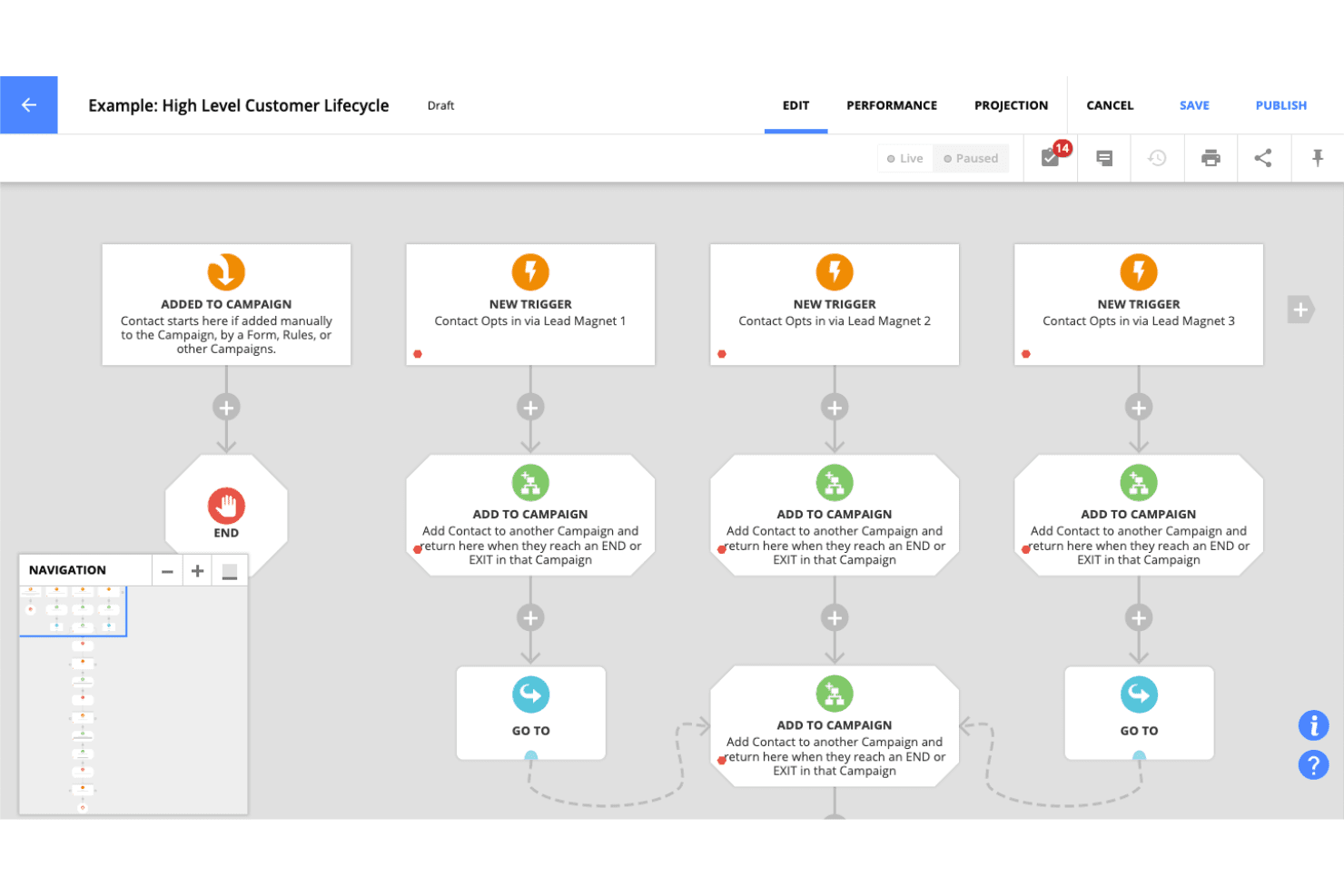
Ontraport’s drag-and-drop builder uses triggers, conditions, forks, goals, tasks, and notifications to map customer journeys. You can build paths for webinar follow-up, abandoned carts, onboarding, or upsells, then monitor conversions directly on the campaign map.
Email And SMS Messaging
Ontraport sends automated email and two-way SMS messages using drag-and-drop, plain-text, or HTML editors. Marketers can personalize follow-ups, use keywords for segmentation, and schedule messages according to each contact’s local time.
Contact Segmentation
Ontraport uses contact data, page visits, form submissions, purchases, and engagement activity to create targeted audience groups. This lets you send different messages to new leads, active customers, or contacts who abandoned a purchase.
Lead Scoring
Ontraport assigns scores based on marketing engagement, purchases, onboarding milestones, or other contact activity. Score changes can trigger sales alerts, automated follow-ups, and lead routing through round-robin, weighted, or custom rules.
Funnel Tracking And Attribution
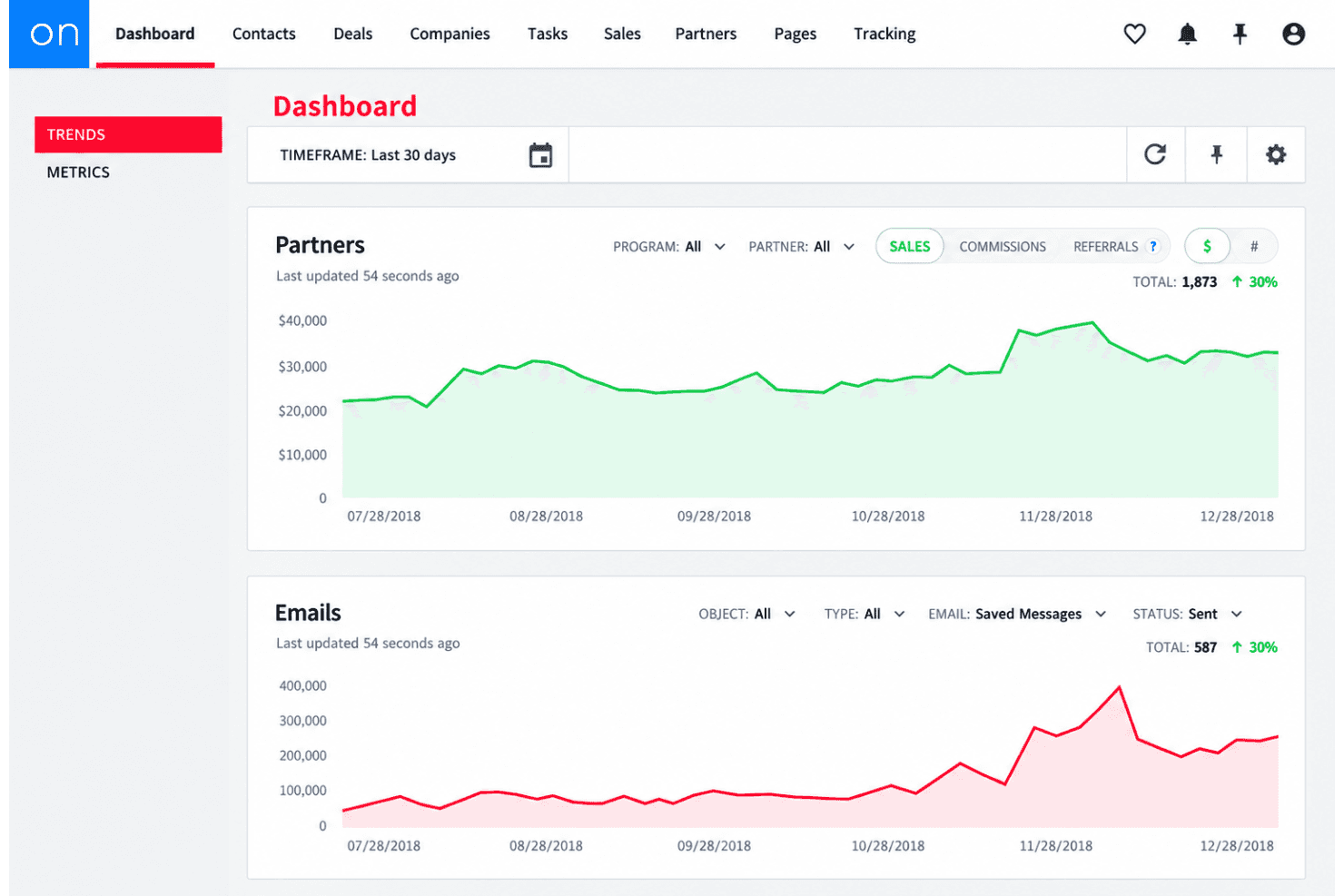
Ontraport tracks first- and last-click lead sources alongside email, page, and sales conversions. Campaign Performance Mode connects contact-level activity with conversion rates, time to convert, and lifetime value for channel and funnel analysis.
Split Testing
Ontraport lets you test different automation paths, rather than limiting experiments to email subject lines or page variations. You can compare messages, timing, and funnel sequences to identify which journey produces more conversions.
Ease of Use
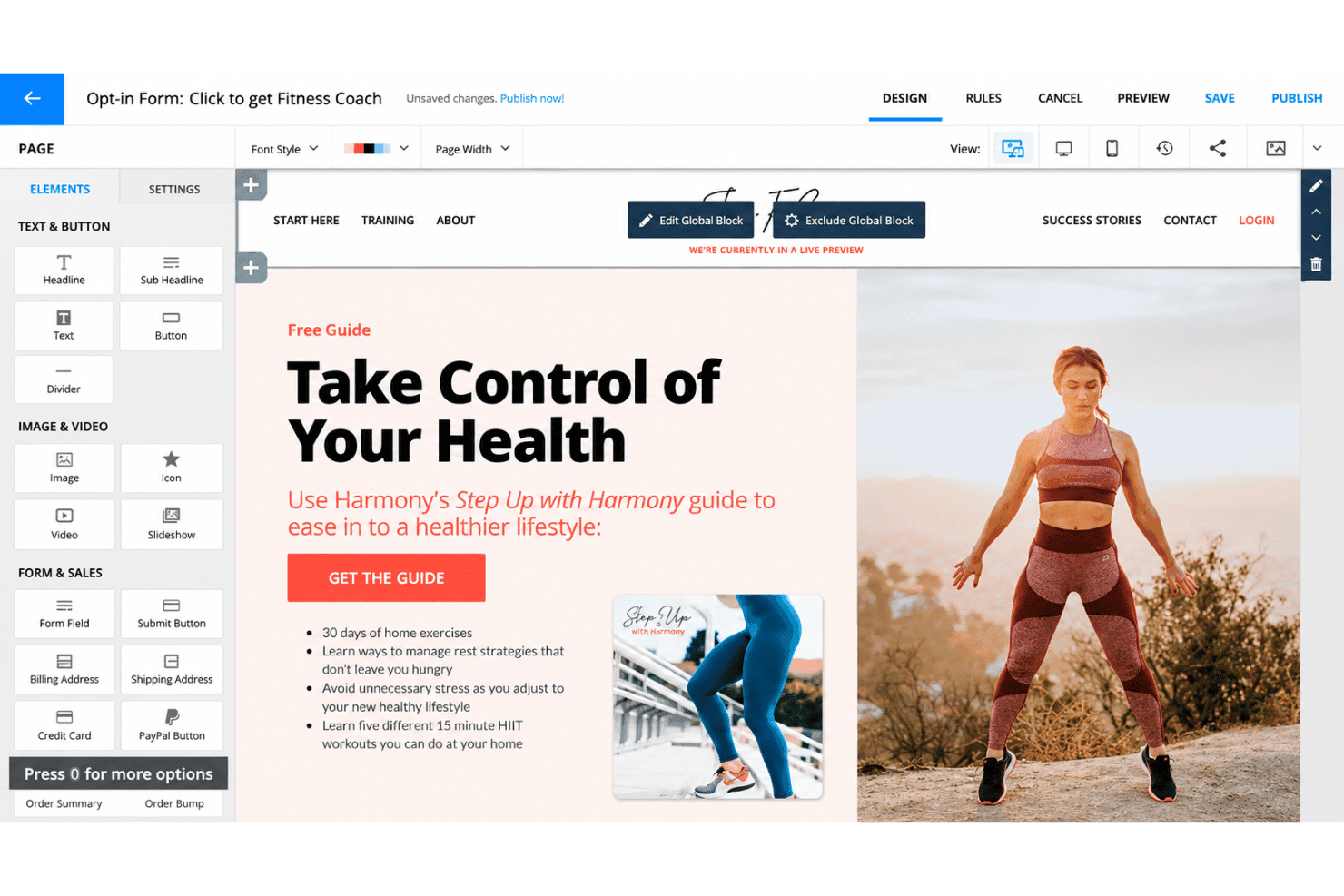
Ontraport is capable but takes time to learn. Its visual campaign builder gives you triggers, conditions, split tests, goals, tasks, and notifications in one workspace, yet that flexibility can make campaign setup feel complex. User feedback commonly points to a steep learning curve, especially for advanced automations and custom workflows. Support, migration help, setup services, and Ontraport University make adoption easier, but smaller teams may prefer a simpler interface.
Integrations
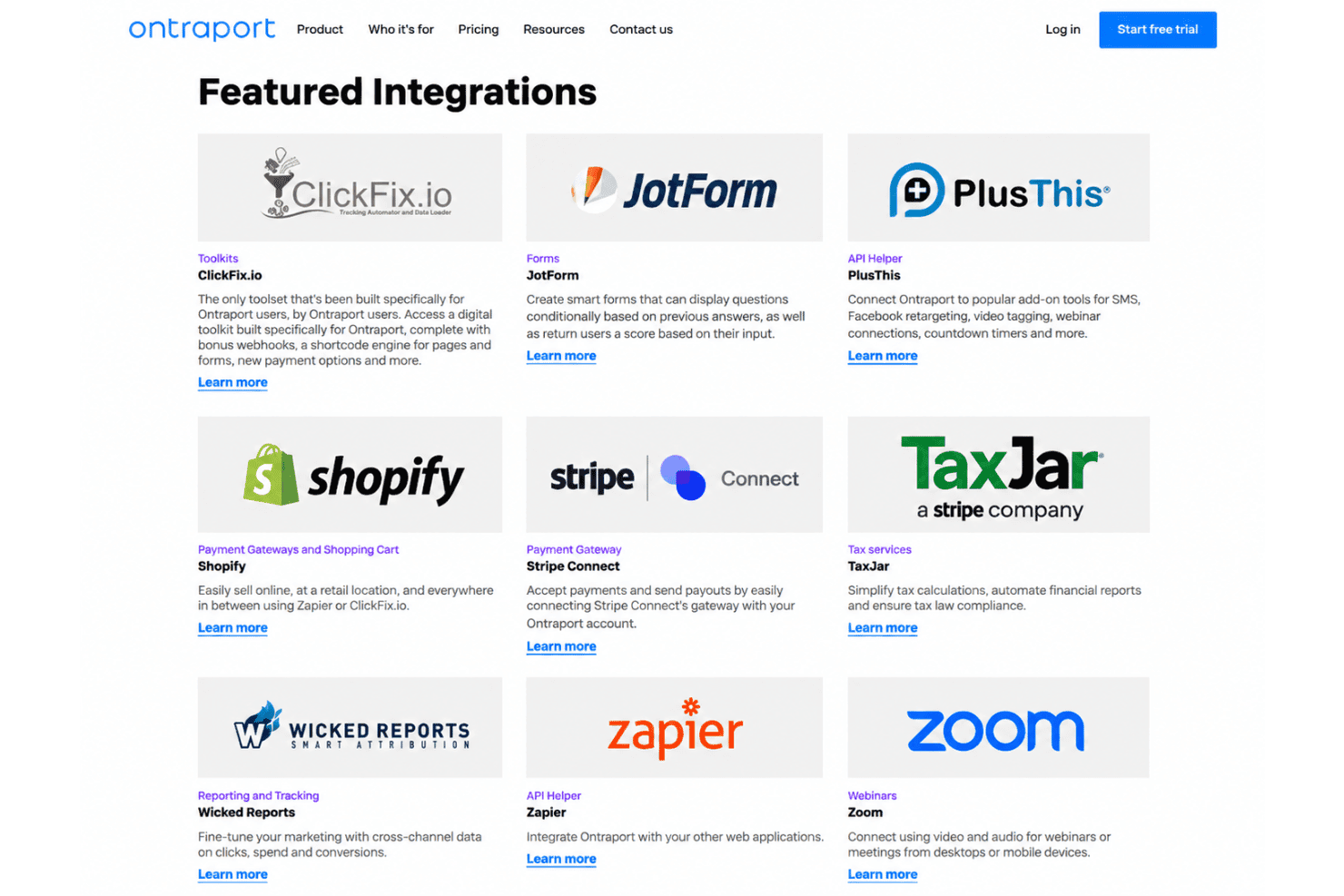
Ontraport offers built-in integrations with Facebook Connect Button, Facebook Custom Audiences, and UltraCart.
It also provides an API and supports third-party integration tools, including Zapier, Make, Apiant, ClickFix.io, Fuzed, PlusThis, Formstack Documents (formerly WebMerge), and WP Fusion.
Ontraport Specs
- A/B Testing: Yes
- Analytics: No
- API: Yes
- Audience Targeting: No
- Automated Conversion: No
- Batch Permissions & Access: No
- Behavioral Tracking: No
- Brand Management: Yes
- Campaign Management: No
- Contact Management: Yes
- Contact Sharing: Yes
- Conversion Tracking: Yes
- CRM Integration: No
- Customer Management: Yes
- Dashboards: No
- Data Export: Yes
- Data Import: Yes
- Email Integration: Yes
- External Integrations: Yes
- Keyword Tracking: No
- Landing Pages: No
- Lead Management: Yes
- Lead Scoring: Yes
- Link Tracking: No
- Marketing Automation: Yes
- Multi-User: Yes
- Notifications: Yes
- Password & Access Management: Yes
- Social-Media Integration: Yes


