

Un agente de marketing con IA utiliza inteligencia artificial para planificar, ejecutar y optimizar actividades de marketing con una intervención manual limitada. Estas herramientas pueden ayudar a gestionar campañas, crear contenido, segmentar audiencias y analizar el rendimiento.
Sin embargo, sus capacidades varían considerablemente. Algunos se centran en la producción de contenido, mientras que otros pueden ajustar presupuestos, crear audiencias o lanzar campañas en varios canales. He evaluado las principales opciones para ayudarte a encontrar el mejor agente de marketing con IA para tus objetivos, tu conjunto de tecnologías y tu presupuesto.
Por qué confiar en nuestras recomendaciones de software
6,700+
Reviews
20
Industry experts
16+
Evaluation factors
14
Years
Nuestro equipo lleva probando y evaluando software desde 2012. Como líderes de marketing, sabemos lo difícil —y lo importante— que es elegir el software adecuado.
Para esta guía, evaluamos las herramientas mediante pruebas prácticas e investigación independiente, puntuando las herramientas según nuestros criterios de selección.
Nuestras reseñas reflejan nuestro criterio editorial humano, no un discurso de ventas.
Revisores expertos:
 Gui DrusinaDirector creativo
- Shriya GhateSenior Marketing Lead
 Amanda JacquesLíder de Marketing Ops

Tabla comparativa de agentes de marketing con IA
Esta tabla comparativa resume los detalles de precios de mis principales selecciones de agentes de marketing con IA:
| Tool | Best For | Trial Info | Price | ||
|---|---|---|---|---|---|
| 1 | Ideal para codificar procesos de GTM reutilizables | Demo gratuita disponible | Desde $29/mes | Website | |
| 2 | Ideal para equipos de marketing con agentes múltiples sin código | Plan gratuito disponible | Precio a consultar | Website | |
| 3 | Ideal para la optimización autónoma de medios pagados | No disponible | Precio bajo solicitud | Website | |
| 4 | Ideal para la activación de campañas basadas en cuentas | Demostración gratuita disponible | Precios a consultar | Website | |
| 5 | Ideal para el descubrimiento predictivo de audiencias | Demo gratuita disponible | Desde $1,250/mes (facturado anualmente) | Website | |
| 6 | Ideal para la producción de contenido gobernada por la marca | Prueba gratuita de 7 días disponible | Desde $59/mes (facturado anualmente) | Website | |
| 7 | Ideal para mensajería adaptativa multicanal | Demo gratuita disponible | Precio a consultar | Website | |
| 8 | La mejor para inteligencia de campañas basada en CRM | Demostración gratuita disponible | Desde $1,500/mes (facturación anual) | Website | |
| 9 | Ideal para la ejecución de campañas nativas en HubSpot | Plan gratuito disponible | Precio bajo consulta | Website | |
| 10 | Ideal para la personalización de campañas de comercio electrónico | Plan gratuito disponible | Desde $14/mes | Website |


Opiniones sobre los mejores agentes de marketing con IA
A continuación encontrarás mis resúmenes detallados de los mejores agentes de marketing con IA que llegaron a mi selección. Mis reseñas ofrecen un análisis detallado de las funciones, los casos de uso más adecuados y las integraciones de cada plataforma para ayudarte a encontrar la mejor opción para ti.
 Ideal para codificar procesos de GTM reutilizables
- Demo gratuita disponible
- Desde $29/mes
Visit WebsiteCustomer Rating:4.4/5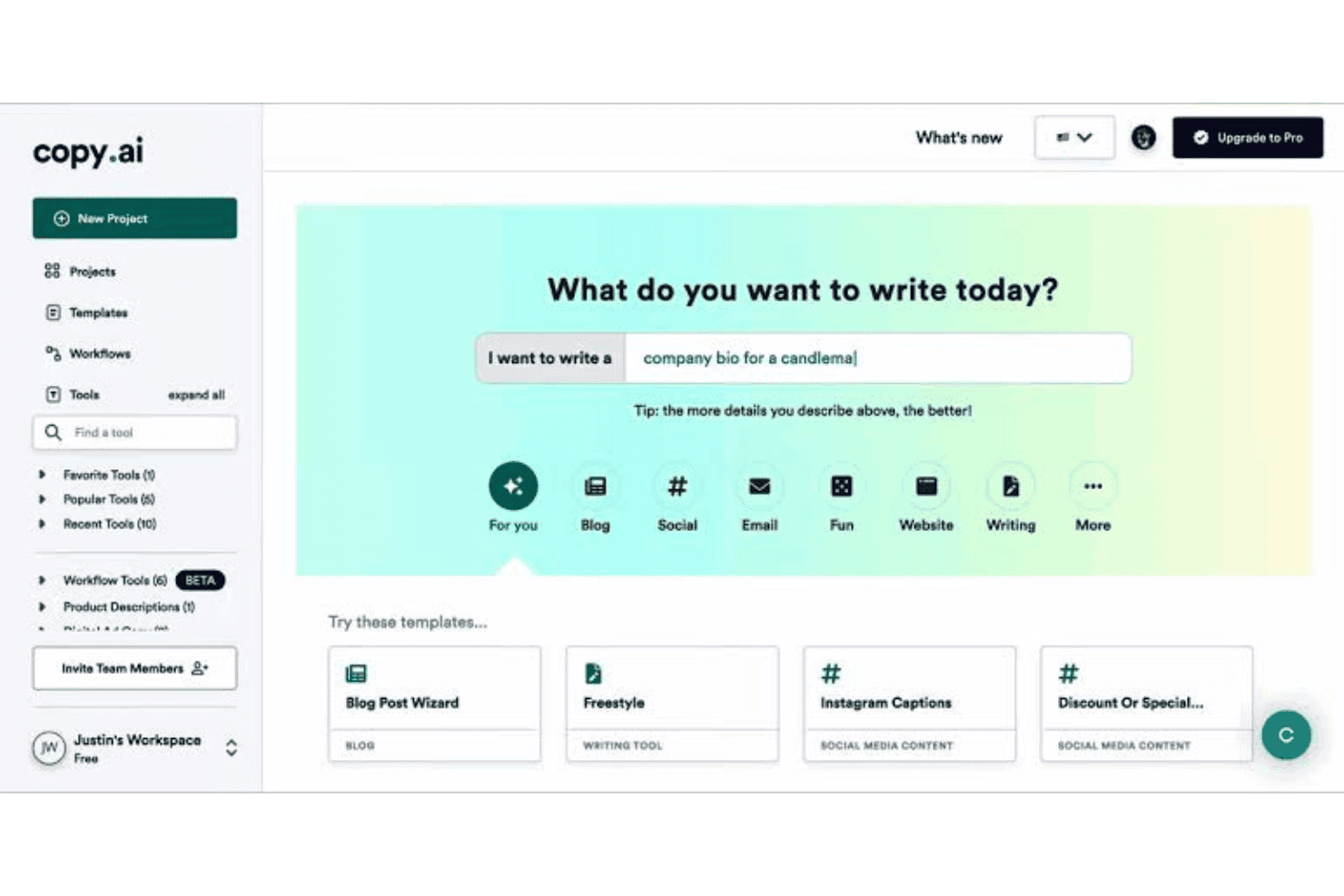
Copy.ai ofrece una interfaz de escritura basada en avisos con herramientas categorizadas como Blog, Social, Email y Sitio web para ayudar a los usuarios a generar contenido rápidamente. Copy.ai es una plataforma nativa de IA para GTM que combina automatización de flujos de trabajo, agentes de IA, generación de contenido e integraciones con CRM para ejecutar procesos de salida al mercado en funciones de ventas y marketing.
¿Para quién es Copy.ai?
Copy.ai es ideal para equipos B2B de medianas empresas y grandes empresas donde las operaciones de marketing y ventas están estrechamente alineadas en torno a una ejecución de GTM compartida.
Por qué elegí Copy.ai
He incluido Copy.ai en mis mejores opciones porque ninguna otra plataforma que haya utilizado facilita tanto convertir procesos de GTM repetibles en Workflows estructurados y reutilizables. Puedo codificar una secuencia ABM completa, una táctica de prospección o un proceso de localización una sola vez y desplegarlo en todo el equipo sin tener que reconstruirlo desde cero. Las funciones Infobase y Brand Voice permiten que cada resultado de workflow provenga de la misma fuente de verdad, así que la coherencia no es algo que deba supervisar manualmente.
Funciones clave de Copy.ai
- Content Agent Studio: Genera agentes de IA personalizados para producir activos de marketing alineados con tu marca a partir de entradas de ejemplo.
- Base de datos en Tablas: Estructura y consulta datos de marketing de múltiples fuentes para flujos de trabajo y automatizaciones.
- Controles de voz de marca: Asegura que los mensajes generados respeten el estilo único de tu marca y la terminología aprobada.
- Interfaz de chat por avisos: Interactúa con la plataforma mediante un chat de IA para tareas puntuales y solicitudes rápidas de contenido.
Integraciones de Copy.ai
Copy.ai ofrece integraciones nativas con HubSpot, Salesforce, Gong, Outreach y Salesloft, y se conecta con Zapier. Hay una API disponible para integraciones personalizadas.
Pros and Cons
Pros:
- Los flujos de trabajo de GTM reutilizables se despliegan sin necesidad de reconstruirlos cada vez
- Prospecting Cockpit investiga cuentas antes de iniciar la prospección
- Cumple con SOC 2 para equipos que gestionan datos sensibles de clientes
Cons:
- Los niveles de automatización de flujos de trabajo suben abruptamente de precio
- La profundidad de la plataforma requiere una configuración significativa antes de entregar valor
 Ideal para equipos de marketing con agentes múltiples sin código
- Plan gratuito disponible
- Precio a consultar
Visit WebsiteCustomer Rating:4.3/5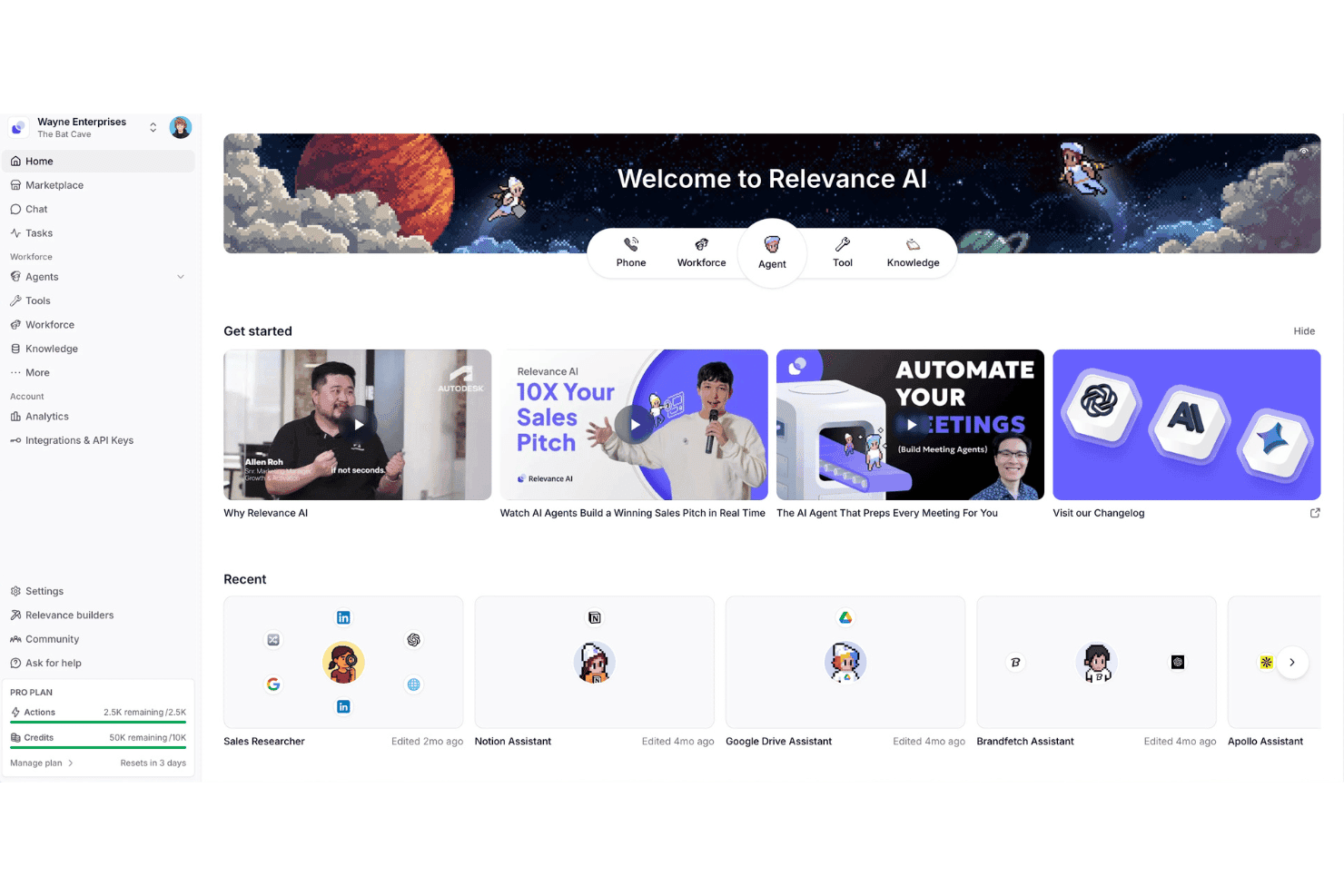
Relevance AI ofrece un panel de inicio con agentes de IA, herramientas y funciones de fuerza laboral para automatizar tareas de ventas y reuniones. Relevance AI es una plataforma de agentes de IA sin código que permite a los equipos de marketing crear, implementar y ejecutar fuerzas de trabajo de agentes múltiples para la calificación de leads, nutrición durante el ciclo de vida, reutilización de contenido e informes de campañas.
¿Para quién es mejor Relevance AI?
Es ideal para equipos de marketing y GTM de medianas y grandes empresas que desean crear flujos de trabajo personalizados de agentes sin depender de recursos de ingeniería.
Por qué elegí Relevance AI
Relevance AI se gana su lugar en mi lista gracias a cómo gestiona la orquestación de agentes múltiples para equipos de marketing. Me encanta el modelo de 'Fuerza Laboral', donde puedes crear agentes especializados (como un Calificador MQL y un Especialista en Ciclo de Vida) que trabajan en conjunto en vez de aislados. La función 'Inventar' es especialmente impresionante: describes el agente que necesitas en lenguaje natural, y la plataforma genera el prompt, las herramientas y la lógica de evaluación por ti, haciéndolo realmente accesible sin soporte técnico.
Características clave de Relevance AI
- Agentes de marketing preconstruidos: Accede a plantillas para calificación de MQL, nutrición en el ciclo de vida, reutilización de contenido y análisis de campañas.
- Integraciones nativas multicanal: Conéctate directamente con herramientas como correo electrónico, CRM, plataformas sociales y hojas de cálculo para una ejecución de extremo a extremo.
- Evaluación del rendimiento de los agentes: Utiliza evaluaciones incorporadas, pruebas A/B y análisis para revisar los resultados de los agentes y optimizar los flujos de trabajo.
- Gobernanza a nivel empresarial: Obtén cumplimiento SOC 2 Tipo II, registros de auditoría, enmascaramiento de PII, aprobaciones con intervención humana y monitoreo detallado.
Integraciones de Relevance AI
Relevance AI ofrece integraciones nativas con HubSpot, Salesforce, Google Sheets, Slack, LinkedIn, ZoomInfo y Gmail. También se conecta con Zapier y proporciona una API para integraciones personalizadas.
Pros and Cons
Pros:
- Creación de agentes sin código para especialistas en marketing no técnicos
- Fuerza laboral de agentes múltiples ejecuta tareas en paralelo
- Controles de aprobación integrados con intervención humana
Cons:
- La lógica de los agentes puede fallar en flujos de trabajo complejos
- Tiempo de configuración mayor que plataformas de agente único
Learn more about Relevance AI: Ideal para la optimización autónoma de medios pagados
- No disponible
- Precio bajo solicitud
Visit WebsiteCustomer Rating:4/5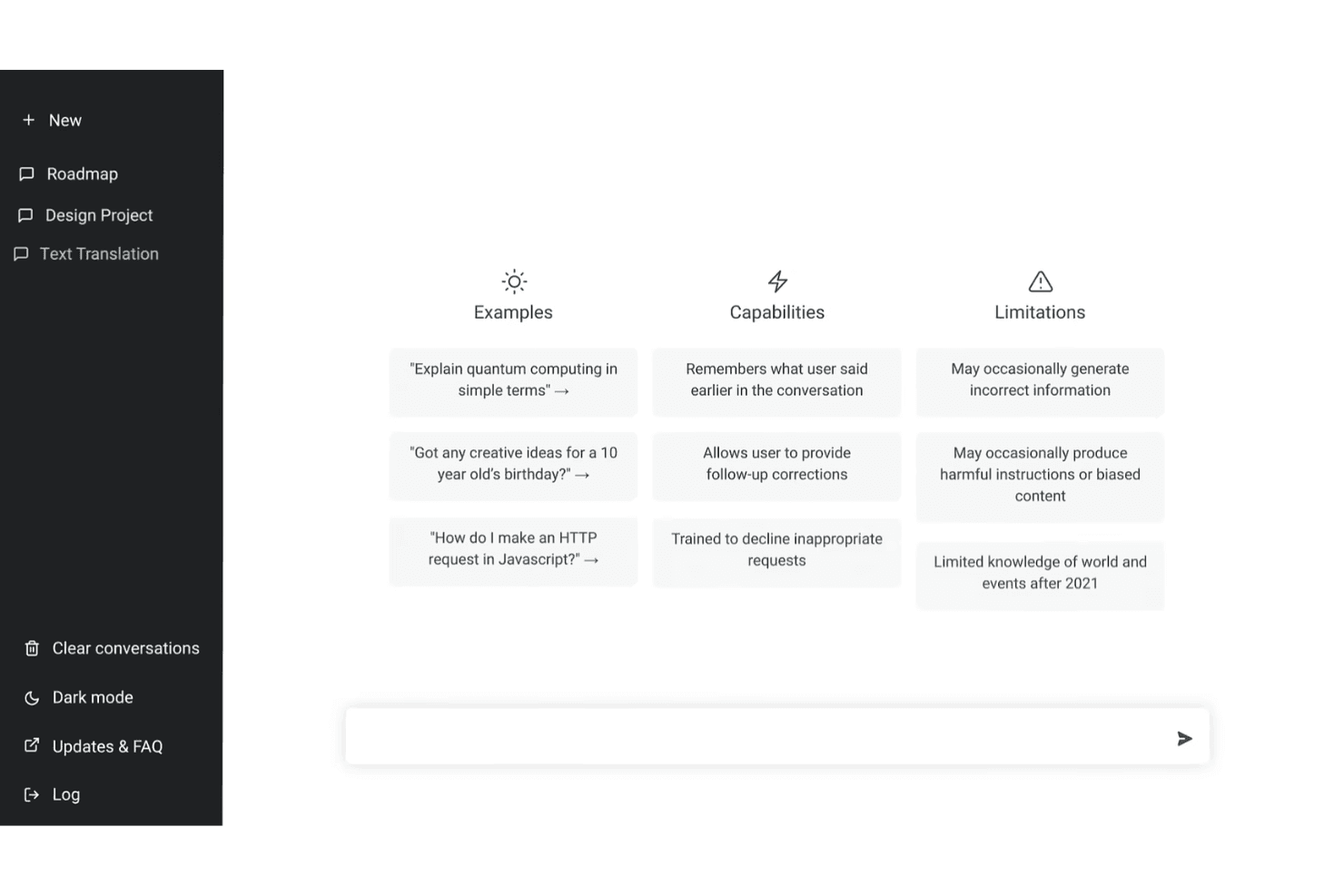
Albert.ai muestra una interfaz estilo ChatGPT con secciones de Ejemplos, Capacidades y Limitaciones junto a una barra lateral de conversación. Albert.ai es un agente autónomo de marketing con IA que gestiona y optimiza de forma independiente campañas de medios pagados en buscadores, redes sociales y canales programáticos, encargándose de las pujas, asignación de presupuesto, segmentación de audiencia y pruebas creativas en tiempo real.
¿Para quién es mejor Albert.ai?
Albert.ai es ideal para marcas B2C empresariales y agencias que manejan grandes presupuestos de medios pagados y desean delegar la ejecución táctica de campañas a una IA.
Por qué elegí Albert.ai
Albert.ai se gana un puesto entre los mejores en mi lista porque es una de las pocas plataformas que realmente toma decisiones autónomas en medios pagados, no solo señala oportunidades para que una persona actúe. Me encanta cómo realiza ajustes de pujas en tiempo real en Google Ads, Meta y canales programáticos simultáneamente, reasignando presupuesto hacia las audiencias de mejor rendimiento sin necesidad de ciclos de revisión semanales. Su motor de pruebas creativas multivariables rota los materiales publicitarios existentes e identifica combinaciones ganadoras a una velocidad inalcanzable para un equipo humano.
Características clave de Albert.ai
- Descubrimiento de audiencias multicanal: Encuentra y segmenta audiencias de alto valor en múltiples redes de medios pagados utilizando señales en tiempo real.
- Gestión de campañas orientada a objetivos: Permite introducir KPIs específicos para que la plataforma adapte las estrategias y el gasto automáticamente según tus objetivos.
- Informes de rendimiento continuos: Ofrece paneles de datos con métricas de campañas y audiencias en tiempo real para cada canal conectado.
- Modelado de audiencias similares impulsado por IA: Crea y ajusta audiencias similares basándose en datos de interacción y conversión en directo para ampliar el alcance.
Integraciones de Albert.ai
Albert.ai ofrece integraciones nativas con Google Ads, Bing, Facebook, Instagram, YouTube y Google Marketing Platform. Dispone de una API para integraciones personalizadas.
Pros and Cons
Pros:
- Ejecuta cambios de pujas y presupuesto completamente sin intervención humana
- Realiza pruebas creativas multivariables en varios canales simultáneamente
- Escala el volumen de campañas sin aumentar personal
Cons:
- Requiere una amplia biblioteca de recursos creativos para funcionar correctamente
- No cubre los canales de anuncios de LinkedIn y Amazon
Learn more about Albert.ai: 4Ideal para la activación de campañas basadas en cuentas
Tofu
- Demostración gratuita disponible
- Precios a consultar
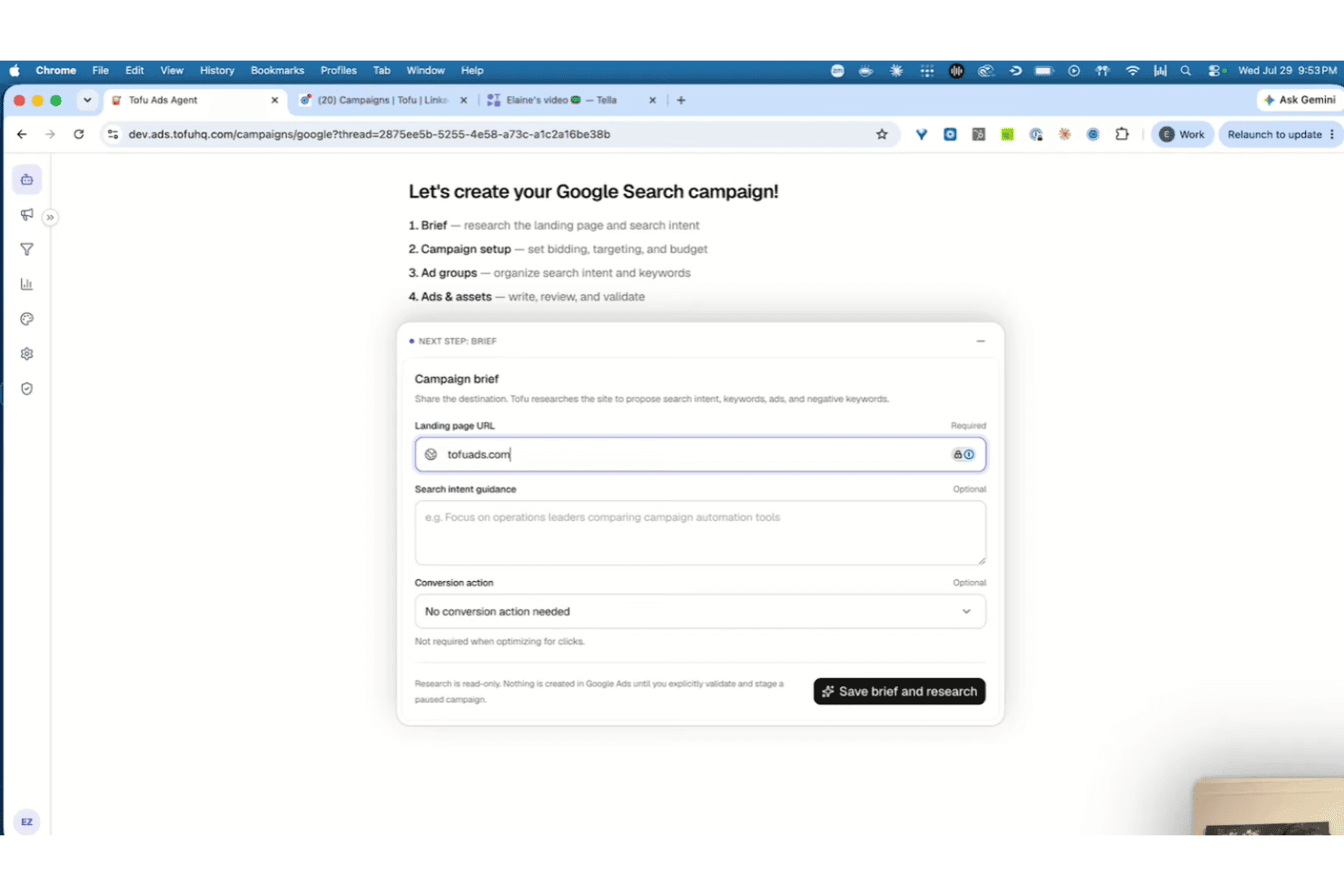
El Agente de Anuncios de Tofu guía a los usuarios a través de la creación de una campaña de Google Search ingresando una URL de página de destino e intención de búsqueda. Tofu es una plataforma de generación de demanda B2B nativa de IA que utiliza tres agentes de IA conectados para investigar cuentas, generar contenido de campaña personalizado y activarlo en correos electrónicos, páginas de destino y anuncios dentro de tus herramientas y CRM de marketing existentes.
¿Para quién es mejor Tofu?
Tofu es una excelente opción para equipos de marketing B2B de nivel medio y empresarial que ejecutan programas estructurados de ABM en múltiples verticales o segmentos objetivo.
Por qué elegí Tofu
Elegí Tofu como uno de los mejores porque su Agente de Investigación recopila información de más de 75 fuentes de datos, incluidas notas sobre etapas del acuerdo, razones de cierre perdido y tecnografía, para construir un contexto de la cuenta antes de que se cree cualquier activo. Esa inteligencia sobre la cuenta se alimenta directamente al Agente de Creación, que genera páginas de destino y secuencias de correo electrónico personalizadas adaptadas a la etapa de compra específica de cada cuenta. En la práctica, eso significa que puedo activar una campaña completa de ABM, desde la investigación hasta el lanzamiento, sin tener que explicar manualmente cada activo.
Características clave de Tofu
- Ingesta automatizada de activos de marca: Tofu importa y actualiza automáticamente tus directrices de marca, mensajes y datos de personas compradoras para un contenido de campaña consistente.
- Despliegue multicanal de campañas: Envía campañas a través de correo electrónico, páginas de destino, anuncios y LinkedIn desde una sola plataforma unificada.
- Flujos de aprobación y colaboración: Herramientas integradas permiten que los miembros del equipo revisen, editen y aprueben los activos de la campaña antes de su lanzamiento.
- Integración personalizada con Salesforce y HubSpot: Se sincroniza directamente con tu CRM para mostrar notas de oportunidades en tiempo real y conectar acciones de campaña con los datos de la cuenta.
Integraciones de Tofu
Tofu ofrece integraciones nativas con Salesforce, HubSpot, Marketo y Outreach. Hay una API disponible para integraciones personalizadas.
Pros and Cons
Pros:
- Personalización profunda a nivel de cuenta en los activos de campaña
- El Agente de Investigación recopila información de más de 75 fuentes de datos
- Activación completa de campañas ABM desde una sola plataforma
Cons:
- Limitado solo a casos de uso B2B
- La configuración requiere datos de CRM de alta calidad
Learn more about Tofu: Ideal para el descubrimiento predictivo de audiencias
- Demo gratuita disponible
- Desde $1,250/mes (facturado anualmente)
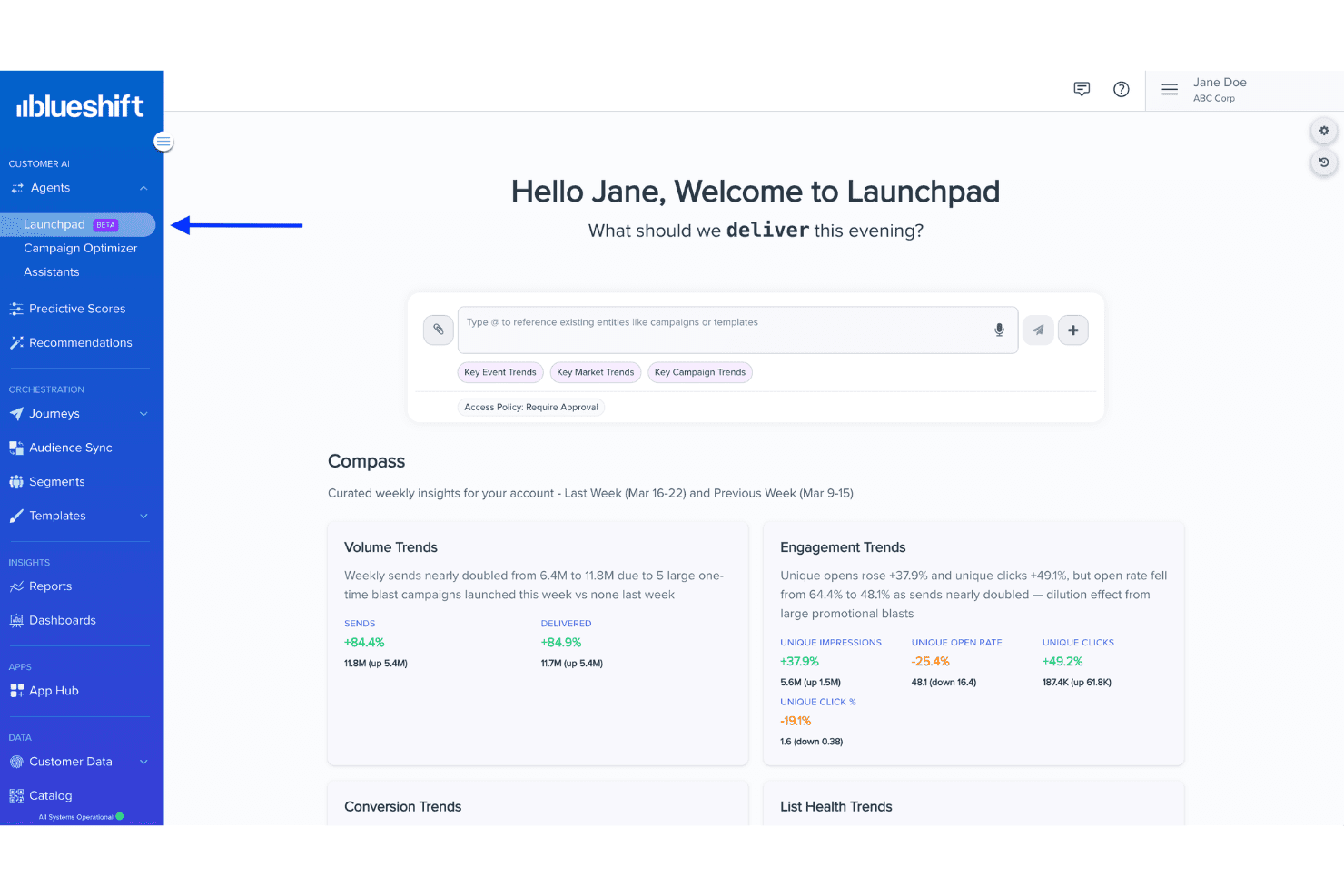
Blueshift ofrece un panel Launchpad impulsado por IA con insights semanales de Compass que cubren volumen, interacción y tendencias de campañas. Blueshift es una plataforma de interacción con clientes impulsada por IA que combina un CDP nativo con IA agentica para ejecutar segmentación predictiva, orquestación de campañas multicanal y personalización 1:1 en correo electrónico, SMS, notificaciones push, in-app y web.
¿Para quién es mejor Blueshift?
Blueshift es ideal para marcas B2C de tamaño medio y empresarial con necesidades complejas de datos de clientes y equipos dedicados de operaciones de marketing.
Por qué elegí Blueshift
Incluí Blueshift en mis principales selecciones porque su super agente Compass explora continuamente los perfiles de clientes unificados para revelar oportunidades de audiencia antes de que pienses en buscarlas. Adjunta resultados previstos a cada idea que presenta, por lo que no tienes que adivinar el impacto. Combinado con un modelado de intención patentado que predice el canal y el momento adecuado para cada individuo, la capa de descubrimiento de audiencias es genuinamente predictiva en lugar de retrospectiva.
Características clave de Blueshift
- Constructor de campañas omnicanal: Lanza y automatiza flujos de trabajo a través de correo electrónico, SMS, notificaciones push, in-app y web desde una sola interfaz.
- Diseñador de recorridos de arrastrar y soltar: Visualiza y edita secuencias de interacción con clientes de varios pasos sin necesidad de código.
- Integraciones nativas con Shopify y comercio electrónico: Conecta los datos de la tienda directamente para obtener activadores en tiempo real y mensajes personalizados.
- Motor de segmentación avanzada: Crea segmentos de audiencia dinámicos basados en comportamiento, utilizando perfiles de clientes unificados y eventos en tiempo real.
Integraciones de Blueshift
Blueshift ofrece más de 100 integraciones nativas, incluidas Salesforce, HubSpot, Shopify, Magento, BigCommerce, Marketo, Braze, Segment, Snowflake y S3. Se dispone de una API para integraciones personalizadas.
Pros and Cons
Pros:
- La IA patentada predice el momento de interacción a nivel individual
- CDP integrado elimina la necesidad de una plataforma separada
- El super agente Compass identifica nuevos segmentos de forma autónoma
Cons:
- La configuración inicial requiere recursos significativos de ingeniería de datos
- Los paneles de reportes tienen opciones de personalización limitadas
Learn more about Blueshift: Ideal para la producción de contenido gobernada por la marca
- Prueba gratuita de 7 días disponible
- Desde $59/mes (facturado anualmente)
Visit WebsiteCustomer Rating:4.7/5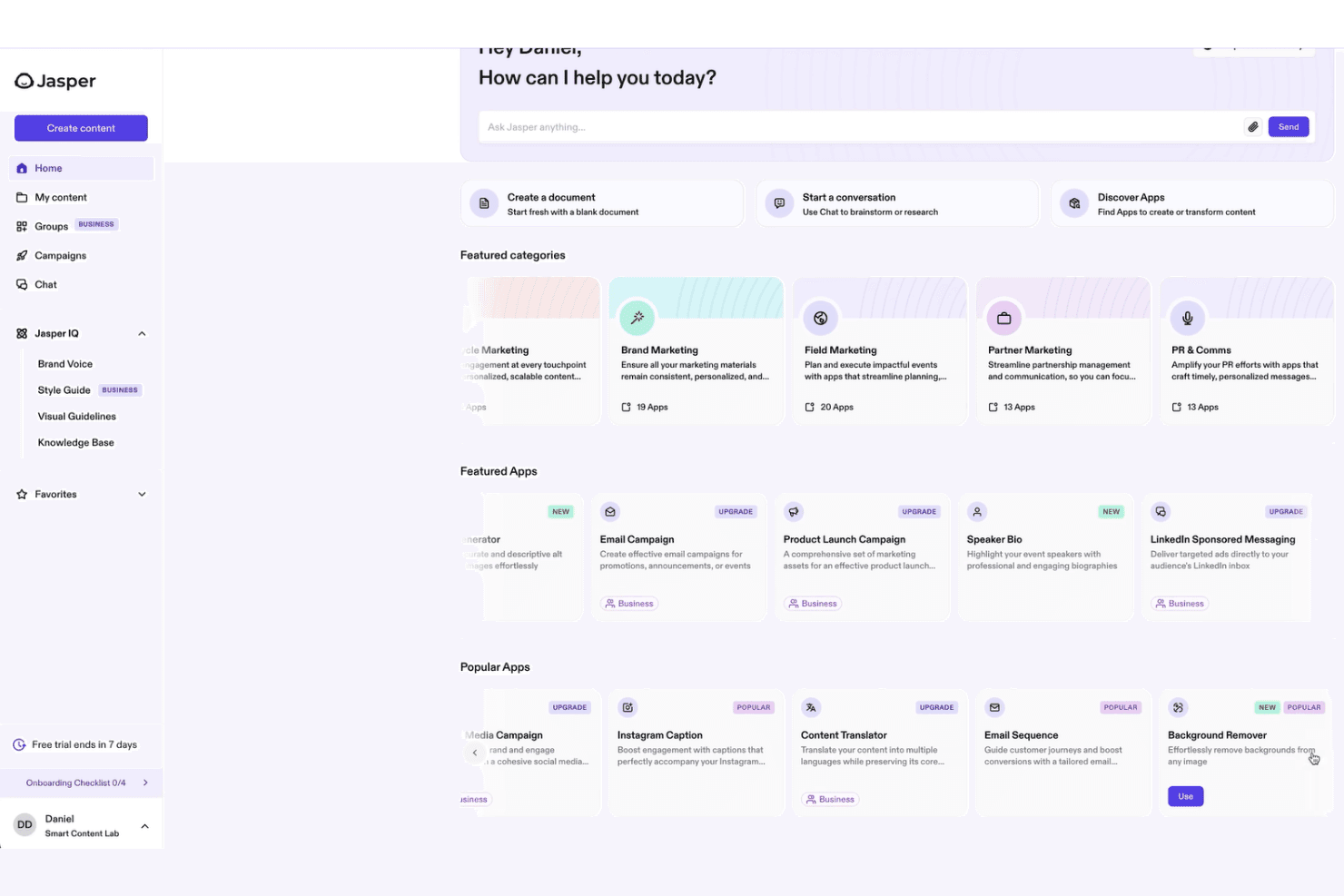
Jasper ofrece un panel de inicio con categorías de aplicaciones destacadas, herramientas de contenido basadas en IA y una interfaz conversacional para equipos de marketing. Jasper es una plataforma de marketing con IA construida en torno a agentes autónomos, canalizaciones de contenido y herramientas de gobernanza de marca que ejecutan flujos de trabajo de contenido multinivel en varios canales, desde la creación de campañas y la optimización SEO hasta la personalización de audiencias y la traducción.
¿Para quién es mejor Jasper?
Jasper es ideal para equipos de marketing medianos a grandes que producen grandes volúmenes de contenido en varias marcas o campañas y necesitan controles de gobernanza para mantener la coherencia de la marca en todos los materiales.
Por qué elegí Jasper
Jasper se gana su lugar en mi lista corta por la seriedad con la que maneja la gobernanza de marca a gran escala. La capa Jasper IQ, que incluye Voz de Marca, Guía de Estilo y Directrices Visuales, actúa como un sistema de inteligencia compartido para que cada pieza de contenido permanezca alineada con la marca sin importar quién la haya producido dentro del equipo. También confío en las Canalizaciones de Contenido para mover campañas a través de la creación, adaptación y activación como un flujo de trabajo estructurado y repetible en lugar de procesos aislados cada vez.
Características clave de Jasper
- Editor colaborativo Canvas: Crea, edita y optimiza contenido en varios formatos con tu equipo en tiempo real en un espacio de trabajo compartido.
- Generación masiva de contenido con Grid: Produce grandes volúmenes de activos de marketing, como descripciones de productos o textos para páginas de destino, en una interfaz similar a una hoja de cálculo.
- Optimización impulsada por agentes: Usa agentes de IA para mejorar automáticamente el SEO, la traducción y la personalización de contenido dentro de flujos de trabajo definidos.
- Soporte para API y extensión de navegador: Accede a funciones de Jasper de manera programática o desde aplicaciones de terceros usando una extensión de navegador para una mayor flexibilidad en los flujos de trabajo.
Integraciones de Jasper
Jasper ofrece integraciones nativas con Salesforce, HubSpot, Google Workspace, Microsoft Teams, WordPress, Sitecore, Slack, Webflow, Salesforce Marketing Cloud y SEMrush. También cuenta con una API para integraciones personalizadas.
Pros and Cons
Pros:
- La Voz de Marca garantiza una producción coherente con la marca
- Las Canalizaciones de Contenido automatizan flujos de trabajo de campaña multinivel
- Jasper IQ mantiene el contexto de marca en todos los activos
Cons:
- Ejecución autónoma limitada más allá de la creación de contenido
- Capacidades nativas débiles para gestión de canales publicitarios
Learn more about Jasper: Ideal para mensajería adaptativa multicanal
- Demo gratuita disponible
- Precio a consultar
Visit WebsiteCustomer Rating:4.4/5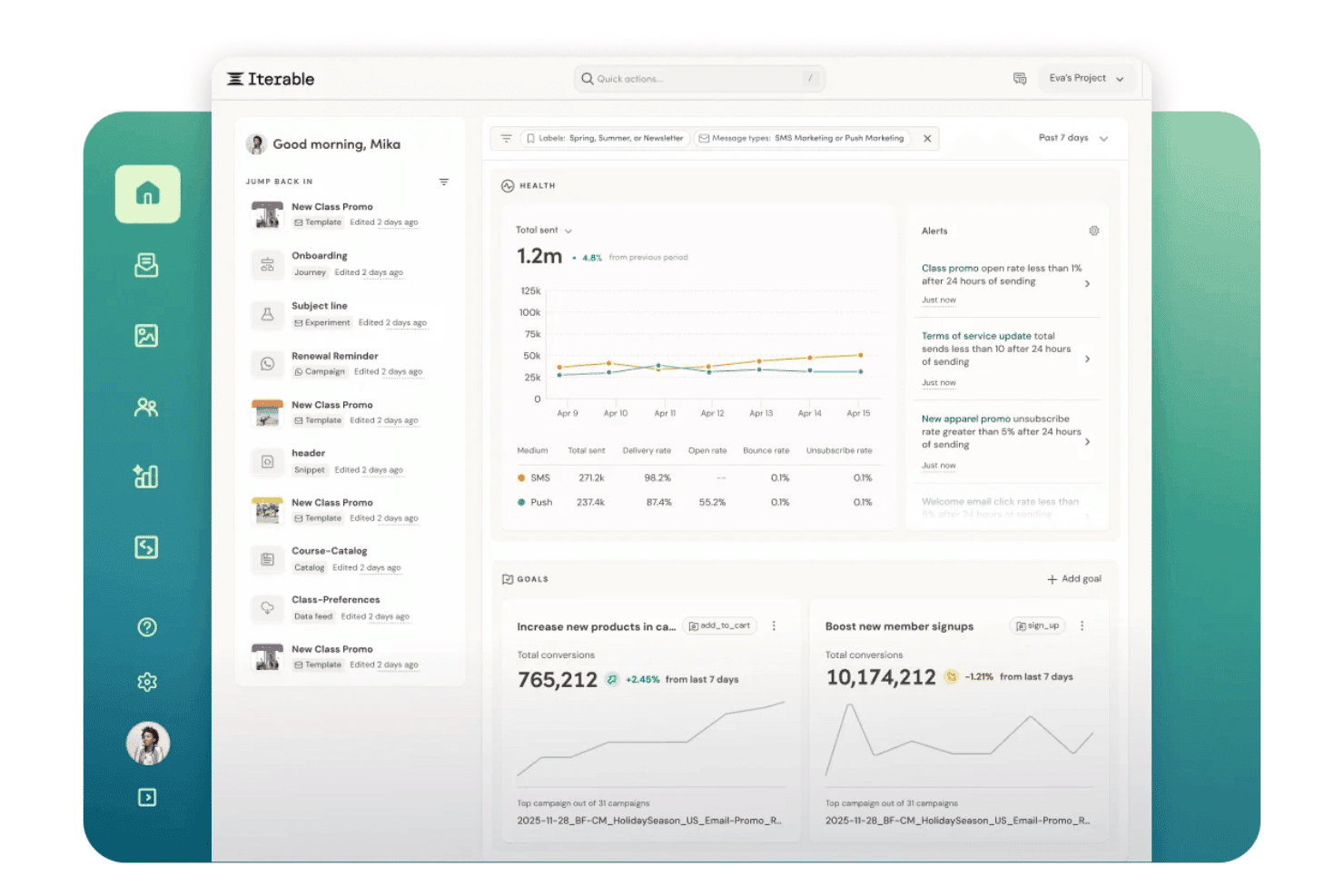
Iterable Nova Agent muestra un panel de marketing con métricas de salud, alertas y objetivos de conversión para campañas de SMS y push. Iterable Nova Agent es un agente de marketing con IA integrado en la plataforma de compromiso multicanal de Iterable que construye recorridos de cliente de forma autónoma, genera copias de campañas, ejecuta experimentos y personaliza mensajes en correo electrónico, SMS, push, in-app y más.
¿Para quién es mejor Iterable Nova Agent?
Iterable Nova Agent es ideal para equipos de marketing B2C de medianas y grandes empresas que ejecutan programas de ciclo de vida de alto volumen a través de múltiples canales propios.
Por qué elegí Iterable Nova Agent
Elegí Iterable Nova Agent como uno de los mejores porque su capacidad de Decisión de Canal selecciona automáticamente el canal y la frecuencia de envío adecuados para cada individuo en tiempo real. Eso lo hace verdaderamente adaptable entre correo electrónico, SMS, push, in-app y WhatsApp. También valoro la Memoria de Decisión, que convierte la intención de marketing declarada en un sistema de aprendizaje repetible que mejora con cada ciclo de campaña.
Características clave de Iterable Nova Agent
- Audiencias predictivas: Identifica riesgos de abandono y oportunidades de alto valor utilizando modelos de aprendizaje automático basados en los datos de comportamiento del usuario.
- Transparencia total (Glassbox): Hace que cada resultado impulsado por IA sea transparente y rastreable para la supervisión de marketing y cumplimiento.
- Activación de usuarios desconocidos: Detecta e interactúa con visitantes anónimos del sitio antes de la conversión, ampliando el crecimiento de la audiencia propia.
- Asistente de segmentación: Utiliza IA para convertir instrucciones en lenguaje natural en segmentos de audiencia específicos para campañas.
Integraciones de Iterable Nova Agent
Iterable Nova Agent ofrece integraciones nativas con Salesforce, HubSpot, Microsoft Dynamics 365, Segment, Snowflake, Google Ads, Facebook Ads, Braze, Amplitude y Power BI. Hay una API disponible para integraciones personalizadas.
Pros and Cons
Pros:
- La decisión de canal adapta el mensaje a cada usuario individual
- La Memoria de Decisión mejora las campañas con el tiempo
- La transparencia total (Glassbox) muestra claramente el razonamiento de la IA
Cons:
- Complejidad de configuración para equipos de marketing no técnicos
- Autonomía del agente limitada fuera del ecosistema de Iterable
Learn more about Iterable Nova Agent: La mejor para inteligencia de campañas basada en CRM
- Demostración gratuita disponible
- Desde $1,500/mes (facturación anual)
Visit WebsiteCustomer Rating:4/5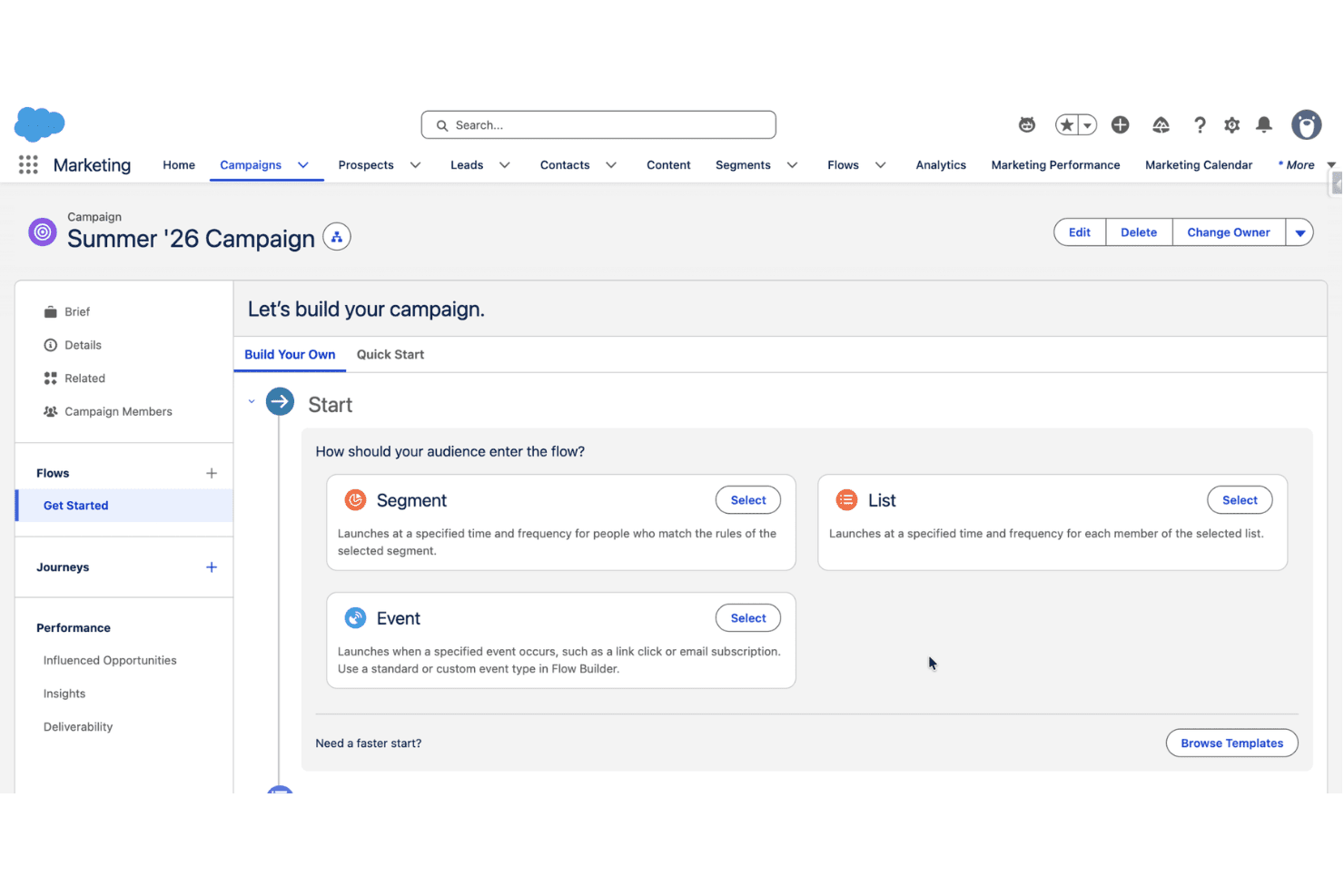
Agentforce Marketing permite a los usuarios crear campañas seleccionando cómo entra su audiencia en el flujo a través de Segmento, Lista o disparadores de Evento. Agentforce Marketing es la plataforma de marketing basada en Salesforce que utiliza agentes autónomos de IA para planificar, crear, lanzar y optimizar campañas a través de correo electrónico, SMS, medios pagados y web, todo ello respaldado por datos unificados de CRM y de clientes.
¿Para quién es mejor Agentforce Marketing?
Es ideal para equipos de marketing de medianas y grandes empresas que ya utilizan Salesforce y buscan ampliar el alcance de los datos de su CRM hacia la ejecución autónoma de campañas.
Por qué elegí Agentforce Marketing
Agentforce Marketing merece un lugar en mi lista porque ningún otro agente de marketing con IA está construido sobre una base tan sólida de CRM y datos de cliente. Cuando ingreso un objetivo de campaña, los agentes utilizan Data 360 (el CDP de Salesforce) para segmentar audiencias, generar contenido y lanzar campañas en todos los canales, sin que tenga que definir cada paso. La capa de Inteligencia de Marketing cierra el ciclo, consolidando la atribución de medios pagados y los resúmenes de campaña creados por IA en el mismo entorno donde ya opera el agente.
Principales características de Agentforce Marketing
- Tablero Command Center: Permite monitorear la salud de los agentes, el estado de los flujos de trabajo y los KPIs de marketing de todas las campañas en tiempo real.
- Marketplace AgentExchange: Conecta tus agentes de marketing con un ecosistema de flujos de trabajo prefabricados, extensiones de socios y plugins de agentes especializados.
- Automatización Journey Builder: Orquesta recorridos multicanal y de varios pasos para clientes, activados por datos en tiempo real y señales de comportamiento.
- Mensajería conversacional bidireccional: Permite que los agentes de IA respondan a clientes y prospectos mediante SMS, WhatsApp y correo electrónico directamente dentro de tus campañas.
Integraciones de Agentforce Marketing
Agentforce Marketing ofrece integraciones nativas con Salesforce Sales Cloud, Service Cloud, Slack, MuleSoft, Google Ads, Meta (Facebook), WhatsApp y Data Cloud, y proporciona una API para integraciones personalizadas.
Pros and Cons
Pros:
- Los datos profundos del CRM posibilitan campañas altamente personalizadas
- Los agentes ejecutan de forma autónoma flujos de trabajo de campañas multicanal
- La atribución de circuito cerrado vincula los ingresos a las campañas
Cons:
- Requiere infraestructura Salesforce existente para funcionar
- El alto coste de entrada limita el acceso a equipos más pequeños
Learn more about Agentforce Marketing: Ideal para la ejecución de campañas nativas en HubSpot
- Plan gratuito disponible
- Precio bajo consulta
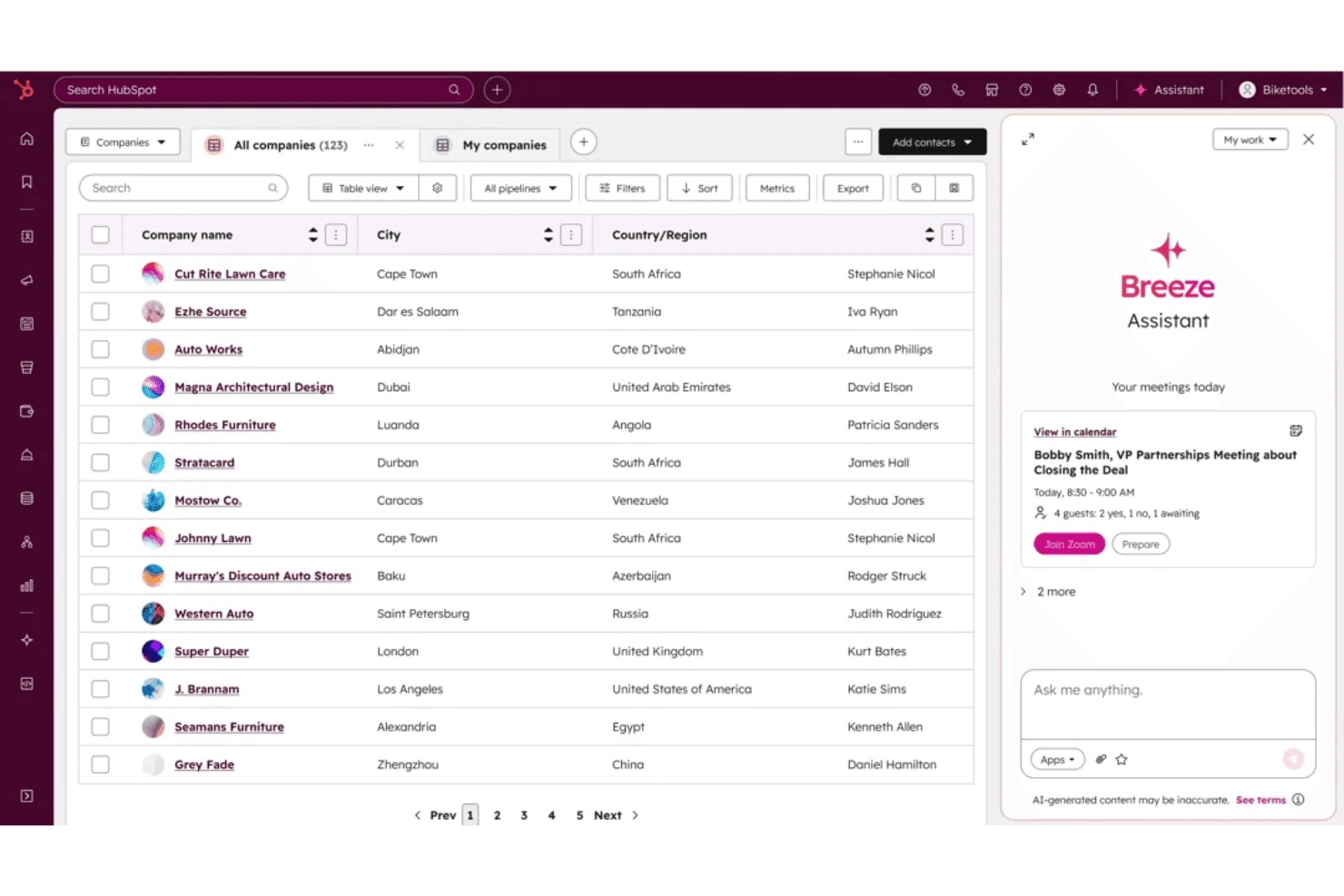
HubSpot Breeze ofrece un panel de asistente de IA que muestra las reuniones del día y permite a los usuarios hacer preguntas directamente en la vista de Empresas del CRM. HubSpot Breeze es una capa de IA integrada en la Plataforma de Clientes de HubSpot que combina un asistente conversacional, agentes especializados en marketing y ventas, y un enriquecimiento de datos nativo en CRM para automatizar la creación de contenido, el alcance y los flujos de trabajo de campañas.
¿Para quién es mejor HubSpot Breeze?
Es una opción natural para equipos de marketing de medianas y grandes empresas que ya gestionan sus operaciones de salida al mercado en la plataforma CRM de HubSpot.
Por qué elegí HubSpot Breeze
HubSpot Breeze se gana su lugar en mi lista porque el Agente de Contenido y el Agente de Redes Sociales generan blogs, páginas de aterrizaje y publicaciones sociales de forma nativa dentro de Marketing Hub, utilizando los datos en vivo de tu CRM para definir la voz de la marca y la segmentación. Uso Content Remix para reutilizar un solo recurso en emails, anuncios y copias para redes sociales en un solo paso. Breeze Intelligence luego enriquece los registros de contactos con más de 200 millones de perfiles de empresas, por lo que la personalización está incorporada directamente en el mismo flujo de trabajo de campaña.
Características clave de HubSpot Breeze
- Barra lateral de chat del Asistente Breeze: Asistente de IA basado en chat e integrado a lo largo de HubSpot para consultas rápidas de campañas, generación de ideas y resúmenes de registros CRM.
- Agent Hub con creador de agentes personalizado: Te permite crear y configurar agentes de marketing, ventas y atención al cliente para flujos de trabajo únicos.
- Breeze Intelligence para enriquecimiento de datos: Enriquece automáticamente los contactos con datos de empresas y compradores en tiempo real extraídos de más de 200 millones de perfiles.
- Segmentación y personalización impulsadas por IA: Crea segmentos de audiencia dinámicos y entrega contenido personalizado utilizando atributos del CRM y disparadores de comportamiento.
Integraciones de HubSpot Breeze
HubSpot Breeze ofrece integraciones nativas en todo el ecosistema de HubSpot, incluyendo Marketing Hub, CRM, CMS Hub, Sales Hub y Service Hub. Hay más de 1,700 integraciones adicionales disponibles a través del marketplace y se proporciona una API para flujos de trabajo personalizados.
Pros and Cons
Pros:
- La IA nativa del CRM elimina el cambio de datos entre herramientas
- El Agente de Contenido genera activos en varios formatos rápidamente
- Breeze Intelligence enriquece contactos automáticamente
Cons:
- Los agentes solo funcionan dentro de la plataforma de HubSpot
- La calidad de la generación de contenido varía según el tipo de activo
Learn more about HubSpot Breeze: Ideal para la personalización de campañas de comercio electrónico
- Plan gratuito disponible
- Desde $14/mes
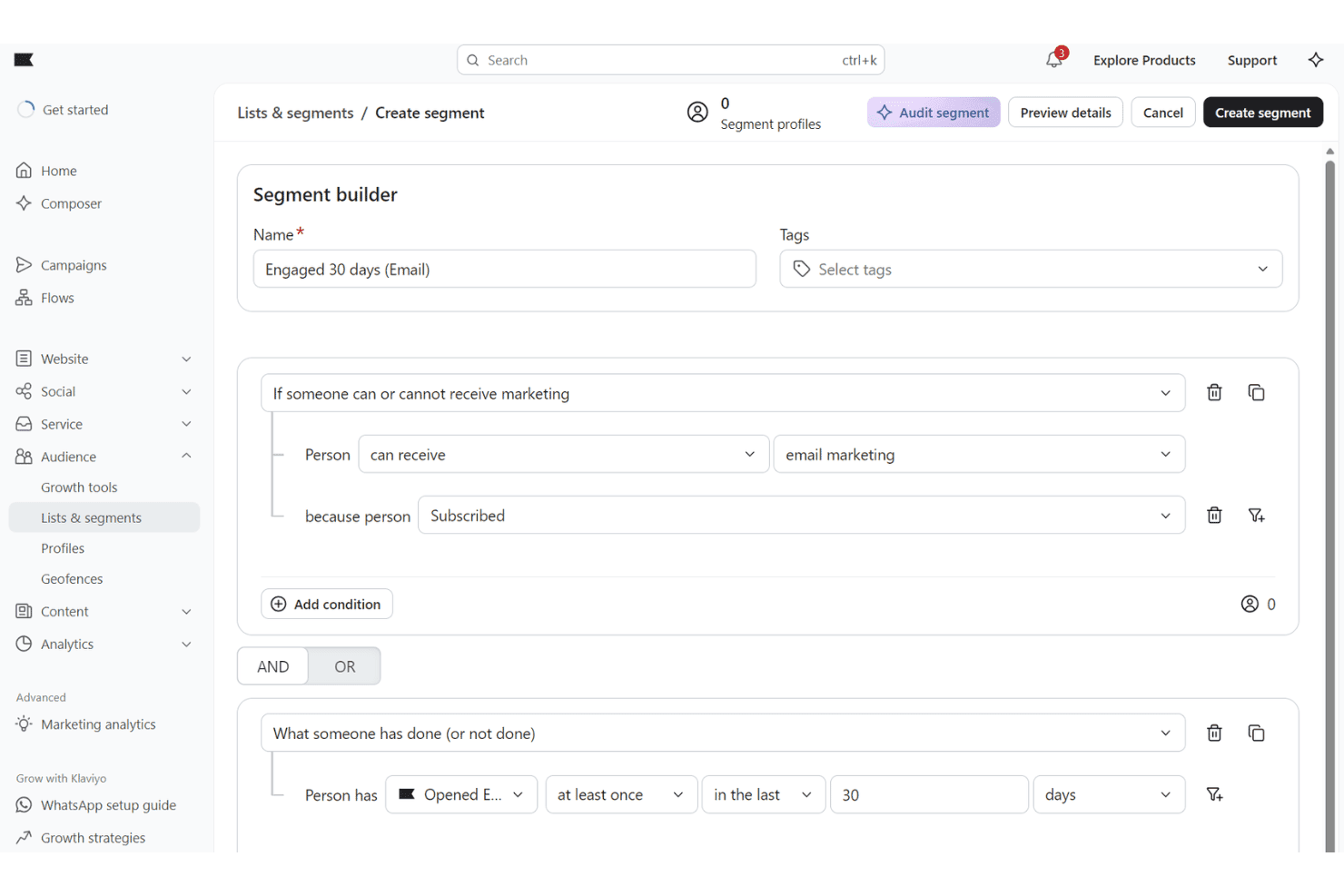
El creador de segmentos de Klaviyo permite a los usuarios crear segmentos de correo electrónico específicos según el estado de la suscripción y la actividad de interacción. Composer de Klaviyo es un agente de marketing con IA que analiza los datos de tus clientes, identifica oportunidades para campañas, crea audiencias y genera contenido para campañas multicanal de correo electrónico y SMS dentro de tu cuenta de Klaviyo.
¿Para quién es más adecuado Composer de Klaviyo?
Composer es una opción natural para los equipos de marketing de comercio electrónico y DTC que ya trabajan con Klaviyo y quieren pasar más rápido de la idea de una campaña a su ejecución.
Por qué elegí Composer de Klaviyo
Composer de Klaviyo ocupa un lugar en mi lista de favoritos porque ningún otro agente de marketing con IA personaliza campañas a partir de una base de datos de comercio electrónico más completa. Escribo un resumen de campaña en lenguaje natural, como la reactivación de un comprador inactivo durante 90 días, y Composer crea la audiencia a partir de perfiles de clientes activos, redacta textos para correo electrónico y SMS con la voz de mi marca y los prepara para su revisión. También me encanta que las señales de las conversaciones del Agente de clientes se integren directamente en la forma en que Composer segmenta la siguiente campaña.
Características principales de Composer de Klaviyo
- Creación de campañas multicanal: Crea campañas para correo electrónico y SMS simultáneamente a partir de una sola instrucción.
- Aprobación con intervención humana: Todas las campañas se preparan para su revisión antes de enviar cualquier contenido a tu audiencia.
- Creación dinámica de audiencias: Genera automáticamente segmentos de audiencia específicos mediante tus perfiles de clientes y datos de compra.
- Alertas de rendimiento basadas en el comportamiento: Recibe notificaciones cuando te acerques a los límites de uso de los créditos de Composer para evitar interrupciones inesperadas.
Integraciones de Composer de Klaviyo
Composer de Klaviyo se integra de forma nativa con Shopify, BigCommerce, WooCommerce y Magento, y se conecta con otras herramientas mediante el ecosistema más amplio de Klaviyo. Hay una API disponible para integraciones personalizadas.
Pros and Cons
Pros:
- Personalización avanzada mediante datos propios de comercio electrónico
- Crea audiencias y textos a partir de una sola instrucción
- Las señales del Agente de clientes se integran en la segmentación de campañas
Cons:
- Solo se puede utilizar dentro de la plataforma de Klaviyo
- Los créditos de Composer limitan el volumen mensual de tus campañas
Learn more about Composer by Klaviyo:
Otros agentes de marketing con IA
Estas son algunas opciones adicionales de agentes de marketing con IA que no llegaron a mi selección, pero que aun así merece la pena consultar:
- 11Adobe Experience Platform Agent OrchestratorMejor para la orquestación empresarial multiplataforma
- 12Optimizely Agent PlatformMejor para la optimización autónoma de experimentos
- 13OptimoveMejor para toma de decisiones de clientes impulsadas por IA
- 14GumloopIdeal para la automatización del flujo de trabajo de marketing visual
- 15CrewAIMejor para desarrollo de múltiples agentes basado en código
- 16LyzrLo mejor para la implementación controlada de agentes privados
Cómo evalúo los agentes de marketing con IA
Las herramientas que simplemente envuelven un chatbot alrededor de un resumen de campaña no forman parte de mi lista. En su lugar, busqué plataformas que puedan gestionar flujos de trabajo de manera independiente. Ejemplos de esto incluyen lanzar pruebas A/B y reconstruir segmentos de audiencia durante las campañas. Divido mi evaluación en dos áreas. Primero, evalúo la funcionalidad central requerida para calificar. Luego, considero los factores que distinguen a cada plataforma.
Funcionalidad central (requisito básico para esta lista)
Al seleccionar las herramientas para mi lista, clasifico cada una en una escala de 0 (no ofrece la funcionalidad) a 5 (destaca en esta área) para cada funcionalidad central que figura a continuación. Luego, calculo la puntuación total de la herramienta como un porcentaje. Cada herramienta debe alcanzar una puntuación total mínima del 65% para ser considerada para su inclusión.
- Ejecución autónoma de tareas: Evalúo si el agente puede encadenar flujos de trabajo de varios pasos por sí mismo, como redactar una secuencia de correos electrónicos, programar envíos y pausar los menos eficaces sin indicaciones manuales en cada etapa.
- Integración con canales de marketing: La herramienta debe conectarse de forma nativa con canales centrales como email, anuncios, redes sociales, CRM y CMS, para que el agente pueda actuar directamente en lugar de solo exportar datos para que tú tomes acción por separado.
- Generación de contenido: Busco la capacidad de producir textos listos para marketing en varios tipos de activos: titulares de anuncios, asuntos de correos, bloques de páginas de aterrizaje; no solo completaciones de texto genéricas.
- Razonamiento basado en objetivos: Cuando estableces un KPI como aumentar las solicitudes de demo en un 20%, el agente debe vincular ese objetivo con acciones específicas y comenzar a ejecutarlas en vez de solo sugerir una lista de verificación.
- Análisis de rendimiento y optimización: Verifico si la plataforma recopila datos en vivo de campaña y ajusta iterativamente variables como montos de puja, horas de envío o variantes creativas según lo que realmente funciona.
- Segmentación de audiencias y personalización: Las herramientas potentes van más allá de segmentos estáticos basados en reglas; busco segmentación impulsada por IA que reconstruya los grupos de usuarios de forma dinámica mientras el comportamiento e intención del usuario cambian en plena campaña.
Una vez que tengo una lista de herramientas que cumplen los criterios, considero lo que diferencia a cada plataforma.
Factores diferenciadores (lo que distingue a los proveedores)
Así es como comparo y contrasto los diferentes proveedores:
Características destacadas
El aprendizaje del tono/marca es un gran diferenciador: busco agentes que asimilen tus guías de estilo y activos previos, afinando su salida con el tiempo en lugar de empezar de cero en cada campaña. Los análisis con retroalimentación cerrada también son importantes porque las plataformas más potentes atribuyen ingresos a campañas específicas y asignan más presupuesto a lo que realmente convierte. Evalúo además los controles de intervención humana, como los filtros de aprobación y los registros de auditoría que permiten a tu equipo revisar las decisiones del agente antes de que cualquier cosa se publique.
Más allá de las características
La compatibilidad con tu stack de martech es una de las primeras cosas que reviso. Las conexiones nativas con tu CRM, plataformas de anuncios y herramientas de analítica influyen en la rapidez con la que el agente aporta valor. También evalúo los controles de privacidad y gobernanza de datos, ya que un agente autónomo que maneja datos de clientes necesita límites claros sobre cómo esos datos entrenan sus modelos. Finalmente, evalúo la estructura de precios. Comparo modelos basados en usuarios y en uso para ver cómo cambian los costos al aumentar el volumen de campañas.
Cómo elegir el mejor agente de marketing con IA
Es fácil perderse entre largas listas de funciones y estructuras de precios complejas. Para ayudarte a mantener la concentración mientras avanzas en tu proceso particular de selección de software, aquí tienes una lista de factores que debes tener en cuenta:
| Factor | Qué considerar |
|---|---|
| FactorEscalabilidad | Qué considerar¿La herramienta seguirá siendo adecuada si crecen el volumen de tus campañas, los canales o el tamaño de tu equipo? Comprueba si los precios o los flujos de trabajo se vuelven restrictivos con un mayor uso. |
| FactorIntegraciones | Qué considerar¿Se conecta de forma nativa con tu CRM, tus plataformas publicitarias, tus herramientas de análisis y tu CMS principales? Evalúa la profundidad de la API y si necesitarías soluciones manuales o conectores adicionales. |
| FactorCapacidad de personalización | Qué considerar¿Puedes adaptar los flujos de trabajo, las directrices de marca o los procesos de aprobación a tu negocio? Evita las plataformas que imponen una automatización rígida y única para todos. |
| FactorFacilidad de uso | Qué considerar¿Tu equipo necesitará una formación intensiva o los profesionales del marketing podrán empezar a utilizarla desde el primer día? Busca interfaces claras y controles con intervención humana para reducir el tiempo de adaptación. |
| FactorImplementación e incorporación | Qué considerar¿Qué implica la configuración? ¿Hay opciones de autoservicio o necesitas que un socio del proveedor configure los flujos de datos, los canales o los permisos en tu nombre? |
| FactorCoste | Qué considerar¿El precio se ajusta a los patrones de tus campañas: por usuario, uso o resultados? Ten en cuenta los costes ocultos de las integraciones, los complementos y las necesidades de escalado. |
| FactorMedidas de seguridad | Qué considerar¿Ofrece controles claros para el acceso a los datos, registros de auditoría y revisión de contenidos que satisfagan las necesidades de privacidad y gobernanza de tu equipo? |
| FactorNecesidades de recursos internos | Qué considerar¿Quién se encarga del diseño de los flujos de trabajo, la supervisión de los agentes y el ajuste de las campañas en curso? Averigua si necesitarás un miembro del equipo dedicado para obtener valor de la plataforma. |
¿Qué es un agente de marketing con IA?
Los agentes de marketing con IA son herramientas autónomas que utilizan inteligencia artificial para planificar, ejecutar y optimizar campañas de marketing en distintos canales con una intervención humana mínima. Estos agentes se encargan de tareas como la creación de contenidos, la segmentación, la orquestación de campañas y el análisis del rendimiento. Están diseñados para ayudar a los equipos de marketing a automatizar el trabajo repetitivo, personalizar las comunicaciones a gran escala y adaptar las estrategias en tiempo real según los datos y los objetivos.
Funciones principales de los agentes de marketing con IA
Al seleccionar un agente de marketing con IA, presta atención a las siguientes funciones principales:
- Ejecución autónoma de flujos de trabajo: Permite que el agente planifique, secuencie y lleve a cabo de forma independiente tareas de marketing complejas, como el lanzamiento de campañas, sin instrucciones paso a paso.
- Integración multicanal: Se conecta de forma nativa con herramientas de correo electrónico, redes sociales, plataformas publicitarias, CRM y CMS, de modo que las acciones y los datos fluyen directamente entre tus sistemas.
- Creación de contenidos con IA: Utiliza IA generativa para producir textos de marketing, correos electrónicos, publicaciones en redes sociales y anuncios personalizados que coincidan con la voz de tu marca y los objetivos de tu campaña.
- Optimización de campañas basada en objetivos: Acepta objetivos o KPI establecidos y ajusta automáticamente las actividades de marketing para alcanzar los resultados deseados mediante la reasignación del presupuesto o el perfeccionamiento de los mensajes.
- Análisis del rendimiento en tiempo real: Supervisa al instante los resultados de las campañas, muestra información relevante y realiza ajustes basados en datos mientras la campaña está activa.
- Segmentación predictiva de audiencias: Segmenta a tu audiencia mediante datos de comportamiento e intención y, después, personaliza las comunicaciones según los cambios en tiempo real de la actividad de los usuarios.
- Flujos de aprobación y límites de control: Permite a los equipos configurar comprobaciones con intervención humana para que las acciones importantes requieran revisión y aprobación antes de publicarse.
- Controles de privacidad de datos y cumplimiento: Ofrece opciones sólidas para controlar el uso de los datos, el consentimiento y los informes, lo que ayuda a cumplir las normas de privacidad internacionales.
- Biblioteca de plantillas y manuales: Proporciona estructuras de campañas y directrices listas para usar que ayudan a los equipos a poner en marcha rápidamente flujos de trabajo probados.
- Registro de auditoría y transparencia: Registra cada decisión o acción importante que lleva a cabo el agente, para que puedas revisar, informar y cumplir las normas de responsabilidad.
Ventajas de utilizar un agente de marketing con IA
La implementación de un agente de marketing con IA ofrece varias ventajas para tu equipo y tu empresa. Estas son algunas de las que puedes esperar:
- Ejecución automatizada de campañas: Libera a tu equipo de las tareas repetitivas y permite que el agente planifique, lance y gestione campañas con una supervisión mínima.
- Decisiones basadas en datos: Los análisis en tiempo real y las optimizaciones adaptativas garantizan que las campañas mejoren continuamente según el rendimiento real, no según suposiciones.
- Personalización escalable: Ofrece fácilmente mensajes personalizados a gran escala, ya que la segmentación inteligente y la generación de contenidos adaptan las comunicaciones a cada cliente.
- Voz de marca coherente: los modelos de IA aprenden tus directrices de estilo y recursos anteriores para crear contenido acorde con la marca en todos los canales y tipos de recursos.
- Lanzamiento al mercado más rápido: los flujos de trabajo, las plantillas y los manuales de estrategias prediseñados te permiten lanzar nuevas campañas más rápidamente sin esperar a una configuración manual prolongada.
- Mayor cumplimiento y control: los puntos de aprobación con intervención humana y los registros de auditoría mantienen la gobernanza, lo que te permite revisar, aprobar e informar sobre las acciones automatizadas.
- Integración fluida con las herramientas existentes: las conexiones nativas con las plataformas principales mantienen unificada tu infraestructura de marketing, con datos y acciones que fluyen sin problemas entre los sistemas.
Costes y precios de los agentes de marketing con IA
Para seleccionar un agente de marketing con IA es necesario comprender los distintos modelos de precios y planes disponibles. Los costes varían en función de las funcionalidades, el tamaño del equipo, los complementos y otros factores. La siguiente tabla resume los planes habituales, sus precios medios y las funcionalidades que suelen incluir las soluciones de agentes de marketing con IA:
Tabla comparativa de planes para agentes de marketing con IA
| Tipo de plan | Precio medio | Funcionalidades habituales |
|---|---|---|
| Tipo de planPlan gratuito | Precio medio$0 | Funcionalidades habitualesAutomatización básica de flujos de trabajo, integraciones limitadas, volumen restringido de campañas y análisis mínimos. |
| Tipo de planPlan personal | Precio medio$15-$40/usuario/mes | Funcionalidades habitualesConexiones multicanal, creación básica de contenido con IA, segmentación sencilla de audiencias y asistencia estándar. |
| Tipo de planPlan empresarial | Precio medio$50-$120/usuario/mes | Funcionalidades habitualesAutomatización avanzada, segmentación dinámica, aprendizaje de la voz de marca, paneles de análisis y asistencia prioritaria. |
| Tipo de planPlan corporativo | Precio medio$120-$300+/usuario/mes | Funcionalidades habitualesIntegraciones personalizadas, incorporación guiada específica, controles completos de cumplimiento, campañas ilimitadas y registro de auditoría. |
Preguntas frecuentes sobre agentes de marketing con IA
Estas son algunas respuestas a preguntas frecuentes sobre los agentes de marketing con IA:
¿Cómo mejora el rendimiento de las campañas un agente de marketing con IA?
Un agente de marketing con IA analiza continuamente los datos y resultados de las campañas y realiza ajustes en tiempo real, como reasignar el presupuesto, perfeccionar los mensajes o dirigirse a nuevos segmentos para maximizar los resultados y alcanzar tus objetivos.
¿Puedo controlar o revisar lo que hace el agente de IA antes de que las campañas se publiquen?
Sí, la mayoría de los agentes de marketing con IA ofrecen controles con supervisión humana que permiten configurar flujos de trabajo de aprobación, revisar el contenido generado y exigir una aprobación final antes de lanzar las campañas o realizar cambios.
¿Son adecuados los agentes de marketing con IA para equipos pequeños o empresas emergentes?
Sí, estas herramientas pueden ayudar a los equipos pequeños a automatizar tareas y ampliar las campañas sin aumentar la plantilla, haciendo accesible el marketing de nivel profesional incluso con recursos o tiempo limitados.
¿Qué tipos de integraciones debería buscar?
Deberías buscar conexiones directas con tu CRM, plataformas publicitarias, herramientas de análisis y CMS. Esto garantiza que la automatización de las campañas funcione de principio a fin y que los datos sean coherentes en todo tu conjunto de herramientas.
¿Cómo gestionan los agentes de marketing con IA la privacidad y la seguridad de los datos?
La mayoría de los proveedores incluyen controles de privacidad de datos, registros de auditoría y políticas de consentimiento claras, lo que te ayuda a cumplir estándares como el RGPD o la CCPA y, al mismo tiempo, mantener la supervisión sobre cómo se utilizan y almacenan los datos de los clientes.