

Sprout Social Test 2026: Vorteile, Nachteile, Funktionen und Preise
Sprout Social überzeugt durch seine intuitive Benutzeroberfläche und leistungsstarke Analysen und ist damit ideal für Teams, die tiefe Einblicke suchen. Der Premium-Preis ist jedoch möglicherweise nicht für kleinere Unternehmen geeignet.

Wir bewerten Tools unabhängig, und Provisionen helfen, unsere Tests zu finanzieren. Siehe unsere Transparenz-Richtlinie, unsere Methodik oder schlagen Sie ein Tool vor.
Sprout Social is a social media management software for marketing teams that need to manage publishing, engagement, and performance reporting across multiple social channels in one place. I'd choose it over Hootsuite if your team relies heavily on analytics and social listening—Sprout Social's reporting is more detailed and its inbox tools give you a clearer picture of audience engagement than Hootsuite's equivalent features.
Sprout Social Evaluation Summary
4.3/5
- From $79/user/month (billed annually)
- 30-day free trial
Warum Sie unseren Software-Empfehlungen vertrauen können
6,700+
Reviews
20
Industry experts
16+
Evaluation factors
14
Years
Unser Team testet und bewertet Software seit 2012. Als Marketingführungskräfte wissen wir selbst, wie schwierig – und wichtig – es ist, die richtige Software auszuwählen.
Für diesen Leitfaden haben wir Tools mithilfe von praktischen Tests und unabhängiger Recherche bewertet und dabei unsere Bewertungskriterien angewendet.
Unsere Bewertungen spiegeln unser menschliches redaktionelles Urteilsvermögen wider, keine Verkaufsstrategie.
Expertenprüfer:
 Gui DrusinaKreativdirektor
- Shriya GhateSenior Marketing Lead
 Amanda JacquesMarketing Ops Leiterin

Sprout Social Overview
If you’re judging Sprout Social against other social media management tools, I think its clean interface, detailed analytics, and responsive support set it apart. The onboarding is smooth, and integrations with major platforms are reliable. Pricing is higher than some alternatives, but the advanced reporting and collaboration features justify the investment for larger teams or agencies.
In my experience, Sprout Social is best for marketing teams who need strong analytics, easy scheduling, and a platform that scales as their needs grow. Smaller businesses may find the cost harder to justify, but the feature set is hard to beat.
Pros
- Smooth onboarding and intuitive team collaboration features.
- AI-powered tools for content creation and engagement.
- Advanced analytics and reporting for multiple channels.
Cons
- Lacks dynamic AI-powered scheduling compared to some competitors.
- Some analytics don’t always match native platform data.
- Pricing is high for small businesses or solo users.
Is Sprout Social Right For Your Needs?
Who Would be a Good Fit for Sprout Social?
Sprout Social is a strong choice for teams that need advanced analytics, multi-channel publishing, and collaboration tools to manage complex social media strategies. Larger organizations, agencies, and brands with high content volume or multiple stakeholders will get the most value from its reporting, approval workflows, and AI-powered features. If your team relies on data-driven decisions and needs to coordinate across several platforms, Sprout Social’s capabilities are likely to meet your needs.
- Franchise BusinessesFranchises can manage local and national social accounts from one dashboard.
- Healthcare OrganizationsHealthcare teams use Sprout Social’s compliance features and secure collaboration tools.
- Retail BrandsRetailers can track engagement and manage campaigns across many locations and channels.
- Higher EducationUniversities benefit from Sprout Social’s multi-profile management and team collaboration.
- Digital AgenciesThe platform’s client management and reporting tools help agencies handle multiple brands.
- Enterprise Marketing TeamsSprout Social supports complex workflows, approval processes, and detailed analytics for large teams.
Who Would be a Bad Fit for Sprout Social?
Sprout Social may not be the best option for small businesses, solo marketers, or teams with limited budgets who don’t need advanced analytics or collaboration features. If your social media needs are basic, or you only manage a few accounts, the cost and depth of Sprout Social’s platform may be more than you require. Teams looking for highly specialized features or niche integrations may also find it limiting.
- Event-Only MarketersTeams running occasional campaigns may not justify the ongoing investment.
- Startups With Minimal PresenceStartups just starting out may not need advanced analytics or workflows.
- Niche InfluencersInfluencers focused on a single platform may not need multi-channel tools.
- Nonprofits With Tight BudgetsNonprofits may find the cost too high for their limited needs.
- Solo FreelancersFreelancers managing a handful of accounts won’t use most features.
- Small Local BusinessesThe pricing and advanced features are overkill for basic needs.
Wie wir Tools testen und bewerten
Wir haben jahrelang unser Software-Test- und Bewertungssystem aufgebaut, verfeinert und verbessert. Das Bewertungsraster wurde entwickelt, um die Feinheiten der Softwareauswahl zu erfassen und aufzuzeigen, was ein Tool effektiv macht. Dabei konzentrieren wir uns auf kritische Aspekte des Entscheidungsprozesses. Im Folgenden können Sie genau nachvollziehen, wie unsere Tests und Bewertungen über sieben Kriterien hinweg funktionieren. Dies ermöglicht eine unparteiische Bewertung der Software basierend auf Kernfunktionen, besonderen Merkmalen, Benutzerfreundlichkeit, Onboarding, Kundenservice, Integrationen, Kundenrezensionen und Preis-Leistung.
Kernfunktionen (25% der Gesamtbewertung)
Der Ausgangspunkt unserer Bewertung ist stets die Kernfunktionalität des Tools. Verfügt es über die grundlegenden Merkmale und Funktionen, die ein Nutzer erwarten würde? Sind einige dieser Kernfunktionen nur in hochpreisigen Tarifen verfügbar? Im Kern erwarten wir, dass ein Tool den Basisfunktionen der Konkurrenz standhält.
Besondere Merkmale (25% der Gesamtbewertung)
Als nächstes bewerten wir außergewöhnliche, herausragende Funktionen, die über die übliche Kernfunktionalität hinausgehen. Eine hohe Punktzahl spiegelt spezialisierte oder einzigartige Merkmale wider, die das Produkt schneller, effizienter oder wertvoller für den Nutzer machen. Wir bewerten außerdem, wie einfach es ist, das Tool in andere häufig verwendete Anwendungen im Tech-Stack zu integrieren, um die Funktionalität und den Nutzen der Software zu erweitern. Tools, die viele native Integrationen, Drittanbieter-Anbindungen sowie API-Zugriff für eigene Integrationen bieten, schneiden am besten ab.
Benutzerfreundlichkeit (10% der Gesamtbewertung)
Wir berücksichtigen, wie schnell und einfach sich Aufgaben, die zu den Kernfunktionen gehören, mit dem Tool ausführen lassen. Hoch bewertete Software ist gut gestaltet, intuitiv bedienbar, bietet mobile Apps, Vorlagen und lässt auch komplexe Aufgaben einfach erscheinen.
Onboarding (10% der Gesamtbewertung)
Uns ist bewusst, wie wichtig eine schnelle Akzeptanz im Team für eine neue Plattform ist. Daher bewerten wir, wie leicht sich das Tool mit minimaler Einweisung erlernen und anwenden lässt und wie schnell Teammitglieder auch ohne Vorerfahrung loslegen können. Eine hohe Punktzahl deutet darauf hin, dass kaum oder gar keine Unterstützung notwendig ist.
Kundenservice (10% der Gesamtbewertung)
Wir prüfen, wie schnell und einfach es ist, bei Problemen Hilfe per Telefon, Live-Chat oder Wissensdatenbank zu erhalten. Tools und Unternehmen, die Support in Echtzeit anbieten, erhalten die besten Bewertungen; Chatbots schneiden am schlechtesten ab.
Kundenrezensionen (10% der Gesamtbewertung)
Neben unseren eigenen Tests und Bewertungen berücksichtigen wir den Net Promoter Score aktueller und ehemaliger Kunden. Wir prüfen, wie wahrscheinlich sie sich erneut für das Tool bezüglich der Kernfunktionen entscheiden würden. Hoch bewertete Software spiegelt einen hohen Net Promoter Score der Nutzer wider.
Preis-Leistung (10% der Gesamtbewertung)
Abschließend bewerten wir unter Berücksichtigung aller anderen Kriterien den Durchschnittspreis der Einsteiger-Tarife im Verhältnis zu den Kernfunktionen sowie den Wert der anderen bewerteten Aspekte. Software, die mehr für weniger bietet, wird besser bewertet.
Core Features
Content Planning and Scheduling
Plan, create, and schedule posts across multiple social channels from a unified calendar. AI-powered suggestions help optimize send times for better engagement.
Social Inbox and Engagement
Manage all incoming messages, comments, and mentions in one place. AI tools assist with quick, consistent replies to customers at scale.
Analytics and Reporting
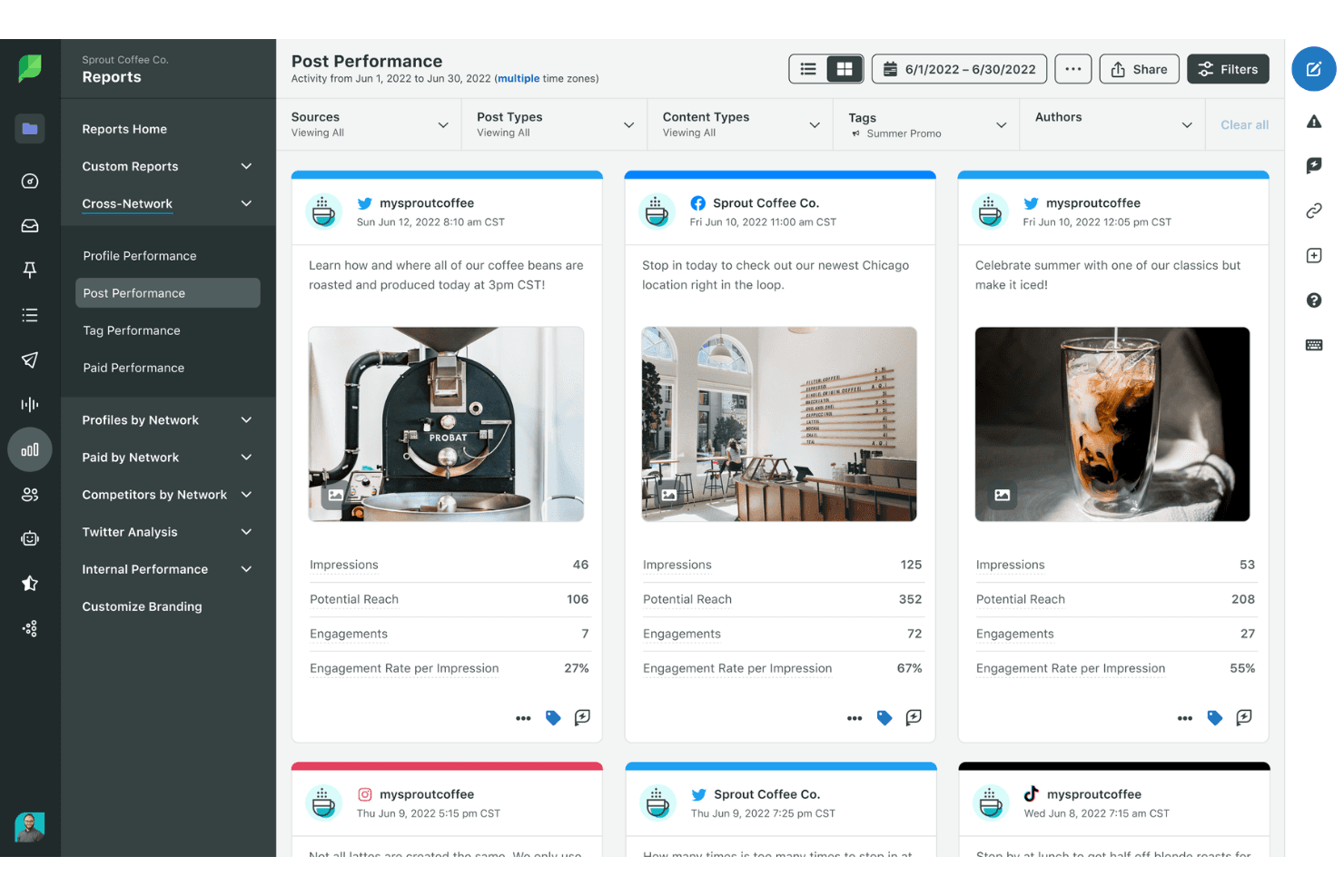
Access detailed analytics that track performance across channels and campaigns. Customizable reports make it easy to share insights with stakeholders.
Trend Discovery and Listening
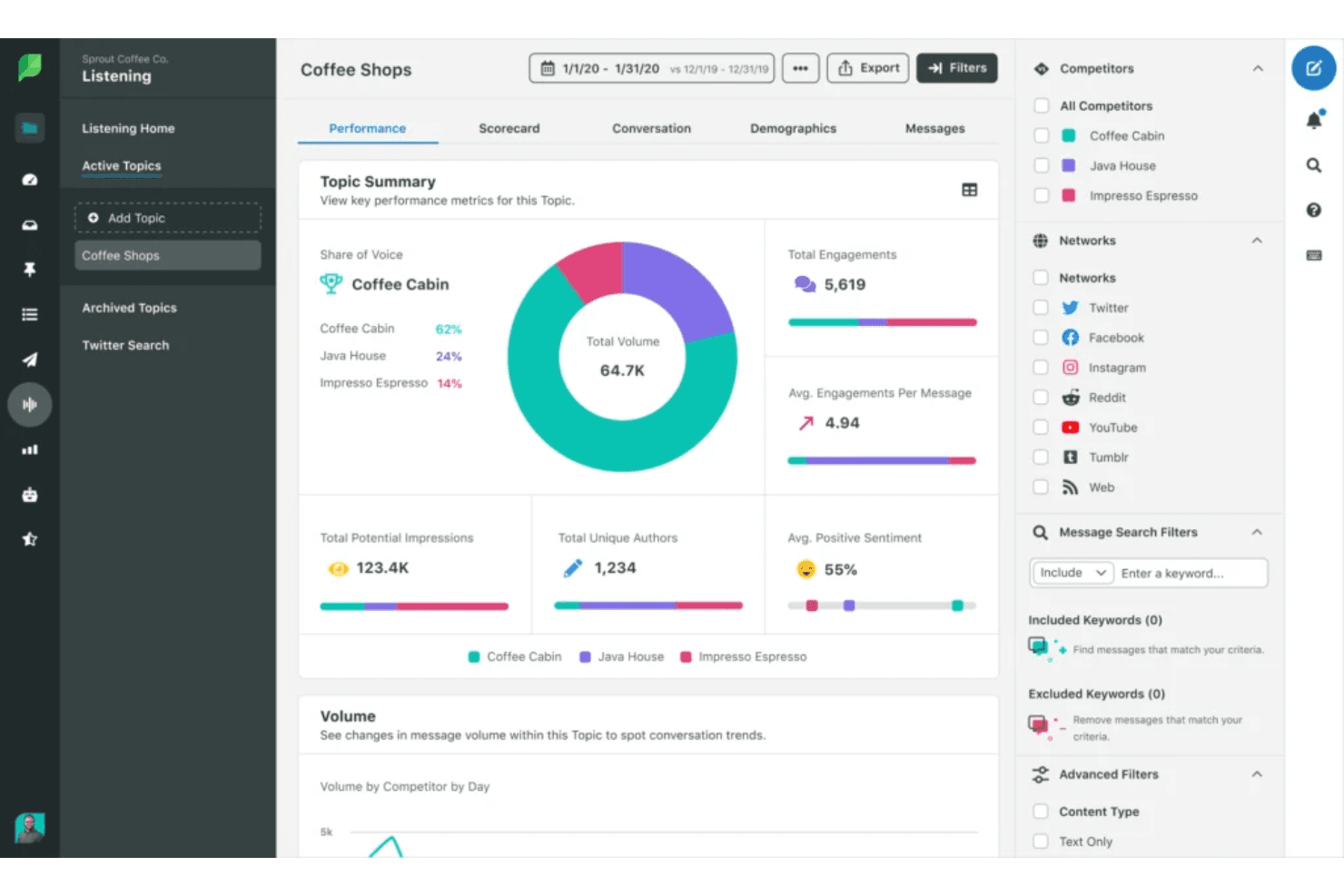
Monitor real-time conversations to spot trends and audience sentiment. Use these insights to inform content strategy and stay ahead of industry shifts.
Collaboration and Workflow Management
Assign tasks, set approval workflows, and manage team roles within the platform. This helps larger teams coordinate campaigns and maintain brand consistency.
AI-Powered Influencer Campaigns
Find and vet creators, manage influencer campaigns, and measure results with built-in AI tools. The platform scores brand fit and tracks campaign metrics for better ROI.

Ease of Use
Sprout Social is widely praised for its clean, intuitive interface and logical navigation, making it easy for new users to get started. The unified inbox, drag-and-drop calendar, and clear reporting dashboards reduce friction for busy teams.
I think the onboarding process is straightforward, with helpful tutorials and responsive support. Users often mention that even with advanced features, the platform feels approachable and doesn’t overwhelm with unnecessary complexity.
Integrations
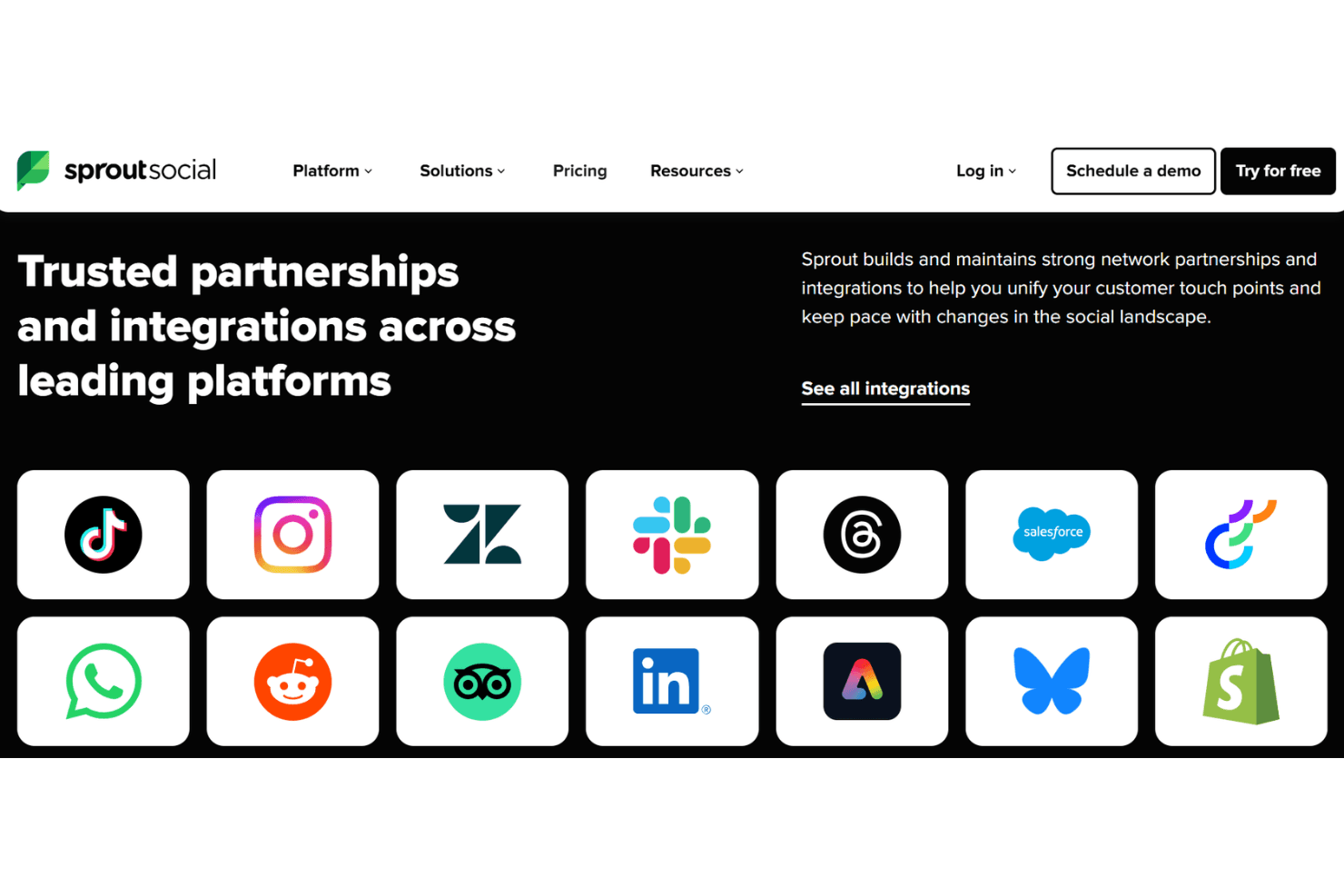
Sprout Social integrates with Facebook, Instagram, X (formerly Twitter), LinkedIn, TikTok, Pinterest, YouTube, Shopify, Google Analytics, and Canva, among others.
Sprout Social also offers an API and connects with select third-party business tools for extended functionality.
Sprout Social Specs
- Analytics: Yes
- API: Yes
- Approval Workflows: Yes
- Audience Targeting: Yes
- Brand Management: Yes
- Calendar Management: Yes
- Campaign Management: Yes
- Collaboration Support: Yes
- Conversion Tracking: No
- Custom Reports: Yes
- Dashboard: Yes
- Data Export: Yes
- Data Import: Yes
- Data Visualization: Yes
- External Integrations: Yes
- Feedback Management: Yes
- Keyword Tracking: Yes
- Knowledge Base: Yes
- Landing Pages: No
- Link Tracking: Yes
- Marketing Automation: No
- Multi-Account: Yes
- Multi-User: Yes
- Notifications: Yes
- Review Monitoring: Yes
- Scheduling: Yes
- Sentiment Analysis: Yes
- Social Media Monitoring: Yes
- Social-Media Integration: Yes
- Third-Party Plugins/Add-Ons: Yes
- Workflow Management: Yes


