

Keap-Bewertung 2026: Vorteile, Nachteile, Funktionen und Preise
I see Keap as a strong all-in-one choice for small businesses that want CRM, marketing automation, and payments together—provided they’re ready for its learning curve and cost.

Wir bewerten Tools unabhängig, und Provisionen helfen, unsere Tests zu finanzieren. Siehe unsere Transparenz-Richtlinie, unsere Methodik oder schlagen Sie ein Tool vor.
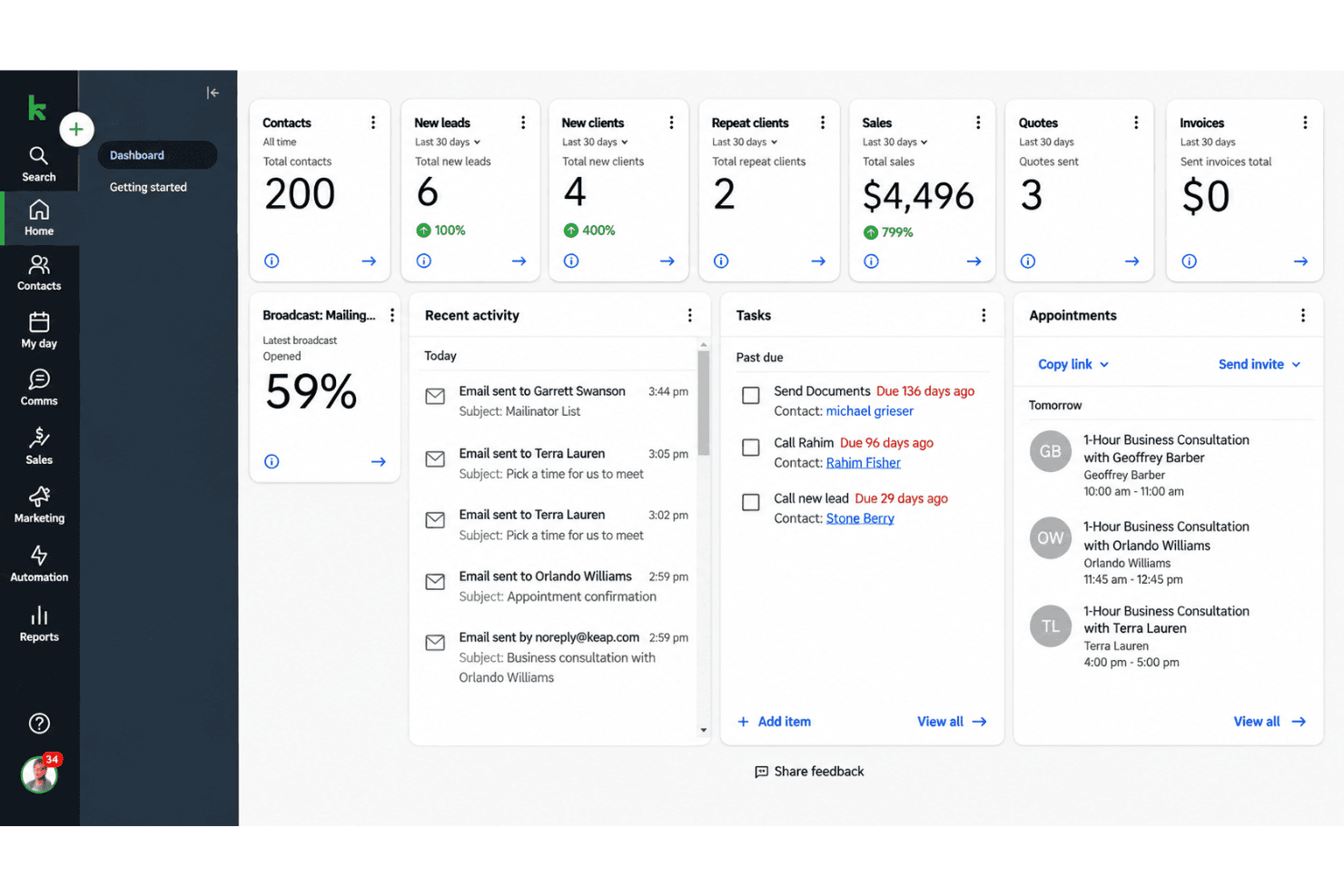
Keap is a marketing automation software platform with CRM, email campaigns, sales pipelines, appointment scheduling, and payments for small businesses. I’d consider it when you need one system to manage leads, automate follow-ups, and collect payments, with Keap offering a more small-business-focused setup than HubSpot.
Keap Evaluation Summary
4.2/5
- From $299/month
- 14-day free trial
Warum Sie unseren Software-Empfehlungen vertrauen können
6,700+
Reviews
20
Industry experts
16+
Evaluation factors
14
Years
Unser Team testet und bewertet Software seit 2012. Als Marketingführungskräfte wissen wir selbst, wie schwierig – und wichtig – es ist, die richtige Software auszuwählen.
Für diesen Leitfaden haben wir Tools mithilfe von praktischen Tests und unabhängiger Recherche bewertet und dabei unsere Bewertungskriterien angewendet.
Unsere Bewertungen spiegeln unser menschliches redaktionelles Urteilsvermögen wider, keine Verkaufsstrategie.
Expertenprüfer:
 Gui DrusinaKreativdirektor
- Shriya GhateSenior Marketing Lead
 Amanda JacquesMarketing Ops Leiterin

Keap Overview
I’d choose Keap when your small business needs CRM, email campaigns, sales pipelines, appointment scheduling, and payments in one system. Its automation and contact management go further than basic email tools, while built-in payments reduce the need for separate systems. However, pricing is relatively high, the interface takes time to learn, and onboarding requires planning. Integrations cover common business tools, but larger teams may find customization and reporting less flexible. Support and guided setup help, making Keap best suited to service businesses that value an integrated workflow over the lowest subscription cost.
Pros
- Visual campaign builder connects forms, tags, emails, texts, and payments.
- CRM data, tags, and lead scoring support targeted automated follow-ups.
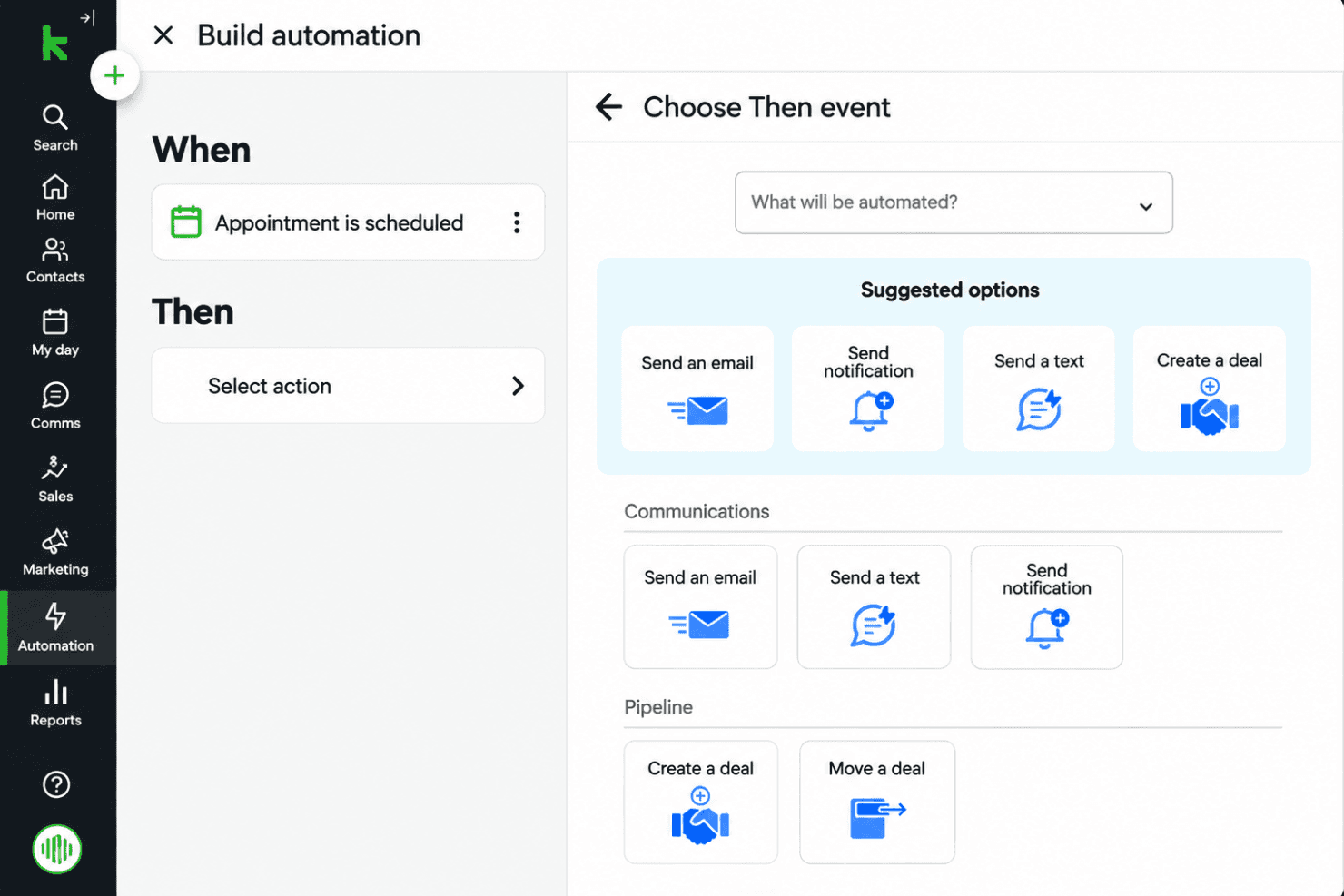
- Built-in payments and appointment scheduling extend automation beyond email campaigns.
Cons
- Starting prices and contact-based charges exceed many small-business automation alternatives.
- Campaign setup often requires training before teams build reliable workflows.
- Users report inconsistent support and difficult cancellation or billing experiences.
Is Keap Right For Your Needs?
Who Would be a Good Fit for Keap?
Keap suits small and midsize service businesses that need CRM, email and text automation, payments, scheduling, and follow-up tasks in one system. It also fits sales and marketing teams managing revenue-linked customer journeys rather than basic newsletters. The platform’s forms, tags, campaign builder, integrations, and open API support connected workflows, while guided onboarding helps teams handle migration and setup.
- Service BusinessesKeap fits appointment-based businesses that need scheduling, payments, CRM records, and automated follow-up in one subscription.
- Consulting FirmsConsulting firms can connect forms, tags, email, tasks, appointments, and payments to manage prospect and client journeys.
- Small Sales TeamsSmall sales teams can manage customer records and automated follow-up with a subscription that includes two users.
- Revenue TeamsRevenue teams can connect marketing activity to payments, tasks, appointments, and customer records instead of managing separate systems.
- Marketing OperationsMarketing operations teams can build journeys that combine forms, tags, email, text messages, tasks, and payment steps.
- Growing BusinessesGrowing businesses can use Keap’s data migration help, automation templates, integrations, and open API while their customer processes become more complex.
Who Would be a Bad Fit for Keap?
Keap is a poor match for teams that need inexpensive email campaigns, high-volume texting, a lightweight interface, or a fully self-directed setup. Its subscription starts at $299 per month when billed annually, scales with contacts, and charges extra for additional users. The platform also requires more onboarding than simpler tools, while its messaging allowances and integration options need careful review before purchase.
- Basic Email TeamsTeams that only send newsletters or simple email campaigns will pay for CRM, payments, scheduling, and automation features they may not use.
- Early StartupsEarly-stage companies with small contact lists and limited budgets may find the $299 monthly annual-plan starting price difficult to justify.
- Large DepartmentsLarge departments may outgrow the included two users because each additional user costs $39 per month.
- High-Volume TextingTeams sending large text volumes may need paid messaging upgrades because the base text tier includes 500 messages and 100 voice minutes.
- Self-Serve TeamsTeams that want immediate independent setup may struggle with Keap’s longer learning curve and greater need for onboarding and training.
- Specialized StacksBusinesses dependent on tools outside Keap’s listed integrations may face extra setup work because custom connections require its open API or services such as Zapier.
Wie wir Tools testen und bewerten
Wir haben jahrelang unser Software-Test- und Bewertungssystem aufgebaut, verfeinert und verbessert. Das Bewertungsraster wurde entwickelt, um die Feinheiten der Softwareauswahl zu erfassen und aufzuzeigen, was ein Tool effektiv macht. Dabei konzentrieren wir uns auf kritische Aspekte des Entscheidungsprozesses. Im Folgenden können Sie genau nachvollziehen, wie unsere Tests und Bewertungen über sieben Kriterien hinweg funktionieren. Dies ermöglicht eine unparteiische Bewertung der Software basierend auf Kernfunktionen, besonderen Merkmalen, Benutzerfreundlichkeit, Onboarding, Kundenservice, Integrationen, Kundenrezensionen und Preis-Leistung.
Kernfunktionen (25% der Gesamtbewertung)
Der Ausgangspunkt unserer Bewertung ist stets die Kernfunktionalität des Tools. Verfügt es über die grundlegenden Merkmale und Funktionen, die ein Nutzer erwarten würde? Sind einige dieser Kernfunktionen nur in hochpreisigen Tarifen verfügbar? Im Kern erwarten wir, dass ein Tool den Basisfunktionen der Konkurrenz standhält.
Besondere Merkmale (25% der Gesamtbewertung)
Als nächstes bewerten wir außergewöhnliche, herausragende Funktionen, die über die übliche Kernfunktionalität hinausgehen. Eine hohe Punktzahl spiegelt spezialisierte oder einzigartige Merkmale wider, die das Produkt schneller, effizienter oder wertvoller für den Nutzer machen. Wir bewerten außerdem, wie einfach es ist, das Tool in andere häufig verwendete Anwendungen im Tech-Stack zu integrieren, um die Funktionalität und den Nutzen der Software zu erweitern. Tools, die viele native Integrationen, Drittanbieter-Anbindungen sowie API-Zugriff für eigene Integrationen bieten, schneiden am besten ab.
Benutzerfreundlichkeit (10% der Gesamtbewertung)
Wir berücksichtigen, wie schnell und einfach sich Aufgaben, die zu den Kernfunktionen gehören, mit dem Tool ausführen lassen. Hoch bewertete Software ist gut gestaltet, intuitiv bedienbar, bietet mobile Apps, Vorlagen und lässt auch komplexe Aufgaben einfach erscheinen.
Onboarding (10% der Gesamtbewertung)
Uns ist bewusst, wie wichtig eine schnelle Akzeptanz im Team für eine neue Plattform ist. Daher bewerten wir, wie leicht sich das Tool mit minimaler Einweisung erlernen und anwenden lässt und wie schnell Teammitglieder auch ohne Vorerfahrung loslegen können. Eine hohe Punktzahl deutet darauf hin, dass kaum oder gar keine Unterstützung notwendig ist.
Kundenservice (10% der Gesamtbewertung)
Wir prüfen, wie schnell und einfach es ist, bei Problemen Hilfe per Telefon, Live-Chat oder Wissensdatenbank zu erhalten. Tools und Unternehmen, die Support in Echtzeit anbieten, erhalten die besten Bewertungen; Chatbots schneiden am schlechtesten ab.
Kundenrezensionen (10% der Gesamtbewertung)
Neben unseren eigenen Tests und Bewertungen berücksichtigen wir den Net Promoter Score aktueller und ehemaliger Kunden. Wir prüfen, wie wahrscheinlich sie sich erneut für das Tool bezüglich der Kernfunktionen entscheiden würden. Hoch bewertete Software spiegelt einen hohen Net Promoter Score der Nutzer wider.
Preis-Leistung (10% der Gesamtbewertung)
Abschließend bewerten wir unter Berücksichtigung aller anderen Kriterien den Durchschnittspreis der Einsteiger-Tarife im Verhältnis zu den Kernfunktionen sowie den Wert der anderen bewerteten Aspekte. Software, die mehr für weniger bietet, wird besser bewertet.
Core Features
Visual Campaign Builder
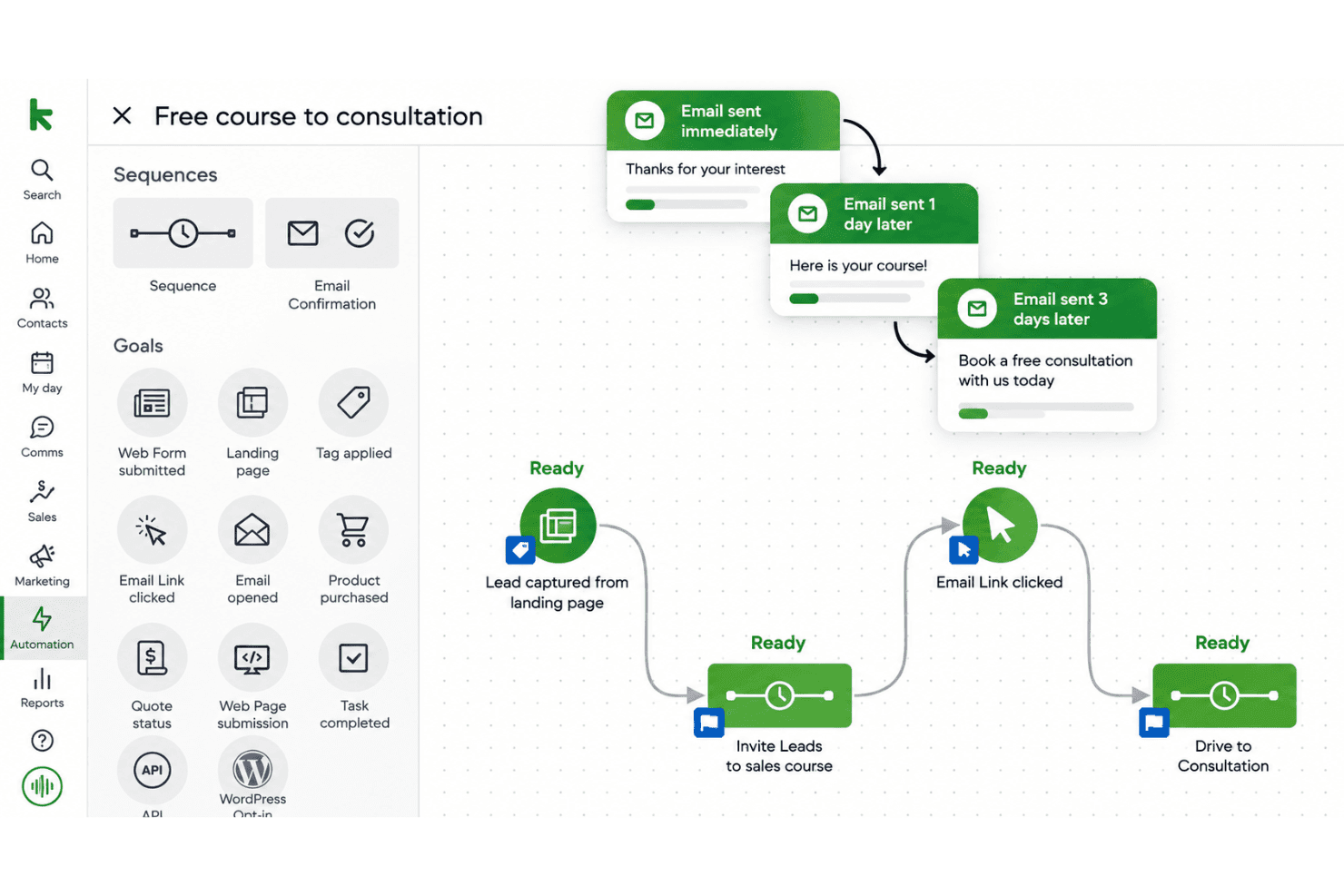
Keap’s visual campaign builder connects forms, tags, emails, text messages, and payments in one workflow. For example, a form submission can trigger a welcome email, apply a tag, and create a follow-up task.
CRM And Contact Management
Keap stores contact records, activity data, tags, and lead details for targeted follow-ups. You can group contacts by source, interest, or lifecycle stage before sending a campaign.
Email Marketing
Keap supports broadcast emails and automated email sequences tied to contact actions or campaign stages. A service business could send educational emails after someone downloads a guide, then follow up with an offer.
Lead Capture Forms
Keap forms collect prospect information and can start automated campaigns when someone submits their details. For example, a consultation request can add a contact to the CRM and trigger an immediate confirmation email.
Lead Scoring And Routing
Keap assigns scores based on engagement or potential value, helping teams prioritize contacts for follow-up. A lead that opens several emails can receive a higher score and move into a sales-focused workflow.
Text Message Automation
Keap adds text messages to automated campaigns alongside email and CRM actions. You can send an appointment reminder or follow-up text after a prospect submits a form.
Ease of Use
Keap is usable once configured, but it isn’t the easiest marketing automation software to learn. Its visual campaign builder connects forms, tags, emails, texts, payments, and tasks, giving you one place to manage customer journeys. However, the many options create a steep learning curve, and user reviews often mention difficult setup, inconsistent support, and frustrating billing or cancellation experiences. I’d recommend it to teams willing to invest in onboarding.
Integrations
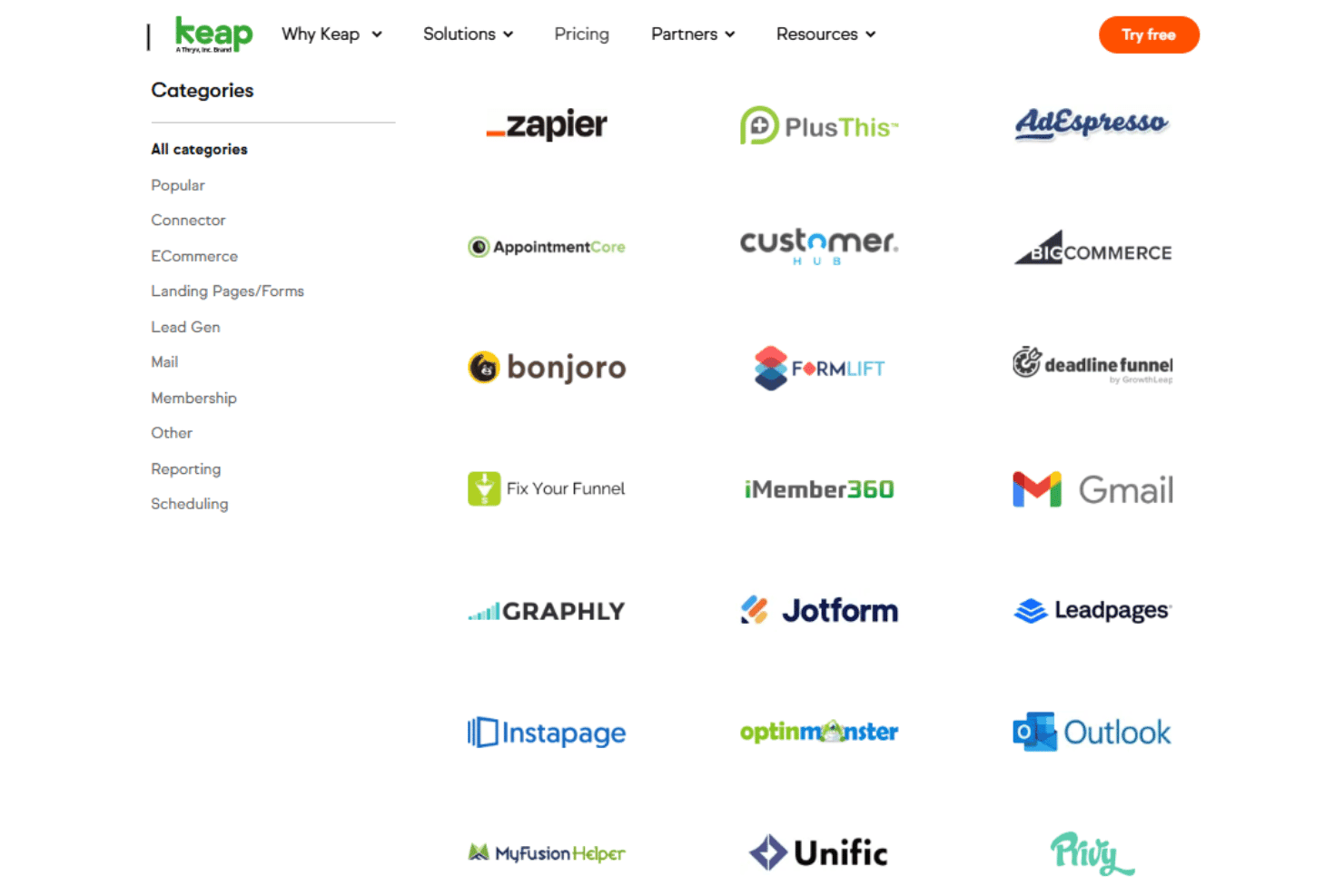
Keap integrates with Gmail, Outlook, WebinarJam, FormLift, Jotform, Typeform, AppointmentCore, and OnceHub (formerly ScheduleOnce).
Keap also offers an open API for custom integrations and connects with third-party tools such as Zapier.
Keap Specs
- A/B Testing: Yes
- Analytics: Yes
- API: Yes
- Audience Targeting: Yes
- Automated Conversion: No
- Batch Permissions & Access: No
- Behavioral Tracking: Yes
- Brand Management: No
- Campaign Management: Yes
- Contact Management: Yes
- Contact Sharing: No
- Conversion Tracking: Yes
- CRM Integration: Yes
- Customer Management: Yes
- Dashboards: Yes
- Data Export: Yes
- Data Import: Yes
- Email Integration: Yes
- External Integrations: Yes
- Keyword Tracking: No
- Landing Pages: Yes
- Lead Management: Yes
- Lead Scoring: Yes
- Link Tracking: Yes
- Marketing Automation: Yes
- Multi-User: Yes
- Notifications: Yes
- Password & Access Management: Yes
- Social-Media Integration: Yes


