
Drupal-Test 2026: Vorteile, Nachteile, Funktionen und Preise
I see Drupal as a powerful, highly configurable CMS for complex sites—if your team can handle its steeper learning curve and more hands-on implementation.

Wir bewerten Tools unabhängig, und Provisionen helfen, unsere Tests zu finanzieren. Siehe unsere Transparenz-Richtlinie, unsere Methodik oder schlagen Sie ein Tool vor.
Drupal is open-source content management software for organizations that need structured content, granular permissions, multilingual publishing, and tailored digital experiences. I’d choose Drupal over WordPress for complex websites with multiple content types, editorial workflows, and strict access controls because it offers deeper configuration for those requirements.
Drupal Evaluation Summary
4.2/5
- Free and open-source
- Free forever plan
Warum Sie unseren Software-Empfehlungen vertrauen können
6,700+
Reviews
20
Industry experts
16+
Evaluation factors
14
Years
Unser Team testet und bewertet Software seit 2012. Als Marketingführungskräfte wissen wir selbst, wie schwierig – und wichtig – es ist, die richtige Software auszuwählen.
Für diesen Leitfaden haben wir Tools mithilfe von praktischen Tests und unabhängiger Recherche bewertet und dabei unsere Bewertungskriterien angewendet.
Unsere Bewertungen spiegeln unser menschliches redaktionelles Urteilsvermögen wider, keine Verkaufsstrategie.
Expertenprüfer:
 Gui DrusinaKreativdirektor
- Shriya GhateSenior Marketing Lead
 Amanda JacquesMarketing Ops Leiterin

Drupal Overview
I’d choose Drupal for complex websites that need structured content, granular permissions, multilingual publishing, custom workflows, and extensive integrations. Its open-source pricing avoids license fees, but hosting, development, maintenance, and specialist support can make the total cost higher than simpler alternatives. The interface and onboarding take longer to learn, yet experienced teams gain finer control over content models, access rules, and digital experiences. In my view, Drupal outperforms competitors on flexibility and governance but underperforms on setup simplicity. It’s best suited to organizations with technical resources and demanding, long-term publishing requirements.
Pros
- Structured content models handle complex, reusable publishing requirements.
- Granular roles and workflows support controlled, multilingual editorial operations.
- Open-source licensing avoids fees and supports extensive configuration.
Cons
- Administrative screens and layout tools can feel clunky for marketers.
- Major upgrades often require specialist developers and manual maintenance.
- Large datasets or customizations can create performance and hosting demands.
Is Drupal Right For Your Needs?
Who Would be a Good Fit for Drupal?
Drupal suits organizations with complex content structures, strict permissions, multilingual publishing, and technical support. It gives large teams control over content types, revisions, workflows, and user access. Its API capabilities also support integrations with platforms such as Salesforce, Mailchimp, HubSpot, and Google Analytics.
- Higher EducationUniversities can manage departments, programs, research, events, and multilingual pages through Drupal’s structured content types and permissions.
- Large EnterprisesLarge companies can assign detailed roles, approval workflows, and revision histories across many teams and websites.
- Global Marketing TeamsInternational marketing departments can publish localized content using Drupal’s multilingual tools, translation integrations, and centralized governance.
- Government AgenciesGovernment teams can use structured content, access controls, revisions, and editorial workflows for regulated public information.
- Content OperationsContent operations teams can connect Drupal with Salesforce, HubSpot, Mailchimp, analytics platforms, and other marketing systems.
- Technical TeamsDevelopers can customize Drupal through its open-source codebase, web services modules, community modules, and API integrations.
Who Would be a Bad Fit for Drupal?
Drupal is a poor match for teams that need a simple setup, minimal training, or vendor-led support. Its administration interface can feel crowded, while upgrades and module maintenance often require developer involvement. Smaller teams may spend more on hosting, configuration, and technical support than the platform’s free core suggests.
- Small BusinessesSmall businesses with basic website needs may find Drupal’s configuration and maintenance demands excessive for a few pages and contact details.
- Solo MarketersSolo marketers may need technical help to configure content types, permissions, layouts, workflows, and ongoing module updates.
- Rapid CampaignsCampaign teams needing quick launches may lose time configuring Drupal instead of publishing through a simpler CMS.
- Local RetailersLocal retailers with limited content and few integrations may not need Drupal’s structured modeling, revisions, and access controls.
- Nontechnical TeamsNontechnical departments can struggle with Drupal’s crowded administration interface and developer-heavy upgrade process.
- Simple BlogsBlog publishers needing straightforward writing and publishing may find Drupal’s granular configuration unnecessary for their content model.
Wie wir Tools testen und bewerten
Wir haben jahrelang unser Software-Test- und Bewertungssystem aufgebaut, verfeinert und verbessert. Das Bewertungsraster wurde entwickelt, um die Feinheiten der Softwareauswahl zu erfassen und aufzuzeigen, was ein Tool effektiv macht. Dabei konzentrieren wir uns auf kritische Aspekte des Entscheidungsprozesses. Im Folgenden können Sie genau nachvollziehen, wie unsere Tests und Bewertungen über sieben Kriterien hinweg funktionieren. Dies ermöglicht eine unparteiische Bewertung der Software basierend auf Kernfunktionen, besonderen Merkmalen, Benutzerfreundlichkeit, Onboarding, Kundenservice, Integrationen, Kundenrezensionen und Preis-Leistung.
Kernfunktionen (25% der Gesamtbewertung)
Der Ausgangspunkt unserer Bewertung ist stets die Kernfunktionalität des Tools. Verfügt es über die grundlegenden Merkmale und Funktionen, die ein Nutzer erwarten würde? Sind einige dieser Kernfunktionen nur in hochpreisigen Tarifen verfügbar? Im Kern erwarten wir, dass ein Tool den Basisfunktionen der Konkurrenz standhält.
Besondere Merkmale (25% der Gesamtbewertung)
Als nächstes bewerten wir außergewöhnliche, herausragende Funktionen, die über die übliche Kernfunktionalität hinausgehen. Eine hohe Punktzahl spiegelt spezialisierte oder einzigartige Merkmale wider, die das Produkt schneller, effizienter oder wertvoller für den Nutzer machen. Wir bewerten außerdem, wie einfach es ist, das Tool in andere häufig verwendete Anwendungen im Tech-Stack zu integrieren, um die Funktionalität und den Nutzen der Software zu erweitern. Tools, die viele native Integrationen, Drittanbieter-Anbindungen sowie API-Zugriff für eigene Integrationen bieten, schneiden am besten ab.
Benutzerfreundlichkeit (10% der Gesamtbewertung)
Wir berücksichtigen, wie schnell und einfach sich Aufgaben, die zu den Kernfunktionen gehören, mit dem Tool ausführen lassen. Hoch bewertete Software ist gut gestaltet, intuitiv bedienbar, bietet mobile Apps, Vorlagen und lässt auch komplexe Aufgaben einfach erscheinen.
Onboarding (10% der Gesamtbewertung)
Uns ist bewusst, wie wichtig eine schnelle Akzeptanz im Team für eine neue Plattform ist. Daher bewerten wir, wie leicht sich das Tool mit minimaler Einweisung erlernen und anwenden lässt und wie schnell Teammitglieder auch ohne Vorerfahrung loslegen können. Eine hohe Punktzahl deutet darauf hin, dass kaum oder gar keine Unterstützung notwendig ist.
Kundenservice (10% der Gesamtbewertung)
Wir prüfen, wie schnell und einfach es ist, bei Problemen Hilfe per Telefon, Live-Chat oder Wissensdatenbank zu erhalten. Tools und Unternehmen, die Support in Echtzeit anbieten, erhalten die besten Bewertungen; Chatbots schneiden am schlechtesten ab.
Kundenrezensionen (10% der Gesamtbewertung)
Neben unseren eigenen Tests und Bewertungen berücksichtigen wir den Net Promoter Score aktueller und ehemaliger Kunden. Wir prüfen, wie wahrscheinlich sie sich erneut für das Tool bezüglich der Kernfunktionen entscheiden würden. Hoch bewertete Software spiegelt einen hohen Net Promoter Score der Nutzer wider.
Preis-Leistung (10% der Gesamtbewertung)
Abschließend bewerten wir unter Berücksichtigung aller anderen Kriterien den Durchschnittspreis der Einsteiger-Tarife im Verhältnis zu den Kernfunktionen sowie den Wert der anderen bewerteten Aspekte. Software, die mehr für weniger bietet, wird besser bewertet.
Core Features
Content Types And Fields
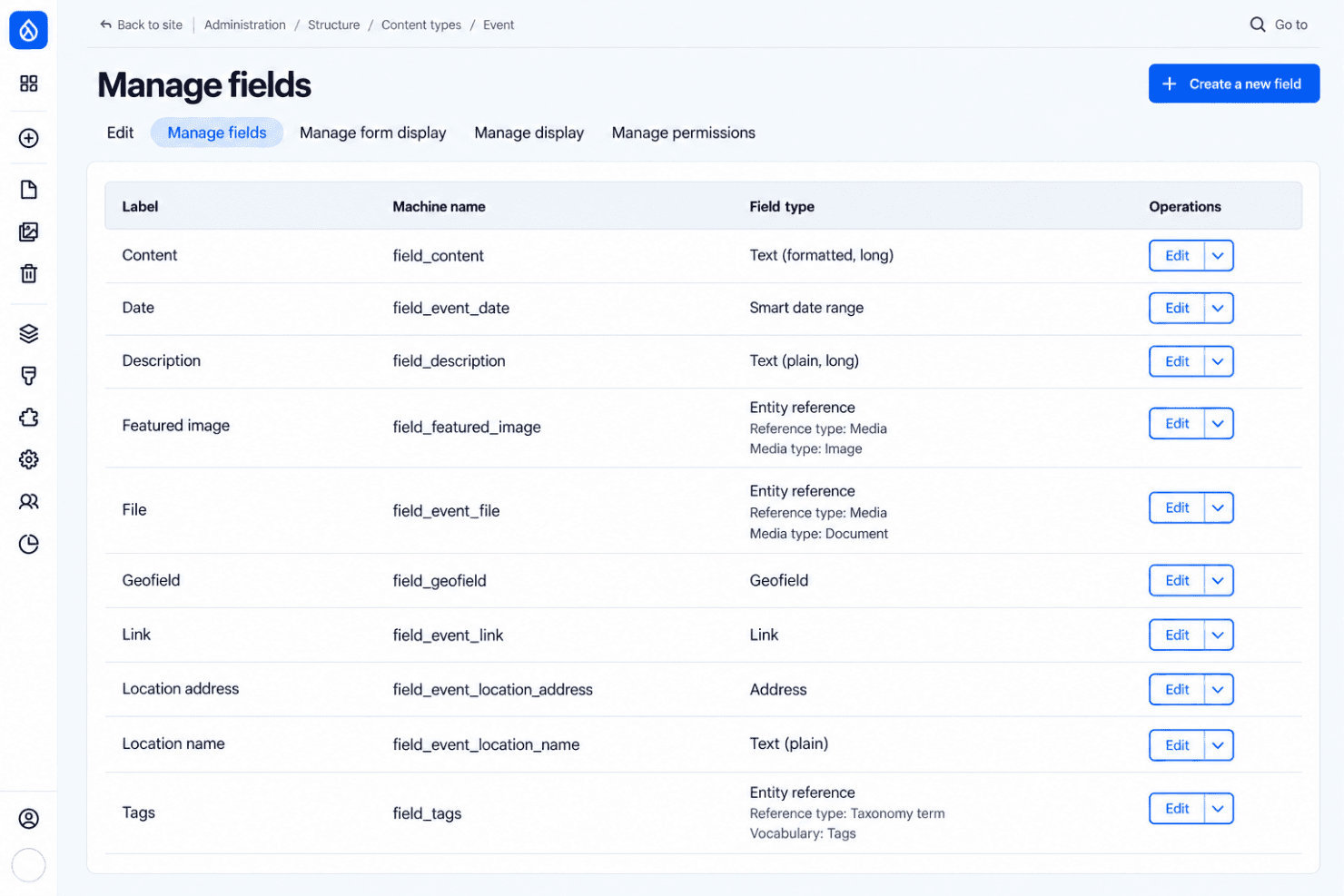
Drupal lets you define content types with custom fields, such as author, publication date, location, or campaign category. This structure supports reusable content across landing pages, articles, directories, and other digital experiences.
Taxonomy
Drupal’s taxonomy system organizes content with hierarchical vocabularies and terms, such as product categories, regions, or audience segments. Editors can tag content consistently and build filtered listings from those terms.
Media Management
Drupal’s Media module lets teams manage reusable images, video, documents, and other assets separately from page content. The Media Library provides a central place to search, select, and reuse approved assets across campaigns.
Roles And Permissions
Drupal lets administrators create roles and assign granular permissions for actions such as creating, editing, publishing, or deleting content. You can give contributors access to drafts while reserving publishing rights for editors.
Editorial Workflows And Revisions
Drupal’s Workflows and Content Moderation modules support review stages such as draft, review, and published, while revisions preserve earlier versions. Teams can route campaign content through approvals and restore a previous version when needed.
Multilingual Publishing
Drupal’s multilingual modules support translated content, interface text, configuration, and language-aware publishing controls. Marketing teams can manage localized versions of product pages while keeping language variants connected.
Ease of Use
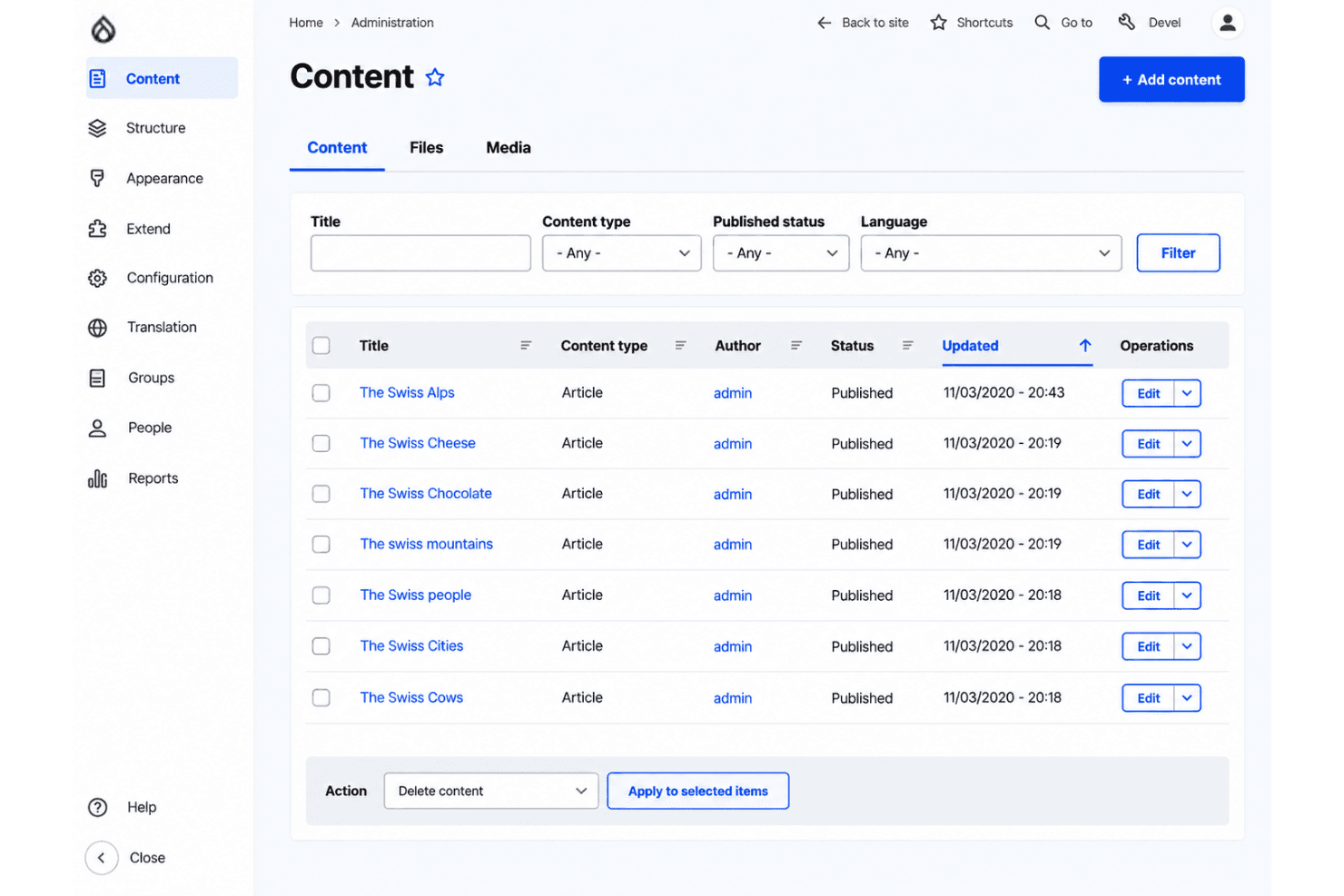
Drupal is highly configurable but has a steep learning curve. User reviews praise its content modeling, permissions, revisions, and multilingual tools, while criticizing the messy administration interface and developer-heavy upgrades. I find it less approachable than simpler CMS platforms because marketers often need training to manage layouts and workflows. Still, teams with technical support gain precise control over structured content and editorial governance.
Integrations
Drupal integrates with Salesforce, Mailchimp, HubSpot, Google Analytics, Shopify, Tableau, Smartling, Brightcove, and Real-time SEO for Drupal (powered by Yoast), among others.
Drupal also provides REST and JSON support through its core web services modules and connects with third-party automation platforms such as Zapier.
Drupal Specs
- A/B Testing: Yes
- Analytics: Yes
- API: Yes
- Audience Targeting: Yes
- Automated Conversion: No
- Batch Permissions & Access: No
- Behavioral Tracking: Yes
- Brand Management: No
- Campaign Management: No
- Contact Management: No
- Contact Sharing: No
- Conversion Tracking: Yes
- CRM Integration: Yes
- Customer Management: No
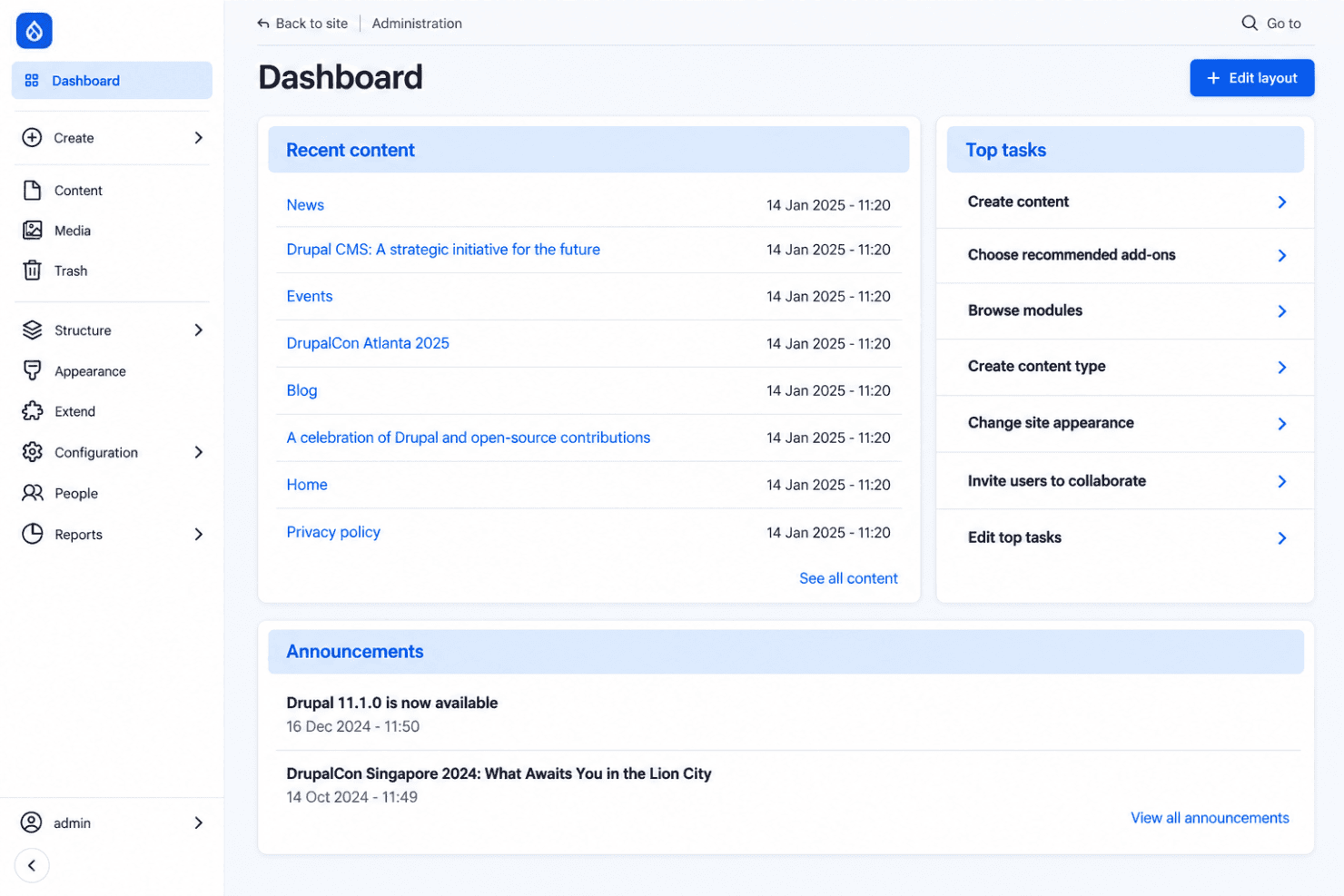
- Dashboards: Yes
- Data Export: No
- Data Import: Yes
- Email Integration: Yes
- External Integrations: Yes
- Keyword Tracking: No
- Landing Pages: Yes
- Lead Management: No
- Lead Scoring: No
- Link Tracking: No
- Marketing Automation: Yes
- Multi-User: Yes
- Notifications: Yes
- Password & Access Management: Yes
- Social-Media Integration: Yes


