
Acast-anmeldelse: Fordele, ulemper, vigtigste funktioner og aktuelle priser
Curious if Acast can actually elevate your ad intelligence game? I dig into what really sets Acast apart (and what doesn't) so you can decide if it’s worth it in 2026.

We review tools independently, and commissions help fund our testing. See our transparency policy, our methodology, or suggest a tool.
Acast is an ad intelligence software built for podcast advertisers, hosts, and agencies who want to plan, place, and measure audio campaigns across a large publisher network. I'd look at it if you run podcast ad buys and need dynamic ad insertion, brand lift measurement, and audience targeting in one platform, rather than stitching together separate hosting and monetization tools. Compared with rival ad-serving platforms tied to a single catalog, Acast gives you broader access to independent podcast inventory and a marketplace model that suits advertisers who want reach beyond one publisher's roster. It also runs podcast hosting on the creator side, so if your goal is to monetize your podcast rather than buy against someone else's, the same account covers both.
Acast Evaluation Summary
3.9/5
- From $14.99 /month (billed annually)
- Free plan available
Why Trust Our Software Recommendations
6,700+
Reviews
20
Industry experts
16+
Evaluation factors
14
Years
Our team has been testing and reviewing software since 2012. As marketing leaders ourselves, we know how difficult—and important—it is to choose the right software.
For this guide, we evaluated tools using hands-on testing and independent research, scoring tools using our selection criteria.
Our reviews reflect our human editorial judgment, not a sales pitch.
Expert reviewers:
 Gui DrusinaCreative Director
- Shriya GhateSenior Marketing Lead
 Amanda JacquesMarketing Ops Leader

Acast Overview
If you’re judging Acast as ad intelligence software, I think you’ll appreciate its dynamic ad insertion, strong audience targeting, and broad marketplace access for podcast inventory. In my experience, its interface is easy to onboard, and its support is responsive. While pricing can be higher and integrations aren’t as deep as some tools offer, you get unique access to independent shows and campaign measurement features in one place. Judged as a podcast hosting platform, the monetization options are the real draw rather than the publishing tools themselves. I’d suggest Acast is a good fit for advertisers and agencies seeking scalable podcast buys with actionable analytics, rather than those tied to a single network or needing granular omnichannel integrations.
Pros
- Dynamic ad insertion across a large independent podcast network
- Granular audience targeting for campaign planning and measurement
- Marketplace access to both programmatic and direct podcast ad buys
Cons
- Limited omnichannel attribution compared to cross-channel analytics tools
- Higher pricing tiers than some competing podcast platforms
- Fewer built-in integrations with non-podcast marketing platforms
Is Acast Right For Your Needs?
Who Would be a Good Fit for Acast?
Acast is a strong choice for marketing teams, media agencies, and brands that want a fast, guided way to reach independent podcast audiences at scale. If you work in a department that values clear dashboards, responsive support, and access to a broad podcast inventory without complicated setup or integrations, you’ll find it well suited. Creators sit on the other side of the same marketplace: an Acast podcast gets hosting, a podcast website, and access to advertiser demand from one account. Its tiered plans and API capabilities also fit larger organizations needing advanced workflows or those who prioritize analytics and targeting in audio formats.
- DTC Consumer BrandsAcast gives direct access to premium independent podcast ad inventory, letting brands target niche audiences and track performance in one dashboard.
- Media Buying AgenciesIts centralized planning and analytics simplify multi-campaign management for agencies running podcast ads across diverse shows and networks.
- Marketing DepartmentsCampaign setup, targeting, and budget management are intuitive, so marketing teams can quickly launch campaigns and measure ROI.
- Large EnterprisesThe Enterprise tier delivers custom integrations, advanced workflow features, and dedicated account management for complex needs.
- Digital-First StartupsOnboarding is fast, enabling startups to get ads live and pull reports within hours, accelerating go-to-market efforts.
- Audio-First Content ProducersYou can reach engaged podcast listeners with advanced targeting, making it easy to promote audio-based offerings.
Who Would be a Bad Fit for Acast?
Acast isn’t the right fit for small businesses with limited ad budgets, companies needing highly customized integrations, or teams focused on visual content channels. If your needs extend beyond podcast advertising or require niche integration support outside Acast's ecosystem, you may find the platform restrictive. Small independent shows hoping to monetize a few hundred downloads a month will also sit below the thresholds that make the marketplace work.
- Small Local BusinessesThe cost and scale of Acast’s inventory can be high for small businesses looking for hyper-local podcast placements.
- Performance Marketing TeamsTeams needing granular attribution or cross-channel tracking across video, social, and search ads will find Acast’s focus too narrow.
- IT DepartmentsIf your IT team needs deep custom integrations or automations beyond what Acast’s API provides, it’s not a great fit.
- Multinational CorporationsGlobal brands needing localized content delivery in non-supported regions can run into limitations with Acast’s reach.
- Ecommerce RetailersOnline retailers prioritizing visual formats or product listing integrations won’t find the podcast-first focus of Acast aligned with their strategies.
- Agencies Serving Niche PlatformsAgencies needing promo tools for non-podcast ad formats or channels outside Acast’s available integrations should look elsewhere.
How We Test & Score Tools
We’ve spent years building, refining, and improving our software testing and scoring system. The rubric is designed to capture the nuances of software selection and what makes a tool effective, focusing on critical aspects of the decision-making process.
Below, you can see exactly how our testing and scoring works across seven criteria. It allows us to provide an unbiased evaluation of the software based on core functionality, standout features, ease of use, onboarding, customer support, integrations, customer reviews, and value for money.
Core Functionality (25% of final scoring)
The starting point of our evaluation is always the core functionality of the tool. Does it have the basic features and functions that a user would expect to see? Are any of those core features locked to higher-tiered pricing plans? At its core, we expect a tool to stand up against the baseline capabilities of its competitors.
Standout Features (25% of final scoring)
Next, we evaluate uncommon standout features that go above and beyond the core functionality typically found in tools of its kind. A high score reflects specialized or unique features that make the product faster, more efficient, or offer additional value to the user.
We also evaluate how easy it is to integrate with other tools typically found in the tech stack to expand the functionality and utility of the software. Tools offering plentiful native integrations, 3rd party connections, and API access to build custom integrations score best.
Ease of Use (10% of final scoring)
We consider how quick and easy it is to execute the tasks defined in the core functionality using the tool. High scoring software is well designed, intuitive to use, offers mobile apps, provides templates, and makes relatively complex tasks seem simple.
Onboarding (10% of final scoring)
We know how important rapid team adoption is for a new platform, so we evaluate how easy it is to learn and use a tool with minimal training. We evaluate how quickly a team member can get set up and start using the tool with no experience. High scoring solutions indicate little or no support is required.
Customer Support (10% of final scoring)
We review how quick and easy it is to get unstuck and find help by phone, live chat, or knowledge base. Tools and companies that provide real-time support score best, while chatbots score worst.
Customer Reviews (10% of final scoring)
Beyond our own testing and evaluation, we consider the net promoter score from current and past customers. We review their likelihood, given the option, to choose the tool again for the core functionality. A high scoring software reflects a high net promoter score from current or past customers.
Value for Money (10% of final scoring)
Lastly, in consideration of all the other criteria, we review the average price of entry level plans against the core features and consider the value of the other evaluation criteria. Software that delivers more, for less, will score higher.
Core Features
Dynamic Ad Insertion
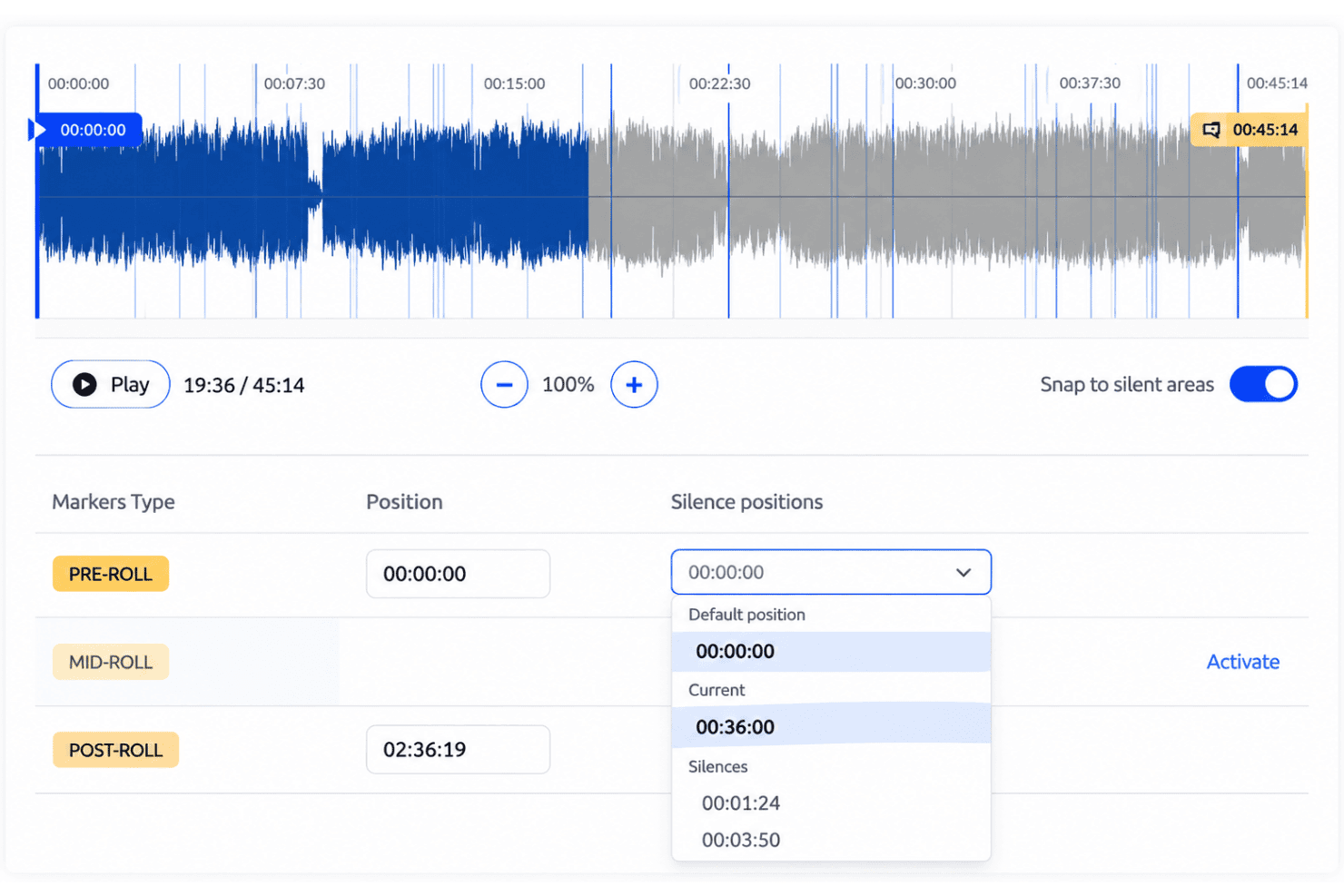
Place targeted audio ads across a wide podcast network in real time. Dynamically inserted ads let you swap pre-roll or mid-roll creative without re-uploading episodes.
Audience Targeting
Match ads to listeners on demographic, behavioral, and contextual criteria. Set age, location, interests, or device type to focus spend where it fits.
Podcast Marketplace Access
Direct access to independent and premium podcast inventory for programmatic and direct buys. Hosts monetize while advertisers scale past single-publisher platforms.
Campaign Planning Dashboard
Campaign setup, budgeting, creative assets, and scheduling in one interface. Manage multiple campaigns and see delivery, pacing, and creative rotation at a glance.
Brand Lift Measurement
Track listener recall, awareness, and sentiment after exposure via surveys and digital signals. Reportable impact that justifies branded content spend.
Real-Time Analytics and Reporting
Instant access to impressions, listens, conversions, and engagement by show, campaign, or audience slice. Data updates live so you can optimize mid-flight.
Ease of Use
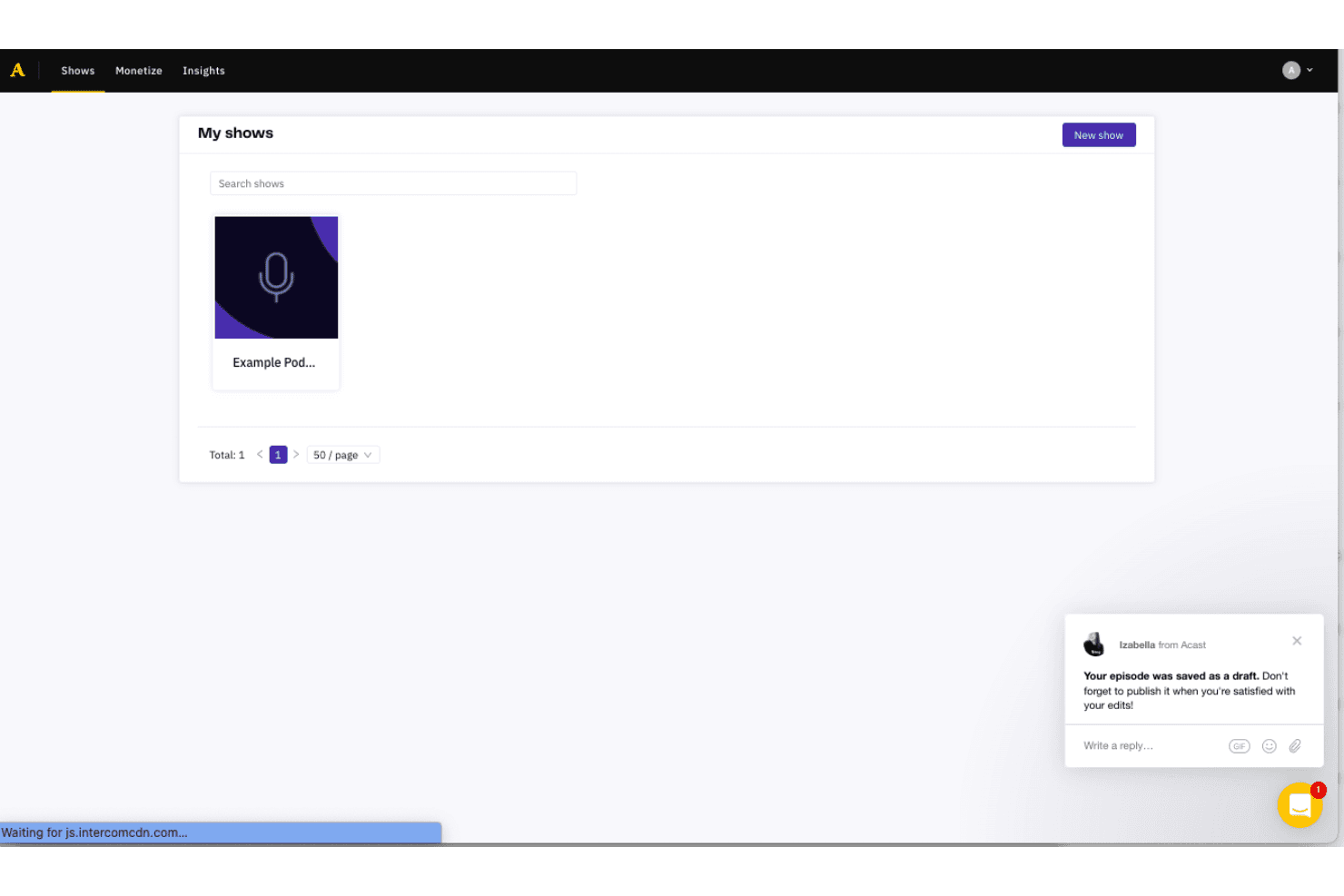
Acast is user-friendly for podcast advertisers, with a clean interface and quick onboarding that lets you launch, track, and optimize campaigns without a steep learning curve. The centralized dashboard combines planning, budget, and analytics in one view. Users point to responsive support and intuitive navigation, though some mention that advanced integrations are limited—there’s no direct pipe to your social media scheduler, for instance. If you want fast setup and clear access to independent podcast inventory, you should find Acast’s usability a strong fit.
Integrations
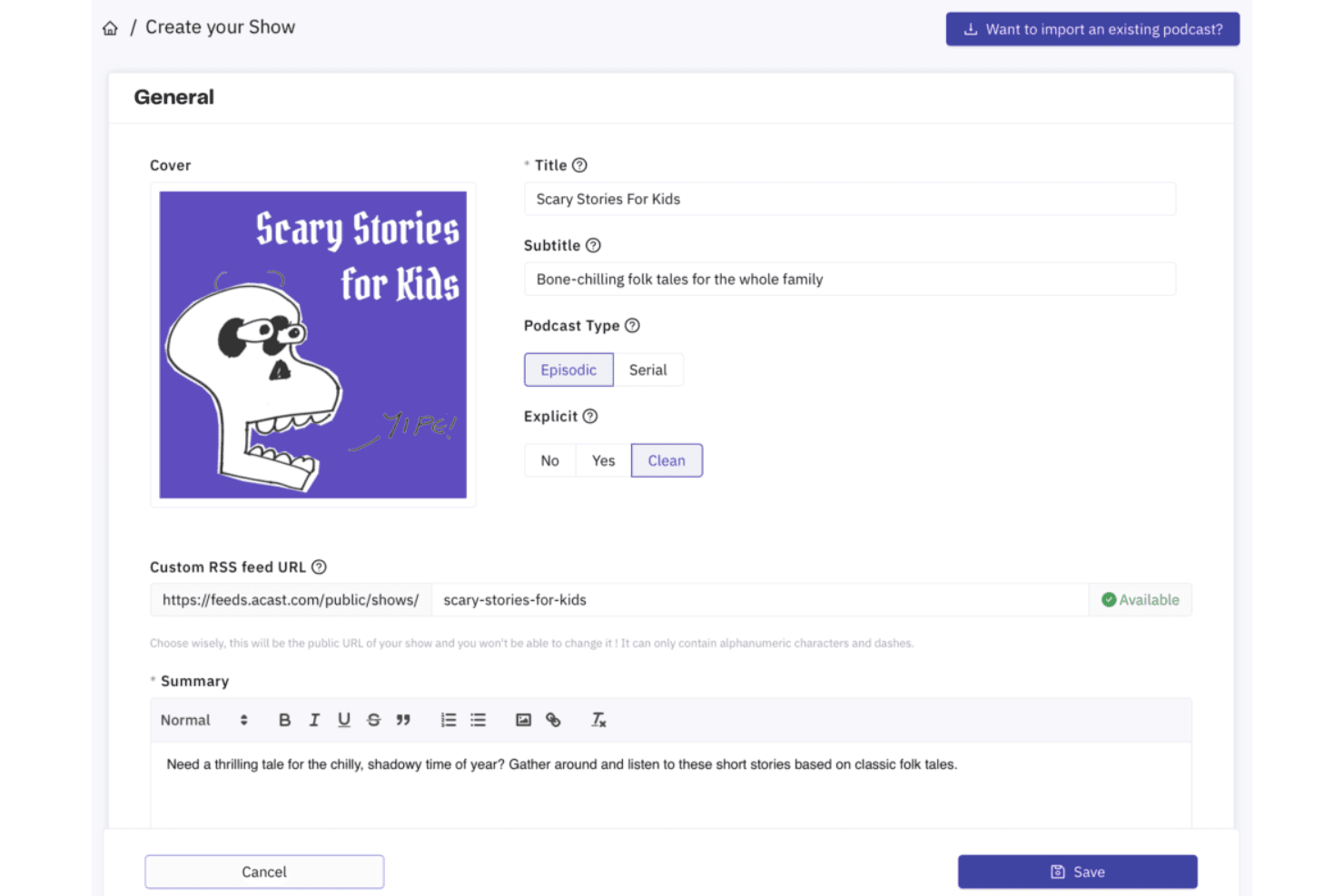
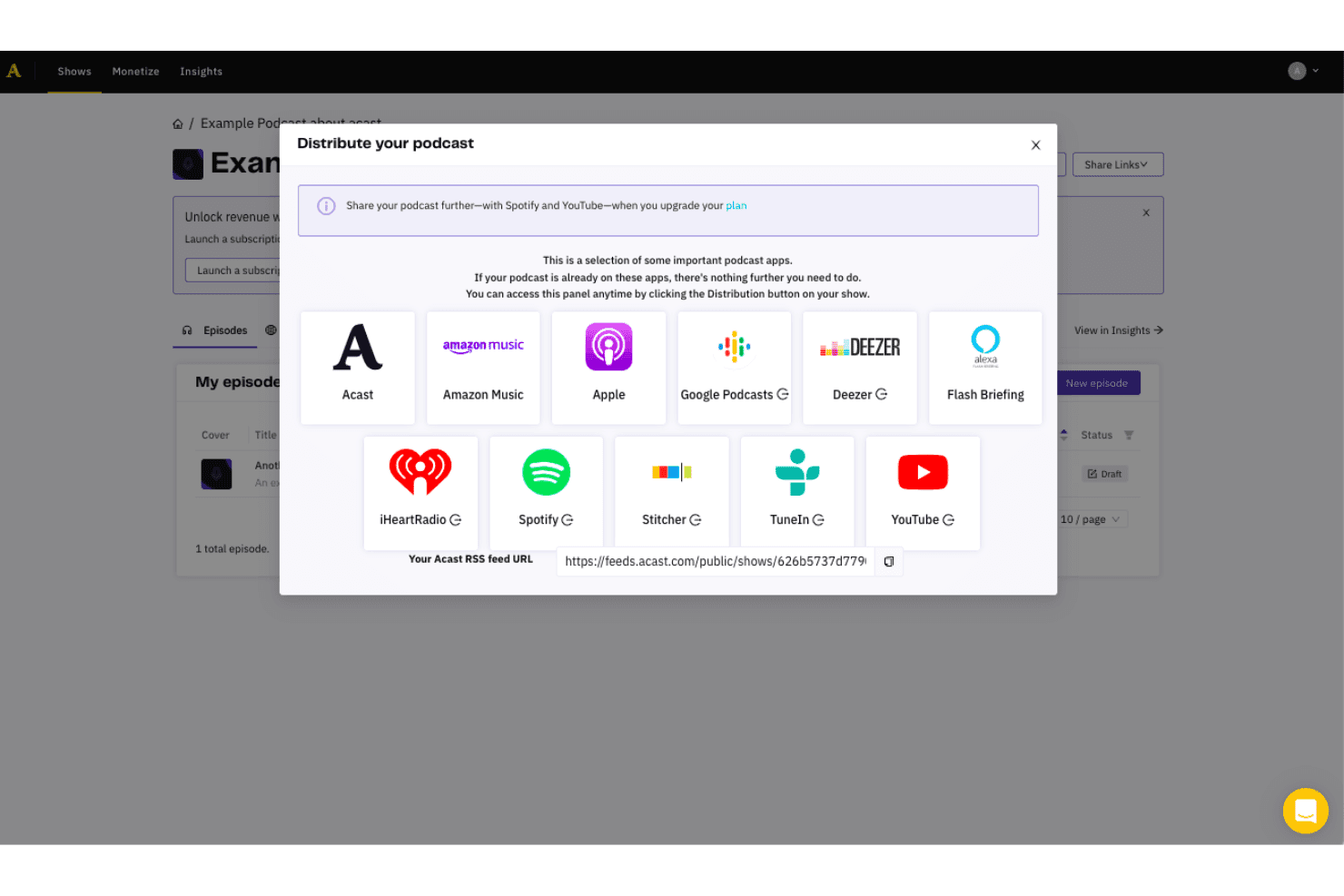
Acast integrates with Spotify, Apple Podcasts, Google Podcasts, Amazon Music, Deezer, iHeartRadio, Stitcher, Pocket Casts, Overcast, and RSS feeds, among others, so your show reaches listeners in whichever podcast app they already use.
Acast also offers an API for custom workflows, transcription for published episodes, and connects with select third-party integration tools.
Acast Specs
- A/B Testing: Yes
- API: Yes
- Audience Targeting: Yes
- BitCoin: Yes
- Brand Management: Yes
- Budgeting: Yes
- Calendar Management: Yes
- Conversion Tracking: Yes
- Dashboard: Yes
- Data Export: Yes
- Data Import: Yes
- Data Visualization: Yes
- External Integrations: Yes
- Forecasting: Yes
- Marketing Automation: Yes
- Multi-User: Yes
- Notifications: Yes
- PayPal: Yes
- Scheduling: Yes
- Social-Media Integration: Yes
- Stripe: Yes
- Third-Party Plugins/Add-Ons: Yes


