


Synup Vs. BrightLocal: Full Comparison & Reviews For 2026
Cut through the noise: I break down Synup vs. BrightLocal, focusing on what actually separates them so you can pick the right local SEO tool for your business in 2026.

We review tools independently, and commissions help fund our testing. See our transparency policy, our methodology, or suggest a tool.
Rankings tell you what’s happening. Execution changes it. The better fit depends on whether your team needs deeper local intelligence or more hands-on management across locations.
If you’re feeling stuck with confusing dashboards or spending too much time tracking search rankings, you’re not alone. Choosing the right local SEO tool can make or break your local marketing, and Synup and BrightLocal both promise to free up your time while taking very different routes to it. One runs the work across your locations for you, the other shows you exactly where you stand and what to fix.
In this article, I’ll walk you through an in-depth comparison of Synup and BrightLocal. You’ll get a sense of each tool’s strengths, watch-outs, ideal use cases, pricing details, security posture, and how they hold up in daily use, so you can decide which one makes the most sense for your business.
Synup
4.4/5
- Free demo available
- From $79/month (billed annually)
BrightLocal
4.7/5
- 14-day free trial + free demo
- From $31/month (billed annually)
Why Trust Our Software Recommendations
6,700+
Reviews
20
Industry experts
16+
Evaluation factors
14
Years
Our team has been testing and reviewing software since 2012. As marketing leaders ourselves, we know how difficult—and important—it is to choose the right software.
For this guide, we evaluated tools using hands-on testing and independent research, scoring tools using our selection criteria.
Our reviews reflect our human editorial judgment, not a sales pitch.
Expert reviewers:
 Gui DrusinaCreative Director
- Shriya GhateSenior Marketing Lead
 Amanda JacquesMarketing Ops Leader

| Synup | BrightLocal | |
|---|---|---|
| Free Trial | Free demo available | 14-day free trial + free demo |
| Pricing | From $79/month (billed annually) | From $31/month (billed annually) |
Synup vs. BrightLocal Pricing & Hidden Costs
Synup publishes its pricing per location, in tiers that run from a single storefront up to enterprise portfolios, and every tier carries the full feature set rather than holding listings or reviews back for an upgrade. A free trial gets you in without a sales call, billing is monthly unless you take the annual discount, and white labeling opens up from the mid tiers. BrightLocal runs three plans that build on each other, starting with visibility tracking, then adding listing sync and Google Business Profile posting, then review monitoring and collection, with the price scaling by location count. A free trial runs without a card, annual billing carries a discount, and citation building sits outside the subscription as a pay per citation service, alongside a done-for-you SEO retainer and separately priced API access.
Pick the right model by thinking about how you’ll grow and which features you’ll genuinely touch each month. With Synup the question is simply how many locations you manage, since the feature set doesn’t move between tiers. With BrightLocal the question is which plan tier you need and how much citation work you’ll buy on top, because that spend sits outside the plan. Write down your must-have features and current location count, then run a couple of growth scenarios against both, and you’ll see quickly which one stays predictable as you scale.
| Synup | BrightLocal | |
|---|---|---|
| API | Yes | Yes |
| Brand Management | Yes | Yes |
| Dashboard | Yes | Yes |
| External Integrations | Yes | Yes |
| Multi-User | Yes | Yes |
| Notifications | Yes | Yes |
| Social-Media Integration | Yes | Yes |
| Integration | Synup | BrightLocal |
|---|---|---|
| IntegrationGoogle Business Profile | Synup✅ | BrightLocal✅ |
| IntegrationApple Maps | Synup✅ | BrightLocal✅ |
| IntegrationBing | Synup✅ | BrightLocal✅ |
| IntegrationFacebook | Synup✅ | BrightLocal✅ |
| IntegrationWaze | Synup✅ | BrightLocal❌ |
| IntegrationGoogle Analytics | Synup✅ | BrightLocal✅ |
| IntegrationAPI | Synup✅ | BrightLocal✅ |
| IntegrationMCP connectors | Synup✅ | BrightLocal✅ |
The publisher picture separates them fastest. Synup pushes one record out to search, maps, navigation, and in-car systems, and connects to CRMs so review requests fire off the back of a customer visit. BrightLocal syncs to the platforms that matter most for local search and handles the long tail through its citation building service instead, with native connections into Google Analytics, Google Business Profile, Facebook, and agency reporting tools. Both offer an API and both can be queried by an AI assistant through their own connector, though Synup’s is built for agents to act while BrightLocal’s is aimed at pulling reports out of the platform.
| Factor | Synup | BrightLocal |
|---|---|---|
| FactorCertifications | SynupHolds SOC 2 Type II, ISO 27001, and ISO 42001 covering AI management systems. | BrightLocalHolds no certification of its own, and looks for certified providers when choosing infrastructure. |
| FactorRegulatory Compliance | SynupOperates under GDPR for client and location data, with data handling covered contractually. | BrightLocalBuilt around GDPR and UK data protection guidance, with documented access, correction, and deletion requests. |
| FactorData Retention | SynupLocation, review, and audit data is held in the platform for as long as the account is active. | BrightLocalSets defined retention windows for account and customer data, and closes out dormant accounts on a schedule. |
| FactorAccess Controls | SynupRoles and permissions per workspace, client portals for external access, and approvals before anything publishes. | BrightLocalUser roles with varying permission levels, plus client logins that expose only the reports you choose. |
| FactorReliability | SynupCloud only, with no on-premise option and availability managed entirely by Synup. | BrightLocalCloud only, with status communicated through the support channels rather than a public commitment. |
On paper this is closer than it looks in practice. Synup carries the formal certifications, including SOC 2 Type II, ISO 27001, and an ISO 42001 certification covering AI management systems, which is the one worth caring about when an agent is publishing on your behalf. BrightLocal is a UK company and frames its position around GDPR and the guidance that comes with it, with clear retention periods, documented subject access and deletion handling, and a preference for infrastructure providers that are themselves certified. Both are dependable for everyday marketing work. If procurement wants certificates on file rather than policies, only one of them has them.
| Factor | Synup | BrightLocal |
|---|---|---|
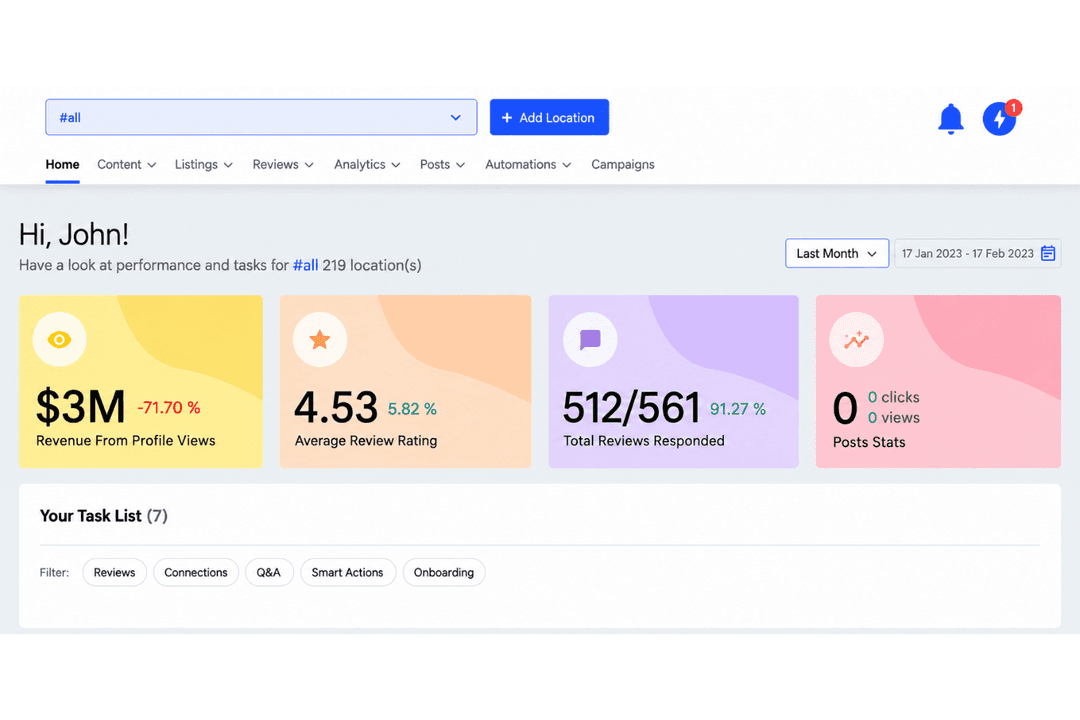
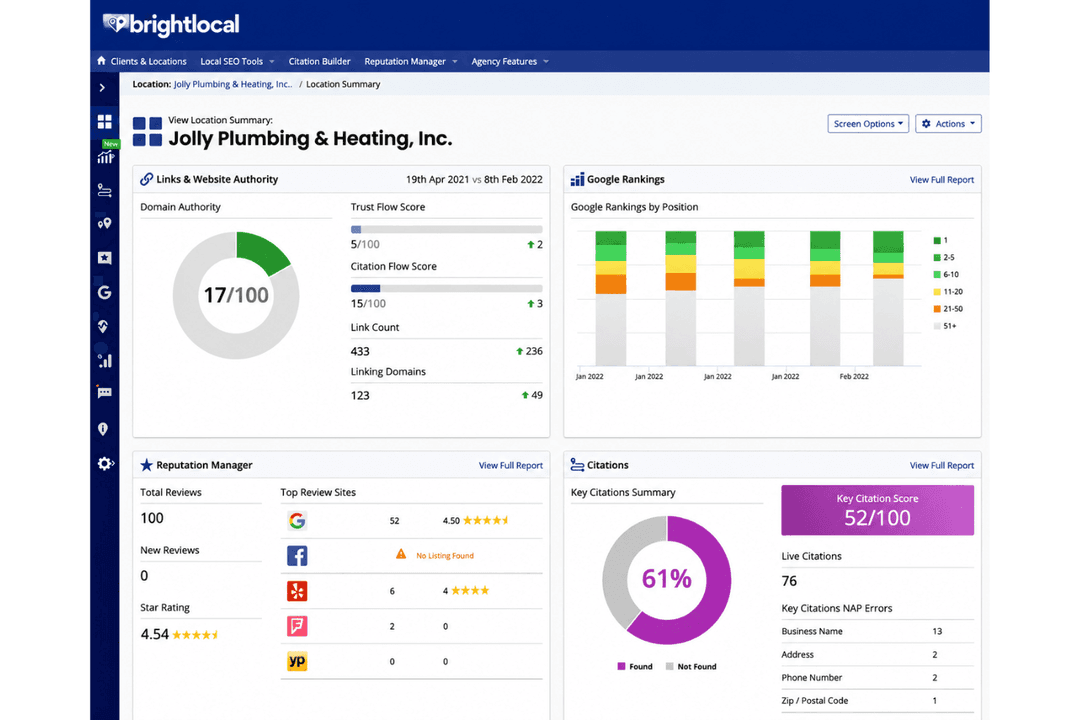
| FactorUser Interface | SynupOne workspace across listings, reviews, social, and rankings, with plain language chat as the way in. | BrightLocalLaid out around jobs rather than systems, which keeps it approachable for people new to local SEO. |
| FactorOnboarding | SynupThe agent pulls existing listing data, flags conflicts, and proposes fixes for approval, and larger accounts get a named contact and training. | BrightLocalStart a trial without a card and work through the setup yourself, with an academy and webinar library behind it. |
| FactorBulk Actions | SynupBulk edits and agent playbooks apply changes across every location at once. | BrightLocalHandles updates across locations, though the heavier lifting is in reporting rather than publishing. |
| FactorSupport Access | SynupKnowledge base and email for self-serve users, with a dedicated onboarding contact and team training on larger accounts. | BrightLocalLive chat during staffed hours plus a support widget and help center, with a separate team for large estates. |
| FactorReporting Setup | SynupReports cover listings, reviews, rankings, and AI answer visibility, and go out through a portal with your branding on it. | BrightLocalWhite labeled dashboards and scheduled reports, with client logins that show only what you want them to see. |
BrightLocal is easier to walk into. You can start a trial without handing over a card, the tools are laid out around jobs rather than systems, and there’s a well-stocked academy and webinar library if you want to learn the discipline as well as the software. Synup asks for less work rather than less learning: the agent does the first run setup, pulls existing listing data, and proposes fixes for approval, which matters more as location count climbs. For a small team running a handful of clients, BrightLocal gets you moving. For a team carrying hundreds of locations, Synup gets you out of the manual work faster.
Synup
- Automates listing fixes, review replies, and social posts through a built in AI agent.
- Covers listings, reputation, social, and AI answer visibility in one workspace.
- Flat published pricing, a free trial with no minimum contract.
- No paid search or local services ads management beyond boosted posts on Meta.
- Social listening and brand mention tracking aren’t part of the platform yet.
- Store locator and location pages come through a managed service rather than self serve.
BrightLocal
- Tracks local search rankings across multiple locations accurately
- Includes white-labeled, automated reporting tailored for agencies
- Offers citation audit and cleanup workflows in one platform
- Integrations with third-party platforms are limited
- Citation sources database isn’t as extensive as competitors
- Lacks broader SEO and keyword research features found elsewhere
Synup
- Multi-Location RetailBulk updates, alerts, and agent driven corrections keep store listings and review replies moving across dozens or hundreds of sites without a dedicated team behind them.
- Restaurant ChainsHours, service details, and seasonal changes push out in one pass, and reviews from Google, Yelp, and TripAdvisor land in a single queue instead of five browser tabs.
- Franchise OperatorsPer location workspaces, API access, and client facing reporting give franchisors oversight without taking the keyboard away from individual operators.
- Local Marketing AgenciesAgencies onboard clients quickly, work every account from one place, and hand each client a branded portal that never mentions the platform behind it.
- Healthcare NetworksProvider and practice details stay consistent across directories, which matters when a stale address or a wrong hours field quietly costs appointments.
- Vertical Software ProvidersSoftware companies serving local businesses can embed listings and location data through the public APIs and resell the full presence stack under their own brand.
BrightLocal
- Multi-location RetailBrightLocal makes it easy to track citations, manage reviews, and monitor rankings for dozens or hundreds of store locations in one place.
- Marketing AgenciesAgencies get quick onboarding, location-by-location reporting, and bulk monitoring tools ideal for managing multiple local SEO projects under one roof.
- Franchise BrandsFranchise marketers can audit, monitor, and benchmark performance across franchisees with consolidated dashboards and automated tasks.
- Hospitality BusinessesHotels and restaurants can use BrightLocal to audit, improve, and monitor their presence across high-impact review sites and directories like TripAdvisor and Yelp.
- In-house Marketing TeamsYou can keep tabs on rankings, spot listing errors, and benchmark competitors without bringing in outside specialists or custom dev work.
- Local Professional ServicesPlumbers, dentists, or law firms with a geographic footprint can manage reputation, fix citations, and boost search visibility with minimal technical expertise.
Who Should Use Synup, and Who Should Use BrightLocal?
Pick Synup if the locations are the business: agencies and resellers carrying many clients, franchise groups, multi-location brands, and software companies that want to sell local presence under their own name, especially where the work is continuous and nobody has the hours to do it by hand. Pick BrightLocal if the job is measuring, auditing, and proving local performance, which suits agencies and consultants who report to clients, in-house teams with a handful of locations, and anyone whose next move is a citation cleanup rather than a channel rollout. If you need listings, reviews, and social running continuously across a large estate, Synup is the fit. If you need to see exactly where you rank and show a client why, BrightLocal is hard to beat for the money.
| Synup | BrightLocal | |
|---|---|---|
| Agency Model | Synup Full white labeling with partner pricing built for reselling the platform under your own brand. | BrightLocal White labeled dashboards, client logins, and a lead capture widget aimed at winning new business. |
| AI Approach | Synup An agent that executes across listings, reviews, social, and rankings, with an approvals inbox and audit trail. | BrightLocal AI that diagnoses and drafts, surfacing prioritized actions and suggesting review replies for you to send. |
| Channel Coverage | Synup Adds social publishing and scheduling across connected profiles for every location. | BrightLocal Focuses on Google Business Profile posting rather than wider social publishing. |
| Listings Reach | Synup Distributes one record to search, maps, navigation, and in-car systems, with duplicate resolution built in. | BrightLocal Syncs to the major search and review platforms, and covers the long tail through paid citation submissions. |
| Pricing Model | Synup Published per location tiers with every feature included, a free trial, and monthly or annual billing. | BrightLocal Three stacked plans priced by location count, with citation building bought separately per citation. |
| AI Search Visibility | Both now track how a business shows up in AI generated answers rather than only in classic search results. It’s a young feature in each product, and it reflects the same read on where local discovery is heading. |
|---|---|
| Alerts and Notifications | Both platforms tell you when something moves, whether that’s a new review, a listing change, or a ranking drop. |
| API and AI Access | Both give you an API for custom work, and both offer a connector that lets an AI assistant reach their data. |
| Core Local SEO Tools | Both cover the essentials: keeping listings accurate, monitoring and replying to reviews, and tracking how each location ranks in local search. The day to day baseline matches up closely, and either one will keep a location’s details straight across the places customers actually look. |
| Whitelabel Reporting | Each lets you put reports in front of a client with your branding rather than theirs. |