

Northbeam Review 2026: Pros, Cons, Features and Pricing
I judge Northbeam by whether its attribution insights can improve real budget decisions—not just make marketing performance look clearer—and weigh its features, trade-offs, and pricing.

We review tools independently, and commissions help fund our testing. See our transparency policy, our methodology, or suggest a tool.
Northbeam is marketing attribution software for ecommerce brands, combining multi-touch attribution, incrementality measurement, and media mix modeling. I’d consider it when your team needs to compare channel and touchpoint contributions across customer journeys to inform budget decisions. Compared with Triple Whale’s broader ecommerce platform, Northbeam is a better fit if your priority is a measurement-focused tool centered on cross-channel attribution.
Northbeam Evaluation Summary
4.5/5
- Pricing upon request
- Free demo available
Why Trust Our Software Recommendations
6,700+
Reviews
20
Industry experts
16+
Evaluation factors
14
Years
Our team has been testing and reviewing software since 2012. As marketing leaders ourselves, we know how difficult—and important—it is to choose the right software.
For this guide, we evaluated tools using hands-on testing and independent research, scoring tools using our selection criteria.
Our reviews reflect our human editorial judgment, not a sales pitch.
Expert reviewers:
 Gui DrusinaCreative Director
- Shriya GhateSenior Marketing Lead
 Amanda JacquesMarketing Ops Leader

Northbeam Overview
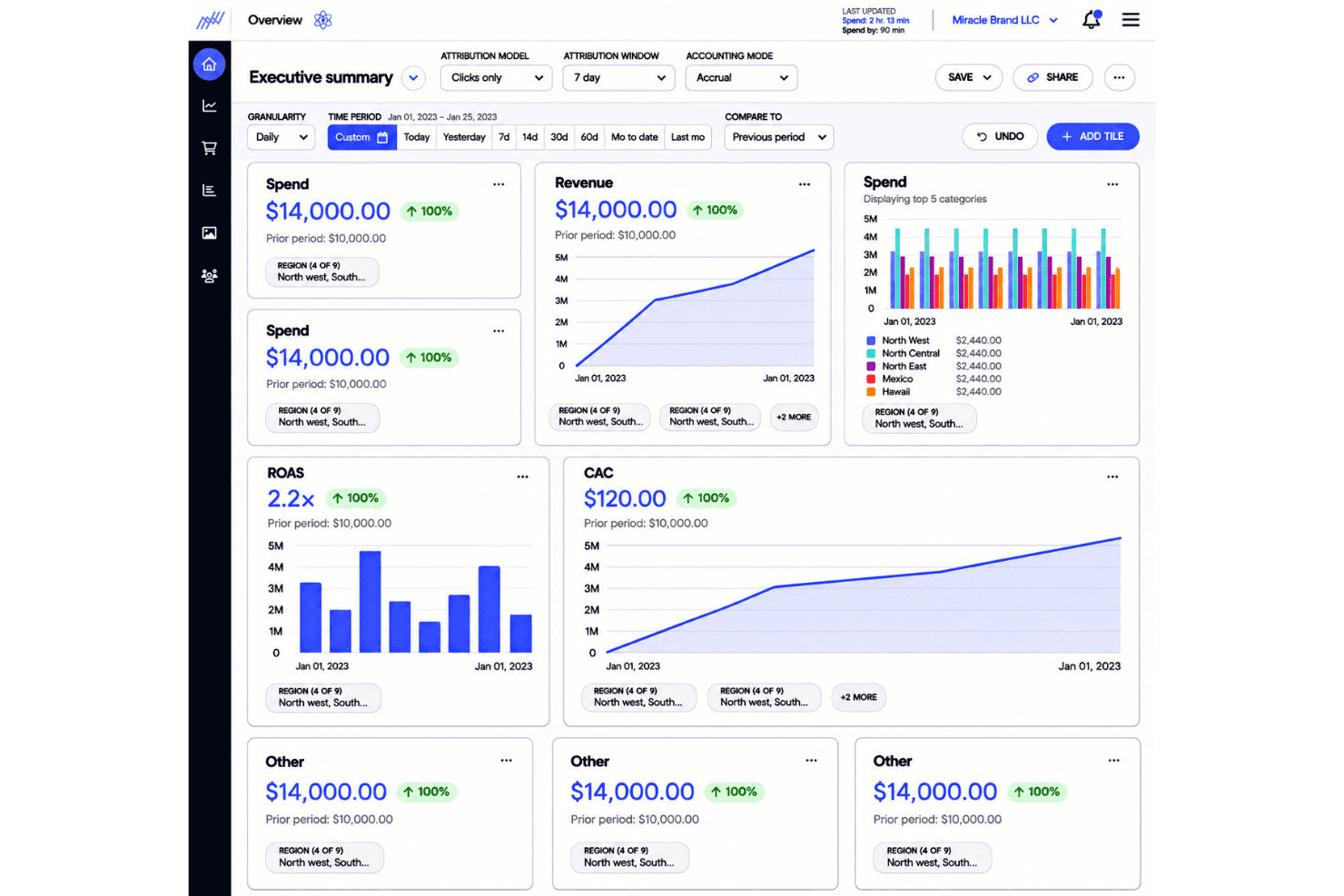
I’d choose Northbeam when your ecommerce team needs cross-channel budget decisions, not just channel reports. Its first-party multi-touch attribution offers flexible models and lookback windows, while incrementality and media mix modeling help test whether returns are incremental. Customizable dashboards and ad-platform integrations support comparisons such as new-customer ROAS versus view-through impact. Onboarding includes setup, training, and data validation. I’d recommend it for growing brands that value analyst support, but its setup requirements and differing platform metrics demand careful evaluation.
Pros
- First-party multi-touch models compare channel and touchpoint revenue.
- Users praise consistent attribution data and clear budget reporting.
- Incrementality and media mix modeling add lift tests and planning context.
Cons
- Users report difficult onboarding and inconsistent support.
- Attribution totals can differ substantially from ad-platform reports.
- Pricing can strain smaller brands’ attribution budgets.


How We Test & Score Tools
We’ve spent years building, refining, and improving our software testing and scoring system. The rubric is designed to capture the nuances of software selection and what makes a tool effective, focusing on critical aspects of the decision-making process.
Below, you can see exactly how our testing and scoring works across seven criteria. It allows us to provide an unbiased evaluation of the software based on core functionality, standout features, ease of use, onboarding, customer support, integrations, customer reviews, and value for money.
Core Functionality (25% of final scoring)
The starting point of our evaluation is always the core functionality of the tool. Does it have the basic features and functions that a user would expect to see? Are any of those core features locked to higher-tiered pricing plans? At its core, we expect a tool to stand up against the baseline capabilities of its competitors.
Standout Features (25% of final scoring)
Next, we evaluate uncommon standout features that go above and beyond the core functionality typically found in tools of its kind. A high score reflects specialized or unique features that make the product faster, more efficient, or offer additional value to the user.
We also evaluate how easy it is to integrate with other tools typically found in the tech stack to expand the functionality and utility of the software. Tools offering plentiful native integrations, 3rd party connections, and API access to build custom integrations score best.
Ease of Use (10% of final scoring)
We consider how quick and easy it is to execute the tasks defined in the core functionality using the tool. High scoring software is well designed, intuitive to use, offers mobile apps, provides templates, and makes relatively complex tasks seem simple.
Onboarding (10% of final scoring)
We know how important rapid team adoption is for a new platform, so we evaluate how easy it is to learn and use a tool with minimal training. We evaluate how quickly a team member can get set up and start using the tool with no experience. High scoring solutions indicate little or no support is required.
Customer Support (10% of final scoring)
We review how quick and easy it is to get unstuck and find help by phone, live chat, or knowledge base. Tools and companies that provide real-time support score best, while chatbots score worst.
Customer Reviews (10% of final scoring)
Beyond our own testing and evaluation, we consider the net promoter score from current and past customers. We review their likelihood, given the option, to choose the tool again for the core functionality. A high scoring software reflects a high net promoter score from current or past customers.
Value for Money (10% of final scoring)
Lastly, in consideration of all the other criteria, we review the average price of entry level plans against the core features and consider the value of the other evaluation criteria. Software that delivers more, for less, will score higher.
Core Features
First-Party Multi-Touch Attribution
Northbeam uses first-party data and machine learning to assign conversion credit across customer touchpoints, rather than relying only on ad-platform reports. This gives your team a cross-channel view for comparing campaign contributions when deciding where to adjust spend.
Multiple Attribution Models
You can compare performance using multiple attribution models, which distribute conversion credit across the customer journey in different ways. Reviewing the same campaign through different models helps you see how credit assumptions affect channel and touchpoint results.
Unlimited Lookback Windows
Northbeam lets you set unlimited lookback windows for attribution. Your team can compare how different periods change reported campaign contribution, such as whether longer consideration journeys affect the credit assigned to earlier ads.
Clicks and Deterministic Views
Northbeam attributes revenue to clicks and deterministic views, including view-through interactions. This helps you assess campaigns designed to build awareness, where customers may see an ad before converting without clicking it.
Incrementality Measurement
Northbeam’s incrementality product uses lift testing to estimate whether marketing activity caused additional conversions, rather than simply correlating with them. Comparing a test group with a control group can help your team assess whether a campaign adds sales or captures demand that would have converted anyway.
Media Mix Modeling
Northbeam’s media mix modeling analyzes channel performance using historical and current data, including factors such as seasonality and market trends. It helps your team plan budgets over a longer horizon and assess where additional spend may have diminishing returns.
Ease of Use
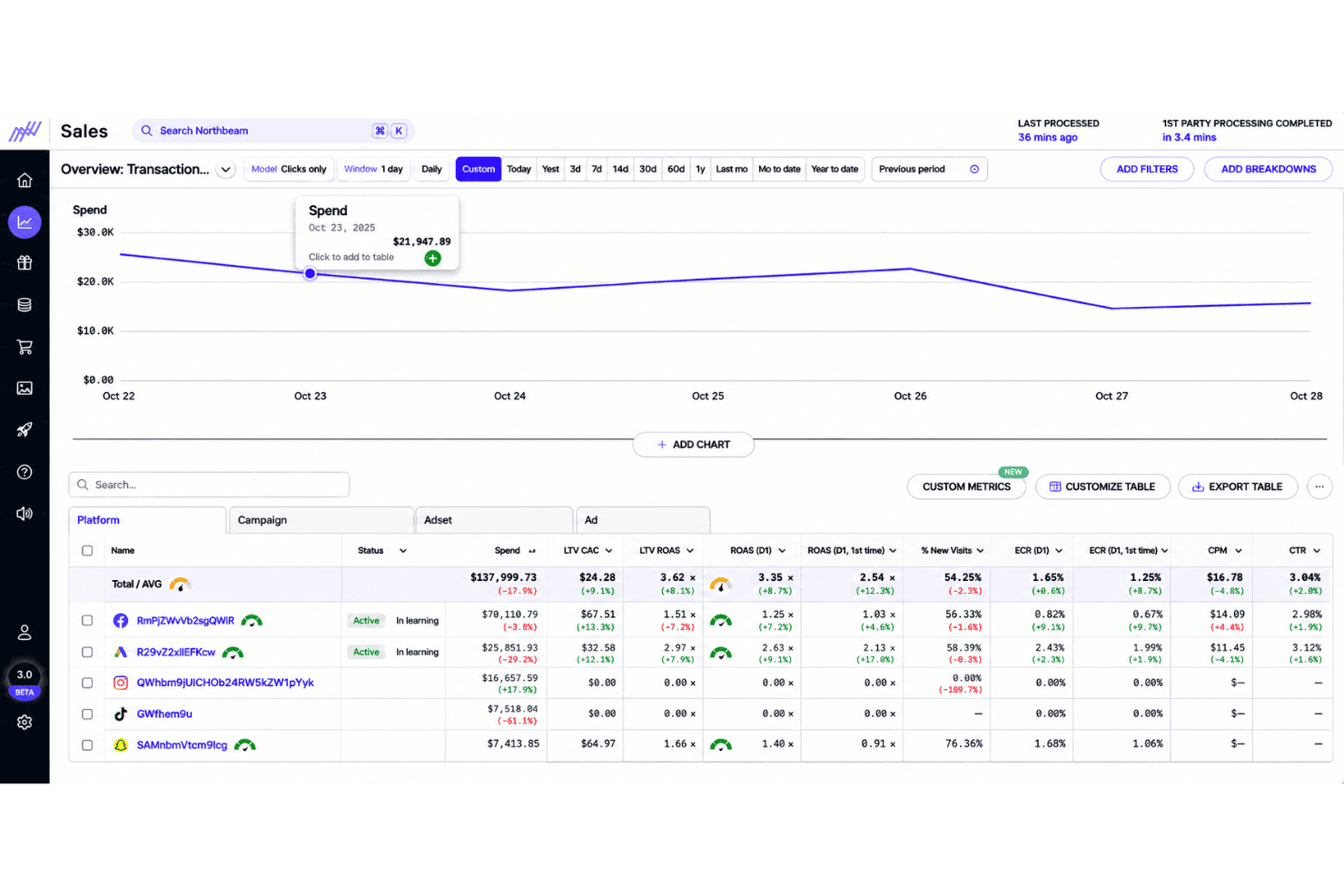
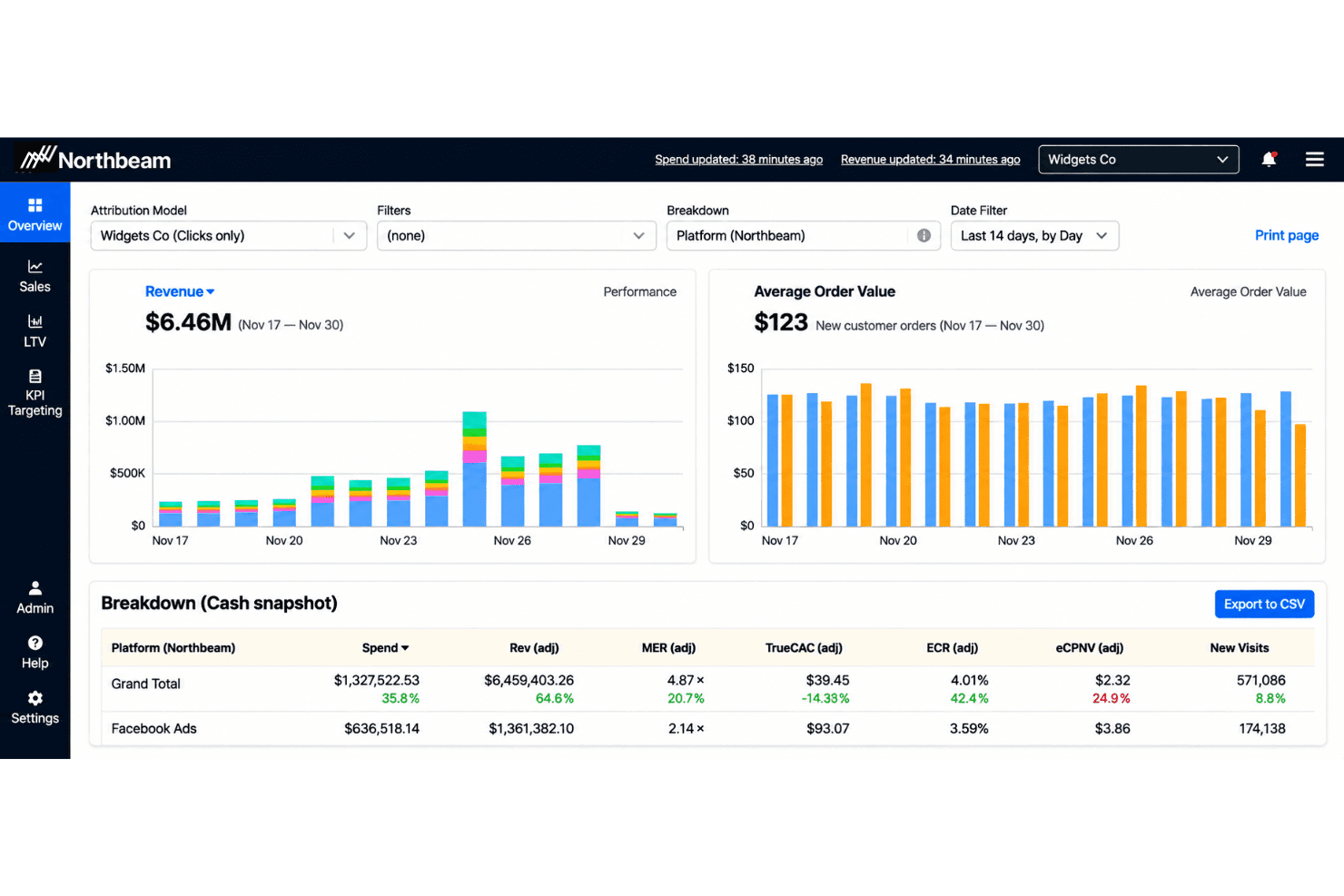
Northbeam is suitable for daily reporting once configured, but its range of attribution features can introduce a learning curve. Multiple attribution models, adjustable lookback windows, and customizable dashboards provide flexibility when analyzing channel performance. However, understanding these settings and interpreting attribution results requires familiarization, particularly for teams accustomed to basic channel-reporting tools.
Integrations
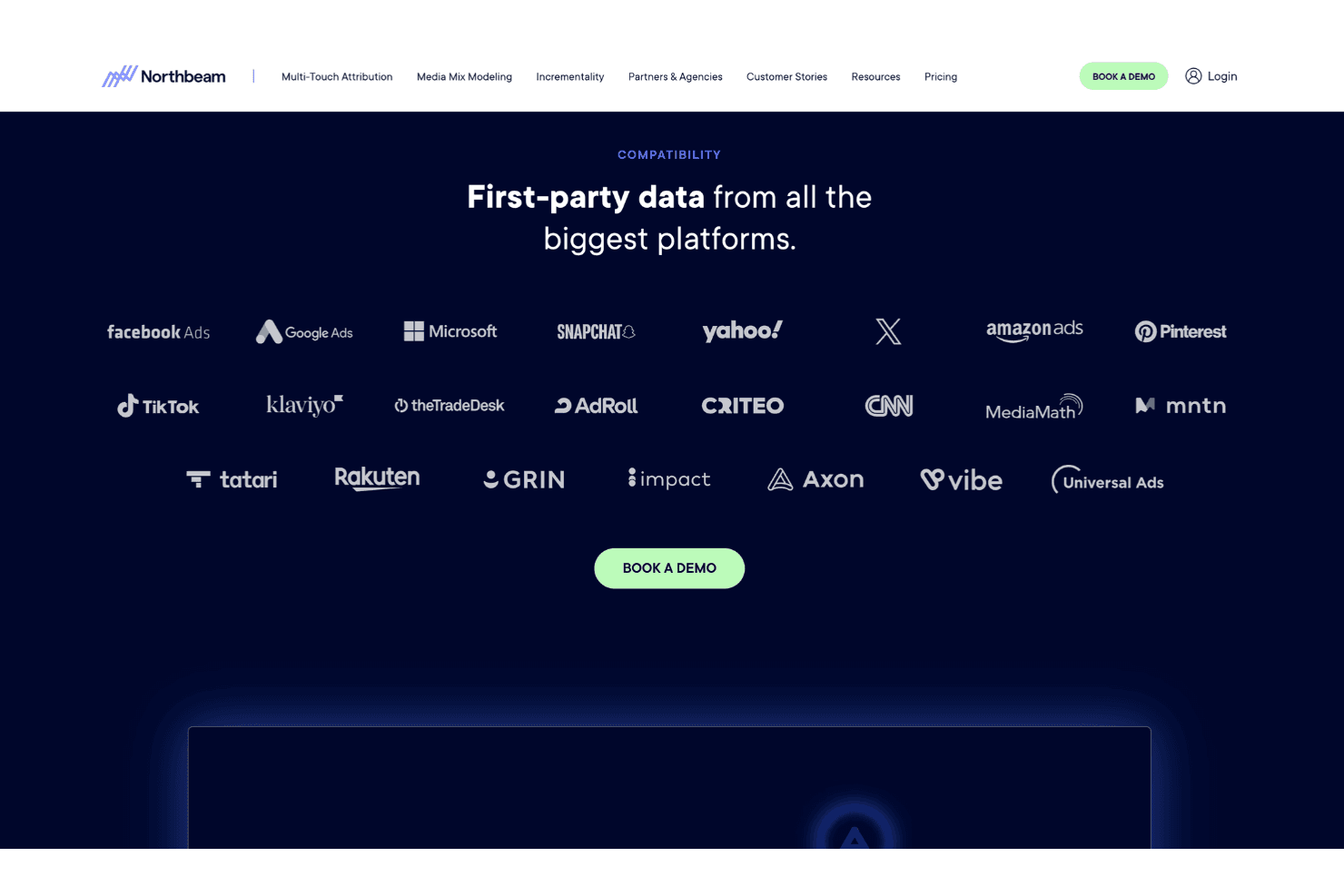
Northbeam integrates with Shopify, Meta, Google Ads, TikTok, Pinterest, Snapchat, impact.com, and Rokt. It also provides an Orders API for importing order data and supports additional custom integrations.
Northbeam Specs
- API: Yes
- Audience Targeting: No
- Brand Management: No
- Conversion Tracking: Yes
- Data Export: Yes
- Data Import: Yes
- External Integrations: Yes
- Keyword Tracking: No
- Lead Management: No
- Lead Scoring: No
- Link Tracking: Yes
- Marketing Automation: No
- Multi-User: Yes
- Net Promoter Score: No
- Notifications: Yes
- Social-Media Integration: Yes


