


ActiveCampaign vs. Mailchimp: Comparison and Expert Reviews for 2026


Juggling multiple campaigns, tracking results, and keeping your audience engaged can feel overwhelming—especially when your existing marketing tools slow you down. ActiveCampaign and Mailchimp both promise to simplify your workflow, but each takes a different approach in the marketing campaign management software world. At a high level, Mailchimp focuses on making it easy to create and manage campaigns, while ActiveCampaign is built to automate and optimize entire customer journeys.
In this article, you’ll get a clear, side-by-side look at how these platforms compare, so you can confidently choose the right fit for your team’s goals and challenges.
ActiveCampaign vs. Mailchimp : An Overview
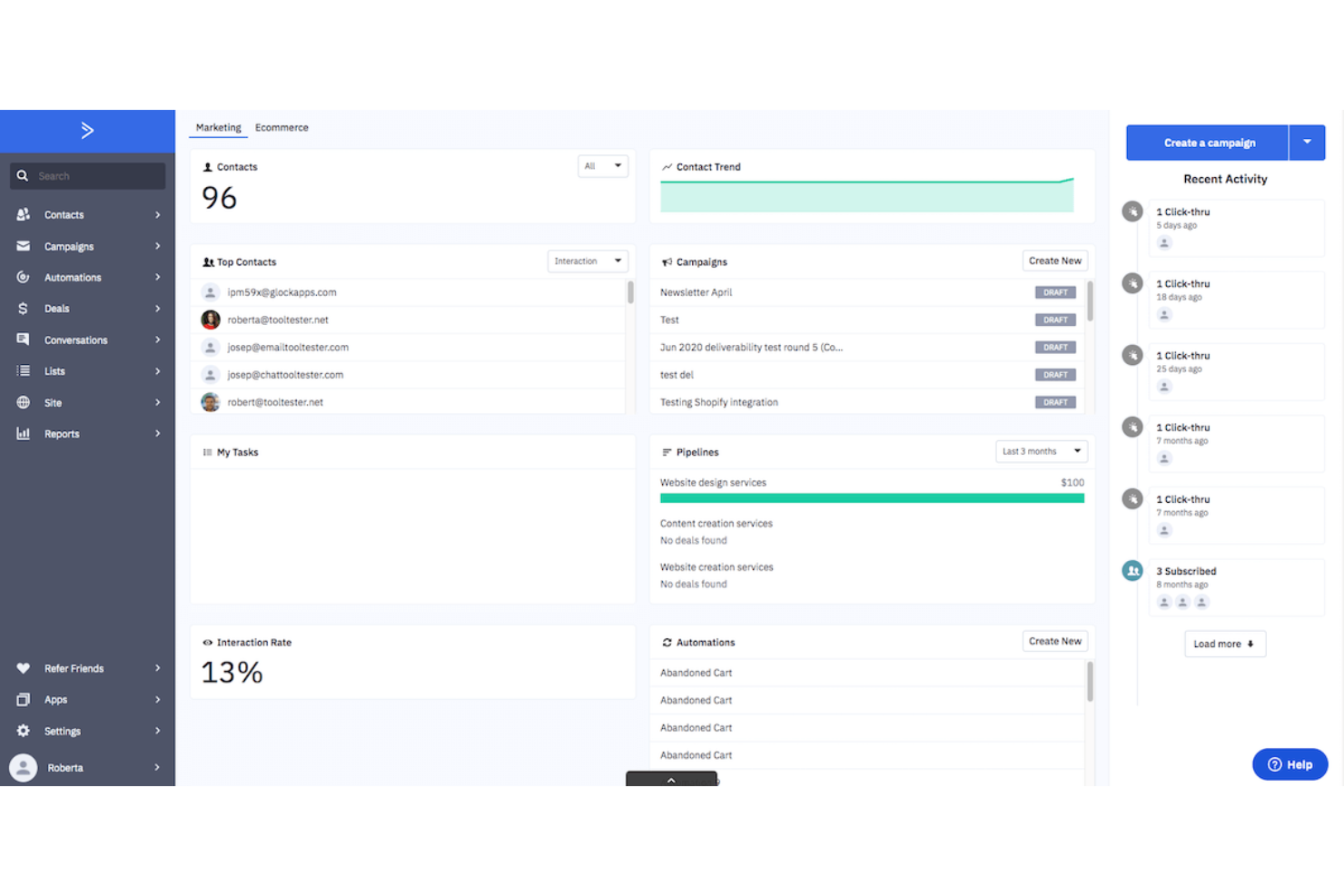
ActiveCampaign


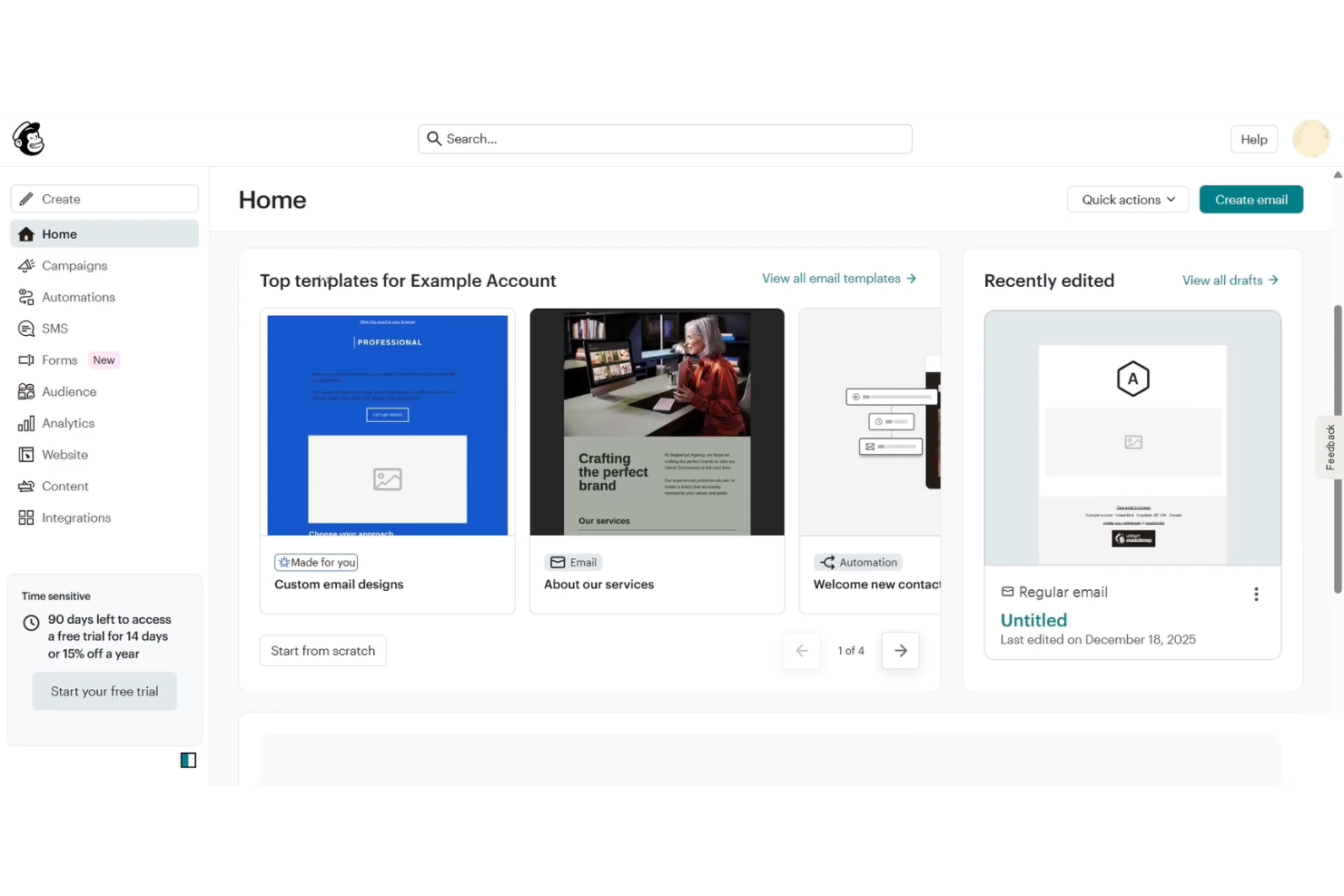
Mailchimp
Why Trust Our Software Recommendations
Our team has been testing and reviewing software since 2012. As marketing leaders ourselves, we know how difficult—and important—it is to choose the right software.
For this guide, we evaluated tools using hands-on testing and independent research, scoring tools using our selection criteria.
Our reviews reflect our human editorial judgment, not a sales pitch.
Expert reviewers:
ActiveCampaign vs. Mailchimp Pricing Comparison
| ActiveCampaign | Mailchimp | |
|---|---|---|
| Free Trial | 14-day free trial | Free plan available |
| Pricing | From $15/month (billed annually) | From $13/month |
ActiveCampaign vs. Mailchimp Pricing & Hidden Costs
ActiveCampaign uses a tiered pricing model based on contact count and feature access (for email, WhatsApp, or both combined), with higher tiers unlocking more advanced automation, CRM functionality, and personalization capabilities. In addition to contact-based pricing, it also applies send limits, with overage fees if you exceed your monthly allowance—something that can significantly impact costs at scale.
Mailchimp also follows a tiered, contact-based pricing model, but with a key difference: it counts subscribed, unsubscribed, and non-subscribed contacts toward your total, which can cause costs to rise faster than expected as your database grows. Its free plan is relatively limited, and more advanced features—like deeper automation, predictive insights, and onboarding support—are reserved for higher tiers.
ActiveCampaign vs. Mailchimp Feature Comparison
Both ActiveCampaign and Mailchimp overlap in core marketing features. They both offer email campaign builders, audience segmentation, automation workflows (like welcome emails or abandoned cart sequences), and multi-channel capabilities such as SMS, landing pages, and integrations. Each platform also includes reporting tools to track performance, meaning either can handle the fundamentals of running modern marketing campaigns from one place.
Where they differ is in their standout strengths. ActiveCampaign excels in advanced automation and AI-driven optimization, using tools like Active Intelligence to build and refine workflows based on behavior and data. Mailchimp stands out for its ease of use and campaign-centric design, with an intuitive builder and unified system for managing email, ads, social, and landing pages. Its feature set provide a simpler approach to campaign management.
| ActiveCampaign | Mailchimp | |
|---|---|---|
| A/B Testing | ||
| API | ||
| Audience Targeting | ||
| Brand Management | ||
| CRM Integration | ||
| Campaign Management | ||
| Contact Management | ||
| Contact Sharing | ||
| Conversion Tracking | ||
| Customer Management | ||
| Data Export | ||
| Data Import | ||
| Email Integration | ||
| External Integrations | ||
| Lead Management | ||
| Lead Scoring | ||
| Link Tracking | ||
| Marketing Automation | ||
| Multi-User | ||
| Notifications | ||
| Social-Media Integration |
ActiveCampaign vs. Mailchimp Integrations
| Integration | ActiveCampaign | Mailchimp |
| Salesforce | ✅ | ✅ |
| Shopify | ✅ | ✅ |
| WordPress | ✅ | ✅ |
| WooCommerce | ✅ | ✅ |
| Zendesk | ✅ | ✅ |
| Unbounce | ✅ | ✅ |
| Eventbrite | ✅ | ✅ |
| Square | ✅ | ✅ |
| API | ✅ | ✅ |
| Zapier | ✅ | ✅ |
Both ActiveCampaign and Mailchimp cover the most widely used integrations across CRM, ecommerce, content management, and events, including tools like Salesforce, Shopify, and WordPress. ActiveCampaign stands out with a larger integrations ecosystem (1,000+ apps) and a strong focus on connecting automation and customer data across systems, while Mailchimp emphasizes ease of use with a curated set of 300+ integrations designed to support common marketing workflows.
Both platforms also offer API access and Zapier connectivity, making it possible to extend functionality or connect niche tools when native integrations aren’t available.
ActiveCampaign vs. Mailchimp Security, Compliance & Reliability
| Factor | ActiveCampaign | Mailchimp |
| Data Privacy | Offers GDPR tools, data processing agreements, and user consent management. | Provides GDPR support, data processing agreements, and privacy controls. |
| Encryption | Uses TLS encryption for data in transit and at rest. | Secures data with TLS encryption in transit and at rest. |
| Uptime Guarantee | Maintains high uptime with real-time status monitoring and incident reporting. | Delivers reliable uptime and public status updates for transparency. |
| Regulatory Compliance | Supports GDPR, SOC 2, and optional HIPAA (Enterprise). | Supports GDPR, SOC 2, and ISO 27001; does not support HIPAA. |
| Access Controls | Offers role-based access, MFA, and configurable session controls. | Provides role-based access levels and enforced two-factor authentication. |
From a security and compliance standpoint, these platforms cover the essentials most marketing teams need. They each provide GDPR support, data processing agreements, access controls, and account security features like two-factor authentication, along with established compliance frameworks and transparent security practices. ActiveCampaign also offers optional HIPAA support on higher-tier plans, which may be important for teams in regulated industries.
In practice, both are reliable choices for handling customer data and running campaigns at scale, with safeguards in place to protect information and maintain platform stability.
ActiveCampaign vs. Mailchimp Ease of Use
| Factor | ActiveCampaign | Mailchimp |
| User Interface | Offers a clean dashboard, but advanced features can feel overwhelming at first. | Features a simple, intuitive interface that’s easy to navigate. |
| Onboarding | Offers guided setup, tutorials, and free 1:1 onboarding on paid plans. | Delivers step-by-step onboarding and helpful tooltips throughout. |
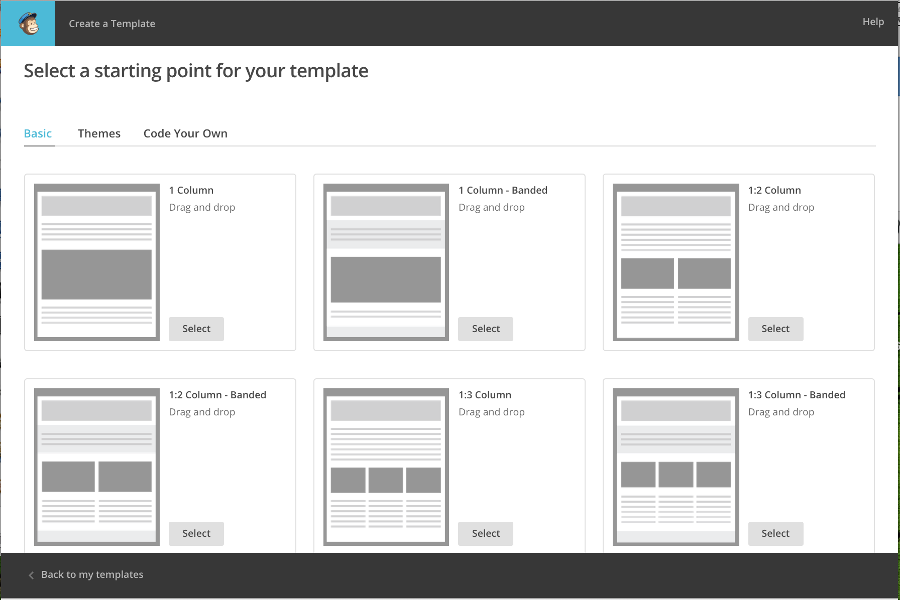
| Campaign Creation | Powerful automation builder with drag-and-drop workflows and advanced logic. | Lets you quickly build campaigns with a drag-and-drop email editor. |
| Support | Offers live chat, email, and a detailed knowledge base. | Provides 24/7 email and chat support plus a robust help center. |
| Learning Curve | Easy to learn, but may take more time to master due to advanced options and customization. | Easy to pick up, even for beginners with no prior experience. |
Mailchimp is generally easier to pick up and use, making it a strong choice for teams that want to launch campaigns quickly with minimal setup. ActiveCampaign is also pretty straightforward to use, but may be seen as more complex upfront. Despite this initial complexity, ActiveCampaign offers greater depth and flexibility for teams willing to invest time in learning its automation and customization capabilities.
ActiveCampaign vs Mailchimp : Pros & Cons
ActiveCampaign
- Offers market-leading email deliverability, free migration services, and 1:1 onboarding on all paid plans.
- All-in-one platform combines email, SMS, WhatsApp, landing pages, CRM, and behavioral automation with over 1,000 integrations.
- Active Intelligence builds campaigns for you from plain-language goals using AI trained on billions of data points, delivering campaigns in 5 clicks.
- The interface might feel a bit clunky compared to some competitors.
- New users may find some of ActiveCampaign's more advanced features overwhelming, requiring time to learn.
- Costs can rise as contact lists grow, especially for advanced features
Mailchimp
- Easy-to-use email builder and templates make campaign creation fast.
- All-in-one platform (email, automation, landing pages, ads, social) reduces tool sprawl.
- 300+ integrations support e-commerce, analytics, and workflow automation.
- Pricing scales quickly as your contact list grows.
- Deeper segmentation and advanced automation require higher-tier plans.
- Unsubscribed and inactive contacts still count toward billing.
Best Use Cases for ActiveCampaign and Mailchimp
ActiveCampaign
- Travel and Hospitality Automate booking confirmations and post-stay engagement to improve guest retention and reviews.
- Online Learning Creators Deliver onboarding and lesson sequences automatically based on where learners are in your courses.
- Healthcare Providers Send appointment confirmations, reminders, and timely follow-ups with consistent communication.
- Agencies Manage segmented campaigns and automation workflows for clients without doing every step manually.
- Ecommerce Stores Trigger automated emails for abandoned carts and personalized product follow-ups tied to customer behavior.
- SaaS Companies Automate lead follow-ups and product onboarding sequences to nurture users through the trial and adoption cycle.
Mailchimp
- Ecommerce Businesses Mailchimp’s integrations with platforms like Shopify and WooCommerce let you sync customer and order data, making it easier to run automations like abandoned cart emails and post-purchase follow-ups.
- Small to Midsize Businesses (SMBs) If you’re looking for an all-in-one marketing platform without a steep learning curve, Mailchimp gives you the core tools—email, automation, and audience management—in a single, easy-to-use system.
- Startups and Lean Teams With prebuilt templates, simple signup forms, and guided setup, Mailchimp helps you get campaigns live quickly without needing dedicated marketing ops or technical support.
- Professional Services Firms Mailchimp helps you stay top of mind with clients through newsletters, updates, and automated follow-ups without requiring a complex marketing setup. Its email templates, audience segmentation, and simple automation flows make it easy to nurture relationships.
- Nonprofit Organizations Engage supporters with email campaigns, newsletters, and updates using prebuilt templates and simple audience management tools. You can segment donors and subscribers, automate outreach, and run campaigns without needing extensive technical resources.
- Marketing Departments Mailchimp allows you to manage email, landing pages, social posts, and ads from one place, making it easier to coordinate campaigns without switching between platforms.
Who Should Use ActiveCampaign, and Who Should Use Mailchimp?
ActiveCampaign is best suited for teams that want automation-first marketing and need to manage the full customer lifecycle in one place. It’s a strong fit for SaaS companies, ecommerce brands, and growing businesses that rely on behavior-based workflows, and it stands out with autonomous AI features that can build and optimize campaigns in just a few clicks. If you’re willing to invest time upfront for more control, personalization, and scalability, ActiveCampaign offers significantly more depth.
Mailchimp is ideal for small and mid-sized businesses, startups, and lean marketing teams that prioritize simplicity and speed. It’s a strong fit if your focus is creating campaigns quickly, managing basic automations, and running marketing across email, ads, and social without a steep learning curve. If simplicity and ease of use matter more than advanced customization, Mailchimp is the better choice.
Differences Between ActiveCampaign and Mailchimp
| ActiveCampaign | Mailchimp | |
|---|---|---|
| AI Capabilities | Autonomous AI (“Active Intelligence”) builds and optimizes campaigns. | AI assists with content, send times, and recommendations. |
| Automation | Advanced automation with multi-step workflows, branching logic, and triggers. | Strong automation flows, but less flexible and customizable at scale. |
| CRM Features | Built-in CRM with pipelines, lead scoring, and sales automation. | Basic audience management; limited CRM and no true sales pipeline. |
| Personalization | Dynamic content, behavioral targeting, and advanced segmentation. | Basic segmentation with some predictive features on higher tiers. |
| Scalability | Designed for scaling lifecycle marketing and complex journeys. | Better suited for simple to moderate marketing needs. |
| Visit ActiveCampaignOpens new window | Visit Mailchimp Opens new window |
Similarities Between ActiveCampaign and Mailchimp
| Email Campaigns | Both let you design, schedule, and send email campaigns with drag-and-drop editors and pre-built templates. |
|---|---|
| Integrations | Each platform connects with popular tools like Shopify, WordPress, Salesforce, and offers Zapier support. |
| List Management | Each offers tools for managing contacts, segmenting lists, and handling unsubscribes and compliance. |
| Multi-Channel Support | Both support multiple channels beyond email, such as SMS, ads, or social integrations. |
| Reporting & Analytics | Both provide real-time campaign analytics, open/click tracking, and performance dashboards. |
| Visit ActiveCampaignOpens new window Visit Mailchimp Opens new window | |