

Warmy-recension: Fördelar, nackdelar, funktioner och priser
Warmy utmärker sig med sina AI-drivna verktyg för e-postleverans och erbjuder oöverträffad automatisering och optimering i realtid, perfekt för marknadsförare och byråer.

We review tools independently, and commissions help fund our testing. See our transparency policy, our methodology, or suggest a tool.
Warmy is an email deliverability software built around automated email warmup. It's a solid fit if you're running cold outreach at scale and need to protect sender reputation across multiple inboxes before a campaign goes live. I'd consider it over Mailreach if you want more granular control over warmup schedules and a cleaner dashboard for monitoring inbox health across a larger volume of accounts. This review covers what Warmy does well, where it falls short, and who it's actually built for.
Warmy Evaluation Summary
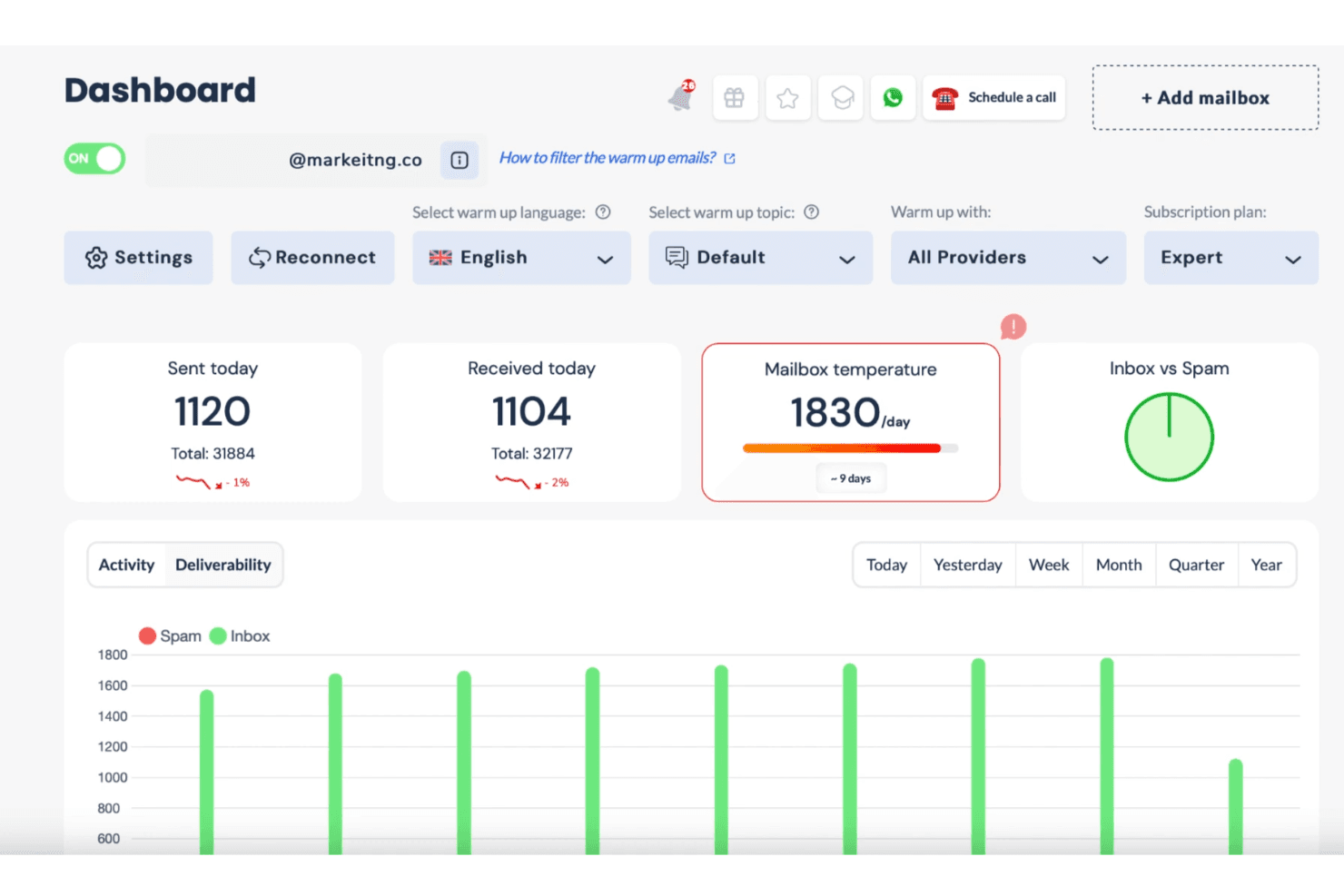
5/5
- Pricing upon request
- Free trial + free demo available
Varför du kan lita på våra programvarurekommendationer
6,700+
Reviews
20
Industry experts
16+
Evaluation factors
14
Years
Vårt team har testat och recenserat programvara sedan 2012. Som marknadsföringsledare själva vet vi hur svårt — och viktigt — det är att välja rätt programvara.
För den här guiden utvärderade vi verktyg genom praktisk testning och oberoende research, och betygsatte verktygen enligt våra urvalskriterier.
Våra recensioner speglar vårt mänskliga redaktionella omdöme, inte ett säljbudskap.
Expertgranskare:
 Gui DrusinaKreativ direktör
- Shriya GhateSenior Marketing Lead
 Amanda JacquesMarketing Ops Leader

Warmy Overview
In my opinion, Warmy is a solid choice for email deliverability, particularly for marketing and sales teams in tech startups and digital agencies. Its standout feature is the AI-driven email warm-up, which outperforms many competitors by ensuring your emails reach the inbox. However, its onboarding process could be smoother compared to other providers. If you're looking for a tool that balances cost with functionality and offers great customer support, Warmy should be on your shortlist. It’s best suited for environments where email outreach is crucial, like marketing campaigns and client communications.
Pros
- Warmy's AI-driven email warm-up boosts your email delivery rates significantly.
- You can easily manage and monitor your email campaigns with its intuitive interface.
- Warmy's customer support is responsive and helpful for your team's needs.
Cons
- Onboarding could be more streamlined to help your team get started faster.
- Some users find the reporting features lacking in detail for their work.
- You might experience occasional delays in email scheduling.
Is Warmy Right For Your Needs?
Who Would be a Good Fit for Warmy?
Warmy is great for marketing teams and digital agencies that need reliable email deliverability. If your team frequently runs email campaigns, Warmy's AI-driven tools can improve your open rates by ensuring emails land in inboxes. It's especially useful for tech startups that rely on email outreach to grow their customer base. The intuitive interface and responsive customer support further make it ideal for teams that need to manage and monitor campaigns efficiently.
- Tech StartupsWarmy helps your startup achieve better outreach with its AI-driven email warm-up and delivery tools.
- Digital AgenciesYour agency can benefit from Warmy's intuitive interface to manage multiple client campaigns effectively.
- Sales TeamsWarmy's features ensure your cold emails avoid spam filters and reach potential clients' inboxes.
- E-commerce BusinessesWarmy can boost your email marketing efforts by improving deliverability and open rates.
- NonprofitsIf your nonprofit relies on newsletters, Warmy's tools help ensure your messages reach supporters.
- Event PlannersWarmy helps your event invites get noticed by enhancing email delivery success.
Who Would be a Bad Fit for Warmy?
Warmy might not be the best choice for small businesses with limited email marketing needs. If your team sends emails infrequently, the advanced features of Warmy might be more than you need. Also, if your business requires detailed reporting for analytics, Warmy's current reporting capabilities may not suffice. Companies with simple email needs or those heavily reliant on comprehensive analytics tools might find better fits elsewhere.
- Small Local ShopsWarmy's advanced email tools might be unnecessary for your simple email communication needs.
- FreelancersIf you send a few emails, Warmy's capabilities could be overkill for your work.
- Analytics-Driven FirmsYour team might find Warmy's reporting features lacking for deep analytical insights.
- Brick-and-Mortar StoresIf you don't rely on email marketing, Warmy's features may not offer much value.
- Traditional IndustriesIndustries with minimal digital outreach could find Warmy more than necessary for their email needs.
- Casual BloggersWarmy's advanced deliverability functions might exceed your basic email newsletter requirements.
How We Test & Score Tools
We’ve spent years building, refining, and improving our software testing and scoring system. The rubric is designed to capture the nuances of software selection and what makes a tool effective, focusing on critical aspects of the decision-making process.
Below, you can see exactly how our testing and scoring works across seven criteria. It allows us to provide an unbiased evaluation of the software based on core functionality, standout features, ease of use, onboarding, customer support, integrations, customer reviews, and value for money.
Core Functionality (25% of final scoring)
The starting point of our evaluation is always the core functionality of the tool. Does it have the basic features and functions that a user would expect to see? Are any of those core features locked to higher-tiered pricing plans? At its core, we expect a tool to stand up against the baseline capabilities of its competitors.
Standout Features (25% of final scoring)
Next, we evaluate uncommon standout features that go above and beyond the core functionality typically found in tools of its kind. A high score reflects specialized or unique features that make the product faster, more efficient, or offer additional value to the user.
We also evaluate how easy it is to integrate with other tools typically found in the tech stack to expand the functionality and utility of the software. Tools offering plentiful native integrations, 3rd party connections, and API access to build custom integrations score best.
Ease of Use (10% of final scoring)
We consider how quick and easy it is to execute the tasks defined in the core functionality using the tool. High scoring software is well designed, intuitive to use, offers mobile apps, provides templates, and makes relatively complex tasks seem simple.
Onboarding (10% of final scoring)
We know how important rapid team adoption is for a new platform, so we evaluate how easy it is to learn and use a tool with minimal training. We evaluate how quickly a team member can get set up and start using the tool with no experience. High scoring solutions indicate little or no support is required.
Customer Support (10% of final scoring)
We review how quick and easy it is to get unstuck and find help by phone, live chat, or knowledge base. Tools and companies that provide real-time support score best, while chatbots score worst.
Customer Reviews (10% of final scoring)
Beyond our own testing and evaluation, we consider the net promoter score from current and past customers. We review their likelihood, given the option, to choose the tool again for the core functionality. A high scoring software reflects a high net promoter score from current or past customers.
Value for Money (10% of final scoring)
Lastly, in consideration of all the other criteria, we review the average price of entry level plans against the core features and consider the value of the other evaluation criteria. Software that delivers more, for less, will score higher.
Core Features
AI-Driven Email Warm-Up
This feature helps your emails land in inboxes by gradually building a positive sender reputation through an automated warmup process. It works automatically, saving you time and effort.
Real-Time Analytics
You can track your email performance instantly, including insights gathered from test sends to a seed list. It provides insights into key metrics so you can make quick adjustments.
Spam Filter Testing
Warmy checks your emails against spam filters, helping improve inbox placement and ensuring your messages reach your audience. It minimizes the risk of emails landing in the spam folder.
Customizable Templates
Your team can use and modify pre-designed email templates, saving time on crafting emails. It ensures consistency across your campaigns.
Email Scheduling
Schedule your emails to send at optimal times for your audience. It maximizes engagement by reaching recipients when they're most active.
Blacklist Monitoring
This feature alerts you if your domain is blacklisted. It helps maintain your sender reputation by addressing issues promptly.
Ease of Use
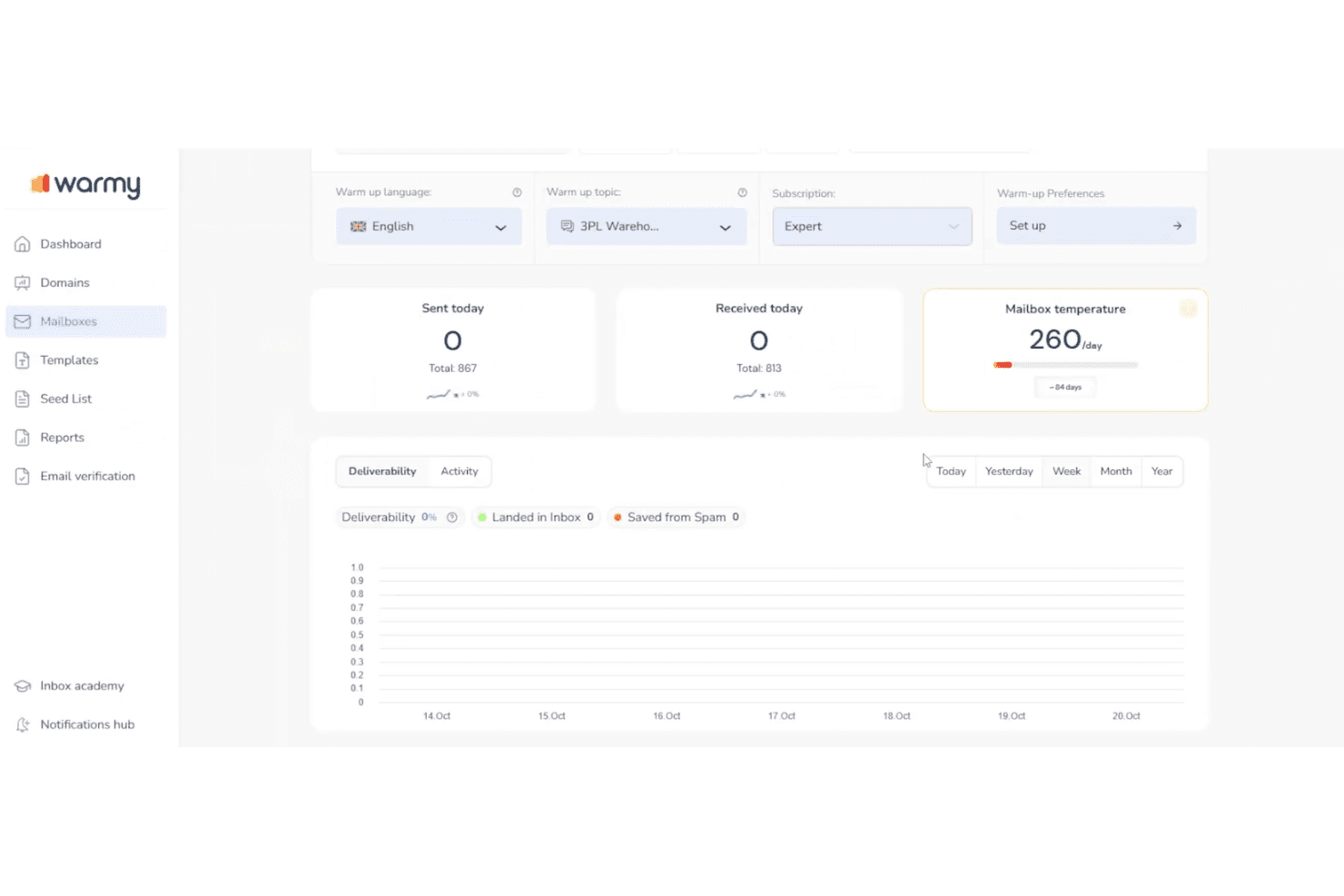
Warmy is user-friendly with an intuitive interface that makes managing email campaigns straightforward for your team. Its dashboard is well-organized, allowing you to easily navigate between features like analytics and email scheduling. While some users mention a learning curve during onboarding, the overall experience is smooth once you get the hang of it. Compared to other solutions, Warmy simplifies complex tasks, helping you focus on improving deliverability without getting bogged down in technical details.
Integrations
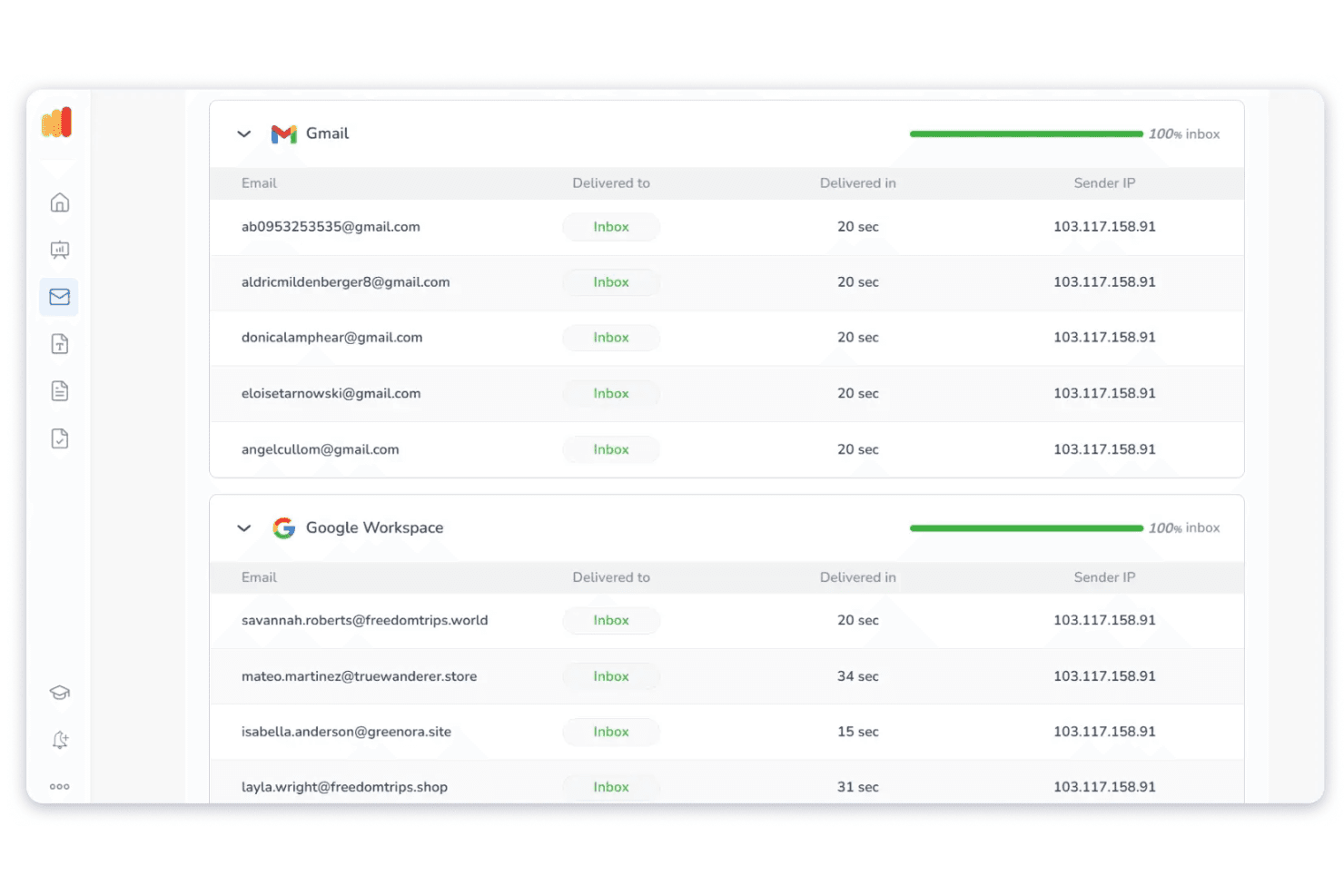
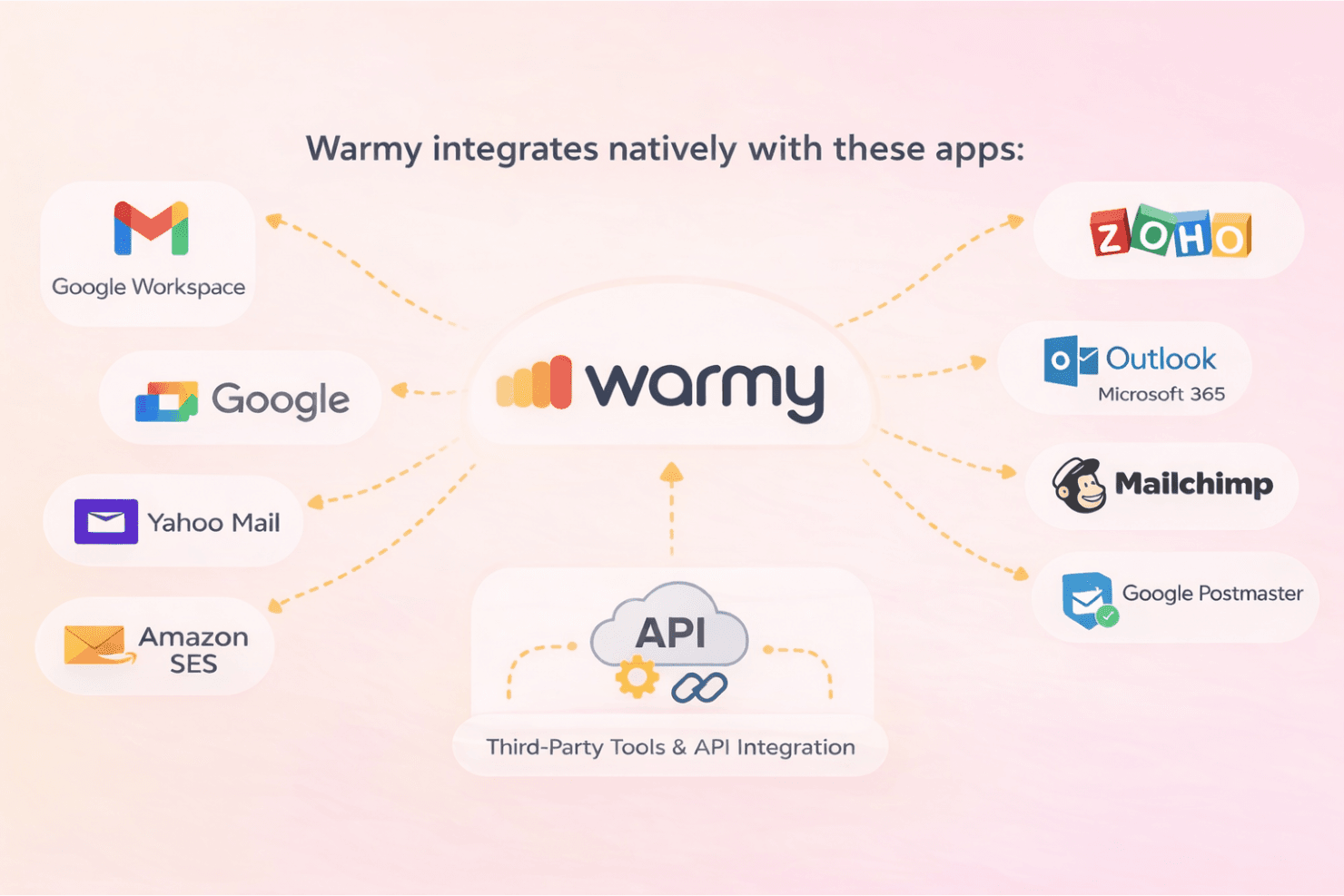
Warmy integrates natively with Gmail, Google Workspace, Outlook, Microsoft 365, Yahoo Mail, Amazon SES, SMTP (custom SMTP servers), Google Postmaster, Mailchimp, and Zoho.
Warmy also offers an API for deeper integration, and it can connect with third-party tools as part of its broader integration ecosystem.
Warmy Specs
- A/B Testing: Yes
- API: Yes
- Audience Targeting: No
- Brand Management: No
- Calendar Management: No
- Campaign Management: No
- Compliance Tracking: No
- Contact Management: No
- Contact Sharing: No
- Conversion Tracking: No
- CRM Integration: No
- Customer Management: Yes
- Dashboard: Yes
- Data Export: Yes
- Data Import: Yes
- Data Visualization: No
- Email Integration: Yes
- External Integrations: Yes
- Google Apps Integration: No
- Lead Management: Yes
- Lead Scoring: No
- Link Tracking: No
- Marketing Automation: Yes
- Multi-User: Yes
- Notifications: Yes
- Scheduling: Yes
- Social-Media Integration: No
- Third-Party Plugins/Add-Ons: No


