
Building a brand from scratch is rare. Building one inside one of the world's most iconic sports—with no existing marketing playbook—is even rarer.
In this conversation, Cadillac Formula 1 CMO Ahmed Iqbal (Meddy) shares what it takes to launch a new Formula 1 team while earning credibility with lifelong fans and attracting an entirely new generation. From designing an audience-first content strategy to rethinking accessibility in a sport known for exclusivity, this episode explores the leadership decisions behind building a modern brand in real time. Every decision comes back to a central question: How do you create a community that people genuinely want to be part of?
What You’ll Learn
- Why building a brand from scratch requires defining purpose before campaigns or content.
- How Cadillac Formula 1 balances serving devoted F1 fans while attracting an emerging audience.
- The strategic thinking behind choosing accessibility over exclusivity for marquee brand moments.
- How audience data—not assumptions—is shaping content priorities across YouTube, Instagram, TikTok, Threads, and X.
- What it takes to build a high-velocity content engine capable of producing hundreds of assets during a race weekend.
- Why experimentation matters—but only after operational foundations are firmly in place.
- How marketing leaders can build community by inviting customers into the journey instead of simply promoting the destination.
- Lessons in leading through ambiguity, rapid growth, and constant prioritization as a first-time CMO.
Key Takeaways
- Start with the "why" before the marketing plan.
Without legacy brand guidelines or historical campaigns, Ahmed's first priority wasn't creative execution—it was defining what Cadillac Formula 1 stands for. Brand strategy, audience strategy, content, design, and organizational structure all flowed from that foundation. - Growth doesn't have to come at the expense of your existing audience.
Rather than choosing between longtime Formula 1 fans and newcomers, Cadillac built parallel content strategies. Technical engineering content serves experienced fans, while personality-led storytelling helps new audiences find their way into the sport. - Accessibility can become a competitive advantage.
Instead of unveiling their first livery behind closed doors, Cadillac transformed Times Square into an open fan experience. The strategy challenged Formula 1 conventions while remaining consistent with Cadillac's premium positioning. - Content velocity is an operational challenge—not just a creative one.
Producing 200–300 pieces of content during a race weekend requires far more than creative talent. It depends on workflow design, production processes, editing speed, and cross-functional coordination in one of the busiest environments in professional sport. - Data should guide creative decisions—not replace them.
Performance data informs what gets expanded, refined, or retired. Rather than chasing every trend, the team studies audience behaviour across platforms and invests more heavily where engagement signals genuine interest. - Platform strategy begins with audience behaviour.
Instagram captures the broader Formula 1 lifestyle. YouTube serves deeper storytelling for dedicated fans. TikTok introduces new audiences through personality and behind-the-scenes moments. Threads functions almost like an ongoing focus group. - Innovation earns its place after operational excellence.
Ahmed believes experimentation is essential, but only once the fundamentals are reliable. Strong marketing operations create the freedom to test bigger ideas with confidence. - Community is the long-term KPI.
Audience growth matters, but the larger ambition is creating a fan base that begins referring to Cadillac Formula 1 as "we." That shift—from spectators to community—is the brand outcome the team is ultimately building toward.
Chapters
- 00:00 — Building Cadillac F1
- 01:40 — No Playbook
- 02:33 — Winning New Fans
- 05:14 — The Livery Reveal
- 06:04 — Two Audiences
- 08:56 — Scaling Content
- 10:57 — Foundations First
- 13:09 — Platform Strategy
- 15:05 — Leading at Speed
- 17:27 — Learning From Rivals
- 18:37 — The Documentary
- 19:42 — Building Community
- 21:13 — Accessible by Design
- 22:31 — Looking Ahead
Meet Our Guest
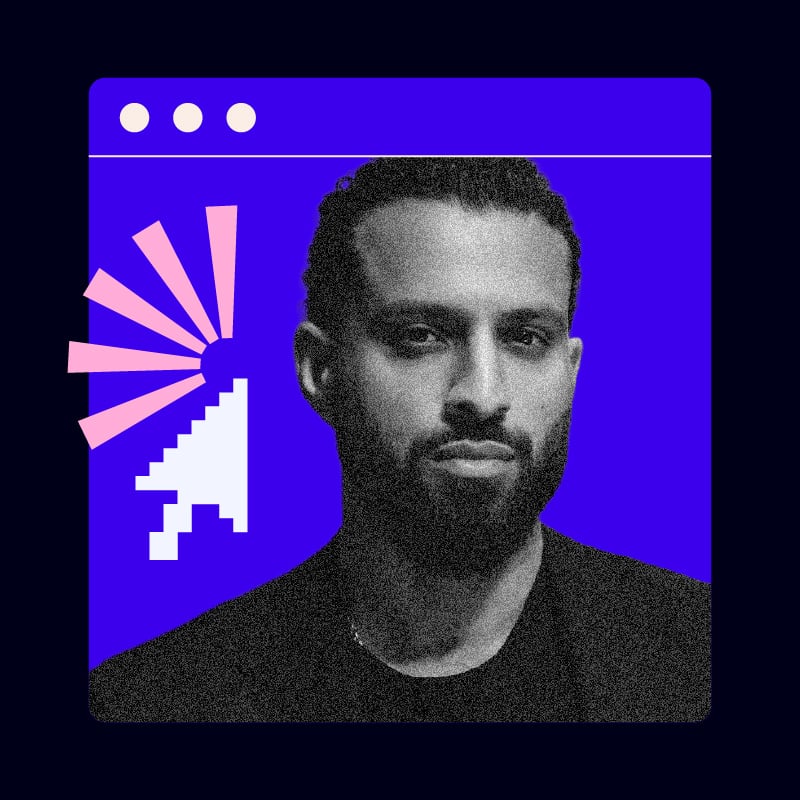
Ahmed Iqbal is a seasoned marketing executive with a background spanning automotive, technology, and finance. As Chief Marketing Officer of Cadillac Formula 1, he leads the team's global marketing strategy, brand development, fan engagement, and partnerships while shaping its identity in the U.S. motorsport market. Before joining Cadillac F1, he led automotive strategy at TikTok after serving as Head of Global Automotive at Twitter (now X), following seven years in leadership roles at Audi of America and an early career in investment banking at J.P. Morgan.
Resources from this episode:
- Join the CMO Club Community
- Subscribe to the newsletter to get our latest articles and podcasts
- Connect with Ahmed on LinkedIn
- Visit Cadillac Formula 1® Team
Related articles and podcasts:
Breanna Lawlor: There was no playbook, no brand heritage built for this. Ahmed Iqbal, also known as Meddy, is the Chief Marketing Officer at Cadillac Formula 1. Before joining the grid, he spent nearly a decade in social media leadership at TikTok and Twitter, and he also built brand strategy at Audi. We talk about what it means to build a brand from scratch inside an already mythologized sport, how Meddy is thinking about the line between team identity and driver personality, and the strategic bet he’s making on fan accessibility over exclusivity. He also shares what the Miami Grand Prix activation reveals about where this brand is heading.
I’m Breanna Lawlor. This is The CMO Club Podcast. Meddy, welcome. Let’s dive in.
I’d love to hear who you are- Yeah … the company you work with, and what your role is.
Ahmed Iqbal: Absolutely. So Chief Marketing Officer for the Cadillac Formula 1 team.
I’ve been in the role for about seven months. Prior to that, I was in the world of social media. Yes. So I worked at TikTok for almost three years, and at Twitter before that for almost four years. And then prior to that, I was in the automotive world. So I worked at Audi of America, and was on the Audi brand side for about almost a decade.
So the through line’s always been automotive and social, and then now it’s formed into the CMO role of Cadillac F1.
Breanna Lawlor: I like that you continued the theme of things that are fast-moving throughout your career.
Ahmed Iqbal: Yeah. Fast-moving, chaotic, jumping from one frying pan to another. You know, from between let’s say Twitter’s acquisition stages to TikTok’s journey of becoming an American company, now a startup F1 team is very exciting.
Breanna Lawlor: This is good, though- Yeah … ’cause, I mean, you’re well-poised-
Ahmed Iqbal: Yeah …
Breanna Lawlor: in an organization that historically hasn’t had a CMO. You’re the first CMO for Cadillac F1.
Ahmed Iqbal: Yes, that’s correct, yeah.
Breanna Lawlor: So no playbook for you. How’s that been so far?
Ahmed Iqbal: It’s been exciting. It’s been messy. It’s been fun. It’s been stressful.
It’s all the things. Essentially the first marketing employee on the team, so it’s a brand-new team. We kind of launched in March of 2025. I came in in October last year, and we started to build out the team from scratch. So everything from brand to creative, to comms, to digital starting the conversations of what those org structures look like.
And then also the actual hard work of what does this team stand for? What is our why? How do we build a brand strategy around the why? The framework of content strategy, audience strategy, design identity. It’s how the brand looks and feels. So it’s been a lot of work in seven months, but it’s been an amazing learning experience, but also just a lot of fun.
Breanna Lawlor: No kidding. Yeah. And one thing I really admired in your talk yesterday is how you’ve invited your audience in, but you’ve also been able to reach a new audience segment by way of doing things a little bit differently. Do you wanna lean into that a little?
Ahmed Iqbal: Yeah, absolutely. So one of the main things we wanted to do as a team was speak to the emerging audience of Formula 1.
Yeah. Right? So Formula 1 obviously had been a storied sport with much success globally for a long time. And Canada actually has been ahead of the curve in regards to fandom. They’ve been in this for a long time, so shout out to the Canadians being ahead of the curve on Formula 1. But in the US, it’s really started to grow in the last five years, and so we wanted to pay attention to that growth and figure out if we’re gonna be America’s team, what does that mean, and how do we prepare our team to be a team of the future and prepare our team to align with the demographic that’s paying attention to Formula 1 now?
The first big idea that, you know, we worked on was the livery reveal, right? A big moment in Formula 1 every year is when the team unveils what their car is gonna look like. And for us it was extremely special, ’cause it was the very first car. You know, first year, first car, how do we do it in a meaningful way?
And our team CEO, Dan Tauras, gave us a charge right off the bat. He said, “I wanna do a Super Bowl commercial.” What’s more American than that? Being at the highlight and pinnacle of American sport and entertainment, and finding our way through. And so taking that and then saying, “Okay, how do we wanna do things differently?”
Right. “How do we wanna talk to new audiences?” And what was really important was not just going for scale, the glitz and the glam of a Super Bowl commercial to build awareness, it was also how do we make it more accessible and make it easier for fans to become a fan, right? And I think with Formula 1, it’s such an interesting sport.
It’s obviously very global. 24 races in different cities all over the world. Extremely expensive. The tickets are really, really expensive and hard to get at some places. And so it creates sometimes a barrier for a fan to be able to experience the actual race- In real time … or the product in real life.
Yeah. So you have to think about, as a marketer, how do you create moments where fans can engage with the product, can engage with the brand, can feel connected if they don’t have access to a race or they don’t have access to, you know, a headquarters or something like that. And so we started to think about then for the livery reveal, we wanted to make the most approachable and accessible way, but keeping in a level of elevated luxury.
At the end of the day, we are part of the Cadillac brand, so we wanted to make sure it was elevated. So what we did, decided to do was create an experience in the middle of Times Square in New York City, right? One of the most global cities in the world, so you have the opportunity to let everyone kind of see it, and we put it in Times Square ’cause it’s the most democratic place in New York to get to- Right
’cause every train goes there and everyone get a chance to go there. So on Super Bowl Sunday night we did a show there and revealed it and allowed everyone to kind of check it out. And I think that is an example of how we were trying to think about how do we start to open the doors to net new fans.
‘Cause most teams when they do livery reveals, they do them in a studio, they shoot the content in a studio. They do it in a room with a bunch of press. It’s an invite-only type of event. And what we did is we took it all the way outside and said, “Come one, come all.” And the priority were the fans as opposed to, let’s say, the insular crowd.
Breanna Lawlor: How did that land?
Ahmed Iqbal: Landed really well. I mean, honestly, the F1 press was excited about it because they were excited to see something new and different and strange. The F1 fans were excited to see something new, and then the net new fans, I think, you know, people that were curious or just getting into the sport, it was a bit of a spectacle, and it- Yeah
also felt like something more tangible and relatable. It worked out really well from a metrics standpoint. We had over 1.1 billion impressions on our livery reveal, which from our metrics and analysis, was the number one livery reveal of the year. Really excited to have that moment with the team, and all the hard work they put in, it panned out really well.
Breanna Lawlor: Yeah. I’m glad to hear that. And I think it takes a certain skill to retain an existing audience, reach a new audience, and serve both at the same time. Yeah. And as a marketing officer who’s been in your seat for less than a year-
Ahmed Iqbal: Yeah …
Breanna Lawlor: how are you doing this with such skill and also humility?
Ahmed Iqbal: Yeah. Well, there’s two big audience groups that we’re thinking about, right?
And I think a lot of Formula 1 teams are thinking about it the same way, but it’s the core fan, right, that’s been behind Formula 1 and got the sport to where it is today, and thinking about and understanding what do they care about? What do they want from experiences, from content, from brand partnerships, from our sponsors, all those things.
And then it’s understanding the other side of the coin, which is people that are just getting curious, that may have watched Drive to Survive, or watched the F1 movie, or their friends are all watching it and are into Formula 1, and they yet haven’t really took a step in. How do we start to make it more approachable for them, right?
And what are the types of content that those people want? What are the places that we need to show up there? And so we’ve had these parallel path strategies, knowing that we need to come in with a level of humility and make sure we pay homage to all the folks that have, and the fans that have brought the sport to where it is today, and do our job of making sure we get enough content out on race weekend, right?
Because the appetite for content for core F1 fans is aggressive, and it’s great, right? They want a, a high velocity of content. So we realized early days you gotta do at least 200 pieces of content in a race week to keep up with the low end of content. That’s a lot for a startup team that’s still building a marketing engine and a content team.
Breanna Lawlor: It’s huge.
Ahmed Iqbal: Yeah. And so then when we jump into the other fans, it’s like, okay, well, why haven’t you engaged with Formula 1 yet, right? Are we not showing up in places where you are? Are we not integrating into other components of your fandom, whether it’s in other sports, or whether it’s in fashion, or whether it’s in food?
Yeah. Where else can we show up to help pull you in? And so we designed a strategy to do both, right? Making sure we do content for the new fan, content for the existing fan. An example of that, we have two series that are live right now. We just launched one. It’s called Cruise Control with Terry Crews, right?
Who doesn’t love Terry Crews? And he is as he calls it, an, an aspirational expert.
Breanna Lawlor: Love that term.
Ahmed Iqbal: Yeah. And so he’s already decided he’s a mega fan, and he’s learning the sport, and he’s been with us for some time, and he’s documenting his journey. So he’s really representing the voice of the new fan, the perspective of the new fan.
Right. And he’s helping the new fan have a, a pretty much a, a seat right over the shoulder of the team as we’re developing the whole program. So we have that running on YouTube. At the same time, we’re partnering with General Motors to make a se- content series called What Makes Fast. And this is really exciting because for all the core F1 fans that really get into the science of the sport, this is the documented journey of the General Motors engineers putting together our first race engine that we’re preparing for by the end of the decade, right?
And so that right there gives you a line of sight into an, a type of content that you don’t often see in Formula 1, an engine being built from scratch from a manufacturer that just started. So it’s a really new perspective, but it’s really for that core fan. So those are two examples of how we’re trying to balance our content output.
Wow. And longer term thinking, the goal is trying to create more content. As much as we can create, but database decision-making, right? Like- Yes … what are the fans asking for? What do they pay attention to? What is working? What’s not working? And find ways to find all the different pockets to serve the fans what they want and where they need it.
Breanna Lawlor: It’s a lot. Yeah. The number of content’s a lot. The- Yeah … the need to put more out, but also I imagine you’re using AI to help you understand, synthesize some of these patterns, some of these observations in how you’re designing your next release. As far as what you’re hoping to accomplish, are there any kind of points of friction that you’re coming up against that has surprised you based on the data that you’re getting?
You mentioned yesterday, we’re watching what people are watching. Yeah. We’re seeing where they drop off.
Ahmed Iqbal: Yeah.
Breanna Lawlor: And then we’re making decisions based on more of this, less of that. Anything that’s surprising you based on what you’re seeing so far?
Ahmed Iqbal: Yeah. I think friction points early days- Yeah … were getting the content engine up to the velocity that we needed, right?
So coming in, understanding, okay, in a race weekend, we gotta get 200 to 300 pieces of content out a week. How do we do that with the amount of limitation that we have in the paddock, in the space, right? Because when you’re thinking about the type of, the amount of room that you have and the people that you can get in to record content, it’s not as simple as bring as many cameras and- No
and photographers as you can. Number one, I don’t have the team. Number two, the paddock is such a small and tight space, and you need to know how to move within that space, right? Of course. And it’s a live workplace, right? So it’s, it’s very unique that there’s not a lot of sports where you’re in the product while it’s happening, creating content.
Breanna Lawlor: No kidding.
Ahmed Iqbal: Right? And so it’s like you’re in the garage, people are working on the car, the drivers are getting ready to get out there, and it’s a high-paced environment. They’re building parts in the garage in a fabricator, like a 3D printer, while they’re running those parts to the car. And in the meantime, you got people taking tours, you got content being shot.
And so there’s a lot– It’s almost like a ballet of how everyone works together to make sure they’re in the right spot to capture it. So for me, not being from Formula 1, understanding how the dynamics in the garage work, making sure we have, you know, the right people in the garage to get the right amount of content, then setting up the process on editing it quickly so we get it out to market and into platforms so that fans can consume it at the right pace and speed as the other teams.
That one initially took us some time to kind of figure out. In a much better place now. We pumped out over 300 pieces of content for the last race, and it’s, it’s a process we’re learning, but- Yeah … the speed of which, and the, let’s say, the box that you have to play in with creating content in Formula 1 is very unique.
Breanna Lawlor: No doubt. I was gonna ask you, too if you can– had to choose between- Yeah … experimenting, speed, and quality, you as CMO, what are you leaning into as a theme this year for what you’re trying to ship?
Ahmed Iqbal: It’s a great question. Obviously, the answer is all of them. But if I had to priority stack them between experimental, speed, and quality, you know, we talk about this a lot.
It’s experimenting is important, but you need to get the foundations correct. Because at the end of the day, there’s only 11 teams on the grid. 10 have been doing it longer than us, and it’s really important that we get the respect from The community of Formula 1 that we are a team that’s here, we’re doing it right, we’re paying homage to the sport and the way things have been done.
So, I think quality is important, and so prioritizing the baseline foundations of running a marketing operation in Formula 1 is extremely important. So, I think that really is, you know, number one. By happenstance, speed is something that’s the nature of Formula 1. Whether you choose to choose it or not, it’s gonna happen to you.
Yeah. Right? And I think that’s something that we’ve all learned, is we wish we had more time. We wish we could slow things down. And what I’ve learned, I was talking to Rob Bloom yesterday from Aston Martin, and I was like, “Six years in, I guess you guys are really, you know, ahead of the curve planning ahead.”
And he’s “Of course, we try to, but at the end of the day, Formula 1, you’re always just onto your next beat.” There’s that feeling of you’re never really fully caught up, and, you know, they call it a traveling circus. It’s an amazing you know, spectacle of a sport, but it’s constantly traveling.
It’s constantly moving. So, the element of unpredictability and speed is always gonna be there. I don’t even know if I can choose that. I think speed ends up choosing you. But innovation, and let’s call it experimentation, is really what I love as a marketer first, because I love to test ideas, right? And I think that’s how you get the breakthroughs, that’s how you get ahead of the curve, and that’s how you get, I think, that respect from a fan, from a new fan or old fan, is, “Thank you for providing something new, some fresh value,” right?
Yeah. Or just a different way of moving a sport forward or moving the way content works forward. And so that’s a real big priority for me. But I think that’s something that, while we’re experimenting all the time every day, I think that becomes a bigger part of our playbook after we get the foundations right.
Breanna Lawlor: Yeah, which makes a ton of sense.
Ahmed Iqbal: Yeah. ‘
Breanna Lawlor: Cause then you have room to play. Are there any specific channels that you are leaning into that have served you well for your existing audience, and then also new audiences as well, and how are you diversifying and balancing that, given the nature of- Yeah … how much content you’re looking to shift?
Ahmed Iqbal: Yeah, no, it’s a great question. So, initially coming in back in November, the priority focus was mostly on Instagram. I mean, we had a bit of presence on Facebook and X, right? We used X for the news, for announcements, like everyone mostly does, and Instagram was a priority. Since then, we’ve launched YouTube, we’ve launched TikTok, we’ve launched Threads, and I think what we’ve found is there is different consumer behavior across the platforms- Of course
from an F1 fan. So from YouTube, you get a lot of the people that are watching much longer form content, much more of the core F1 fans that have been around for a while seem to flock to YouTube more for their content. From a Instagram perspective, it’s much more the holistic sport, the lifestyle piece of it.
It’s all the elements. It’s everything from this, the product itself of racing, to the lifestyle of the drivers, to the drama of the team principals, to all the things, right? So it really is the magazine of F1, if you will. There’s so much, so many different elements to it, and I think Instagram encaptures it well, and we find that that’s where people are going for the bigger picture.
And then TikTok really is an interesting one, and it’s been blowing up. TikTok, I think, has played a really big role in the explosion in America, mainly because the drivers lead a lot of the stories, especially with the American F1 fan. Right. And TikTok has played a great role in that hero storytelling, in the behind the scenes, in the quick, fast-moving content.
So I think that p- continues to be a bigger part of the growth of content in Formula 1. Yeah. So I imagine that to be a bigger part of our stack, but I like the melody of them all. And honestly, Threads has been really interesting, too, almost as like a focus group, right? It’s kind of like a involved version of, of how I, you know, used to see Twitter, is paying attention to the way people are having conversations, sharing our content, talking and engaging with us, and letting us know what’s working and what’s not.
Breanna Lawlor: And so you’re really taking the lens of you’re learning from your audience and where they are- Yeah … and specifically how they use the channel to figure out what to produce for that, said channel.
Ahmed Iqbal: 100%. I think l- that’s my favorite thing to do is to pay attention to how things perform- … because it gives us feedback on okay, what’s working, what’s not, how do we learn, how do we get better, and how do we essentially continue to pay attention to what the consumer’s asking for and give them more of what they want.
Breanna Lawlor: Totally.
Ahmed Iqbal: Yeah.
Breanna Lawlor: I know you’re on the road a lot, literally and figuratively. How do you kind of navigate staying ahead of things, keeping your head on straight when you’re always traveling, and who do you have kind of as a guide or a resource for you to help just bring you back down to earth as far as the marketing lens?
Ahmed Iqbal: Well, one, I have a fantastic team. So the team is awesome, and we are very much a divide and conquer kind of group. Nice. We got each other’s backs. There’s a lot of things that are moving at pace, and it’s very much a lot of no-look passes, right, if you will. Another sports reference. But they’ve been awesome and been really helpful, right?
So I think there’s that, is hiring the right people that can hang with you in that speed, in that environment, and get your back and, and, and kinda step in for you when they need to. So I think that’s been number one. Number two, having a process and a rhythm to the business, ’cause I think this is one of the first times…
I mean, you know, you get in a lot of different roles, but now more than ever, that you never feel caught up, ’cause it’s a 24-hour sport. We have a team in the UK. We have team members all over the US, and then once race season is in and, you know, people all over the planet, it’s literally like the work never stops.
Yeah. It’s 24/7. Yeah. So giving yourself some grace that it’s gonna continue to go, and that ruthless prioritization is the most important thing, and I’ve learned to pay attention to the idea of prioritization much more than ever. And then to answer your question about grounding, right? I think grounding is an interesting one.
I don’t think I’ve nailed that one yet. As everyone said, I think taking the time, for me personally, just to work out and make sure I have my routine, my ceremony of waking up and doing a couple things that I always do no matter what city I’m in, what time zone I’m in, always helps ground me in okay, this is how my day should start, and, and then I can get in the flow of things.
I think that’s really important. And then when I do get some free time, trying to get a chance to tap in with the environment, right? And so, like in Vancouver, even here, I’m here for, you know, until Thursday morning. If I can get to a place that’s a local, a local spot, like a Cactus Club Cafe or something, to go check out what the vibe is here, that actually grounds me a lot ’cause it gives me a little inspiration of understanding what a local market looks and feels like, right?
And especially we’re on the road for races, it’s like understanding what the local market feels like is so important because it then not only is it It’s nice to decompress and just to experience the environment you’re in, but it also serves as an insight for, okay, when I’m back here next time, what can we do as a brand?
How can we engage with something that’s already has some local presence here? I think those are the important things.
Breanna Lawlor: That’s really savvy. You have that line of sight on, on what they’re gonna connect with. And also- Yeah … it’s good for you to step outside of your own role and your own team- Yeah … and see what’s working elsewhere.
Ahmed Iqbal: Yeah.
Breanna Lawlor: Do you also look to your competitors for inspiration, or do you connect with them? What’s kind of the rapport between you and some of the other-
Ahmed Iqbal: Yeah … Formula 1 teams? I mean, I’m a student of marketing and the work, right? So I’m always gonna be paying attention to the field. I’ve seen some really cool stuff from other teams, and I’ve seen some stuff that I feel like I can learn from.
Personally, I think, you know, F1 is one of the most competitive landscapes in sports, so we are competing at all times in every way. Right. And I- if, you know, our, our team CEO, Dan Towers, was here, he would say everything is a competition, even at a commercial level, even at a marketing level. We’re always on.
But with that said, I think there’s a lot to learn from and respect the work that some of these teams have done to get the sport to where it is. So definitely paying attention to what the other teams do, and also just to make sure that what we’re doing is uniquely different, right? It’s not really about copying a playbook or learning from what they do all the time.
It’s just to understand what’s out there and to make sure that our North Star is truly unique, which I think it is, and the purpose we exist is completely unique to what else is out there.
Breanna Lawlor: I was chatting with Brooke Stites earlier, and she played a significant hand in Kimi Antonelli’s feature film, and I, I’d love to kinda pick your brain a little bit on if that’s something that you might consider for Cadillac Formula 1, and if that type of idea, that creative output, has merit for your audience, or if it might look a little bit different.
Ahmed Iqbal: So we actually have a documentary coming out later this year. So we talked about it a little bit last year, still filling out the r- you know, the rollout plan for it. But we have a behind-the-scenes documentary that’s coming, which will be the story of how Cadillac F1 came to be, and I think it’ll be really exciting for fans to get a peek behind the curtain.
But my take is, you know, when I first got here, we looked around, and we were like, “God, there’s so many documentaries and projects happening.” And then very quickly it was like, “We actually don’t have enough,” because it’s very rare that a F1 team starts from scratch, right? You know, there hasn’t been one in a decade.
So we wanna make sure we document it, not just From every angle, but for different audiences with different vantage points. And so I would say there’s gonna be a lot more content coming. And as the team matures, and our team builds out, and we start to get into a rhythm, you’re gonna see even more content.
And yes, definitely wanna go into the long, let’s call it long-form content.
Breanna Lawlor: Yeah. That makes a ton of sense. And it’s also an interesting parallel for marketing leaders-
Ahmed Iqbal: Yeah …
Breanna Lawlor: everywhere, that you need to recognize what your audience is asking for. Be ready to serve it up. Maybe let a few things fall by the wayside if this is serving you well.
But pay attention to what they’re asking for and what they’re actually engaging with. Yeah. And it seems like you’re doing that really, really well, and it’s yielding fabulous results.
Ahmed Iqbal: Thank you.
Breanna Lawlor: If you were to imagine where you might be a year from now, as a result of directly the efforts that you’re putting into place, the processes you’re establishing with your team- Yeah some of the ideas you’re generating, where do you hope to be in a year?
Ahmed Iqbal: Yeah. ‘
Breanna Lawlor: Cause things are moving fast.
Ahmed Iqbal: Things are moving really fast. I would hope in a year from now, let’s say, the fan base grown.
Breanna Lawlor: Yeah.
Ahmed Iqbal: The senses of a community starting to form within the fandom, where they feel connected to each other.
Yeah. And they feel a sense of pride of being a fan of the team, and we deliver that through content, but also through experience. So when we do something, they come together. And, you know, some teams have it, some don’t, right? Sure. In other sports where you know that you’re a part of a community, you talk about the team as a we.
I’d love to get to that point and start to build that type of relationship with the fans. So that’s number one. Number two is planting the flag effectively that we are America’s, you know, new team. Yeah. And that, you know, we represent over 100-plus years of American automotive heritage and innovation in motorsport with Cadillac, and that message rings really clearly across the field of motorsport.
And then also, that we’ve Capture the essence of what it means to be a builder and a dreamer, right? Because essentially, this is a team that was built off of a dream, and this is a team that’s in the current stage of building, and that we’ve landed the narrative that this is a team that’s gonna be on a journey for a long time.
Yeah. And we’re gonna be building step by step, and we want people to build with us. We want partners to build with us. We want sponsors to come in and build with us. We want our fans to, to come in and build with us, and be on the ups and downs of this team’s journey with us. So if people can, you know, a year from now, be like, “Hey, that’s America’s team.
They’re on a building journey, and that fan base is really cool, and I feel like we’re a part of the community,” I think that’s all I can really ask for.
Breanna Lawlor: Love it. And I really appreciate the shift from sort of this elitist, invite-only-
Ahmed Iqbal: Yeah …
Breanna Lawlor: to accessible for anyone who’s interested, and keen, and excited to be a fan, and sees themselves in the community, and also in Cadillac AT4.
Ahmed Iqbal: 100%.
Breanna Lawlor: It’s pretty incredible.
Ahmed Iqbal: Yeah, I think there’s always a barrier to entry to something special. Yeah. And there always should be. But the barrier to entry doesn’t always have to be access. It doesn’t always have to be money. It doesn’t always have to be a ticket price. And I think that’s important for us, right?
So when we did our event in Miami Grand Prix just recently, there was no ticket price, and we recreated what a paddock would feel like for the fans in Miami. And the barrier to entry was, you know, obviously getting ahead of it, RSVPing early, engaging with the brand on socials, finding a way in, and really letting as many fans can get in as possible.
And then we obviously rewarded them with having Checo there, and having a great performance there, and having a pretty much an experience of food, and drinks, and race simulators, and you know, even we had a salon set up there. So there was… And photography. There were so many things we did that we wanted the fans to experience and enjoy.
So the barrier to entry will always be there, and I think it’s important because we wanna make sure the passion is there, the excitement, the curiosity, that you’re… It’s not something you just pass by and pop into. It’s something that, “No, I wanna be here.” But we make it accessible for people to really connect, especially the emerging fan base that, that we’re seeing now in Formula 1.
Breanna Lawlor: Yeah. I see there’s an intentionality on both sides.
Ahmed Iqbal: Yes.
Breanna Lawlor: Yeah.
Ahmed Iqbal: Absolutely.
Breanna Lawlor: Yeah. And it’s serving you really well.
Ahmed Iqbal: Yeah, yeah. Yeah. Absolutely.
Breanna Lawlor: Well, congrats on a successful first seven months-
Ahmed Iqbal: Thank you …
Breanna Lawlor: you know, as CMO. But-
Ahmed Iqbal: I appreciate it …
Breanna Lawlor: this has been such a pleasure to chat and get a, kind of get a read on how you’re approaching it. It’s a great fresh perspective. And yeah, stoked to see where it takes you.
Ahmed Iqbal: Appreciate it. Yeah. And thank you so much for having me.