

Contentstack-beoordeling 2026: voordelen, nadelen, functies en prijzen
I put Contentstack’s composable architecture to the test—here’s where its flexibility shines, where costs and complexity surface, and who will get the most from it.

We review tools independently, and commissions help fund our testing. See our transparency policy, our methodology, or suggest a tool.
Contentstack is a composable content management software platform for marketing teams that need to manage structured content across websites, apps, and other digital channels. Choose it over WordPress when your team needs an API-first setup, reusable content models, and greater control over omnichannel publishing.
Contentstack Evaluation Summary
4.8/5
- From $29/month
- Free plan available
Waarom u onze softwareaanbevelingen kunt vertrouwen
6,700+
Reviews
20
Industry experts
16+
Evaluation factors
14
Years
Ons team test en beoordeelt software sinds 2012. Als marketingleiders weten we zelf hoe moeilijk — en belangrijk — het is om de juiste software te kiezen.
Voor deze gids hebben we tools geëvalueerd met behulp van praktijktests en onafhankelijk onderzoek, waarbij we tools beoordeelden aan de hand van onze selectiecriteria.
Onze reviews weerspiegelen ons menselijke redactionele oordeel, geen verkooppraatje.
Deskundige beoordelaars:
 Gui DrusinaCreatief directeur
- Shriya GhateSenior Marketing Lead
 Amanda JacquesMarketing Ops Leader

Contentstack Overview
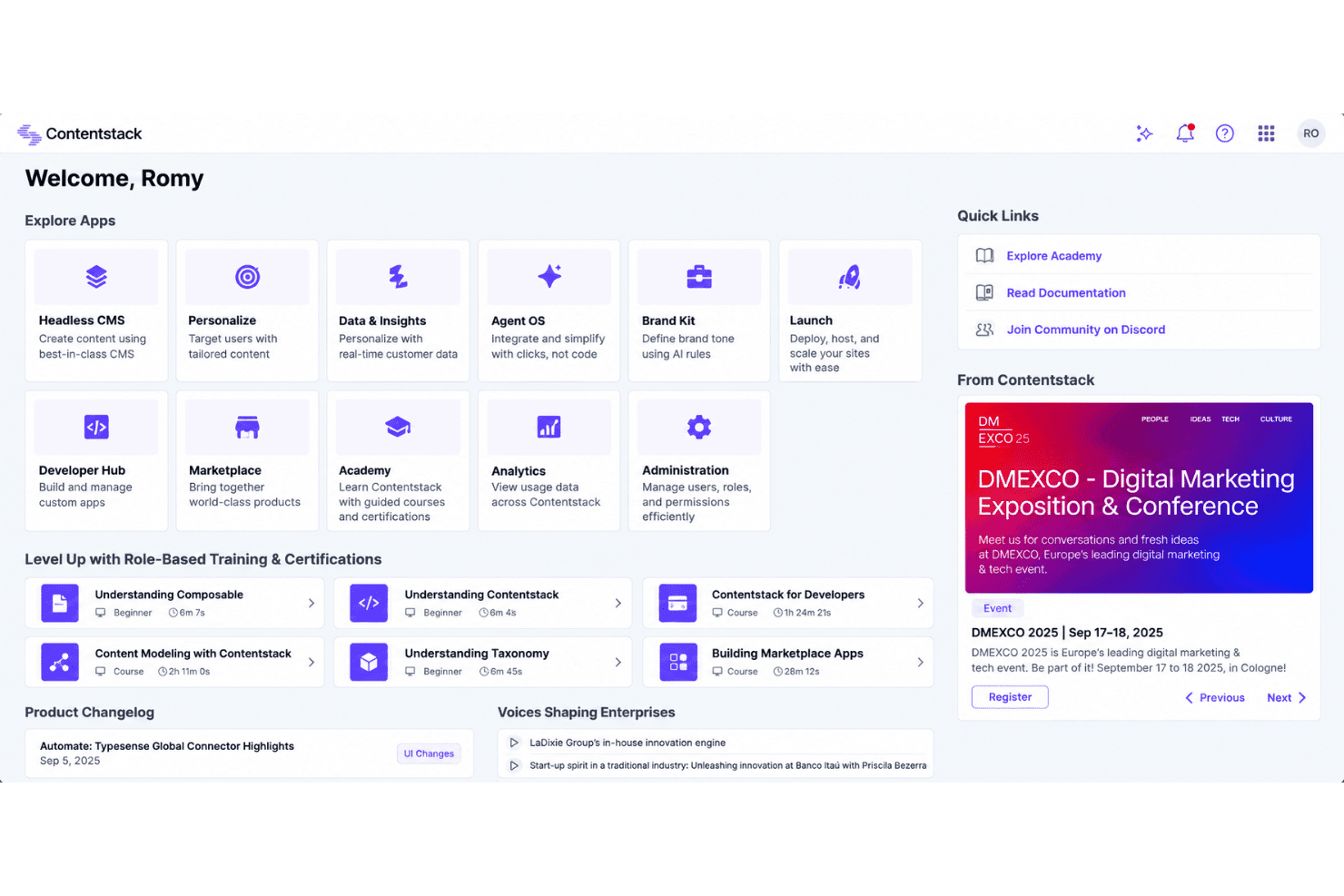
I’d choose Contentstack for teams that need API-first content modeling, reusable components, and publishing across websites, apps, and other channels. Its visual editing, workflows, localization, integrations, and developer tools support sophisticated content operations, while the interface remains approachable for marketers. However, custom pricing can exceed simpler platforms, and onboarding requires technical planning around schemas, APIs, and integrations. Support is strong for implementation-led projects, though smaller teams may prefer a lower-cost, faster setup. Compared with simpler options, Contentstack offers greater flexibility and governance but demands more investment, making it best for growing, multi-channel organizations.
Pros
- API-first modeling supports reusable content across omnichannel experiences.
- Visual Editor lets marketers update layouts without routine developer involvement.
- Workflows, releases, and branches support governed publishing across teams.
Cons
- Pricing is opaque and often expensive for smaller teams.
- Live preview setup can require substantial developer configuration.
- Localization and bulk publishing still involve manual work.
Is Contentstack Right For Your Needs?
Who Would be a Good Fit for Contentstack?
Contentstack fits organizations that need structured content across channels, sites, and teams. Its APIs, workflows, Releases, Visual Editor, integrations, and enterprise governance support complex publishing programs. Teams with developer support will get more from its headless architecture, Live Preview setup, and content modeling requirements.
- Enterprise BrandsContentstack supports multiple production sites, custom roles, workflows, personalization, and data residency through its Enterprise plan.
- Ecommerce TeamsEcommerce teams can connect Contentstack with commercetools, Algolia, Cloudinary, and other systems while managing structured product content through APIs.
- Global MarketingMarketing departments publishing across websites and channels can use structured content, Releases, workflows, and the Content Management API.
- Regulated OrganizationsOrganizations with strict publishing controls can use custom roles, approval workflows, Releases, audit-oriented governance, and enterprise support.
- Developer Led TeamsEngineering teams can build tailored digital experiences with Contentstack’s headless architecture, APIs, integrations, and developer-configured Live Preview.
- Content OperationsContent operations teams coordinating many contributors can use workflows, Visual Editor, Brand Kit, Agent OS, and centralized content modeling.
Who Would be a Bad Fit for Contentstack?
Contentstack is a poor match for teams seeking a simple, no-code website builder with minimal configuration. Its schemas, APIs, Live Preview setup, and technical documentation create more work than smaller teams may need. The pricing structure also becomes harder to justify when you need only one basic site, limited publishing controls, or a low-cost content platform.
- Solo CreatorsSolo creators may find Contentstack excessive because schemas, APIs, and Live Preview setup add technical work to a small publishing operation.
- Small BusinessesSmall businesses needing one basic website may not justify Growth pricing, workflows, enterprise features, and the configuration required by a headless CMS.
- No Code TeamsTeams without developer support may struggle with content modeling, API configuration, integrations, and the technical setup required for Live Preview.
- Basic Brochure SitesA simple brochure site rarely needs Releases, custom roles, multi-site delivery, or integrations with platforms such as commercetools and Algolia.
- Tight BudgetsBudget-conscious teams may outgrow the free and $29 Build plans quickly, while the $299 Growth plan adds a significant recurring cost.
- All In One CommerceBusinesses seeking built-in commerce may find Contentstack unsuitable because it connects with commercetools rather than providing a complete native commerce system.
How We Test & Score Tools
We’ve spent years building, refining, and improving our software testing and scoring system. The rubric is designed to capture the nuances of software selection and what makes a tool effective, focusing on critical aspects of the decision-making process.
Below, you can see exactly how our testing and scoring works across seven criteria. It allows us to provide an unbiased evaluation of the software based on core functionality, standout features, ease of use, onboarding, customer support, integrations, customer reviews, and value for money.
Core Functionality (25% of final scoring)
The starting point of our evaluation is always the core functionality of the tool. Does it have the basic features and functions that a user would expect to see? Are any of those core features locked to higher-tiered pricing plans? At its core, we expect a tool to stand up against the baseline capabilities of its competitors.
Standout Features (25% of final scoring)
Next, we evaluate uncommon standout features that go above and beyond the core functionality typically found in tools of its kind. A high score reflects specialized or unique features that make the product faster, more efficient, or offer additional value to the user.
We also evaluate how easy it is to integrate with other tools typically found in the tech stack to expand the functionality and utility of the software. Tools offering plentiful native integrations, 3rd party connections, and API access to build custom integrations score best.
Ease of Use (10% of final scoring)
We consider how quick and easy it is to execute the tasks defined in the core functionality using the tool. High scoring software is well designed, intuitive to use, offers mobile apps, provides templates, and makes relatively complex tasks seem simple.
Onboarding (10% of final scoring)
We know how important rapid team adoption is for a new platform, so we evaluate how easy it is to learn and use a tool with minimal training. We evaluate how quickly a team member can get set up and start using the tool with no experience. High scoring solutions indicate little or no support is required.
Customer Support (10% of final scoring)
We review how quick and easy it is to get unstuck and find help by phone, live chat, or knowledge base. Tools and companies that provide real-time support score best, while chatbots score worst.
Customer Reviews (10% of final scoring)
Beyond our own testing and evaluation, we consider the net promoter score from current and past customers. We review their likelihood, given the option, to choose the tool again for the core functionality. A high scoring software reflects a high net promoter score from current or past customers.
Value for Money (10% of final scoring)
Lastly, in consideration of all the other criteria, we review the average price of entry level plans against the core features and consider the value of the other evaluation criteria. Software that delivers more, for less, will score higher.
Core Features
Content Modeling
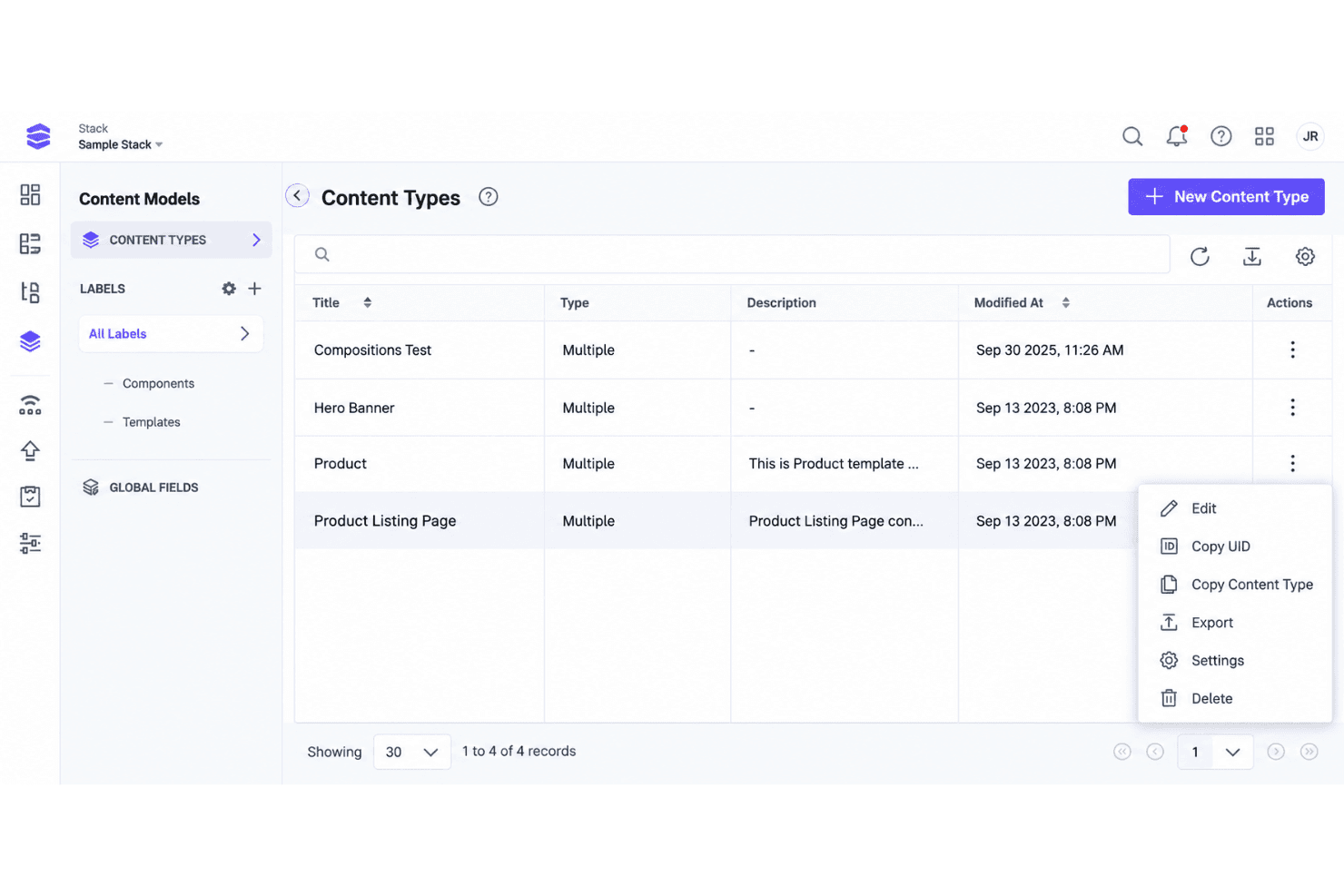
Contentstack lets you define structured content types, fields, and reusable components through an API-first model. This gives teams consistent content for websites, apps, and other channels, such as reusing one product description across multiple campaigns.
Visual Editor
The Visual Editor lets marketers edit content in a page context and preview changes before publishing. Teams can adjust page content without asking developers to handle every update.
Workflows
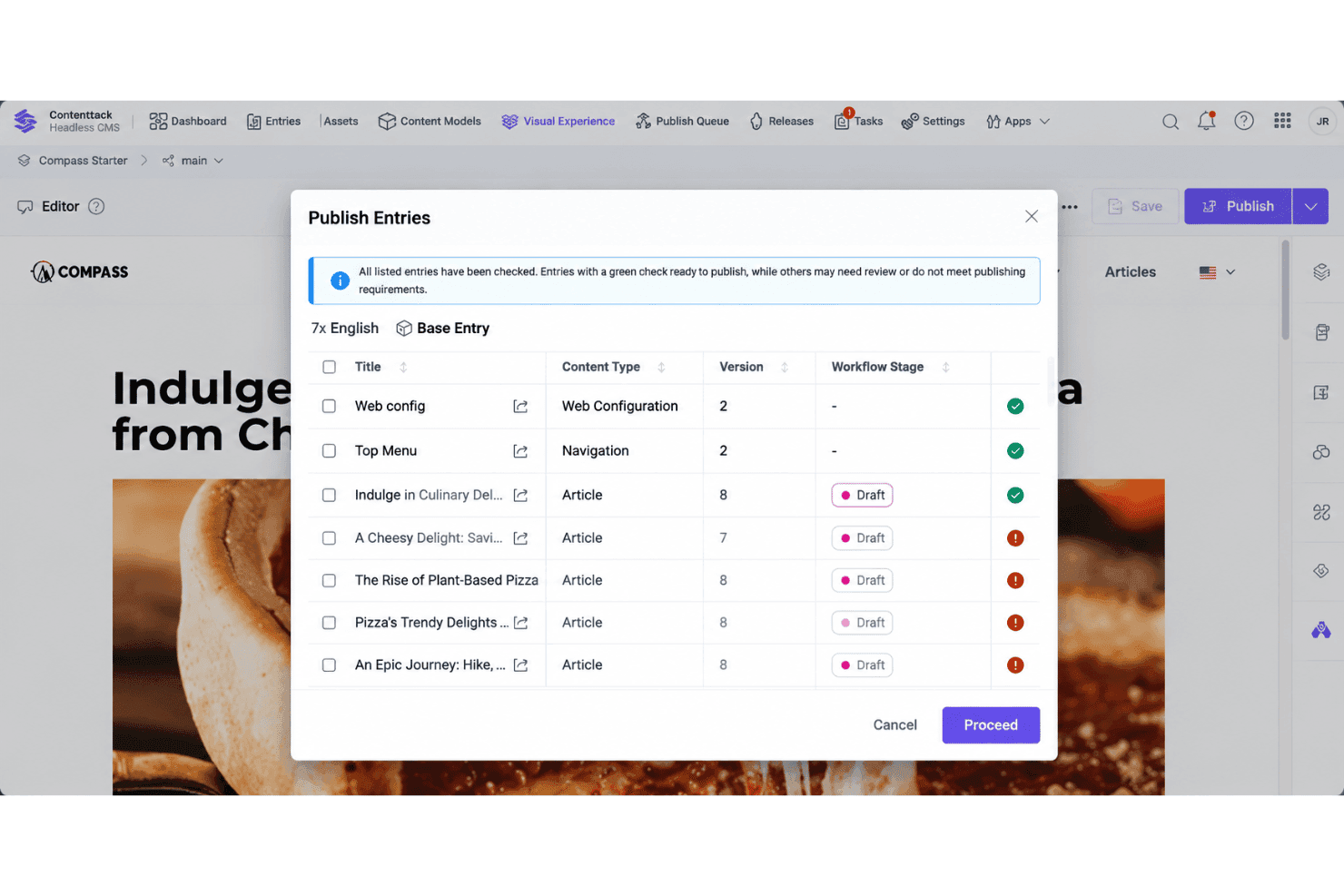
Workflows assign content stages, responsibilities, and approval steps to publishing processes. Marketing teams can route a campaign page from drafting to review and approval before it goes live.
Releases
Releases group related content changes for scheduled or coordinated publishing. A team can prepare landing pages, product updates, and campaign copy together, then publish them at a planned time.
Localization
Contentstack supports localized content for teams managing multiple languages and regional experiences. Editors can create language variants while keeping shared content structures consistent across markets.
Live Preview
Live Preview shows how content will appear on a connected website or application before publication. Developers configure the preview environment, giving marketers a practical way to check page context and presentation.
Ease of Use
Contentstack is approachable for content teams once the underlying content model is configured. Visual Editor provides no-code, in-context editing, while Workflows and Releases help teams manage approvals and coordinated publishing. However, initial setup can require developer involvement, particularly for schemas, APIs, integrations, and Live Preview configuration. It suits teams that need structured content and governance rather than a fully turnkey CMS.
Integrations
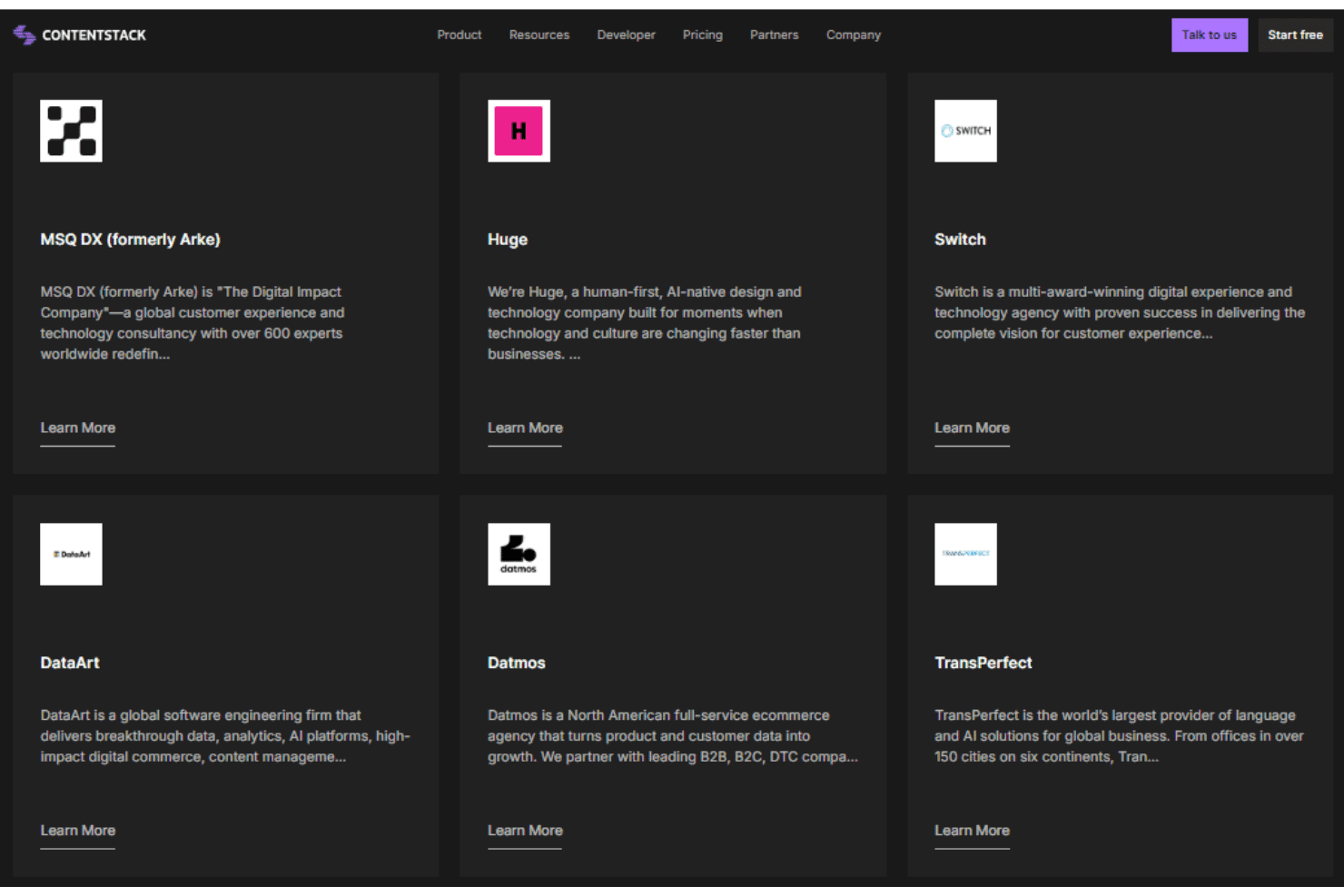
Contentstack integrates with Algolia, commercetools, Bynder, Cloudinary, Salesforce CRM data, and Salesforce Commerce, among other tools and services.
Contentstack also provides a Content Management API for custom integrations and connects with third-party automation tools such as Zapier.
Contentstack Specs
- A/B Testing: Yes
- API: Yes
- Batch Permissions & Access: Yes
- Dashboard: Yes
- Data Export: Yes
- Data Import: Yes
- Data Visualization: Yes
- External Integrations: Yes
- File Sharing: No
- File Transfer: No
- Multi-User: Yes
- Notifications: Yes
- Third-Party Plugins/Add-Ons: Yes


