

Som erfaren markedsfører er det krevende å ligge foran konkurrentene. Du møter utfordringer som å forstå målgruppen din, følge med på merkevarens omdømme og reagere på markedstrender. Det er her programvare for merkevareinnsikt kommer inn i bildet, og hjelper deg med å ta informerte beslutninger.
Etter min erfaring kan de riktige verktøyene bli en avgjørende faktor for teamet ditt, ved å gi innsikt som driver strategi og vekst. Jeg har testet og vurdert ulike alternativer for å gi deg en objektiv liste over de beste programvareløsningene for merkevareinnsikt på markedet.
Nedenfor finner du detaljerte vurderinger av hver løsning, med vekt på funksjoner og fordeler som hjelper deg med å ta en smart kjøpsbeslutning.
Hvorfor du kan stole på våre programvareanbefalinger
6,700+
Reviews
20
Industry experts
16+
Evaluation factors
14
Years
Teamet vårt har testet og anmeldt programvare siden 2012. Vi er selv markedsføringsledere, så vi vet hvor vanskelig og hvor viktig det er å velge riktig programvare.
I denne guiden har vi vurdert verktøyene gjennom praktisk testing og uavhengig research og gitt dem poeng ut fra våre utvelgelseskriterier.
Anmeldelsene våre bygger på vår egen redaksjonelle vurdering. De er ikke et salgsargument.
Ekspertanmeldere:
 Gui DrusinaCreative Director
- Shriya GhateSenior Marketing Lead
 Amanda JacquesMarketing Ops Leader

Sammenligningstabell for programvare for merkevareinnsikt
Denne sammenligningstabellen oppsummerer prisdetaljene for mine beste utvalgte programmer for merkevareinnsikt:
| Tool | Best For | Trial Info | Price | ||
|---|---|---|---|---|---|
| 1 | Best for historical social data at scale | Not available | Pricing upon request | Website | |
| 2 | Best for AI-powered crisis and trend alerts | Free demo available | Pricing upon request | Website | |
| 3 | Best for experience-led brand health research | Free demo available | Pricing upon request | Website | |
| 4 | Best for AI-driven brand and search visibility | Free demo available | Pricing upon request | Website | |
| 5 | Best for enterprise PR and brand intelligence | Not available | Pricing upon request | Website | |
| 6 | Best for unified brand and CXM intelligence | Free demo available | Pricing upon request | Website | |
| 7 | Best for unified social listening and publishing | 14-day free trial + free demo available | From $99/user/month | Website | |
| 8 | Best for social listening | Free demo available | Pricing upon request | Website | |
| 9 | Best for AI-driven global media intelligence | Free demo available | From $10,000/year (billed annually) | Website | |
| 10 | Best for AI-driven brand and consumer intelligence | 14-day free trial | Pricing upon request | Website |


Vurderinger av den beste programvaren for merkevareinnsikt
Nedenfor finner du mine detaljerte oppsummeringer av den beste programvaren for merkevareinnsikt som kom med på kortlisten min. Vurderingene mine gir et detaljert innblikk i de viktigste funksjonene, fordeler & ulemper, integrasjoner og ideelle bruksområder for hvert verktøy, slik at du kan finne det beste alternativet for deg.
 Best for historical social data at scale
- Not available
- Pricing upon request
Visit WebsiteCustomer Rating:4.3/5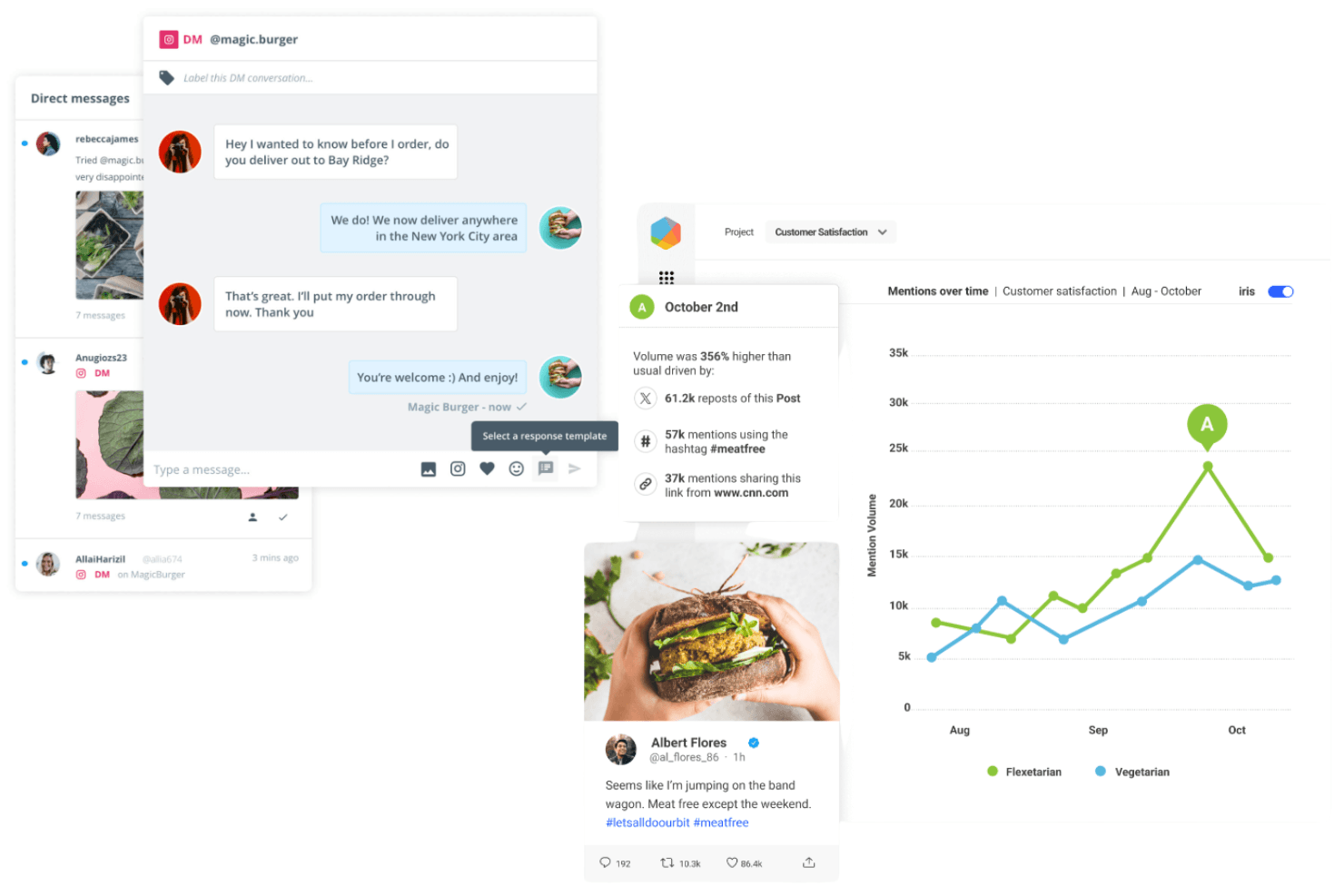
Brandwatch analyzes and manages online conversations across social channels. Brandwatch is a brand intelligence and social listening platform that combines real-time mention monitoring across 100 million+ sources, AI-powered sentiment analysis, competitive benchmarking, and a historical data archive stretching back to 2006.
Who Is Brandwatch Best For?
Brandwatch is a strong fit for enterprise marketing and insights teams that need to track brand perception across massive conversation volumes over long time horizons.
Why I Picked Brandwatch
Brandwatch earns its spot on my list because no other platform comes close to its historical data depth—1.7 trillion conversations archived back to 2006, pulling from 100 million+ sources daily. I love how that archive isn't just a data dump: the Share of Voice tool lets me run longitudinal competitive benchmarking across a decade-plus of conversation data, which is genuinely rare. The React Score™ adds another layer I rely on, flagging high-risk mentions in real time so my team can act before a reputation issue compounds.
Brandwatch Key Features
- Iris AI chat assistant: Ask Iris lets you query your data in plain language and instantly returns AI-generated summaries and charts.
- Image and logo recognition: Detects brand logos, objects, and scenes in user-generated images to track visual brand presence across social media.
- Demographic insights: Identifies age, gender, and behavioral characteristics of the authors discussing your brand online.
- Smart alerts and anomaly detection: Flags spikes in mentions or sentiment shifts and delivers natural-language summaries to keep stakeholders informed.
Brandwatch Integrations
Brandwatch reports 17 partner-tool integrations, including Salesforce, HubSpot, Zendesk, ServiceNow, Shopify, Bynder, and Bitly. Its Analysis, Consumer Research, Data Upload, Measure, Publish, and Engage APIs support custom connections.
Pros and Cons
Pros:
- AI-powered alerting for brand crises
- Best-in-class visual logo recognition capabilities
- Unmatched depth of historical social data
Cons:
- Sarcasm and irony detection is limited
- No free trial or self-serve access
Learn more about Brandwatch: Best for AI-powered crisis and trend alerts
- Free demo available
- Pricing upon request
Visit WebsiteCustomer Rating:4.4/5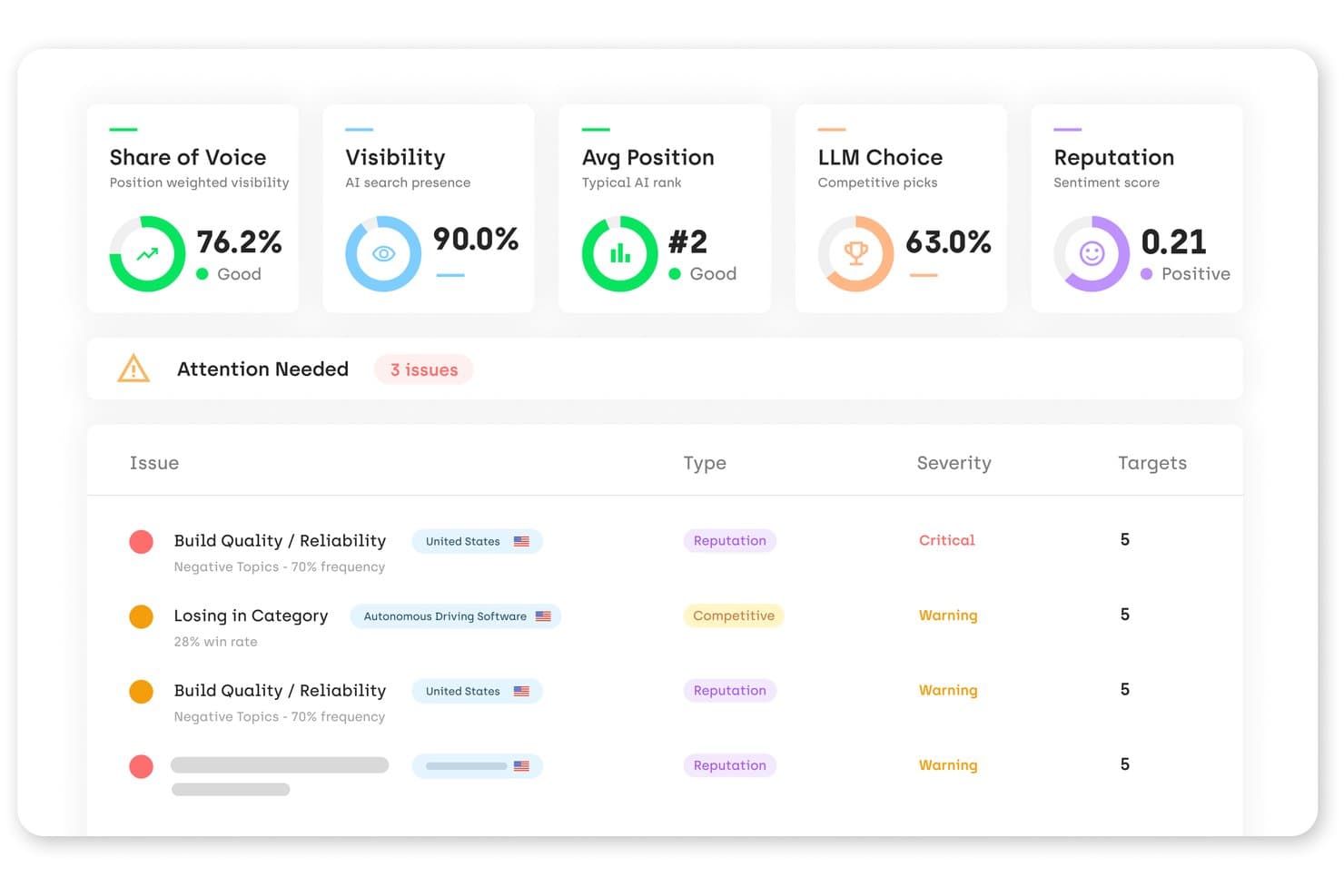
Onclusive tracks brand reputation, visibility, and AI search issues in one dashboard. Onclusive is a brand intelligence platform that combines media monitoring across print, broadcast, and social channels with AI-powered sentiment analysis, crisis alerting, competitive benchmarking, and audience insights.
Who Is Onclusive Best For?
Onclusive is a strong fit for enterprise marketing and PR teams that need real-time crisis detection and trend monitoring across print, broadcast, and social media at scale.
Why I Picked Onclusive
Onclusive earns its spot on my shortlist because of how its AI-powered Sentinel system handles crisis detection in real time. When a negative sentiment spike hits, Sentinel surfaces the alert before it escalates, tracking the signal across print, broadcast, and social simultaneously. I also rate the GEO Analytics feature highly: it monitors how your brand appears in AI-generated search results, which is genuinely rare among brand intelligence platforms right now.
Onclusive Key Features
- Share of Voice analysis: Tracks your brand's media presence against competitors across print, online, broadcast, and social channels in one view.
- Message Pull-Through measurement: Monitors whether your key brand messages are actually appearing in media coverage.
- Audience demographic and psychographic mapping: Surfaces behavioral patterns, values, and audience segments from social listening data.
- Data-as-a-Service API: Delivers enriched media content—including sentiment scores, entity tags, and topic classifications—directly to your existing BI or CRM tools.
Onclusive Integrations
Onclusive integrates with CRM systems and BI tools including Tableau, Power BI, and Looker. Its Data-as-a-Service offering provides REST APIs, XML feeds, RSS, and customizable schemas for custom integrations.
Pros and Cons
Pros:
- Tracks brand visibility in AI-generated searches
- Largest print and broadcast monitoring coverage
- Real-time crisis alerts and sentiment spike detection
Cons:
- Occasional gaps in Instagram and TikTok data
- No free trial or transparent pricing
Learn more about Onclusive: Best for experience-led brand health research
- Free demo available
- Pricing upon request
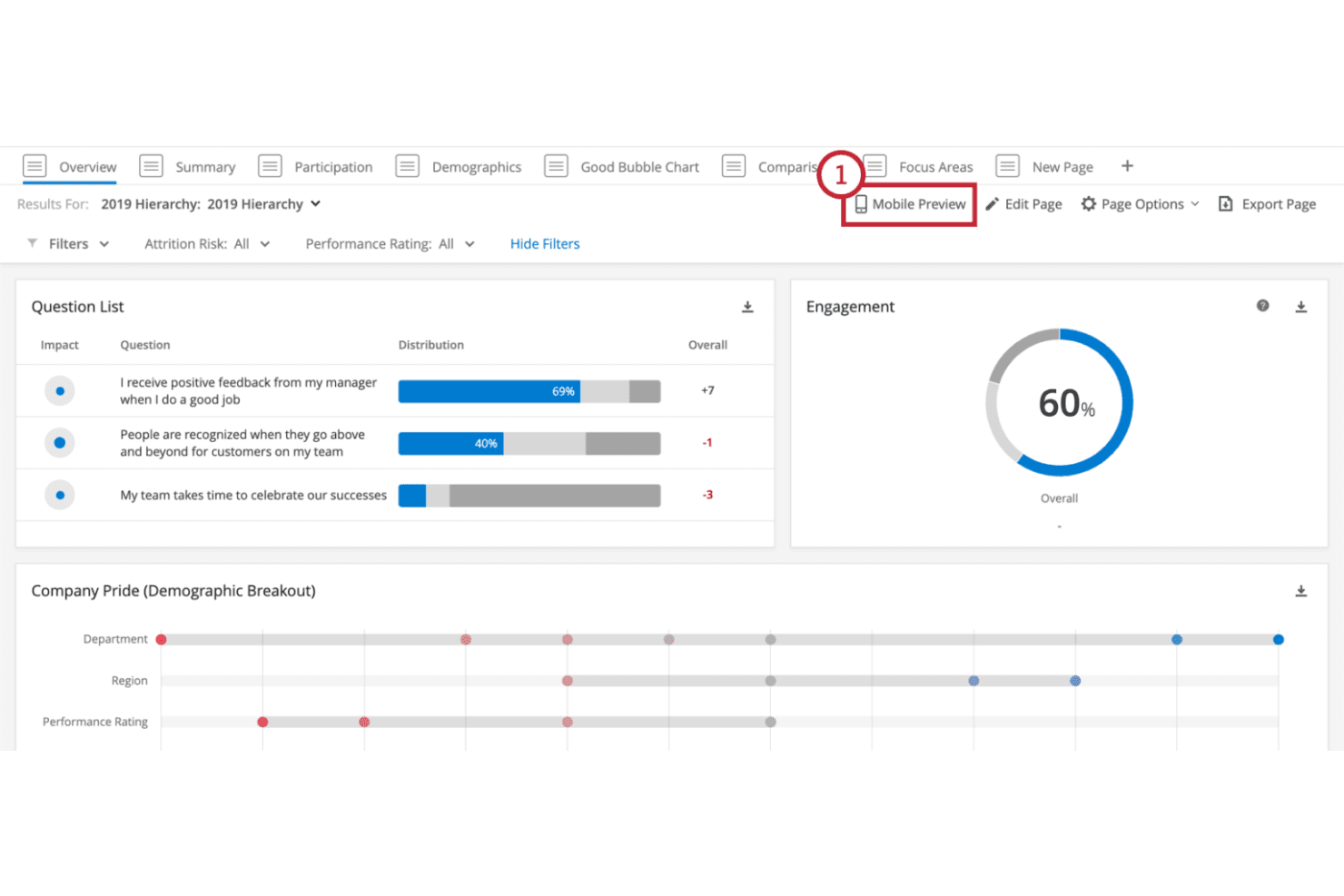
Qualtrics XM provides insights to boost brand engagement and experience. Qualtrics XM is an experience management platform that combines survey-based brand research, AI-powered sentiment analysis, and consumer insights across solicited and unsolicited feedback channels.
Who Is Qualtrics XM Best For?
Qualtrics XM is a strong fit for enterprise market research and consumer insights teams that need rigorous, survey-based brand health tracking backed by AI-powered analytics.
Why I Picked Qualtrics XM
Qualtrics XM earns its spot on my shortlist because its Brand Tracking Research Service is built on Ph.D.-designed methodology, giving brand health research a level of rigor I haven't seen matched in other platforms. I also love how its predictive AI models flag awareness or sentiment dips three to six months before they surface as revenue impact, which turns reactive brand monitoring into a genuinely proactive discipline. Pair that with XM Discover's multi-dimensional sentiment analysis across text, audio, and even emojis, and you get a depth of signal that survey-only tools simply can't replicate.
Qualtrics XM Key Features
- XM Discover connectors: Pulls in feedback from social platforms, review sites, CRM tools, and contact centers into a single analysis environment.
- Edge Audiences synthetic panels: Generates AI-driven consumer behavior data by demographic profile in minutes, cutting research timelines from weeks to hours.
- Research Hub: A centralized archive with AI-powered semantic search that lets you surface and reuse past brand research across your organization.
- iQ Anomaly Events: Automatically detects unexpected spikes or drops in survey response patterns and triggers workflows to alert your team.
Qualtrics XM Integrations
Qualtrics XM offers documented connectors for Salesforce, Facebook, Instagram, X, Trustpilot, TripAdvisor, Yotpo, Zendesk, Genesys Cloud, and Brandwatch. Its public API supports custom integrations and downstream workflows.
Pros and Cons
Pros:
- Global panel access and AI synthetic audiences
- Ph.D.-designed methodology for brand research
- Predictive AI forecasts brand metric shifts
Cons:
- Share of voice dashboards not included
- No native TikTok or YouTube monitoring
Learn more about Qualtrics XM: Best for AI-driven brand and search visibility
- Free demo available
- Pricing upon request
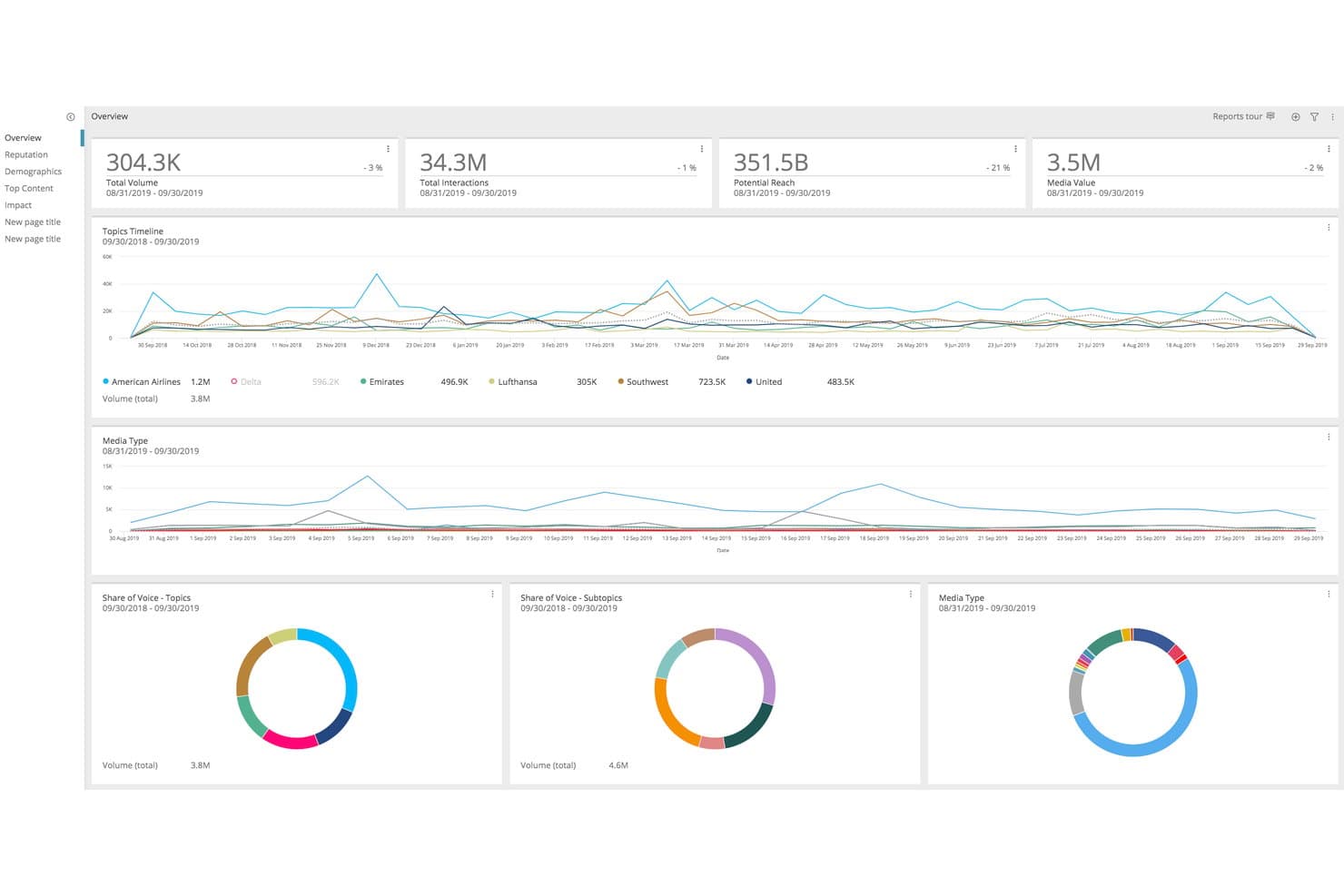
Ipsos Synthesio tracks brand volume, reach, and media type over time. Ipsos Synthesio is a brand intelligence platform that combines social listening, AI-powered consumer insights, sentiment analysis, competitive benchmarking, and AI search visibility monitoring across 800 million+ sources and 81+ languages.
Who Is Ipsos Synthesio Best For?
Ipsos Synthesio is a strong fit for enterprise market research and consumer insights teams that need AI-powered brand intelligence backed by rigorous research methodology.
Why I Picked Ipsos Synthesio
Ipsos Synthesio earns its spot as one of the best on my shortlist because no other tool in this category tracks brand presence across AI-powered search the way it does. Its AI Visibility module monitors how platforms like ChatGPT, Gemini, and DeepSeek describe and cite your brand versus competitors, which is something most social listening tools haven't touched yet. I also like that Signals GenAI turns millions of real-time consumer signals into structured insight narratives in under 60 seconds, using 40+ validated prompts built around specific research questions.
Ipsos Synthesio Key Features
- Audience analysis module: Profiles consumers by demographics, interests, and psychographics using a blend of social, behavioral, and survey data in a single view.
- Topic modeling: Uses ML to automatically scan and categorize millions of conversations into themes, surfacing patterns without requiring manual query setup.
- Crisis and anomaly alerting: Detects sudden spikes in mention volume or negative sentiment in real time, triggering alerts before issues escalate.
- Search intelligence: Pulls consumer intent data from 10+ search platforms—including Google, YouTube, and Amazon—alongside social data for a fuller picture of audience behavior.
Ipsos Synthesio Integrations
Native integrations are not publicly listed. Ipsos Synthesio supports custom integrations through its REST.
Pros and Cons
Pros:
- Combines survey, behavioral, and social data
- Includes generative AI-driven insight narratives
- Tracks brand across AI search and chat
Cons:
- Requires demo request for pricing access
- Sentiment accuracy inconsistent in complex cases
Learn more about Ipsos Synthesio:
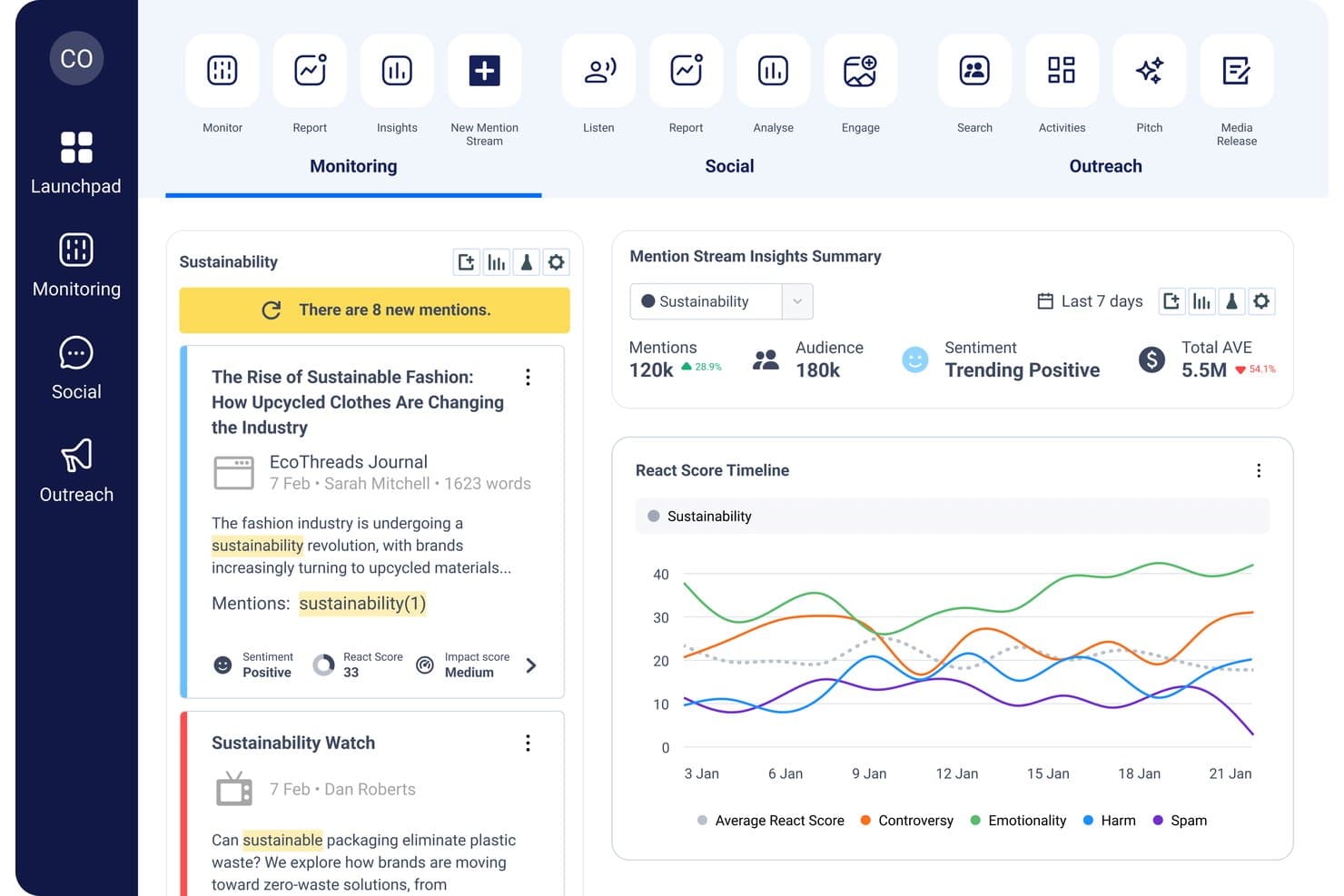
Cision tracks brand mentions, sentiment, and reach in one dashboard. CisionOne is an enterprise media intelligence platform that combines real-time media monitoring across print, broadcast, and social channels with AI-powered sentiment analysis, competitive benchmarking, and brand health reporting.
Who Is Cision Best For?
Cision is a strong fit for enterprise PR and communications teams that need multi-channel media monitoring, AI-powered brand intelligence, and executive-ready reporting at global scale.
Why I Picked Cision
Cision earns its spot on my list because no other platform matches its scale for enterprise PR and brand intelligence. I'm particularly impressed by the React Score, which detects sarcasm, fake news, and hate speech in real time, so your team catches reputational risk before it escalates. The AI Visibility Dashboard also stands out, tracking how your brand appears across ChatGPT, Gemini, and Perplexity compared to competitors—something very few tools offer.
Cision Key Features
- Instant Insights AI summaries: Auto-generates narrative-driven summaries of brand coverage trends, emerging themes, and shifts across earned media channels.
- Brandwatch social listening integration: Monitors conversations across Twitter/X, Facebook, Instagram, YouTube, Reddit, and LinkedIn with emotional classification and topic wheel visualization.
- Custom executive reporting dashboards: Converts dashboard widgets into branded, shareable report slides with a single click, distributable via URL or direct stakeholder link.
- Research-as-a-Service: Cision's expert Insights team delivers daily briefings, custom competitive reports, and reputation analysis as a managed extension of your team.
Cision Integrations
CisionOne integrates with Google Analytics, Adobe Analytics, Tableau, Power BI, Slack, Microsoft Teams, Brandwatch, and Trajaan. Its REST API supports custom connections.
Pros and Cons
Pros:
- AI dashboard tracks brand on AI platforms
- Real-time React Score flags brand risk
- Unmatched global media channel coverage
Cons:
- Interface navigation can feel overwhelming
- Opaque pricing requires direct sales contact
Learn more about Cision: Best for unified brand and CXM intelligence
- Free demo available
- Pricing upon request
Visit WebsiteCustomer Rating:4.2/5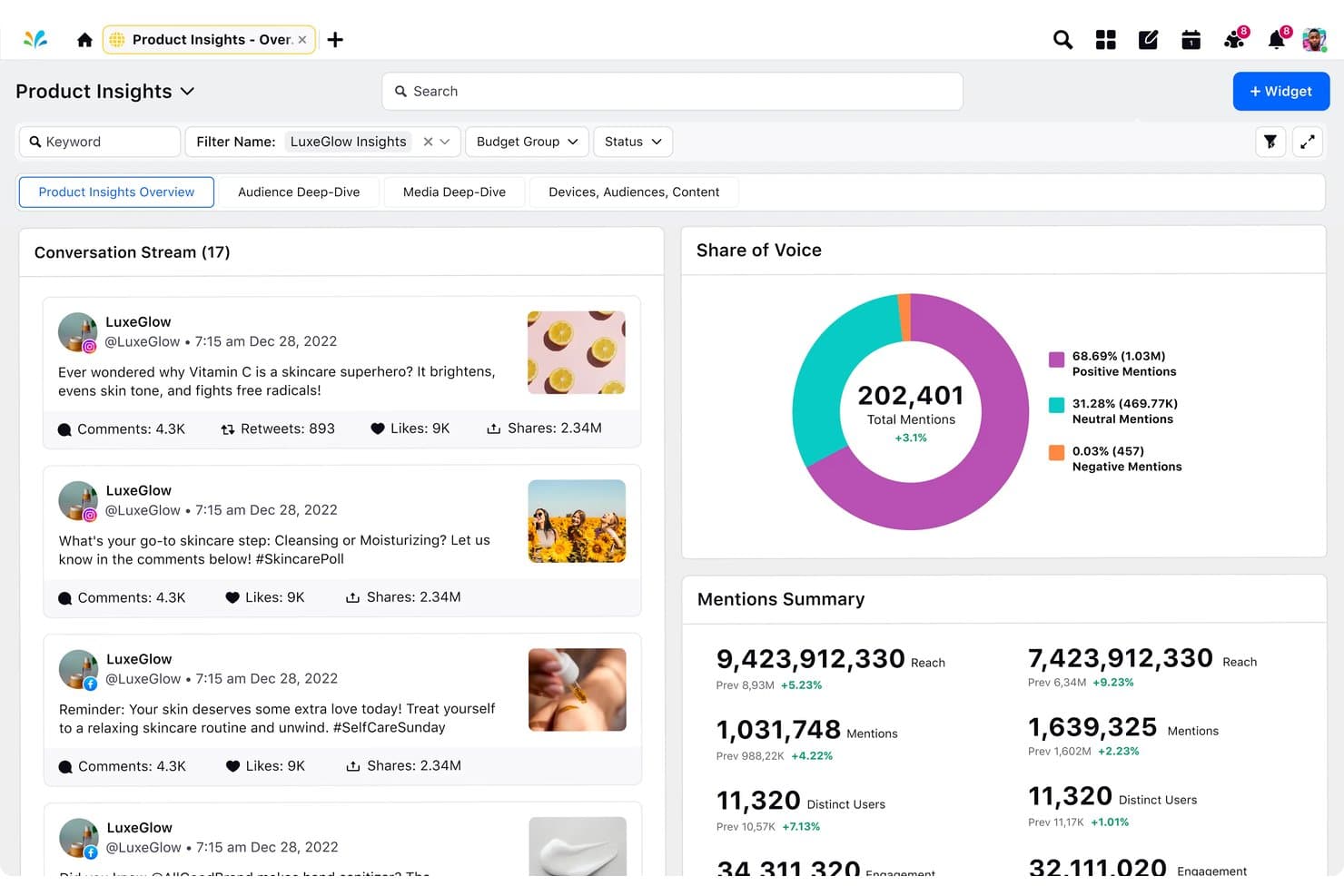
Sprinklr Insights tracks brand mentions and share of voice in real time. Sprinklr Insights is an enterprise brand intelligence platform that unifies social listening, sentiment analysis, competitive benchmarking, visual recognition, and consumer insights across 30+ channels, 400K+ media sources, and 1B+ websites into a single AI-powered suite.
Who Is Sprinklr Insights Best For?
Sprinklr Insights is a strong fit for enterprise marketing and insights teams that need to unify brand monitoring, consumer intelligence, and competitive benchmarking across a single platform.
Why I Picked Sprinklr Insights
Sprinklr Insights earns its spot on my shortlist because no other platform I've evaluated unifies brand monitoring, consumer intelligence, and competitive benchmarking at this scale. I'm particularly impressed by the Visual Insights module, which detects brand logos across images, GIFs, and video, capturing mentions that text-based listening tools miss entirely. The Benchmarking Assistant, an AI chatbot that delivers automated competitive recommendations, is something I haven't seen executed this well elsewhere.
Sprinklr Insights Key Features
- Smart Theme detection: AI automatically groups social conversations into themes, surfacing emerging topics without any manual setup or query building.
- Crisis Management module: Combines generative AI with an early warning alerting framework to detect conversation spikes and send real-time alerts before issues escalate.
- Research Copilot: A conversational AI assistant that lets you query social and brand data in natural language and returns citation-backed, root-cause analysis responses.
- LLM Insights: Monitors how your brand appears in AI-generated search results across tools like ChatGPT and Gemini, tracking AI mention rate, share of voice, and sentiment.
Sprinklr Insights Integrations
Sprinklr Insights offers native integrations with Tableau, Microsoft Power BI, Looker Studio, Snowflake, Salesforce, Microsoft Dynamics CRM, Zendesk, Slack, and Microsoft Teams. Its Developer Portal provides APIs and webhooks for custom integrations.
Pros and Cons
Pros:
- Visual logo recognition misses few brand mentions
- Industry-leading AI for sentiment and trends
- Largest coverage of channels and languages
Cons:
- Customer support response times frequently slow
- Complex and lengthy onboarding process
Learn more about Sprinklr Insights: Best for unified social listening and publishing
- 14-day free trial + free demo available
- From $99/user/month
Visit WebsiteCustomer Rating:4.3/5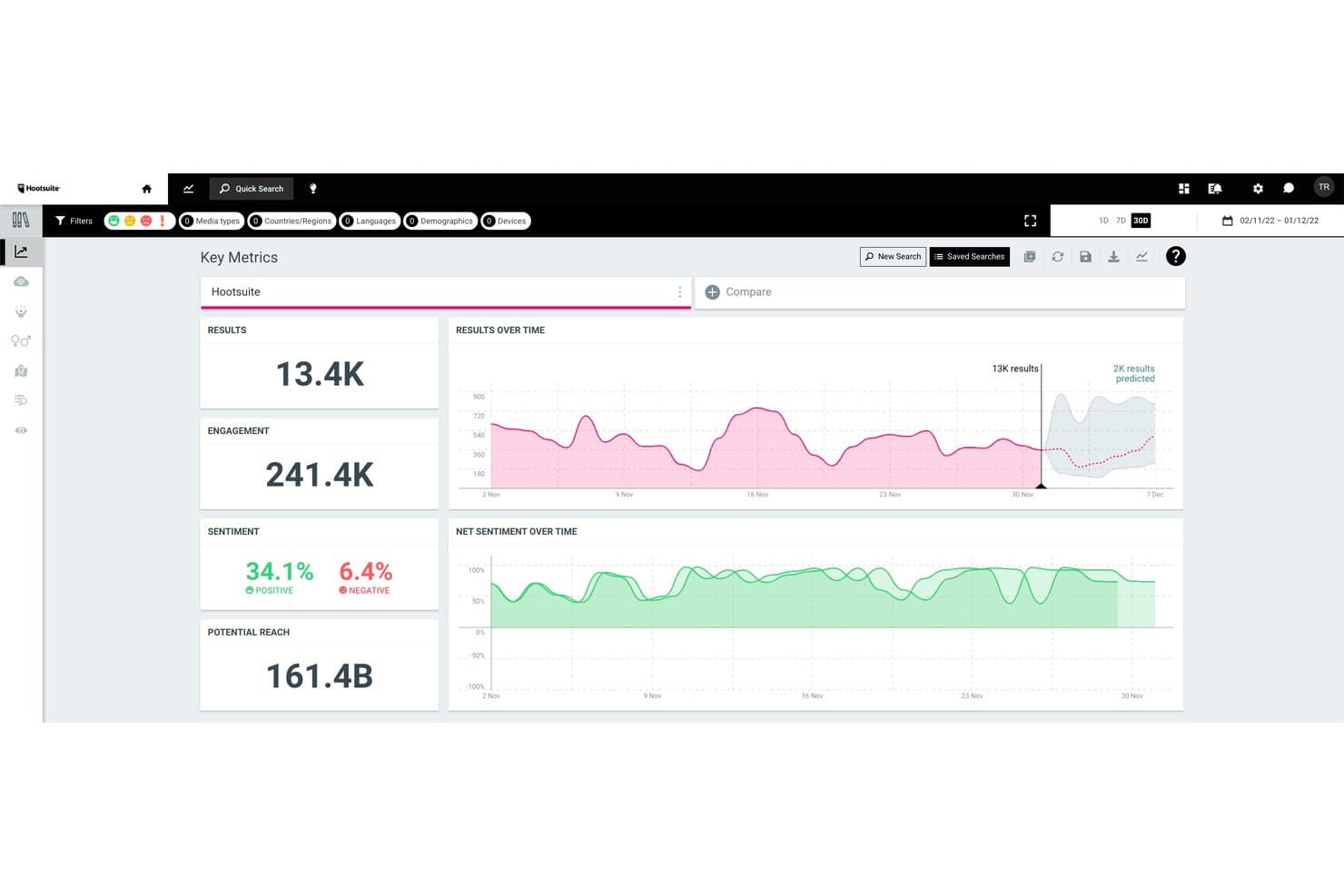
Hootsuite tracks brand sentiment and engagement metrics over time. Hootsuite is a social media management and brand intelligence platform that combines social listening, sentiment analysis, competitive benchmarking, consumer insights, and publishing across 30+ channels and 150 million+ websites.
Who Is Hootsuite Best For?
Hootsuite is a strong fit for brand and marketing teams that want social listening, competitive benchmarking, and content publishing in one platform rather than juggling separate tools.
Why I Picked Hootsuite
Hootsuite earns its spot on my shortlist because it's one of the few tools that genuinely unifies brand intelligence and content publishing without forcing you to stitch together separate platforms. I love that Blue Silk™ AI detects sentiment across text, images, and video, so logo appearances in user-generated content don't slip through the way they do with keyword-only tools. The 90-day trend forecasting is also something I find genuinely useful when planning campaign timing against emerging conversations.
Hootsuite Key Features
- Visual and logo recognition: Blue Silk™ AI scans images and video at scale to detect brand logo appearances in user-generated content across social and media channels.
- LLM share of voice tracking: Monitors how your brand appears in AI tools like ChatGPT, Gemini, and Claude compared to competitors.
- Boolean search with saved queries: Supports advanced keyword and Boolean search operators across 50+ saved searches for precise, repeatable listening workflows.
- Crisis and anomaly alerts: Triggers real-time notifications when sentiment shifts suddenly or mention volume spikes, with sarcasm-aware NLP to reduce false negatives.
Hootsuite Integrations
Native integrations include Google Analytics, Adobe Analytics, Salesforce, Canva, Adobe Express, Bynder, Audiense, Affinio, Upfluence, and Slack. Hootsuite also offers an App Directory and an open API for custom integrations.
Pros and Cons
Pros:
- LLM share of voice tracking included
- AI detects sarcasm and emotional nuance
- Visual and logo recognition for brand mentions
Cons:
- Some users report slow customer support
- Deepest listening features require Enterprise plan
Learn more about Hootsuite:
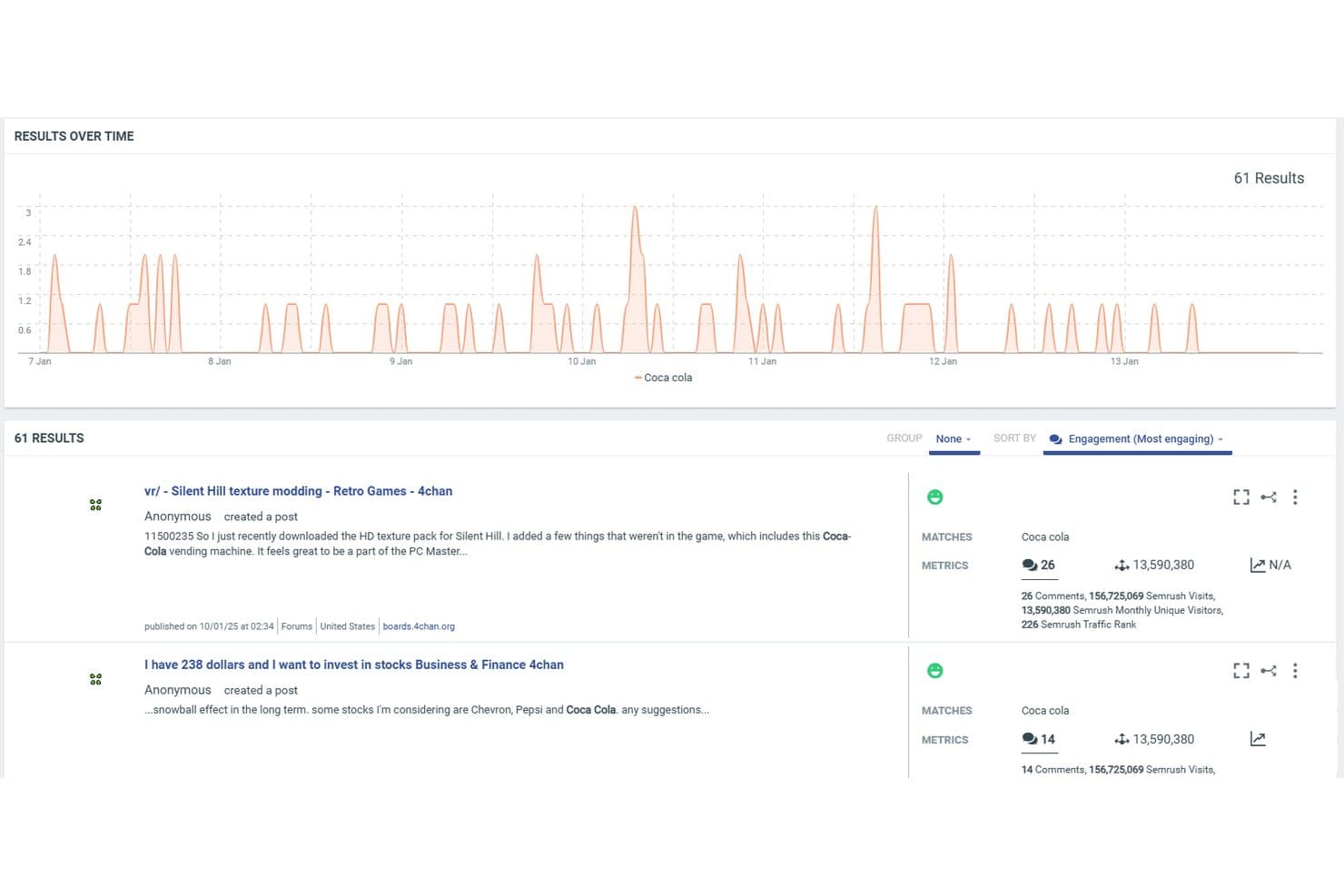
Lumen by Talkwalker tracks brand mentions over time with engagement metrics. Lumen by Talkwalker is a brand intelligence and social listening platform that monitors mentions across 30 social networks, 150M+ websites, and broadcast and print media, with AI-powered sentiment analysis, competitive benchmarking, and audience insights built in.
Who Is Lumen by Talkwalker Best For?
Enterprise marketing and insights teams that need deep, multi-channel social listening across global markets will get the most out of Lumen by Talkwalker.
Why I Picked Lumen by Talkwalker
Lumen by Talkwalker earns its spot on my shortlist because its social listening coverage is genuinely hard to beat: 30 social networks, 150M+ websites, and broadcast and print media, all without data sampling. I'm particularly impressed by Blue Silk™ AI, which goes well beyond basic sentiment to detect sarcasm and irony at 90% accuracy across 192 languages. I also love the LLM Insights feature, which tracks how AI assistants like ChatGPT and Gemini are describing your brand versus competitors.
Lumen by Talkwalker Key Features
- Visual and logo recognition: Detects 40,000+ brand logos, objects, and scenes across 60M+ daily videos, images, GIFs, and memes—even when no text accompanies the visual content.
- Audience Insights product: Surfaces AI-powered demographic, behavioral, and psychographic data about audiences, including preference mapping, persona clustering, and conversion analysis.
- Custom scoring systems: Lets you build weighted brand health scores from your own chosen metrics, such as share of voice, sentiment, and media value combined.
- Developer API access: Offers a full API suite including Search, Export, Webhook, and Image Detection APIs for integrating Talkwalker data into external tools and BI workflows.
Lumen by Talkwalker Integrations
Native integrations include Hootsuite, Tableau, Google Analytics 4, Audiense, Affinio, Upfluence, Khoros, Facelift, Data Virtuality, and RingCentral RingCX. Its APIs support custom connections.
Pros and Cons
Pros:
- Monitors brand mentions in AI assistant responses
- Detects sarcasm and irony in 192 languages
- Covers 30 social networks and 150M+ sites
Cons:
- Facebook and Instagram coverage is restricted
- Sentiment scoring sometimes needs manual correction
Learn more about Lumen by Talkwalker: Best for AI-driven global media intelligence
- Free demo available
- From $10,000/year (billed annually)
Visit WebsiteCustomer Rating:4.1/5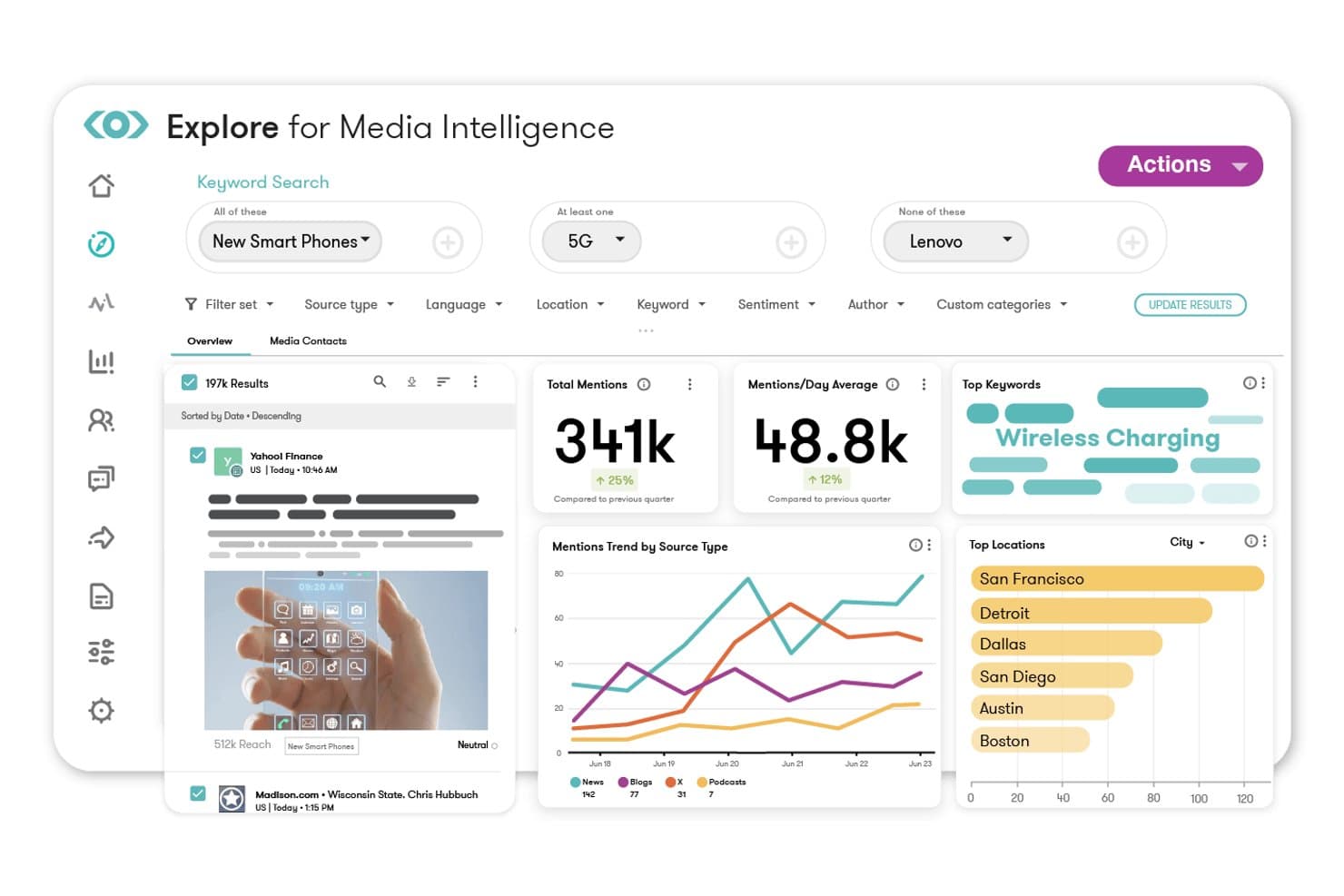
Meltwater tracks brand mentions, trends, and top keywords in one dashboard. Meltwater is a brand intelligence platform that combines media monitoring, social listening, consumer insights, and AI-powered trend detection across traditional media, online publications, social networks, broadcast, podcasts, and AI-generated content.
Who Is Meltwater Best For?
Meltwater is a strong fit for global enterprise marketing and communications teams that need to monitor brand presence across dozens of markets, languages, and channels from a single platform.
Why I Picked Meltwater
Meltwater earns its spot on my shortlist because no other platform I've reviewed monitors brand presence at this scale, across traditional media, social networks, podcasts, broadcast, and now AI-generated content from LLMs like ChatGPT and Gemini. I'm particularly impressed by GenAI Lens, which tracks how your brand appears in AI-generated answers and benchmarks your AI share of voice against competitors. Mira AI adds another layer by surfacing narrative anomalies and generating executive summaries from billions of daily data points automatically.
Meltwater Key Features
- Official Reddit data partnership: Meltwater's full Reddit firehose access captures community conversations across subreddits without the data gaps that come with standard API access.
- 48-hour conversation forecasting: The social listening module predicts conversation volume trends up to 48 hours ahead, giving your team time to prepare responses or campaigns before topics peak.
- Bring Your Own Content (BYOC): Upload surveys, interview transcripts, or internal data directly into the platform to analyze alongside Meltwater's monitored data sources.
- Custom reporting and scheduling: Build tailored dashboards and set automated report delivery so stakeholders receive brand performance updates without manual effort.
Meltwater Integrations
Meltwater offers integrations with Slack, Microsoft Teams, Salesforce, Power BI, Tableau, Domo, and Looker, plus MCP connections for Claude and ChatGPT. Its API and webhooks support custom integrations, and Zapier is also supported.
Pros and Cons
Pros:
- AI-powered crisis alerts and summaries
- Full Reddit firehose access included
- Monitors LLMs like ChatGPT and Gemini
Cons:
- No self-serve free trial available
- Sentiment accuracy is inconsistent for nuance

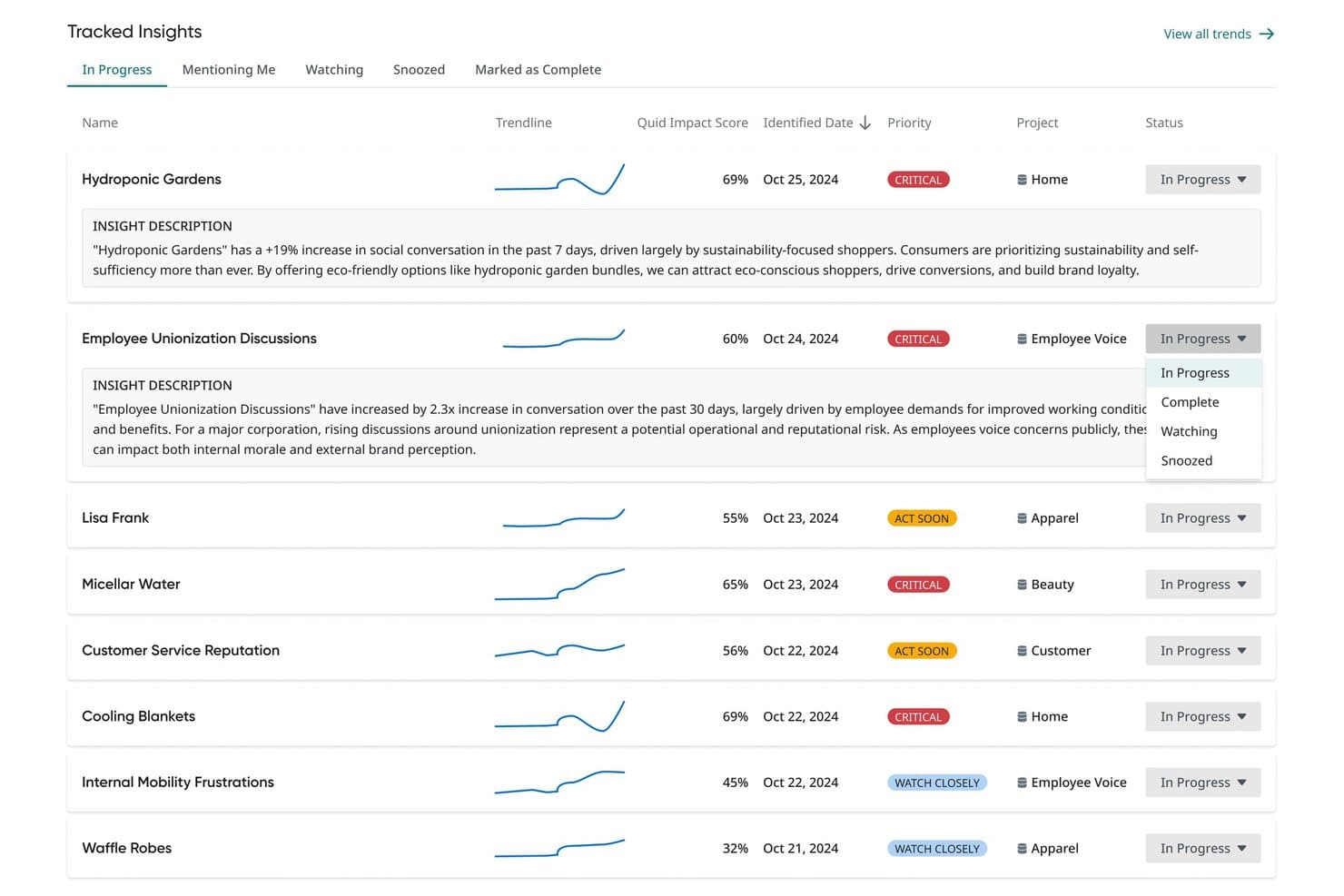
Quid tracks and prioritizes brand insights by urgency and project. Quid is an AI-driven brand and consumer intelligence platform that combines social listening, sentiment analysis, competitive benchmarking, trend detection, and audience insights across social, news, forums, reviews, and broadcast data sources.
Who Is Quid Best For?
Quid is a strong fit for enterprise marketing and insights teams that need to connect brand perception, competitive intelligence, and consumer behavior in one place.
Why I Picked Quid
Quid earns its spot on my shortlist because its AI-driven approach connects brand perception, competitive intelligence, and consumer behavior in one place, rather than treating them as separate workflows. I'm particularly impressed by its Q Agents library, which automates multi-step research and generates executive-ready Insight Briefs in minutes. The 20-year proprietary NLP engine also delivers sentiment analysis that captures nuanced emotion and intent across 160+ languages, which is hard to replicate at that depth.
Quid Key Features
- Competitive share of voice tracking: Benchmarks your brand's share of voice against multiple competitors across social, news, and forums simultaneously.
- Influencer identifier agent: Surfaces influencers by reach and brand alignment from within your target audience's conversations.
- Custom branded dashboards: Drag-and-drop report builder that generates scheduled, stakeholder-specific dashboards with your own branding.
- Patent and market intelligence layer: Tracks 90K+ new patent publications weekly alongside Crunchbase and Seeking Alpha data for competitive market analysis.
Quid Integrations
Quid supports integrations with Salesforce, Tableau, Power BI, Slack, Microsoft Teams, and 200+ enterprise connectors through its Q Platform. Its open API supports custom integrations and combines CRM, NPS, support-ticket, and operational data with external intelligence.
Pros and Cons
Pros:
- Generative AI automates multi-step research
- Nuanced sentiment analysis in 160+ languages
- Unmatched data breadth across global sources
Cons:
- Some social sources have occasional data gaps
- Advanced features require additional purchase
Learn more about Quid:
Annen programvare for merkevareinnsikt
Her er noen flere alternativer innen programvare for merkevareinnsikt som ikke kom med på kortlisten min, men som likevel er verdt å undersøke:
- 11YouScanBest for AI-driven visual brand monitoring
- 12Brand24Best for AI-driven mention and trend alerts
- 13MentionBest for cross-channel brand and competitor tracking
- 14MentionlyticsBest for AI-driven multilingual brand monitoring
- 15Fuel CycleBest for consumer insights
- 16AwarioBest for affordable agency brand monitoring
- 17Sprout SocialBest for social and news intelligence in one
- 18BlueOceanBest for always-on competitive benchmarking
- 19OrnicoBest for ad and editorial monitoring in Africa
- 20Qualtrics Brand TrackingBest for survey-led brand health measurement
How I Evaluate Brand Intelligence Software
I split my evaluation into two layers: baseline requirements to make the list, and the differentiators that matter when brand managers need to track perception, share of voice, or a reputation crisis.
Core Functionality (Table Stakes For This List)
When I'm selecting tools for my list, I rank each one on a scale from 0 (does not offer the functionality) to 5 (excels in this area) for each core functionality listed below. Then, I calculate the tool's total score into a percentage. Each tool needs to achieve a minimum total score of 65% to be considered for inclusion.
- Brand Monitoring & Mentions: I check how many channels a tool covers—social, news, blogs, forums, reviews—and whether mentions surface in real time or on a delay.
- Sentiment Analysis: The quality of NLP matters here, so I evaluate whether a platform can accurately distinguish sarcasm, mixed feelings, and context beyond simple positive/negative labels.
- Competitive Benchmarking: I look for share-of-voice comparisons, sentiment side-by-sides, and the ability to track multiple competitors within the same dashboard view.
- Brand Health Metrics: Tracking a single campaign spike is one thing—I evaluate whether a tool can measure awareness, perception, and equity trends over months or quarters.
- Consumer & Audience Insights: Beyond basic follower demographics, useful platforms surface psychographic and behavioral data about who's engaging with your brand and why.
- Trend & Topic Detection: I look at whether a tool proactively flags emerging conversations and category shifts, rather than relying on you to manually set up every keyword to watch.
Once I have a list of tools that meet this criteria, I consider what sets each platform apart.
Differentiating Factors (What Sets Vendors Apart)
Here's how I compare and contrast different vendors:
Standout Features
Crisis alerting is a major differentiator. When a product recall or viral complaint starts gaining traction, I want to know whether a platform flags the spike before my team spots it manually. Visual and logo recognition also separates tools—some platforms detect your brand in images and videos even when no one tags or mentions you by name. I also evaluate AI-powered summaries that turn raw mention data into actionable narratives, saving hours of manual analysis for lean marketing teams.
Beyond Features
Data source coverage matters a lot here. I check whether a platform pulls from licensed social, news, and review data—or just scrapes publicly available content—because gaps in source quality lead to blind spots in your brand picture. Integration with your existing stack is another key factor; brand intelligence loses value if it sits in a silo, so I look for native connections to tools like Salesforce, HubSpot, or Tableau. Pricing flexibility also counts, especially for teams managing multiple brands or regional campaigns that need scalable query volumes.
Slik velger du programvare for merkevareinnsikt
Det er lett å gå seg vill i lange funksjonslister og komplekse prismodeller. For å hjelpe deg med å holde fokus når du går gjennom den unike prosessen med å velge programvare, får du her en sjekkliste over faktorer du bør ha i mente:
| Faktor | Hva du bør vurdere |
| Skalerbarhet | Forsikre deg om at programvaren kan vokse med virksomheten din. Den bør kunne håndtere økt datamengde og flere brukere etter hvert som teamet ditt utvides. |
| Integrasjoner | Kontroller om programvaren kan kobles til verktøyene du allerede bruker, for eksempel CRM-systemer eller sosiale medieplattformer, for å effektivisere dataflyten og utvide funksjonaliteten. |
| Tilpasningsmuligheter | Se etter programvare som lar deg tilpasse rapporter og dashbord etter dine spesifikke behov, slik at innsikten er relevant for teamet ditt. |
| Brukervennlighet | Velg et verktøy med et intuitivt grensesnitt som krever minimalt med opplæring, slik at teamet ditt raskt kan tilpasse seg og maksimere produktiviteten. |
| Budsjett | Ta hensyn til de totale kostnadene, inkludert oppstartsgebyrer og løpende utgifter. Sørg for at løsningen passer innenfor budsjettet ditt uten at du må ofre viktige funksjoner. |
| Sikkerhetstiltak | Kontroller at programvaren tilbyr solide tiltak for databeskyttelse, for eksempel kryptering og regelmessige oppdateringer, slik at den sensitive informasjonen din holdes sikker. |
| Brukerstøtte | Forsikre deg om at leverandøren tilbyr pålitelig kundestøtte, inkludert chat eller telefon, slik at teamet ditt får hjelp ved behov. |
| Analysedybde | Vurder dybden på analysene som tilbys, for eksempel sentimentanalyse eller prediktiv innsikt, slik at du sikrer at verktøyet dekker de strategiske behovene dine. |
Trender innen programvare for merkevareinnsikt
I undersøkelsen min hentet jeg inn utallige produktoppdateringer, pressemeldinger og versjonslogger fra ulike leverandører av programvare for merkevareinnsikt. Her er noen av trendene som vokser frem, og som jeg følger med på:
- KI-drevet innsikt: KI blir en sentral funksjon som gir dypere analyser og prediktiv innsikt. Verktøy som AlphaSense bruker KI til å tilby sentimentanalyse i sanntid, noe som hjelper bedrifter med å ligge i forkant av markedstrendene.
- Sentimentanalyse: Flere verktøy fokuserer på sentimentanalyse for å hjelpe merkevarer med å forstå kundenes følelser. Denne funksjonen er avgjørende for å tilpasse markedsføringsstrategier som øker kundeengasjementet og -tilfredsheten.
- Overvåking i sanntid: Leverandørene legger vekt på dataanalyse i sanntid, slik at bedrifter kan reagere umiddelbart på endringer i markedet. Denne trenden hjelper selskaper med å opprettholde et konkurransefortrinn ved å tilpasse seg raskt til forbrukeratferd.
- Forbedret personvern: Med stadig flere reguleringer av data prioriterer leverandørene funksjoner for personvern. Forbedrede sikkerhetstiltak sikrer overholdelse av regelverket og bygger kundetillit ved å beskytte sensitiv informasjon.
- Visualiseringsverktøy: Avansert datavisualisering blir stadig viktigere og hjelper brukerne med å tolke komplekse data på en enkel måte. Verktøy som Zoho Analytics tilbyr tilpassbare dashbord som gjør innsikten mer tilgjengelig og handlingsrettet.
Hva er programvare for merkevareinnsikt?
Programvare for merkevareinnsikt er et verktøy som hjelper bedrifter med å overvåke og analysere merkevarens resultater og omdømme i markedet. Markedsførere, PR-team og merkevareansvarlige bruker vanligvis disse verktøyene for å få innsikt i kundenes holdninger og konkurranseposisjonering. Funksjoner for overvåking i sanntid, KI-drevet innsikt og sentimentanalyse hjelper med å forstå markedstrender og ta informerte beslutninger. Alt i alt gir disse verktøyene verdifulle data som gjør det mulig for bedrifter å forbedre merkevarestrategien og kundeengasjementet.
Funksjoner i programvare for merkevareinnsikt
Når du velger programvare for merkevareinnsikt, bør du se etter følgende nøkkelfunksjoner:
- Overvåking i sanntid: Følger umiddelbart med på omtaler av merkevaren og endringer i markedet, slik at du kan reagere i tide og justere strategien.
- KI-drevet innsikt: Gir dypere analyser og prediktiv innsikt for å hjelpe med å forstå markedstrender og kundeatferd.
- Sentimentanalyse: Analyserer kundenes følelser og meninger og bidrar til å utforme strategier som øker engasjementet og tilfredsheten.
- Tilpassbare dashbord: Gir tilpassede visninger av data, noe som gjør innsikten mer tilgjengelig og handlingsrettet for ulike teambehov.
- Prediktiv analyse: Forutser fremtidige trender og mulige endringer i markedet, slik at bedrifter kan ligge i forkant av konkurrentene.
- Tiltak for personvern: Sikrer overholdelse av datareguleringer og beskytter sensitiv informasjon, noe som bygger tillit hos kundene.
- Identifisering av påvirkere: Hjelper med å identifisere viktige påvirkere for å forbedre kommunikasjonsstrategier og utvide merkevarens rekkevidde.
- Avanserte visualiseringsverktøy: Forenkler tolkningen av komplekse data og gjør det enklere for team å ta informerte beslutninger.
- Konkurransemessig referansesammenligning: Gir innsikt i konkurrentenes strategier, slik at bedrifter kan forstå markedsposisjonen sin og tilpasse seg deretter.
- Integrasjonsmuligheter: Kobler seg til eksisterende verktøy og plattformer for å effektivisere dataflyten og forbedre den samlede funksjonaliteten.
Fordeler med programvare for merkevareinnsikt
Implementering av programvare for merkevareinnsikt gir flere fordeler for teamet og virksomheten din. Her er noen av fordelene du kan se frem til:
- Bedre beslutningstaking: Overvåking i sanntid og KI-drevet innsikt hjelper teamet ditt med å ta informerte beslutninger raskt.
- Økt kundeengasjement: Sentimentanalyse gjør det mulig å forstå kundenes følelser, noe som fører til bedre strategier for kundeengasjement.
- Større markedsbevissthet: Prediktiv analyse og konkurransemessig referansesammenligning holder deg informert om markedstrender og konkurrentenes handlinger.
- Effektiv datahåndtering: Tilpassbare dashbord og integrasjonsmuligheter effektiviserer dataanalyse og rapporteringsoppgaver.
- Styrket merkevareomdømme: Tiltak for personvern og identifisering av påvirkere støtter arbeidet med å beskytte merkevaren og nå ut til flere.
- Strategisk smidighet: Avanserte visualiseringsverktøy og varsler i sanntid gjør det mulig for teamet ditt å endre strategier effektivt når markedsforholdene endrer seg.
Kostnader og priser for programvare for merkevareinnsikt
Valg av programvare for merkevareintelligens krever en forståelse av de ulike prismodellene og planene som er tilgjengelige. Kostnadene varierer basert på funksjoner, teamstørrelse, tillegg og mer. Tabellen nedenfor oppsummerer vanlige planer, gjennomsnittsprisene deres og typiske funksjoner som er inkludert i programvareløsninger for merkevareintelligens:
Sammenligningstabell for programvare for merkevareintelligens
| Plantype | Gjennomsnittspris | Vanlige funksjoner |
| Gratisplan | $0 | Grunnleggende overvåking, begrensede rapporter og begrenset datatilgang. |
| Personlig plan | $5-$25/ bruker/måned | Standard overvåking, sentimentanalyse og tilpassbare dashbord. |
| Forretningsplan | $30-$60/ bruker/måned | Avansert analyse, integrasjonsmuligheter og forbedret personvern for data. |
| Virksomhetsplan | $70-$150/ bruker/måned | Analyse med alle funksjoner, varsler i sanntid og dedikert kundestøtte. |
Vanlige spørsmål om programvare for merkevareintelligens
Her er noen svar på vanlige spørsmål om programvare for merkevareintelligens:
Hvordan forbedrer programvare for merkevareintelligens beslutningstaking?
Programvare for merkevareintelligens gir data og innsikt i sanntid, slik at teamet ditt raskt kan ta informerte beslutninger. Ved å analysere kundesentiment og markedstrender kan du justere strategiene for å samsvare bedre med forbrukernes preferanser. Dette fører til mer effektive markedsføringskampanjer og bedre forretningsresultater.
Hvordan måler jeg avkastningen på investeringen i programvare for merkevareintelligens?
For å måle avkastningen på investeringen bør du vurdere programvarens innvirkning på merkevarens resultater og kundeengasjement. Se på måltall som økt merkekjennskap, forbedret kundetilfredshet og en styrket konkurranseposisjon. Ved å analysere disse faktorene kan du fastslå programvarens verdi for virksomheten din.
Hvordan kan sentimentanalyse være til nytte for merkevaren min?
Sentimentanalyse hjelper deg med å forstå kundenes følelser og meninger om merkevaren din. Ved å identifisere positive og negative holdninger kan du tilpasse markedsføringsstrategiene dine for å møte forbrukernes behov og forbedre oppfatningen av merkevaren. Dette fører til sterkere kunderelasjoner og økt lojalitet.
Hvilken rolle spiller AI i programvare for merkevareintelligens?
AI forbedrer programvare for merkevareintelligens ved å gi prediktiv innsikt og avansert analyse. Det hjelper teamet ditt med å forutse markedstrender og forbrukeratferd, slik at dere kan ta beslutninger på et proaktivt grunnlag. AI-drevne funksjoner gir dypere analyser og gjør det mulig å ligge foran i et konkurransepreget marked.
Hvordan kan data og innsikt forbedre en strategi for merkevareintelligens?
En sterk strategi for merkevareintelligens bygger på å omgjøre tilbakemeldinger fra kunder, forbrukerundersøkelser og demografiske data til handlingsrettet innsikt. Denne innsikten hjelper merkevarer med å forstå hvem målgruppen er og hvordan den tenker, slik at de kan ta smartere, datadrevne beslutninger. Ved å identifisere verdifull innsikt kan virksomheter tilpasse budskapet sitt og følge med på hvordan merkevaren oppfattes over tid, slik at de sikrer at innsatsen treffer de rette personene.
Hvilken rolle spiller teknologi i merkevareintelligens?
Teknologi er selve grunnlaget for moderne strategier for merkevareintelligens. Verktøy basert på kunstig intelligens, AI-teknologi og algoritmer bidrar til å behandle store mengder nettinnhold og trekke ut mønstre i sanntid. Intelligensløsninger kan også bruke naturlig språkbehandling til å tolke sentiment og kontekst i samtaler på nettet. Dette gir merkevarer et kraftig fortrinn når det gjelder å forstå hvordan og hvorfor det snakkes om dem.
Hvordan bidrar markedsføringsinnsats til merkevareintelligens?
Merkevareintelligens bygger på evnen til å overvåke og justere markedsføringsinnsatsen basert på tilbakemeldinger fra virkeligheten. Elementer som merkevareovervåking, merkevareidentitet og varsler spiller en viktig rolle. Ved å følge med på hva som blir sagt i sosiale medier, kan team samordne kommunikasjonsstrategier, styrke merkevarebyggingen og raskt håndtere omdømmerisikoer eller muligheter.
Hvorfor er det viktig å forstå målgruppen for merkevareintelligens?
Å kjenne målgruppen er kjernen i enhver vellykket strategi for merkevareintelligens. Det sikrer at du kommuniserer verdien tydelig og konsekvent. Å involvere interessenter og iverksette strategiske initiativer støtter også langsiktig vekst. Et konkurransefortrinn oppstår gjennom en dyp forståelse av hva målgruppen forventer, verdsetter og reagerer på.