

Recensione di Writesonic: Vantaggi, Svantaggi, Caratteristiche e Prezzi Spiegati
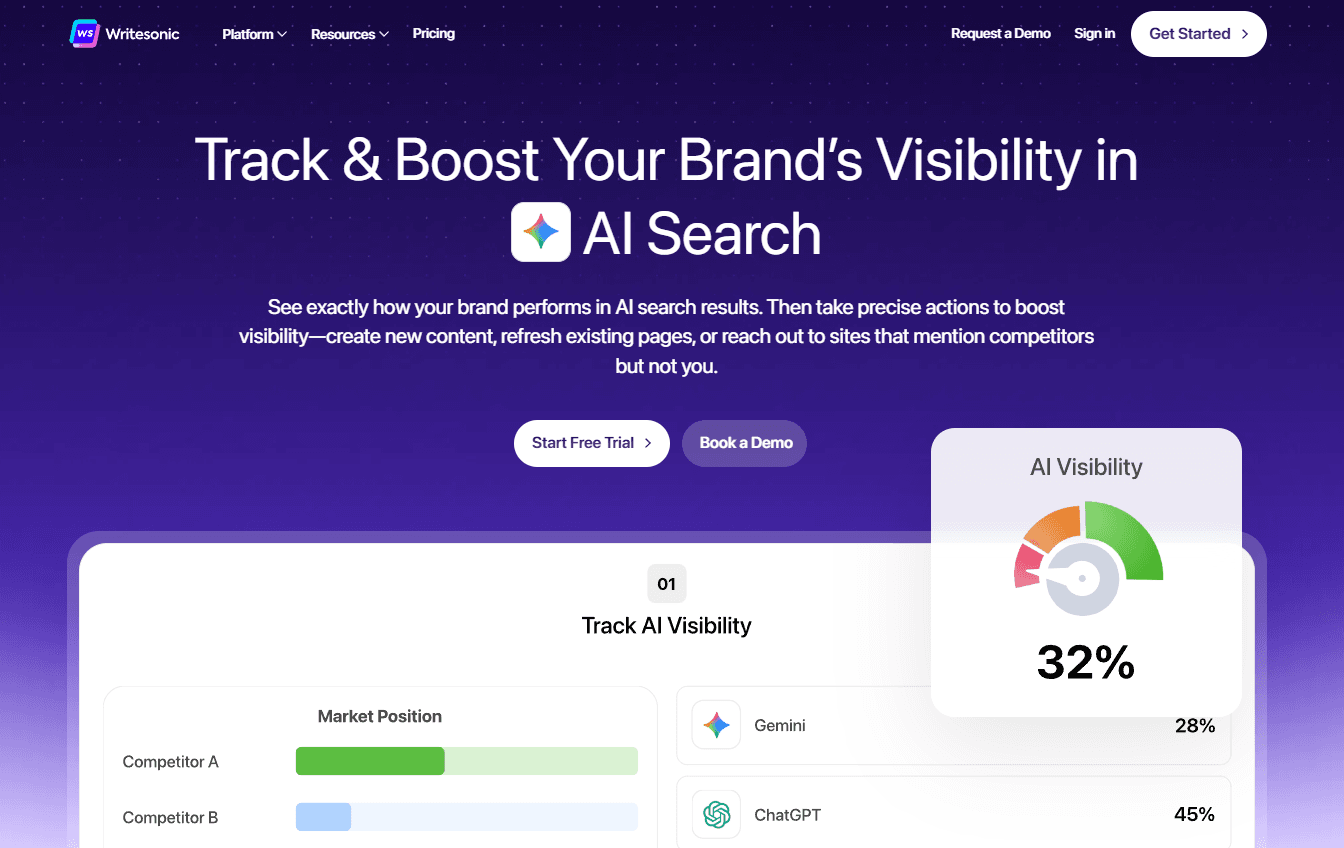
Writesonic si distingue per i suoi strumenti di contenuto AI facili da usare e prezzi flessibili, rendendolo ideale per i marketer che cercano contenuti rapidi e di qualità.

Recensiamo gli strumenti in modo indipendente, e le commissioni aiutano a finanziare i nostri test. Consulta la nostra politica sulla trasparenza, la nostra metodologia o suggerisci uno strumento.
Writesonic is a content marketing software that uses AI to generate blog posts, landing pages, product descriptions, and social media copy. It's worth considering if your team needs to produce content at scale without growing your writing headcount. Compared to Jasper, Writesonic offers more built-in SEO tools and a lower starting price. That makes it the stronger pick for lean marketing teams focused on search-driven content production.
Writesonic Evaluation Summary
4.8/5
- From $79/month (billed annually)
- Free trial + free demo available
Perché fidarsi dei nostri consigli sui software
6,700+
Reviews
20
Industry experts
16+
Evaluation factors
14
Years
Il nostro team testa e recensisce software dal 2012. In quanto leader del marketing noi stessi, sappiamo quanto sia difficile — e importante — scegliere il software giusto.
Per questa guida, abbiamo valutato gli strumenti attraverso test pratici e ricerche indipendenti, assegnando un punteggio agli strumenti in base ai nostri criteri di selezione.
Le nostre recensioni riflettono il nostro giudizio editoriale umano, non un discorso di vendita.
Revisori esperti:
 Gui DrusinaDirettore creativo
- Shriya GhateSenior Marketing Lead
 Amanda JacquesResponsabile Marketing Ops

Writesonic Overview
When judging Writesonic as a content marketing software, its overall functionality and fast onboarding make it easy for new users to start producing content quickly. The AI writing tools and templates outperform many competitors for blog posts and ad copy, while flexible pricing suits both small teams and growing businesses.
However, customization options and integrations are more limited than some alternatives, which may matter for advanced workflows. If you’re selecting a solution for rapid content creation and straightforward collaboration, Writesonic is a strong choice, especially for teams prioritizing speed and ease over deep technical customization.
Pros
- Generates SEO-optimized articles with built-in fact-checking.
- Offers real-time AI visibility tracking across multiple platforms.
- Provides actionable content recommendations based on competitor data.
Cons
- Some outputs require manual editing for accuracy.
- Limited advanced formatting for long-form content.
- Fewer workflow automation features than some competitors.
Is Writesonic Right For Your Needs?
Who Would be a Good Fit for Writesonic?
Writesonic is a strong choice for teams and businesses that need to produce high volumes of digital content quickly, especially when SEO optimization and AI-driven recommendations are priorities. Its templates, fact-checking, and competitor analysis tools make it well-suited for marketing departments, agencies, and small businesses looking to scale content without a large editorial staff. Writesonic’s straightforward interface and actionable insights also support roles that need to generate ad copy, blog posts, or social media content on tight timelines.
- Digital Marketing AgenciesAgencies benefit from Writesonic’s bulk content generation and SEO tools for client campaigns.
- Small E-Commerce BrandsE-commerce teams can use product description templates and AI copywriting for catalog updates.
- Freelance Content WritersFreelancers save time with AI-assisted drafts and competitor-based content suggestions.
- Social Media ManagersSocial teams use Writesonic’s platform-specific templates for quick, tailored posts.
- StartupsStartups leverage affordable pricing and fast onboarding to launch content initiatives.
- In-House Marketing TeamsMarketing departments use Writesonic’s analysis tools for SEO content strategy.
Who Would be a Bad Fit for Writesonic?
Writesonic may not be the best option for organizations with highly specialized content needs, strict compliance requirements, or complex approval workflows. Its limited advanced formatting and workflow automation can be a drawback for larger enterprises or regulated industries. Teams needing deep integration with custom tech stacks or advanced editorial controls may find Writesonic’s feature set restrictive.
- Large EnterprisesEnterprises may need more workflow automation and advanced approval processes.
- Legal ServicesLegal teams require stricter compliance and review controls than Writesonic offers.
- Academic InstitutionsAcademic users need advanced citation and research tools not found here.
- Healthcare ProvidersHealthcare content often demands specialized compliance and medical accuracy.
- Technical Documentation TeamsTechnical writers may find the formatting and structure options too limited.
- Financial ServicesFinance teams need more robust compliance and audit features than available.
Come Testiamo e Valutiamo gli Strumenti
Abbiamo passato anni a costruire, perfezionare e migliorare il nostro sistema di test e valutazione del software. Il nostro metodo è progettato per cogliere le sfumature nella selezione del software e ciò che rende uno strumento efficace, concentrandoci sugli aspetti critici del processo decisionale. Qui sotto puoi vedere esattamente come funziona il nostro sistema di test e valutazione su sette criteri. Questo ci permette di offrire una valutazione imparziale del software basata su funzionalità principali, funzioni distintive, facilità d’uso, onboarding, supporto clienti, integrazioni, recensioni dei clienti e rapporto qualità-prezzo.
Funzionalità principali (25% del punteggio finale)
Il punto di partenza della nostra valutazione è sempre la funzionalità principale dello strumento. Include le caratteristiche e le funzioni basilari che un utente si aspetterebbe di trovare? Alcune di queste funzionalità sono bloccate nei piani premium? Ci aspettiamo che ogni strumento soddisfi almeno le capacità di base dei suoi concorrenti.
Funzionalità distintive (25% del punteggio finale)
Successivamente, valutiamo le funzionalità uniche che vanno oltre la normale funzionalità principale, quelle poco comuni negli strumenti simili. Un punteggio alto riflette caratteristiche specializzate o uniche che rendono il prodotto più veloce, efficiente o offrono un valore aggiunto all’utente. Valutiamo anche quanto sia semplice integrare il software con altri strumenti abitualmente usati in una tech stack, per espandere le funzionalità e l’utilità del prodotto. Sono valutate positivamente soluzioni con molte integrazioni native, connessioni di terze parti e API per creare integrazioni personalizzate.
Facilità d’uso (10% del punteggio finale)
Consideriamo la rapidità e semplicità con cui si possono eseguire le attività principali tramite lo strumento. I software con punteggio più alto sono ben progettati, intuitivi, dispongono di app mobili, offrono template e semplificano compiti complessi.
Onboarding (10% del punteggio finale)
Sappiamo quanto sia importante l’adozione rapida in azienda, quindi valutiamo la facilità di apprendimento e utilizzo di uno strumento con formazione minima. Analizziamo quanto velocemente un utente senza esperienza può iniziare a usare il software. Le soluzioni migliori richiedono poco o nessun supporto.
Supporto clienti (10% del punteggio finale)
Analizziamo la rapidità e facilità nel trovare aiuto tramite telefono, chat dal vivo o knowledge base. Gli strumenti che offrono supporto in tempo reale ottengono il punteggio migliore: i chatbot invece i peggiori.
Recensioni dei clienti (10% del punteggio finale)
Oltre ai nostri test, consideriamo il net promoter score di attuali ed ex clienti. Valutiamo la probabilità che, potendo scegliere, l’utente decida di utilizzare ancora quello strumento per le funzionalità principali. Un software con un punteggio alto corrisponde ad un alto net promoter score tra clienti attuali o passati.
Rapporto qualità-prezzo (10% del punteggio finale)
Infine, tenendo conto di tutti gli altri criteri, confrontiamo il prezzo medio dei piani base rispetto alle funzionalità principali e agli altri fattori di valutazione. I software che offrono di più, a meno, ottengono i punteggi più alti.
Core Features
AI Article Writer
Automatically generates long-form blog posts and articles based on user prompts. This helps teams quickly produce SEO-friendly content for websites and blogs.
SEO Optimization Tools
Provides keyword suggestions, in-depth readability analysis, and on-page SEO recommendations as you write. Users can improve search rankings without needing separate SEO software.
Content Rephraser
Instantly rewrites existing text to create unique versions while preserving meaning. This is useful for repurposing blog posts or adapting messaging for different channels.
Fact-Checking Assistant
Checks AI-generated content against live web data to reduce inaccuracies. This feature helps ensure published content is up-to-date and streamlines fact-checking.
Template Library
Offers pre-built templates for ads, product descriptions, landing pages, and emails. Users can select a template, fill in details, and generate ready-to-publish content in minutes.
Competitor Analysis
Analyzes top-performing content from competitors and suggests improvements for your own content ideas. This gives users actionable insights to outperform similar brands in their niche.
Ease of Use
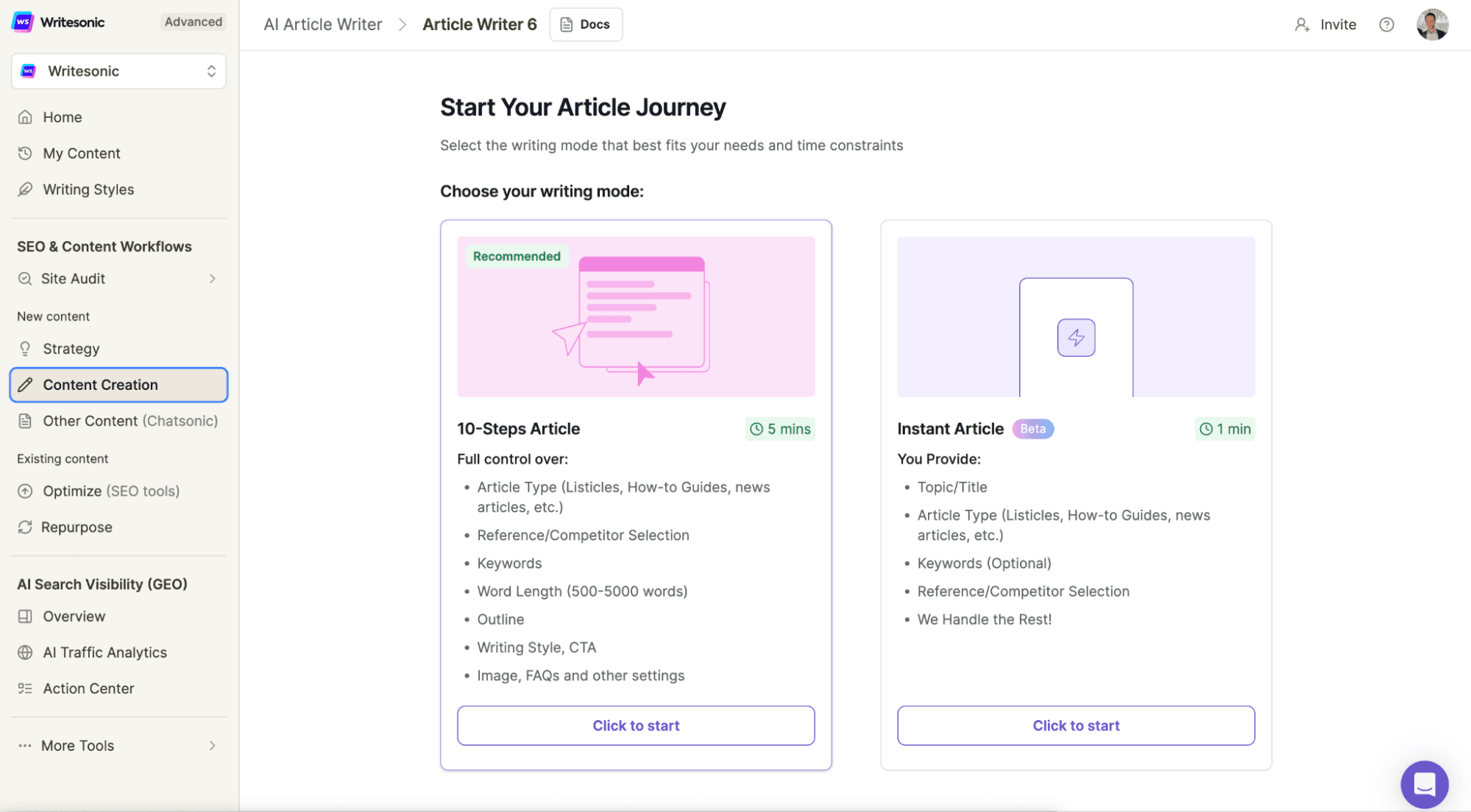
Writesonic is widely recognized for its clean user interface and straightforward navigation, making it easy for new users to start creating content with minimal setup. The platform’s guided workflows, clear prompts, and accessible template library reduce friction for both beginners and experienced marketers. Many users highlight the intuitive dashboard and fast onboarding, noting that even advanced features like brand voice customization are simple to configure without technical expertise.
Integrations
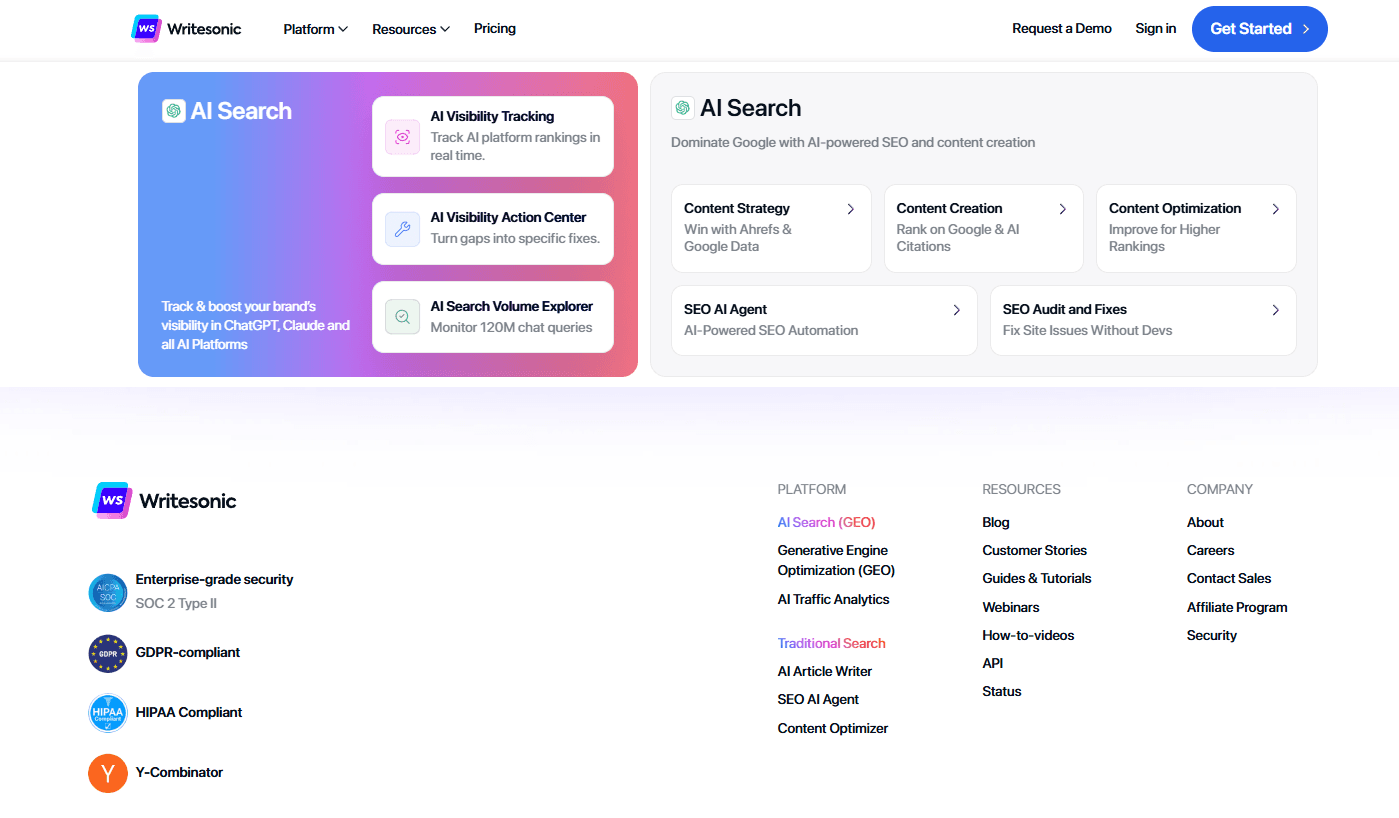
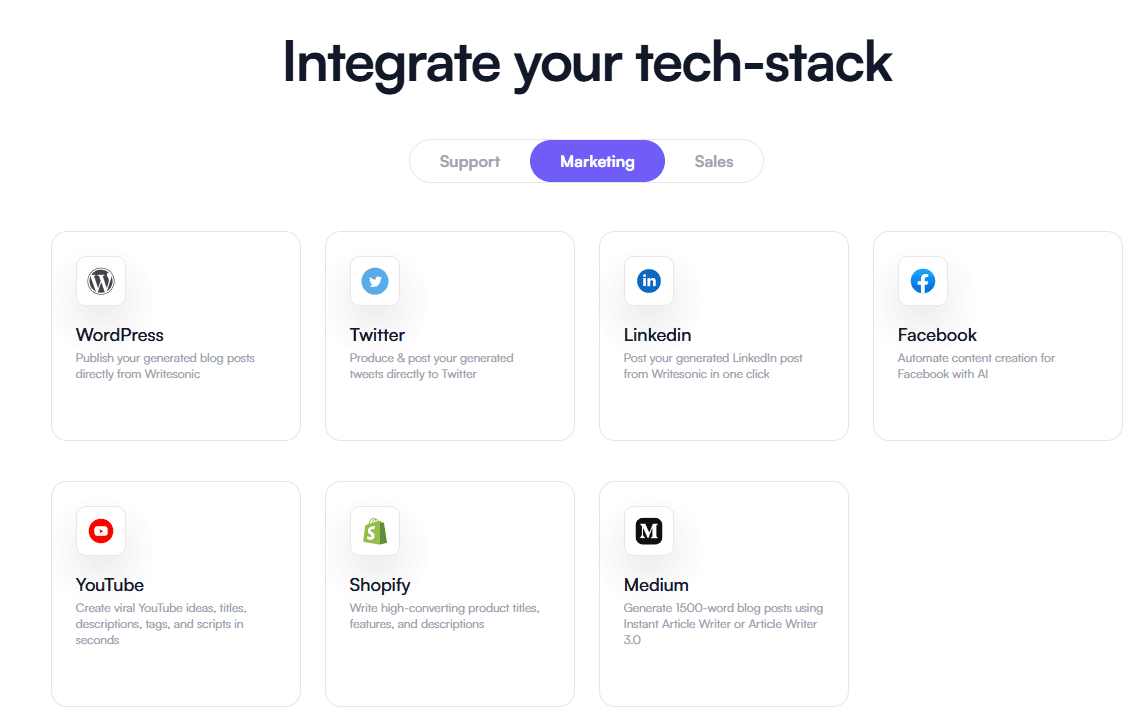
Writesonic integrates with popular LLMs such as ChatGPT, Gemini, and Claude, as well as other platforms like WordPress, Zapier, Google Analytics, and Google Search Console, among others.
Writesonic also offers an API and connects with third-party integration tools for expanded workflow automation.
Writesonic Specs
- A/B Testing: Yes
- Energy Production Estimates: No
- Geo-filtering: No
- Inventory Tracking: No
- Materials Library: Yes
- Media Streaming: No
- SCORM: No
- SEO: Yes
- Shading Analysis: Yes


