

Recensione GetResponse: Pro, Contro, Caratteristiche e Prezzi
GetResponse si distingue per la sua interfaccia intuitiva e le sue funzionalità robuste, rendendolo una scelta eccellente per piccole e medie imprese e per l'e-commerce.

Recensiamo gli strumenti in modo indipendente, e le commissioni aiutano a finanziare i nostri test. Consulta la nostra politica sulla trasparenza, la nostra metodologia o suggerisci uno strumento.
GetResponse is an email marketing software for marketers who need more than a basic newsletter tool. It combines email campaigns, marketing automation, landing pages, and webinars in a single platform. I'd mainly consider it if you're outgrowing Mailchimp's automation capabilities and want a platform that covers more of your funnel without piecing together separate tools.
GetResponse Evaluation Summary
4.2/5
- From $15.58/month (billed annually)
- 14-day free trial + free demo available
Perché fidarsi dei nostri consigli sui software
6,700+
Reviews
20
Industry experts
16+
Evaluation factors
14
Years
Il nostro team testa e recensisce software dal 2012. In quanto leader del marketing noi stessi, sappiamo quanto sia difficile — e importante — scegliere il software giusto.
Per questa guida, abbiamo valutato gli strumenti attraverso test pratici e ricerche indipendenti, assegnando un punteggio agli strumenti in base ai nostri criteri di selezione.
Le nostre recensioni riflettono il nostro giudizio editoriale umano, non un discorso di vendita.
Revisori esperti:
 Gui DrusinaDirettore creativo
- Shriya GhateSenior Marketing Lead
 Amanda JacquesResponsabile Marketing Ops

GetResponse Overview
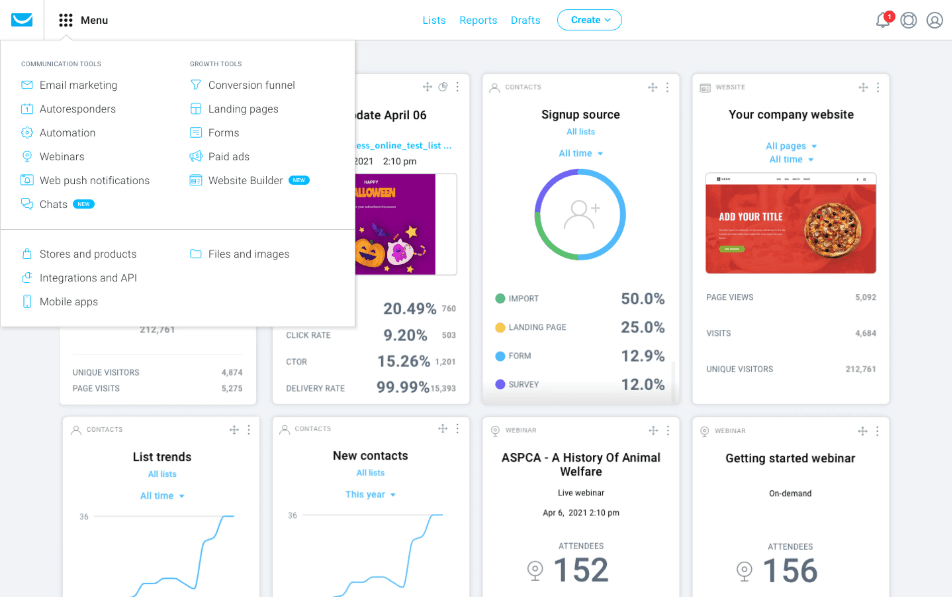
In my opinion, GetResponse is a solid choice for small to mid-sized businesses and e-commerce teams looking for reliable email marketing software. Its automation capabilities and intuitive interface make it a standout, though its pricing can be a bit steep for startups. Compared to other tools, it excels in ease of use and onboarding, making it suitable for teams without dedicated IT support. However, it may not offer the advanced analytics larger enterprises need. If you're seeking a user-friendly platform with strong customer support and diverse features, GetResponse is worth considering.
Pros
- The automation tools are powerful and easy to use, saving your team time.
- The intuitive interface makes it simple for anyone to manage campaigns.
- Customer support is responsive and helpful, ensuring you get the answers you need quickly.
Cons
- The analytics features may not meet the needs of larger enterprises.
- Some users find the email template designs limited in variety.
- The learning curve for advanced features can be steep for beginners.
Is GetResponse Right For Your Needs?
Who Would be a Good Fit for GetResponse?
GetResponse is a great fit for small to mid-sized businesses, e-commerce teams, and marketing departments that need user-friendly automation. Its intuitive interface and responsive customer support make it ideal for teams without dedicated IT staff. If you’re in a growing business that values strong email marketing capabilities with easy-to-use tools, GetResponse can help streamline your campaigns and boost engagement.
- E-commerce TeamsGetResponse's automation and analytics tools help you tailor campaigns to boost your online sales.
- Small BusinessesThe platform’s ease of use and customer support make it perfect for teams managing their own marketing.
- Marketing DepartmentsGetResponse supports complex campaigns with its advanced automation features, ideal for driving engagement.
- NonprofitsUse GetResponse to manage donor communications with its efficient email tools and contact management.
- FreelancersGetResponse’s templates and automation let you easily manage and grow your client base.
- Educational InstitutionsSchools can use GetResponse to engage with students and parents through targeted email campaigns.
Who Would be a Bad Fit for GetResponse?
GetResponse may not suit large enterprises needing advanced analytics and integrations with numerous systems. Its analytics, while sufficient for smaller teams, might not provide the in-depth insights big corporations need. If your team relies heavily on custom reporting and complex data analysis, GetResponse's offerings might fall short. Additionally, tech-heavy industries needing extensive API integrations may find GetResponse limiting.
- Large EnterprisesThe analytics tools might not meet your need for comprehensive data insights and custom reporting.
- Tech CompaniesYou might find GetResponse's integration options limited if you rely on extensive API connections.
- Financial ServicesIf your work requires advanced security features and compliance tools, GetResponse might not be the best fit.
- Healthcare ProvidersGetResponse may lack the specialized integrations and compliance features you need for patient communications.
- Data-Driven TeamsIf you need robust data analysis, GetResponse's reporting might not offer the depth you're looking for.
- Custom Software DevelopersGetResponse’s limited customization options may not meet the needs of teams creating unique client solutions.
Come Testiamo e Valutiamo gli Strumenti
Abbiamo passato anni a costruire, perfezionare e migliorare il nostro sistema di test e valutazione del software. Il nostro metodo è progettato per cogliere le sfumature nella selezione del software e ciò che rende uno strumento efficace, concentrandoci sugli aspetti critici del processo decisionale. Qui sotto puoi vedere esattamente come funziona il nostro sistema di test e valutazione su sette criteri. Questo ci permette di offrire una valutazione imparziale del software basata su funzionalità principali, funzioni distintive, facilità d’uso, onboarding, supporto clienti, integrazioni, recensioni dei clienti e rapporto qualità-prezzo.
Funzionalità principali (25% del punteggio finale)
Il punto di partenza della nostra valutazione è sempre la funzionalità principale dello strumento. Include le caratteristiche e le funzioni basilari che un utente si aspetterebbe di trovare? Alcune di queste funzionalità sono bloccate nei piani premium? Ci aspettiamo che ogni strumento soddisfi almeno le capacità di base dei suoi concorrenti.
Funzionalità distintive (25% del punteggio finale)
Successivamente, valutiamo le funzionalità uniche che vanno oltre la normale funzionalità principale, quelle poco comuni negli strumenti simili. Un punteggio alto riflette caratteristiche specializzate o uniche che rendono il prodotto più veloce, efficiente o offrono un valore aggiunto all’utente. Valutiamo anche quanto sia semplice integrare il software con altri strumenti abitualmente usati in una tech stack, per espandere le funzionalità e l’utilità del prodotto. Sono valutate positivamente soluzioni con molte integrazioni native, connessioni di terze parti e API per creare integrazioni personalizzate.
Facilità d’uso (10% del punteggio finale)
Consideriamo la rapidità e semplicità con cui si possono eseguire le attività principali tramite lo strumento. I software con punteggio più alto sono ben progettati, intuitivi, dispongono di app mobili, offrono template e semplificano compiti complessi.
Onboarding (10% del punteggio finale)
Sappiamo quanto sia importante l’adozione rapida in azienda, quindi valutiamo la facilità di apprendimento e utilizzo di uno strumento con formazione minima. Analizziamo quanto velocemente un utente senza esperienza può iniziare a usare il software. Le soluzioni migliori richiedono poco o nessun supporto.
Supporto clienti (10% del punteggio finale)
Analizziamo la rapidità e facilità nel trovare aiuto tramite telefono, chat dal vivo o knowledge base. Gli strumenti che offrono supporto in tempo reale ottengono il punteggio migliore: i chatbot invece i peggiori.
Recensioni dei clienti (10% del punteggio finale)
Oltre ai nostri test, consideriamo il net promoter score di attuali ed ex clienti. Valutiamo la probabilità che, potendo scegliere, l’utente decida di utilizzare ancora quello strumento per le funzionalità principali. Un software con un punteggio alto corrisponde ad un alto net promoter score tra clienti attuali o passati.
Rapporto qualità-prezzo (10% del punteggio finale)
Infine, tenendo conto di tutti gli altri criteri, confrontiamo il prezzo medio dei piani base rispetto alle funzionalità principali e agli altri fattori di valutazione. I software che offrono di più, a meno, ottengono i punteggi più alti.
Core Features
Email marketing
Create and send professional newsletters to your email list using pre-designed templates and built-in A/B testing tools. This helps you improve engagement and get better results from your campaigns.
AI Email Writing tools
Use an AI email generator and AI-powered writing assistant to create content quickly. This helps you save time and produce high-quality emails with less effort.
Autoresponders
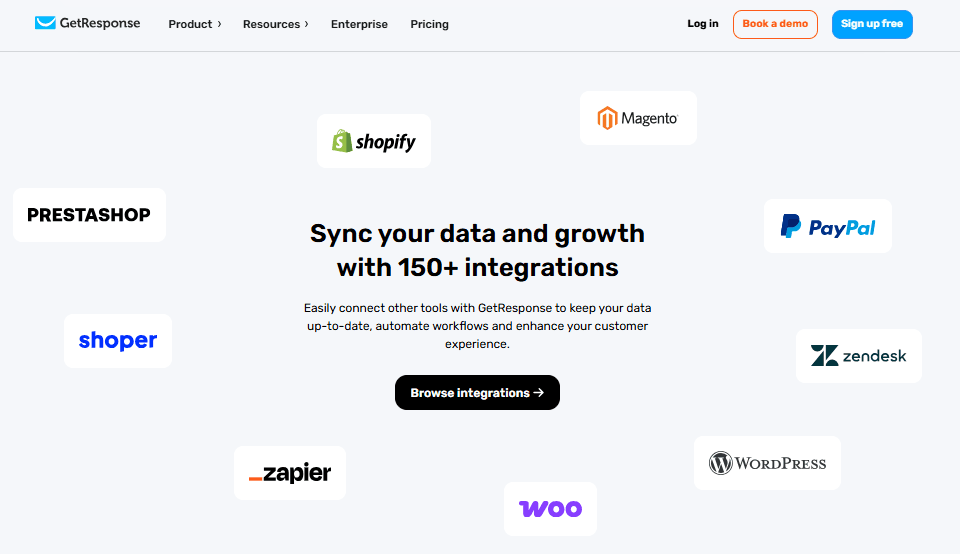
Set up automated email sequences for welcome messages, follow-ups, and drip campaigns. This allows you to nurture leads consistently without having to send emails manually.
Landing Page Builder
Build landing pages directly inside the platform without needing separate tools or HTML knowledge. This helps you launch campaigns faster and keep everything in one place.
Signup Forms & Popups
Create embedded signup forms and popups to capture leads on your website. This helps you grow your contact list and turn visitors into subscribers.
List Building
Organize your contacts using tags, segments, and engagement scoring as part of your marketing automation strategy. This helps you target the right audience with more personalized and effective email or SMS campaigns.
Ease of Use
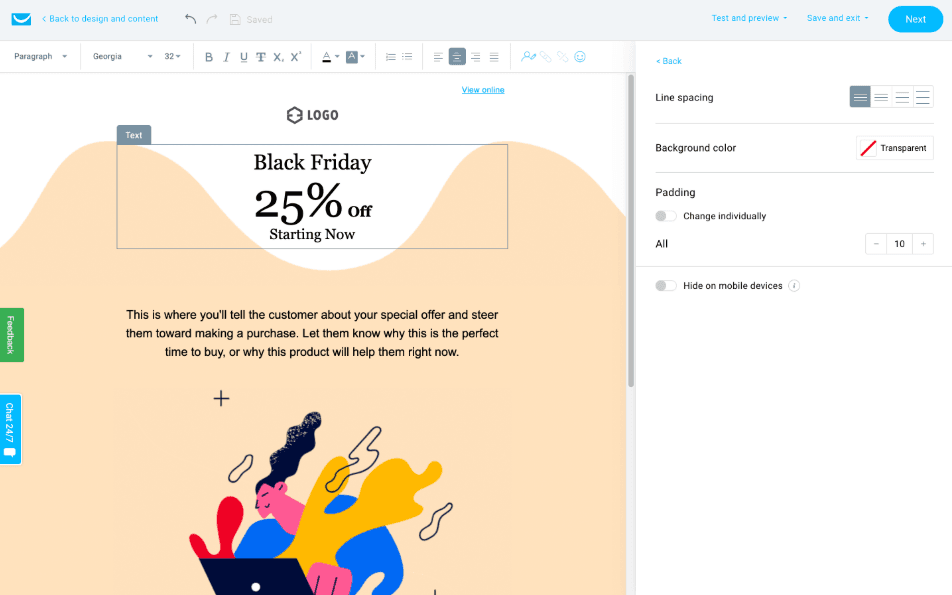
GetResponse is known for its intuitive interface that makes it easy for you to manage email campaigns without a steep learning curve. The drag-and-drop editor and pre-built templates simplify creating emails, while the automation builder is straightforward for setting up workflows. Users appreciate how quickly they can get up and running, especially if they’re new to email marketing. Compared to many other tools, GetResponse's design ensures that even non-tech-savvy team members can handle campaigns efficiently.
Integrations
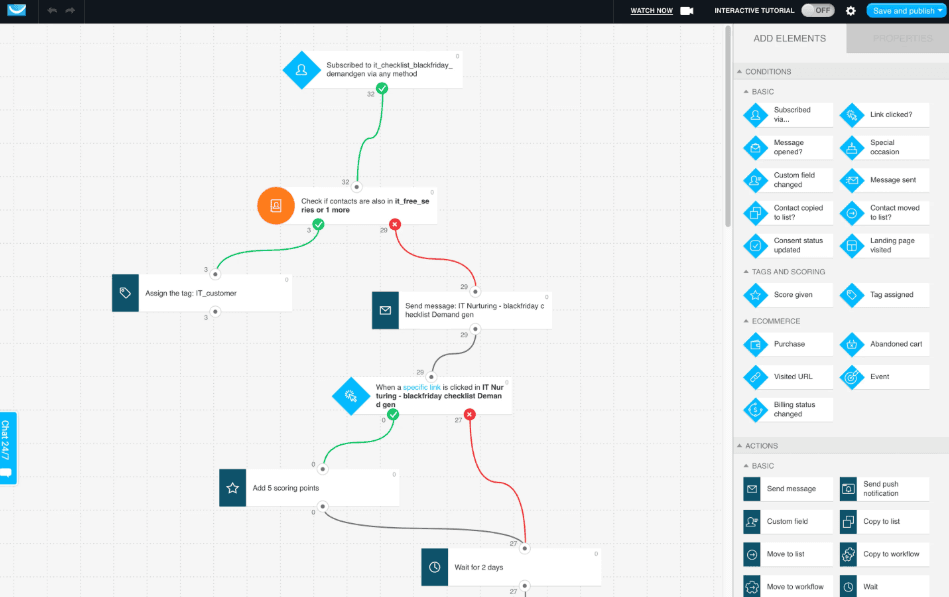
GetResponse has a dedicated integrations directory with plug-and-play connections across key categories like ecommerce, payment processing, CRM, ads/conversions, and productivity so you can sync contacts, sales data, and campaign activity without doing everything manually.
For online selling and payments, it supports popular platforms like Shopify, WooCommerce, PayPal, and Stripe. It also connects with CRM/analytics tools such as Salesforce and Google Analytics.
If you need more flexibility, you can connect GetResponse through integration platforms like Zapier or Make, and developers can build custom connections using the GetResponse API.
GetResponse Specs
- A/B Testing: Yes
- API: Yes
- Audience Targeting: Yes
- Brand Management: No
- Calendar Management: Yes
- Campaign Management: Yes
- Compliance Tracking: No
- Contact Management: Yes
- Contact Sharing: Yes
- Conversion Tracking: Yes
- CRM Integration: Yes
- Customer Management: Yes
- Dashboard: Yes
- Data Export: Yes
- Data Import: Yes
- Data Visualization: No
- Email Integration: Yes
- External Integrations: Yes
- Google Apps Integration: No
- Lead Management: Yes
- Lead Scoring: Yes
- Link Tracking: No
- Marketing Automation: Yes
- Multi-User: Yes
- Notifications: Yes
- Scheduling: Yes
- Social-Media Integration: Yes
- Third-Party Plugins/Add-Ons: Yes


