

Recensione DashThis: Pro, Contro, Caratteristiche e Prezzi
DashThis si distingue per la facilità nella creazione di dashboard, rendendo la reportistica di marketing semplice per le agenzie, ma potrebbe mancare di analisi avanzate presenti in strumenti più complessi.

Recensiamo gli strumenti in modo indipendente, e le commissioni aiutano a finanziare i nostri test. Consulta la nostra politica sulla trasparenza, la nostra metodologia o suggerisci uno strumento.
DashThis is a marketing intelligence software built for marketers who need to pull data from multiple channels into clean, shareable dashboards without a lot of manual setup. It's a strong fit if your team is spending too much time compiling reports across platforms like Google Ads, Meta, and HubSpot. I'd consider it over Google Looker Studio if you want pre-built templates and a faster path to polished, client-ready reports—Looker Studio gives you more customization, but DashThis gets you to a working dashboard much quicker.
DashThis Evaluation Summary
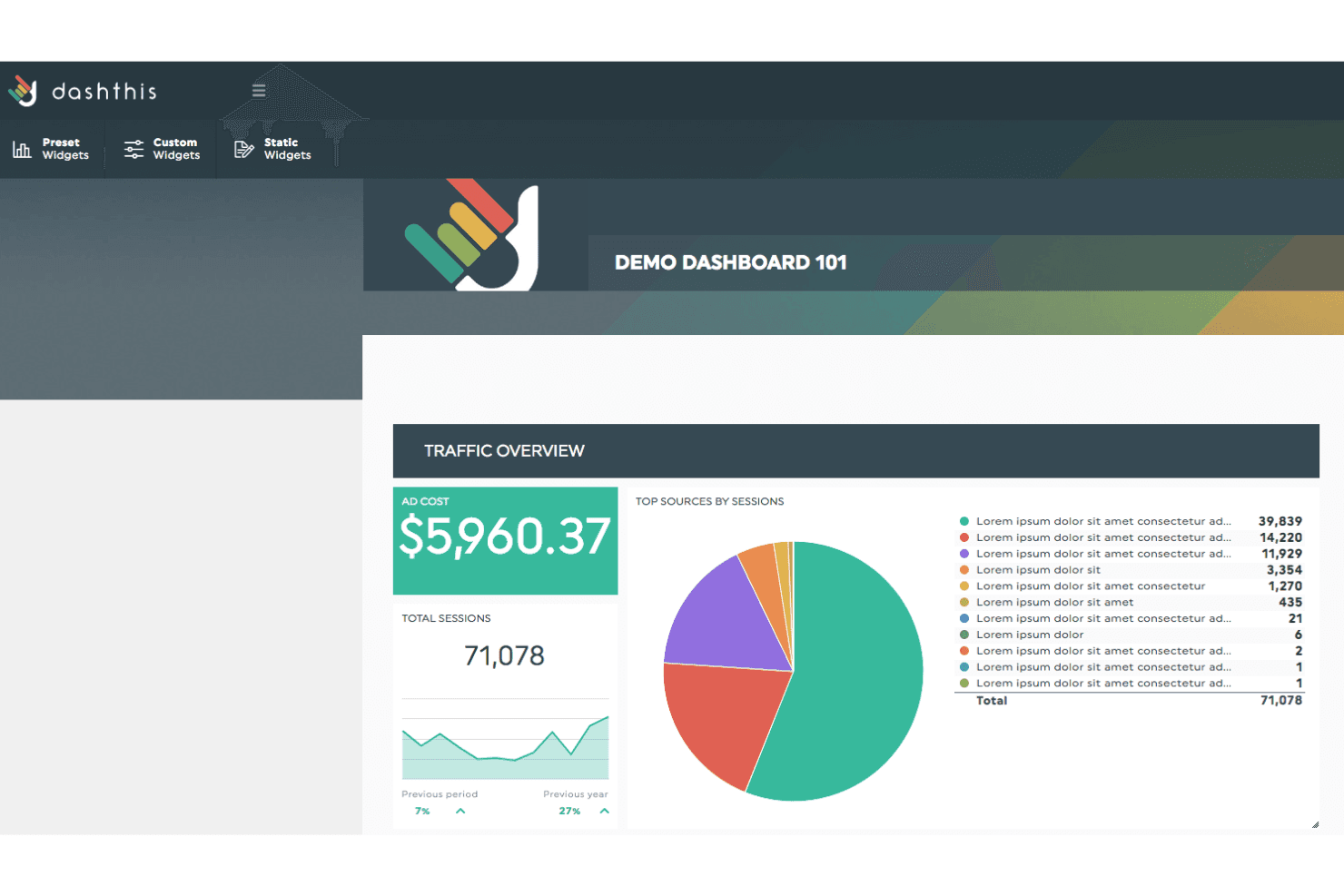
4.8/5
- From $44/month (billed annually)
- 14-day free trial + free demo available
Perché fidarsi dei nostri consigli sui software
6,700+
Reviews
20
Industry experts
16+
Evaluation factors
14
Years
Il nostro team testa e recensisce software dal 2012. In quanto leader del marketing noi stessi, sappiamo quanto sia difficile — e importante — scegliere il software giusto.
Per questa guida, abbiamo valutato gli strumenti attraverso test pratici e ricerche indipendenti, assegnando un punteggio agli strumenti in base ai nostri criteri di selezione.
Le nostre recensioni riflettono il nostro giudizio editoriale umano, non un discorso di vendita.
Revisori esperti:
 Gui DrusinaDirettore creativo
- Shriya GhateSenior Marketing Lead
 Amanda JacquesResponsabile Marketing Ops

DashThis Overview
If you’re judging DashThis against other marketing intelligence software, I think its clean interface, fast onboarding, and wide range of integrations make it a top pick for agencies and teams who want quick, visual dashboards. Pricing is straightforward, and support is responsive. While it doesn’t offer deep data modeling or advanced analytics, it outperforms with ease of use and automated reporting.
If you’re selecting a tool for client reporting or multi-channel campaign tracking, DashThis is a strong contender - especially if you value simplicity over granular customization.
Pros
- Customer support is fast and highly rated by users
- AI Insights highlight trends and issues in dashboards
- Automates multi-channel marketing reporting with ready-made templates
Cons
- Pricing can be high for agencies with many clients
- Limited options for custom calculated metrics
- Lacks advanced data modeling and transformation features
Is DashThis Right For Your Needs?
Who Would be a Good Fit for DashThis?
DashThis is a strong choice for marketing teams, agencies, and departments that need to automate multi-channel reporting and deliver clear, visual dashboards to clients or stakeholders. Its ready-made templates, AI-powered insights, and responsive support make it ideal for environments where speed, simplicity, and presentation matter more than deep analytics or custom data modeling. If your team values fast onboarding and needs to consolidate data from multiple marketing platforms, DashThis is likely to fit your workflow.
- E-commerce BrandsDashThis connects to major ad and analytics platforms for sales tracking.
- Freelance MarketersAffordable plans and simple setup suit solo consultants.
- In-House Marketing DepartmentsEasy sharing and scheduled reports keep stakeholders informed.
- Franchise NetworksCentralized dashboards help track performance across multiple locations.
- Small Marketing TeamsTeams can quickly consolidate campaign data without technical setup.
- Digital Marketing AgenciesDashThis simplifies client reporting with automated dashboards and white-label options.
Who Would be a Bad Fit for DashThis?
DashThis isn’t the best choice for organizations that need advanced analytics, deep data transformation, or highly customized reporting. If your business relies on complex data modeling, granular metric calculations, or requires integration with niche data sources, you’ll likely find DashThis limiting. It’s also less suited for large enterprises with strict data governance or highly technical BI requirements.
- Large Retail ChainsDashThis may not scale for complex, multi-region reporting needs.
- Manufacturing CompaniesFew integrations with ERP or supply chain data sources.
- Product Analytics TeamsMissing features for cohort analysis and product usage tracking.
- Healthcare OrganizationsDoes not offer HIPAA-compliant data handling or healthcare integrations.
- Financial Services FirmsLimited support for custom financial metrics and compliance reporting.
- Enterprise Data TeamsDashThis lacks advanced data modeling and transformation capabilities.
Come Testiamo e Valutiamo gli Strumenti
Abbiamo passato anni a costruire, perfezionare e migliorare il nostro sistema di test e valutazione del software. Il nostro metodo è progettato per cogliere le sfumature nella selezione del software e ciò che rende uno strumento efficace, concentrandoci sugli aspetti critici del processo decisionale. Qui sotto puoi vedere esattamente come funziona il nostro sistema di test e valutazione su sette criteri. Questo ci permette di offrire una valutazione imparziale del software basata su funzionalità principali, funzioni distintive, facilità d’uso, onboarding, supporto clienti, integrazioni, recensioni dei clienti e rapporto qualità-prezzo.
Funzionalità principali (25% del punteggio finale)
Il punto di partenza della nostra valutazione è sempre la funzionalità principale dello strumento. Include le caratteristiche e le funzioni basilari che un utente si aspetterebbe di trovare? Alcune di queste funzionalità sono bloccate nei piani premium? Ci aspettiamo che ogni strumento soddisfi almeno le capacità di base dei suoi concorrenti.
Funzionalità distintive (25% del punteggio finale)
Successivamente, valutiamo le funzionalità uniche che vanno oltre la normale funzionalità principale, quelle poco comuni negli strumenti simili. Un punteggio alto riflette caratteristiche specializzate o uniche che rendono il prodotto più veloce, efficiente o offrono un valore aggiunto all’utente. Valutiamo anche quanto sia semplice integrare il software con altri strumenti abitualmente usati in una tech stack, per espandere le funzionalità e l’utilità del prodotto. Sono valutate positivamente soluzioni con molte integrazioni native, connessioni di terze parti e API per creare integrazioni personalizzate.
Facilità d’uso (10% del punteggio finale)
Consideriamo la rapidità e semplicità con cui si possono eseguire le attività principali tramite lo strumento. I software con punteggio più alto sono ben progettati, intuitivi, dispongono di app mobili, offrono template e semplificano compiti complessi.
Onboarding (10% del punteggio finale)
Sappiamo quanto sia importante l’adozione rapida in azienda, quindi valutiamo la facilità di apprendimento e utilizzo di uno strumento con formazione minima. Analizziamo quanto velocemente un utente senza esperienza può iniziare a usare il software. Le soluzioni migliori richiedono poco o nessun supporto.
Supporto clienti (10% del punteggio finale)
Analizziamo la rapidità e facilità nel trovare aiuto tramite telefono, chat dal vivo o knowledge base. Gli strumenti che offrono supporto in tempo reale ottengono il punteggio migliore: i chatbot invece i peggiori.
Recensioni dei clienti (10% del punteggio finale)
Oltre ai nostri test, consideriamo il net promoter score di attuali ed ex clienti. Valutiamo la probabilità che, potendo scegliere, l’utente decida di utilizzare ancora quello strumento per le funzionalità principali. Un software con un punteggio alto corrisponde ad un alto net promoter score tra clienti attuali o passati.
Rapporto qualità-prezzo (10% del punteggio finale)
Infine, tenendo conto di tutti gli altri criteri, confrontiamo il prezzo medio dei piani base rispetto alle funzionalità principali e agli altri fattori di valutazione. I software che offrono di più, a meno, ottengono i punteggi più alti.
Core Features
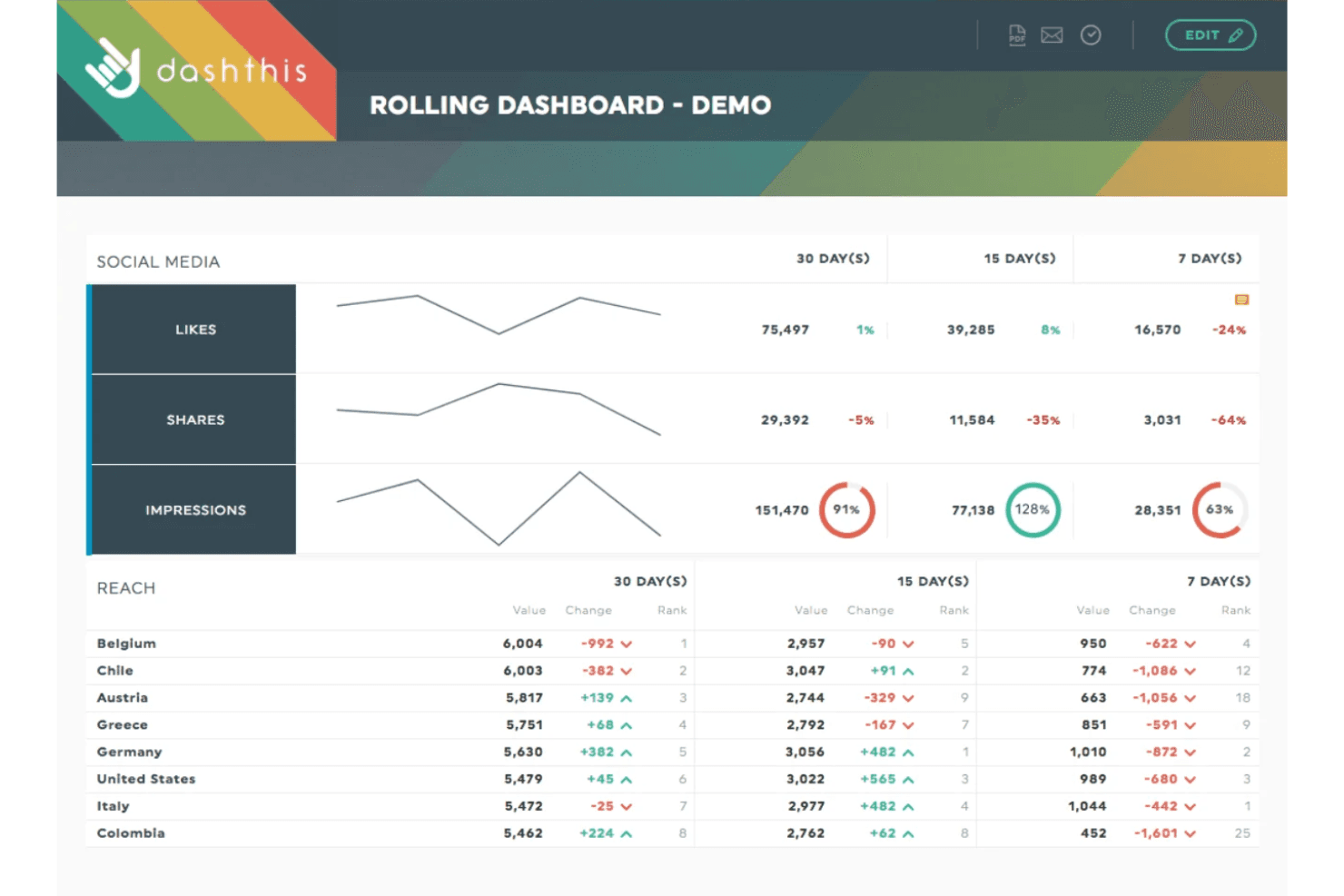
Automated Reporting
Schedule dashboards to update and send automatically, saving time on manual reporting. Users can set daily, weekly, or monthly delivery to clients or stakeholders.
Preset Dashboard Templates
Choose from industry-specific templates for PPC, SEO, social, and more. Templates help users launch new dashboards in minutes with pre-built layouts.
AI Insights
DashThis highlights key trends, anomalies, and performance changes directly in your dashboards. This helps users quickly spot issues or wins without digging through data.
White-Labeling
Customize dashboards with your own branding, logos, and colors. This is especially useful for agencies delivering reports to clients.
Data Widget Library
Drag-and-drop widgets let you visualize data as charts, tables, or KPIs. Users can mix and match widgets to tailor dashboards to their needs.
Scheduled PDF Exports
Export dashboards as PDFs and schedule them for automatic delivery. This feature ensures stakeholders always have the latest reports on hand.
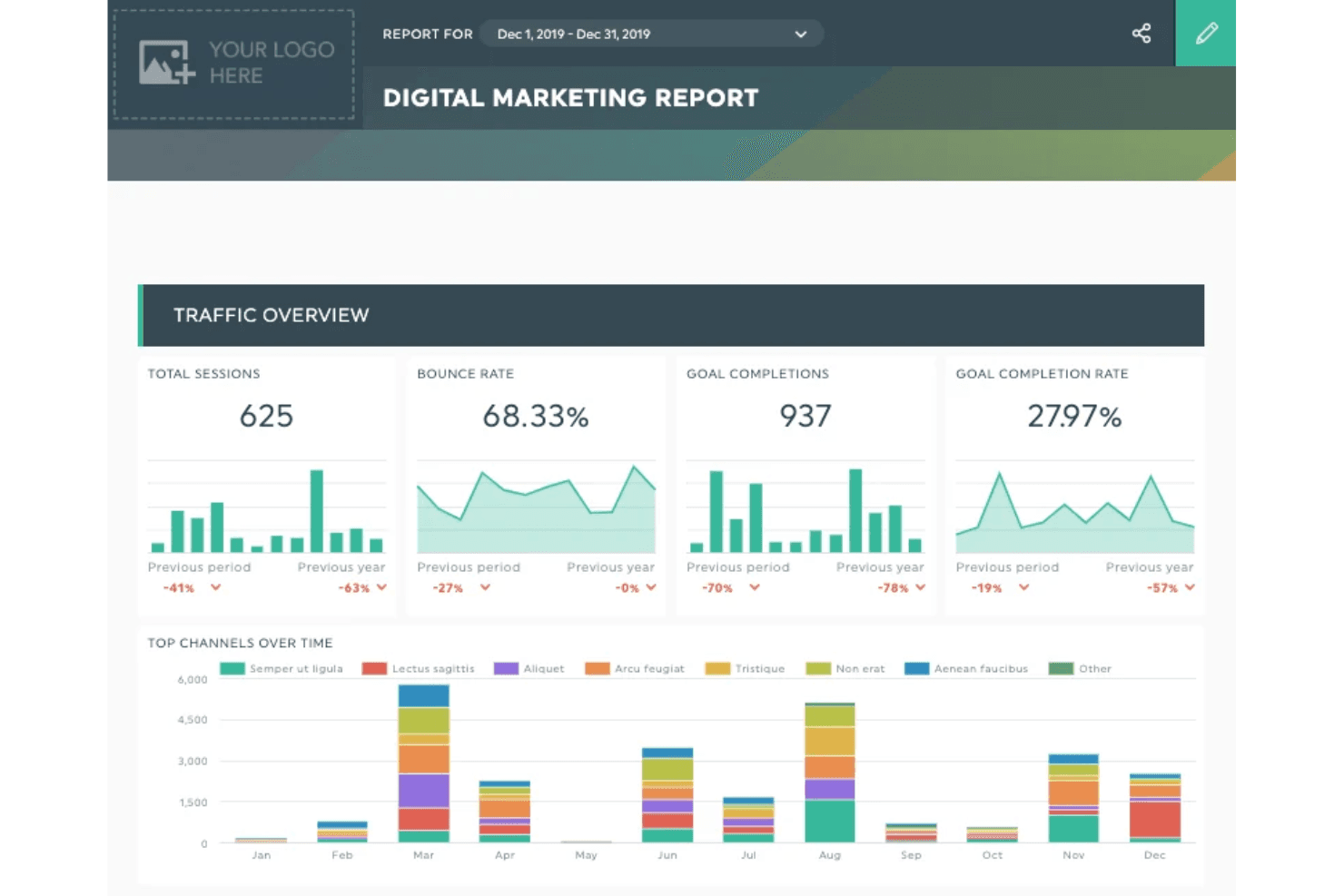
Ease of Use
DashThis is one of the most user-friendly marketing intelligence tools I’ve tried. Users consistently mention how quickly they can set up dashboards and automate reports without technical help.
The drag-and-drop interface, clear navigation, and ready-made templates make it easy for non-technical users to get started. Even agencies juggling dozens of clients say DashThis keeps reporting simple and organized, which is a big advantage over more complex, data-heavy platforms.
Integrations
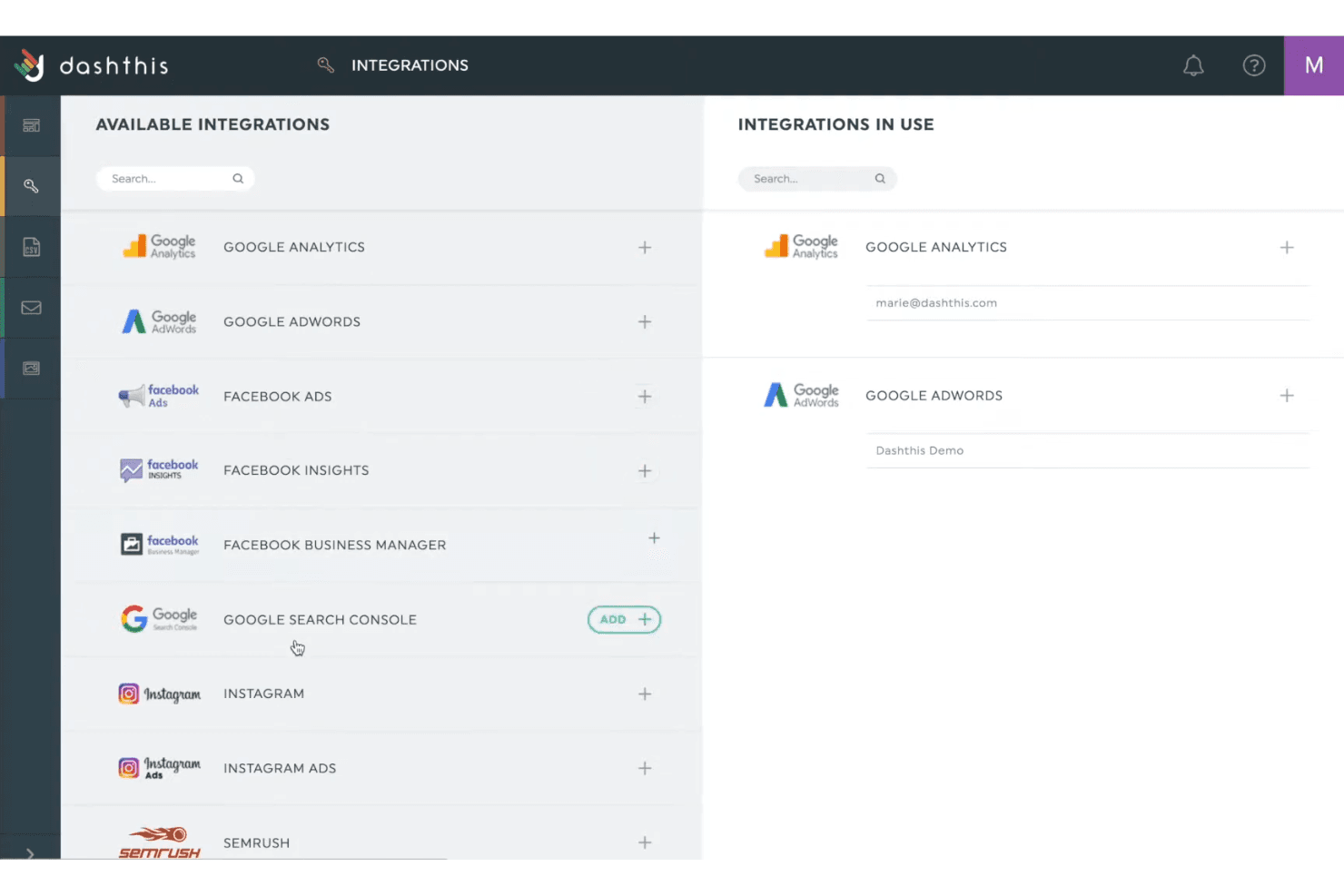
DashThis integrates with Google Analytics, Facebook Ads, Google Ads, LinkedIn Ads, Instagram Insights, Twitter Ads, YouTube, Mailchimp, HubSpot, and Shopify, among others.
DashThis also offers an API for custom data sources but does not connect with third-party integration tools like Zapier.
DashThis Specs
- AI Integration: Yes
- Analytics: Yes
- API: Yes
- Calendar Management: Yes
- Comparative Reporting: Yes
- Custom Reports: Yes
- Dashboard: Yes
- Data Export: Yes
- Data Import: Yes
- Data Visualization: Yes
- External Integrations: Yes
- Forecasting: Yes
- Multi-User: Yes
- Notifications: Yes
- Process Reporting: Yes
- Scenario Planning: Yes
- Scheduling: Yes
- SEO: Yes
- Workflow Management: Yes


