

Recensione ClickFunnels: Pro, Contro, Caratteristiche e Prezzi
ClickFunnels si distingue per la sua interfaccia intuitiva e la solida libreria di modelli, rendendolo ideale per le aziende che cercano una creazione rapida di funnel.

Recensiamo gli strumenti in modo indipendente, e le commissioni aiutano a finanziare i nostri test. Consulta la nostra politica sulla trasparenza, la nostra metodologia o suggerisci uno strumento.
ClickFunnels is a marketing funnel software built for marketers who need to design and manage end-to-end sales funnels—from lead capture through to checkout—without stitching together separate tools. I'd consider it over Leadpages if your funnel involves upsells, order bumps, or membership areas, since ClickFunnels handles that full sequence in one place rather than just the landing page layer.
ClickFunnels Evaluation Summary
4.6/5
- From $81/month (billed annually)
- 14-day free trial available
Perché fidarsi dei nostri consigli sui software
6,700+
Reviews
20
Industry experts
16+
Evaluation factors
14
Years
Il nostro team testa e recensisce software dal 2012. In quanto leader del marketing noi stessi, sappiamo quanto sia difficile — e importante — scegliere il software giusto.
Per questa guida, abbiamo valutato gli strumenti attraverso test pratici e ricerche indipendenti, assegnando un punteggio agli strumenti in base ai nostri criteri di selezione.
Le nostre recensioni riflettono il nostro giudizio editoriale umano, non un discorso di vendita.
Revisori esperti:
 Gui DrusinaDirettore creativo
- Shriya GhateSenior Marketing Lead
 Amanda JacquesResponsabile Marketing Ops

ClickFunnels Overview
In my opinion, ClickFunnels is a strong contender in the marketing funnel software space. It excels with its user-friendly interface and extensive template library, making funnel creation accessible even to novices. The pricing might be a bit steep for small businesses, but the value in features often justifies the cost. Compared to competitors, its ease of use and customer support stand out. It's best suited for small to medium-sized businesses in e-commerce and digital marketing. If you're weighing your options, consider how ClickFunnels's simplicity and functionality might benefit your team over more complex alternatives.
Pros
- You can easily create sales funnels with an intuitive drag-and-drop builder.
- The extensive template library saves your team time on design.
- Strong customer support helps you resolve issues quickly.
Cons
- Limited reporting features might challenge your data analysis.
- You may find the customization options somewhat restricted.
- The platform can feel slow during peak usage times.
Is ClickFunnels Right For Your Needs?
Who Would be a Good Fit for ClickFunnels?
ClickFunnels is ideal for small businesses and startups in e-commerce and digital marketing. If your team needs quick funnel creation without technical hassle, this tool's drag-and-drop builder and template library make it easy to set up and launch. Sales teams wanting to convert leads efficiently will appreciate its straightforward interface and support. For entrepreneurs managing multiple campaigns, ClickFunnels offers a practical way to organize and track funnels in one place.
- E-Commerce StoresClickFunnels helps you create product sales funnels with ease, boosting your online sales.
- Digital Marketing TeamsYour team can quickly build and manage multiple campaigns using its intuitive funnel builder.
- Coaches and ConsultantsClickFunnels simplifies lead generation and client onboarding with customizable templates.
- Small BusinessesYou can launch and test marketing funnels without needing a tech team.
- Event PlannersUse ClickFunnels to design registration and ticket sales funnels easily.
- Content CreatorsMonetize your content by creating funnels that capture and convert your audience.
Who Would be a Bad Fit for ClickFunnels?
ClickFunnels may not suit large enterprises or teams needing extensive customization and detailed analytics. If your work involves complex data-driven strategies, you'll find the limited reporting features a hurdle. Companies needing deep integration with other platforms might also struggle due to its restricted customization options. For businesses with highly specialized funnel requirements, the platform's simplicity can be a drawback.
- Large EnterprisesYour need for detailed analytics and complex customization won't be met with ClickFunnels's limited capabilities.
- Data-Driven MarketersIf you rely heavily on analytics, ClickFunnels's reporting features may not provide the depth you need.
- Tech-Heavy FirmsYour requirement for deep software integration might be limited by ClickFunnels's constrained options.
- Financial ServicesHighly regulated industries may find ClickFunnels's security and compliance features insufficient.
- NonprofitsOrganizations needing tailored donor funnels might find ClickFunnels's templates too generic.
- B2B CompaniesYour complex sales processes could be hindered by ClickFunnels's more straightforward funnel designs.
Come Testiamo e Valutiamo gli Strumenti
Abbiamo passato anni a costruire, perfezionare e migliorare il nostro sistema di test e valutazione del software. Il nostro metodo è progettato per cogliere le sfumature nella selezione del software e ciò che rende uno strumento efficace, concentrandoci sugli aspetti critici del processo decisionale. Qui sotto puoi vedere esattamente come funziona il nostro sistema di test e valutazione su sette criteri. Questo ci permette di offrire una valutazione imparziale del software basata su funzionalità principali, funzioni distintive, facilità d’uso, onboarding, supporto clienti, integrazioni, recensioni dei clienti e rapporto qualità-prezzo.
Funzionalità principali (25% del punteggio finale)
Il punto di partenza della nostra valutazione è sempre la funzionalità principale dello strumento. Include le caratteristiche e le funzioni basilari che un utente si aspetterebbe di trovare? Alcune di queste funzionalità sono bloccate nei piani premium? Ci aspettiamo che ogni strumento soddisfi almeno le capacità di base dei suoi concorrenti.
Funzionalità distintive (25% del punteggio finale)
Successivamente, valutiamo le funzionalità uniche che vanno oltre la normale funzionalità principale, quelle poco comuni negli strumenti simili. Un punteggio alto riflette caratteristiche specializzate o uniche che rendono il prodotto più veloce, efficiente o offrono un valore aggiunto all’utente. Valutiamo anche quanto sia semplice integrare il software con altri strumenti abitualmente usati in una tech stack, per espandere le funzionalità e l’utilità del prodotto. Sono valutate positivamente soluzioni con molte integrazioni native, connessioni di terze parti e API per creare integrazioni personalizzate.
Facilità d’uso (10% del punteggio finale)
Consideriamo la rapidità e semplicità con cui si possono eseguire le attività principali tramite lo strumento. I software con punteggio più alto sono ben progettati, intuitivi, dispongono di app mobili, offrono template e semplificano compiti complessi.
Onboarding (10% del punteggio finale)
Sappiamo quanto sia importante l’adozione rapida in azienda, quindi valutiamo la facilità di apprendimento e utilizzo di uno strumento con formazione minima. Analizziamo quanto velocemente un utente senza esperienza può iniziare a usare il software. Le soluzioni migliori richiedono poco o nessun supporto.
Supporto clienti (10% del punteggio finale)
Analizziamo la rapidità e facilità nel trovare aiuto tramite telefono, chat dal vivo o knowledge base. Gli strumenti che offrono supporto in tempo reale ottengono il punteggio migliore: i chatbot invece i peggiori.
Recensioni dei clienti (10% del punteggio finale)
Oltre ai nostri test, consideriamo il net promoter score di attuali ed ex clienti. Valutiamo la probabilità che, potendo scegliere, l’utente decida di utilizzare ancora quello strumento per le funzionalità principali. Un software con un punteggio alto corrisponde ad un alto net promoter score tra clienti attuali o passati.
Rapporto qualità-prezzo (10% del punteggio finale)
Infine, tenendo conto di tutti gli altri criteri, confrontiamo il prezzo medio dei piani base rispetto alle funzionalità principali e agli altri fattori di valutazione. I software che offrono di più, a meno, ottengono i punteggi più alti.
Core Features
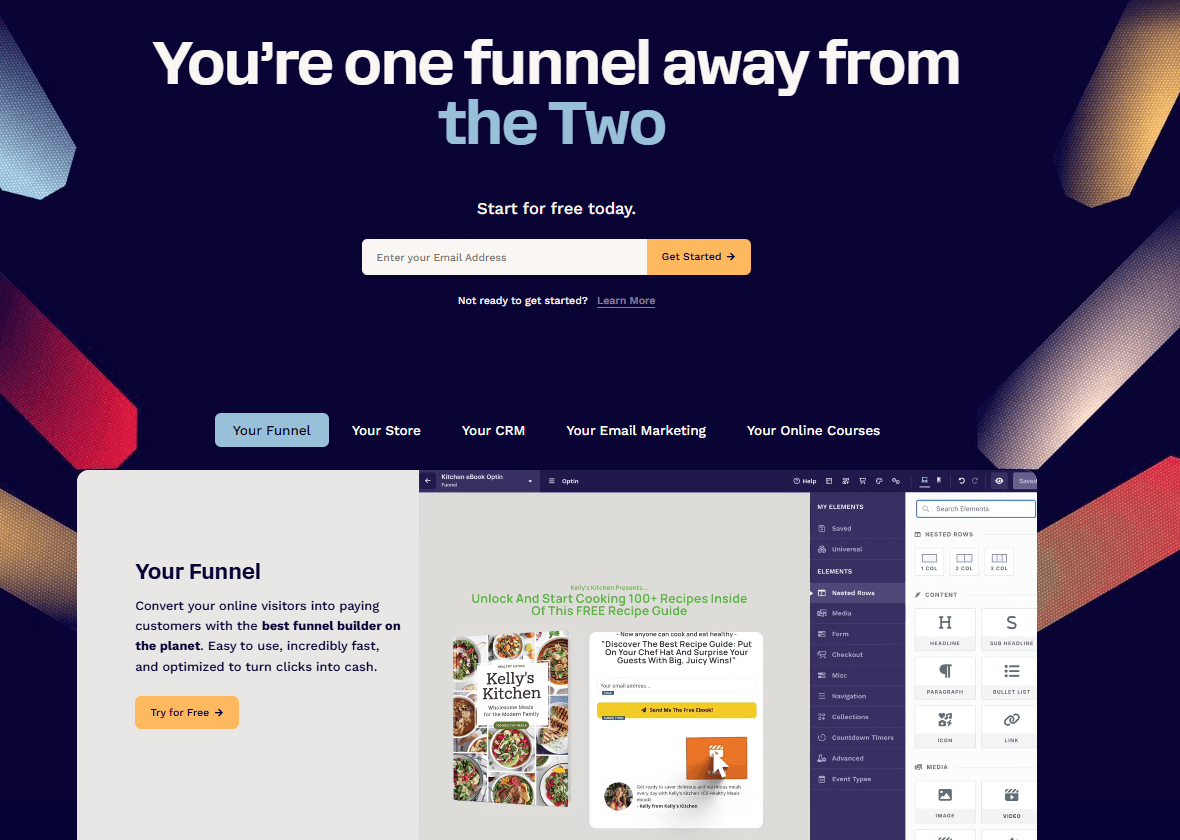
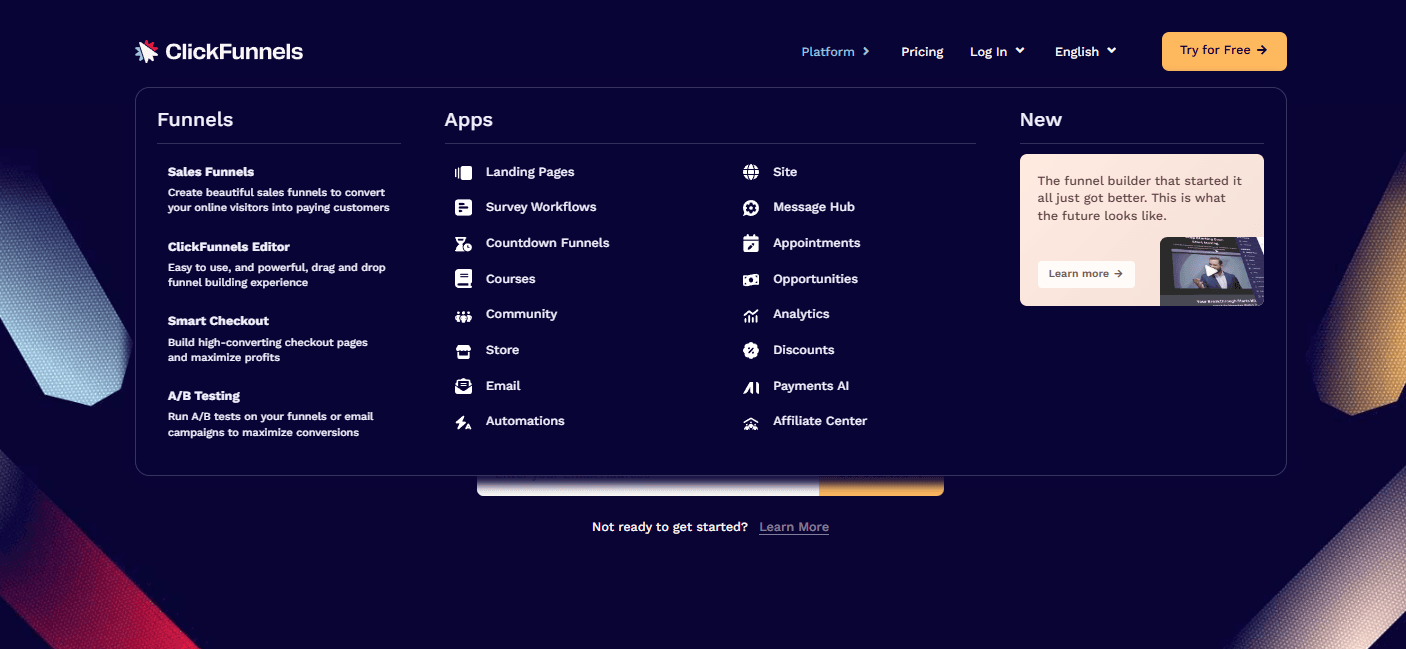
Sales Funnels: Build multi-step funnels for leads, sales, webinars, launches, and more. Designed to guide visitors through a clear “next step” flow.
ClickFunnels Editor: Visual builder for creating funnel pages without needing a dev hand-hold. Useful for quick edits, swaps, and testing ideas fast.
Landing Pages: Make standalone landing pages or full websites that connect directly into funnels. Keep your site and funnel experience in the same system.
Ecommerce Store: Sell products with store-style flows that still behave like funnels (upsells, step paths, etc.). Better for direct-response selling than a plain catalog setup.
Online Courses: Create gated content that people pay to access (courses, memberships, communities). Pairs naturally with funnels + Customer Center for delivery.
Email Marketing: Run follow-ups and automations so leads don’t go cold the moment they bounce. Helps you keep momentum after opt-ins and purchases.
A/B Testing: Test page variations to improve conversions using real performance data. Reduces “vibes-based marketing” (fun, but expensive).
Analytics: Track funnel and page performance so you can see what’s working and what’s leaking revenue. Built-in reporting helps you iterate without extra reporting tools.
Countdown Funnels: Add urgency mechanics (timers/deadlines) to push action. Useful for promos, launches, and limited-time offers.
Blog: Publish content on-site so you can support funnels with informational pages. Not the main reason to buy ClickFunnels, but it’s there for “content + conversion” plays.
Ease of Use
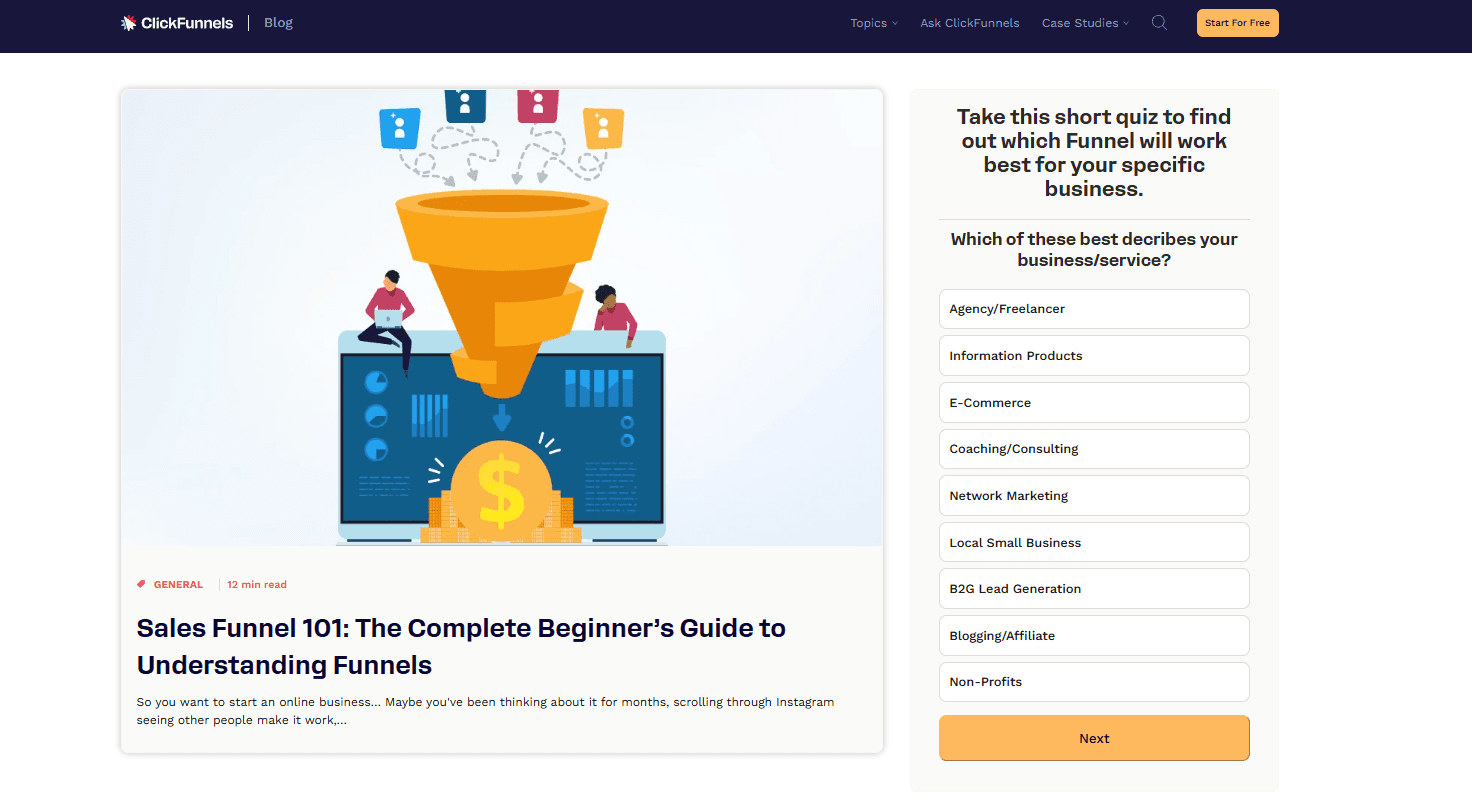
ClickFunnels is generally user-friendly, making it accessible even if you're not tech-savvy. Its drag-and-drop builder and extensive templates simplify funnel creation for your team. Users appreciate the intuitive interface that allows quick setup without needing deep technical knowledge. However, some find the platform can be slow during peak times, which might disrupt your workflow. Despite this, the ease of creating and managing funnels makes it a favored choice among many marketing teams.
Integrations
ClickFunnels integrates with ActiveCampaign, Aweber, Blastable, Constant Contact, ConvertKit, GetResponse, HubSpot, Keap, Klaviyo, MailChimp, Ontraport, Pipedrive, Sendlane, and Slack.
ClickFunnels also has an API and connects with third-party integration tools like Zapier for extensive automation options.
ClickFunnels Specs
- A/B Testing: Yes
- API: Yes
- Data Export: No
- Data Import: No
- External Integrations: Yes
- Landing Pages: No
- Multi-User: No
- Third-Party Plugins/Add-Ons: No


