

Avis sur Cascade 2026 : Avantages, inconvénients, fonctionnalités et tarifs
Cascade se distingue en transformant la stratégie en action, aidant les équipes à aller au-delà des tableaux de bord grâce à une approche plus concrète de l’exécution.

Nous évaluons les outils de manière indépendante, et les commissions aident à financer nos tests. Consultez notre politique de transparence, notre méthodologie ou suggérez un outil.
Cascade is a marketing strategy software for teams that need to translate big-picture strategy into trackable goals and team-level plans. I'd consider it if your marketing org has outgrown general project management tools like monday.com and needs a purpose-built platform for strategic planning, OKR tracking, and cross-functional visibility—all tied back to measurable outcomes.
Cascade Evaluation Summary
4.8/5
- Pricing upon request
- Free trial + free demo available
Pourquoi faire confiance à nos recommandations de logiciels
6,700+
Reviews
20
Industry experts
16+
Evaluation factors
14
Years
Notre équipe teste et évalue des logiciels depuis 2012. En tant que leaders marketing nous-mêmes, nous savons à quel point il est difficile — et important — de choisir le bon logiciel.
Pour ce guide, nous avons évalué les outils grâce à des tests pratiques et une recherche indépendante, en notant les outils selon nos critères de sélection.
Nos avis reflètent notre jugement éditorial humain, et non un argumentaire de vente.
Réviseurs experts:
 Gui DrusinaDirecteur de la création
- Shriya GhateSenior Marketing Lead
 Amanda JacquesResponsable Marketing Ops

Cascade Overview
If you’re judging Cascade as a marketing strategy software, I think its visual planning tools and real-time progress tracking set it apart for teams who want to move from strategy to execution. The interface is clean, onboarding is straightforward, and integrations cover most needs, though some advanced analytics features lag behind competitors. Pricing is mid-range, and support is responsive.
I’d suggest Cascade is best for marketing teams who need a single source of truth for strategy, especially in fast-moving or cross-functional environments where alignment and accountability matter most.
Pros
- Built-in OKR and planning frameworks support structured execution.
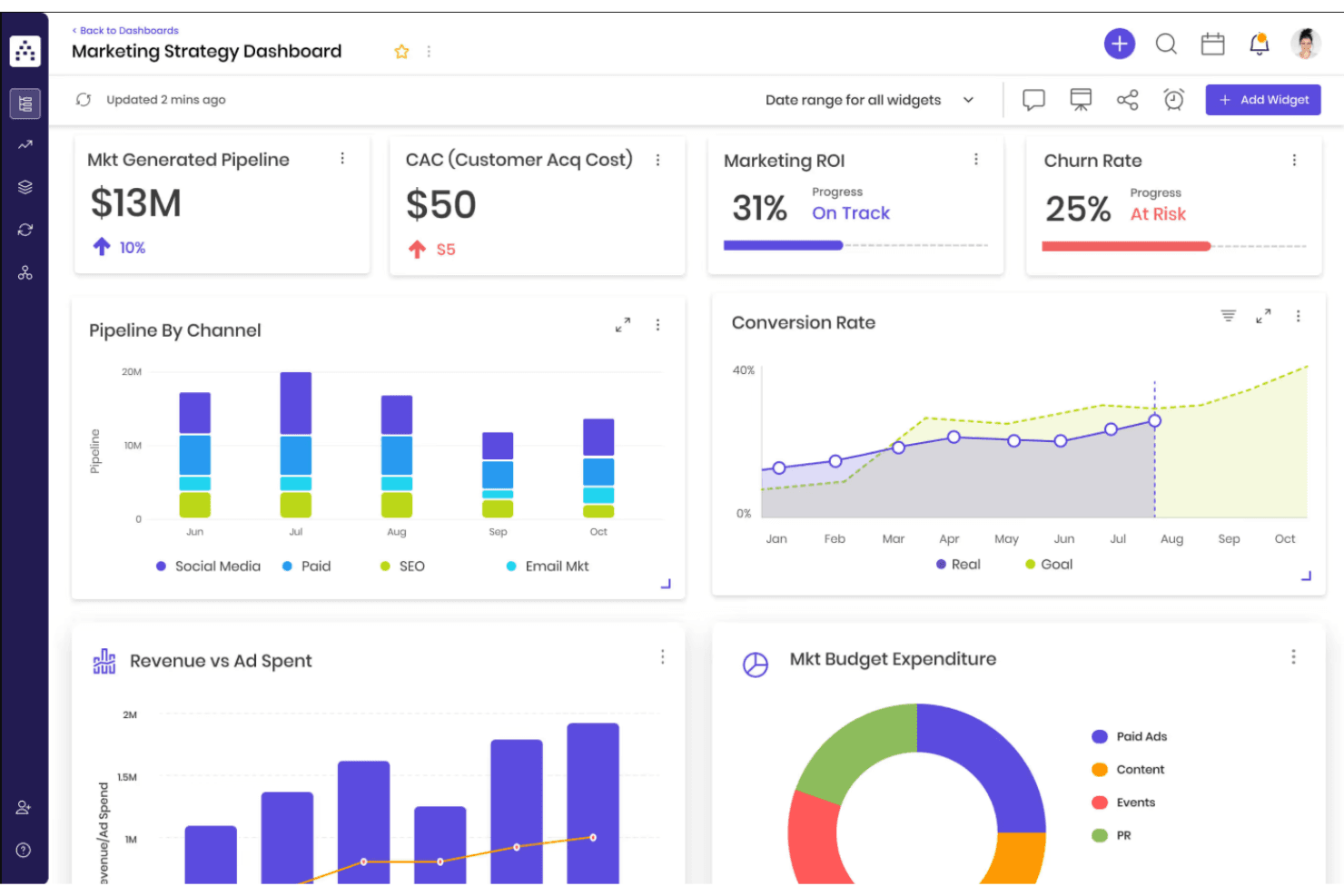
- Real-time dashboards make tracking progress straightforward.
- Visual strategy mapping connects goals, projects, and KPIs.
Cons
- Some users report slow performance with large data sets.
- Mobile app functionality is less developed than desktop.
- Advanced analytics and reporting options are limited.
Is Cascade Right For Your Needs?
Who Would be a Good Fit for Cascade?
Cascade is a strong choice for organizations that need to align multiple teams around shared goals and track progress in real time. Its visual planning, OKR frameworks, and centralized dashboards make it ideal for marketing departments, cross-functional teams, and companies with complex strategies. I think you’ll get the most value if your business relies on structured execution, transparency, and accountability across projects and campaigns.
- Consulting FirmsStrategy mapping and client-facing dashboards support structured client engagements.
- Cross-Functional TeamsReal-time updates and shared dashboards improve collaboration across business units.
- Nonprofit OrganizationsGoal mapping and impact tracking help nonprofits measure and communicate outcomes.
- Project Management OfficesVisual roadmaps and progress dashboards keep projects aligned with business goals.
- Marketing DepartmentsBuilt-in campaign planning and KPI tracking support marketing execution from strategy to results.
- Mid-Sized EnterprisesCascade’s centralized platform helps coordinate strategy across multiple departments and teams.
Who Would be a Bad Fit for Cascade?
Cascade may not be the best fit for very small teams, organizations with highly specialized analytics needs, or industries that require deep customization. If your team needs advanced reporting, heavy automation, or industry-specific compliance features, you might find Cascade’s feature set limiting compared to other options.
- Financial ServicesDoes not offer specialized compliance or regulatory tracking features.
- Field Service TeamsMobile app limitations hinder on-the-go strategy management.
- Manufacturing OperationsLacks industry-specific workflow automation and compliance tracking.
- Data-Driven Analytics TeamsLimited advanced analytics and reporting restrict deep data exploration.
- Small StartupsPricing and feature depth may exceed the needs of early-stage teams.
- Solo ConsultantsCascade’s collaborative features are unnecessary for single-person operations.
Comment nous testons et évaluons les outils
Nous avons passé des années à construire, affiner et améliorer notre système de test et de notation des logiciels. Notre grille d’évaluation est conçue pour prendre en compte toutes les nuances du choix logiciel et ce qui rend un outil efficace, en mettant l’accent sur les aspects critiques du processus de décision. Ci-dessous, vous pouvez découvrir précisément comment nos tests et notations fonctionnent selon sept critères. Cela nous permet d’offrir une évaluation impartiale des logiciels en fonction de la fonctionnalité principale, des fonctionnalités différenciantes, de la facilité d’utilisation, de l’onboarding, du support client, des intégrations, des avis clients et du rapport qualité-prix.
Fonctionnalité principale (25% de la note finale)
Le point de départ de notre évaluation est toujours la fonctionnalité principale de l’outil. Dispose-t-il des fonctions de base attendues ? Certaines de ces fonctionnalités sont-elles bloquées dans des offres tarifaires supérieures ? Nous attendons d’un outil qu’il soit à la hauteur des capacités fondamentales de ses concurrents.
Fonctionnalités différenciantes (25% de la note finale)
Ensuite, nous évaluons les fonctionnalités spéciales qui vont au-delà de ce que l’on trouve habituellement chez ce type d’outils. Un score élevé indique des fonctionnalités uniques ou spécialisées qui rendent le produit plus rapide, plus efficace, ou offrent une valeur ajoutée à l’utilisateur. Nous évaluons également la facilité d’intégration avec d’autres outils couramment utilisés pour élargir les possibilités et l’utilité du logiciel. Les outils offrant de nombreuses intégrations natives, des connexions tierces et un accès API pour bâtir des intégrations personnalisées obtiennent les meilleures notes.
Facilité d’utilisation (10% de la note finale)
Nous considérons la rapidité et la facilité d’exécution des tâches principales via l’outil. Les logiciels les mieux notés sont bien conçus, intuitifs à utiliser, proposent des applications mobiles, des modèles prêts à l’emploi, et simplifient des tâches parfois complexes.
Onboarding (10% de la note finale)
Nous savons combien l’adoption rapide par l’équipe est cruciale pour une nouvelle plateforme. Nous évaluons donc la facilité avec laquelle il est possible d’apprendre et d’utiliser un outil sans formation poussée. On mesure aussi la vitesse à laquelle un membre de l’équipe peut être opérationnel, sans expérience préalable. Les solutions bien notées requièrent peu ou pas d’assistance.
Support client (10% de la note finale)
Nous examinons la rapidité et la facilité avec lesquelles on peut obtenir de l’aide par téléphone, chat en direct ou base de connaissances. Les outils et sociétés offrant un support en temps réel sont favorisés ; les chatbots sont pénalisés.
Avis clients (10% de la note finale)
Au-delà de nos propres tests et évaluations, nous prenons en compte le score de recommandation nette des clients actuels et passés. Nous étudions leur propension, si l’occasion se présente, à réutiliser l’outil pour sa fonctionnalité principale. Un score élevé reflète donc un bon taux de recommandation.
Rapport qualité-prix (10% de la note finale)
Enfin, après avoir pris en compte tous les autres critères, nous confrontons le prix moyen des offres de base aux fonctionnalités principales et prenons en compte la valeur apportée par les autres éléments d’évaluation. Les logiciels qui offrent plus pour moins obtiennent une note supérieure.
Core Features
Strategy Mapping
Visually connect goals, projects, and KPIs in a single workspace. This helps teams see how every initiative supports the overall strategy.
OKR and Goal Frameworks
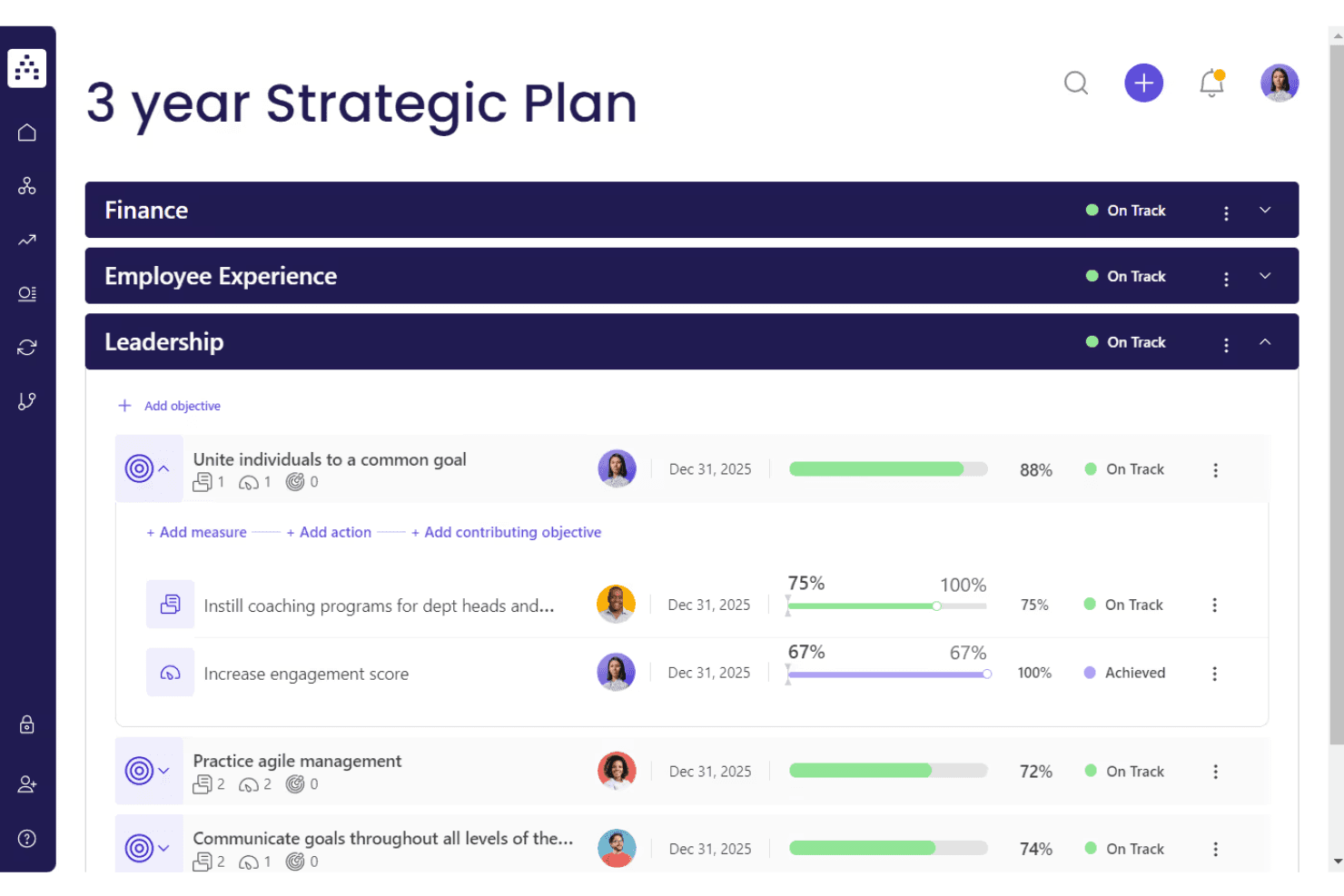
Set, track, and manage objectives using built-in OKR templates. Teams can align individual and departmental goals with company-wide priorities.
Real-Time Dashboards
Monitor progress with live dashboards that update as work happens. Users get instant visibility into campaign status and performance metrics.
Project and Task Management
Assign tasks, set deadlines, and manage deliverables within the platform. This keeps execution tightly linked to strategic plans.
Performance Analytics
Track key metrics and outcomes with customizable reports. Users can quickly identify what’s working and where to adjust strategy.
Collaboration Tools
Share updates, comment on projects, and notify stakeholders directly in Cascade. This streamlines communication and keeps everyone aligned.

Ease of Use
Cascade’s interface is clean and intuitive, making it easy for teams to get started without heavy training. Users often mention that visual strategy mapping and drag-and-drop planning simplify complex workflows. Onboarding is straightforward, and built-in templates help teams quickly set up goals and projects.
While some advanced features require a bit of exploration, most users find day-to-day navigation and collaboration smooth and accessible, even for those new to strategy software.
Integrations
Cascade integrates with Salesforce, Bamboo HR, Gainsight, Hubspot, Microsoft Dynamics, Pipedrive, monday.com, Smartsheet, MS Teams, and Slack, among others.
Cascade also offers an API and connects with third-party integration tools like Zapier and Microsoft Power Automate.

Cascade Specs
- API: Yes
- Batch Permissions & Access: Yes
- Budgeting: No
- Calendar Management: No
- Collaboration Support: No
- Dashboard: No
- Data Export: Yes
- Data Import: Yes
- Data Visualization: No
- Expense Tracking: No
- External Integrations: Yes
- Forecasting: No
- Multi-User: Yes
- Notifications: Yes
- Performance Reviews: No
- Process Reporting: No
- Project Management: No
- Resource Management: No
- Roadmapping: No
- Scheduling: No
- Task Scheduling/Tracking: No
- Third-Party Plugins/Add-Ons: No