

Reseña de Cascade: Ventajas, Desventajas, Características y Guía de Precios

Revisamos herramientas de manera independiente, y las comisiones ayudan a financiar nuestras pruebas. Consulta nuestra política de transparencia, nuestra metodología o sugiere una herramienta.
Cascade is a marketing strategy software for teams that need to translate big-picture strategy into trackable goals and team-level plans. I'd consider it if your marketing org has outgrown general project management tools like monday.com and needs a purpose-built platform for strategic planning, OKR tracking, and cross-functional visibility—all tied back to measurable outcomes.
Cascade Evaluation Summary
4.8/5
- Pricing upon request
- Free trial + free demo available
Por qué confiar en nuestras recomendaciones de software
6,700+
Reviews
20
Industry experts
16+
Evaluation factors
14
Years
Nuestro equipo lleva probando y evaluando software desde 2012. Como líderes de marketing, sabemos lo difícil —y lo importante— que es elegir el software adecuado.
Para esta guía, evaluamos las herramientas mediante pruebas prácticas e investigación independiente, puntuando las herramientas según nuestros criterios de selección.
Nuestras reseñas reflejan nuestro criterio editorial humano, no un discurso de ventas.
Revisores expertos:
 Gui DrusinaDirector creativo
- Shriya GhateSenior Marketing Lead
 Amanda JacquesLíder de Marketing Ops

Cascade Overview
If you’re judging Cascade as a marketing strategy software, I think its visual planning tools and real-time progress tracking set it apart for teams who want to move from strategy to execution. The interface is clean, onboarding is straightforward, and integrations cover most needs, though some advanced analytics features lag behind competitors. Pricing is mid-range, and support is responsive.
I’d suggest Cascade is best for marketing teams who need a single source of truth for strategy, especially in fast-moving or cross-functional environments where alignment and accountability matter most.
Pros
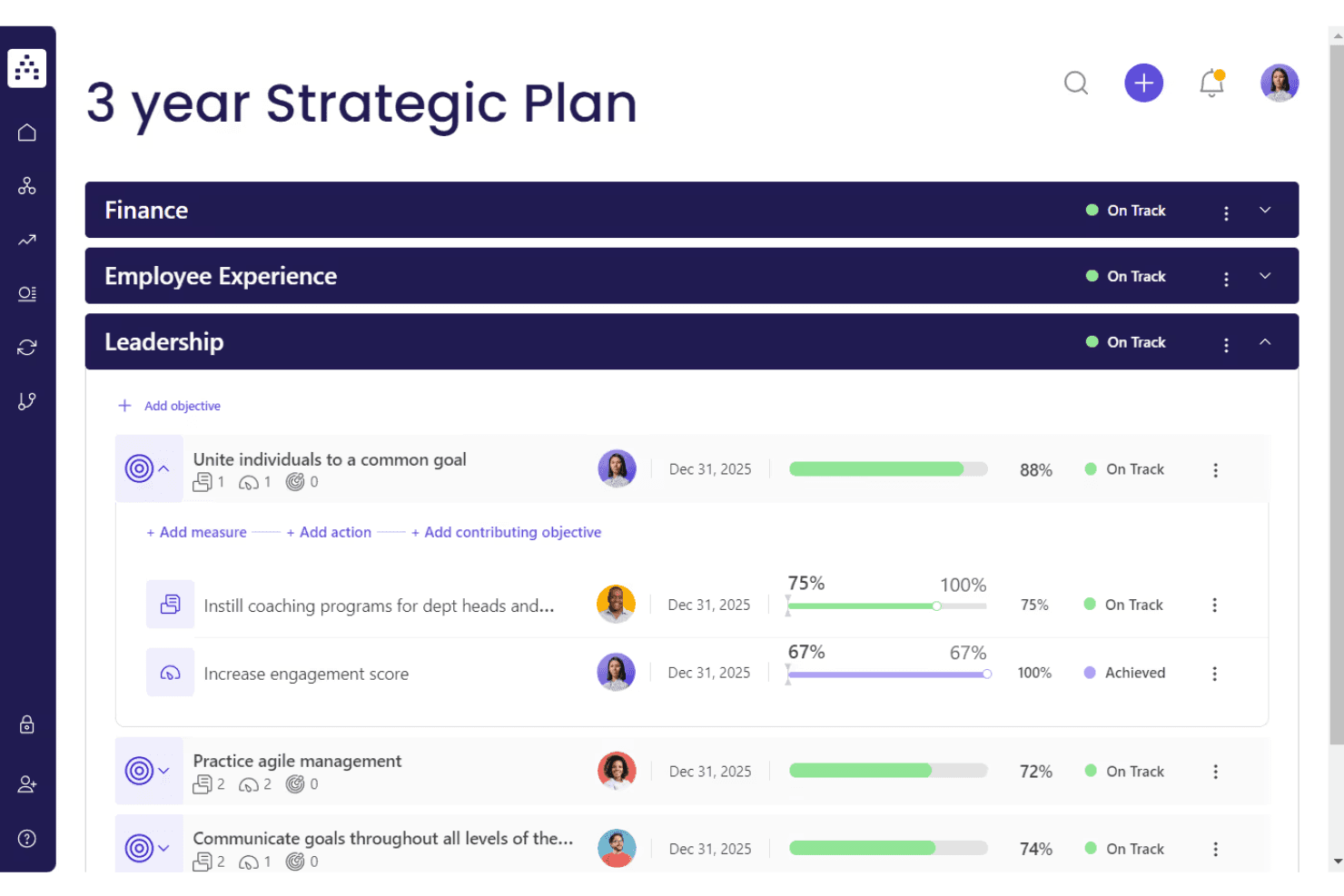
- Built-in OKR and planning frameworks support structured execution.
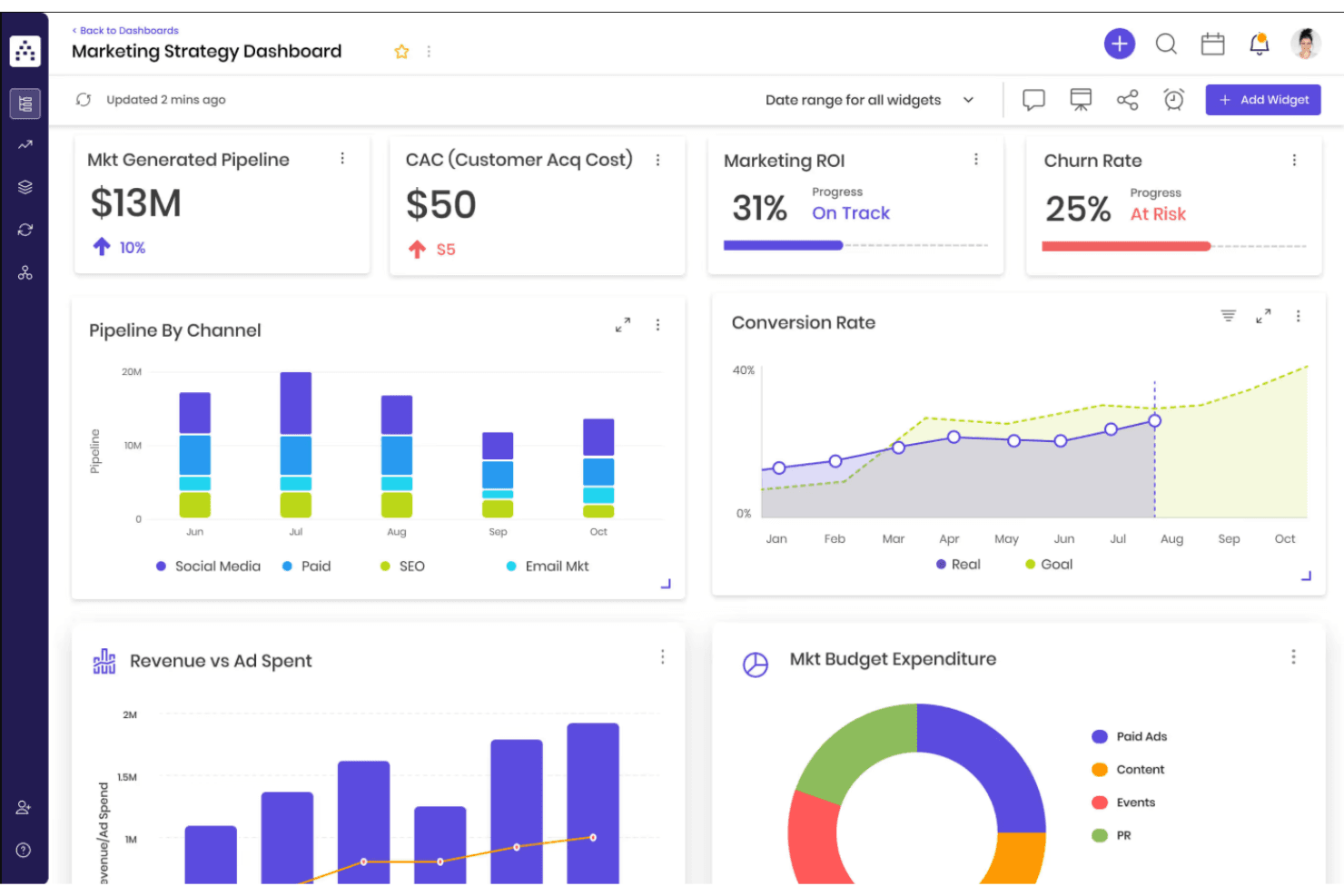
- Real-time dashboards make tracking progress straightforward.
- Visual strategy mapping connects goals, projects, and KPIs.
Cons
- Some users report slow performance with large data sets.
- Mobile app functionality is less developed than desktop.
- Advanced analytics and reporting options are limited.
Is Cascade Right For Your Needs?
Who Would be a Good Fit for Cascade?
Cascade is a strong choice for organizations that need to align multiple teams around shared goals and track progress in real time. Its visual planning, OKR frameworks, and centralized dashboards make it ideal for marketing departments, cross-functional teams, and companies with complex strategies. I think you’ll get the most value if your business relies on structured execution, transparency, and accountability across projects and campaigns.
- Consulting FirmsStrategy mapping and client-facing dashboards support structured client engagements.
- Cross-Functional TeamsReal-time updates and shared dashboards improve collaboration across business units.
- Nonprofit OrganizationsGoal mapping and impact tracking help nonprofits measure and communicate outcomes.
- Project Management OfficesVisual roadmaps and progress dashboards keep projects aligned with business goals.
- Marketing DepartmentsBuilt-in campaign planning and KPI tracking support marketing execution from strategy to results.
- Mid-Sized EnterprisesCascade’s centralized platform helps coordinate strategy across multiple departments and teams.
Who Would be a Bad Fit for Cascade?
Cascade may not be the best fit for very small teams, organizations with highly specialized analytics needs, or industries that require deep customization. If your team needs advanced reporting, heavy automation, or industry-specific compliance features, you might find Cascade’s feature set limiting compared to other options.
- Financial ServicesDoes not offer specialized compliance or regulatory tracking features.
- Field Service TeamsMobile app limitations hinder on-the-go strategy management.
- Manufacturing OperationsLacks industry-specific workflow automation and compliance tracking.
- Data-Driven Analytics TeamsLimited advanced analytics and reporting restrict deep data exploration.
- Small StartupsPricing and feature depth may exceed the needs of early-stage teams.
- Solo ConsultantsCascade’s collaborative features are unnecessary for single-person operations.
Cómo Probamos y Puntuamos las Herramientas
Hemos dedicado años a construir, refinar y mejorar nuestro sistema de prueba y puntuación de software. El marco está diseñado para captar los matices de la selección de software y lo que hace a una herramienta eficaz, enfocándose en los aspectos críticos del proceso de decisión. A continuación, puedes ver exactamente cómo funcionan nuestras pruebas y puntuaciones en siete criterios. Esto nos permite brindar una evaluación imparcial de los programas basada en la funcionalidad principal, características destacadas, facilidad de uso, integración, soporte al cliente, reseñas de clientes y relación calidad-precio.
Funcionalidad Principal (25% de la puntuación final)
El punto de partida de nuestra evaluación siempre es la funcionalidad principal de la herramienta. ¿Cuenta con las funciones básicas que un usuario esperaría? ¿Alguna de esas funciones está reservada solo para planes de pago avanzados? Esperamos que, en esencia, una herramienta se mantenga al nivel de las capacidades mínimas de sus competidores.
Características Destacadas (25% de la puntuación final)
Después, evaluamos las características poco comunes y destacadas que van más allá de la funcionalidad típica de herramientas similares. Una puntuación alta refleja funciones especializadas o únicas que hacen el producto más rápido, eficiente o aportan un valor adicional al usuario. También evaluamos qué tan fácil es integrarse con otras herramientas habituales en el entorno tecnológico para expandir la funcionalidad del software. Las herramientas que ofrecen muchas integraciones nativas, conexiones de terceros y acceso a API para crear integraciones personalizadas tienen la mejor puntuación.
Facilidad de Uso (10% de la puntuación final)
Consideramos cuán rápido y fácil es ejecutar las tareas definidas en la funcionalidad central utilizando la herramienta. El software mejor puntuado está bien diseñado, es intuitivo, ofrece aplicaciones móviles, proporciona plantillas y hace que tareas relativamente complejas parezcan sencillas.
Incorporación (10% de la puntuación final)
Sabemos lo importante que es que un equipo adopte rápidamente una nueva plataforma, por eso evaluamos lo fácil que es aprender y usar una herramienta con la menor formación posible. Analizamos lo rápido que un integrante puede comenzar a usar la herramienta sin experiencia previa. Las soluciones mejor puntuadas requieren poco o ningún soporte.
Soporte al Cliente (10% de la puntuación final)
Vemos cuán rápido y sencillo es obtener ayuda por teléfono, chat en vivo o base de conocimientos. Las empresas y herramientas que ofrecen soporte en tiempo real logran la mejor puntuación, mientras que los chatbots obtienen la peor.
Reseñas de Clientes (10% de la puntuación final)
Más allá de nuestras propias pruebas y evaluaciones, consideramos el puntaje de recomendación de clientes actuales y anteriores. Revisamos la probabilidad de que, de poder elegir de nuevo, seleccionarían la herramienta por su funcionalidad principal. Un software con alta puntuación refleja una elevada recomendación de sus usuarios.
Relación Calidad-Precio (10% de la puntuación final)
Finalmente, considerando todos los demás criterios, revisamos el precio promedio de los planes básicos frente a las funciones y el valor de los demás factores de evaluación. El software que ofrece más por menos obtiene mejor puntuación.
Core Features
Strategy Mapping
Visually connect goals, projects, and KPIs in a single workspace. This helps teams see how every initiative supports the overall strategy.
OKR and Goal Frameworks
Set, track, and manage objectives using built-in OKR templates. Teams can align individual and departmental goals with company-wide priorities.
Real-Time Dashboards
Monitor progress with live dashboards that update as work happens. Users get instant visibility into campaign status and performance metrics.
Project and Task Management
Assign tasks, set deadlines, and manage deliverables within the platform. This keeps execution tightly linked to strategic plans.
Performance Analytics
Track key metrics and outcomes with customizable reports. Users can quickly identify what’s working and where to adjust strategy.
Collaboration Tools
Share updates, comment on projects, and notify stakeholders directly in Cascade. This streamlines communication and keeps everyone aligned.

Ease of Use
Cascade’s interface is clean and intuitive, making it easy for teams to get started without heavy training. Users often mention that visual strategy mapping and drag-and-drop planning simplify complex workflows. Onboarding is straightforward, and built-in templates help teams quickly set up goals and projects.
While some advanced features require a bit of exploration, most users find day-to-day navigation and collaboration smooth and accessible, even for those new to strategy software.
Integrations
Cascade integrates with Salesforce, Bamboo HR, Gainsight, Hubspot, Microsoft Dynamics, Pipedrive, monday.com, Smartsheet, MS Teams, and Slack, among others.
Cascade also offers an API and connects with third-party integration tools like Zapier and Microsoft Power Automate.

Cascade Specs
- API: Yes
- Batch Permissions & Access: Yes
- Budgeting: No
- Calendar Management: No
- Collaboration Support: No
- Dashboard: No
- Data Export: Yes
- Data Import: Yes
- Data Visualization: No
- Expense Tracking: No
- External Integrations: Yes
- Forecasting: No
- Multi-User: Yes
- Notifications: Yes
- Performance Reviews: No
- Process Reporting: No
- Project Management: No
- Resource Management: No
- Roadmapping: No
- Scheduling: No
- Task Scheduling/Tracking: No
- Third-Party Plugins/Add-Ons: No