

El software de marketing de correo directo automatiza el diseño, la distribución y la gestión de campañas de correo físico, lo que te facilita personalizar las comunicaciones, destacar entre el ruido digital y ahorrar muchísimo trabajo manual.
Con mi experiencia en operaciones de marketing y mis análisis detallados y prácticos, te guiaré por las principales opciones de software de marketing de correo directo para que puedas elegir la que mejor se adapte a tu empresa y crear campañas memorables sin el estrés habitual.
Por qué confiar en nuestras recomendaciones de software
6,700+
Reviews
20
Industry experts
16+
Evaluation factors
14
Years
Nuestro equipo lleva probando y evaluando software desde 2012. Como líderes de marketing, sabemos lo difícil —y lo importante— que es elegir el software adecuado.
Para esta guía, evaluamos las herramientas mediante pruebas prácticas e investigación independiente, puntuando las herramientas según nuestros criterios de selección.
Nuestras reseñas reflejan nuestro criterio editorial humano, no un discurso de ventas.
Revisores expertos:
 Gui DrusinaDirector creativo
- Shriya GhateSenior Marketing Lead
 Amanda JacquesLíder de Marketing Ops

Tabla comparativa: software de marketing de correo directo
Esta tabla comparativa resume los detalles de precios de mis principales selecciones de software de marketing de correo directo.
| Tool | Best For | Trial Info | Price | ||
|---|---|---|---|---|---|
| 1 | Lo mejor para envíos automatizados con estilo manuscrito | No disponible | Desde $49/mes | Website | |
| 2 | Ideal para una amplia variedad de piezas y regalos por correo | Demo gratuita disponible | Precios a consultar | Website | |
| 3 | Ideal para crear tiendas de regalos personalizadas | Plan gratuito de pago por uso | Disponible previa solicitud | Website | |
| 4 | Mejor software de correo directo para agencias de marketing | Plan gratuito disponible | Desde $199/mes | Website | |
| 5 | Ideal para marketing integrado de correo directo y correo electrónico | Prueba gratuita de 14 días + demo gratuita disponible | Desde $20/mes | Website | |
| 6 | Mejor software de marketing de correo directo para la sostenibilidad | Plan gratuito + demo gratis disponible | Desde $260/mes | Website | |
| 7 | Ideal para conectar con tu stack tecnológico vía REST API | Se ofrece demostración gratuita y llamada de descubrimiento | Desde $20/mes | Website | |
| 8 | Ideal para tarjetas y regalos con apariencia manuscrita | Demo gratuita disponible | Desde $374/mes (facturación anual) | Website | |
| 9 | Ideal para informar el marketing por correo directo con datos digitales | Consulta de expertos disponible | Precio disponible a solicitud | Website | |
| 10 | Mejor con servicios de gestión de proyectos dedicados | Demo gratuita disponible | Precio bajo solicitud | Website |


Análisis de los mejores programas de marketing de correo directo
A continuación encontrarás mis resúmenes detallados de los mejores programas de marketing de correo directo que llegaron a mi lista. Mis análisis ofrecen una visión detallada de las funciones principales, ventajas y desventajas, integraciones y casos de uso ideales de cada herramienta para ayudarte a encontrar la mejor opción para ti.
 Lo mejor para envíos automatizados con estilo manuscrito
- No disponible
- Desde $49/mes
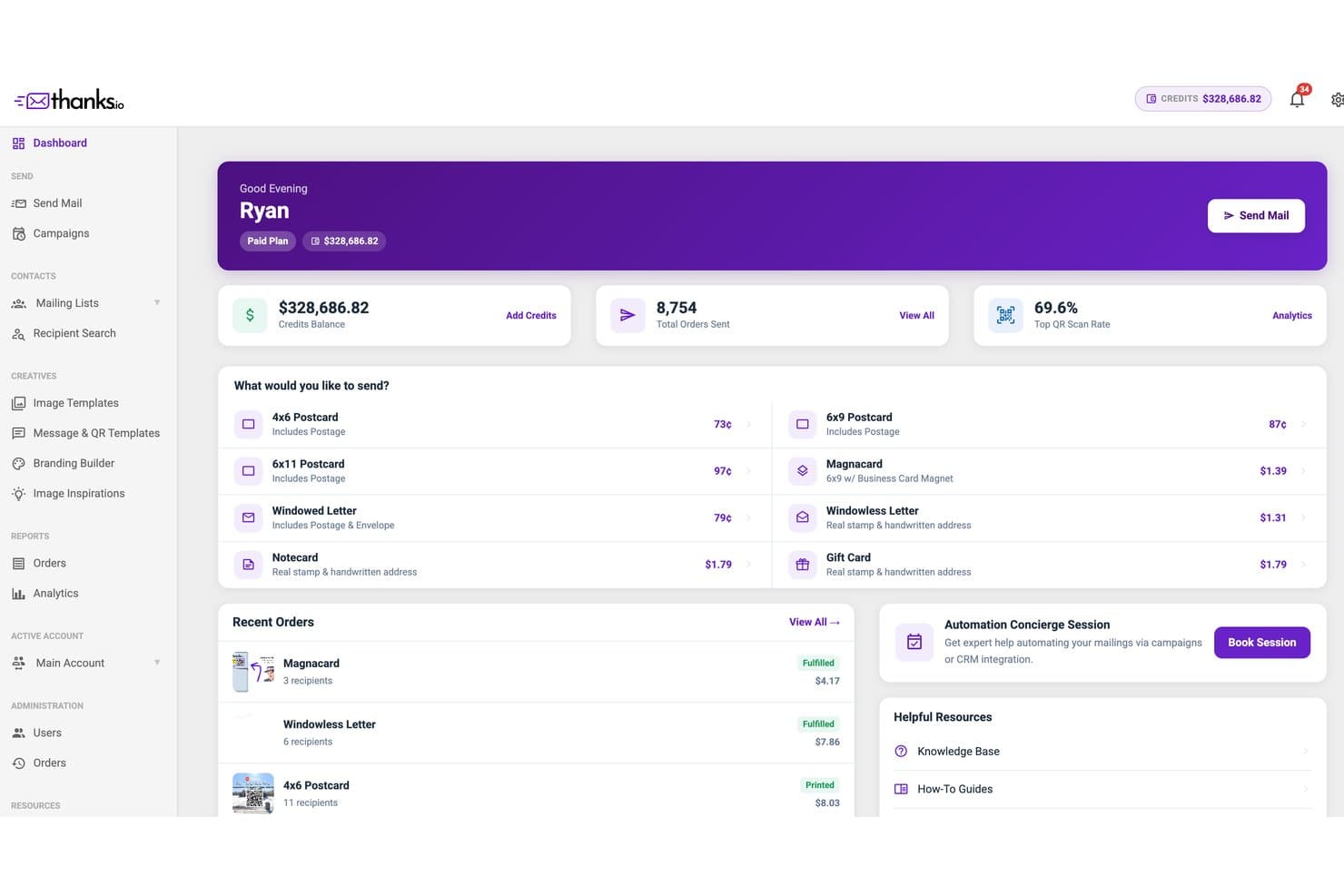
Thanks.io ofrece un panel que muestra el saldo de créditos, el total de pedidos enviados, la tasa de escaneo de códigos QR y opciones de productos de correo directo con precios. Thanks.io es una plataforma de automatización de correo directo que envía postales, cartas, tarjetas de notas, tarjetas de regalo y MagnaCards con estilo manuscrito, con personalización integrada, integraciones con CRM, flujos de trabajo de campañas activadas y seguimiento mediante códigos QR.
¿Para quién es más adecuado Thanks.io?
Thanks.io es una excelente opción para profesionales del marketing inmobiliario, del comercio electrónico y de agencias que necesitan automatizar el correo físico personalizado sin contar con un equipo dedicado a las operaciones de impresión.
Por qué elegí Thanks.io
Thanks.io ocupa un lugar en mi lista de opciones principales porque su motor de escritura a mano no se parece a nada que haya visto en otras plataformas de correo directo. El modo Realism añade tachaduras auténticas y un espaciado natural a cada pieza, por lo que los destinatarios realmente creen que alguien la escribió a mano. También me gusta que la IA por destinatario genere mensajes únicos para cada dirección de una campaña, lo que significa que puedo enviar mil piezas y que cada una parezca redactada individualmente.
Funciones principales de Thanks.io
- Verificación de direcciones NCOA: Cada envío comprueba automáticamente las direcciones de los destinatarios con la base de datos nacional de cambios de dirección para garantizar la entregabilidad.
- Envíos en varios formatos: Envía postales, tarjetas de notas plegadas, cartas, tarjetas de regalo con marca y MagnaCards desde una sola plataforma.
- Más de 500 integraciones: Se conecta de forma nativa con HubSpot, Salesforce, Shopify y ActiveCampaign, y con miles de aplicaciones a través de Zapier.
- Seguimiento de códigos QR por campaña: Cada destinatario puede recibir un código QR único con notificaciones de escaneo en tiempo real.
Integraciones de Thanks.io
Thanks.io ofrece integraciones con HubSpot, Salesforce, Shopify, Pipedrive, ActiveCampaign, Zoho CRM, WooCommerce, BigCommerce y HighLevel, y se conecta con Zapier. También hay una API disponible para integraciones personalizadas.
Pros and Cons
Pros:
- El motor de escritura a mano produce cartas convincentes
- La IA genera textos únicos para cada destinatario
- El plan gratuito permite realizar pruebas de bajo volumen
Cons:
- La entrega del correo está limitada a EE. UU.
- No ofrece informes de atribución de ingresos para múltiples interacciones
Learn more about Thanks.io: Ideal para una amplia variedad de piezas y regalos por correo
- Demo gratuita disponible
- Precios a consultar
Visit WebsiteCustomer Rating:4.6/5
Selecciona entre tarjetas de regalo electrónicas, artículos de Amazon, experiencias únicas y más para enviar. Sendoso es un software de marketing por correo directo que ayuda a las empresas a enviar correo físico, regalos y experiencias personalizadas, artículos de marca y notas escritas a mano a los clientes.
Por qué elegí Sendoso: Decidí agregar este software a mi lista por su amplia variedad de opciones para regalos corporativos y correo directo. Puedes seleccionar entre una gran cantidad de artículos de su marketplace, crear notas escritas a mano para enviar y hasta elegir experiencias únicas para regalar, como catas de vino y clases de yoga. Esto permite dar regalos memorables que van más allá de los activos tradicionales de marketing por correo directo.
Además de gestionar tus campañas de correo directo, también puedes configurar una tienda de artículos promocionales a través de la plataforma. La empresa se encargará del cumplimiento de los pedidos en tu nombre, lo que facilita el lanzamiento de tu propia tienda online. La gestión y cumplimiento de inventario a nivel mundial significa que no tienes que estar limitado por tu ubicación, ni la de tu cliente.
Características destacadas e integraciones de Sendoso
Una característica destacada clave de este software es que dispone de un plan gratuito. Puedes registrarte en la versión freemium directamente desde la web y empezar a enviar regalos rápidamente. Los envíos son ilimitados, solo necesitas pagar por los regalos que envías. El plan gratuito incluye seguimiento completo, tienda de marca personalizada e integraciones ilimitadas. Es una opción rentable para empresas que hacen una cantidad limitada de marketing por correo directo, pequeñas empresas o particulares.
Las integraciones incluyen Marketo, Salesforce, HubSpot, Eloqua, Microsoft Dynamics 365, Outreach, SalesLoft, Chili Piper, Calendly, Magento y monday.com, entre otros. También hay una integración con Zapier para desbloquear integraciones adicionales con un plan de pago.
Pros and Cons
Pros:
- Cuenta gratuita de pago por regalo disponible
- Servicios de campañas incluidos en los planes de pago
- Equipo global de expertos para soporte al cliente
Cons:
- La navegación es un poco compleja
- Los artículos del marketplace pueden ser caros
Learn more about Sendoso: Ideal para crear tiendas de regalos personalizadas
- Plan gratuito de pago por uso
- Disponible previa solicitud
Visit WebsiteCustomer Rating:4.8/5
Configura tiendas de regalos personalizadas y luego envía puntos a los destinatarios para canjearlos por el regalo que elijan. Stadium es una plataforma global de marketing por correo directo y regalos que te permite enviar regalos al por mayor o de forma individual. Puedes seleccionar regalos de las múltiples marcas de la empresa.
Por qué elegí Stadium: Esta plataforma no solo ofrece regalos de 6 marcas diferentes, sino que también cuenta con un flujo de trabajo claro y fácil de usar. La añadí a mi lista por lo sencillo que es configurar una tienda de regalos personalizada a la que luego pueden acceder personas o grupos. Solo tienes que seleccionar una plantilla de sitio, elegir un valor en puntos y enviar los puntos a tus destinatarios, quienes podrán seleccionar un regalo en el sitio. Las tiendas abarcan muchos tipos de regalos, como aperitivos, artículos promocionales, kits de comida, bebidas y experiencias de formación de equipos.
Características destacadas e integraciones de Stadium
Entre las características destacadas se incluyen el creador de tiendas web fácil de usar y el plan gratuito. Hay muchísimas plantillas prediseñadas específicamente para casos de uso como incentivos y recompensas para empleados, celebraciones y logros, regalos para clientes y clientes potenciales, e incluso beneficios para empleados. Es rápido y sencillo poner en marcha tu sitio de regalos.
En cuanto al plan gratuito, puedes crear tiendas ilimitadas e incluso añadir una marca personalizada sin comprometerte con un plan de pago. ¡También puedes crear productos promocionales con tu marca! El único coste es la tarifa de plataforma del 15 %, que cubre los costes de gestión de pedidos, operaciones y envío.
Las integraciones incluyen Salesforce, HubSpot, Marketo, Zendesk, monday.com, Workday, Pipedrive, Justworks, ADP, Outreach, Groove y Salesloft, entre otras. Una cuenta de pago de Zapier también desbloqueará integraciones adicionales.
Pros and Cons
Pros:
- Amplia biblioteca de plantillas para crear tiendas de regalos fácilmente
- Posibilidad de añadir una marca personalizada a tus tiendas de regalos
- Modelo flexible de pago por uso
Cons:
- No existe la opción de enviar materiales impresos personalizados
- Se necesita tiempo para aprender a usar la plataforma
Learn more about Stadium Software: Mejor software de correo directo para agencias de marketing
- Plan gratuito disponible
- Desde $199/mes
Visit WebsiteCustomer Rating:4.3/5
Crea fácilmente activos digitales e impresos para enviar en campañas multicanal para tus clientes. Postalytics es una plataforma de automatización de correo directo diseñada para agilizar y mejorar el marketing de los equipos internos de marketing y agencias de marketing.
Por qué elegí Postalytics: Esta plataforma ofrece herramientas y funciones para crear, enviar y hacer seguimiento de campañas de correo directo. Decidí incluirla en mi lista por la forma en que se adapta específicamente a las necesidades de las agencias de marketing. Proporciona activos totalmente personalizables con marca blanca que puedes adaptar a las necesidades de tus clientes e integra con tu CRM. Al conectar la plataforma con tu CRM, puedes gestionar y automatizar campañas híbridas de marketing digital y offline en un solo lugar, manteniendo las comunicaciones con los clientes organizadas y accesibles.
Características destacadas e integraciones de Postalytics
Características destacadas que me llamaron la atención de este software fueron su editor de activos de arrastrar y soltar y sus capacidades avanzadas de seguimiento. Puedes crear y revisar piezas de correo de manera fácil y rápida con el constructor intuitivo, sin necesidad de ser diseñador gráfico. Además, los códigos de barras inteligentes incluidos en las piezas de correo permiten rastrear la entrega y obtener confirmación.
Integraciones incluyen Hubspot, Salesforce, ActiveCampaign, Zoho, Marketo, HighLevel, Klavyo, Pipedrive, Freshsales y Nimble, entre otros. Una cuenta de pago de Zapier desbloquea integraciones adicionales y hay una API disponible para crear integraciones personalizadas.
Pros and Cons
Pros:
- Los activos de marca blanca son fáciles de personalizar para los clientes
- Creador de piezas de correo fácil de usar con funcionalidad de arrastrar y soltar
- Integra el correo directo con tu CRM, email y campañas digitales
Cons:
- Disponible solo para EE. UU. y Canadá
- Se necesita algún conocimiento de diseño para crear activos
Learn more about Postalytics: Ideal para marketing integrado de correo directo y correo electrónico
- Prueba gratuita de 14 días + demo gratuita disponible
- Desde $20/mes
Visit WebsiteCustomer Rating:4.3/5
Puedes diseñar tus propias postales de marca y Mailchimp las imprimirá, franqueará y entregará a tu audiencia objetivo. Mailchimp es una plataforma integral de marketing diseñada para ayudar a empresas de todos los tamaños a crecer y conectar con sus audiencias.
Por qué elegí Mailchimp: Elegí Mailchimp porque integra el correo directo con el marketing por correo electrónico, creando una experiencia fluida para los usuarios. Una de sus características más destacadas es la herramienta 'Postcards', que permite a las empresas diseñar, dirigir y enviar postales físicas a sus clientes. Esta función es muy fácil de usar, con capacidades de diseño de arrastrar y soltar y un proceso sencillo para cargar listas de correos. Además, la capacidad de Mailchimp para sincronizar tus campañas de correo directo con tus campañas de correo electrónico asegura un mensaje consistente en todos los canales, aumentando la efectividad general de tu estrategia de marketing.
Características destacadas e integraciones de Mailchimp
Las características destacadas incluyen opciones avanzadas de segmentación que permiten a las empresas dirigir mensajes personalizados a grupos específicos de clientes. Sus herramientas de automatización permiten programar correos electrónicos y envíos de correo directo desencadenados por eventos y ventas. Mailchimp también proporciona análisis e informes detallados, incluido el retorno de inversión para el correo directo.
Las integraciones incluyen Shopify, WooCommerce, BigCommerce, Magento, WordPress, Salesforce, HubSpot, Zendesk, Stripe, QuickBooks, Slack, Google Analytics y cientos más.
Pros and Cons
Pros:
- Seguimiento de la entrega de postales
- Correo directo y campañas digitales sincronizados
- Buenas capacidades de automatización
Cons:
- Puede volverse costoso con listas de correo grandes
- Las postales son el único formato de correo directo disponible
Learn more about Mailchimp: 6Mejor software de marketing de correo directo para la sostenibilidad
Lob
- Plan gratuito + demo gratis disponible
- Desde $260/mes

Rastrea métricas de desempeño del correo directo y asegúrate de maximizar tu ROI. Lob es un software de marketing de correo directo que se centra en adoptar un enfoque sostenible para el marketing de correo directo y en aprovechar las tecnologías digitales para gestionar campañas de correo físico.
Por qué elegí Lob: Esta plataforma entró en mi lista por sus impresionantes capacidades de automatización, pero también por sus esfuerzos hacia la sostenibilidad. Puedes automatizar prácticamente todos los pasos de la gestión de campañas de correo directo con este software. Facilita la segmentación de audiencia, te conecta con una red nacional de impresión y entrega, y te ayuda a medir el rendimiento de tus campañas y optimizar tus tácticas para obtener mejores resultados.
En lo referente a sostenibilidad, este proveedor de software es líder en el sector. El correo que envías a través de la plataforma es carbono neutral, desde la obtención de materiales hasta la disposición final. Además, la empresa asegura que las emisiones inevitables sean compensadas y el producto cuenta con la certificación de Climate Impact Partners.
Características y integraciones destacadas de Lob
Algunas características destacadas que noté en esta plataforma fueron sus capacidades de personalización. Puedes enviar ofertas personalizadas y aprovechar el historial de compras de un cliente para enviarle correos directos relevantes y dirigidos. Otra cosa que vale la pena mencionar es la dedicación de la empresa a la seguridad. La plataforma cumple con SOC 2 Tipo 2 y HIPAA, y se somete a auditorías de terceros para verificar dicho cumplimiento.
Las integraciones incluyen Shopify, Salesforce, Marketo, JotForm, EasyPost, Simon Data, ActionIQ, Optimove, Braze y Customer.io, entre otros. Una cuenta de pago de Zapier también puede desbloquear integraciones adicionales.
Pros and Cons
Pros:
- La plataforma basada en API permite la integración con tu stack tecnológico existente
- La verificación de direcciones ayuda a reducir costos y mejorar las tasas de entrega
- Centro de ayuda autogestionable útil y robusto
Cons:
- La configuración puede requerir conocimientos técnicos
- El panel de análisis está disponible solo en el plan empresarial
Learn more about Lob: Ideal para conectar con tu stack tecnológico vía REST API
- Se ofrece demostración gratuita y llamada de descubrimiento
- Desde $20/mes

Puedes limpiar, estandarizar y verificar tus direcciones en lote utilizando el software. PostGrid es un software de comunicaciones offline que ofrece herramientas tanto para impresión y envío postal como para verificación de direcciones, todo ello facilitado a través de una API.
Por qué elegí PostGrid: Esta herramienta funciona conectándose con tus otras plataformas de software mediante API, aunque también existen integraciones nativas. La elegí porque amplía las capacidades de tu CRM, ayudando a facilitar tus comunicaciones offline. Piezas físicas de correo como cartas, postales o cheques pueden enviarse utilizando tus herramientas SaaS existentes.
Mientras tanto, la verificación de direcciones potenciada por IA del software te ayuda a asegurar que tus envíos lleguen a los destinatarios correctos. Puedes estandarizar las direcciones que tienes en tu base de datos, depurar tus registros y verificar direcciones en lote. Esta función también está habilitada mediante API, integrando todas las capacidades del software en tus herramientas existentes.
Funciones destacadas e integraciones de PostGrid
Una función destacada es el SLA de 2 días ofrecido por el proveedor de software. Puedes estar seguro de que tus envíos serán procesados dentro de dos días hábiles, garantizando una entrega rápida. El software también enruta los pedidos a un proveedor cercano al destino, ayudando a acelerar el tiempo de entrega.
Las integraciones incluyen HubSpot, Salesforce, Marketo, Zoho, NetSuite, SAP, Microsoft Dynamics 365, Eloqua y Pipedrive, entre otros. Una cuenta de pago en Zapier dará a los usuarios acceso a integraciones adicionales.
Pros and Cons
Pros:
- Se integra con las herramientas que ya utilizas
- Plan gratuito para capacidades de impresión y envío postal
- Plantillas para agilizar la creación de activos
Cons:
- Costo adicional por cada envío postal
- Tiene una curva de aprendizaje
Learn more about PostGrid: Ideal para tarjetas y regalos con apariencia manuscrita
- Demo gratuita disponible
- Desde $374/mes (facturación anual)

Escribe un mensaje o utiliza el asistente de redacción con IA y selecciona un estilo de escritura para tu nota. Handwrytten es una plataforma de envío de regalos por correo directo que se especializa en enviar notas y tarjetas que parecen estar escritas a mano.
Por qué elegí Handwrytten: Este software ofrece un valor único al proporcionar notas que aparentemente están escritas a mano, pero en realidad son escritas por el equipo de robots de la empresa. Puedes seleccionar entre varios estilos de escritura a mano e incluir tarjetas de regalo para marcas populares como Starbucks, Target, GrubHub y más. Elige una tarjeta de su banco de plantillas o diseña la tuya propia, y envía tu mensaje para que sus robots lo escriban y lo envíen en tu nombre. El precio es flexible: puedes pagar por tarjeta individualmente o obtener tarifas con descuento al enviar tarjetas en cantidades más grandes.
Características y Integraciones destacadas de Handwrytten
La principal característica destacada de esta plataforma es la capacidad de configurar un estilo de escritura personalizado basado en tu propia letra. Así es: por un pago único de $1000 la empresa emulará tu caligrafía para crear un producto más auténtico. Y si ese precio es muy elevado, puedes pedir que repliquen solo tu firma por $250.
Las integraciones incluyen Salesforce, HubSpot, Shopify, CDK Global y Make. También se pueden configurar integraciones adicionales mediante Zapier, Integrately, SyncSpider o la API de la plataforma.
Pros and Cons
Pros:
- Plan gratuito con modalidad de pago por tarjeta
- Tutoriales y seminarios web disponibles
- Opciones sin branding disponibles
Cons:
- Limitado a tarjetas y tarjetas de regalo manuscritas
- Las tarjetas de regalo tienen un costo adicional
Learn more about Handwrytten: Ideal para informar el marketing por correo directo con datos digitales
- Consulta de expertos disponible
- Precio disponible a solicitud

Crea campañas de correo directo para prospectos y clientes utilizando datos de intención. PebblePost es una plataforma programática de marketing por correo directo que ayuda a las marcas a ejecutar y gestionar campañas tanto de adquisición como de retención.
Por qué elegí PebblePost: Decidí añadir esta plataforma a mi lista por la forma en que aprovecha los datos digitales para informar tus estrategias de correo directo. El software utiliza señales de intención en línea para segmentar tanto a prospectos como a clientes existentes, a quienes luego puedes dirigir campañas de marketing por correo directo oportunas y relevantes. También puedes crear activos en papel únicos y personalizados en la plataforma, y realizar pruebas A/B sobre el material de marketing para mejorar los resultados.
Características destacadas e integraciones de PebblePost
Características destacadas que distinguen a esta plataforma son sus herramientas dedicadas para soportar campañas tanto de adquisición como de retención. Puedes identificar tanto prospectos con alta intención como clientes existentes en riesgo para dirigirte a ellos con correo directo. El software conecta los datos de intención de tu sitio web con los datos de clientes en tu CRM, ayudándote a dirigir mejor tus campañas para reactivar a los clientes existentes.
Las integraciones no son especificadas por el proveedor.
Pros and Cons
Pros:
- Aprovecha los datos de intención para estrategias de correo directo
- Útil tanto para adquisición como para retención
- Capacidad para crear campañas altamente segmentadas
Cons:
- Puede ser complejo de navegar
- La información sobre precios no es transparente
Learn more about PebblePost: Mejor con servicios de gestión de proyectos dedicados
- Demo gratuita disponible
- Precio bajo solicitud

Haz seguimiento de tus campañas de regalos y marketing por correo directo, y accede a servicios de expertos. ReachDesk ofrece una plataforma integral de regalos corporativos, así como servicios de gestión de proyectos y estrategia para apoyar tus campañas de marketing por correo directo.
Por qué elegí ReachDesk: Además del mercado global del software, las herramientas de segmentación de audiencia y las capacidades analíticas, también se te asignará un gestor de proyectos dedicado al registrarte. Los expertos de la compañía pueden apoyar tu estrategia y desarrollo de campañas, el cumplimiento de envíos de regalos y la búsqueda y almacenamiento de activos. Para empresas con recursos internos limitados para gestionar sus campañas de marketing por correo directo, esta puede ser una excelente opción para obtener tanto una plataforma de software como un socio experto.
Funciones y conexiones destacadas de ReachDesk
Las funciones destacadas incluyen el mercado global del software, que ofrece regalos locales de todo el mundo. Puedes enviar artículos a más de 160 países y seleccionar opciones localizadas para una experiencia de regalo más personalizada. Además de regalos físicos, puedes enviar también regalos digitales y experiencias virtuales. Esto incluye cosas como tarjetas de regalo, notas de agradecimiento, talleres y actividades de consolidación de equipos.
Las integraciones incluyen Overview, Salesforce, Marketo, HubSpot, Salesloft, Outreach, Influitive, BambooHR, Workday y HiBob, entre otras. Una cuenta de pago en Zapier también desbloqueará integraciones adicionales.
Pros and Cons
Pros:
- Capacidad para enviar regalos localizados
- Gran cantidad de contenido de ayuda de autoservicio
- Servicios de cumplimiento y almacenamiento incluidos
Cons:
- La información de precios no es transparente
- Los informes son algo limitados
Learn more about Reachdesk:
Otros programas de marketing de correo directo
Estas son algunas opciones adicionales de software de marketing de correo directo que no llegaron a mi lista, pero que aun así merece la pena considerar:
- 11PostalIdeal para crear merchandising personalizado con la marca
- 12AlyceIdeal para gestionar regalos B2B salientes
- 13PostieIdeal para ofrecer una experiencia amigable a los especialistas en marketing digital
- 14Bluebird.cxIdeal para configurar programas automatizados de regalos corporativos
Cómo evalúo el software de marketing por correo directo
Divido mi evaluación en dos capas: las capacidades básicas que una herramienta debe tener—como envíos automáticos y cumplimiento de extremo a extremo—y los diferenciadores que hacen destacar a las mejores opciones.
Funcionalidad principal (Requisitos básicos para esta lista)
Cuando selecciono herramientas para mi lista, califico cada una en una escala del 0 (no ofrece la funcionalidad) al 5 (sobresale en esta área) para cada funcionalidad principal listada a continuación. Luego, calculo el puntaje total de la herramienta como un porcentaje. Cada herramienta debe alcanzar un puntaje total mínimo del 65% para ser considerada para inclusión.
- Diseño y creación de piezas de correo: Busco editores integrados o bibliotecas de plantillas que admitan campos de datos variables, para que puedas personalizar una postal con el nombre del destinatario, logotipo de la empresa o un código de oferta único sin recurrir a herramientas de diseño externas.
- Servicios de impresión y cumplimiento: El manejo de impresión, franqueo y entrega de extremo a extremo es fundamental aquí. Verifico si la plataforma gestiona la producción internamente o a través de socios certificados, y si admite múltiples formatos como postales, cartas y mailers dimensionales.
- Gestión de direcciones y listas: Una entrega precisa comienza con datos limpios. Evalúo si una herramienta ofrece validación de direcciones, eliminación de duplicados y limpieza a nivel NCOA, en lugar de solo aceptar una carga de CSV en crudo.
- Integraciones CRM y MarTech: Plataformas como Lob, Sendoso y Reachdesk se conectan de distintas formas a CRMs y herramientas de automatización de marketing. Analizo la profundidad de las integraciones nativas con sistemas como Salesforce y HubSpot, incluyendo si admiten flujos de trabajo disparados y sincronización de datos bidireccional.
- Automatización y disparadores de campañas: Evalúo si puedes configurar envíos basados en eventos, como enviar un kit de bienvenida cuando se cierre una oportunidad o enviar una postal de reactivación tras 90 días de inactividad, sin intervención manual.
- Seguimiento y atribución: Saber que una pieza fue entregada es una cosa. Busco seguimiento de respuestas mediante PURLs, códigos QR o códigos promocionales únicos, además de la capacidad de registrar los datos de interacción en tu CRM para informes de ciclo cerrado.
Una vez que tengo una lista de herramientas que cumplen los criterios, considero qué diferencia a cada plataforma.
Factores diferenciadores (Qué distingue a los proveedores)
Así es como comparo y contrasto a los diferentes proveedores:
Funciones destacadas
Para los equipos enfocados en ABM, reviso si una plataforma admite regalos y correo dimensional—el envío de artículos promocionales de marca o kits personalizados junto con postales estándar permite realizar acciones de alto impacto que los formatos planos no pueden replicar. Los disparadores de datos de intención también son importantes. Las herramientas que se conectan a proveedores como 6sense o Bombora te permiten enviar automáticamente un correo cuando una cuenta objetivo muestra señales de compra. Las notas escritas a mano son otro diferenciador digno de evaluar, ya que la tecnología de pluma robótica suele aumentar las tasas de respuesta en envíos 1:1 de alto valor.
Más allá de las funciones
La transparencia de precios es clave—analizo si los costos por pieza incluyen impresión, franqueo y tarifas de la plataforma o si se cobran por separado, ya que los costos ocultos se acumulan rápido en campañas de gran volumen. La rapidez de cumplimiento también varía ampliamente. Algunas plataformas entregan en días tras un evento disparador, mientras que otras tardan semanas, lo cual es relevante para acciones de reactivación sensibles al tiempo. También evalúo la escalabilidad: una herramienta que gestiona bien los envíos 1:1 de ABM también debería soportar campañas estacionales masivas sin requerir un flujo de trabajo completamente diferente.
Cómo elegir un programa de marketing de correo directo
Es fácil perderse entre largas listas de funciones y estructuras de precios complejas. Para ayudarte a mantener la concentración mientras recorres tu proceso particular de selección de software, aquí tienes una lista de factores que debes tener en cuenta:
| Factor | Qué debes considerar |
|---|---|
| FactorEscalabilidad | Qué debes considerar¿Puede el software crecer junto con tu empresa? Ten en cuenta las necesidades futuras y si la herramienta puede gestionar un mayor volumen sin problemas. |
| FactorIntegraciones | Qué debes considerar¿Se integra con tu conjunto de herramientas actual? Comprueba la compatibilidad con tu CRM, tus plataformas de marketing y otras herramientas esenciales. |
| FactorPersonalización | Qué debes considerar¿Hasta qué punto puedes adaptar la herramienta a tu marca? Busca opciones para personalizar los envíos y las campañas de modo que reflejen la identidad de tu empresa. |
| FactorFacilidad de uso | Qué debes considerar¿La interfaz es intuitiva para tu equipo? Un diseño fácil de usar reduce la curva de aprendizaje y acelera la adopción. |
| FactorImplementación e incorporación | Qué debes considerar¿Con qué rapidez puedes empezar a utilizarla? Evalúa el tiempo y los recursos necesarios para una transición fluida y busca servicios de asistencia, como formación o tutoriales. |
| FactorCoste | Qué debes considerar¿El precio se ajusta a tu presupuesto? Compara los planes de precios y ten en cuenta las posibles tarifas ocultas. Busca una buena relación entre las funciones ofrecidas y el precio. |
| FactorMedidas de seguridad | Qué debes considerar¿Cómo protege la herramienta tus datos? Evalúa los estándares de cifrado, el cumplimiento de la normativa sobre datos y los protocolos de seguridad del proveedor para asegurarte de que tu información permanece protegida. |
| FactorDisponibilidad de asistencia | Qué debes considerar¿Tendrás acceso a ayuda cuando la necesites? Comprueba si ofrece asistencia las 24 horas del día, los 7 días de la semana, y la capacidad de respuesta del servicio de atención al cliente para resolver rápidamente cualquier problema. |
Tendencias del software de marketing de correo directo para 2024
Estas son algunas tendencias que he observado en la tecnología de marketing por correo directo, además de lo que podrían significar para el futuro del sector del marketing. He consultado innumerables actualizaciones de productos, comunicados de prensa y registros de versiones para extraer las ideas más importantes.
- Automatización e integración: Una tendencia significativa es la mayor automatización de los procesos de correo directo, estrechamente integrada con las plataformas de marketing digital. Las herramientas ofrecen ahora activadores más sofisticados basados en el comportamiento de los clientes en los canales digitales, lo que garantiza una experiencia omnicanal fluida. Este cambio subraya la necesidad de adoptar un enfoque de marketing unificado que combine la precisión digital con el impacto tangible del correo físico.
- Personalización a gran escala: Los rápidos avances en la tecnología de impresión de datos variables (VDP) permiten una personalización sin precedentes. Los profesionales del marketing ahora pueden crear envíos de correo altamente personalizados a gran escala, respondiendo a la demanda de experiencias de cliente más adaptadas. Esta función evoluciona rápidamente y refleja la creciente expectativa de personalización en todas las comunicaciones de marketing.
- Opciones ecológicas: La introducción de opciones y materiales de impresión ecológicos representa una función novedosa y cada vez más demandada. A medida que las preocupaciones medioambientales se vuelven más acuciantes, los profesionales del marketing buscan formas de minimizar su huella ecológica sin dejar de llegar a su público de manera eficaz.
- Realidad aumentada (RA): Quizá la función más inusual y cautivadora sea la integración de la RA con el correo directo. Al dar vida a una pieza de correo estática mediante superposiciones digitales, los profesionales del marketing pueden crear una experiencia inmersiva que conecte los ámbitos físico y digital. Esta novedosa funcionalidad apunta al futuro de las campañas de marketing interactivas.
- Prioridad a la calidad sobre la cantidad: Se observa un cambio notable hacia la priorización de piezas de correo de alta calidad e impacto frente a los envíos masivos. Esto refleja una comprensión más profunda del papel del correo directo en la creación de valor de marca y el establecimiento de relaciones duraderas con los clientes, en lugar de considerarlo simplemente una herramienta para llegar a un público amplio.
Al adoptar estos avances, los profesionales del marketing pueden afrontar mejor los desafíos de llegar a su público e implicarlo de manera significativa, garantizando que cada campaña ofrezca innovación e impacto.
¿Qué es el software de marketing por correo directo?
El software de marketing por correo directo es una herramienta que ayuda a diseñar, enviar y realizar un seguimiento de materiales de marketing físicos, como postales, catálogos o folletos. Los profesionales del marketing y los propietarios de empresas lo utilizan para crear listas de correo, dirigirse a las personas adecuadas, personalizar el contenido y comprobar el rendimiento de sus campañas de correo. Ahorra tiempo en la organización de direcciones y hace que la gestión de campañas impresas sea mucho menos complicada.
Funciones
Al seleccionar un software de marketing por correo directo, presta atención a las siguientes funciones clave:
- Personalización: Adapta los mensajes y diseños a cada destinatario, mejorando la interacción y la relevancia.
- Seguimiento de entregas: Supervisa el estado de los envíos en tiempo real, garantizando una entrega puntual y permitiendo realizar ajustes si es necesario.
- Capacidades de integración: Se conecta con el CRM y otras herramientas de marketing para agilizar los flujos de trabajo y la gestión de datos.
- Análisis e información: Proporciona informes detallados sobre el rendimiento de las campañas, ayudándote a medir el éxito y tomar decisiones fundamentadas.
- Automatización: Simplifica tareas repetitivas, como el envío y la programación, ahorrando tiempo y reduciendo el trabajo manual.
- Plantillas personalizables: Ofrece diseños prediseñados que se pueden adaptar a las necesidades de tu marca y campaña.
- Gestión del presupuesto: Realiza un seguimiento de los gastos y ayuda a asignar los recursos de manera eficiente entre las campañas.
- Alcance global: Admite envíos internacionales y el cumplimiento normativo, ampliando el impacto geográfico de tu campaña.
- Opciones de programación: Permite planificar y ejecutar campañas con antelación, garantizando una entrega de correo puntual y estratégica.
- Medidas de seguridad: Protege los datos confidenciales mediante el cifrado y el cumplimiento de las normativas de protección de datos.
Ventajas
La implementación de un software de marketing por correo directo ofrece varias ventajas para tu equipo y tu empresa. Estas son algunas de las que puedes esperar:
- Mayor interacción: Las funciones de personalización adaptan los mensajes a los destinatarios, lo que hace que tus campañas sean más relevantes y atractivas.
- Seguimiento eficiente: El seguimiento de las entregas proporciona actualizaciones en tiempo real, lo que te permite garantizar una entrega puntual y realizar los ajustes necesarios.
- Flujos de trabajo integrados: Las capacidades de integración se conectan con otras herramientas, optimizando tus procesos de marketing y la gestión de datos.
- Decisiones fundamentadas: Los análisis y la información ofrecen informes detallados sobre el rendimiento de las campañas, lo que te ayuda a perfeccionar las estrategias basándote en los datos.
- Ahorro de tiempo: La automatización reduce las tareas manuales, como el envío y la programación, y libera tiempo para que tu equipo se centre en las tareas creativas.
- Control de costes: Las funciones de gestión del presupuesto te ayudan a supervisar y asignar los recursos de forma eficaz, evitando gastar más de lo previsto.
- Alcance global: La asistencia internacional te permite ampliar el impacto de tu campaña más allá de las fronteras locales y llegar a un público más amplio.
Costes y precios
Para seleccionar un software de marketing por correo postal es necesario comprender los distintos modelos de precios y planes disponibles. Los costes varían en función de las funciones, el tamaño del equipo, los complementos y otros factores. La siguiente tabla resume los planes habituales, sus precios medios y las funciones que suelen incluir las soluciones de software de marketing por correo postal:
Tabla comparativa de planes de software de marketing por correo postal
| Tipo de plan | Precio medio | Funciones habituales |
|---|---|---|
| Tipo de planPlan gratuito | Precio medio$0 | Funciones habitualesPersonalización básica, análisis limitados y plantillas básicas. |
| Tipo de planPlan personal | Precio medio$10-$30/usuario/mes | Funciones habitualesPersonalización avanzada, seguimiento de entregas y asistencia por correo electrónico. |
| Tipo de planPlan para empresas | Precio medio$50-$100/usuario/mes | Funciones habitualesCapacidades de integración, herramientas de automatización y análisis mejorados. |
| Tipo de planPlan empresarial | Precio medio$150-$300/usuario/mes | Funciones habitualesSoluciones personalizables, asistencia especializada e informes exhaustivos. |
Preguntas frecuentes sobre el software de marketing de correo directo
Estas son algunas respuestas a preguntas frecuentes sobre el software de marketing de correo directo:
¿Cómo afecta la estacionalidad a las campañas de marketing de correo directo?
La estacionalidad desempeña un papel importante en el marketing de correo directo, ya que influye tanto en el momento como en el contenido de las campañas. Durante las temporadas de mayor actividad, como las fiestas, los consumidores son más receptivos a las ofertas promocionales, por lo que es un momento ideal para enviar correo directo con ofertas especiales o cupones exclusivos. Por el contrario, comprender las temporadas de menor actividad puede ayudar a planificar contenidos que mantengan el interés de la audiencia, como boletines o actualizaciones de la marca. Adaptar la estrategia de correo directo para aprovechar las oportunidades estacionales puede aumentar significativamente la interacción y las conversiones.
¿Cuál es el impacto medioambiental del marketing de correo directo?
El impacto medioambiental del marketing de correo directo está relacionado principalmente con el uso de papel, el consumo de energía y la generación de residuos. Sin embargo, muchas organizaciones buscan minimizar estos efectos adoptando prácticas respetuosas con el medio ambiente, como utilizar papel reciclado, optimizar las listas de correo para reducir los residuos y emplear técnicas de impresión sostenibles. Además, las tecnologías de impresión digital han evolucionado para reducir el consumo de energía y el uso de productos químicos. Los profesionales del marketing son cada vez más conscientes de estos impactos y están tomando medidas para garantizar que sus campañas de correo directo sean lo más respetuosas posible con el medio ambiente.
¿Cómo se puede personalizar el marketing de correo directo sin invadir la privacidad?
Personalizar el marketing de correo directo sin invadir la privacidad implica equilibrar el contenido segmentado con el respeto por la protección de los datos de los consumidores. Empieza por utilizar los datos de forma responsable: obtén el consentimiento y aplica principios de minimización de datos, utilizando únicamente la información necesaria para crear mensajes relevantes. La segmentación y el análisis predictivo pueden ayudar a adaptar el contenido sin necesidad de utilizar datos excesivamente personales. Además, la transparencia sobre el uso de los datos y la posibilidad de darse de baja fácilmente generan confianza. La personalización debe mejorar la experiencia del cliente, haciendo que se sienta valorado y comprendido, no vigilado.
¿Cómo se mide la eficacia del software de marketing de correo directo?
Puedes realizar un seguimiento de métricas clave como la tasa de respuesta, la tasa de conversión y las confirmaciones de entrega. Muchas herramientas ofrecen paneles de análisis que muestran qué campañas obtuvieron mejores resultados. Céntrate en resultados medibles, como ofertas canjeadas o visitas al sitio web procedentes de códigos QR, para evaluar el impacto a lo largo del tiempo.
¿Cuánto se tarda normalmente en lanzar una campaña utilizando un software de marketing de correo directo?
Para campañas sencillas, puedes diseñar y programar los envíos en unas pocas horas. Los proyectos más grandes o altamente personalizados pueden tardar varios días, especialmente si requieren aprobaciones o cargas de datos. Una vez configuradas las plantillas y los flujos de trabajo, las campañas posteriores avanzan mucho más rápido.