CMO Building An AI-Native Marketing Organization Says Marketing Leaders Are Focused On The Wrong AI Risks
Adrian Peticila
CMO of mindit.io

Discover why AI-native marketing depends on clear positioning, shared infrastructure, and human judgment to create distinctive brands that AI cannot commoditize.
Key Takeaways
AI Exposure: AI has exposed marketing's lack of substance, requiring marketers to focus on authenticity and conviction.
AI-native Systems: AI-native organizations build real infrastructure, enhancing efficiency by integrating AI into core processes.
Task Distinction: AI handles routine tasks, while humans focus on strategic decisions, ensuring marketing remains distinct.
Strategic Systems: Effective systems amplify results, while weak strategies lead to underperformance, regardless of AI use.
Brand Measurement: AI offers new ways to measure brand impact, such as citation rates and narrative consistency.
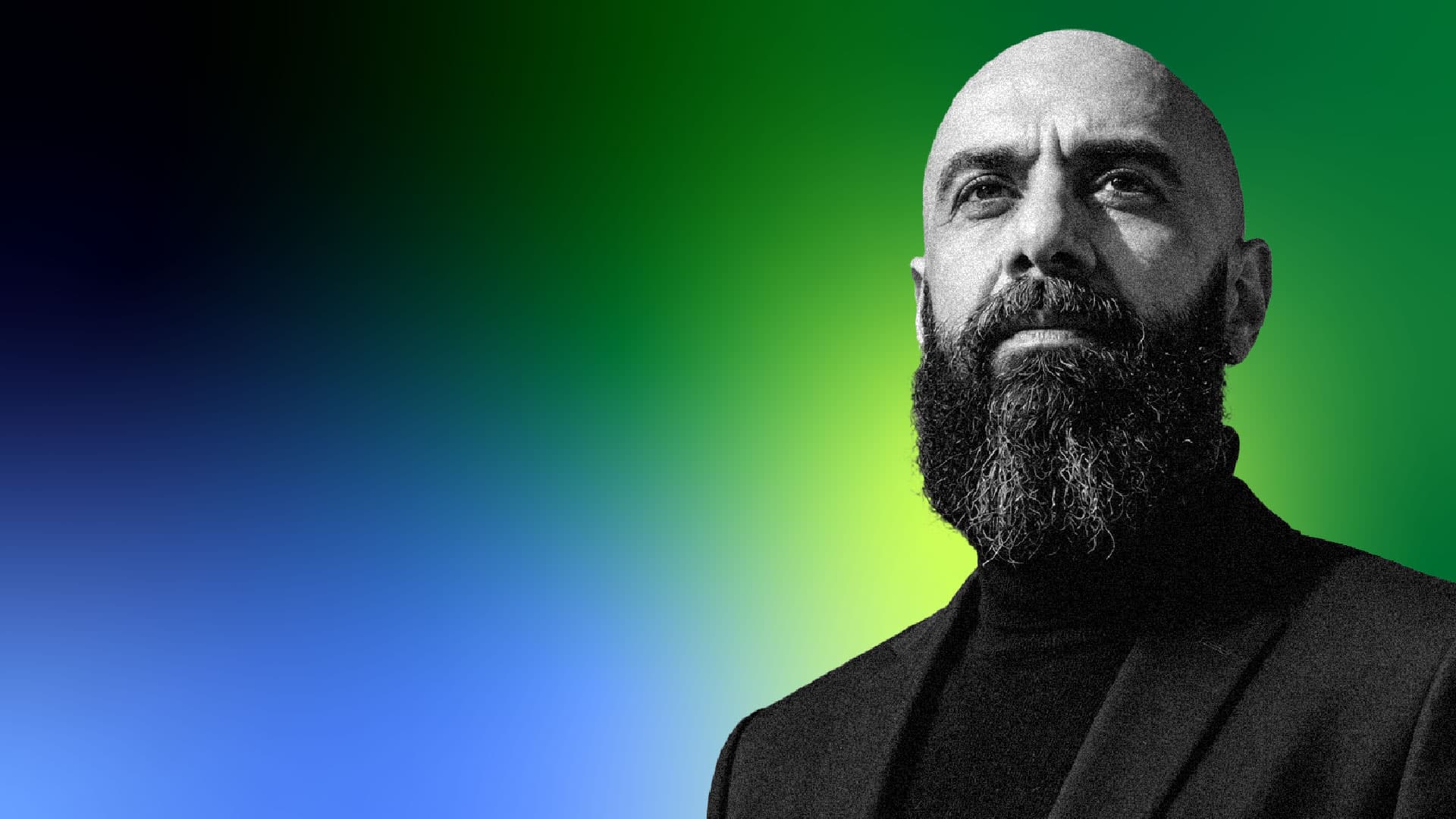
Adrian Peticila is CMO of mindit.io, a Romanian-Swiss software engineering company building AI and data systems for DACH enterprise in banking and retail. He's also the founder of the personal branding sandbox, Aah! Monster.
We sat down with him to understand what it means to create an AI-native marketing organization. Here's what he told us.
Marketing has been exposed

I'm CMO at mindit.io, a Romanian-Swiss shop with 300 specialists building AI and data systems for DACH enterprise in banking and retail. Our marketing is small and intentional, run by a lean team across digital, content, social, outreach, PR, SEO, and AI infrastructure.
The complexity isn't in the channel mix. It's in the buyer, including CTOs, CDOs, CAIOs in banking and retail across three German-speaking markets, people who can smell vendor-speak through a screen. You earn their attention with substance, or you don't get it at all.
I also founded Aah! Monster, a personal branding sandbox. And I've had 20+ years in the trenches. Financial product sales, business development across Europe, then marketing and branding.
I'd argue AI didn't transform marketing. It exposed it. Most of what we called "content" was filler that any tool can now generate in seconds. The job now is figuring out what's left.
More Articles
How AI-native framing changes marketing organizations
We use Claude as the operating layer. It's not a chatbot that the team queries. It's a system with skills, context, and a knowledge base wired into how we draft, research, and ship. Everything points back to one source of truth.
But the strategic move isn't tool selection. It's commitment.
Most marketing teams are stuck in the demo phase. They have three chatbots open, none trusted, with output spread across tabs and nothing compounding. That's not AI-native. That's AI-curious.
AI-native means picking a primary system and building real infrastructure on top of it. Voice. Context. Standards. The team gets faster because the system gets smarter, not because the team prompts harder.
Tools commoditize. Infrastructure compounds. That's the whole bet.
So, we rebuilt around the AI-native frame. A different operating model where AI is wired into how the work gets done, not bolted on the side. And because of that, the floor went up, capacity opened up, and roles shifted toward judgment.
The team stopped chasing tools and started building on top of one. The AI Manifest is a recent campaign that, under the old model, would have eaten a quarter and a full team. We ran it in a week with a small crew.
The speed isn't the interesting part. The bottleneck in most marketing was never production; it was conviction. AI doesn't fix that. It exposes it.
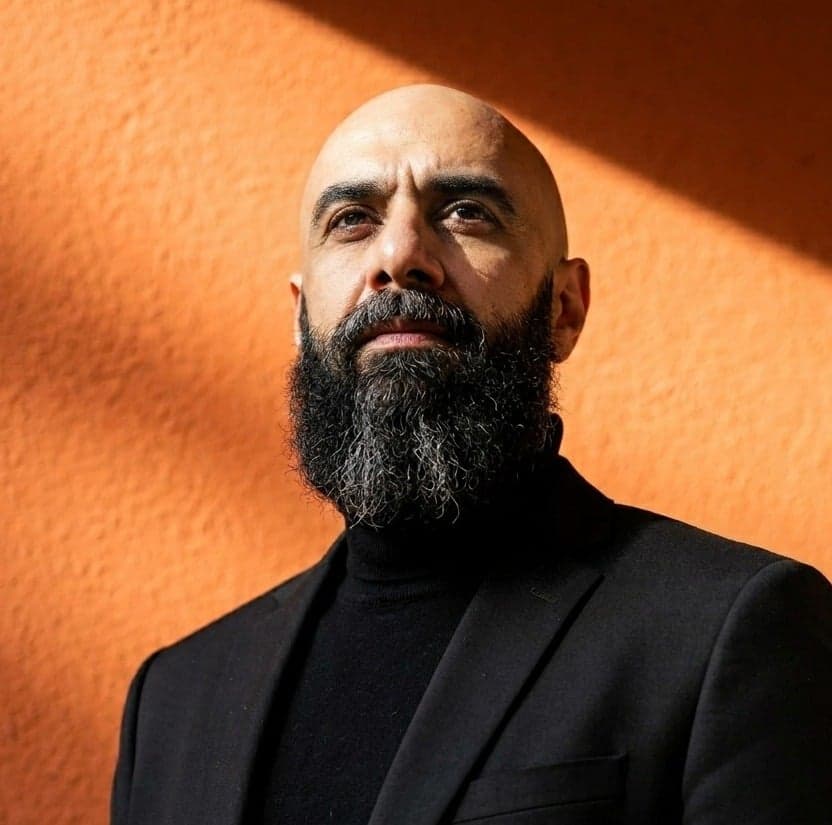
Adrian's Thoughts
Most marketing teams are stuck in the demo phase. They have three chatbots open, none trusted, with output spread across tabs and nothing compounding. That’s not AI-native. That’s AI-curious.
How to distinguish AI tasks from human tasks
AI runs the floor: Drafts, variations, summaries, research collapse, repurposing across channels, the first 90% of any artifact. Anything that looks like a task gets handed to a tool.
Humans run the ceiling: Position, conviction, taste, the call on what's worth saying in the first place, the relationships, and the judgment on when the AI's output is clean and when it's slop wearing a tie.
The split is simple. AI is fast at average. It's bland at distinct. And distinct is the whole job in marketing.
If a tool can do it, it's not the work. It's the prep.
Why systems are more important than AI tools
Here's what I'm seeing:
- Output capacity multiplied without headcount growing.
- Campaigns that took weeks now take days.
- The team's social media role expanded into real strategic work because execution stopped eating the calendar.
- Director-level LinkedIn went from sporadic to consistent, with each voice intact.
But it was bad in the beginning. The first six months were a graveyard of half-experiments. Tools opened, abandoned, opened again. Output that looked clean and read like nothing. Posts that slid past the audience without leaving a mark.
AI compounds whatever's already there. Strong system, stronger results. Weak system, more confident slop. So, we had to improve our systems.
Why AI failures point to upstream problems
Anywhere AI compensates for a weak strategy upstream, performance will be subpar.
So, we started reading every miss as a signal pointing upstream. Most often, it pointed to the same thing where a strategic decision we'd been postponing because manual effort was hiding the gap. The fix required a decision.
For us, outbound was the clearest case. AI personalization didn't fix the trust gap because the gap was never about phrasing. So, we rebuilt outbound around point of view first, with personalization second.
Same pattern with content velocity. More output, same indifference. We moved upstream, sharpened the positioning, and cut the topics that didn't earn airtime. Pick a position. Put your name on it. Defend it in public. Make everything point back. Now, AI accelerates a thesis instead of multiplying noise.
The misses pointed at the real work. We opted to do the work.
Anywhere AI compensates for a weak strategy upstream, performance will be subpar…AI personalization didn’t fix the trust gap because the gap was never about phrasing. We rebuilt outbound around point of view first, personalization second.
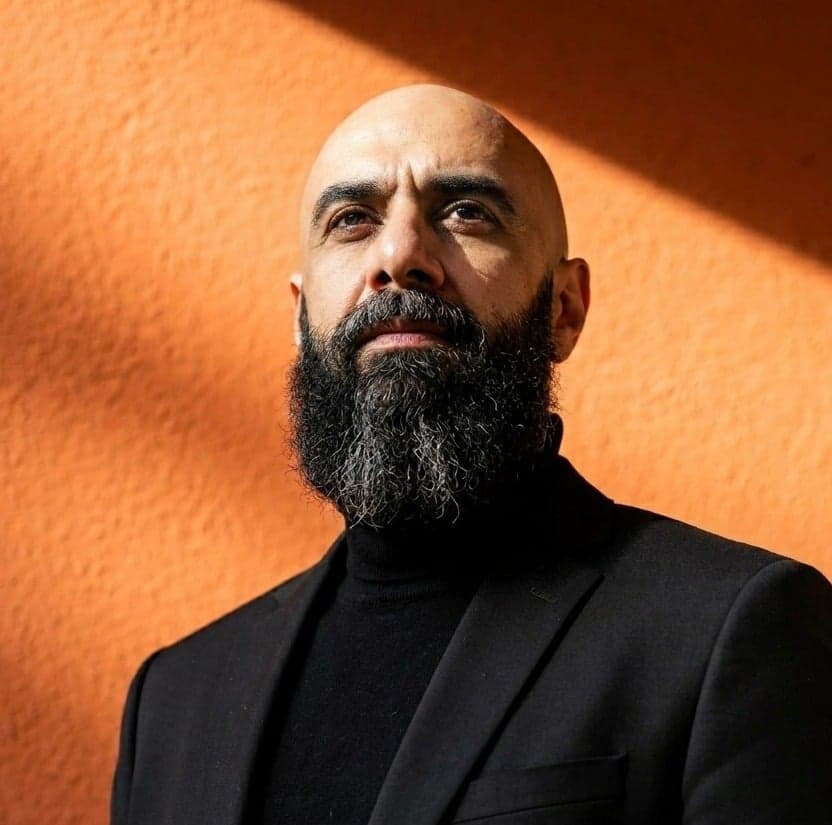
Why marketing leaders are focusing on the wrong risk
Leaders are watching the wrong risk. They're worried about hallucinations, factual errors, embarrassing outputs which are the visible failure modes. But it's the invisible one that's more dangerous.
Every team is now using the same models, feeding similar prompts, and optimizing for similar outputs. The result is a market where the differentiation gap is closing fast. Competitors sound more alike every quarter. Brand voices flatten toward the same tone. Positioning collapses toward the same vocabulary.
A useful test: Feed AI something a person wrote, then ask it to produce ten more in the same voice. Output 1 is decent. Output 10 phrases the same observation in ten different ways. The model averages the input and remains there. We hit this issue across multiple content streams early on. The output was clean, on topic, technically correct, and quietly identical. The edges that make a piece feel human (the grudges, the off-angle references, the unexpected jumps) flattened into competence.
AI is making everyone look competent and indistinguishable at the same time. Competence is the new commodity; distinctiveness is the new moat.
Adrian's Advice
A useful test: Feed AI something a person wrote, then ask it to produce ten more in the same voice. Output 1 is decent. Output 10 phrases the same observation in ten different ways.
Why CMOs must start with position
If I were starting over, I'd focus on position first. I'd open by deciding what we stand for, what we refuse to do, and what we'd defend in public when hedging would be easier. This work doesn't require a budget. It requires conviction.
Then, I'd build infrastructure before campaigns. There's the knowledge layer, voice profiles, along with a set of standards. This is the system the team writes against. Most CMOs do the opposite where they're burning budget on campaigns, then wondering why the second campaign costs the same as the first. Infrastructure compounds, but standalone campaigns don't.
Distribution comes third. You need to make an investment in being unavoidable in the few places that matter. Partnerships, owned communities, and citation surfaces. The places where trust forms for your audience are where you need to be visible.
How AI removed the separation between brand and demand

I used to believe that brand and demand were two different jobs.
I held that line for years. Brand was the long game, demand was the short game, and a CMO ran both lanes in parallel without letting either one starve the other. They operated with different teams, metrics, and timelines. I defended the separation because I'd watched too many companies collapse brand into demand and end up with neither.
AI made me let it go. When buyers ask an AI assistant a question, no brand phase precedes the demand phase. There's one moment where the trust you've built either surfaces your name, or it doesn't. Brand isn't building toward demand anymore. It's executing demand, in real time, every time a buyer asks a question with your category in it.
The lane separation served me well for a long time. But, it doesn't anymore. The work is one job now. And, I'm still adjusting to that but, I'm glad it happened.
How AI provides new ways to measure brand
The whole "brand is unmeasurable, attribution is impossible, just trust the long game" position is a relic. It was true when brand lift surveys and aided recall were the only signals. It's not true anymore.
AI gave us new measurement surfaces. These three matter most:
- Citation rate: how often AI assistants quote you.
- Narrative consistency: whether the framing matches the position you've claimed.
- Voice presence: whether you appear in the conversations AI tools draw from.
The whole “brand is unmeasurable, attribution is impossible, just trust the long game” position is a relic…It’s not true anymore.
How CMOs can double down on GEO
Here's our SEO and GEO process, end-to-end.
- We map the platforms and surfaces where buyers research, not just where they Google.
- Then, production: long-form, off-platform threads, content that earns citations from AI assistants and humans alike.
- Then, the loop: track what surfaces, double down, cut the rest.
Claude carries most of the load. Research, drafting against our voice, structured page generation at scale, and the analysis loop on what's getting cited. The underlying infrastructure (voice, context, knowledge) enables the work. And specialist tools fill the gaps for tracking, schema, and off-platform monitoring.
Traditional SEO optimizes for one engine. GEO has dozens. CMOs visible in 2027 build citation surfaces now, while others still debate whether AI search counts.
Where marketing is going in five years

What does marketing look like in five years, or three, or one? Smaller. Sharper. The function pulls closer to the CEO and product, further from the campaign calendar.
Production becomes free. Distribution becomes the hardest problem. The moats that survive are the ones AI can't copy: accumulated trust, distinctive positions, partner ecosystems, depth of relationship.
The CMOs who'll matter in 2030 are the ones using the next few years to build the slow assets. Position. Authority. Trust. The window is open now. But it won't be open forever.
Why CMOs must cut what no longer serves the organization
My advice? Kill. Your. Darlings.
Not the campaigns that failed. Those are easy. Kill the ones you're proud of that aren't working anymore. The processes that make you feel like a marketer but don't move the needle. The relationships that run on inertia. The dashboards that prove you're busy without proving you're useful.
One concrete example: We doubled down on partnerships and killed a chunk of standalone brand spend to do it. For years we, ran the usual mix. Independent events, independent content, independent campaigns. We pulled the budget and redirected it into partner-led formats: joint events, co-built content, shared stages, partner-introduced conversations with the buyers we actually wanted to reach. Less visibility on our terms. More credibility on terms that were earned. Trying to outshout the market on your own is the most expensive vanity in B2B marketing.
Most of what made a CMO good before isn't going to make a CMO good now. That's the job. Not adopting tools; cutting weight.
Adrian's Advice
My advice? Kill. Your. Darlings…Most of what made a CMO good before isn’t going to make a CMO good now. That’s the job. Not adopting tools; cutting weight.
Follow along
You can follow Adrian Peticila's work on LinkedIn and his personal website. And check out Aah! Monster for personal branding.
More expert interviews to come on The CMO Club!