
Your customers have more options, more messages, and less attention to give. For marketing leaders, the challenge is no longer simply sending more relevant campaigns. It’s building the systems, data, and internal trust required to personalize at scale without handing every decision over to an algorithm.
Lisa Checchio, Chief Commercial Officer at EBG Solutions, and Maryssa Miller, SVP of Digital Commerce and Customer Engagement, share how EBG is approaching that challenge across billions of emails annually. They unpack the proprietary AI merchandising tools they’ve built on their own data, why human review remains essential, and how small experiments helped turn AI adoption into a cross-functional operating model rather than another isolated technology initiative.
What You’ll Learn
- How EBG uses first-party data and AI to personalize merchandising across a large, highly segmented customer base.
- Why competing for customer attention requires more than optimizing individual campaigns.
- How human review creates a stronger trust layer around AI-generated recommendations and content.
- Why Lisa started EBG’s transformation with a cross-functional listening tour instead of a finished strategy.
- How small experiments and visible proof points helped reduce resistance to larger operational changes.
- Why removing repetitive work can increase team capacity without diminishing the role of human marketers.
- How AI-supported workflows can preserve institutional knowledge and distribute work more effectively when team capacity changes.
Key Takeaways
- Personalization needs more than segmentation.
EBG uses proprietary AI and first-party data to surface more relevant offers at scale. - Keep humans in the review loop.
AI handles the heavy lifting, while marketers assess the reasoning and make the final call. - Build buy-in before you build the roadmap.
Cross-functional listening helped EBG align its transformation with real business needs. - Prove value through small experiments.
Early wins reduced resistance and created confidence for larger investments. - Automate the most cumbersome work first.
Removing repetitive tasks gave the team more time for strategy, creativity, and testing. - Use AI to add capacity, not replace people.
The team used AI-supported workflows to distribute work and maintain continuity without losing human judgment.
Chapters
- 00:00 — Personalizing at Scale
- 01:31 — Inside EBG
- 06:05 — Customer Data & Relevance
- 07:51 — Competing for Attention
- 12:52 — Building Customer Mindshare
- 16:05 — AI-Powered Merchandising
- 20:01 — Experimentation Builds Trust
- 22:26 — Cross-Functional Buy-In
- 26:13 — Getting the Strategy Right
- 29:34 — Automating Team Pain Points
- 32:03 — Creating More Capacity
- 34:59 — AI & Team Continuity
- 39:53 — Keeping Marketing Human
Meet Our Guests
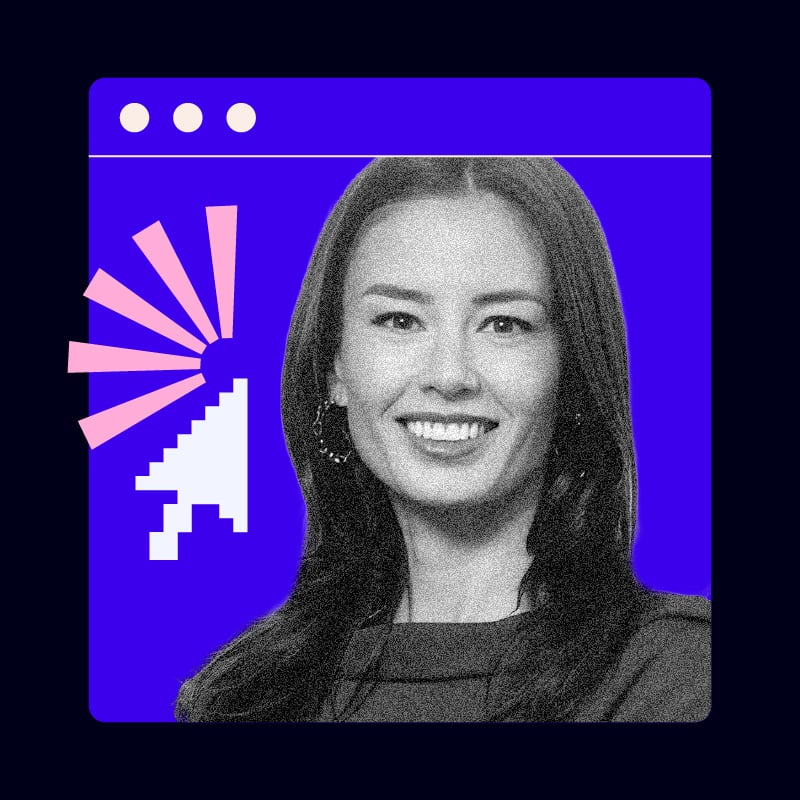
Lisa Checchio is the Chief Commercial Officer at EBG, where she leads marketing, customer experience, loyalty and CRM, corporate sales, data analytics, and communications to drive growth across the business. A seasoned global executive with nearly 25 years of experience across travel, hospitality, and professional sports, she previously served as Executive Vice President and Chief Marketing Officer at Wyndham Hotels & Resorts and spent 11 years at JetBlue Airways. Recognized for her expertise in brand building, customer experience, and commercial strategy, Lisa has been named among Ad Age’s “40 Under 40” and the Global Business Travel Association’s “Top 50 Women in Travel.”
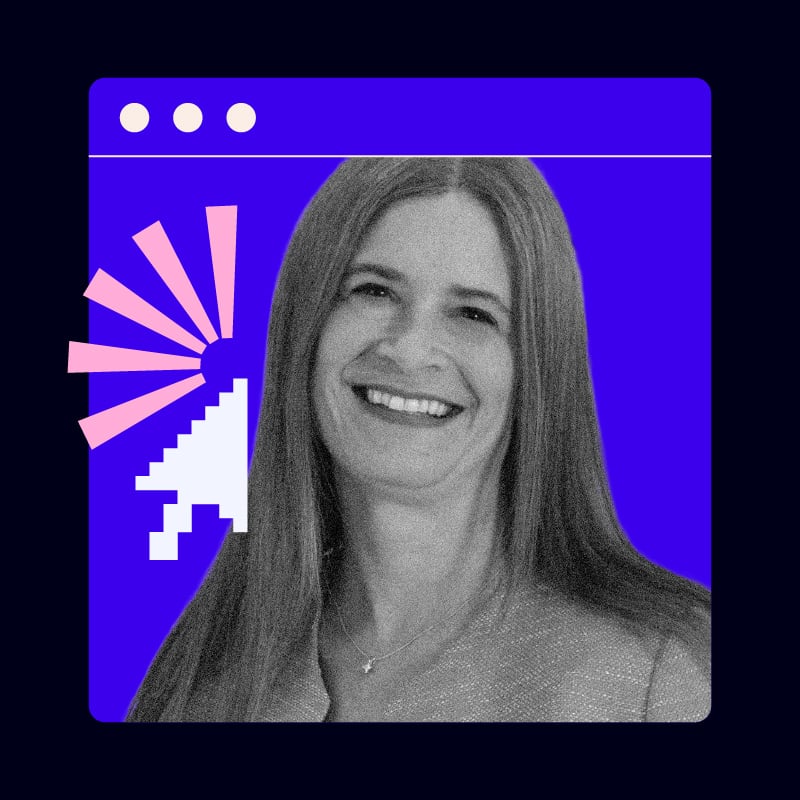
Maryssa Miller is the Senior Vice President of Digital Commerce and Customer Engagement at EBG, where she brings extensive experience in digital product strategy, e-commerce, and customer experience. An award-winning, mission-driven product executive and omnichannel commerce leader, she has built and led digital teams across travel, hospitality, retail, and technology, including leadership experience at JetBlue. Known for connecting business strategy, technology, and customer needs, Maryssa focuses on creating seamless digital experiences that drive engagement, revenue growth, and long-term customer value.
Resources from this episode:
- Join the CMO Club Community
- Subscribe to the newsletter to get our latest articles and podcasts
- Connect with Lisa and Maryssa on LinkedIn
- Visit EBG Solutions
Related articles and podcasts:
Breanna Lawlor: Your audience is getting 30 emails a day, probably more. Every brand they’ve ever bought from is competing for the same 30 seconds of attention. So how do you make sure your message is the one they open? Personalizing at scale sounds obvious, but most marketing teams are still batching and blasting, or they’re handing the keys to an algorithm they don’t fully trust. This episode is about what it looks like when you create the workflows to get it right.
My guests are Lisa Checchio, Chief Commercial Officer at EBG Solutions, and Maryssa Miller, Senior Vice President of Digital Commerce and Customer Engagement. Together, they oversee go-to-market strategy and the full member life cycle for one of the largest employee perk platforms in the country.
In this episode, we get into how EBG built a proprietary AI merchandising tool on top of their own data, plus how they earned cross-functional buy-in before rolling out a transformation at scale. We touch on how structured experimentation led to team security and why the human review layer is what makes the whole flywheel trustworthy.
I’m Breanna Lawlor. This is The CMO Club podcast. Welcome, Lisa and Maryssa. Let’s dive in.
Hello everyone, I’m Breanna. Thanks for joining us on The CMO Club podcast. Today, I’m very excited to introduce two of our guests, who will do a better job of introducing themselves than I will. But we have Lisa Checchio from EBG Solutions, and Maryssa Miller from EBG Solutions as well.
I will hand the bar over to Lisa to introduce herself formally, and thank you so much for being here.
Lisa Checchio: Breanna, thank you so much for having us with you today. My name is Lisa Checchio. I’m EBG’s Chief Commercial Officer, and what that means at EBG is that I look after all of our business strategies and teams that are focused on our go-to-market strategy.
So that can be everything from the way that our commerce sites look like to our end users, to the relationships that we form with our corporate partners, to our public offerings in our theme parks, entertainment space, and kind of everything in between. And just thrilled to be here for the conversation.
Breanna Lawlor: Thank you so much. Appreciate the introduction. Maryssa, on to you.
Maryssa Miller: Thanks, Breanna. So excited to be here as well. I’m Maryssa Miller. I’m the Senior Vice President of Digital Commerce and Customer Engagement, and what that means at EBG is that I’m responsible for the member life cycle, all the way from the point of acquisition to developing their lifetime value and increasing our revenue per user, as well as our overall website and email program, and all of our marketing efforts.
Breanna Lawlor: Fabulous. Thank you for that introduction. So it sounds like you two work in lockstep with one another to accomplish the goals set about by your organization. Can you highlight a little bit of what your focus has been this year at EBG Solutions, and also what EBG Solutions offers collectively for your customer base?
Lisa Checchio: Sure. Yeah, and that might be a good place for us to start. So EBG is a twenty-five-year-old company. We are one of the largest commerce and technology companies focused on perks, platforms, travel, entertainment, shopping, and retail. We are considered a B to C company in that many of our end users, which Maryssa’s team is responsible for, when we talk about our customers who are coming to our site, are actually employees of large– companies large and small.
Because of, you know, some of our very well-known brand platforms such as Tickets at Work, Working Advantage, Plum Benefits, which maybe people who are listening to this call may be more familiar with. Those are our consumer-facing brands that our corporate clients and the employees and customers really kind of, those are– that’s the interface that they’re using.
We also are the kind of the engine behind many large membership groups and affiliations as well as warehouse clubs, auto clubs, and the like. So you can think about some of those very big distribution partners and associations that people belong to. And that’s really the secret sauce of EBG is because our entire ecosystem is a closed user group that requires a login or verification or validation of your employment or your membership or your affiliation, it allows us to work with some of the largest suppliers in the world in theme parks, attractions, entertainment venues, travel, cruise ships, retail to bring these really special discounted perks and value added offers that are not available in an open marketplace because we’re really able now for those suppliers, the value that they see is that we’re able to bring a very intentional audience and a very highly engaged audience who have raised their hand to say, you know, “I wanna belong to this organization and this platform.”
We’re able to bring Incremental offerings to them that don’t necessarily compete with things that they do in the open market, and they can feel protected knowing that their deals are not going to wind up on certain sites like they tend to do because of the way that we really guard and protect their IPs.
Breanna Lawlor: Really valid point, too, because then they can … You have buy-in from them. You’ve got that trust component, which we know is essential. It’s kinda the only thing keeping you afloat.
Lisa Checchio: Yeah, and I’m sure we’ll talk a lot about trust in this conversation, but it really is, it’s trust from our corporate partners and our distribution partners.
It’s trust from our end users, our customers who are, you know, coming to our websites every day, and it’s our trust from our large supplier partners. And so if there’s one thing that we take very seriously is that trust and that responsibility that we have to each of our stakeholders, because it’s complex in that way, in that we have three very distinct customer sets that we work with, in addition to being a B2B2C and a B2C company at the same time.
Breanna Lawlor: Many touchpoints there. And I am sure that data plays a significant role in what you’re able to offer for your customer base. Maryssa, is this a good segue into your level of expertise and what you sort of do to contribute to this?
Maryssa Miller: Yeah, absolutely. So this past year, we’ve been very focused on our end user, and one of the groups that Lisa mentioned, and really focused on how we can build value for them.
We offer so much, everything from theme parks to Broadway tickets to live events, and we really wanna make sure that our members know about the wide variety of things that we have, but also make sure that we’re personalizing it to the different things that they’re interested in. So while someone may never be a Broadway user, you know, never visit Broadway, maybe they have a theme park near them that they didn’t know about that they’d like to visit.
So we’ve been really focused on increasing the lifetime value of all of our customers and making sure that we’re personalizing it as much as possible.
Breanna Lawlor: What is your main point of contact with this customer base? How are you connecting with them? How are you highlighting these deals? How are you communicating the value of these varied offerings with your customer base?
Maryssa Miller: We have a very large email program, and we send in the billions of emails every year. And that still is our primary method of communication. Customers sign up when they first join, and then that’s the beginning of our communication with them. We do leverage other channels. We’ve recently launched into push notifications through apps that we launched this past year, and that’s a much more tactical channel, I think, for our customers because they can visit us much more frequently when they have the phone at their fingertips.
So yeah, we have a very large email program, and we’ve really focused on developing not just the creative execution, but the segmentation of that email program this year, all the personalized elements, the data elements, bringing the loyalty program into that, and really through our merchandising engine that we have to showcase a lot of different offers in a dynamic way to all of our customers.
Breanna Lawlor: This is really fascinating, and I’m really curious to hear if you have competitors that you’re working against. And I know this wasn’t something that we had talked about for our questions initially, but I wanted to know if you’re working against external competitors, internal competitors, or really it’s just time that you’re up against time and attention that are your primary competitors for the service that you offer.
Lisa Checchio: Our business has– There’s a complexity to it just in terms of how robust it is in our business lines. And so in each one of those Business lines in the way that EBG comes to market, there are competitors. So we do see competitors in a corporate perks platform perspective. We see competitors in the aggregators of travel.
We see competitors in the aggregators of discounts, public discount sites. And at the product level, we actually see competitors within the category. So we will see multi-tab shopping. If someone is on our website searching for a movie ticket, they could very well be on the direct site looking for a movie ticket, as well as a kinda aggregate discounter site looking at that same movie ticket, and that’s the same in a lotta categories.
We sell… We have a very large retail program, so if you think about from laptops to cars to movie tickets to theme park tickets and the like. And so we take best practices from knowing that within each one of our categories, because also of our size, we actually do directly compete with some very large retailers that you can think of because people will go to one aggregator to shop for travel, maybe the brand directly for a hotel, and then to Tickets at Work or Working Advantage platform to see the difference.
And so it’s really critical for us in the work that Maryssa and her team are leading to be mindful of where else our shoppers are because that is a critical component when we think of our direct B2C business. When we think about our B2B business, we need to be best in class with some of our competitors that could be going after some of these large associations or these large corporate entities and trying to offer the same type of benefit for their employees or their members.
And so in that case, where we really need to ensure that the ease of use is there, that there’s real value that we’re bringing to their members or employees, and that, you know, that decision-maker, either in that association, organization, or company, is seeing the value of the relationship, right? We don’t wanna be one more thing for them to have to manage.
We want it to be something that brings inherent value to their members or their employees, and that’s really what we’re looking at every day.
Breanna Lawlor: It’s super important, and it seems like you’ve got the right people in place in order to do this. Now, two things come up for me based on what you just shared.
One thing I wanted to ask is, Maryssa, how are you keeping tabs on your competitors in a way that allows you to stay on the forefront of what they might be doing, and you stay ahead of the curve? And then also, Lisa, for you, you’re not necessarily selling B2C to begin with. It’s B2B that you’re building that relationship with, and you’re not selling to the end user initially.
You’re selling to an HR leader. Correct me if I’m wrong here. So my question is, let’s maybe send it over to Maryssa to talk about the competitor element, and then Lisa, I’ll come back to you and ask about how you’re positioning it in such a way that you are selling the idea, the concept to the HR leader.
Maryssa, take it away.
Maryssa Miller: I mean, as Lisa mentioned, there are so many different competitors really for depending on the category or what the customer is looking at, and as well as the perks platform. But we’re really competing for customers’ attention, and so we’re really looking at all the different ways that the different types of competitors or e-commerce sites are communicating with their customers, and often those are overlapping with ours.
And so if someone’s getting ten to thirty emails a day, even into their personal inbox, how do we make sure that we stand out within all of those communications? They may only open one that day because they’re really busy doing something else. And so we wanna make sure that ours is the one that stands out, but also developing that overall trust with them, that they know that they can find really great deals with us, that they want to open that email or that push notification that they get from us.
So we are looking constantly at what all of our competitors are doing at the, you know, the different e-commerce sites, going to– out to conferences and things like that to understand, as well as using AI even to start to see what other competitors are doing at the same time. What is the seasonality that they’re driving?
Because we wanna be a part of those conversations and have our members ultimately think about us.
Breanna Lawlor: So you’re trying to get into their headspace before they need the thing that you can then- Absolutely …provide for them. Yes. Okay. Okay. Yeah. Right on. Thank you for sharing that.
Lisa Checchio: And I think what maryssa is saying is really so critical to the conversation too, because, you know, we want mind space for selling of any product right now, right?
For any brand, even from the beginning of time. Now, of course, we’re in this very kinda AI-driven tech era that we’re in terms of how customers are learning about brands, figuring out where they wanna shop, how to give their loyalty, what’s really gonna be the best deal that I’m going to get. I think there’s a lot of peace of mind that people have.
You know, the worst thing you want is that buyer’s remorse where you buy something, and then you realize you can find something else. And so there’s so much more that we need to do today because I think of the prolific- … proliferation of where people can buy things and how they buy things and how they are told what they should buy and when and where.
But I think that idea of mind space for your brand has been here from the beginning. You know, and that’s really what we’re trying to do is be a part of the consideration set. It’ll dovetail into just the way that many people learn about our brands are through their companies or their associations.
They’re not necessarily seeking us out directly And we aren’t selling a product to them. We are selling the value of this entire marketplace that we own and run through the hundreds, if not thousands, of supplier partners that we bring into the site. And so because of that, having that set of “I should check Working Advantage or Tickets at Work to see if they have this product,” ’cause most likely we do, that mind space is really what Maryssa is talking about.
Because once you’re there and you see the value, then maybe that next time you’re going into market to buy something, you’ll come back and check that too. You don’t have to just come to us for a particular type of product, like I’m in the market for a computer ’cause my kids are going to college and I need to figure out a computer.
You can also see, do I also need a hotel room when I move my kids to college? Do I also need to get them a car because they’re going to college? The breadth of the platform is such that we want to create that mind space and that trust where people are coming back, regardless of the product that they’re looking for, to check us first to see it’s there, and then keep giving them a reason to come back because we understand who they are, what they look for, where they live, and what life stage they’re in, which Maryssa will talk about.
But that’s been a big shift for us, is this focus of kind of life cycle and their relationship with our platforms, as well as who they are and what they need at the time.
Breanna Lawlor: That’s fascinating, ’cause you’re really looking at the customer lifetime value over a, like a very long period of time, and you’re also in lockstep.
You’re conditioning buyer behavior to think of you before they need that thing, and that is a really hard thing to do because, as we know, as marketers, as people, change is really hard, especially if you don’t have trust. But when you’re leading with trust, change is then possible. So Maryssa, I’m gonna pass it back to you here because I think this is quite fascinating.
I’d love to hear about how you’ve adapted sort of in this new AI era that we’re in. How are you utilizing these tools to better position yourselves to be in that position of trust?
Maryssa Miller: Since we are a closed loop ecosystem, we’re really not focused on how we appear as much within the engines just yet. I’m sure that will change, but it’s more about how we bring what’s important to our members to the forefront.
And so a lot of the tools that we’ve been using have been focused on the best offer for the customer at the right time. So we’re using a lot of these large language models to start to parse out what seasonality is important to our customers, where our customers are shopping, what’s trending in the marketplace.
I feel like those things have helped us so much in, in terms of what we’re presenting to the customer and creating that cohesive story that helps to build the trust of all the wonderful things that they can get from us. But Also what’s really important to them. So we have something internally that we’ve been working on that really helps us with that merchandising engine.
We’ve also used AI a lot for generating the right copy and, you know, even it’s funny because we use AI to develop the human elements of it. But I do think that’s what’s actually happening because we can generate the content and then use the voice that we have in order to make sure that it makes sense for the customer and is more personal.
And so we’re not pushing anything out that’s just purely AI-driven. It’s about allowing our teams to better use the tools and much more efficiently in order to create the right messaging and the right offers for our customer.
Lisa Checchio: Yeah. And I’ll add, I think the proprietary tool that we’ve built to help with the merchandising of offers, because, you know, a lot of the value we’re seeing now is not only the size of our emailable base, as Marisa said, we use email as our main channel, but the ability for us to segment that email base so that we are really sending the most relevant offers, it leads to a complexity of merchandising.
When we think of if you take an email down to its brass tacks of a container for a photo or a container for copy, or what the headline can be, what the lead offer can be You know what, this AI power tool that we’ve created, a proprietary tool that we’ve created with our own data using our own systems, really helps us to ensure that all of that merchandising space is maximized both for us and our supplier partners, and is going to drive the most value to the end user.
So you get into this really beautiful flywheel of it’s good for us, it’s good for our supplier partners, it’s good for the end user, and we see that repeat. But I think what is critical to what Maryssa just said is the tools you give the reasoning and the rationale for why they are recommending the placements that they do.
And I think that helps to ensure that, you know, we’re not just letting the machines do the work. There’s a core human element that still is included in it. They’ve done the heavy lifting, then they share the reasoning and the rationale, and then our teams now can strategically go in and make sure that, yes, this makes sense.
I agree with why it was chosen, and I think that’s what you meant, Maryssa, by that, that human element is still there of like it actually, I think, may even allow us to be more human because we’re not just writing and batching large emails anymore. We can actually kind of personalize them at scale, which is what I think every marketer is really shooting for, but do it in a way that really leverages AI and these tools that we just have never had at our disposal.
Maryssa Miller: It seems like it’s a shift from what used to happen, where there were algorithms running, and you often didn’t even know what was going to your end user, and that was really scary for a lot of marketers that sometimes it would get it completely wrong. And so I think the way that we’re doing it now, it gives us the trust as well to know that there is some method to what’s happening and that we can decide if that continues to meet with the strategy and the story that we’re sharing with our members.
Breanna Lawlor: That makes a ton of sense, and it’s actually… it’s quite brilliant really. You’re using this data to power your AI tools that allow you to be more effective and more personal, more human with your customer base, and that flywheel continues. But this didn’t happen overnight. It took some time to get here, I imagine.
It sounded like to me when we first spoke, there was this lens of experimentation that you led with for your team. Can you speak to how you set the foundation for experimentation and trust within your team so that you could get to this stage where you are now and maybe reverse engineer the process a bit?
Maryssa Miller: Yeah, absolutely. I mean, that’s been something that I’ve always loved doing, is experimenting. But, you know, I think we built some small wins very early in the process. So there was a lot that started, you know, when Lisa joined and before me that was helping to sell the story of why we needed to do what we were trying to do.
But as with any major change with transformation, there’s always a little bit of hesitation of, you know, “Is this gonna work? Is this the right thing for us?” And so I think that starting with a lot of these experiments, but allowing the team to fail, you know, if it didn’t work, that was okay. But when we found those small wins, we continued to build off of them, and they just led to larger and larger wins.
And then it allowed us to make even bigger transformations. As, you know, I think, look back on what we’re doing over the past year, even using AI to power some of our merchandising is incredible, and it was a large team effort. It certainly wasn’t just my team that was involved in that. Everyone from the data team to analytics to merchandising to marketing, I mean, it’s really across the board.
But I think that now it’s really become part of our operating system, where we are constantly asking, “What do we want to test? What do we want our members to think and feel, and what would success actually look like for everything that we do?” And, you know, it’s been really great. So we’re proud of the wins and at the same time, when something doesn’t work, it’s also a learning for what we can incorporate for the future.
Breanna Lawlor: I’m curious, was your team one of the first to take this experimental approach, or was this already happening within the organization, sort of in silos? It sounds like you’ve managed to make this a cross-functional endeavor, which is a hard thing to do, especially for an enterprise organization. Do you have any tips or suggestions for folks who are maybe a little further back in their journey than where you’re at that would maybe enable this to be a smoother experience?
Lisa Checchio: I think the enablement and the buy-in of the organization is the most… It has to be the beginning, and that’s really where I started our journey for this transformation, was really understanding… Really just went on a listening tour. Met with my counterparts to really understand not only their side of the business, so from operations to product to technology, finance, shared services, like understanding where they were and what their strategies were and what they were trying to do, and then asking them what they thought about our organization.
What they thought our underbelly was, what they thought we were doing really well, what they wished we always were able to do. If they were writing it, what they thought we should be doing. And it allowed, when we came to the time to present the strategy of what we were going to kinda embark on in this kind of immediate term, immediate, like in a month, six months, a year, then multiyear as we look out in terms of what we’re building towards, it helped to point back to say, “I heard you say this.
This is what we’re doing. I’ve heard you say this about your own organization. This’ll help to solve for that.” Or, “This is how we will integrate into things that you’re already building on the product team or in the data team or for our technology.” I mean, we’re an e-commerce platform, and so everything that we’re doing for our customers, end users that we’re talking about, Maryssa’s end users, really are predicated on the rest of the organization’s ability to deliver that And so by really starting from there, we brought them along on the journey with us versus me just kind of writing the story in a vacuum, bringing Maryssa on, bringing the teams on, being able to talk about kind of building it in a silo and then trying to bring it to the organization.
I just… I’m sure that has worked in other organizations. For me personally, and for our company I don’t know if we would have been able to make as much progress as we’ve had if we had tried to do it that way. And I think, you know, collaborative teams cross-functionally, they can’t be overlooked. They are such a critical component, particularly when we’ve talked about trust a lot on this call already.
The trust of your internal constituents and your other leaders and the working teams it- that has to happen at every level in order for this type of transformation to occur.
Maryssa Miller: Absolutely. I think that’s such a great point because it’s not just the senior leaders and letting them understand why we wanna move in this direction, but it’s the teams executing, too, because then you’re gonna have resistance from their side if they don’t believe in it also.
I think parallel pathing these things is really critical. So as that transformation is happening and that story is going across the organization, having these small wins that build that trust to say, “Here are some green shoots of what actually can work for us,” and that helps to drive the larger transformation and investments if those are needed.
Because if it’s all about strategy and investment, that’s sometimes just too big a leap of faith to take, and I think that people will likely just resist that more often.
Breanna Lawlor: Which makes sense. They’re just trying to protect what they know, and if something is foreign, there’s no reason to trust it. They’re gonna be resistant unless you then have that collaborative approach.
The other side of this, too, is by having those conversations and taking that listening angle, you also uncover potential risks, I imagine. You flesh those out early on, so you can account for them in the building phase. Was there anything that came up that surprised you throughout this experience, this transformation journey?
Lisa Checchio: Not surprised necessarily, but I do think that your point is exactly right. Because you also, listening to your peers and just having conversations also helps you to understand the nuances of their business. We have a very… We keep saying it’s complex in its nature because of all of our constituents, all of our stakeholders, all of our different customer bases, different sales teams, different end users.
And so really taking the time to understand the inherent value that you bring to a customer We’re talking about a B2C customer in the way that we’re understanding the way that they come and use our site. But understanding customer value and the value proposition that we offer to them is such a critical component of making sure that you’re building the right strategy.
Our strategy works for our company because it works for our company. We’ve understand the nuances of it. We understand what people need internally, but what our customers need, and then we’re building strategies for them. And so I think, you know, there’s nothing that necessarily surprised me, but it definitely helped to understand components that maybe at a higher level, you assume that you n-understand because maybe you’ve come from a different organization, or you’ve worked in a different part of your business, and so you know that part very well.
And so it must be, it’s probably the same, or you assume that it’s the same. I think taking the time to really understand it just, you know, we all want to deliver value to our customers, right? I think that’s what every m-marketer is charged with. Every marketer is also charged with presenting their company in the best possible light for that end user.
If that’s value prop language, if it’s marketing language, advertising language, and then customer data. If people trust you with their data, they’ve raised their hand to say, “Yes, I want you to know more about me so you can deliver more value to me.” You know, really Understanding exactly what that means, I think, is really critical ’cause if you start down a path without that brief correct, I mean, everyone knows the brief is the most important part of any campaign.
You gotta get the brief right, and I think the brief is right at a tactical campaign level for one email that we’re sending tomorrow, and all the way from a strategic perspective of really understanding that you’ve got all the inputs right, and now we can build a strategy and the vision for where we wanna go.
Breanna Lawlor: It sounds so evolved from what has historically been a manual bit of trial and error type of process. It’s less trial and error now. You can still try things out and maybe it doesn’t work, and people can change their minds and their behavior for sure, but I think it ultimately comes down if you have that trust, you’re more likely to garner that attention.
If you have that attention and it’s something that they’re interested in, you’re gonna win. So in thinking about this, zooming out a little bit, for marketing leaders or people who are tasked with trying to do something of a similar nature, build something that either automates or improves or fast-tracks this informative sort of data funnel, is there anything that you’ve found that’s worked really well as far as working cross-functionally to try and feed that data in or set yourself up that this process isn’t so laborious?
I know that’s a bit of a long-winded way of asking. What has worked really well in a specific use case that has led to one of these wins, and were you able to replicate it in other areas?
Maryssa Miller: Yeah, absolutely. I mean, I think some of the things that we started with were more on taking what was very cumbersome for the team.
So looking at the pain points that they had across the organization and saying, “If this didn’t exist, what else could you be doing? What else could you focus on?” Because the team really was so focused on the day-to-day operations and the engines. And so we started there, and by automating some of those things, they were just so relieved that, you know, that thing that took so long was just kind of off their plates, and then they could do something that was much more fun.
I mean, most of the team has a marketing background, and so that’s what everyone loves, right? Being creative, connecting with our customers, doing something that’s new and exciting and novel. And so I think that really starting with the pain points really helps, and we’ve absolutely been able to replicate that multiple times over and over because we go on to the next pain point and the next pain point, and that’s been really helpful for the team and has really changed a lot of the process of the way we’ve done things.
Breanna Lawlor: That’s incredible, and what a smart place to start at, and you’re just trying to free up some time so you can do more of the exciting, thrilling work. Can you speak to anything that came up that you were like, “Oh, you were spending X amount of time on this,” and that’s really wild to me- Oh, wow. … ’cause I figured that took you, you know, 10% of how much it’s actually taking?
Maryssa Miller: That is a lot of what happened when I first joined. In fact, it’s a lot of what I heard even as I was interviewing, because everyone comes from different organizations and backgrounds and thinking, “Well, that shouldn’t take you that much time.” And then getting into the details of that, realize there is a reason why it takes that much time.
I mean, certainly it’s not for lack of the team wanting to try something else. It’s truly not having the right tools and capabilities, I think, of how to get things done, but then also maybe not even focused on the right metrics, the right KPIs of what we need to do. And so everyone just gets really bogged down in sort of their day-to-day, and it’s hard to look up from that and say, “How could we do this better?”
And so that was really, you know, our job as leaders, to help enable them and to help them develop those tools and get them the right connections to do that. So I think that’s really helped. And then when they build that trust as well, then they can start to take some of these things on their own because they’ve seen the proof points coming from it.
Lisa Checchio: Yeah, and I can’t imagine that… You know, we’ve all worked in multiple organizations. I mean, this is, again, not a unique element now and again. Many people listening probably go through the same thing. And the work changes in terms of just how we used to send an email or send a campaign 10 years ago versus how we send it now, versus how we’ll send it probably six months from now.
Now it’s just the, there’s such a rapid change of how we can do things. I think change was generally happening over time, just like it was in previous, you know? Right? And now it’s just always keeping… And I think that is a responsibility of a leader, to really keep track of where the time and the days and the weeks are going.
Because I think our teams, I mean, I think we have one of the best teams, if not the best team in the world. But you know, but I think it all comes from the best of intention, right? These are passionate people who care about their company, who care about our customers, who are coming to work every day and putting the effort in.
We need to be responsible to them to make sure that their effort has the return that they want it, they, that their own expectations are set for, right? As well as ours. And I think unlocking it and starting to use some of these tools now that remove some of that friction of the day-to-day have come with some of that manual.
It just– it fr- it’s the same person, I, you know? But now they freed up more thinking time, more creativity, more strategy, more testing time. We have a finite amount of hours in a day. How do we ensure that we’re using the time the best that we, the best that we can, and that we also are creating an environment where that intellectual curiosity of our teams are able to kind of wander a little bit and to learn more.
And I think some of the best ideas that we’ve implemented are really coming from our teams, right? Who have seen it and have been working in it, and now we’re actually able to bring their ideas to life. I mean, it’s so incredible. It’s exciting. It’s energizing, and I think it, the business has been, you know, better for it because they know our customers better than anyone.
Breanna Lawlor: I love that. That ideation component isn’t touched on too much. By freeing up some of the stuff that bogs you down and keeps you in this box, you allow people to think bigger and then actually make good on those ideas with the support of their team, and that’s… What a beautiful place to be. There was one thing that you had mentioned on one of our previous calls, and it had to do with someone going on maternity leave.
And you had mentioned this experience, which is a very- Yes … normal, you know, regular occurrence. People have families, they take a break from work, they come back. It is not a break, it is break from work. And they come back. And you had mentioned this was unsurvivable if you didn’t have these systems in place, and I had never heard that phrasing before.
Because often women go on leave, they come back when they’re ready to come back, hopefully, and then, you know, they pick up where they leave off. But with a system in place, I imagine this experience was very different. Can you enlighten me a little bit?
Maryssa Miller: Yeah. So I mean, this is something that, you know, happens in any team for any reason.
And often those same people are not sort of backfilled ’cause you realize, well, it’s gonna be a short amount of time, they’re gonna be out. And so by the time you train someone new on their role, it’s very hard to do that. And then it could be either a barrier for the rest of the team to pick up other work or just simply not be able to produce the work that you’ve been doing all along.
But now we’ve used some of these tools, like AI tools in creating copy and content, that has really helped feed in sort of the mindset of the team. So the style guide, making sure that it’s adhering to policies and the language that we wanna use. And we’ve allowed the other teams to start that process, and we still have somebody who is looking at that and deciding that it meets the guidelines that we want to put out to our customers.
But we really could not have done that without developing these generative AI tools. And I think that we still absolutely miss this person and can’t wait for them to come back because, you know, it’s still a critical part of the work that we do. But I really think that it’s helped distribute some of that effort throughout that whole team and really keeps everyone going.
So you know it’s certainly, you know, something that we have to deal with on an ongoing basis, but it’s really helped us to get better at doing it and dealing with that for whatever reason happens.
Breanna Lawlor: And I imagine it also makes it easier on the person coming back too, that someone… That the work was distributed, that they’re also recognized for their efforts, that this inherent, intrinsic, internal knowledge doesn’t just disappear because the person is gone.
It’s being utilized throughout that time. I think this is kind of a fascinating development and an angle I hadn’t really thought about previously, and you just hear so many different versions of what maternity leave is like and what happens to the company, and often there’s a lot of gaps. So this was a really creative way of closing that gap, and it sounds like a-
Maryssa Miller: And then one day we’ll have clones of ourselves, right?
And then we can actually clone.
Lisa Checchio: But I do think, you know, I mean, people take leaves now, maternity leave. The, in, in our example this was for maternity leave, but there’s so many reasons for people to need to take a leave of absence, and I think you said it right. The distribution of the work Is really what was another kinda outcome of this, where typically when someone has to take an extended leave, you kind of nominate a person to take it on in addition to their full-time role.
Or there are certain things that just don’t get done during that time because even though they’re critical, you know, we just don’t have the capacity to work on that. It just allowed the team to remain at the level of capacity and of the kind of expectations of everyone’s role, where there’s no burden that was necessarily passed on because that person wasn’t there.
And I think sometimes that is a… can sometimes creep into a team of when somebody is out or a fear of “Oh, my gosh, now I’m gonna have to… How are we gonna get all of this done?” And again, as Maryssa said, it doesn’t replace that person at all. If anything, now when that person returns, they can pick up where they left off.
We haven’t, you know, nothing has atrophied, and if anything, we’re getting stronger and stronger in the way that we’re using the bots that we have created, this generative, using our style guidelines, using our brand guidelines, our tone of voice, our, you know, everything is where we want it to be. It actually just adds capacity because going back to that idea of segmentation and wanting to be able to have personalized these messages at multiple billions of emails a year, we always need more capacity.
We always want, right? You know, we can always use more people and more hands and more eyes and more minds to create more personalized experiences for our customers. And so it never replaces somebody, but it just allows us to actually, I think, pass that on to the end user, going back to kind of some other ways that it’s really helped us because we really are able to write and merchandise and market to more customers in a more personal way.
Breanna Lawlor: Brilliant, and who doesn’t want more capacity in their day-to-day? This has been incredible. You, Maryssa and Lisa, you’re both inspiring leaders who are taking, you know, this tool that’s available to us, and you’ve made some really positive change with it. You’ve enacted this leading with trust in your organization, so you actually are benefiting.
But it trickles down the whole way through, and it’s so inspiring to hear about it, and motivating as well, because this is not done in a vacuum, as you said. This is a distributed effort to move us forward at a rate of change that no one can really keep up with on their own. But if you work cross-functionally and you rely on your fellow teammates, you can go far together.
Is there anything else you wanted to add as we wrap up our conversation? I mean, we’ve covered a ton of ground here, some wonderful takeaways, and I just can’t thank you enough for both being on this call.
Maryssa Miller: Yeah. Thank you so much for having us. I mean, it’s been really great. I mean, we’re obviously so proud of our teams and the work that’s been done, and you know, really happy to be here and hope to share that with others.
I think at the end of the day, you know, it’s the, the people that matter, right? And, you know, so much we talk about AI, but it comes back to the people, and the relationships, and how work gets done, and how work matters in our lives. And I think that it’s been a, a great conversation.
Lisa Checchio: Yeah. Well said, Maryssa.
We
Lisa Checchio: are people who are selling to people, the end user. And if we’re using, we should be using the technology available to us to make our jobs better, to make us smarter, better marketers, to deliver better experiences, and keep raising the bar on the experiences that we can deliver to our customers, because they should be expecting more and more from us because we have tools available to us that we never did before.
But we cannot lose sight that we are people selling to people, and that people, human touch is what will separate, I think, the marketers of today and tomorrow with the technology that we have, is to just not lose sight of that.
Breanna Lawlor: Thank you so much.