How Brands Become Part of Culture Instead of Advertising Around It

Most brands are still buying attention. Brooke Stites argues the brands winning today are earning it instead—by creating stories people actively choose to spend time with. As AI accelerates content production and audiences become increasingly adept at filtering out interruption-based marketing, marketers face a different challenge: creating work that's genuinely worth watching. This episode explores what it takes to shift from advertising to entertainment without losing sight of business objectives.
Brooke, Co-Founder and CEO of MODERN ARTS, shares how brands can become part of culture by serving existing fandoms rather than chasing trends. From Formula 1 and WhatsApp to AI-assisted creative workflows, this conversation offers marketing leaders a practical perspective on audience-first storytelling, human connection, and why quality—not volume—will continue to define standout brands.
What You’ll Learn
- Why brands should focus on earning attention instead of buying it.
- The difference between branded content and true brand entertainment.
- How tapping into existing fandoms creates stronger engagement than trying to manufacture one.
- Why understanding audience behavior is more valuable than simply increasing content output.
- Where AI meaningfully improves creative workflows—and where human judgment remains irreplaceable.
- Why quality and craft continue to outperform speed in an AI-driven content landscape.
- How successful entertainment properties create long-term brand equity rather than one-time campaign performance.
- What modern marketing leaders can learn from sports storytelling and audience participation.
Key Takeaways
- Audience-first beats brand-first. The strongest creative starts with understanding what audiences already care about, then finding an authentic role for the brand within that world instead of forcing a message into it.
- Culture isn't built through interruption. Outside of rare moments like the Super Bowl, advertising rarely becomes culture. Brands become culturally relevant when they contribute something audiences genuinely value.
- Human stories matter even more in the AI era. As synthetic content becomes harder to distinguish, audiences increasingly look for authenticity, transparency, and the "receipts" behind real human experiences.
- AI should strengthen—not replace—creative judgment. MODERN ARTS uses AI throughout its workflow to better understand audiences and accelerate execution, but storytelling, editorial decisions, and creative craft remain human-led.
- Quality compounds over time. Brooke prioritizes craft over speed because premium storytelling positions branded entertainment alongside the content audiences already love, rather than alongside traditional advertising.
- Design for participation. The best content invites audiences to remix, speculate, share, and contribute. Engagement becomes part of the experience—not simply a distribution metric.
- Original IP creates lasting business value. The Mercedes F1 and WhatsApp documentary continues gaining relevance as Kimi Antonelli's career grows, demonstrating how original storytelling can compound value well beyond launch.
- Respect your audience's time. In a world flooded with AI-generated content, marketers should optimize for value—not volume—and create experiences worthy of attention.
Chapters
- 00:00 – Earning Attention
- 01:18 – Finding the Fandom
- 03:17 – Becoming Culture
- 05:09 – The Human Advantage
- 06:40 – Audience First
- 08:07 – AI as a Tool
- 09:33 – Why Quality Wins
- 11:10 – Designing for Participation
- 12:09 – Fans as Co-Creators
- 13:55 – The Kimi Antonelli Story
- 18:05 – The Power of Sports
- 19:33 – Marketing That Adds Value
Meet Our Guest
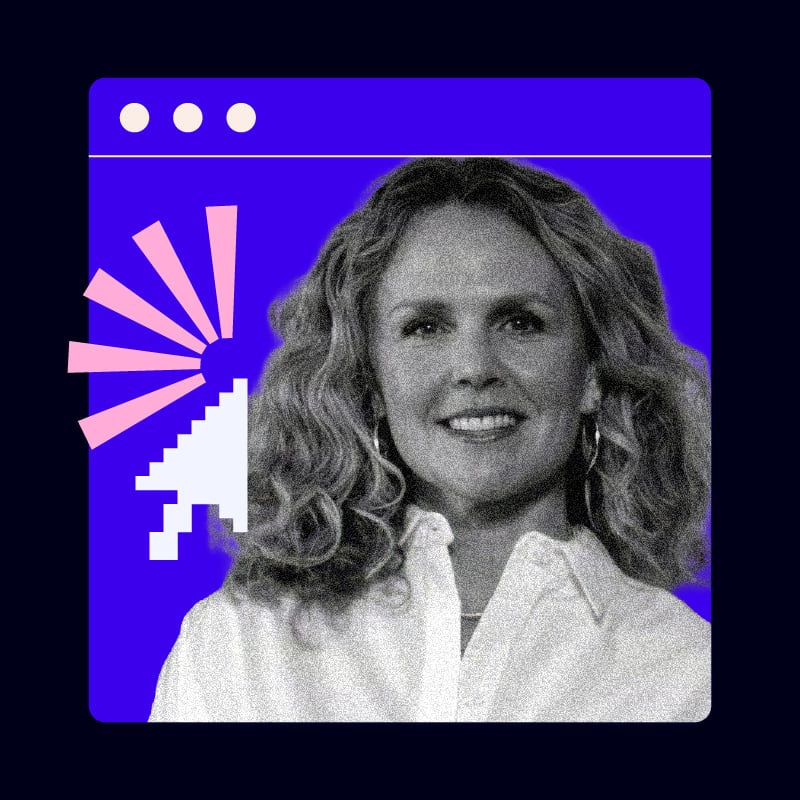
Brooke Stites is the Co-founder and CEO of MODERN ARTS, a creative agency that brings together the worlds of entertainment, storytelling, and brand marketing to help companies build culturally relevant campaigns. Before co-founding MODERN ARTS, she held senior brand leadership roles at Wieden+Kennedy, TBWAMedia Arts Lab, and 180LA, leading strategy and creative partnerships for globally recognized brands. With a career spanning nearly two decades, Brooke is known for combining sharp brand thinking with compelling storytelling to help organizations create meaningful connections with audiences and drive business growth.
Resources from this episode:
- Join the CMO Club Community
- Subscribe to the newsletter to get our latest articles and podcasts
- Connect with Brooke on LinkedIn
- Visit MODERN ARTS
Related articles and podcasts:
Breanna Lawlor: Most brands are still buying attention. Brooke Stites is building a company that argues that the future belongs to brands that earn it by showing up as storytellers, not advertisers, and by making things people are choosing to watch. In an AI-saturated content landscape, the volume problem is only getting worse.
CMOs who keep defaulting to interruption-based media are spending more to reach audiences who are increasingly skilled at tuning them out, and the brands finding traction are the ones rethinking the model entirely. Brooke Stites is the co-founder and CEO of Modern Arts, a brand entertainment agency named to Fast Company’s Most Innovative Companies list. She previously led global accounts at Wieden+Kennedy and the TBWA Media Arts Lab.
In this episode, Brooke breaks down what it means for a brand to be a part of culture rather than interrupting it, how Modern Arts structures work so the brand is never a product placement, but the essential catalyst of the story, and what she thinks most CMOs are getting wrong about the difference between branded content and brand entertainment.
I’m Breanna Lawlor, and this is The CMO Club Podcast.
Brooke, welcome. I’d love to hear who you are and what you do.
Brooke Stites: My name is Brooke Stites. I am the CEO of Modern Arts, which is a brand entertainment agency I founded with my partners Zach Ryder and Adam Groves. So we are an agency and a studio in one, and really focus on, with the brands that we work with, creating original entertainment, so like original IP- Yes
that’s in the form of docs, films, series- … real-life experiences, stuff that you end up seeing on most of the major streamers, but from a brand.
Breanna Lawlor: Yes, absolutely. So what’s fascinating about that angle is you’re creating something that people get really bought into. You’re naturally creating a fandom, provided you do it well.
Right. I’m sure there’s a bit of a formula to make this happen, but what have you found in your experience has led to some successes in creating these original products and generating this fan base that serves you well?
Brooke Stites: I think what we’re actually doing is not generating a fan base, but tapping into a fan base, and I think that’s where the key, I don’t wanna say it’s a formula, but I do think a key to success is certainly tapping into a fandom- Yes and really giving that audience more of what they want.
Breanna Lawlor: Yes.
Brooke Stites: And then I think you end up, yes, creating fans around the content that you’ve created- Right … or the experience that you’ve created, but really it is because you’re tapping into a fandom that already exists-
…
Brooke Stites: And really giving them something of value, adding to their life, and that’s why it’s so appreciated and welcomed, and like- Yeah
then you get the brand and the content of, that you’ve created, like- Yes … to be a part of. They’re inviting you in-
Breanna Lawlor: Yeah …
Brooke Stites: and it’s a part of the world that they already are in and love.
Breanna Lawlor: And then it becomes a part of culture- Right … too, which is huge. Yes. One thing you shared yesterday during your session is how if you can find what people are passionate about, it’s like that’s kind of gold.
From there- Totally … just endless opportunities. But the how, the why behind finding that passion, how have you been successful in that?
Brooke Stites: Well, I think all brands talk about being in culture, and the reality is you can’t- Very infrequently are you getting into culture via an ad. And I think there’s moments in the calendar like Super Bowl where- Right
ads are a part of culture. Sure. But that is a moment. I think that it is really about tapping into the fandom, and then really understanding your audience so deeply-
Breanna Lawlor: Yes …
Brooke Stites: where they are, who they are, what they’re consuming, what do they love to watch what are their true passions? And then adding to that.
Breanna Lawlor: Right.
Brooke Stites: And that’s where I think you are then invited in to be a part of culture versus trying to live alongside it.
Breanna Lawlor: Yeah. How do you navigate that when you’re working with a brand that has a specific MO in mind, and you know your audience or the audience that would be in their demographic? How do you navigate that with them when they have a predetermined idea, and you’re maybe the experts in what the audience needs or how it should be shaped?
Like, how do you work in collaboration with those brands?
Brooke Stites: Well, I think that every brand has an MO, as they should. Yeah. I mean, that’s their job- True … is to have an MO. I think it’s then our job to figure out how that MO either fits into their audience’s- Right … life in a way that feels genuine and authentic- and truly a part of their world- Right … versus trying to insert ourselves into it.
Breanna Lawlor: Yeah, and that’s pretty delicate too, because people are inundated with messaging. They want- Yes … authenticity. You had mentioned yesterday also that there’s a, a search for realness. Yeah. And I think we’re really good at filtering out what doesn’t feel real anymore.
But I imagine there’s some challenges there, because you need to serve a mission, and then people want one thing, and it’s … I feel like it’s a, a balancing act. And so you have something that you need to deliver on, and there’s just so many moving parts.
Brooke Stites: So many moving parts. And again, I do think it always comes back to being audience first.
Breanna Lawlor: Yes.
Brooke Stites: And that does get into them really responding well to human stories. True. Responding well to something that is real. Getting a peek behind the curtain of how things work or who someone is or … And again, but that all gets back to what’s the human element, and I think that’s what people are really responding to.
And I think we’ll see more and more of that in this AI world of, you know, I think we like to say we are learning to, or have learned to identify what’s real versus not. And I think that actually is getting pretty hard. Yes. And so there is, I think, will be, like, a craving almost for the receipts- … of what’s real.
Yeah. You know? And so that you do, in fact, know this was created by humans- … or the story behind it or, … And that’s how you and I connect. Yes. You know, just on a human basis. Sure. That’s how brands can connect with their audience of really what’s the human relationship there?
Breanna Lawlor: And I think also the messaging’s gonna change depending on who that audience is.
Yes. Because what will serve Gen Alpha is gonna be different than Gen Z than Millennials- Very … than Boomers. And so, I mean, you have this movement towards just give it to me straight from- Yeah … Gen Z and maybe Gen Alpha. For sure. And how do you navigate that? You’re showing up, you’re being honest, but what does that look like in comparison to how we’ve traditionally done it?
Brooke Stites: Well, I think it’s always been hard truly to target everyone. Of course. That’s a tough brief. And especially when you’re trying to be audience first, try and make something for a very specific audience, it is about specificity, and something that works with Gen Alpha is definitely not gonna work with Millennials.
But then you also have to realize, especially now, in this case of the Millennials have … Their kids are Gen Alphas. So y- Yeah … often there is something that you’re making, the parents and kids are gonna watch together.
Breanna Lawlor: True.
Brooke Stites: And so how do you … You know, there’s a lot of brands that do it well, that kinda give a wink to parents.
Oh, yeah. I think Lego does a great job of it- Yeah … in terms of their humor. It’s a lot of humor that speaks to adults, that goes right over kids’ heads, but the kids enjoy it just as much.
Breanna Lawlor: Yeah.
Brooke Stites: And so I think that you can reach a wide audience. It’s just, again, the specificity of who in fact you’re trying to talk to.
Breanna Lawlor: And it really seems like it’s centering on inviting someone in, a family in, into a shared experience. Definitely. It’s not the singular one touch point and done. It’s almost like you’re now part of our story. We’re a part of your story. It’s this mutual reciprocity that’s happening as a result of what you create.
Yeah, definitely. So I’m curious. Does AI even have a place in the work that you’re doing as far as maybe understanding your audience or developing a sense of patterns or synthesizing information, or are you really just doubling down on the creative aspect and we’re not venturing that direction?
Brooke Stites: No, we definitely, I mean, look, every headline’ll tell you you have to embrace it or get left behind. And I think that is … There’s so much positive- Yes … about AI in terms of it being a true tool for us. It is a great tool to be able to understand the audience better- Right … deeper. It’s definitely, we use it in the, throughout our process, I would say.
Breanna Lawlor: Sure.
Brooke Stites: And I think it’ll continue to evolve of how it gets utilized at every step. But right now, we really, I think, appreciate it and lean on it as a tool in the toolbox-
Breanna Lawlor: Makes sense …
Brooke Stites: to make us smarter about the audience. It’s bound to evolve. And it’s bound to evolve. By the time- Yes … you know, even by the time this is live-
Breanna Lawlor: Yeah.
Brooke Stites: it’ll be, it will, it’ll be something different. That’s true. What we make of it.
Breanna Lawlor: Yeah, it’s true. And you can take pieces that work for you and your team- That’s right … and knowing what the outcomes are you still wanna arrive at, and leave the rest. It’s not necessary to become this funnel for all information about AI.
You just take the pieces that work for you. That’s it. I think to serve folks well.
Brooke Stites: I think that that is the key to AI, is really recognizing that it is a very powerful tool. Yes. And it’s how does it work for you- Yes … and your process? I think we find smart ways to use it throughout, honestly. And it is about ways to understand your audience, where they are.
Breanna Lawlor: Yes. Faster than you could have once before. Yeah. So then there’s this other component that AI is allowing people to create more volume, more output faster. And obviously, your audience is really keen on quality. How are you navigating the balance between speed, experimentation, and quality? And if you had to pick one of those themes for the rest of this year, or your vision for Modern Arts in the foreseeable future, which one would you lean on?
Brooke Stites: Those are good ones. Ideally, you can pick two, but look.
Breanna Lawlor: Yeah.
Brooke Stites: Make it a little easier on you.
Breanna Lawlor: You can only just pick one?
Brooke Stites: Yeah. I think for me, and for Modern Arts, quality’s always gonna reign. And I think craft- … both of story and actual output of it is so critical in terms of when we speak to what’s really gonna break through, what’s really gonna resonate.
And that, I think really what helps you stand out and stay at eye level with entertainment properties- Right … versus ads-
Breanna Lawlor: Yes …
Brooke Stites: is in fact craft and quality. So I think quality’s always gonna be number one, and then- I think experimentation is important, too. Social channels are a great place, and even different avenues into the channels- Yeah
are different ways to be experimental and also let your audience feel involved themselves. You wanna be able to create something, too, that’s so engaging- … that maybe the audience pulls it apart and remakes it and shares it out themselves. You know, so, like- Yeah … I think experimentation is, in fact, a lot of engagement.
I would see that as a way in to- I like that … engage your audience.
Breanna Lawlor: That’s a really savvy angle. And I’m, I’m curious to hear is from a success story standpoint, do you have anything you can point to where maybe there was an experimental lens that you approached the project with, and there was something you put out there that quality was at the center of it that you can speak to that you’re really proud of, that your team’s been able to share in the last little while?
Brooke Stites: Yeah. I think sometimes we honestly build things so that… Have something in my head right now of a series that we’re in development on, where we’re very specifically creating some social extensions- Nice … to it so that it feels much more of the YouTube Shorts language- … and TikTok language so that it can be, essentially, it’s sticky enough that-
Breanna Lawlor: Yeah, yeah
Brooke Stites: people wanna take those pieces and do something with it themselves. And so it’s inviting experimentation in terms of what we’re actually putting out around-
Breanna Lawlor: Yes …
Brooke Stites: the very well-crafted content.
Breanna Lawlor: Yeah.
Brooke Stites: Is like, what’s the, they call it buffet of Shorts-
Breanna Lawlor: Yes. …
Brooke Stites: that we can put around it that really invite that experimentation and engagement.
I mean, something else that we did a couple years ago now was we did this- digital manga series- … in China with HP. And what was interesting about that is we had worked with a screenwriter of Love, Death & Robots. He wrote the first volume. We were able to make that very quickly, put it out in the world.
And then not even to our prompting, a lot of the fans- Right … ’cause again, we were tapping deep into a- I got it … gaming fandom. We were going after hardcore gamers who loved Love, Death & Robots. So we worked with the writer of Love, Death & Robots- Well done … to write a manga series for this very specific Yeah
niche audience. We released the first volume. They just went crazy for it to a point of- Mm … taking it themselves and guessing what was gonna come next. Excellent. And really wanting to be a part of the conversation.
Breanna Lawlor: Yeah.
Brooke Stites: So then we took one of those suggestions- Yeah … fed that into Phil, the writer. Right. And that was what the second volume was based on.
Breanna Lawlor: Oh, wow. See.
Brooke Stites: And so again- I completely… Yeah … it was very, it ended up being pretty experimental. Yeah, I bet. And on that one, you know, we didn’t even necessarily set out for that to be the case, but because, I mean, I guess there’s experimental and speed- Sure
that AI was able to help- Fast track, in a way? Fast track. Yeah. In the sense that we were able to spit out the next volume very quickly. Right. Yes. Leaning into an AI-backed- Right … platform. Yes. Creative platform. You know, we were able to get that second version out very quickly in response to what one of the fans had suggested.
Breanna Lawlor: Can I ask, you, I imagine your team had a hand in the Kimi Antonelli series, and I wonder, like this has a massive following, and it’s just, it’s an incredible story. I feel like it’s relatable for a lot of folks, parents, siblings- Totally … 18-year-olds everywhere. Yeah. So can you speak to that a little bit about how that came to light- Yeah
and now in hindsight, what the experience has been like for you and your team in sharing that-
Brooke Stites: Yeah … with the world? Well, I am such a Kimi Antonelli fan. I have to say, he’s as wonderful as he seems on screen. And, you know, when we started that project with the Mercedes F1 team and WhatsApp- Right … we really set out to help tell the story of when Lewis Hamilton stepped down.
Breanna Lawlor: I mean, it feels like he was a bit of an underdog. Like, where did Kimi Antonelli come from? Yes. And how did he become the center of this story?
Brooke Stites: So Kimi obviously is having such a huge run, and WhatsApp has such a huge role in this story-
Breanna Lawlor: Yes …
Brooke Stites: because when Lewis stepped down, the whole team went into an absolute frenzy, but like very confidential conversations.
Yes. The team actually didn’t know what they were gonna do, and as it turns out, all those conversations, their boardroom was on WhatsApp. Mm. That’s where all those conversations happened- Okay. Yeah … of like what they were gonna do and who they were considering, and the back and forth about Kimi, and then when they actually even decided that it was gonna be Kimi, they called him on WhatsApp.
You know? It was like a group WhatsApp call. So it’s this beautiful, authentic story for the brand that if WhatsApp wasn’t a part of it- No … that story doesn’t happen.
Breanna Lawlor: Yeah.
Brooke Stites: And so that gets back to really tapping into the fandom also- Yes … in that they just wanna know more about the team, about the drivers.
You know, Drive to Survive did such an incredible job driving interest for F1. Yeah. Like- Entirely new market segment … absolutely wild, the success of the brand and that entire sport, and a big part of that was, is Drive to Survive. Yeah. And so what we were able to do is tell an even deeper story than what you saw on Drive to Survive.
And so when we had the film finished, it made so much sense for it to go on Netflix-
Breanna Lawlor: Yes …
Brooke Stites: because it was, again, adding to the F1 Drive to Survive fans’- Right … like queues. Yeah. So as soon as they were done with the latest Drive to Survive season, they were fed the seat. Right. And again, they just devoured it.
It was super- Yeah … successful for the Mercedes team- Yeah … for WhatsApp. And it really was, again, like tapping into an existing fandom and just giving more of what they love- Yeah … and more of what they want.
Breanna Lawlor: Yeah. What a great case study, and how to- Such a great case study … how to use, leverage that feedback from your audience, and then make something really powerful out of it.
Brooke Stites: And what’s amazing about it is it’s a true testament to creating original IP from a brand. So this is something now that that film continues to compound value for WhatsApp and Mercedes- Yes … and Kenny, frankly. Yeah. So every time he’s on that podium- Right … that film becomes relevant again- … and it’s in people’s queues again.
And I think that there was a part of us that knew that as we were shooting it. Yeah. It was just like, this is such a special time capsule-
Breanna Lawlor: Yeah …
Brooke Stites: that we’re capturing here. ‘Cause he didn’t even have a driver’s license- Yeah … his straight driver’s license yet. Right. He hadn’t finished high school.
His life, it was on the precipice of his life changing so dramatically. And we were there all the way up until the moment of his first race.
And we’re able to capture that. And so- Wow … I think we knew that even at the time of this film will continue to have relevance his entire career.
Breanna Lawlor: Oh, yeah.
Brooke Stites: Because it’s capturing this moment in time- Yeah … that’s never gonna happen again.
Breanna Lawlor: No.
Brooke Stites: No. It was, like, before he was shoved out on the big stage. Yeah. And by God, has he shown up on that big stage. You know, which is great, ’cause that film continues to compound value
Breanna Lawlor: and-
Brooke Stites: … For everyone.
Breanna Lawlor: It does.
Yeah. And it’s, and it’s just incredible. It’s storytelling at the center. Totally. People are buying into this. Yeah. It’s an incredible experience to be a part of as a, as a viewer, as someone watching this unfold in real time. Totally. I imagine you’ve got other brands who have come to you- And said, “Can you do this for us?”
Brooke Stites: Exactly. And I mean, pace is, this is not like you can’t cut and paste. Right? It is a little lightning in a bottle- … for sure. I think that it, it’s continued success- … is also with Kimmy’s continued success. Sure, yep. So we’re cheering for him every week. Yes. But I do think that sport and profile of athletes-
Is such a rich territory. Totally. Because, again, it goes back to very human stories. We can’t AI that. Nope. And I do think that we have some really exciting sports moments here- … coming up with the World Cup, the Women’s World Cup next year- Yeah … then with the Olympics. People just wanna know more about the athletes that they love- Right
and the sports that they love, and I think we do a lot in that space- Yeah … because it is where, one, there’s a lot of eyeballs, but it’s also where there’s some very, very deep passion.
Breanna Lawlor: True, yeah, and there’s, there’s a lot of heroes, right? A lot of heroes. Also, the viewers get to be the hero a- as part of the story as well.
Brooke Stites: Yeah. And wanna feel a part of that, their hero’s world.
Breanna Lawlor: Yeah.
Brooke Stites: And so the more they know about them- Yeah … the closer they feel, and
Breanna Lawlor: it’s a mutually beneficial-
Brooke Stites: Yeah … relationship there.
Breanna Lawlor: Yeah. Yeah, no, there’s some incredible parallels. There’s been serving, branding- Mm … marketing, showing up, putting s- story at the center of your efforts.
Totally. And I think Modern Arts is doing it so well, and I thank you for sharing just a little glimpse into how- No … you did it and what you’ve found success into, and I hope- Yeah … that continues.
Brooke Stites: Well, thank you.
Breanna Lawlor: Is there anything that you might suggest to brands that maybe aren’t exactly as in the same realm that you are, but what they should focus on that has served you and your team really well, in the era of AI taking over maybe some things that are a bit more bespoke?
What would you say, “Lean into this, it’s served us well”?
Brooke Stites: I think it is about being audience first- … and being very deliberate and intentional about where you show up and how, so that it’s not just about being everywhere. I think having a clear voice and story that translates across formats, and then being very respectful of how their audience consumes and behaves in those channels- Right
so that it is something that adds value to their feeds, to their queues. There’s so much coming at people- Oh, yeah … in terms of there’s so much content to consume, and in this AI world, there’s gonna be even more content to consume. I think it’s different by generation or demo, but the conversation is still the same- about time is precious- Yeah … and it is such a commodity. Yeah. I think the different generations understand that in a different way, but it is all the same, and so it is an understanding of where do you spend your time- Yes … and what are you willing to give your time to? And that needs to be top-notch.
Breanna Lawlor: Yeah, your conviction must be so strong- Totally … so evident- Totally … that it’s just- clear as day.
Brooke Stites: Right. And are you speaking to them eye level?
Breanna Lawlor: Yeah.
Brooke Stites: And a, a part of their- … world versus trying to ram yourself into it.
Breanna Lawlor: No, that’s really savvy. You take a step back and then think about, “How can I serve you?”
Right. “And serve you well?” So it’s not just, you know, one vibe. How am I adding va- how am I adding value versus- Yeah … spamming Statsig, yes. And over a long-term relationship too. That too. Yeah. That too.
Thank you, Brooke.
Brooke Stites: Yes, thank you.
Breanna Lawlor: That’s a really good sentiment I think a lot of people will find value in that. Yeah. But it’s been a pleasure speaking with you.
Brooke Stites: Such a pleasure. Yeah. Thank you for having me.
Breanna Lawlor: Thank you for making the time. Yes. Right on.
Brooke Stites: Okay.