


Every conversation about AI eventually seems to end up at the same question:
what is artificial, and what is still real.
AI-generated videos are getting better. AI voices sound more natural. Content is produced faster than ever. And because of that, a lot of online communication is starting to feel strangely flat. Technically impressive, but emotionally forgettable.
That’s exactly why webinars are becoming more valuable, not less.
“Webinars are still fundamentally human.”
It’s a real person sharing expertise, explaining ideas, answering questions, reacting to the audience, and creating connection in real time. In a world where more content will feel automated, that kind of interaction is going to stand out even more over the next few years.
Ironically, AI may end up making authentic communication more important than ever.
People don’t want less human interaction
There’s a common assumption that AI will remove humans from communication completely. I don’t think that’s what people actually want.
Most businesses are not trying to automate relationships. They’re trying to reduce repetitive work so they can spend more time on meaningful conversations. That’s an important difference.
The strongest webinars work because viewers feel connected to the presenter. They hear your voice, see your reactions, and get a sense of who you are. That creates trust in a way that static content rarely can. That trust becomes even more important when audiences are consuming AI-generated content all day.
A webinar feels real and cuts through that noise.
AI works best when it supports the presenter
The interesting thing is that AI and webinars actually work very well together. Not because AI replaces the host, but because it removes friction around the webinar experience. The presenter remains the center of the experience. AI simply helps everything around it run more smoothly.
WebinarGeek is built around exactly that idea.
Want to learn more about WebinarGeek?
WebinarGeek’s AI moderator keeps your session on track
Hosting a webinar requires a lot of focus. You're presenting, watching timing, responding to the audience, and keeping the energy of the session going. At the same time, the public chat can move quickly and it's easy to miss things.
WebinarGeek has a built-in AI moderator that manages your live chat in real time. It automatically answers common questions, moves relevant messages into the Q&A queue, and filters out noise so you can stay focused on your presentation instead of manually tracking every incoming message.

Live captions make webinars more accessible
Accessibility is another area where AI makes a huge difference.
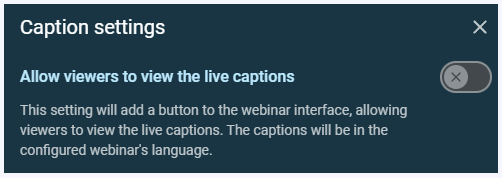
WebinarGeek’s live captions help viewers follow along more easily, especially during educational webinars, international presentations, or sessions with technical terminology.
What’s especially useful is that WebinarGeek’s AI transcription systems can learn specific words or product names. You can teach the system how to correctly recognize industry-specific language, which improves the experience significantly.
That creates a smoother webinar experience for everyone watching.
AI helps you speak your audience’s language
One of the biggest barriers in webinars has always been language. A strong presentation loses impact quickly if viewers struggle to follow the conversation.
WebinarGeek’s AI-powered translation and language support are making it easier to create localized webinar experiences without rebuilding everything from scratch.
That matters because people naturally engage more when content feels local and familiar.
The future of webinars is probably not one global session for everyone. It’s likely smaller, more relevant experiences tailored to different audiences and languages.
Webinar optimization becomes easier with AI
Most webinar hosts notice when a session feels right
But understanding why it worked is more difficult.
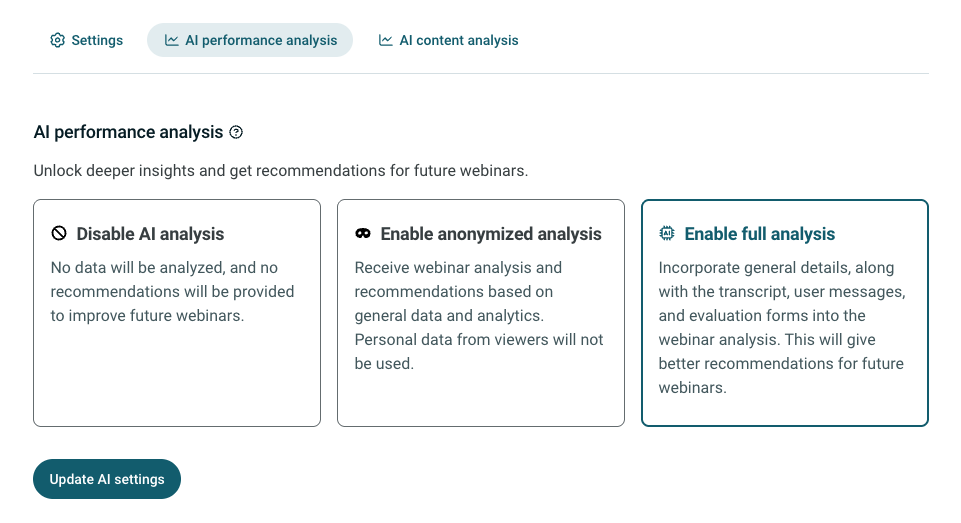
WebinarGeek’s AI-analysis can help identify patterns across your webinars by looking at engagement, drop-off moments, interactions, and viewer behavior.
That makes it easier to improve future webinars without relying purely on instinct.
For example, WebinarGeek’s AI analysis can help you understand:
- Which parts kept attention the longest
- Where viewers dropped off
- Which calls to action performed best
- Which topics generated the most questions
- How engagement changed fluctuated throughout the webinar
That kind of feedback helps you improve gradually without overcomplicating the process.
Replays become easier to navigate with AI-generated chapters
Replay content is often incredibly valuable, but also difficult to navigate: people rarely want to rewatch an entire 60-minute webinar just to revisit one topic.
WebinarGeek’s AI-generated chapters solve that problem by automatically structuring the replay into sections.
Viewers can jump directly to the part they need, revisit important explanations, or share specific moments with colleagues.
That makes webinar replays much more practical as long-term content assets.
AI can help late attendees catch up instantly
Every webinar has latecomers.
Normally, they join halfway through and spend the next ten minutes trying to figure out what they missed.
WebinarGeek’s AI-summaries solve that by generating a short overview of the key points already covered before the attendee entered the webinar room.
That small feature makes the experience feel much smoother and more welcoming.
Especially during longer educational webinars or product demos, this dramatically boosts viewer engagement.
AI makes webinar follow-up faster
Writing webinar emails is necessary, but it’s also highly repetitive.
Crafting the confirmation flows, reminder emails, replay announcements, and follow-up email campaigns often requires much more setup time than people expect.
WebinarGeek’s AI can help simplify that process.
Instead of starting from scratch, you can provide a short prompt and generate email drafts much faster. AI can also help create supporting visuals and improve consistency across communication.
The important thing is that the presenter still decides the tone, message, and intention.
AI speeds up execution. It doesn’t replace the relationship.
The future of webinars will feel more human, not less
A lot of people expect AI to make online communication feel less personal.
I actually think the opposite may happen.
As more content becomes automated, audiences will become more sensitive to authenticity. They’ll pay more attention to people who communicate clearly, naturally, and honestly.
That’s why webinars are in such an interesting position: they combine scale with human presence.
You can reach hundreds or thousands of viewers, but the experience still revolves around a real person sharing knowledge in a direct and personal way.
AI will absolutely change webinars over the next few years.
It will improve accessibility, simplify production, optimize follow-up, and remove repetitive work from the hosting process. But the most important part of the webinar will stay exactly the same: the person behind it.
Ready to see what that looks like in practice? Discover how WebinarGeek uses AI to make your webinars smarter at webinargeek.com.