
Recensione Webflow: Pro, Contro, Caratteristiche e Prezzi
Webflow eccelle per la sua flessibilità di design, dando al tuo team la possibilità di creare siti web unici e visivamente sorprendenti con facilità.

Recensiamo gli strumenti in modo indipendente, e le commissioni aiutano a finanziare i nostri test. Consulta la nostra politica sulla trasparenza, la nostra metodologia o suggerisci uno strumento.
Webflow is a website builder software for designers and marketing teams who need precise visual control over their sites without depending on a developer for every change. If you've outgrown WordPress but don't want to manage themes, plugins, and hosting on top of your actual work, Webflow gives you that same depth of customization in a cleaner, more self-contained package.
Webflow Evaluation Summary
4.4/5
- From $15/month (billed annually)
- Free plan available
Perché fidarsi dei nostri consigli sui software
6,700+
Reviews
20
Industry experts
16+
Evaluation factors
14
Years
Il nostro team testa e recensisce software dal 2012. In quanto leader del marketing noi stessi, sappiamo quanto sia difficile — e importante — scegliere il software giusto.
Per questa guida, abbiamo valutato gli strumenti attraverso test pratici e ricerche indipendenti, assegnando un punteggio agli strumenti in base ai nostri criteri di selezione.
Le nostre recensioni riflettono il nostro giudizio editoriale umano, non un discorso di vendita.
Revisori esperti:
 Gui DrusinaDirettore creativo
- Shriya GhateSenior Marketing Lead
 Amanda JacquesResponsabile Marketing Ops

Webflow Overview
In my opinion, Webflow stands out for its real-time visual design interface and flexibility, which is great for design-focused teams. Its drag-and-drop features and strong SEO tools make it a compelling choice compared to other platforms. However, it can be pricey and has a learning curve, which might not suit beginners or budget-conscious users. I'd recommend Webflow for agencies and freelancers who value design control and are willing to invest time in learning the platform. If you're looking for more simplicity or lower cost, then Webflow might not be right for you.
Pros
- You control every design aspect visually without coding.
- Its SEO tools help your site rank better on search engines.
- The drag-and-drop interface makes designing intuitive for your team.
Cons
- There's a learning curve that might slow down your team initially.
- It lacks built-in customer support chat, which can delay help.
- Some users find the interface overwhelming at first.
Is Webflow Right For Your Needs?
Who Would be a Good Fit for Webflow?
Webflow is great for creative agencies and freelancers who need detailed design control without coding. If your team values customizable design and wants a website that stands out, you can use Webflow to take advantage of its web design tools and SEO features. It's also ideal for marketing departments in medium to large companies looking to create unique, engaging web experiences. The platform's flexibility lets you tailor every aspect of your site, making it a top choice for those prioritizing design precision.
- Creative AgenciesYour team will love Webflow's design freedom and ability to create custom sites without coding.
- FreelancersYou can offer clients unique, visually stunning websites with Webflow's intuitive drag-and-drop interface.
- Marketing DepartmentsWebflow's SEO tools and design capabilities help elevate your company's online presence.
- E-commerce BusinessesWith Webflow, you can build visually appealing online stores that attract and convert customers.
- Portfolio SiteWebflow's design flexibility showcases your work beautifully, making it ideal for artists and photographers.
- StartupsWebflow allows you to create professional, eye-catching websites quickly, helping your business stand out.
Who Would be a Bad Fit for Webflow?
Webflow might not suit small businesses or individuals with limited budgets and no design expertise. If your team prefers simplicity over customization, or if you're looking for a straightforward, low-cost solution, Webflow's advanced features might overwhelm you. Non-designers or those who need quick, templated sites might find the learning curve and design focus unnecessary. The lack of built-in customer support chat could also be a drawback for teams needing immediate help.
- Small BusinessesYou might find Webflow's features too complex and costly if you need simple, budget-friendly website solutions.
- Non-DesignersIf design isn't your strength, Webflow's advanced tools might feel overwhelming and unnecessary for your needs.
- Budget-Conscious UsersWebflow's pricing can be steep if you're looking for the most economical website builder.
- Quick SitesIf you need a fast, templated solution, Webflow's design process might slow you down.
- Customer Support DependentsYour team might struggle with Webflow's lack of immediate support if you often need quick assistance.
- BeginnersIf you're new to website building, Webflow's steep learning curve might be discouraging.
Come Testiamo e Valutiamo gli Strumenti
Abbiamo passato anni a costruire, perfezionare e migliorare il nostro sistema di test e valutazione del software. Il nostro metodo è progettato per cogliere le sfumature nella selezione del software e ciò che rende uno strumento efficace, concentrandoci sugli aspetti critici del processo decisionale. Qui sotto puoi vedere esattamente come funziona il nostro sistema di test e valutazione su sette criteri. Questo ci permette di offrire una valutazione imparziale del software basata su funzionalità principali, funzioni distintive, facilità d’uso, onboarding, supporto clienti, integrazioni, recensioni dei clienti e rapporto qualità-prezzo.
Funzionalità principali (25% del punteggio finale)
Il punto di partenza della nostra valutazione è sempre la funzionalità principale dello strumento. Include le caratteristiche e le funzioni basilari che un utente si aspetterebbe di trovare? Alcune di queste funzionalità sono bloccate nei piani premium? Ci aspettiamo che ogni strumento soddisfi almeno le capacità di base dei suoi concorrenti.
Funzionalità distintive (25% del punteggio finale)
Successivamente, valutiamo le funzionalità uniche che vanno oltre la normale funzionalità principale, quelle poco comuni negli strumenti simili. Un punteggio alto riflette caratteristiche specializzate o uniche che rendono il prodotto più veloce, efficiente o offrono un valore aggiunto all’utente. Valutiamo anche quanto sia semplice integrare il software con altri strumenti abitualmente usati in una tech stack, per espandere le funzionalità e l’utilità del prodotto. Sono valutate positivamente soluzioni con molte integrazioni native, connessioni di terze parti e API per creare integrazioni personalizzate.
Facilità d’uso (10% del punteggio finale)
Consideriamo la rapidità e semplicità con cui si possono eseguire le attività principali tramite lo strumento. I software con punteggio più alto sono ben progettati, intuitivi, dispongono di app mobili, offrono template e semplificano compiti complessi.
Onboarding (10% del punteggio finale)
Sappiamo quanto sia importante l’adozione rapida in azienda, quindi valutiamo la facilità di apprendimento e utilizzo di uno strumento con formazione minima. Analizziamo quanto velocemente un utente senza esperienza può iniziare a usare il software. Le soluzioni migliori richiedono poco o nessun supporto.
Supporto clienti (10% del punteggio finale)
Analizziamo la rapidità e facilità nel trovare aiuto tramite telefono, chat dal vivo o knowledge base. Gli strumenti che offrono supporto in tempo reale ottengono il punteggio migliore: i chatbot invece i peggiori.
Recensioni dei clienti (10% del punteggio finale)
Oltre ai nostri test, consideriamo il net promoter score di attuali ed ex clienti. Valutiamo la probabilità che, potendo scegliere, l’utente decida di utilizzare ancora quello strumento per le funzionalità principali. Un software con un punteggio alto corrisponde ad un alto net promoter score tra clienti attuali o passati.
Rapporto qualità-prezzo (10% del punteggio finale)
Infine, tenendo conto di tutti gli altri criteri, confrontiamo il prezzo medio dei piani base rispetto alle funzionalità principali e agli altri fattori di valutazione. I software che offrono di più, a meno, ottengono i punteggi più alti.
Core Features
Drag-and-Drop Editor
You can easily design your site by dragging elements into place or starting from customizable templates. This feature helps your team create visually appealing layouts without coding.
Responsive Design
Webflow automatically adjusts your site to look great on any device, saving you time and ensuring a consistent user experience. You can also tweak designs for different screen sizes.
SEO Tools
Built-in SEO features help your site rank better on search engines, supporting ongoing optimization efforts. You can customize meta tags, alt texts, URLs, and even generate a sitemap directly within the platform.
CMS Capabilities
Webflow's CMS lets you create and manage dynamic content effortlessly, perfect for blogs or portfolios. Your team can update content without altering the design.
Custom Code Integration
You can add custom HTML, CSS, or JavaScript for advanced customization, offering flexibility for unique project requirements, much like using plugins in other systems. This is ideal if you need to implement specific functionalities.
E-commerce Functionality
Webflow allows you to build and manage online stores with ease, supporting product catalogs, payments, inventory, and a seamless checkout experience. It’s a great option for businesses looking to start their own e-commerce site.
Ease of Use
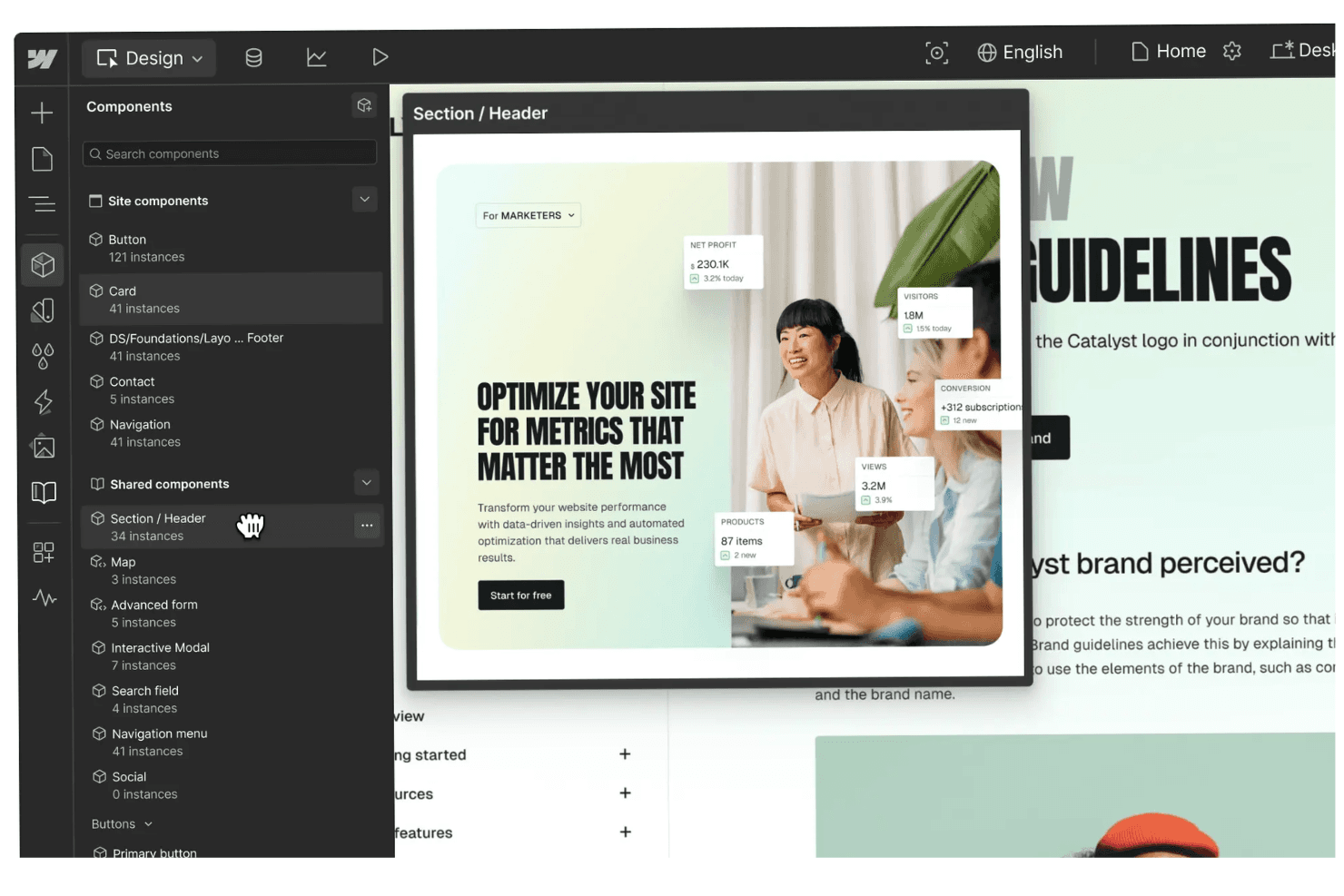
Webflow is user-friendly for those with some design knowledge, offering a visual drag-and-drop editor that simplifies site building. However, its advanced features might overwhelm beginners, requiring a learning curve. Your team will appreciate the intuitive interface once they get the hang of it, allowing for precise design control. The platform's flexibility and visual design tools make it a strong choice for those willing to invest time learning its capabilities.
Integrations
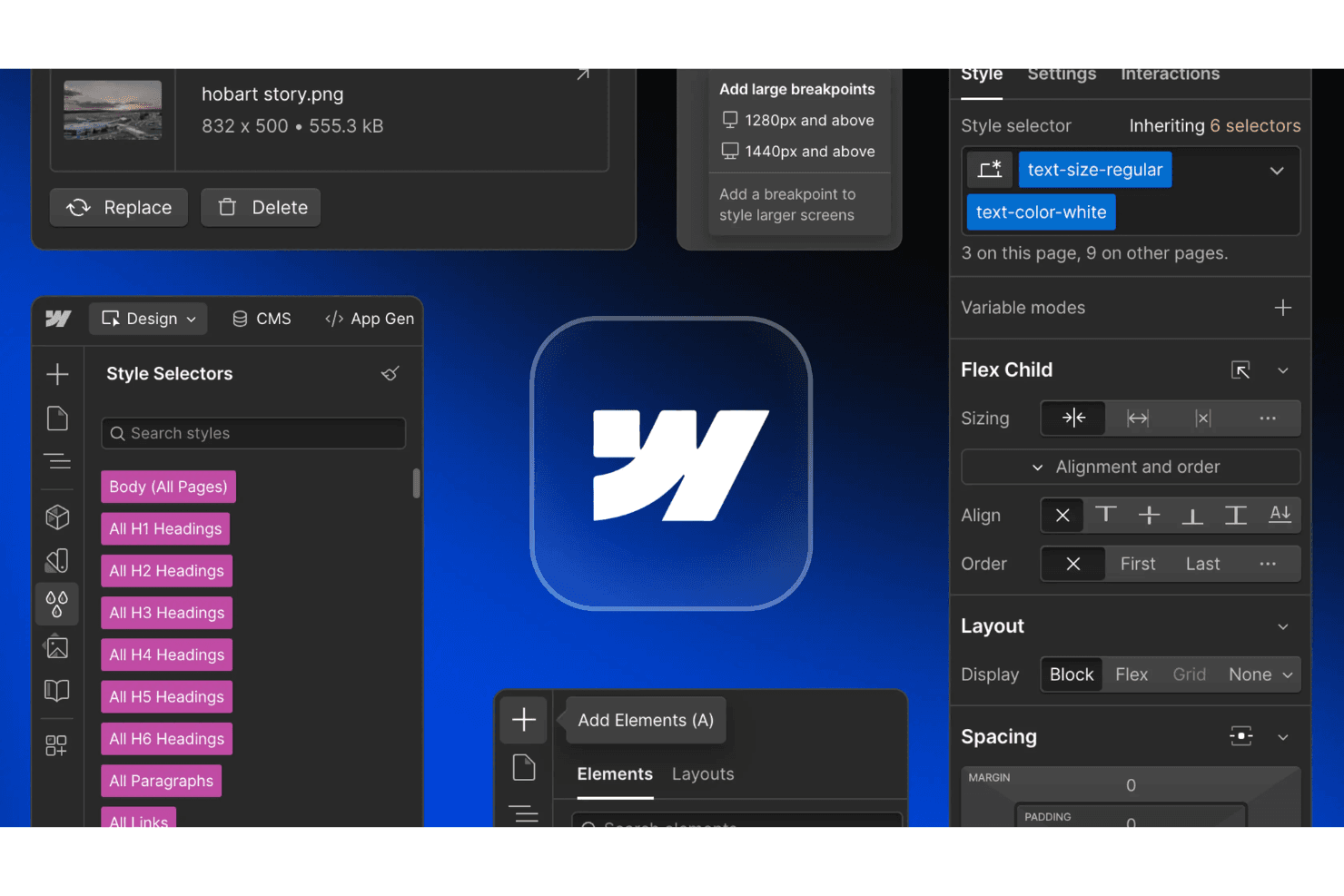
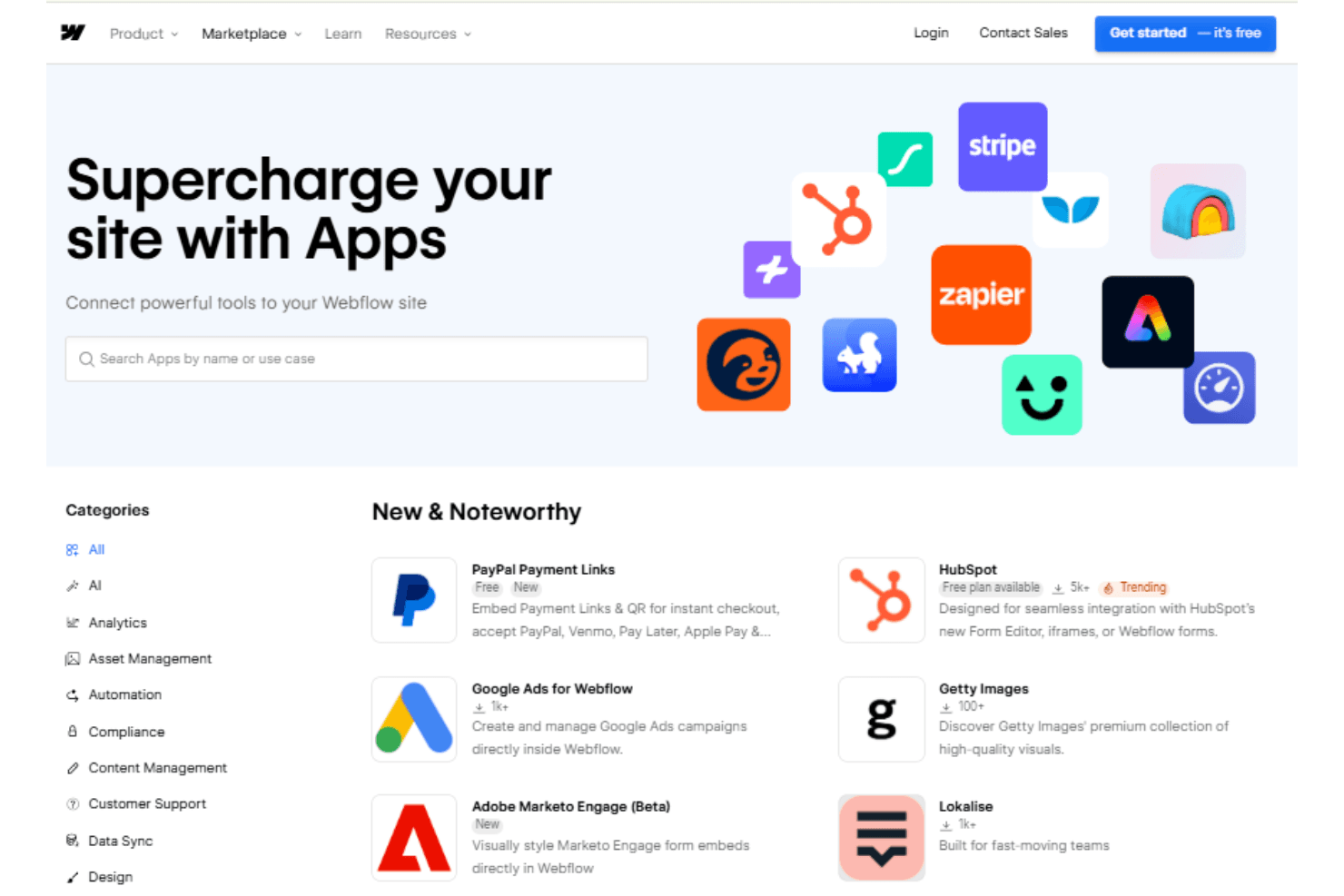
Webflow integrates with Google Analytics, Mailchimp, Zapier, Shopify, PayPal, Stripe, OpenStreetMap, ChatGPT, Google Docs, Claude AI, and WooRank.
Webflow also offers an API and connects with third-party integration tools like Zapier for enhanced functionality.
Webflow Specs
- A/B Testing: Yes
- API: Yes
- Data Export: Yes
- Data Import: Yes
- External Integrations: Yes
- Multi-User: Yes
- Third-Party Plugins/Add-Ons: Yes