

Il software per il marketing tramite posta diretta automatizza la progettazione, la distribuzione e la gestione delle campagne di posta fisica, permettendoti di personalizzare facilmente le comunicazioni, distinguerti dal sovraccarico digitale e risparmiare moltissimo lavoro manuale.
Grazie alla mia esperienza nelle attività operative di marketing e alle mie recensioni pratiche e dettagliate, ti illustrerò le migliori opzioni di software per il marketing tramite posta diretta, così potrai scegliere quella più adatta alla tua azienda e realizzare campagne memorabili senza lo stress abituale.
Perché fidarsi dei nostri consigli sui software
6,700+
Reviews
20
Industry experts
16+
Evaluation factors
14
Years
Il nostro team testa e recensisce software dal 2012. In quanto leader del marketing noi stessi, sappiamo quanto sia difficile — e importante — scegliere il software giusto.
Per questa guida, abbiamo valutato gli strumenti attraverso test pratici e ricerche indipendenti, assegnando un punteggio agli strumenti in base ai nostri criteri di selezione.
Le nostre recensioni riflettono il nostro giudizio editoriale umano, non un discorso di vendita.
Revisori esperti:
 Gui DrusinaDirettore creativo
- Shriya GhateSenior Marketing Lead
 Amanda JacquesResponsabile Marketing Ops

Tabella comparativa: software per il marketing tramite posta diretta
Questa tabella comparativa riassume i dettagli sui prezzi dei miei migliori software selezionati per il marketing tramite posta diretta.
| Tool | Best For | Trial Info | Price | ||
|---|---|---|---|---|---|
| 1 | Ideale per invii automatizzati in stile manoscritto | Non disponibile | A partire da $49/mese | Website | |
| 2 | Ideale per un’ampia gamma di invii postali e regali | Demo gratuita disponibile | Prezzo su richiesta | Website | |
| 3 | Ideale per creare negozi di regali personalizzati | Piano gratuito con pagamento a consumo | Disponibile su richiesta | Website | |
| 4 | Il miglior software di direct mail per agenzie di marketing | Piano gratuito disponibile | A partire da $199/mese | Website | |
| 5 | Ideale per l'integrazione di direct mail e email marketing | Prova gratuita di 14 giorni + demo disponibile | Da $20/mese | Website | |
| 6 | Il miglior software di direct mail marketing per la sostenibilità | Piano gratuito + demo gratuita disponibile | Da $260/mese | Website | |
| 7 | Ideale per connettersi al tuo stack tecnologico tramite REST API | Demo gratuita e chiamata conoscitiva offerte | Da $20/mese | Website | |
| 8 | Ideale per biglietti e regali dall'aspetto scritto a mano | Demo gratuita disponibile | Da $374/mese (fatturazione annuale) | Website | |
| 9 | Ideale per informare il marketing diretto con intuizioni digitali | Consulenza di esperti disponibile | Prezzo su richiesta | Website | |
| 10 | Ideale con servizi di project management dedicati | Demo gratuita disponibile | Prezzo su richiesta | Website |


Recensioni dei migliori software per il marketing tramite posta diretta
Di seguito trovi i miei riepiloghi dettagliati dei migliori software per il marketing tramite posta diretta inclusi nella mia selezione. Le mie recensioni offrono una panoramica approfondita delle funzionalità principali, dei pro & contro, delle integrazioni e dei casi d’uso ideali di ciascuno strumento, per aiutarti a trovare quello più adatto a te.
 Ideale per invii automatizzati in stile manoscritto
- Non disponibile
- A partire da $49/mese
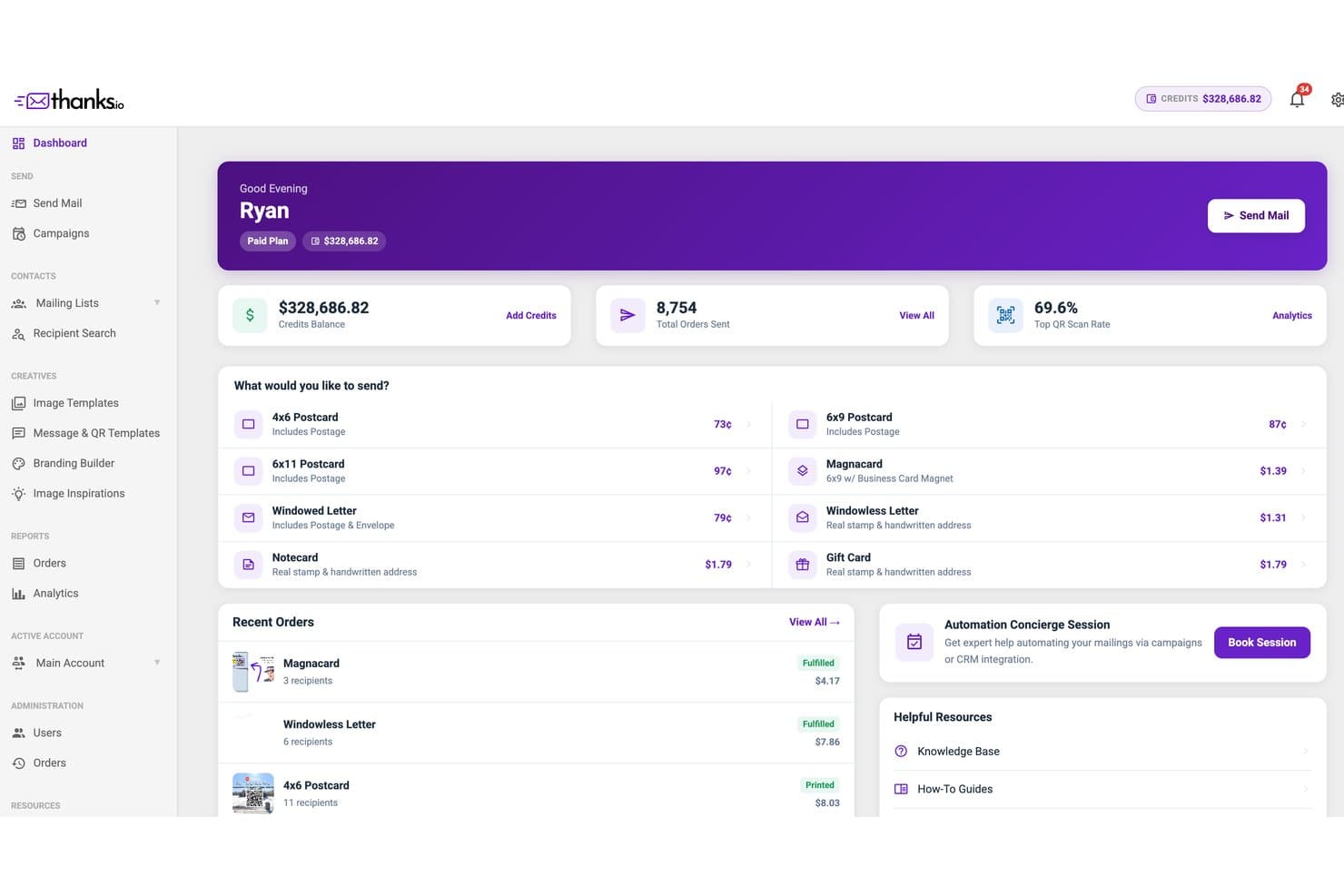
Thanks.io offre una dashboard che mostra il saldo dei crediti, il totale degli ordini inviati, il tasso di scansione dei codici QR e le opzioni dei prodotti di posta diretta con i relativi prezzi. Thanks.io è una piattaforma di automazione della posta diretta che invia cartoline, lettere, biglietti, carte regalo e MagnaCards in stile manoscritto, con personalizzazione integrata, integrazioni CRM, flussi di lavoro per campagne attivate da eventi e monitoraggio tramite codici QR.
Per chi è più adatto Thanks.io?
Thanks.io è una soluzione ideale per i professionisti del marketing nel settore immobiliare, dell'e-commerce e delle agenzie che devono automatizzare l'invio di posta fisica personalizzata senza disporre di un team dedicato alle operazioni di stampa.
Perché ho scelto Thanks.io
Thanks.io si è guadagnato un posto nella mia rosa ristretta perché il suo motore di scrittura a mano è diverso da qualsiasi altra soluzione che abbia visto nelle piattaforme di posta diretta. La modalità realistica aggiunge autentiche cancellature e una spaziatura naturale a ogni elemento, così i destinatari credono davvero che qualcuno lo abbia scritto a mano. Mi piace anche il fatto che l'IA per destinatario generi messaggi unici per ogni indirizzo di una campagna: posso quindi inviare mille elementi e ciascuno sembrerà redatto individualmente.
Funzionalità principali di Thanks.io
- Verifica degli indirizzi NCOA: Ogni invio confronta automaticamente gli indirizzi dei destinatari con il database nazionale dei cambi di indirizzo, per garantire la consegna.
- Invii in più formati: Invia cartoline, biglietti pieghevoli, lettere, carte regalo con marchio e MagnaCards da un'unica piattaforma.
- Oltre 500 integrazioni: Si collega nativamente a HubSpot, Salesforce, Shopify e ActiveCampaign, oltre a migliaia di app tramite Zapier.
- Monitoraggio dei codici QR per campagna: Ogni destinatario può ricevere un codice QR univoco con notifiche in tempo reale delle scansioni.
Integrazioni di Thanks.io
Thanks.io offre integrazioni con HubSpot, Salesforce, Shopify, Pipedrive, ActiveCampaign, Zoho CRM, WooCommerce, BigCommerce e HighLevel, oltre a collegarsi a Zapier. È disponibile un'API per le integrazioni personalizzate.
Pros and Cons
Pros:
- Il motore di scrittura a mano produce lettere convincenti
- L'IA genera testi unici per ogni destinatario
- Il piano gratuito supporta i test a basso volume
Cons:
- La consegna della posta è limitata agli Stati Uniti
- Nessun report sull'attribuzione dei ricavi per più punti di contatto
Learn more about Thanks.io: Ideale per un’ampia gamma di invii postali e regali
- Demo gratuita disponibile
- Prezzo su richiesta
Visit WebsiteCustomer Rating:4.6/5
Scegli tra eGift, articoli da Amazon, esperienze uniche e molto altro da inviare. Sendoso è un software di direct mail marketing che aiuta le aziende a inviare posta diretta, regali ed esperienze personalizzate, gadget con marchio aziendale e note scritte a mano ai clienti.
Perché ho scelto Sendoso: Ho deciso di includere questo software nella mia lista per la vasta gamma di opzioni disponibili per regali aziendali e direct mail. Puoi scegliere tra moltissimi articoli dal loro marketplace, creare note scritte a mano da spedire e persino selezionare esperienze particolari da regalare, come degustazioni di vini e lezioni di yoga. Questo permette di realizzare regali memorabili che vanno oltre i tradizionali strumenti di direct mail marketing.
Oltre a gestire le tue campagne di direct mail, puoi anche allestire un negozio di gadget attraverso la piattaforma. L’azienda gestirà per te l’evasione degli ordini, semplificando notevolmente la complessità di avviare uno shop online. La gestione e l’evasione dell’inventario a livello globale ti permettono di non essere limitato dalla tua località né da quella dei tuoi clienti.
Caratteristiche distintive e integrazioni di Sendoso
Una caratteristica distintiva di questo software è la disponibilità di un piano gratuito. Puoi registrarti alla versione freemium direttamente dal sito e iniziare subito a inviare regali. Le spedizioni sono illimitate: devi semplicemente pagare per i regali che scegli di inviare. Il piano gratuito include tracciamento completo delle spedizioni, negozio personalizzato del tuo marchio e integrazioni illimitate. È un’opzione conveniente per aziende che fanno direct mail marketing in modo limitato, piccole attività o singoli professionisti.
Le integrazioni includono Marketo, Salesforce, HubSpot, Eloqua, Microsoft Dynamic 365, Outreach, SalesLoft, Chili Piper, Calendly, Magento e monday.com, tra le altre. È disponibile anche un’integrazione con Zapier, che consente ulteriori collegamenti tramite un piano a pagamento.
Pros and Cons
Pros:
- Account gratuito con pagamento per singolo regalo disponibile
- Servizi di campagna inclusi nei piani a pagamento
- Team di esperti globali per l’assistenza clienti
Cons:
- La navigazione è piuttosto complessa
- Gli articoli del marketplace possono essere costosi
Learn more about Sendoso: Ideale per creare negozi di regali personalizzati
- Piano gratuito con pagamento a consumo
- Disponibile su richiesta
Visit WebsiteCustomer Rating:4.8/5
Configura negozi di regali personalizzati, quindi invia punti ai destinatari affinché li riscattino per un regalo a loro scelta. Stadium è una piattaforma globale di marketing diretto per corrispondenza e omaggi che consente di inviare regali in blocco o singolarmente. È possibile selezionare regali tra i diversi marchi dell'azienda.
Perché ho scelto Stadium: Questa piattaforma non solo offre regali di sei marchi diversi, ma dispone anche di un flusso di lavoro chiaro e intuitivo. L'ho inserita nel mio elenco per la semplicità con cui consente di configurare un negozio di regali personalizzato, a cui possono poi accedere singoli individui o gruppi. È sufficiente selezionare un modello di sito, scegliere un valore in punti e inviare i punti ai destinatari, che potranno quindi selezionare un regalo dal sito. I negozi includono numerose tipologie di regali, come snack, articoli promozionali, kit per pasti, bevande e attività di formazione del team.
Funzionalità e integrazioni principali di Stadium
Le funzionalità principali includono il generatore di negozi online intuitivo e il piano freemium. Sono disponibili moltissimi modelli pronti all'uso, progettati specificamente per casi d'uso come incentivi e premi per i dipendenti, celebrazioni e traguardi, omaggi per clienti e potenziali clienti e persino vantaggi aziendali. Configurare e rendere operativo il proprio sito per gli omaggi è facile e veloce.
Per quanto riguarda il piano gratuito, è possibile creare negozi illimitati e persino aggiungere un'identità visiva personalizzata senza sottoscrivere un piano a pagamento. È anche possibile creare articoli promozionali personalizzati! L'unico costo è la commissione della piattaforma del 15%, che copre i costi di evasione degli ordini, gestione operativa e spedizione.
Le integrazioni includono Salesforce, HubSpot, Marketo, Zendesk, monday.com, Workday, Pipedrive, Justworks, ADP, Outreach, Groove e Salesloft, tra le altre. Un account Zapier a pagamento consente inoltre di sbloccare ulteriori integrazioni.
Pros and Cons
Pros:
- Ampia libreria di modelli per creare facilmente negozi di regali
- Possibilità di aggiungere un'identità visiva personalizzata ai propri negozi di regali
- Modello flessibile con pagamento a consumo
Cons:
- Nessuna opzione per inviare materiali cartacei personalizzati
- È necessario del tempo per imparare a usare la piattaforma
Learn more about Stadium Software: Il miglior software di direct mail per agenzie di marketing
- Piano gratuito disponibile
- A partire da $199/mese
Visit WebsiteCustomer Rating:4.3/5
Crea facilmente risorse digitali e cartacee da inviare ai tuoi clienti in campagne multicanale. Postalytics è una piattaforma di automazione della posta diretta progettata per snellire e migliorare il marketing per team di marketing interni e agenzie di marketing.
Perché ho scelto Postalytics: Questa piattaforma offre strumenti e funzionalità per creare, inviare e monitorare campagne di posta diretta. Ho scelto di includerla nella mia lista per come risponde specificamente alle esigenze delle agenzie di marketing. Fornisce risorse completamente white-label personalizzabili in base alle necessità dei tuoi clienti e si integra con il tuo CRM. Collegare la piattaforma al CRM aiuta a gestire e automatizzare campagne di marketing ibride, digitali e offline, in un unico luogo, mantenendo le comunicazioni con i clienti organizzate e facilmente accessibili.
Funzionalità e integrazioni distintive di Postalytics
Le funzionalità distintive che mi hanno colpito di questo software sono il suo editor drag-and-drop per la creazione delle risorse e le avanzate capacità di monitoraggio. È possibile creare e revisionare facilmente e rapidamente il materiale postale grazie all’editor intuitivo, senza la necessità di essere un grafico professionista. I codici a barre intelligenti presenti sui materiali postali permettono il tracciamento e la conferma della consegna.
Le integrazioni includono Hubspot, Salesforce, ActiveCampaign, Zoho, Marketo, HighLevel, Klavyo, Pipedrive, Freshsales e Nimble, tra gli altri. Con un account Zapier a pagamento si sbloccano ulteriori integrazioni ed è disponibile una API per creare integrazioni personalizzate.
Pros and Cons
Pros:
- Risorse white-label facilmente personalizzabili per i clienti
- Editor drag-and-drop facile da usare per i materiali postali
- Integra la posta diretta con CRM, email e campagne digitali
Cons:
- Disponibile solo per USA e Canada
- Sono necessarie alcune conoscenze di design per creare le risorse
Learn more about Postalytics: Ideale per l'integrazione di direct mail e email marketing
- Prova gratuita di 14 giorni + demo disponibile
- Da $20/mese
Visit WebsiteCustomer Rating:4.3/5
Puoi progettare le tue cartoline personalizzate e Mailchimp le stamperà, affrancherà e consegnerà al tuo pubblico di destinazione. Mailchimp è una piattaforma di marketing completa progettata per aiutare aziende di tutte le dimensioni a crescere e connettersi con i propri clienti.
Perché ho scelto Mailchimp: Ho scelto Mailchimp perché integra la posta tradizionale con l’email marketing, creando un’esperienza senza soluzione di continuità per gli utenti. Una delle sue funzionalità più interessanti è lo strumento "Cartoline", che permette alle aziende di progettare, indirizzare e inviare cartoline fisiche ai propri clienti. Questa funzione è estremamente intuitiva, grazie alle capacità di progettazione drag-and-drop e a un processo semplice per caricare le liste di destinatari. Inoltre, la capacità di Mailchimp di sincronizzare le tue campagne di direct mail con l’email marketing assicura un messaggio coerente su tutti i canali, migliorando l’efficacia complessiva della tua strategia di marketing.
Funzionalità e integrazioni di spicco di Mailchimp
Le funzionalità di spicco includono opzioni avanzate di segmentazione che permettono alle aziende di raggiungere gruppi di clienti specifici con messaggi personalizzati. I suoi strumenti di automazione consentono di impostare l’invio di email e cartoline innescati da eventi e promozioni. Mailchimp offre anche analisi dettagliate e report, inclusi dati sul ritorno dell’investimento per il direct mail.
Le integrazioni includono Shopify, WooCommerce, BigCommerce, Magento, WordPress, Salesforce, HubSpot, Zendesk, Stripe, QuickBooks, Slack, Google Analytics e centinaia di altri servizi.
Pros and Cons
Pros:
- Tracciamento della consegna delle cartoline
- Direct mail sincronizzato con altre campagne digitali
- Buone capacità di automazione
Cons:
- Può diventare costoso con liste di destinatari molto ampie
- Le cartoline sono l’unico formato di direct mail disponibile
Learn more about Mailchimp: 6Il miglior software di direct mail marketing per la sostenibilità
Lob
- Piano gratuito + demo gratuita disponibile
- Da $260/mese

Monitora le metriche sulle performance delle campagne di direct mail e assicurati di massimizzare il tuo ROI. Lob è un software per il marketing di direct mail che si concentra su un approccio sostenibile al marketing postale diretto e sull'utilizzo delle tecnologie digitali per gestire campagne di direct mail.
Perché ho scelto Lob: Questa piattaforma è entrata nella mia lista per le sue impressionanti capacità di automazione ma anche per il suo impegno verso la sostenibilità. Puoi automatizzare praticamente ogni fase della gestione della tua campagna di direct mail con questo software. Facilita la segmentazione dell’audience, ti mette in contatto con una rete nazionale di stampa e consegna e ti aiuta a misurare le performance delle tue campagne e a ottimizzare le strategie per migliori risultati.
Quando si parla di sostenibilità, questo fornitore di software è un leader del settore. La posta inviata tramite la piattaforma è a impatto zero, dalla scelta dei materiali fino allo smaltimento. Nel frattempo, l’azienda garantisce che le emissioni inevitabili siano compensate e il prodotto è certificato attraverso Climate Impact Partners.
Caratteristiche e integrazioni principali di Lob
Alcune caratteristiche distintive che ho notato in questa piattaforma riguardano le sue capacità di personalizzazione. Puoi inviare offerte personalizzate e sfruttare la cronologia degli acquisti di un cliente per inviargli direct mail mirati e pertinenti. Un altro aspetto importante è l'attenzione dell’azienda alla sicurezza. La piattaforma è conforme a SOC 2 Type 2 e HIPAA, e viene sottoposta a verifiche di conformità da parte di terzi.
Le integrazioni includono Shopify, Salesforce, Marketo, JotForm, EasyPost, Simon Data, ActionIQ, Optimove, Braze e Customer.io, tra gli altri. Un account Zapier a pagamento può anche sbloccare ulteriori integrazioni.
Pros and Cons
Pros:
- Piattaforma basata su API che consente l'integrazione con lo stack tecnologico esistente
- La verifica degli indirizzi aiuta a ridurre i costi e migliorare i tassi di consegna
- Centro assistenza self-service utile e completo
Cons:
- La configurazione potrebbe richiedere competenze tecniche
- Dashboard di analisi disponibile solo nel piano enterprise
Learn more about Lob: Ideale per connettersi al tuo stack tecnologico tramite REST API
- Demo gratuita e chiamata conoscitiva offerte
- Da $20/mese

Puoi pulire, standardizzare e verificare gli indirizzi in blocco tramite il software. PostGrid è un software di comunicazione offline che offre sia strumenti per la stampa e l'invio di posta, sia per la verifica degli indirizzi, il tutto facilitato tramite API.
Perché ho scelto PostGrid: Questo strumento funziona collegandosi alle altre piattaforme software tramite API, ma sono anche disponibili integrazioni native. L'ho scelto perché amplia le funzionalità del tuo CRM, facilitando le comunicazioni offline. È possibile inviare posta fisica come lettere, cartoline o assegni utilizzando i tuoi strumenti SaaS già esistenti.
Nel frattempo, la verifica degli indirizzi alimentata dall'IA del software ti aiuta a garantire che i tuoi invii arrivino ai destinatari corretti. Puoi standardizzare gli indirizzi presenti nei tuoi archivi, ripulire i dati e verificare numerosi indirizzi contemporaneamente. Questa funzione è attivabile anche tramite API, portando tutte le capacità del software all'interno dei tuoi strumenti esistenti.
Funzionalità principali e integrazioni di PostGrid
Una caratteristica distintiva è il SLA di 2 giorni lavorativi offerto dal fornitore. Puoi essere certo che i tuoi invii verranno processati entro due giorni lavorativi, garantendo una consegna rapida. Il software inoltre indirizza gli ordini a un fornitore vicino alla destinazione, contribuendo ad accelerare ulteriormente i tempi di consegna.
Le integrazioni includono HubSpot, Salesforce, Marketo, Zoho, NetSuite, SAP, Microsoft Dynamics 365, Eloqua e Pipedrive, tra gli altri. Un account Zapier a pagamento consente agli utenti di accedere a ulteriori integrazioni.
Pros and Cons
Pros:
- Si integra con gli strumenti che già utilizzi
- Piano gratuito per funzionalità di stampa e invio posta
- Modelli per velocizzare la creazione degli asset
Cons:
- Costo aggiuntivo per ogni invio di posta
- Prevede una curva di apprendimento
Learn more about PostGrid: Ideale per biglietti e regali dall'aspetto scritto a mano
- Demo gratuita disponibile
- Da $374/mese (fatturazione annuale)

Scrivi un messaggio o usa l’assistente AI per la scrittura e scegli uno stile di calligrafia per la tua nota. Handwrytten è una piattaforma di invio regali tramite posta diretta che si specializza nell'invio di biglietti e note che sembrano scritte a mano.
Perché ho scelto Handwrytten: Questo software offre un valore unico fornendo note che appaiono scritte a mano—ma che in realtà vengono scritte dal team di robot dell'azienda. Puoi scegliere tra diversi stili di scrittura a mano e includere buoni regalo per marchi popolari come Starbucks, Target, GrubHub e altri. Puoi scegliere una cartolina fra i loro modelli disponibili oppure disegnarne una tua e inviare il tuo messaggio affinché i loro robot lo scrivano e spediscano per te. I prezzi sono flessibili: puoi pagare per ogni biglietto singolo o ottenere tariffe scontate se invii un numero più alto di biglietti.
Caratteristiche e integrazioni principali di Handwrytten
La principale caratteristica distintiva di questa piattaforma è la possibilità di configurare uno stile di scrittura personalizzato basato sulla tua calligrafia. Proprio così: pagando una tariffa una tantum di $1000 l’azienda replicherà la tua scrittura a mano per un prodotto ancora più autentico. E se questa cifra è troppo alta, puoi farti riprodurre solo la firma per $250.
Le integrazioni includono Salesforce, HubSpot, Shopify, CDK Global e Make. Ulteriori integrazioni possono essere configurate tramite Zapier, Integrately, SyncSpider o l’API della piattaforma.
Pros and Cons
Pros:
- Piano gratuito con modello pay-per-card
- Tutorial e webinar disponibili
- Opzioni senza marchio disponibili
Cons:
- Limitato a biglietti scritti a mano e buoni regalo
- I buoni regalo comportano un costo aggiuntivo
Learn more about Handwrytten: Ideale per informare il marketing diretto con intuizioni digitali
- Consulenza di esperti disponibile
- Prezzo su richiesta

Crea campagne di direct mail per potenziali clienti e clienti utilizzando dati di intento. PebblePost è una piattaforma di marketing diretto programmabile che aiuta i brand a eseguire e gestire campagne di acquisizione e fidelizzazione.
Perché ho scelto PebblePost: Ho deciso di inserire questa piattaforma nella mia lista per il modo in cui sfrutta le intuizioni digitali per guidare le strategie di direct mail. Il software utilizza segnali di intento online per segmentare potenziali clienti e clienti già acquisiti, che potrai poi raggiungere con campagne di marketing diretto tempestive e pertinenti. Puoi anche creare materiali cartacei unici e personalizzati all'interno della piattaforma e svolgere test A/B sul materiale di marketing per migliorarne le prestazioni.
Funzionalità e integrazioni di spicco di PebblePost
Le funzionalità di spicco che distinguono questa piattaforma sono i suoi strumenti dedicati per supportare sia le campagne di acquisizione che di fidelizzazione. Puoi individuare sia potenziali clienti ad alto intento che clienti esistenti a rischio, da raggiungere tramite direct mail. Il software collega i dati di intento dal tuo sito web ai dati dei clienti presenti nel tuo CRM, aiutandoti a raggiungere meglio i clienti già acquisiti per coinvolgerli nuovamente.
Le integrazioni non sono elencate dal fornitore.
Pros and Cons
Pros:
- Sfrutta i dati di intento per strategie di direct mail
- Utile sia per acquisizione che per fidelizzazione
- Possibilità di creare campagne altamente mirate
Cons:
- Può risultare complesso da navigare
- Le informazioni sui prezzi non sono trasparenti
Learn more about PebblePost: Ideale con servizi di project management dedicati
- Demo gratuita disponibile
- Prezzo su richiesta

Tieni traccia dei tuoi regali e delle campagne di marketing tramite posta diretta e ricevi servizi esperti. ReachDesk offre una piattaforma completa per i regali aziendali, oltre a servizi di project management e strategie per supportare le tue campagne di marketing tramite posta diretta.
Perché ho scelto ReachDesk: Oltre al marketplace globale del software, agli strumenti di targeting dell'audience e alle capacità di analisi, ti verrà assegnato anche un project manager dedicato al momento dell'iscrizione. Gli esperti dell'azienda possono supportare la tua strategia e lo sviluppo delle campagne, l'evasione dei regali, l'approvvigionamento e l'immagazzinamento delle risorse. Per le aziende con risorse interne limitate per gestire le attività di marketing tramite posta diretta, questa può essere un'ottima soluzione per ottenere sia una piattaforma software sia un partner esperto.
Funzionalità e integrazioni principali di ReachDesk
Le funzionalità principali includono il marketplace globale del software, che offre regali locali provenienti da tutto il mondo. Puoi spedire articoli in oltre 160 paesi e scegliere opzioni localizzate per un'esperienza di regalo più personalizzata. Oltre ai regali fisici, puoi anche inviare eGift ed esperienze virtuali, come buoni regalo, biglietti di ringraziamento, workshop e attività di team building.
Le integrazioni includono Overview, Salesforce, Marketo, HubSpot, Salesloft, Outreach, Influitive, BambooHR, Workday e HiBob, tra le altre. Un account Zapier a pagamento sblocca ulteriori integrazioni.
Pros and Cons
Pros:
- Possibilità di inviare regali localizzati
- Molti contenuti di auto-aiuto disponibili
- Servizi di logistica e stoccaggio inclusi
Cons:
- Le informazioni sui prezzi non sono trasparenti
- Reportistica piuttosto limitata
Learn more about Reachdesk:
Altri software per il marketing tramite posta diretta
Ecco alcune ulteriori opzioni di software per il marketing tramite posta diretta che non sono state incluse nella mia selezione, ma che vale comunque la pena valutare:
- 11PostalIdeale per creare gadget aziendali personalizzati
- 12AlyceIdeale per gestire il gifting outbound B2B
- 13PostieIdeale per un'esperienza amichevole per i digital marketers
- 14Bluebird.cxIdeale per impostare programmi di gifting aziendale automatizzati
Come Valuto i Software di Direct Mail Marketing
Divido la mia valutazione in due livelli: le capacità di base che uno strumento deve avere—come gli invii automatici e la gestione end-to-end dell'evasione—e le caratteristiche distintive che differenziano le migliori opzioni.
Funzionalità Core (Requisiti Minimi per Questa Lista)
Quando seleziono gli strumenti per la mia lista, valuto ciascuno su una scala da 0 (non offre la funzionalità) a 5 (eccelle in quest'area) per ogni funzionalità core riportata di seguito. Poi calcolo il punteggio totale dello strumento in percentuale. Ogni strumento deve raggiungere un punteggio totale minimo del 65% per essere considerato per l'inclusione.
- Progettazione e Creazione del Materiale Postale: Cerco editor integrati o librerie di template che supportano campi dati variabili, così puoi personalizzare una cartolina con il nome del destinatario, il logo aziendale o un codice offerta unico senza dover ricorrere a strumenti di design esterni.
- Servizi di Stampa e Gestione: Qui conta la gestione completa di stampa, affrancatura e consegna. Verifico se la piattaforma gestisce la produzione internamente o attraverso partner certificati, e se supporta formati multipli come cartoline, lettere e mailing tridimensionali.
- Gestione Indirizzi e Liste: Una consegna accurata parte da dati puliti. Valuto se uno strumento offre validazione degli indirizzi, deduplicazione e pulizia a livello NCOA, invece di accettare solo un caricamento CSV raw.
- Integrazioni con CRM e MarTech: Piattaforme come Lob, Sendoso e Reachdesk si collegano ciascuna a CRM e strumenti di automazione marketing in modo diverso. Analizzo la profondità dell'integrazione nativa con sistemi come Salesforce e HubSpot, incluso il supporto a workflow automatici e la sincronizzazione dati bidirezionale.
- Automazione Campagne e Trigger: Valuto se puoi impostare invii basati su eventi, come spedire un kit di benvenuto alla chiusura di un affare o inviare una cartolina di riattivazione dopo 90 giorni di inattività, senza dover intervenire manualmente.
- Monitoraggio e Attribuzione: Sapere se un invio è stato consegnato è solo il primo passo. Cerco il monitoraggio delle risposte tramite PURL, QR code o codici promozionali unici, oltre alla possibilità di scrivere i dati di engagement nel tuo CRM per un report chiuso del ciclo.
Una volta definita la lista degli strumenti che soddisfano i criteri, analizzo cosa distingue ogni piattaforma.
Fattori Differenzianti (Cosa Distingue i Fornitori)
Ecco come confronto e metto a paragone i diversi fornitori:
Funzionalità Distintive
Per i team focalizzati su ABM, verifico se una piattaforma supporta regali e mailing tridimensionali—inviare gadget brandizzati o kit personalizzati insieme alle classiche cartoline permette azioni più coinvolgenti che i formati piatti non possono replicare. Anche i trigger basati su dati di intenzione sono importanti. Gli strumenti che si collegano a provider come 6sense o Bombora consentono di inviare automaticamente un mailing quando un account target mostra segnali d'acquisto. Le note scritte a mano sono un altro elemento distintivo da valutare, poiché la tecnologia a penna robotica tende ad aumentare i tassi di risposta sugli invii 1:1 di alto valore.
Oltre le Funzionalità
La trasparenza dei prezzi è fondamentale—verifico se i costi per singolo invio includono stampa, affrancatura e commissioni della piattaforma o se vengono fatturati separatamente, poiché i costi nascosti crescono rapidamente su campagne di grande volume. Anche la velocità di evasione varia molto. Alcune piattaforme consegnano entro pochi giorni dal trigger, mentre altre richiedono settimane, aspetto cruciale per azioni di riattivazione sensibili al tempo. Valuto inoltre la scalabilità: uno strumento che gestisce bene invii ABM 1:1 dovrebbe anche supportare campagne stagionali di massa senza dover cambiare completamente workflow.
Come scegliere il software per il marketing tramite posta diretta
È facile perdersi in lunghi elenchi di funzionalità e strutture tariffarie complesse. Per aiutarti a rimanere concentrato mentre affronti il tuo specifico processo di selezione del software, ecco una lista di fattori da tenere a mente:
| Fattore | Cosa considerare |
|---|---|
| FattoreScalabilità | Cosa considerareIl software può crescere insieme alla tua azienda? Considera le esigenze future e verifica se lo strumento è in grado di gestire un volume maggiore senza problemi. |
| FattoreIntegrazioni | Cosa considerareSi integra con il tuo attuale insieme di tecnologie? Verifica la compatibilità con il tuo CRM, le piattaforme di marketing e gli altri strumenti essenziali. |
| FattorePersonalizzazione | Cosa considerareQuanto puoi adattare lo strumento al tuo marchio? Cerca opzioni per personalizzare gli invii e le campagne in modo che siano coerenti con l'identità della tua azienda. |
| FattoreFacilità d'uso | Cosa considerareL'interfaccia è intuitiva per il tuo team? Un design facile da usare riduce la curva di apprendimento e accelera l'adozione. |
| FattoreImplementazione e configurazione iniziale | Cosa considerareQuanto velocemente puoi iniziare a lavorare? Valuta il tempo e le risorse necessari per una transizione senza problemi e cerca supporto come formazione o tutorial. |
| FattoreCosto | Cosa considerareIl prezzo rientra nel tuo budget? Confronta i piani tariffari e considera eventuali costi nascosti. Valuta il rapporto tra le funzionalità offerte e il prezzo. |
| FattoreMisure di sicurezza | Cosa considerareIn che modo lo strumento protegge i tuoi dati? Valuta gli standard di crittografia, la conformità normativa dei dati e i protocolli di sicurezza del fornitore per assicurarti che le tue informazioni rimangano al sicuro. |
| FattoreDisponibilità dell'assistenza | Cosa considerareAvrai accesso all'aiuto quando ne avrai bisogno? Verifica la disponibilità di opzioni di assistenza 24 ore su 24, 7 giorni su 7 e la reattività del servizio clienti nel gestire rapidamente eventuali problemi. |
Tendenze del software per il marketing tramite posta diretta nel 2024
Ecco alcune tendenze che ho notato nel campo della tecnologia per il marketing tramite posta diretta, oltre a ciò che potrebbero significare per il futuro del settore del marketing. Ho esaminato innumerevoli aggiornamenti di prodotto, comunicati stampa e registri delle versioni per individuare le informazioni più importanti.
- Automazione e integrazione: una tendenza significativa è la maggiore automazione dei processi di posta diretta, strettamente integrata con le piattaforme di marketing digitale. Gli strumenti offrono ora trigger più sofisticati basati sul comportamento dei clienti attraverso i canali digitali, garantendo un'esperienza omnicanale fluida. Questo cambiamento sottolinea la necessità di un approccio di marketing unificato, che combini la precisione digitale con l'impatto tangibile della posta fisica.
- Personalizzazione su larga scala: i rapidi progressi nella tecnologia di stampa dei dati variabili (VDP) consentono un livello di personalizzazione senza precedenti. I professionisti del marketing possono ora creare materiali postali altamente personalizzati su larga scala, rispondendo alla richiesta di esperienze cliente più mirate. Questa funzionalità si evolve rapidamente, riflettendo le crescenti aspettative di personalizzazione in tutte le comunicazioni di marketing.
- Opzioni ecologiche: l'introduzione di opzioni e materiali di stampa ecologici rappresenta una funzionalità sia innovativa sia sempre più richiesta. Poiché le preoccupazioni ambientali diventano più pressanti, i professionisti del marketing cercano modi per ridurre al minimo la propria impronta ecologica continuando a raggiungere efficacemente il proprio pubblico.
- Realtà aumentata (AR): forse la funzionalità più insolita ma anche più coinvolgente è l'integrazione della realtà aumentata con la posta diretta. Dando vita a un materiale postale statico attraverso sovrapposizioni digitali, i professionisti del marketing possono creare un'esperienza immersiva, colmando il divario tra il mondo fisico e quello digitale. Questa funzionalità innovativa lascia intravedere il futuro delle campagne di marketing interattive.
- Focus sulla qualità anziché sulla quantità: si nota un chiaro spostamento verso la priorità di materiali postali di alta qualità e di grande impatto, anziché di invii di massa. Ciò riflette una comprensione più profonda del ruolo della posta diretta nella costruzione del valore del marchio e nella creazione di relazioni durature con i clienti, invece di considerarla semplicemente uno strumento per raggiungere un pubblico ampio.
Abbracciando questi progressi, i professionisti del marketing possono affrontare meglio le sfide legate al raggiungimento e al coinvolgimento del proprio pubblico in modi significativi, assicurando che ogni campagna offra innovazione e impatto.
Che cos'è il software per il marketing tramite posta diretta?
Il software per il marketing tramite posta diretta è uno strumento che aiuta a progettare, inviare e monitorare materiali di marketing fisici come cartoline, cataloghi o brochure. I professionisti del marketing e i titolari di aziende lo utilizzano per creare elenchi postali, rivolgersi alle persone giuste, personalizzare i contenuti e valutare l'efficacia delle campagne postali. Fa risparmiare tempo nell'organizzazione degli indirizzi e rende la gestione delle campagne di stampa molto meno complicata.
Funzionalità
Quando scegli un software per il marketing tramite posta diretta, presta attenzione alle seguenti funzionalità chiave:
- Personalizzazione: adatta i messaggi e i design ai singoli destinatari, migliorando il coinvolgimento e la rilevanza.
- Monitoraggio della consegna: monitora in tempo reale lo stato degli invii, assicurando una consegna puntuale e consentendo di apportare modifiche se necessario.
- Funzionalità di integrazione: si connette al CRM e ad altri strumenti di marketing per semplificare i flussi di lavoro e la gestione dei dati.
- Analisi e informazioni: fornisce report dettagliati sulle prestazioni delle campagne, aiutandoti a misurare il successo e a prendere decisioni consapevoli.
- Automazione: semplifica le attività ripetitive come l'invio e la pianificazione, facendo risparmiare tempo e riducendo il lavoro manuale.
- Modelli personalizzabili: offre layout predefiniti che possono essere adattati al tuo marchio e alle esigenze della campagna.
- Gestione del budget: monitora le spese e aiuta ad allocare le risorse in modo efficiente tra le campagne.
- Portata globale: supporta le spedizioni internazionali e la conformità normativa, ampliando l'impatto geografico della campagna.
- Opzioni di pianificazione: consente di pianificare e realizzare le campagne in anticipo, assicurando una consegna postale puntuale e strategica.
- Misure di sicurezza: protegge i dati sensibili attraverso la crittografia e la conformità alle normative sulla protezione dei dati.
Vantaggi
L'implementazione di un software per il marketing tramite posta diretta offre diversi vantaggi al tuo team e alla tua azienda. Eccone alcuni che puoi aspettarti:
- Maggiore coinvolgimento: Le funzionalità di personalizzazione adattano i messaggi ai destinatari, rendendo le campagne più pertinenti e coinvolgenti.
- Monitoraggio efficiente: Il monitoraggio delle consegne fornisce aggiornamenti in tempo reale, consentendo di garantire consegne puntuali e apportare le modifiche necessarie.
- Flussi di lavoro integrati: Le funzionalità di integrazione si collegano ad altri strumenti, semplificando i processi di marketing e la gestione dei dati.
- Decisioni informate: Le analisi e gli approfondimenti offrono report dettagliati sulle prestazioni delle campagne, aiutandoti a perfezionare le strategie sulla base dei dati.
- Risparmio di tempo: L'automazione riduce le attività manuali come l'invio e la programmazione, liberando tempo per consentire al tuo team di concentrarsi sulle attività creative.
- Controllo dei costi: Le funzionalità di gestione del budget aiutano a monitorare e allocare le risorse in modo efficace, evitando spese eccessive.
- Portata globale: Il supporto internazionale consente di estendere l'impatto della campagna oltre i confini locali, raggiungendo un pubblico più ampio.
Costi e prezzi
La scelta di un software di marketing tramite posta diretta richiede la comprensione dei vari modelli e piani tariffari disponibili. I costi variano in base alle funzionalità, alle dimensioni del team, agli elementi aggiuntivi e ad altri fattori. La tabella seguente riassume i piani più comuni, i relativi prezzi medi e le funzionalità tipicamente incluse nelle soluzioni software per il marketing tramite posta diretta:
Tabella comparativa dei piani per software di marketing tramite posta diretta
| Tipo di piano | Prezzo medio | Funzionalità comuni |
|---|---|---|
| Tipo di pianoPiano gratuito | Prezzo medio$0 | Funzionalità comuniPersonalizzazione di base, analisi limitate e modelli di base. |
| Tipo di pianoPiano personale | Prezzo medio$10-$30/utente/mese | Funzionalità comuniPersonalizzazione avanzata, monitoraggio delle consegne e assistenza via email. |
| Tipo di pianoPiano aziendale | Prezzo medio$50-$100/utente/mese | Funzionalità comuniFunzionalità di integrazione, strumenti di automazione e analisi avanzate. |
| Tipo di pianoPiano per grandi aziende | Prezzo medio$150-$300/utente/mese | Funzionalità comuniSoluzioni personalizzabili, assistenza dedicata e report completi. |
Domande frequenti sul software di marketing tramite posta diretta
Ecco alcune risposte alle domande più comuni sul software di marketing tramite posta diretta:
In che modo la stagionalità influisce sulle campagne di marketing tramite posta diretta?
La stagionalità svolge un ruolo significativo nel marketing tramite posta diretta, influenzando sia i tempi sia i contenuti delle campagne. Durante i periodi di punta, come le festività, i consumatori sono più ricettivi alle offerte promozionali, rendendo questo il momento ideale per inviare comunicazioni tramite posta diretta con promozioni speciali o coupon esclusivi. Al contrario, comprendere i periodi di bassa stagione può aiutare a pianificare contenuti che mantengano il pubblico coinvolto, come newsletter o aggiornamenti sul marchio. Adattare la strategia di posta diretta per sfruttare le opportunità stagionali può aumentare significativamente il coinvolgimento e le conversioni.
Quali sono gli effetti ambientali del marketing tramite posta diretta?
L’impatto ambientale del marketing tramite posta diretta riguarda principalmente l’uso della carta, il consumo di energia e la produzione di rifiuti. Tuttavia, molte organizzazioni stanno cercando di ridurre questi effetti adottando pratiche ecocompatibili, come l’uso di carta riciclata, l’ottimizzazione delle mailing list per ridurre gli sprechi e l’impiego di tecniche di stampa sostenibili. Inoltre, le tecnologie di stampa digitale si sono evolute per ridurre il consumo di energia e l’uso di sostanze chimiche. I professionisti del marketing sono sempre più consapevoli di questi effetti e stanno adottando misure per garantire che le loro campagne di posta diretta siano il più possibile rispettose dell’ambiente.
Come si può personalizzare il marketing tramite posta diretta senza violare la privacy?
Personalizzare il marketing tramite posta diretta senza violare la privacy significa trovare un equilibrio tra contenuti mirati e rispetto della protezione dei dati dei consumatori. Inizia utilizzando i dati in modo responsabile: ottieni il consenso e applica i principi di minimizzazione dei dati, utilizzando solo ciò che è necessario per creare messaggi pertinenti. Sfruttare la segmentazione e l’analisi predittiva può aiutare ad adattare i contenuti senza dover ricorrere a dettagli eccessivamente personali. Inoltre, la trasparenza sull’uso dei dati e la possibilità di rinunciare facilmente alle comunicazioni contribuiscono a creare fiducia. La personalizzazione dovrebbe migliorare l’esperienza del cliente, facendolo sentire valorizzato e compreso, non osservato.
Come si misura l'efficacia del software di marketing tramite posta diretta?
Puoi monitorare metriche chiave come il tasso di risposta, il tasso di conversione e le conferme di consegna. Molti strumenti offrono pannelli di analisi che mostrano quali campagne hanno ottenuto i risultati migliori. Concentrati sui risultati misurabili, come le offerte riscattate o le visite al sito web provenienti dai codici QR, per valutare l’impatto nel tempo.
Quanto tempo occorre in genere per lanciare una campagna utilizzando un software di marketing tramite posta diretta?
Per le campagne semplici, puoi progettare e programmare gli invii nell’arco di poche ore. I progetti più grandi o altamente personalizzati possono richiedere diversi giorni, soprattutto se prevedono approvazioni o il caricamento di dati. Una volta configurati i modelli e i flussi di lavoro, le campagne successive vengono realizzate molto più velocemente.