

But remember that just creating Reddit accounts and Wikipedia pages isn't enough to make it into AI recommendations. AI visibility is not an additional marketing channel but rather an extension of your strategy, providing added context at every level.
From my perspective, the goal is not to rebuild your marketing from scratch, but to optimize the activities you are already doing so they can also support AI visibility.
Before you start creating and distributing more content, you first need to understand what your brand is already associated with and what people are actually saying about it.
This is where social listening comes in. It helps you understand how your brand is perceived and consciously build its visibility in places where both people and algorithms are looking for it.
1. Map How Your Brand Is Understood
A semantic loop is the context in which your brand is recognized, both by people and by algorithms. It is built from the topics, questions, phrases, and associations that repeatedly appear around your brand and help define what your product is, what it does, and when it is relevant.
Begin by analyzing the current situation.
Step 1: Identify the Context Surrounding Your Brand
Begin by monitoring your brand, your category, and your closest competitors. Look for recurring patterns rather than individual mentions. Brand24 can help you to identify these. Use AI Brand Assistant or AI Topic Analysis.
- How do people describe my product?
- What use cases appear most often?
- What questions do people ask before mentioning or recommending my brand?
- What topics are most often associated with it?
- What is the sentiment around those conversations?
- Which competitors appear in the same discussions?
- Which sources drive the conversation?
- What language do customers use when talking about the product?
I find it most interesting: does the market actually see your brand the way you do?
Create projects for your brand and product lines, industry-related keywords, and key competitors' brands.
You can perform a content analysis on your own, or use the AI Brand Assistant feature, which analyzes data directly from your projects in an intuitive chat.
At this point, ask yourself: Do people understand exactly what the brand is, what it does, and how to use its products?
Step 2: Use this analysis to accurately describe the set of definitions, questions, phrases, and issues that define your brand and its area of activity.
You may call your product a 'social listening platform', but customers continue to refer to it as a 'reputation management tool'. This distinction is important.
Define your semantic loop and focus your marketing activities on these subject areas. This precision will help you reach the right people who are genuinely interested in your brand.
Once you've done that, you can start creating your marketing strategy.
2. Monitor What People Actually SAY About Your Brand on YouTube
According to Surfer's research, YouTube is the most important source for AI Overviews, accounting for over 23% of citations in August 2025. You can also use LLM monitoring tools to see how often crawlers gather information about your brand (and competitors) from this particular source.
This makes YouTube a valuable source of insight into how your brand and category are discussed, as well as being a content channel.
Brand24 monitors YouTube titles, descriptions, comments, and video transcripts to help you identify spoken mentions. You can then analyze these mentions to determine what captures the attention of audiences and algorith
Use it to find influential creators and plan customer-centric content of your own.
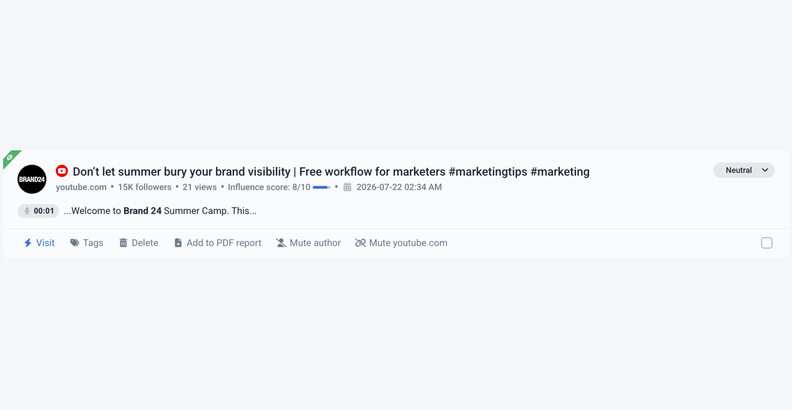
Consequently, investing in YouTube communication is worthwhile. It doesn't have to be a company channel, though. Collaborating with influencers or brand ambassadors can also be effective - the important thing is that the brand is mentioned in credible sources.
Google's AI mode also promotes shorts, and these work well, too.
So, what should you share on YouTube? Start with the conversations already happening around your brand and category. Look for recurring questions, topics, and comparisons in video transcripts and comments, and use these as inspiration for your own content.
Example: Check which domains are most frequently cited in AI answers for your brand, e.g. in Chatbeat. You can use this information to prioritize partnerships, expert content, and channel investment.
The workflow is simple. Brand24 shows you where your brand is being discussed across the web. An AI visibility monitoring tool, such as Chatbeat, adds a second layer: identifying which of those sources actually appear in AI-generated answers.
Although the choice of channel depends on the specifics of the industry, YouTube is likely to work in most cases. Why?
- Scale and freshness - YouTube processes billions of hours of content updated daily, making it one of the largest and most current information sources available to LLMs.
- Machine-readable by design - transcripts, descriptions, and comments give LLMs structured, processable text attached to every video — no extra optimization required.
- Expert content carries weight - interviews, conference talks, and webinars signal domain authority. LLMs treat these formats as credible, citable sources of industry knowledge.
On social media, the currency is fresh content. But what about credibility?
3. Check How Trusted Sources Describe Your Brand
If you look at the sources cited by LLMs, you will certainly find huge media outlets and independent sources like Wikipedia among them. If your brand has limited independent coverage, AI systems may rely more heavily on third-party category pages, comparison content, reviews, and competitor-related sources.
You could lose the opportunity to stay competitive. It's worth checking!
You can check this at two levels. Firstly, you can see which sources and websites mention your brand most often. This will give you an idea of your presence and visibility across the entire internet. You can do this using Brand24, Influencers & Sources tab.
Secondly, you can verify which sources LLMs most frequently use to find information about your brand and establish whether you can influence the information found there. Again, you can use Chatbeat to do it.
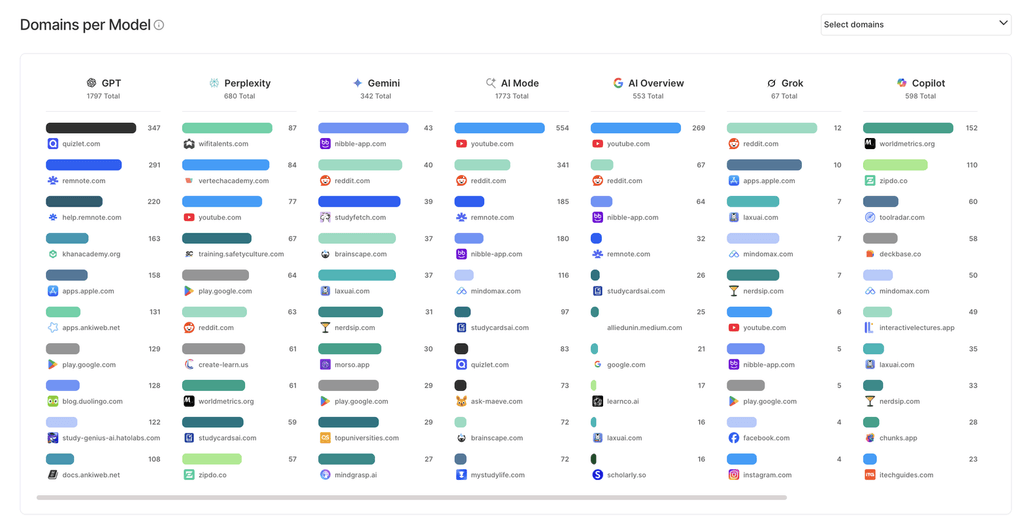
Put these two views together, and you’ll quickly see where the gaps are. If your brand is not present in key sources, such as major media outlets or industry publications, it may be worth strengthening your presence there through digital PR, expert contributions, partnerships, or useful third-party content.
However, the influence of real people is what builds real trust. How can we make use of this?
4. Identify the People Influencing Brand Visibility
You may already be doing this without realizing that traditional PR can make a real impact on LLM citations. People can add a layer of credibility that branded communication alone often cannot.
This can refer to influencers, content creators, and employees as brand ambassadors.
Where do you start? Verify which creators are already talking about your brand, both positively and negatively.
Analyze the value they bring. Are they right for your brand? Do they build communities of people who are interested in their products and services? These are the ideal candidates for influencer marketing campaigns.
Don't just focus on the most popular ones. Although micro-influencers may not have as broad a reach, they can promote your brand more credibly and build trust.
Experts are an important voice, but your customers are even more credible, because their opinions are fully independent.
5. Use Customer Feedback to Strengthen Your Brand Narrative
Customer language is one of the strongest indicators of how your brand is perceived. A brand is the image that people have in their minds. And, today, in algorithms' databases as well. Therefore, if you want to influence your brand's image, you need to understand how people are talking about it.
The most important factor is the substance of the reviews, not the number.
- Which strengths are mentioned repeatedly?
- What issues keep coming up?
- How would customers describe the product in their own words?
- What use cases do they spontaneously mention?
- What do they compare the brand to?
- Where do these conversations take place?
Using a social listening tool allows you to analyze which platforms reviews about your brand come from and what they contain. Armed with this knowledge, you can decide which initiatives to invest in.
The next step is to encourage your audience to leave reviews and share your brand's content online. This can be done through post-purchase emails, well-timed review requests, and other initiatives that comply with each platform’s review policies.
Fresh customer reviews provide current, independent context about how people experience your brand. This is why preview platforms and your Google Business Profile influence how AI perceives your brand.
There are many platforms out there, but it’s worth being present on the ones your audience actually uses.
However, choosing the right channels is much more significant than simply collecting recommendations.
6. A Good Channel is One Where You’re Wanted
There are many reports online suggesting that Reddit, LinkedIn, and YouTube are the most important channels for LLMs. But does that mean that all brands now have to invest their marketing resources there? Hold on before you blow your budget.
It all depends on the industry. For an automotive brand, for example, YouTube and specialist review sites may play a particularly important role. People are looking for honest reviews and want to get a real sense of others’ experiences.
For example, when they’re deciding on a new car. In banking, on the other hand, educational and business platforms will be more important, with social media coming second. What matters more than the opinions of people “like us” is credibility and expertise at the institutional level.
Before investing in new communication channels and revolutionizing your strategy, find out exactly where your target audience is looking for information.
Use social listening to identify where conversations about your brand, category, and competitors are already happening.
First, look at which sources generate the most relevant mentions, questions and engagement. Then prioritize the channels where your audience is already active. Don't spread your efforts everywhere.
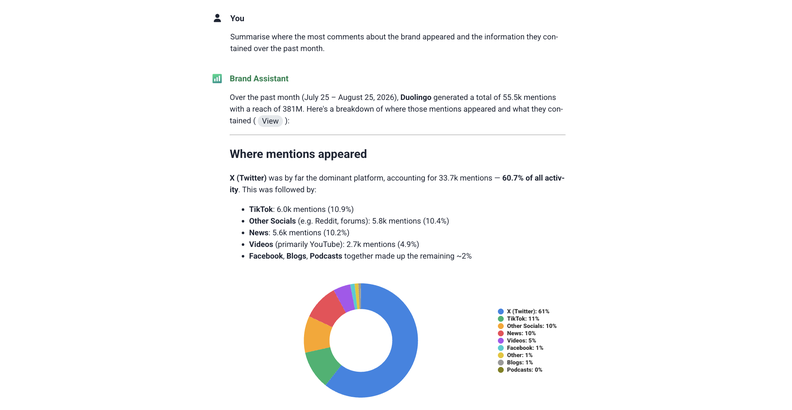
Following trends and recommendations regarding AI visibility only makes sense if your audience is actually present in that location. It is their engagement that will build brand visibility.
7. Adapt Your Existing Marketing Workflow for AI Visibility
You don’t have to throw out your strategy. Many of its elements are likely already working great and achieving other marketing goals (after all, AI visibility isn’t the only one). You can add something to your efforts, modify certain elements, and already achieve an AI-friendly result.
This may sound incredibly cliché: it’s an evolution, not a revolution. But we like clichés precisely because they’re true.
Begin by identifying which existing actions can be modified slightly to increase their impact on LLMs. Here's a list of tasks to help you get started:
- Use social listening tools to identify recurring topics, questions, and language relating to your brand and category.
- Monitor which platforms and sources generate the most relevant conversations about your brand.
- Encourage customers to leave honest reviews on the most relevant platforms in your category.
- Identify experts, creators, and employees who can contribute credible insights to relevant conversations.
- Ensure that your brand is consistently associated with the right topics, use cases, and category terms.
- Compare your visibility and brand narrative with those of your competitors to identify any gaps.
- Review the results regularly and adjust your content, PR, and social strategy accordingly.
Since LLMs aim to provide users with accurate and satisfying answers to their questions, focus on that. Create content that genuinely supports purchasing decisions.